This post contains affiliate links. As an Amazon Associate we earn from qualifying purchases, at no extra cost to you. Read our disclosure.
Safety first: Herbs can be powerful. If you are pregnant, nursing, take medication or have a health condition, check with your doctor or pharmacist first. Please read our herbal & garden safety notes before you start.
Key takeaways
- Seven holiday plants are ASPCA non-toxic to cats and dogs, led by Christmas cactus, Norfolk Island pine and rosemary
- Poinsettias are only mildly toxic; amaryllis, paperwhites, cyclamen and kalanchoe are toxic and belong out of reach
- Skip Jerusalem cherry and real mistletoe in a pet home
- Christmas cactus, orchids, violets and Norfolk pines keep going for years
- A cachepot over the nursery pot dresses a plant up without losing drainage
In this post23 sections
- Christmas plants at a glance
- Pet-safe Christmas plants (ASPCA non-toxic)
- 1. Christmas cactus (Schlumbergera)
- 2. Norfolk Island pine
- 3. Rosemary tree
- 4. Moth orchid (Phalaenopsis)
- 5. African violet
- 6. Blushing bromeliad
- 7. Boston fern
- Classic holiday bloomers to keep out of reach
- 8. Poinsettia
- 9. Amaryllis
- 10. Paperwhites
- 11. Cyclamen
- 12. Kalanchoe
- Festive greens and foliage
- 13. Anthurium
- 14. Potted holly
- 15. English ivy topiary
- 16. Christmas rose (hellebore)
- Two to skip in a home with pets
- Christmas plant pot ideas for small spaces
- FAQ
Christmas plants at a glance
Most lists of Christmas plants skip the question a cat or dog home asks first. This one starts with it. Every plant below carries its pet rating from the ASPCA toxic and non-toxic plant list, plus the size, light and how long it stays festive.
| Plant | Pets (ASPCA) | Light | Lasts | Keeps for next year? |
|---|---|---|---|---|
| Christmas cactus | Non-toxic | Bright, indirect | Blooms 4 to 6 weeks | Yes, easily |
| Norfolk Island pine | Non-toxic | Bright | Years as a houseplant | Yes |
| Rosemary tree | Non-toxic | Brightest window | Months with good light | Yes, with care |
| Moth orchid | Non-toxic | Bright, indirect | Flowers 2 to 3 months | Yes |
| African violet | Non-toxic | Bright, indirect | Reblooms most of the year | Yes |
| Blushing bromeliad | Non-toxic | Bright, indirect | Color holds for months | Pups only |
| Boston fern | Non-toxic | Bright, indirect, humid | Years | Yes |
| Poinsettia | Mildly toxic | Bright, indirect | 6 weeks to a few months | Yes, with a dark routine |
| Amaryllis | Toxic | Bright | Blooms 2 to 3 weeks | Yes |
| Paperwhites | Toxic | Bright, cool | Blooms 2 weeks | No |
| Cyclamen | Toxic | Bright, cool | Blooms 2 to 3 months | Sometimes |
| Kalanchoe | Toxic | Bright to sunny | Blooms 6 to 8 weeks | Yes |
| Anthurium | Toxic | Bright, indirect | Flowers for months | Yes |
| Potted holly | Toxic | Bright, cool | Berries for weeks | Plant outside |
| English ivy topiary | Toxic | Bright, cool | Years | Yes |
| Christmas rose | Toxic | Bright, cool | Blooms for weeks | Plant outside |
This is general information, not veterinary advice. The ASPCA notes that any plant can upset a pet's stomach if eaten, so even the safe ones are best kept out of reach of a determined chewer.
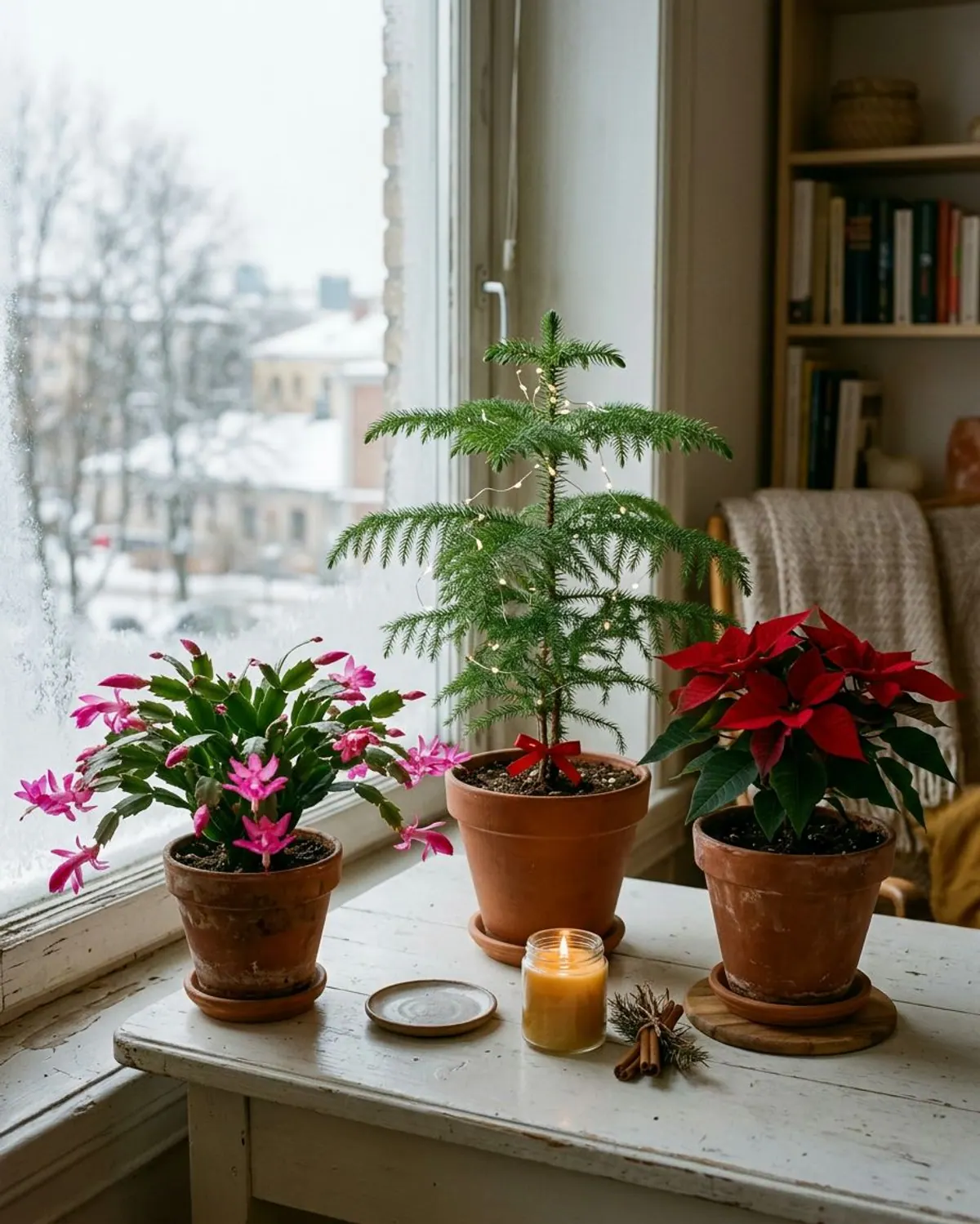
Pet-safe Christmas plants (ASPCA non-toxic)
Start here if you share your home with a cat or a dog. All seven are listed as non-toxic to both by the ASPCA, and most of them keep going long after the decorations come down.
1Christmas cactus (Schlumbergera)
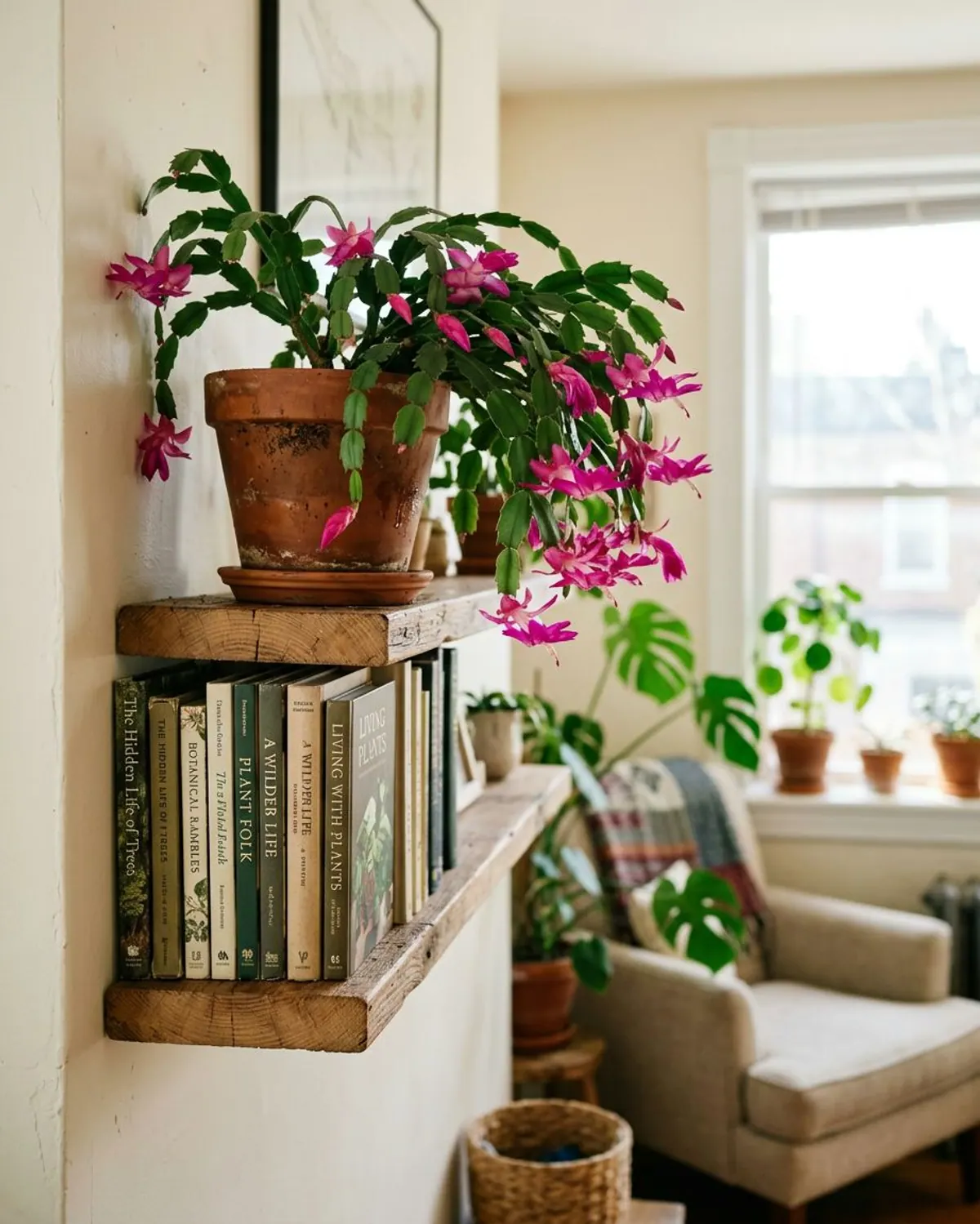
Pet tag: cats safe, dogs safe (ASPCA non-toxic)
Size: Tabletop or trailing from a shelf, 6 to 12 inches.
Light: Bright, indirect; no hot afternoon sun.
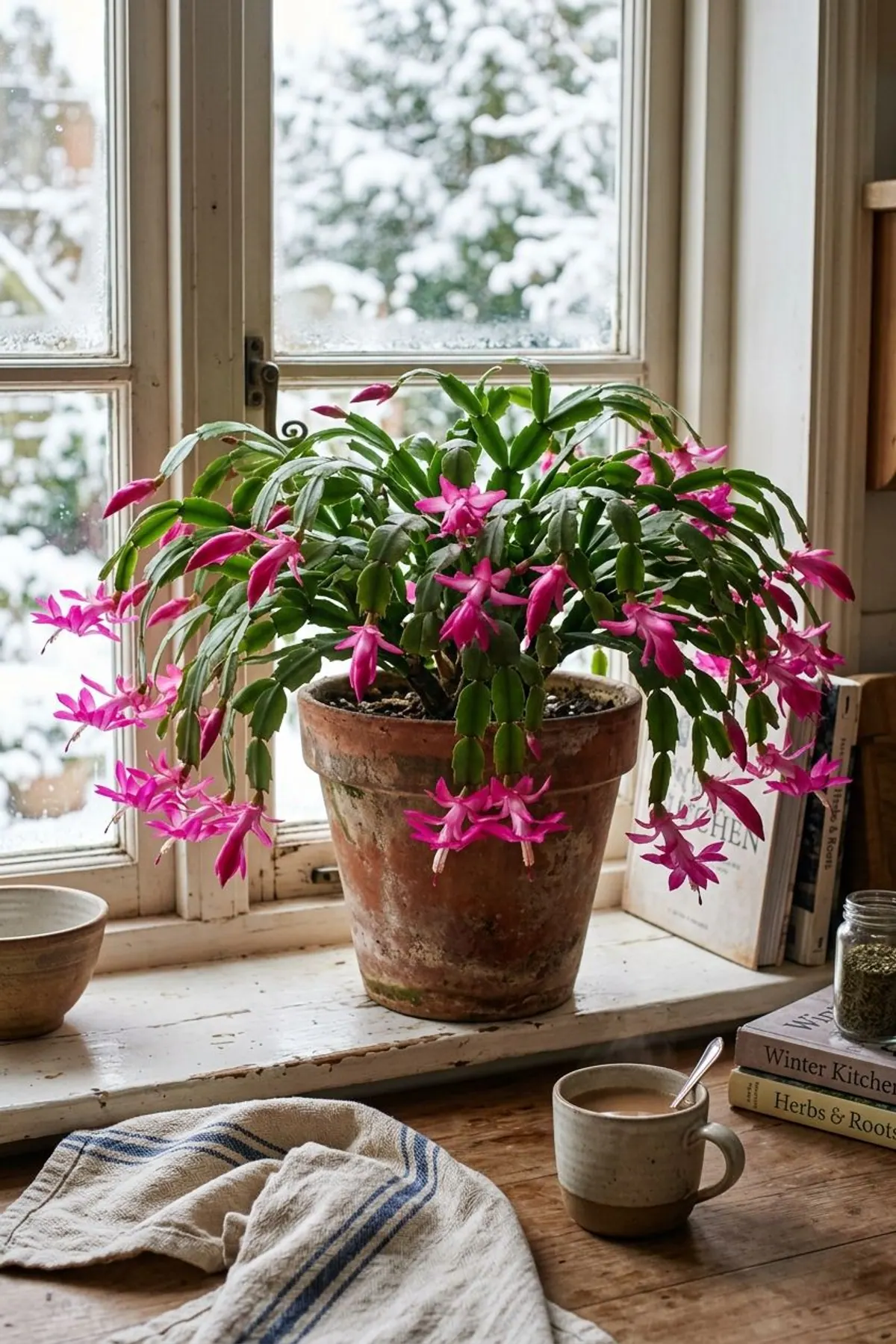
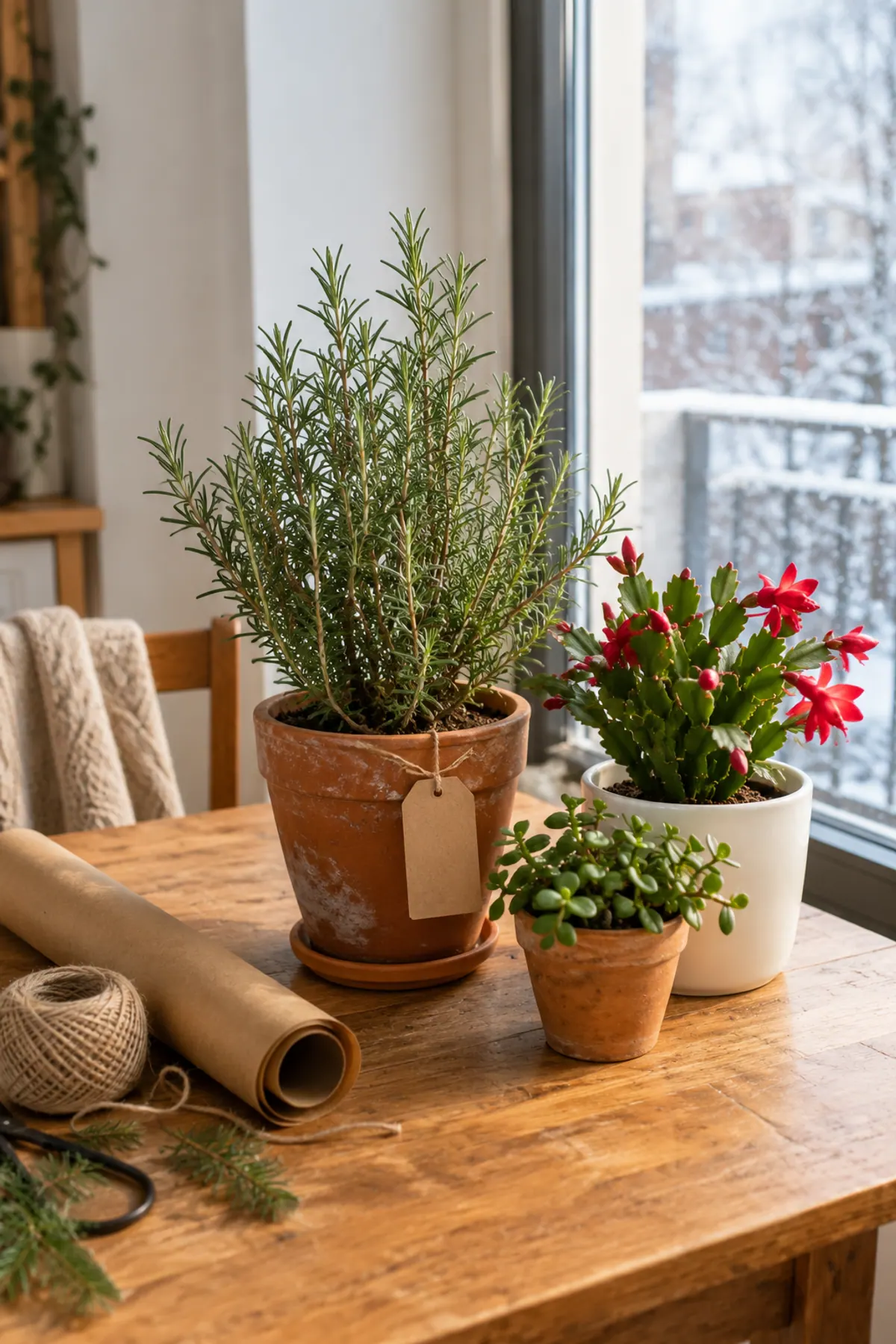
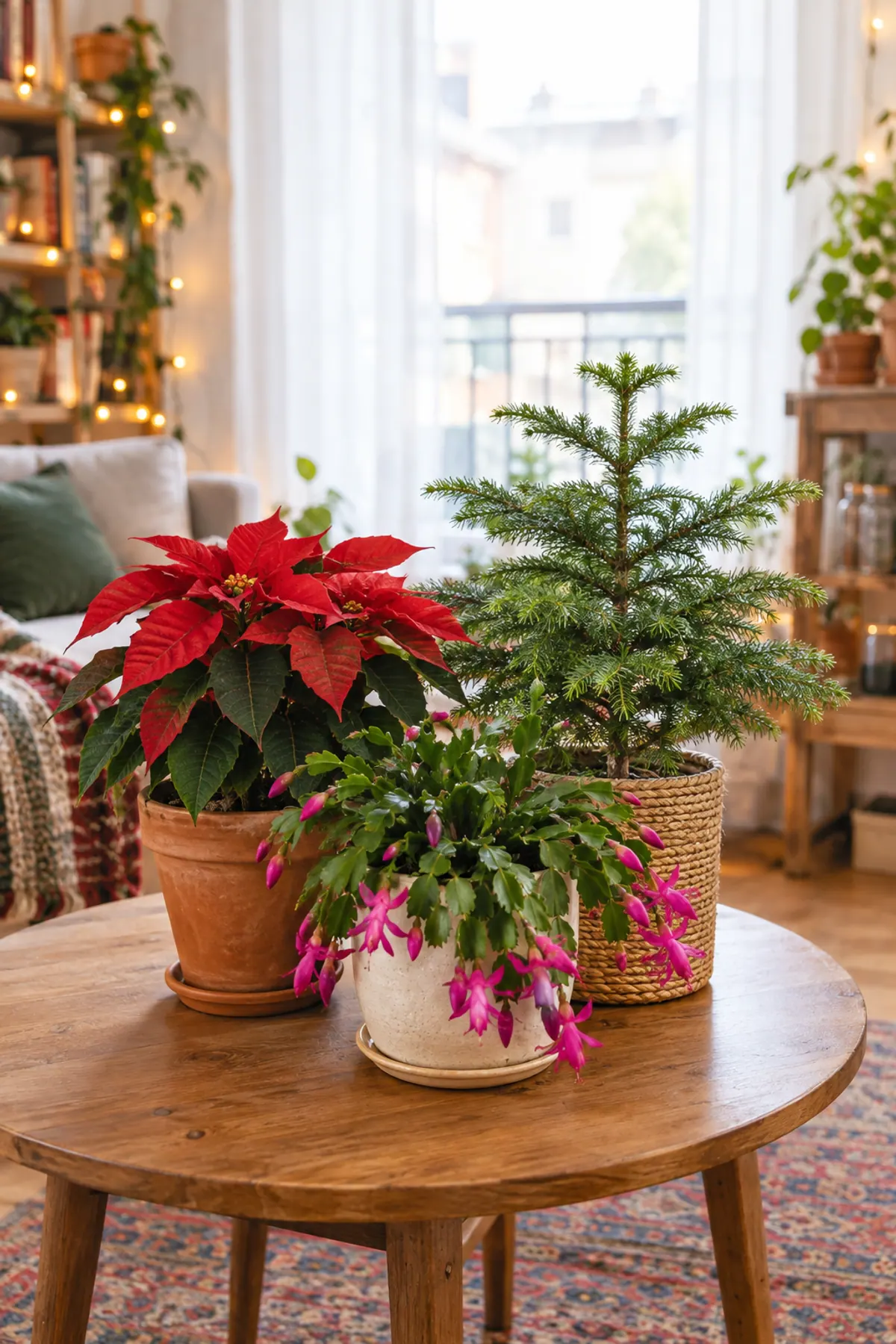
The easiest holiday bloomer to keep for years. Flat segmented stems end in pink, red or white flowers that open over four to six weeks. Water when the top inch of soil is dry and keep it away from drafts, which make buds drop. Our Christmas cactus care guide covers the cool, dark autumn that sets next year's buds.
- Do not move it once buds form; a big change in light or temperature is the top reason buds fall.
A pet safe bloomer that comes back every year.
2Norfolk Island pine
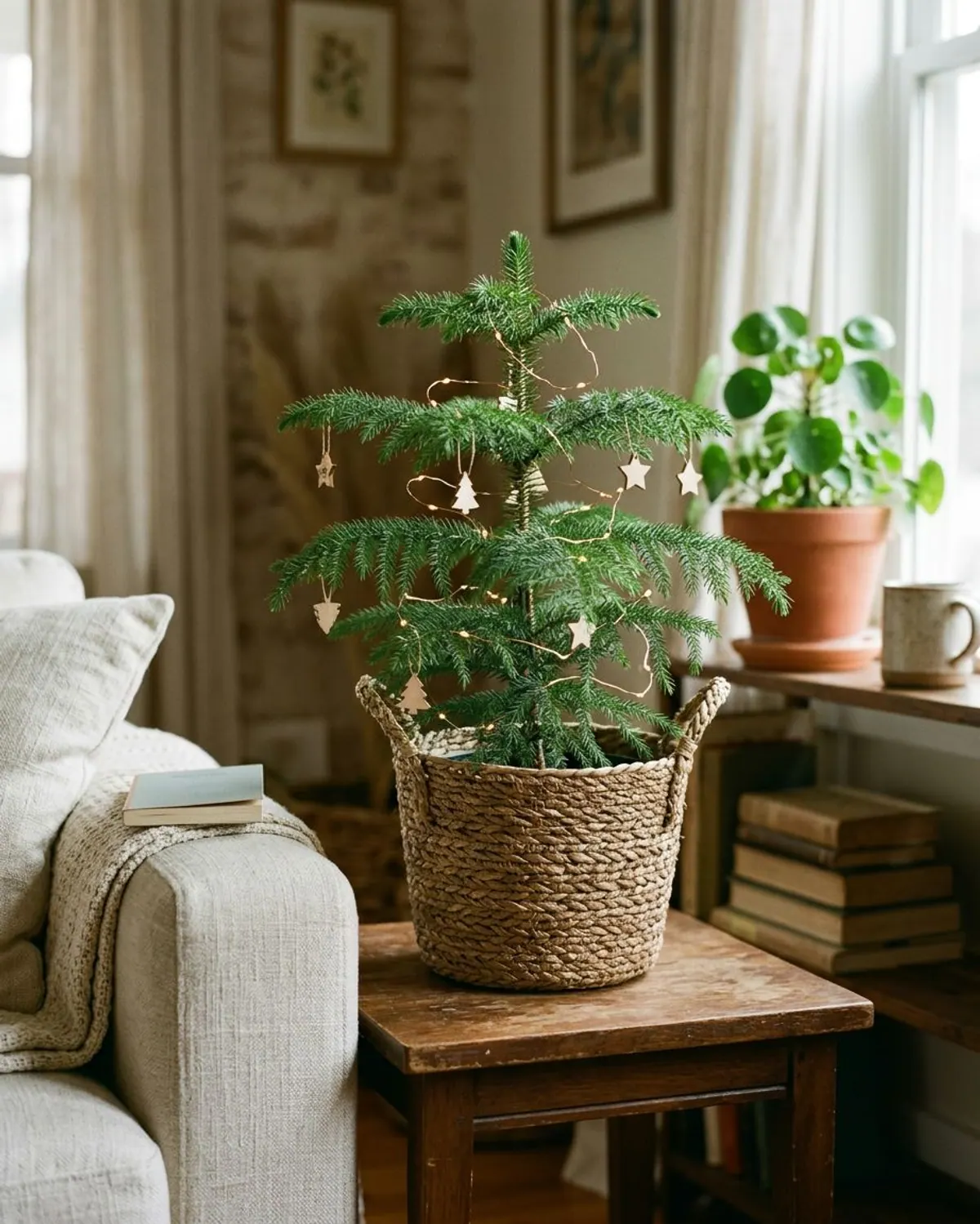
Pet tag: cats safe, dogs safe (ASPCA non-toxic); listed by the ASPCA as Australian pine
Size: Sold at 1 to 3 feet; it grows slowly indoors.
Light: Bright, indirect; turn it weekly so it grows straight.
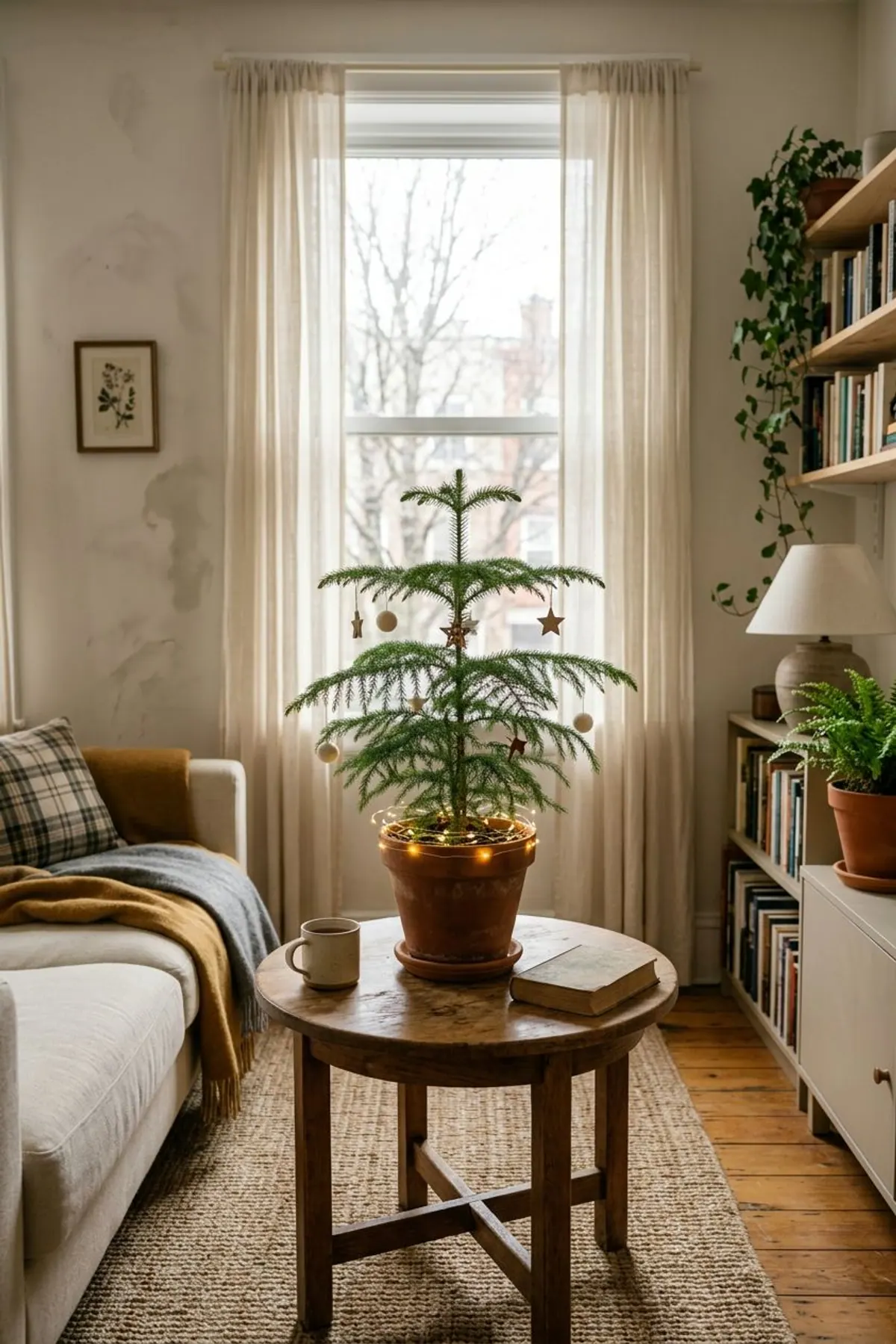
A living tabletop Christmas tree with soft, tiered branches. It suits a studio better than a cut tree and stays on as a houseplant all year. Keep it out of the path of heating vents and give it a humid spot, because dry air browns the needle tips.
- Decorate it with light ornaments only; the branches are soft and bend under heavy glass baubles.
A tiny tree that stays green all year.
3Rosemary tree
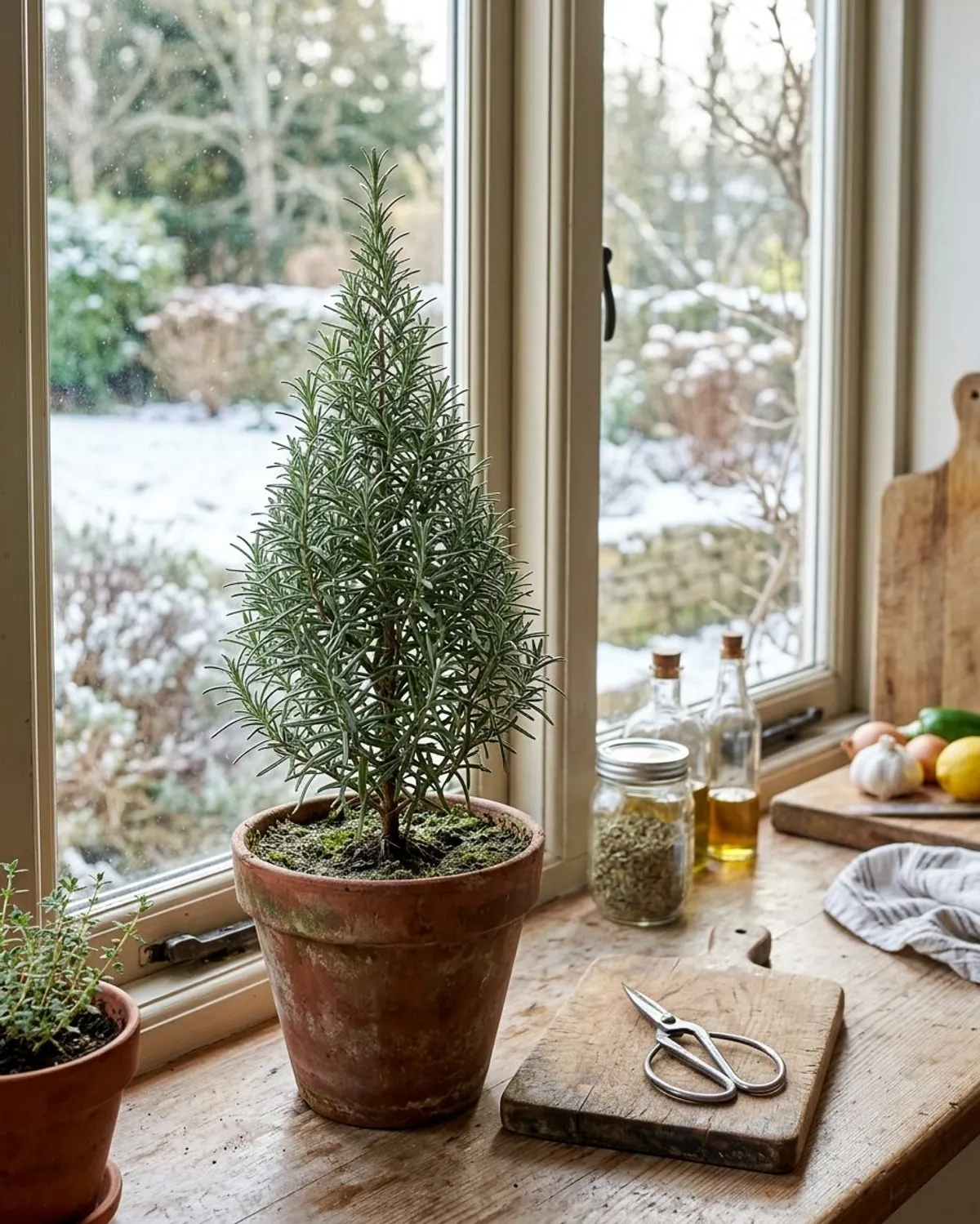
Pet tag: cats safe, dogs safe (ASPCA non-toxic)
Size: Usually sold as a 1 to 2 foot cone.
Light: Your sunniest window; at least 6 hours of light.
A cone-shaped rosemary smells like the season every time you brush it, and you can snip it for the kitchen. It needs more light than most holiday plants and dislikes both soggy and bone-dry soil, which is why so many turn brown by January. See our rosemary indoors guide for the watering routine.
- If your brightest window is still dim, a small grow light on a timer keeps a rosemary tree green through winter.
Smells like the holidays and goes in the cooking.
4Moth orchid (Phalaenopsis)
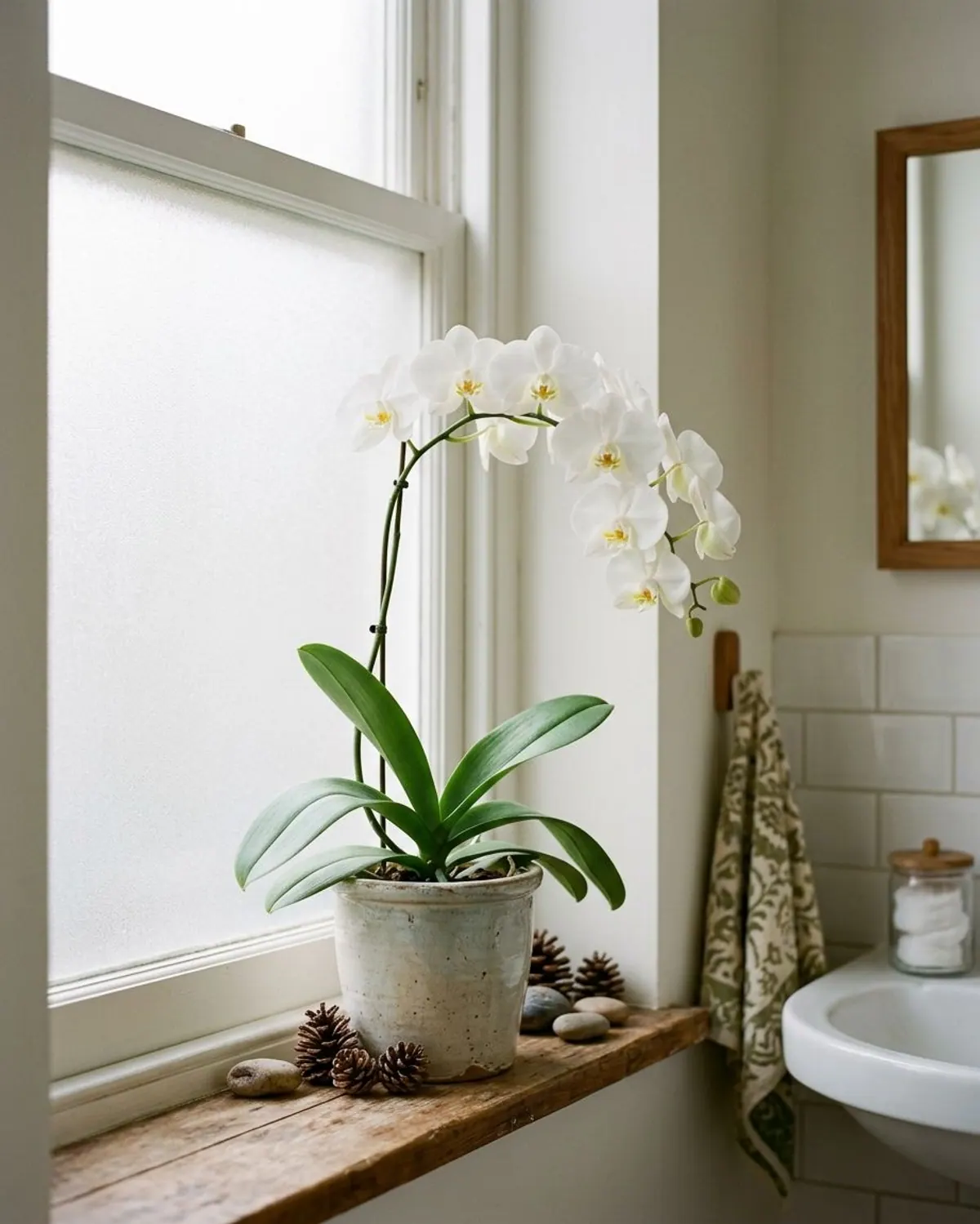
Pet tag: cats safe, dogs safe (ASPCA non-toxic)
Size: Tabletop, about 18 to 24 inches with the flower spike.
Light: Bright, indirect; an east window suits it well.
A white or red orchid reads as elegant holiday decor and the flowers last two to three months. Water about once a week by soaking the bark and draining it fully, never leaving the pot in water. When the flowers drop, keep the plant: it reblooms the next winter with a slightly cooler room.
- Bathrooms with a window suit orchids well because the humidity is higher.
A long-lasting gift plant that is safe around pets.
5African violet
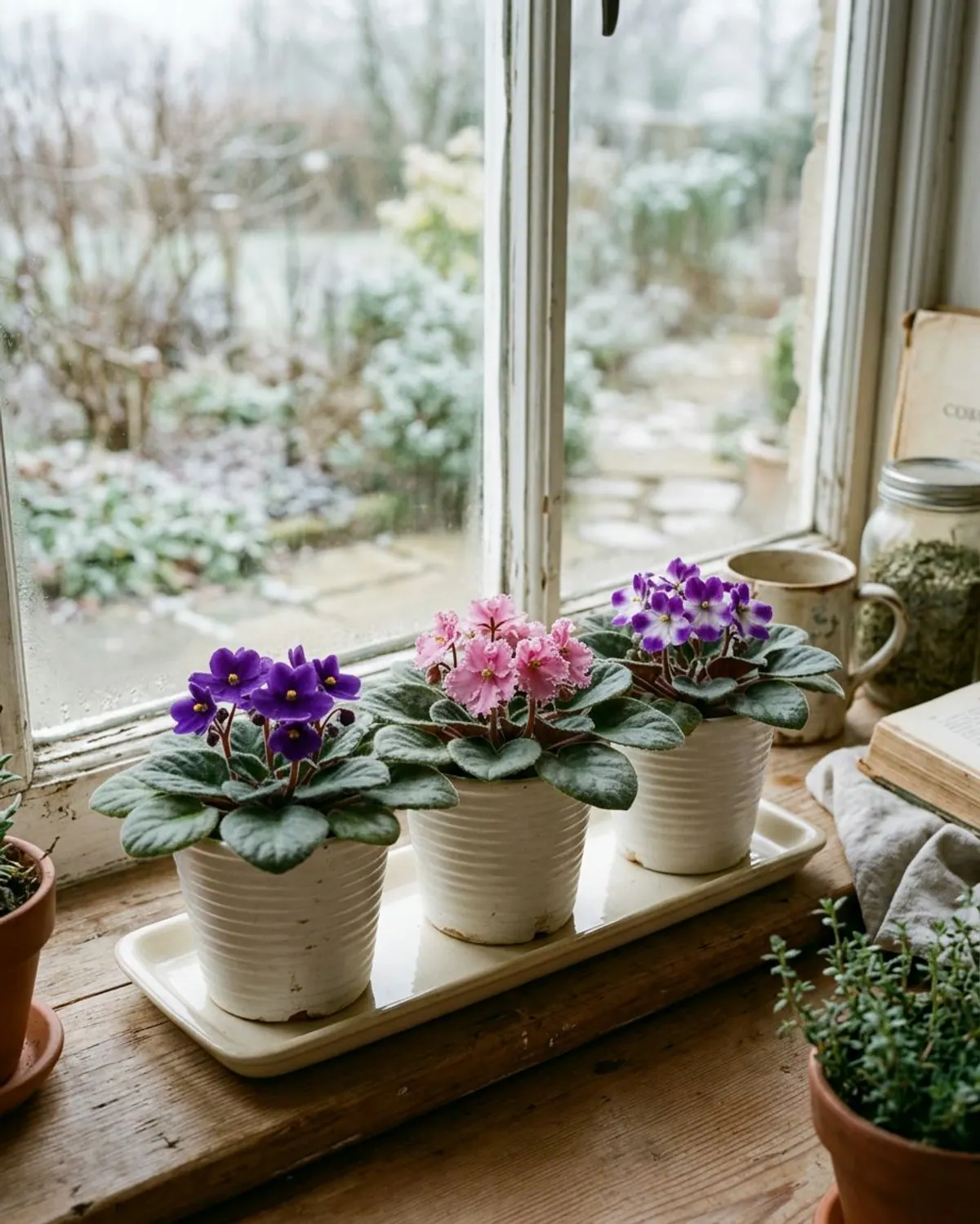
Pet tag: cats safe, dogs safe (ASPCA non-toxic)
Size: Small, about 6 to 8 inches across.
Light: Bright, indirect; a north or east sill works.
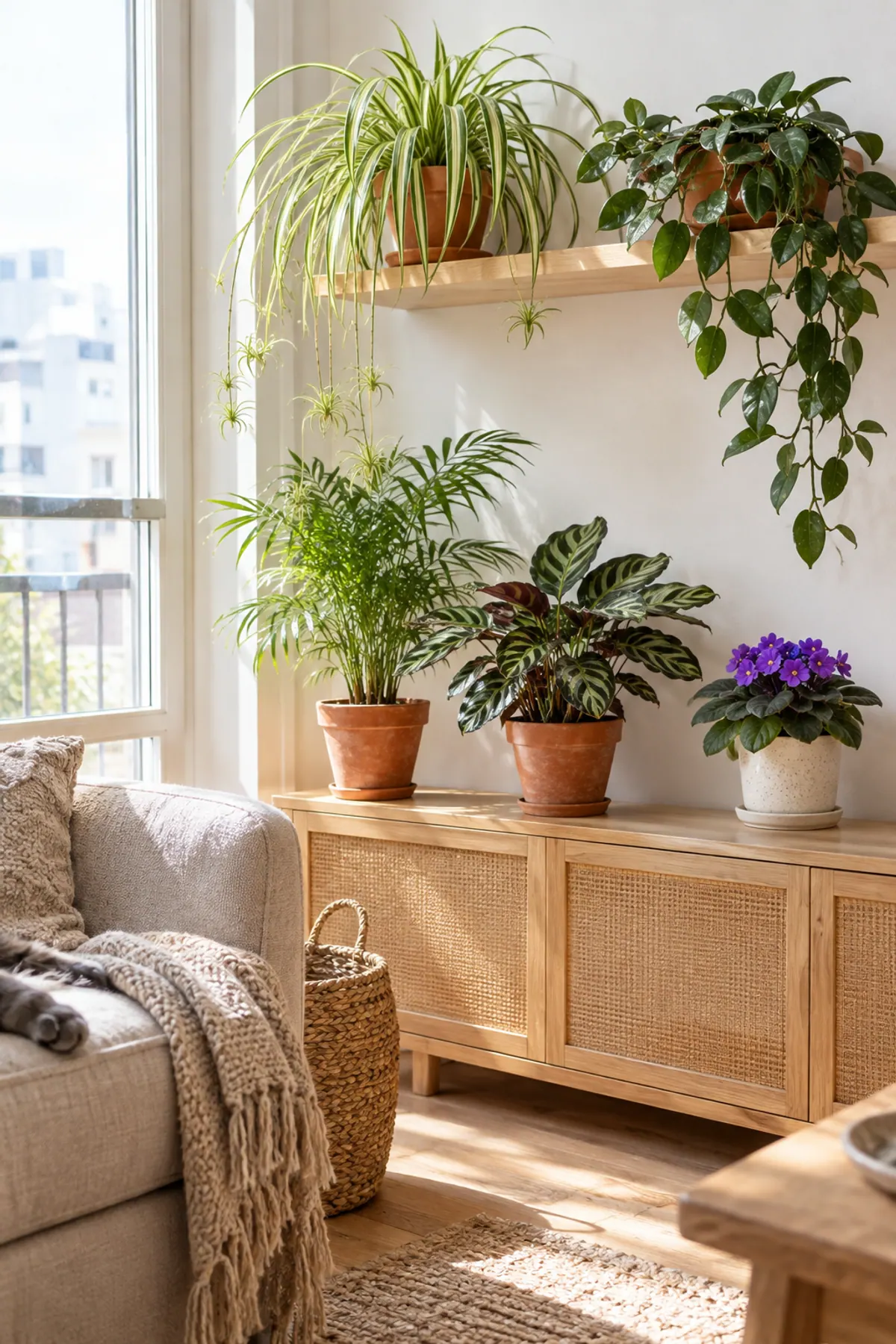
The smallest bloomer here and one of the most generous, flowering on and off all year. Purple, pink and white varieties look festive grouped in a tray. Water from below or at the soil line with room temperature water, since cold water spots the fuzzy leaves.
- Three violets in matching small pots fit on a sill that would not hold one poinsettia.
6Blushing bromeliad
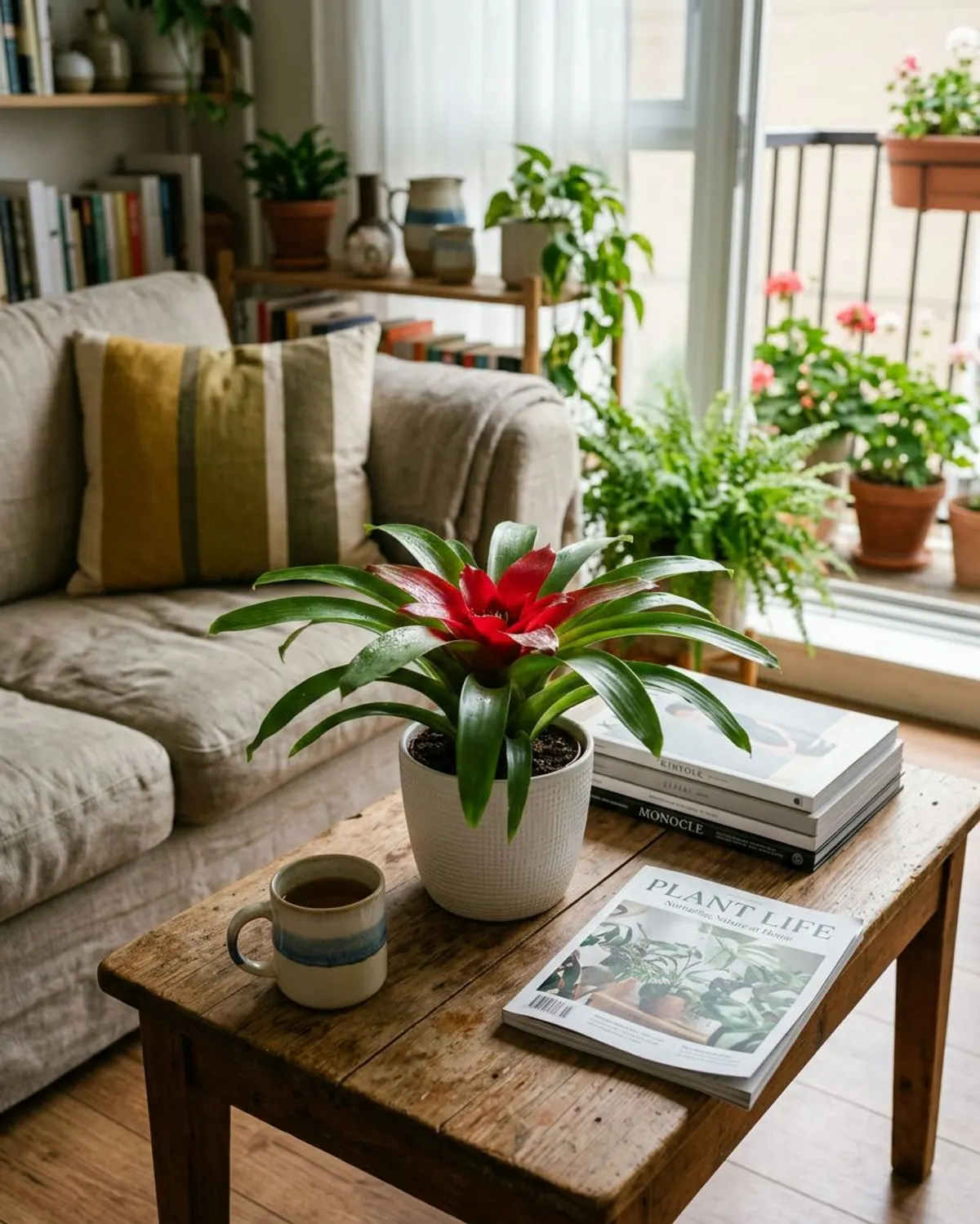
Pet tag: cats safe, dogs safe (ASPCA non-toxic)
Size: Tabletop, about 12 to 18 inches across.
Light: Bright, indirect.
The center of the rosette turns red as it blooms, which gives a Christmas look without a single flower. The color holds for months. Keep a little water in the central cup, refresh it weekly, and let the soil dry between waterings. The mother plant fades after blooming but sends up pups you can pot on.
- Other bromeliads (guzmania, with red bracts) give the same effect and are also commonly sold for the holidays.
7Boston fern
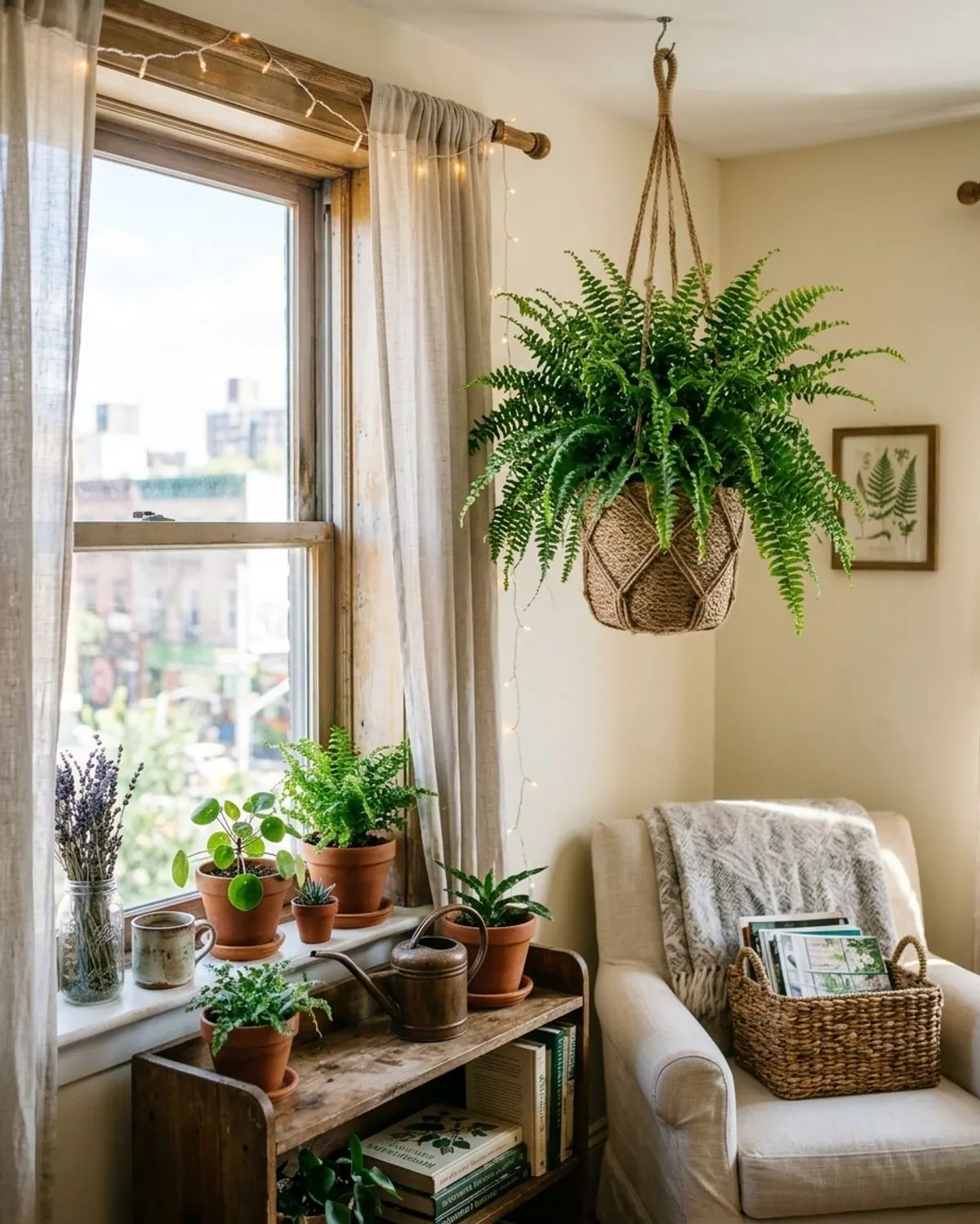
Pet tag: cats safe, dogs safe (ASPCA non-toxic)
Size: Large; best hung from a hook or set on a stand.
Light: Bright, indirect, with humidity.
A full green fern makes a lush backdrop for red bloomers and is one of the classic pet safe houseplants. It sheds leaflets in dry heated air, so mist the room, group it with other plants or run a small humidifier. Water when the surface of the soil starts to feel dry.
- A hanging fern keeps leaves away from both cats and floor space in a small room.
Pet safe greenery that fills a corner.
Classic holiday bloomers to keep out of reach
These are the plants most people picture at Christmas. All five are rated toxic or mildly toxic by the ASPCA, so they belong on a high shelf or in a room your pet does not use. Without pets in the house, they are easy and showy.
8Poinsettia
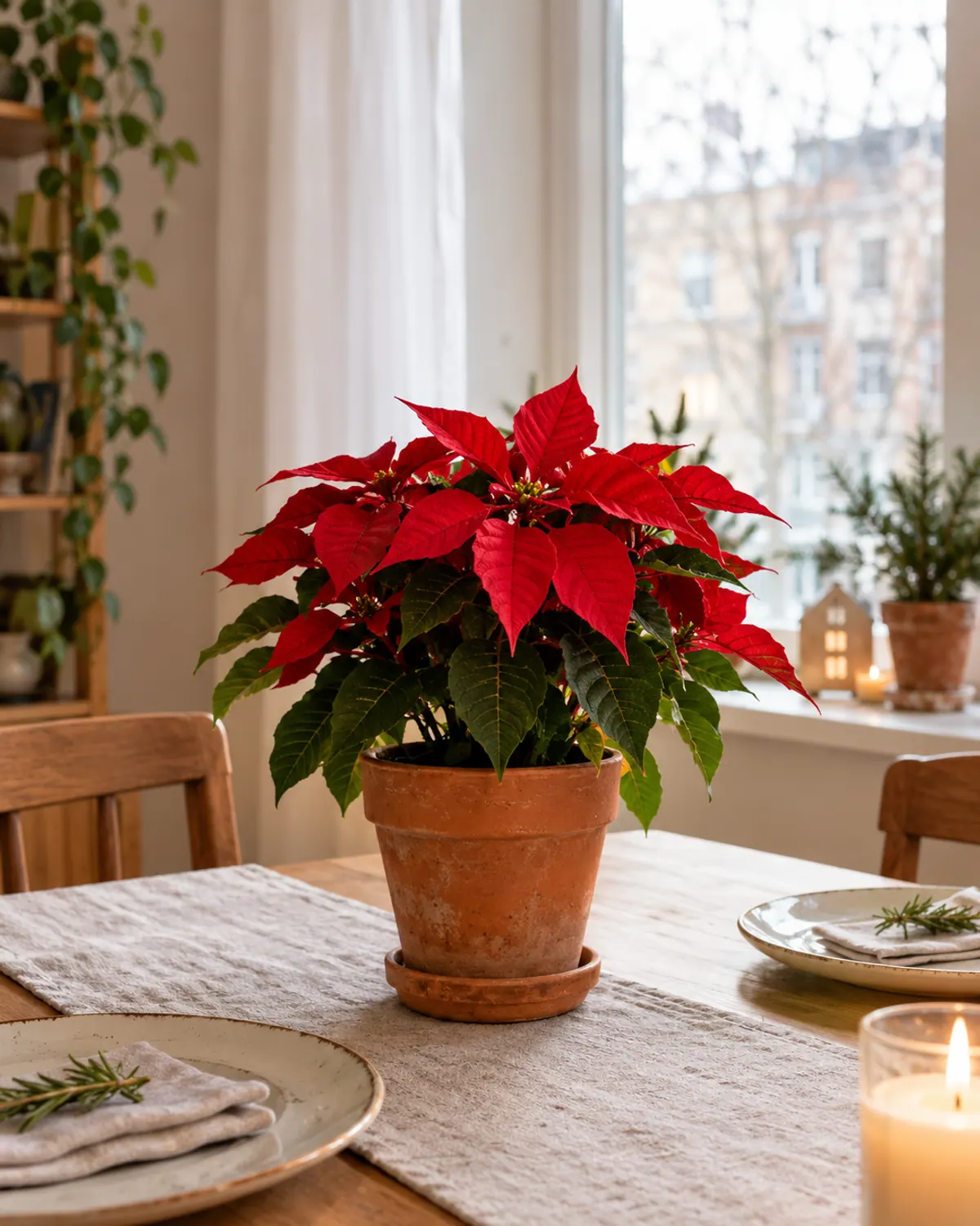
Pet tag: mildly toxic to cats and dogs (ASPCA); sap irritates the mouth and stomach
Size: Usually 12 to 24 inches.
Light: Bright, indirect; days around 65 to 70°F.
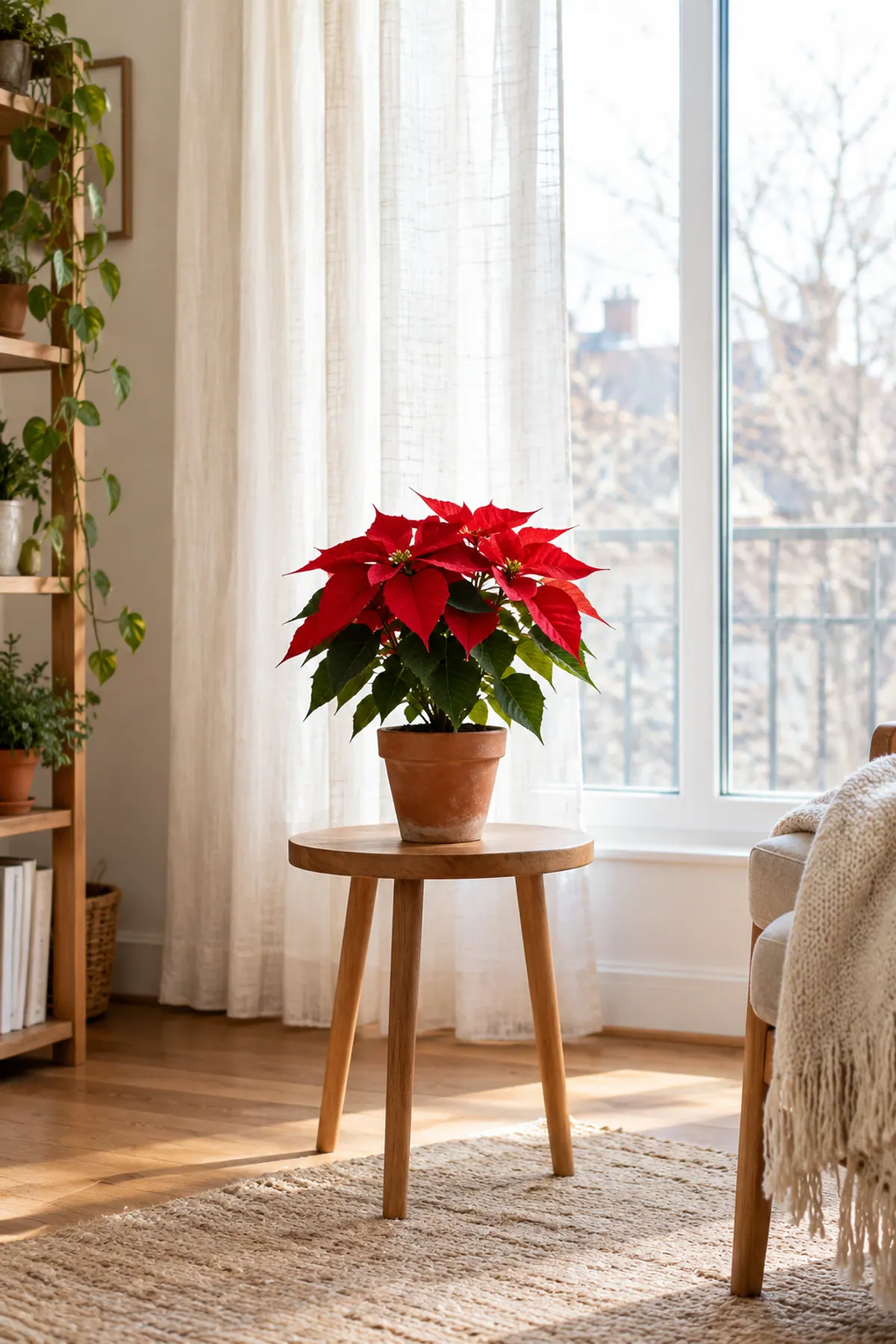
The best-known Christmas plant, and less dangerous than its reputation: chewing usually means drooling or an upset stomach that passes. Take the foil off, water only when the pot feels light and keep it away from drafts. Our poinsettia care guide has the full 12-month rebloom calendar.
- Choose a plant whose small center buds are still tight and green; it will hold color for longer.
The classic, shipped in a sleeve for the trip.
9Amaryllis
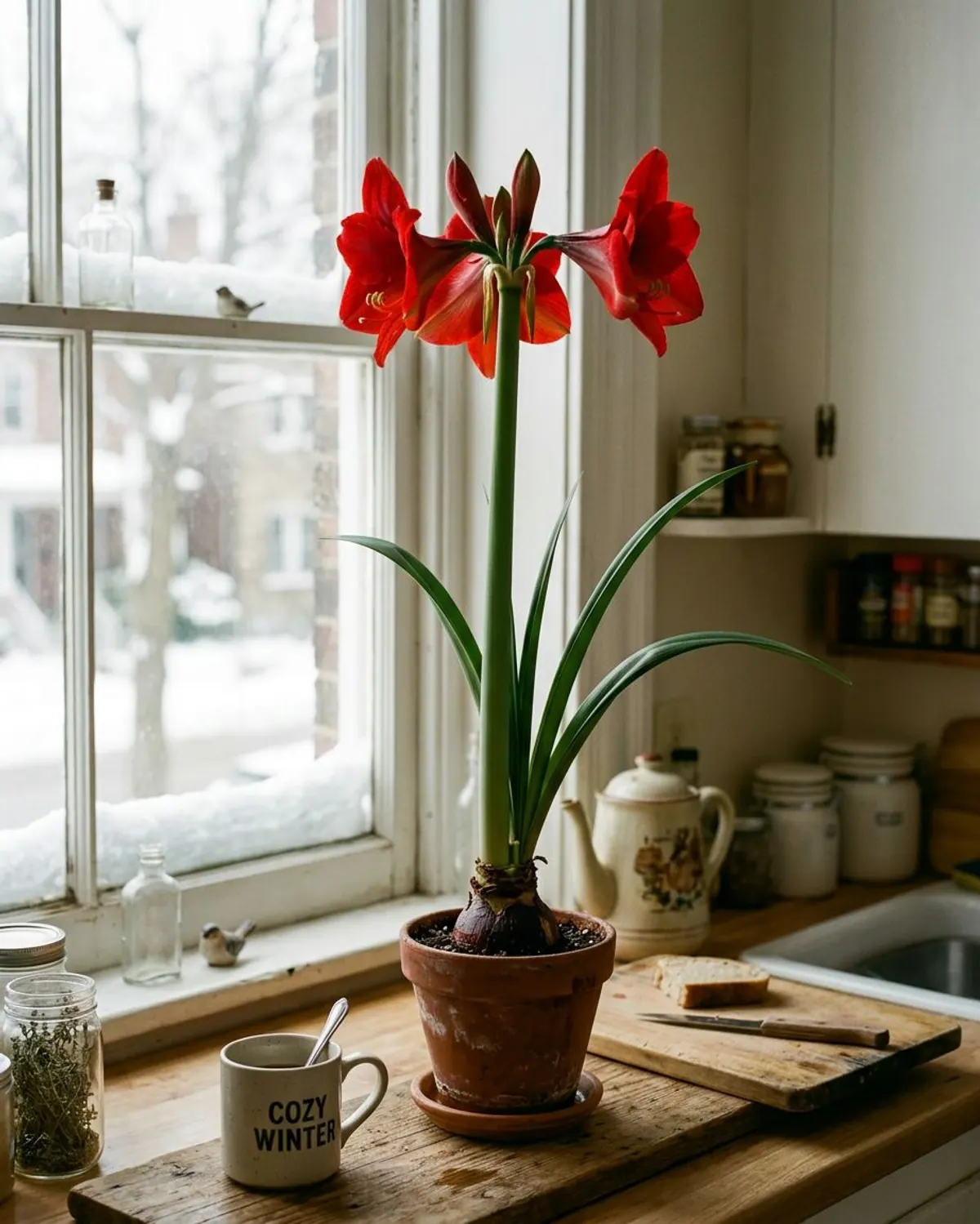
Pet tag: toxic to cats and dogs (ASPCA); the bulb is the most toxic part
Size: Tall: 18 to 24 inches in flower, on a small footprint.
Light: Bright; turn the pot so the stalk grows straight.
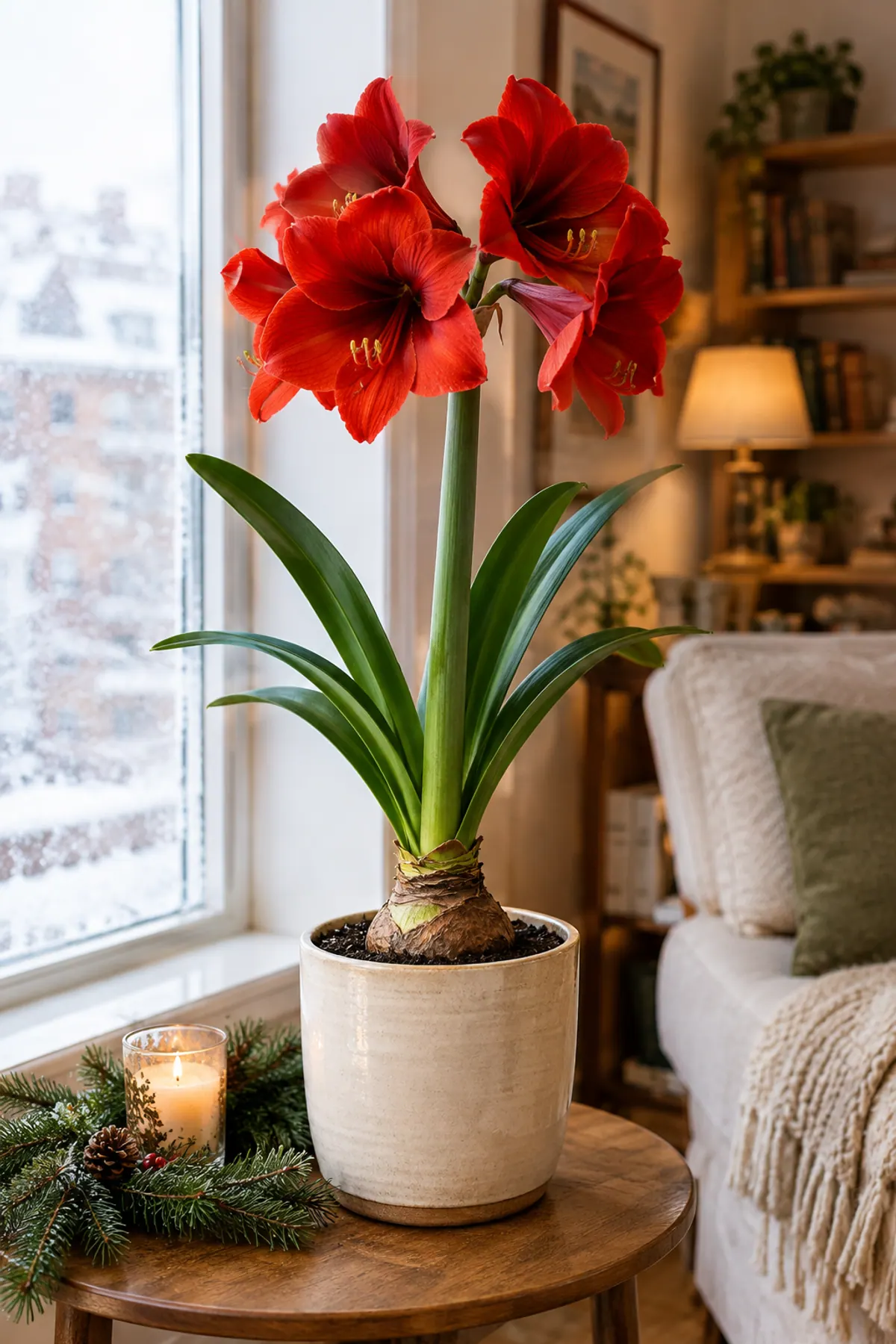
Huge trumpet flowers on a tall stalk from a bulb that takes about six to eight weeks to bloom. That height on a small base makes it a good choice for a narrow sill or a crowded table. Read our amaryllis care guide to bring it back next year.
- Start a bulb in late October or early November for flowers around Christmas.
Comes ready to plant; a good gift for a friend without pets.
10Paperwhites
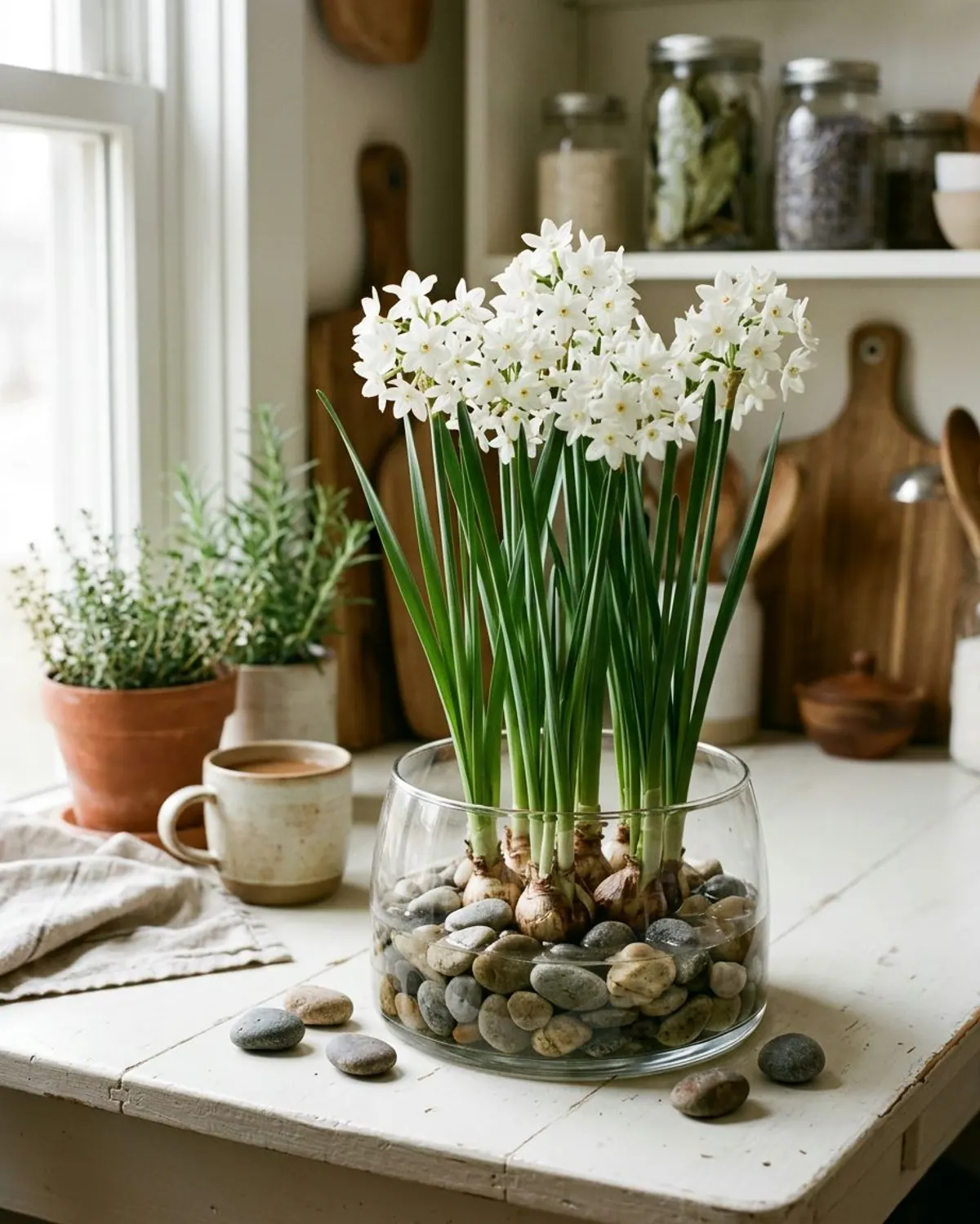
Pet tag: toxic to cats and dogs (ASPCA); the bulbs are the most toxic part
Size: Tall stems, small footprint in a bowl or jar.
Light: Bright and cool, which keeps stems shorter.
Paperwhites grow in a bowl of pebbles and water and flower in about four to six weeks. The scent is strong, which some people love and others do not, so try a few bulbs first. They do not rebloom indoors, so treat them like cut flowers. Ideas for styling them are in our paperwhites centerpiece guide.
- Stagger plantings two weeks apart for flowers from December into January.
11Cyclamen
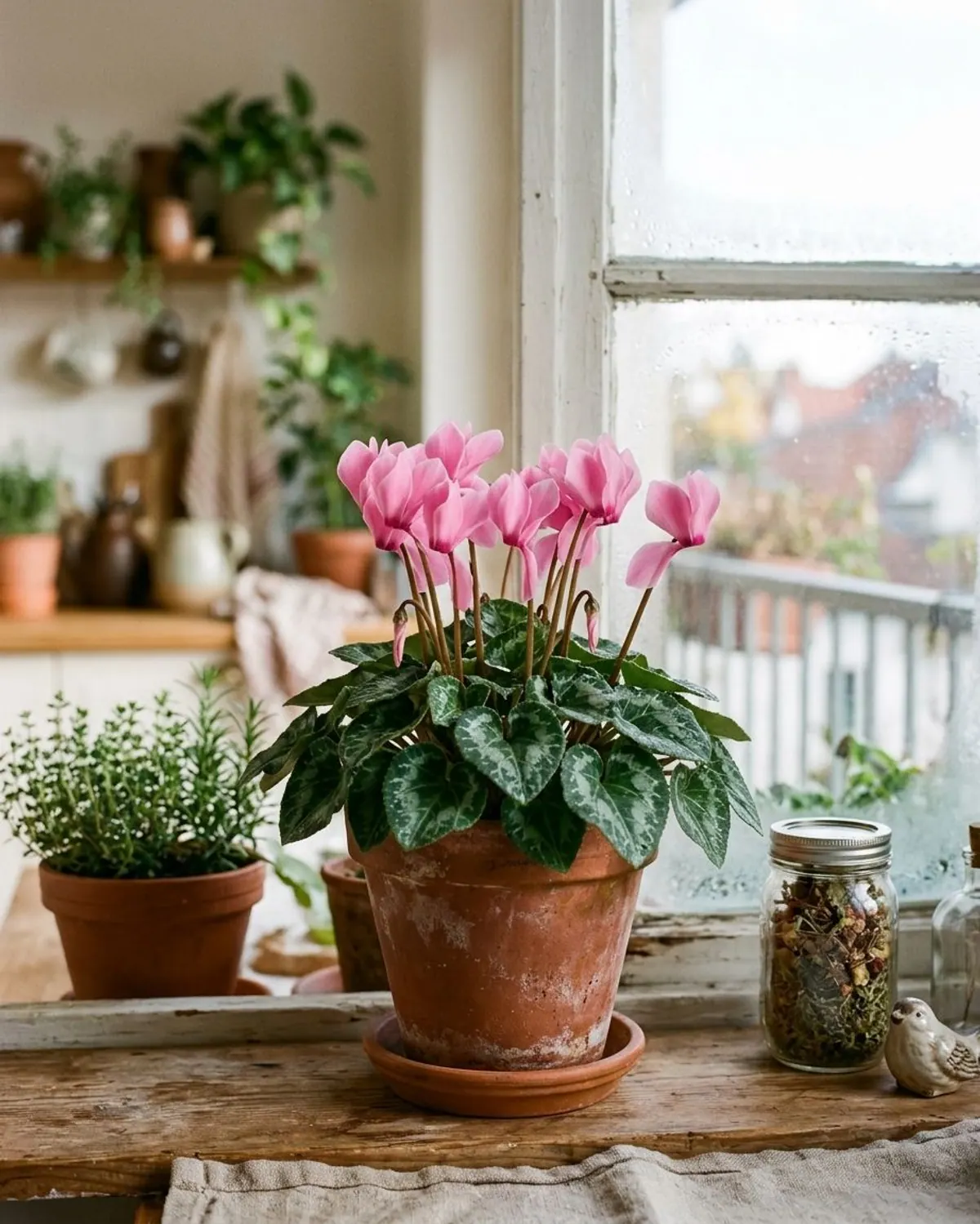
Pet tag: toxic to cats and dogs (ASPCA); the tubers are the most serious
Size: Small, about 8 to 12 inches.
Light: Bright and cool; 50 to 65°F is where it thrives.
Swept-back pink, red or white flowers over silver-marked, heart shaped leaves. Cyclamen likes it cooler than most apartments, so set it on the coolest bright sill or move it to a cool room at night. Water from below when the pot is light and avoid wetting the crown.
- Yellowing leaves usually mean the room is too warm; move it somewhere cooler before blaming the water.
12Kalanchoe
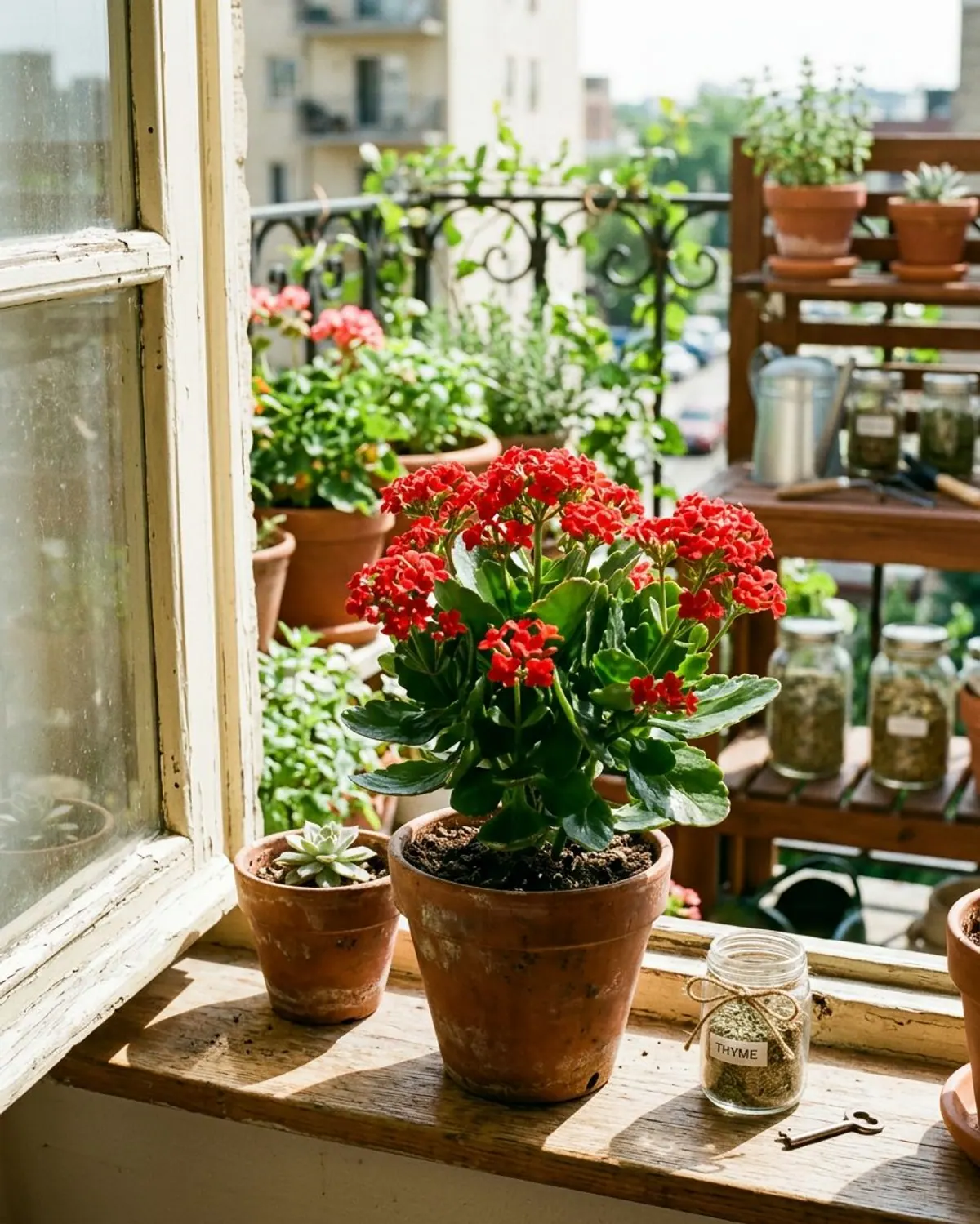
Pet tag: toxic to cats and dogs (ASPCA)
Size: Small, 6 to 12 inches.
Light: Bright to sunny.
A tough little succulent with clusters of red, orange or pink flowers that last six to eight weeks. It is one of the most forgiving bloomers for a sunny window and a busy schedule. Let it dry out between waterings and never leave it sitting in water.
- Kalanchoe rebloom with long nights in autumn, much like a poinsettia.
Festive greens and foliage
For a plant that reads as Christmas without being a classic bloomer, these four bring red, glossy green or white winter flowers. All four are rated toxic by the ASPCA.
13Anthurium
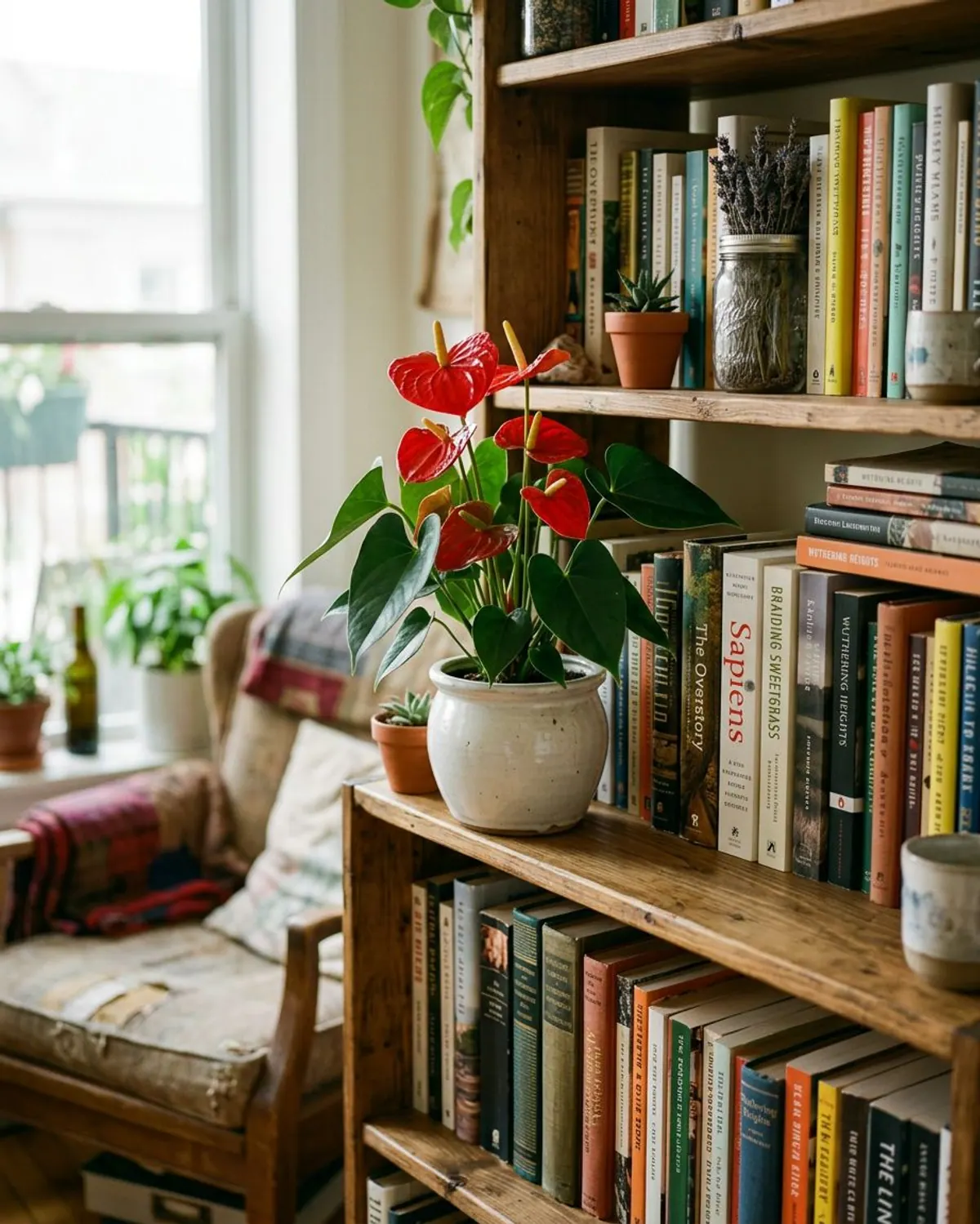
Pet tag: toxic to cats and dogs (ASPCA)
Size: Tabletop, 12 to 18 inches.
Light: Bright, indirect.
Glossy red, heart shaped spathes and dark green leaves look festive and stay in color for months. Anthurium is a true houseplant that keeps going long after New Year. Water when the top inch is dry and give it a humid spot.
- Wipe the leaves with a damp cloth; dust dulls the shine fast in a heated room.
Months of red for a pet-free home.
14Potted holly
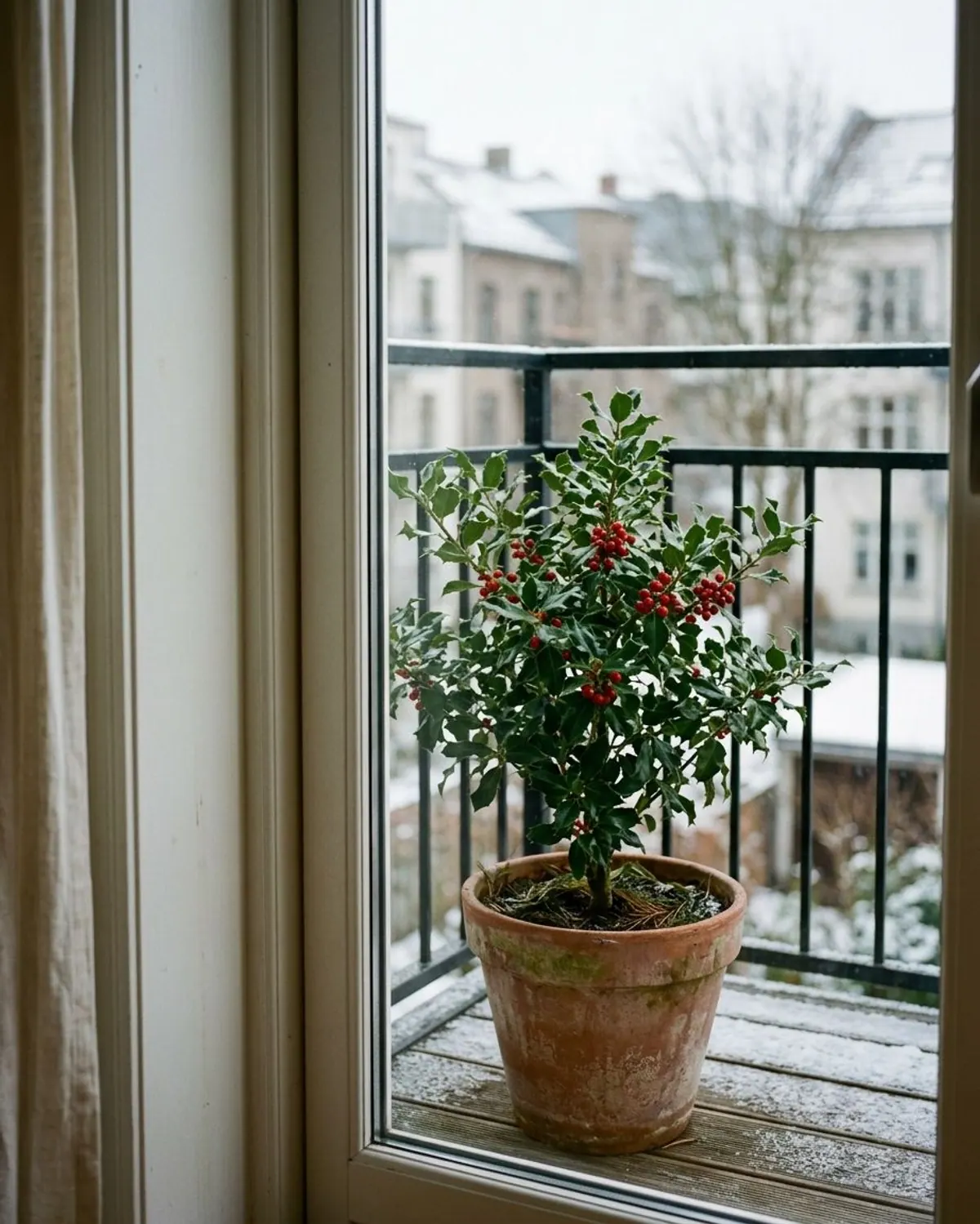
Pet tag: toxic to cats and dogs (ASPCA)
Size: Small potted shrub, 12 to 24 inches.
Light: Bright and cool; it does best on a balcony.
A dwarf holly with red berries makes a porch or balcony look ready for Christmas. Indoors it only lasts a few weeks because the air is too warm and dry, so bring it in for the party and then move it back outside. Plant it in the ground or a large pot in spring.
- Most holly needs a male plant nearby to set berries, so buy a plant already in berry.
15English ivy topiary
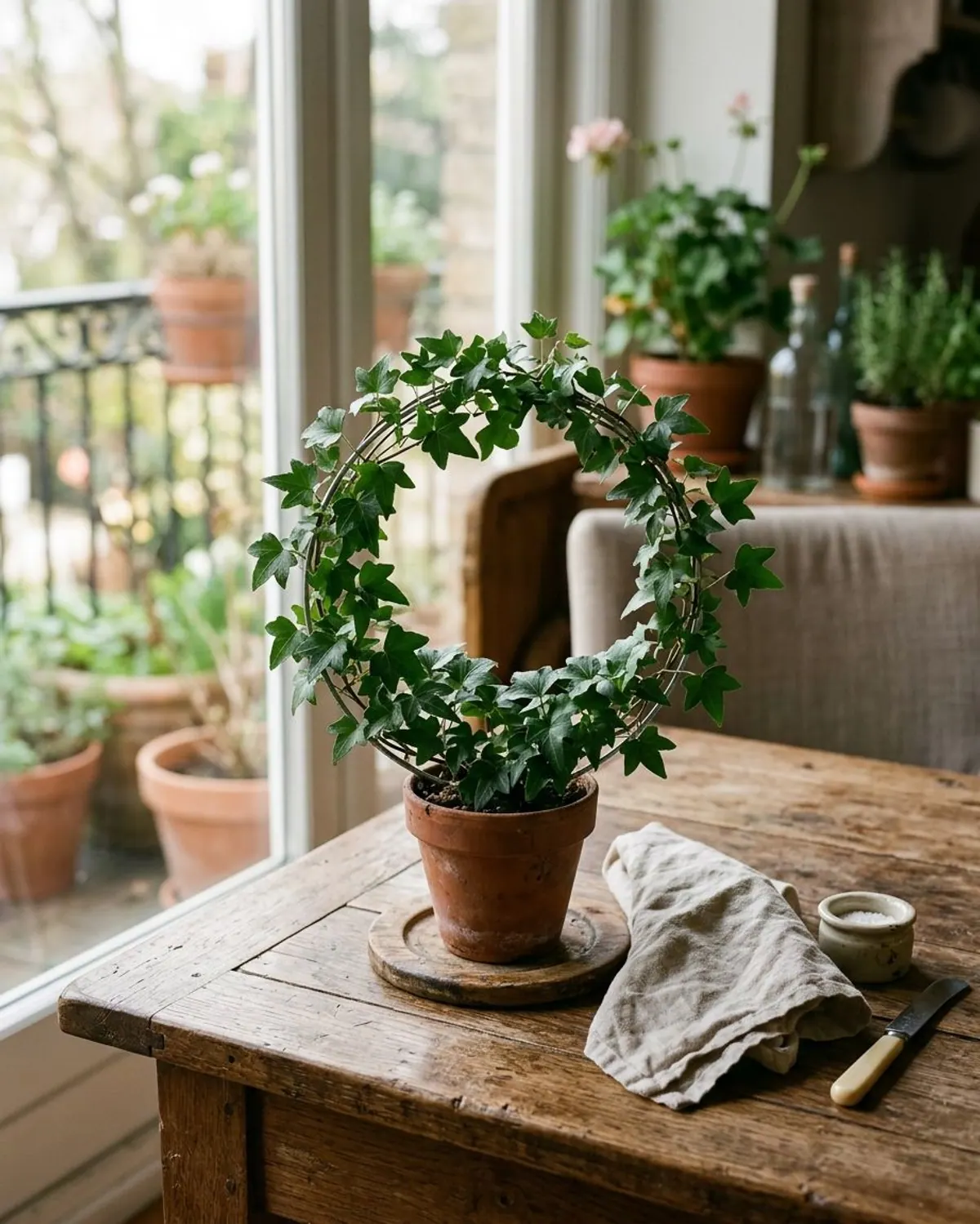
Pet tag: toxic to cats and dogs (ASPCA); the leaves are more toxic than the berries
Size: Tabletop, 12 to 18 inches.
Light: Bright, indirect, on the cool side.
Ivy trained over a wreath or cone frame becomes living decor that you keep all year. Trim stray shoots and tuck them back into the frame each week. It likes a cool room and evenly moist soil, and spider mites show up in hot dry air.
- Rinse the plant in the shower once a month to keep mites away.
16Christmas rose (hellebore)
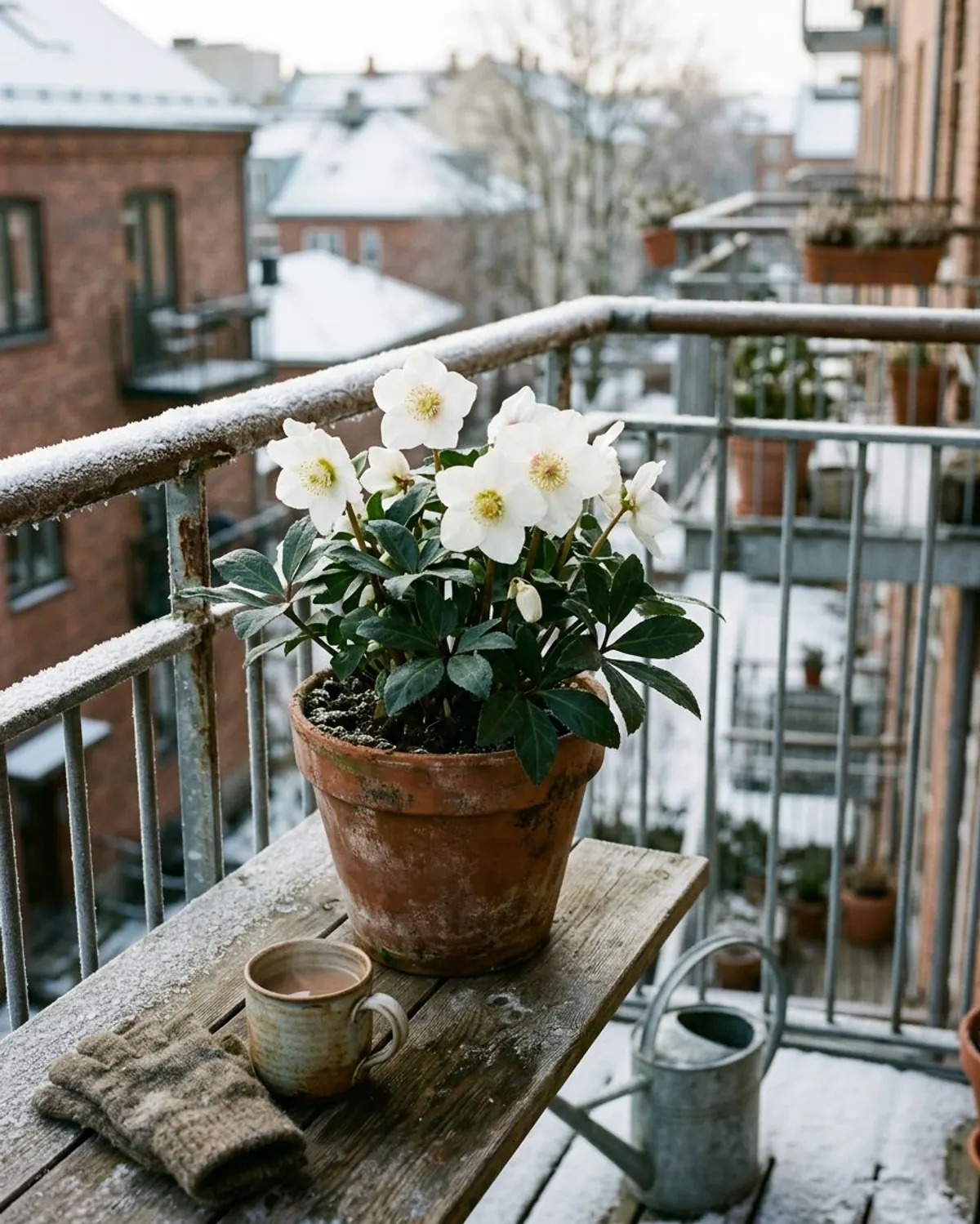
Pet tag: toxic to cats and dogs (ASPCA)
Size: Small, 12 inches.
Light: Bright and cold; best outdoors.
White winter flowers on a hardy perennial, sold in pots at Christmas. It is an outdoor plant at heart: bring it inside for a few days for display, keep it in the coolest spot, then set it back on the balcony. Plant it in a shady garden spot or a large container in spring.
- Wear gloves when you handle hellebores; the sap can irritate skin.
Two to skip in a home with pets
Jerusalem cherry (winter cherry): the orange-red berries look festive but the ASPCA lists the plant as toxic, and the berries tempt children too. Leave it at the store if anyone at home chews plants.
Mistletoe: usually sold as cut sprigs rather than a pot plant. It is toxic to pets, and Penn State Extension warns it can cause vomiting, low blood pressure and a slow heart rate. If you hang it, hang it high and use an artificial sprig in a pet home.
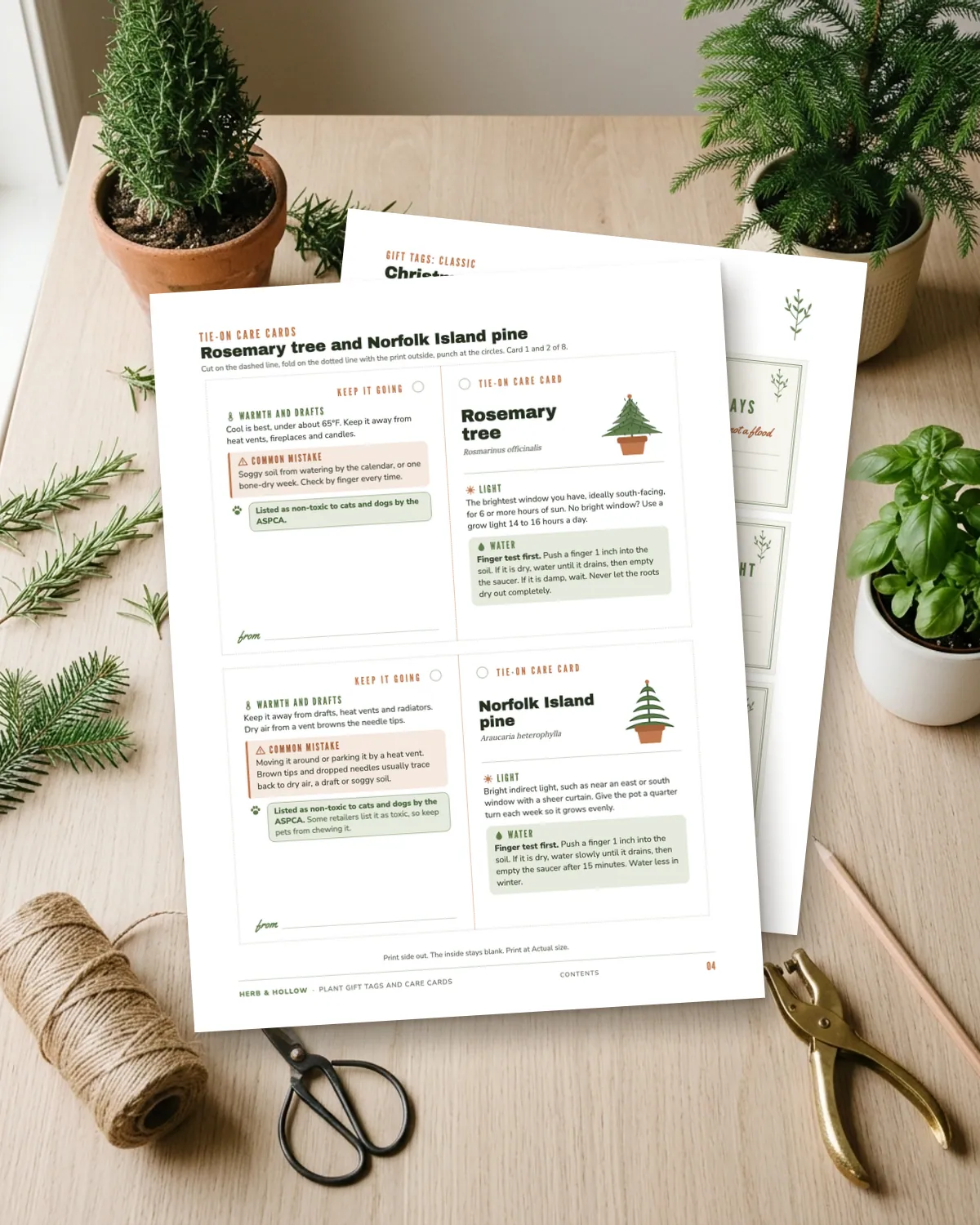
Gifting a plant to someone with a cat or a dog means giving them the ASPCA listing and the care steps along with it. If you are giving one of the non-toxic plants above, our guide to wrapping a plant as a gift in winter keeps the pot dry and the leaves in open air on the trip, and the Plant Gift Tags and Care Cards ($5) give the receiver the light, water and pet lines on a tie-on card. Giving to a teacher before winter break? See teacher Christmas gift plants that survive winter break, which has a free thank-you tag.
Christmas plant pot ideas for small spaces
A grocery store plant in a plastic pot and foil looks instantly better in the right container. These ideas work on a sill, a shelf or a small table and keep the drainage you need.
Christmas plant pot ideas
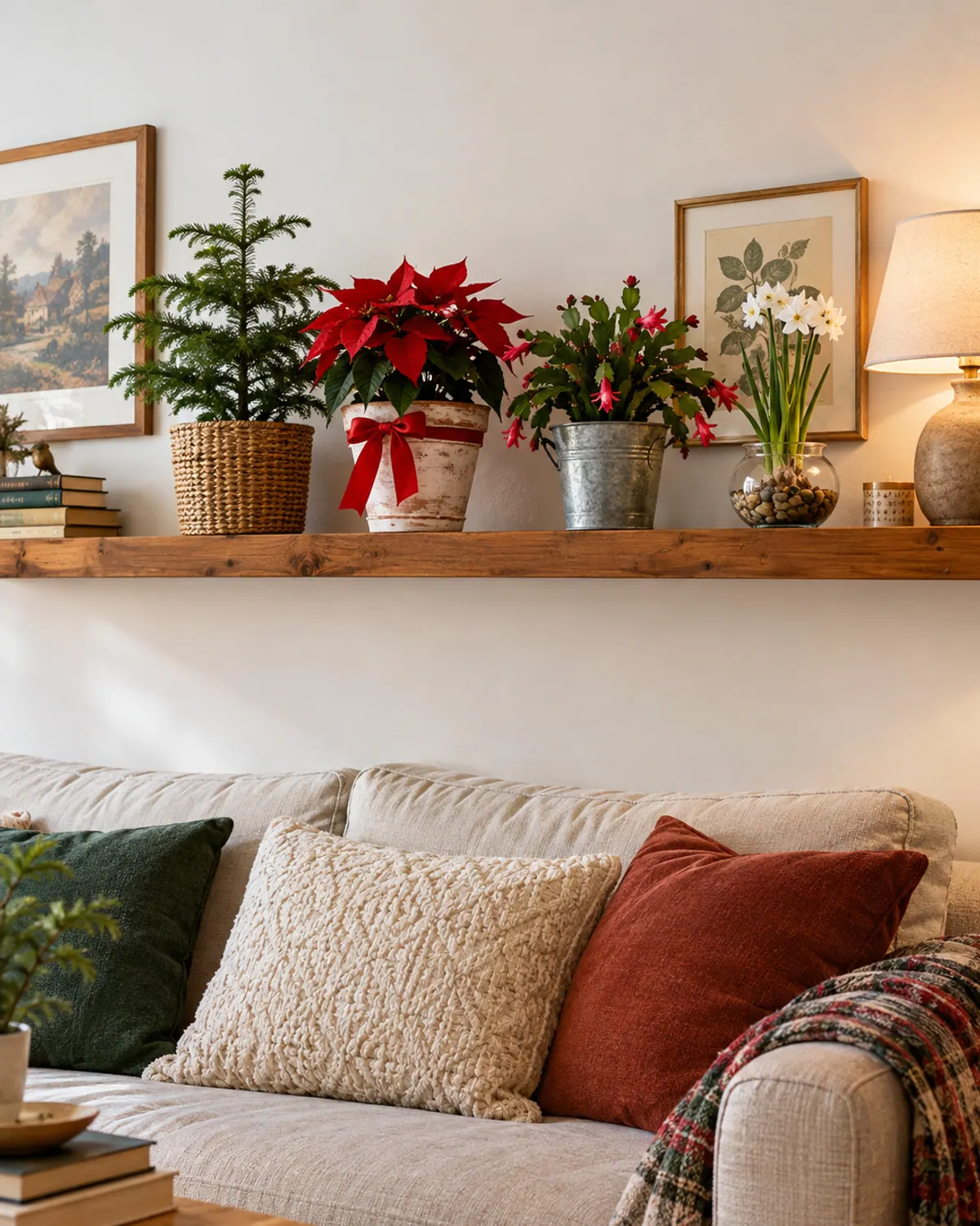
If you want more pet safe houseplants beyond the holidays, our pet-safe houseplants list has more options for every light level. For gift ideas beyond plants, see our gifts for small-space gardeners.
Helpful extras for holiday plants
-
Ceramic cachepot set
Typically $20 to $35
Hides nursery pots and foil; remember to empty them after watering.
Check price on Amazon for Ceramic cachepot set -
Tall plant stand
Typically $20 to $40
Lifts toxic bloomers above a cat or dog.
Check price on Amazon for Tall plant stand -
Small LED grow light with timer
Typically $20 to $35
Keeps a rosemary tree or orchid going in a dim apartment.
Check price on Amazon for Small LED grow light with timer
The Indoor Winter Herb Garden Kit includes a window chooser and a light table with ASPCA pet flags, handy if you are fitting a rosemary tree into the same window as your herbs.
Keeping several of these alive past January is mostly about remembering which one wants water when. The Houseplant Care Tracker ($4) has a plant inventory, a window and light map and a watering and feeding log, so each plant on your shelf has its own schedule.
If you also grow herbs, the Herb Garden Binder ($25) puts planning, sowing, overwintering, drying and labeling in one place, and the code HERB20 takes 20% off at checkout.
Frequently asked questions
What are the most popular Christmas plants?
Poinsettia, Christmas cactus, amaryllis, paperwhites, Norfolk Island pine, rosemary trees and cyclamen are the plants most often sold for the holidays.
Which Christmas plants are safe for cats and dogs?
The ASPCA lists Christmas cactus, Norfolk Island pine, rosemary, moth orchids, African violets, blushing bromeliads and Boston ferns as non-toxic to cats and dogs.
Is a Christmas cactus toxic to cats?
No. The ASPCA lists Christmas cactus as non-toxic to cats and dogs, although eating any plant can cause a mild upset stomach.
What Christmas plant is good for a small apartment?
A Christmas cactus, African violets, a small Norfolk Island pine or a rosemary tree fit a windowsill or side table and keep going after the holidays.
What is a good Christmas plant gift?
A Christmas cactus or a moth orchid makes an easy, pet safe gift that lasts for years. An amaryllis bulb kit is a fun gift for someone without pets.
Save it for later
Pin this to your Houseplants board so it's there when you need it.
Save to Pinterest