This post contains affiliate links. As an Amazon Associate we earn from qualifying purchases, at no extra cost to you. Read our disclosure.
Safety first: Herbs can be powerful. If you are pregnant, nursing, take medication or have a health condition, check with your doctor or pharmacist first. Please read our herbal & garden safety notes before you start.
Key takeaways
- Soft yellow leaf: almost always overwatering; stop watering and check the roots.
- One old outer leaf yellowing: normal aging; cut it at the soil line.
- Water every 2 to 6 weeks, only when the whole pot is dry, and even less in winter.
- Cactus mix, a drainage hole and warmth above about 50°F prevent most problems.
- Pets: snake plants are toxic to cats and dogs per the ASPCA.
In this post23 sections
- Snake plant yellow leaves: the 4-question diagnosis
- Tips 1 to 4: reading the yellow leaf
- 1. Soft and yellow at the base means too much water
- 2. One old outer leaf turning yellow is normal
- 3. Bleached patches on the window side are sunburn
- 4. Translucent, mushy patches after a cold snap are cold damage
- Tips 5 and 6: watering every 2 to 6 weeks, and the weekly myth
- 5. Water only when the whole pot is dry
- 6. Water even less in winter
- Tips 7 and 8: light, soil and pot
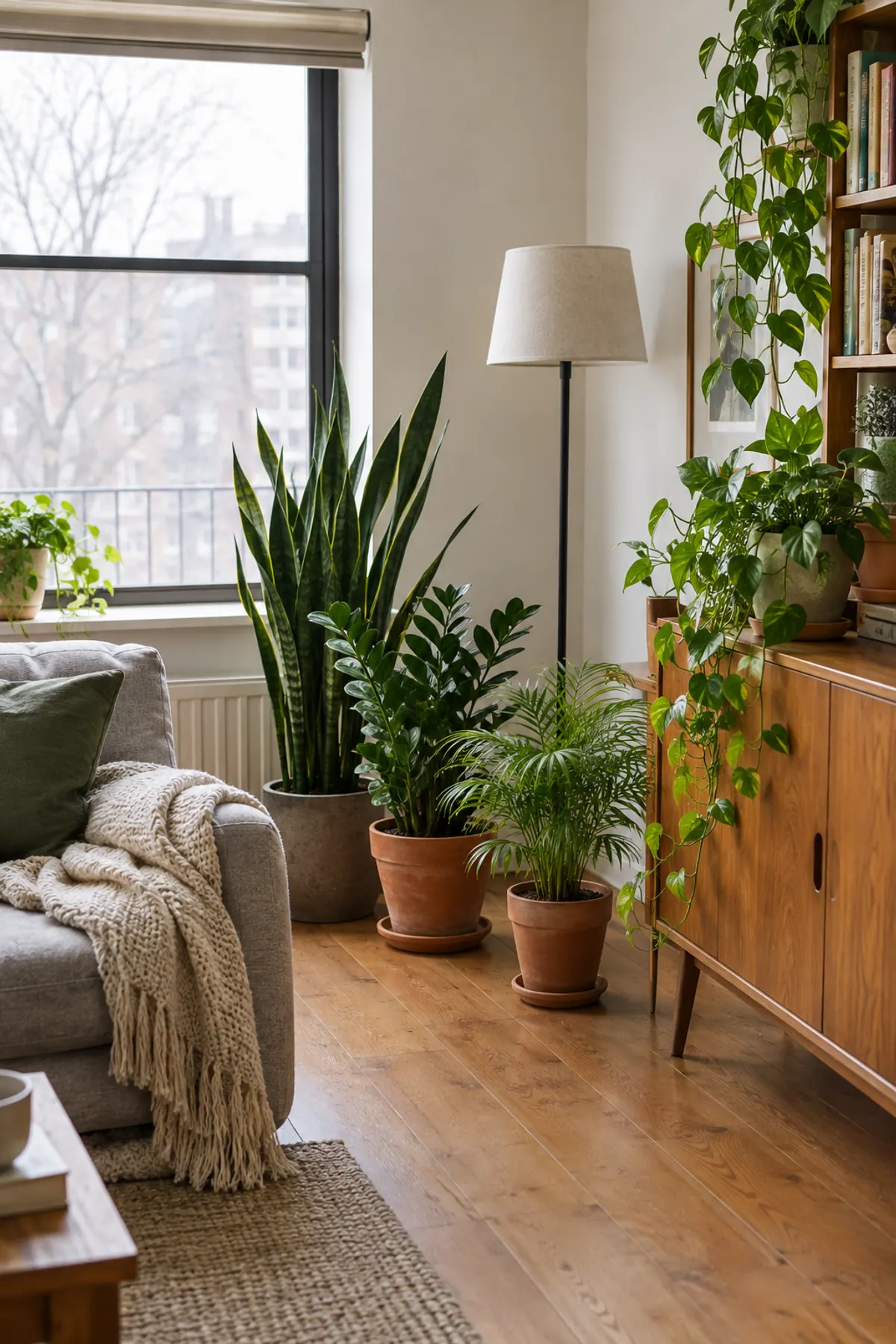
- 7. Low light is fine, bright indirect light is better
- 8. Use cactus mix in a terracotta pot with a drainage hole
- Tip 9: cold drafts, radiators and winter stress
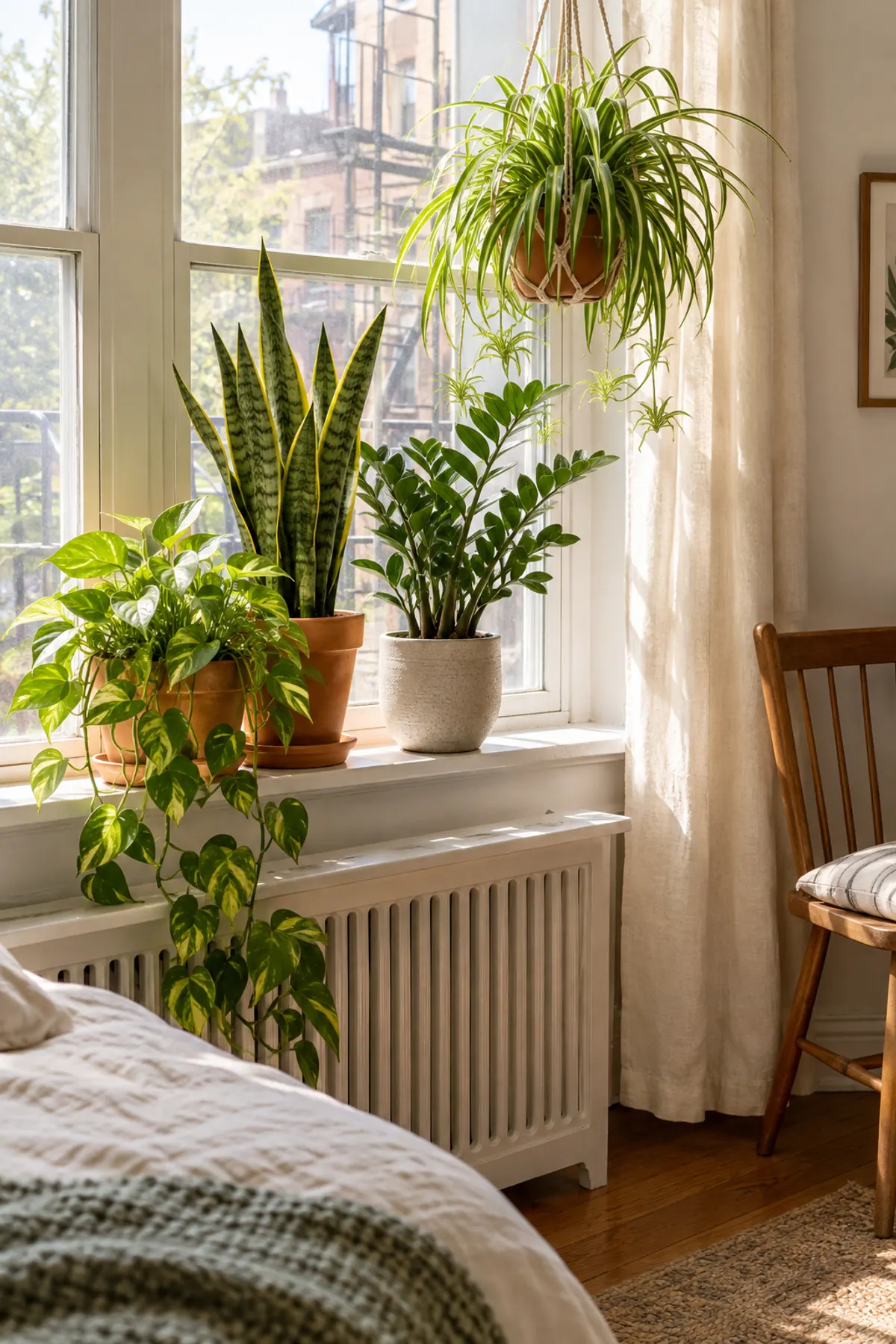
- 9. Keep it between cold glass and the radiator
- Tips 10 to 12: fertilizer, pests and root-bound plants
- 10. Feed lightly, and never in winter
- 11. Wipe the leaves and check for pests
- 12. Divide a root-bound plant
- Tip 13: Moonshine, bird's nest and cylindrical snake plants
- Propagation: leaf cuttings in water or soil
- Snake plant care card
- Snake plant care shopping list
- FAQ
Snake plant yellow leaves: the 4-question diagnosis
Before changing anything, look at the yellow leaf and answer four questions. Is it soft or firm? Is it an old outer leaf or one from the center? Is the yellow on the side facing a sunny window? Has the plant been near cold glass or a door? The answers point to one cause almost every time.
| What you see | Likely cause | Fix |
|---|---|---|
| Soft, mushy yellow leaf, base collapsing, soil damp | Overwatering and root rot | Stop watering, check roots, repot in dry cactus mix |
| One old outer leaf yellows slowly, stays firm | Normal aging | Cut it at the soil line; nothing else to do |
| Pale, bleached or tan patches on the window side | Sunburn | Move back from hot direct sun |
| Translucent, water-soaked patches after cold weather | Cold damage | Move away from cold glass; keep above 50°F |
| Yellowing plus pale new growth after years in one pot | Root-bound or hungry | Divide or repot; feed lightly in spring |
| Yellow speckles, fine webbing or white fluff | Pests | Wipe leaves, isolate, treat |
A yellow leaf will not turn green again. Once you have fixed the cause, cut fully yellow or mushy leaves off at the soil line with clean snips. Leaves that are only partly damaged can stay; the plant keeps using their green part. A cut leaf does not regrow from the tip, but new leaves come up from the roots.
Tips 1 to 4: reading the yellow leaf
1Soft and yellow at the base means too much water
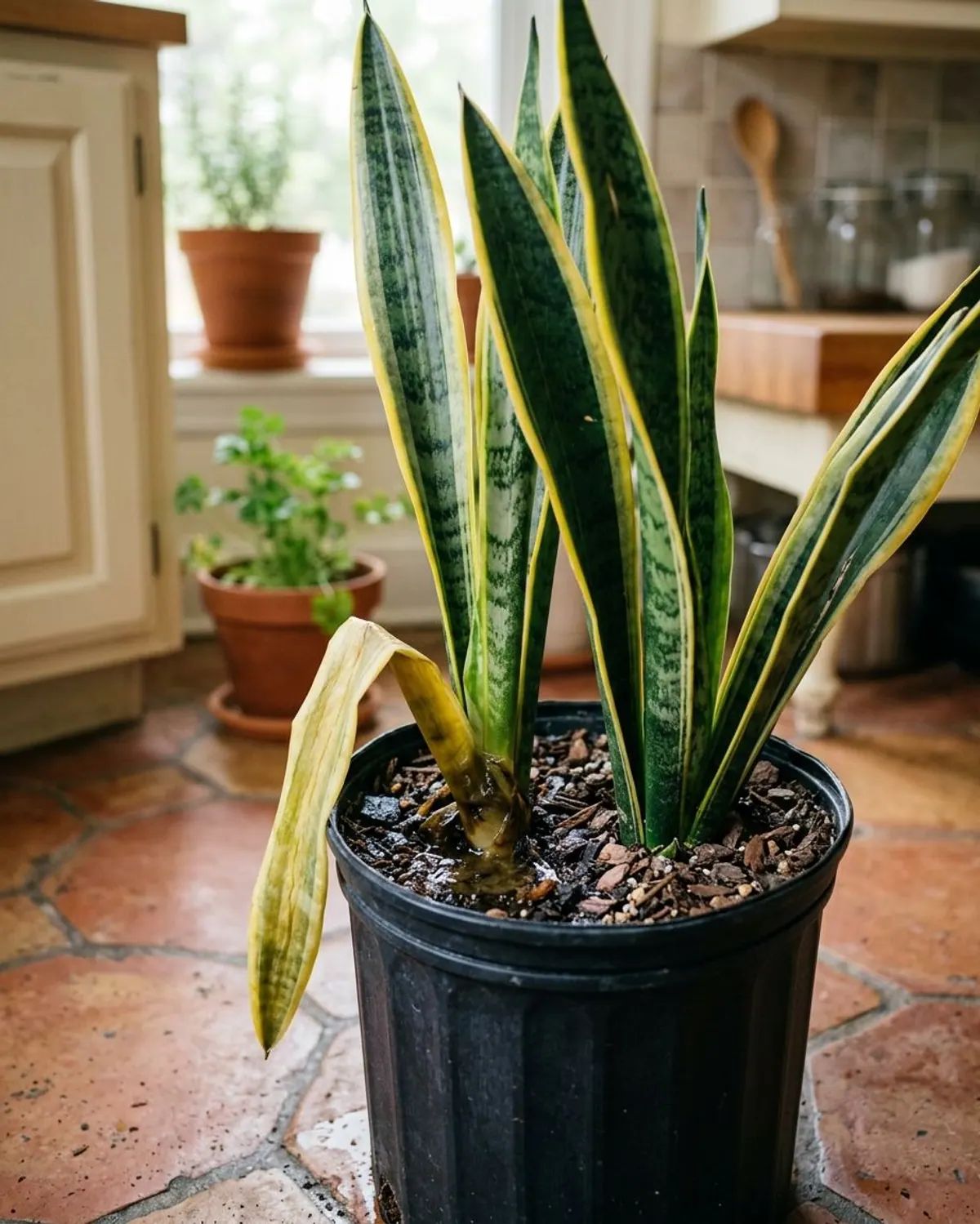
Sign: a yellow leaf that feels soft or squishy, often bending over at the soil.
Cause: roots sitting in wet soil, usually in a dim room in winter.
Fix: stop watering, slide the plant out and check the roots.
Overwatering is the most common reason snake plant leaves turn yellow. Healthy roots are firm and pale; rotted ones are brown, soft and smell sour. Cut away the rotted roots and any mushy leaves with clean snips, let the plant sit out of the pot for a day so the cuts dry, then repot in fresh, dry cactus mix in a pot with a drainage hole. Do not water again for about a week.
- If the rot has reached most of the roots, save a healthy leaf as a cutting (see the propagation section). That is a backup plant if the rest fails.
Drains fast so roots never sit wet.
2One old outer leaf turning yellow is normal
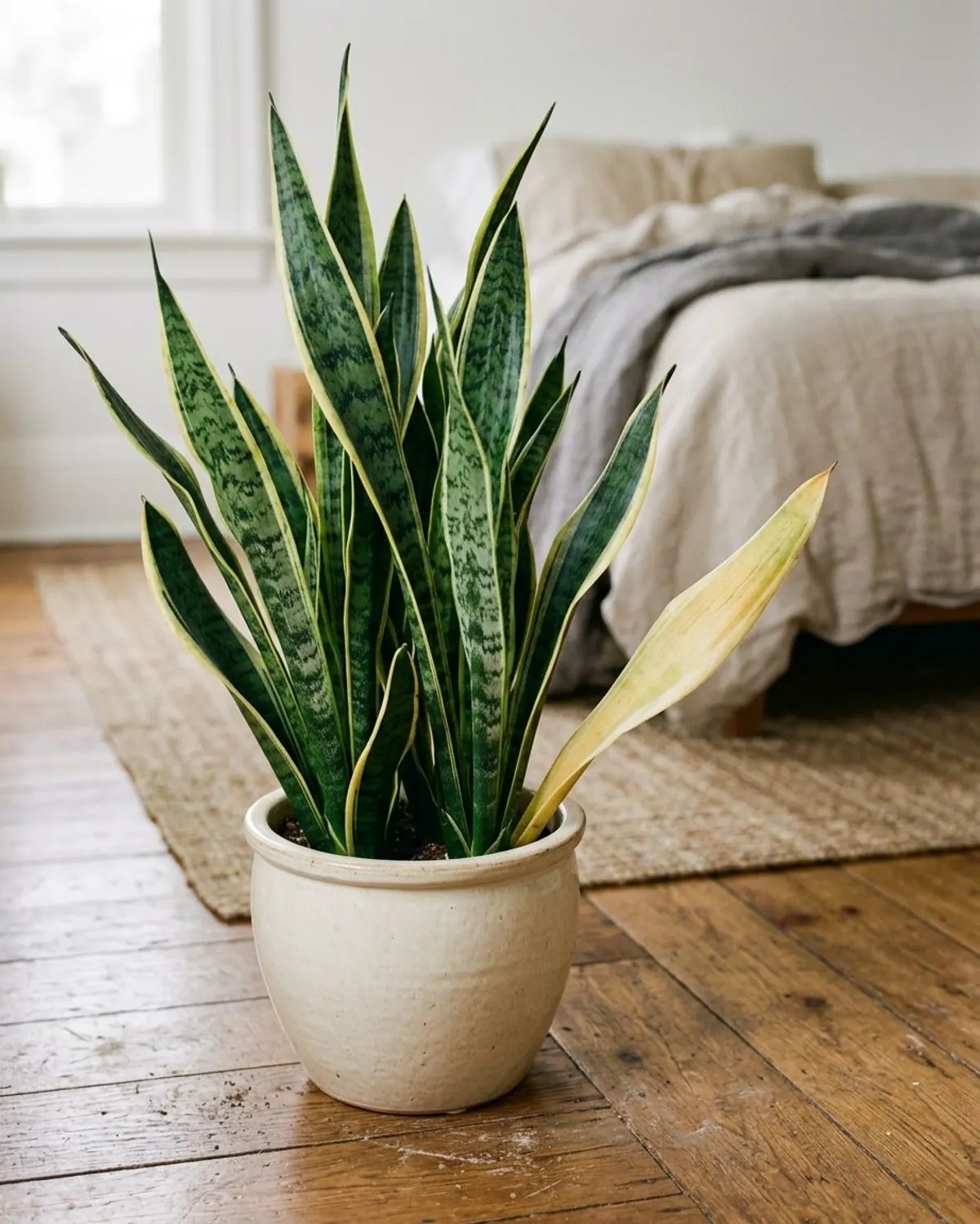
Sign: one outer, older leaf fades evenly to yellow over weeks, and stays firm.
Cause: natural aging.
Fix: cut it at the soil line once it is mostly yellow.
Every snake plant retires an old leaf now and then. If the rest of the plant is green and firm and only the oldest leaf is yellowing, there is nothing to fix. The concern is when several leaves yellow at once, or when new leaves in the center turn yellow; that points back to water or cold.
- Note the date in a care log when you remove an old leaf. If it happens more than a few times a year, look at watering.
3Bleached patches on the window side are sunburn
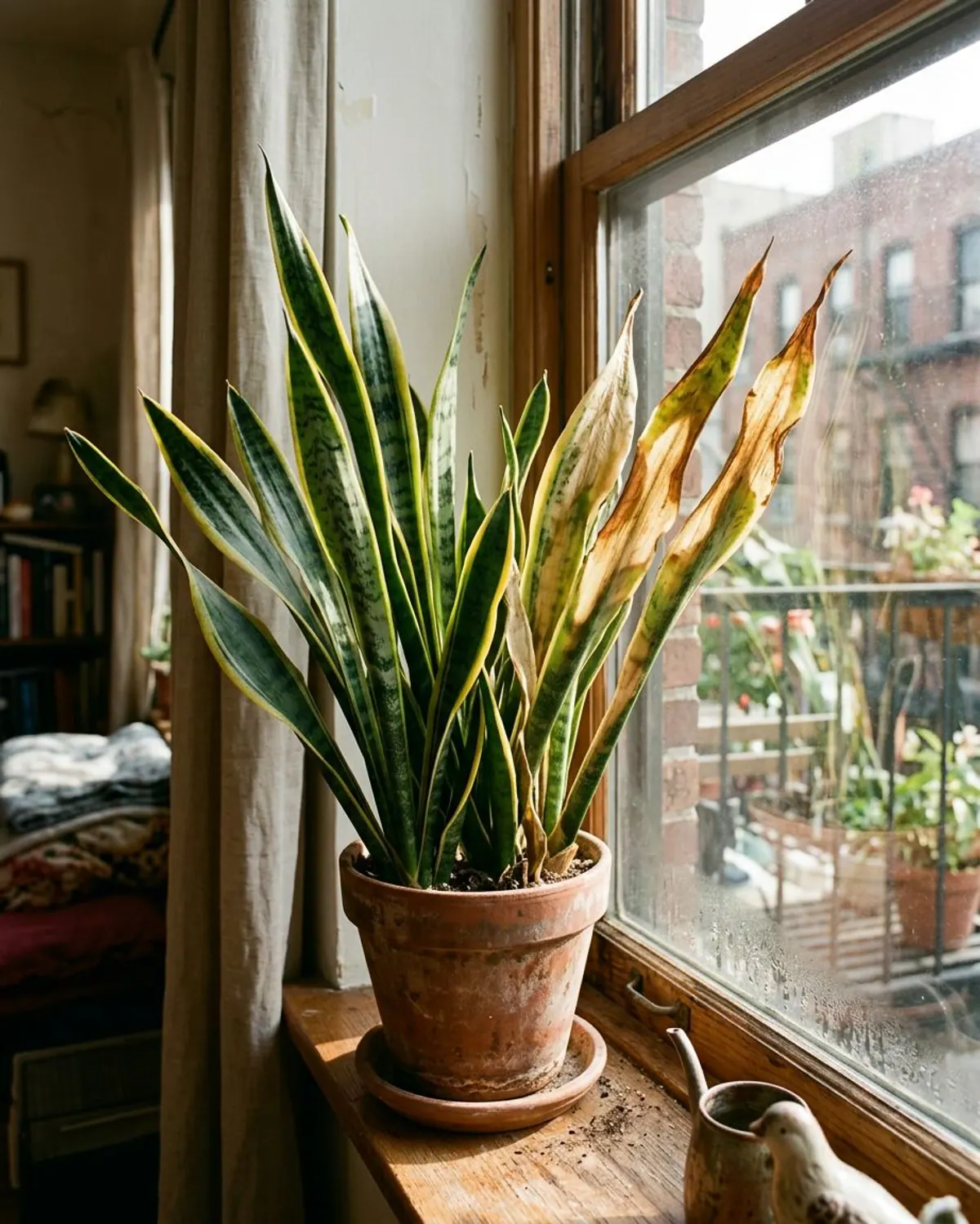
Sign: pale, washed-out or tan patches, sometimes with crisp brown edges, on leaves facing the glass.
Cause: hot direct afternoon sun, often after a move from a dim spot.
Fix: move the plant a few feet back or behind a sheer curtain.
Snake plants handle more light than most low-light plants, but a sudden jump from a dark corner to a hot south or west window can scorch them. The burned patches stay, so trim the worst leaves if they bother you and let new growth replace them.
- Move a plant toward brighter light over a week or two rather than all at once.
4Translucent, mushy patches after a cold snap are cold damage
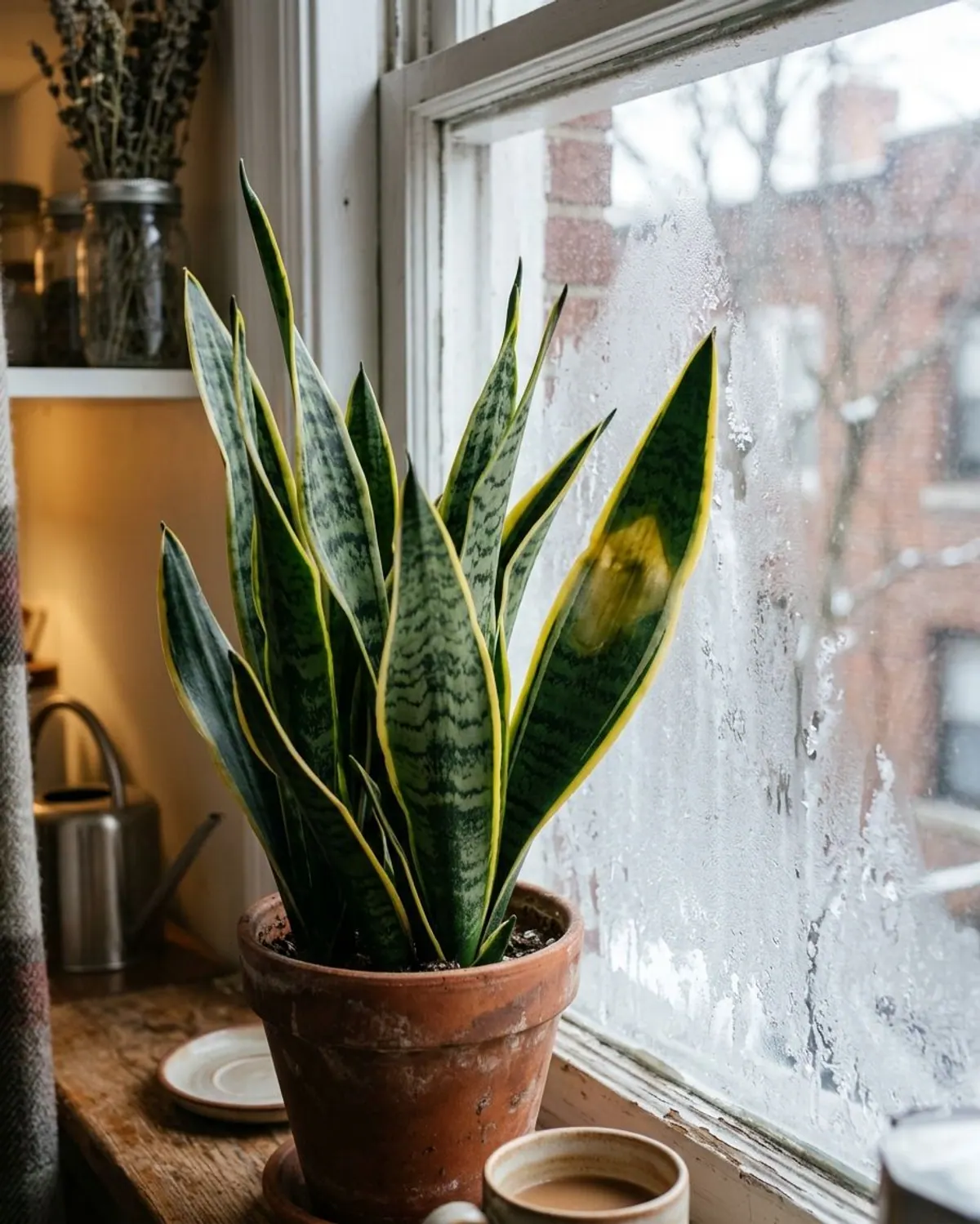
Sign: soft, water-soaked or see-through patches that turn yellow, often where a leaf touched the glass.
Cause: temperatures below about 50°F, cold glass or a drafty door.
Fix: move it away from the window and drafts; cut damaged leaves.
Snake plants are tropical and take damage when they get cold, and cold plus wet soil is the fastest way to lose one. In winter, a sill next to single-pane glass can be much colder than the room. Our winter houseplant care tips cover drafts and heating for the whole collection.
- Check the sill at night with your hand on the glass. If it feels cold, pull the plant back a foot or two.
Tips 5 and 6: watering every 2 to 6 weeks, and the weekly myth
The most repeated snake plant care myth is to water it weekly. A weekly schedule is what rots most of them. Snake plants store water in their thick leaves, so they want the soil to dry out completely, then a thorough drink, then a long wait.
5Water only when the whole pot is dry
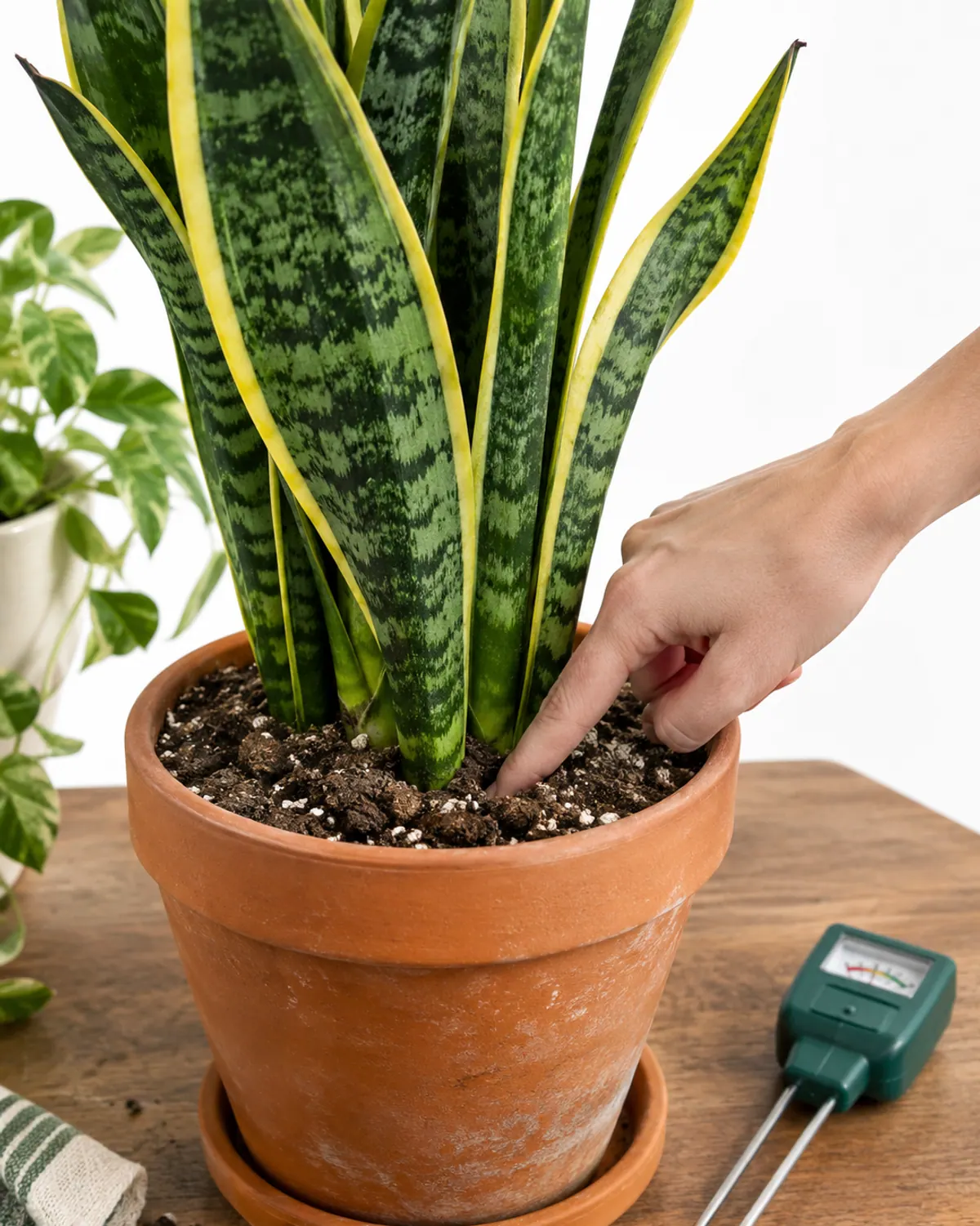
How often: about every 2 to 6 weeks, depending on light, warmth and pot size.
Test: the soil is dry most of the way down, not just on top.
Then: water until it drains from the hole, and empty the saucer.
Push a finger in as deep as it goes, or use a moisture meter that reads lower in the pot. If there is any dampness, wait. A plant in a bright warm room dries faster than one in a dim corner, which is why no fixed schedule works for everyone.
- Lift the pot after watering and again when dry. The weight difference becomes the quickest test.
Shows when the whole pot is dry, not just the top.
6Water even less in winter
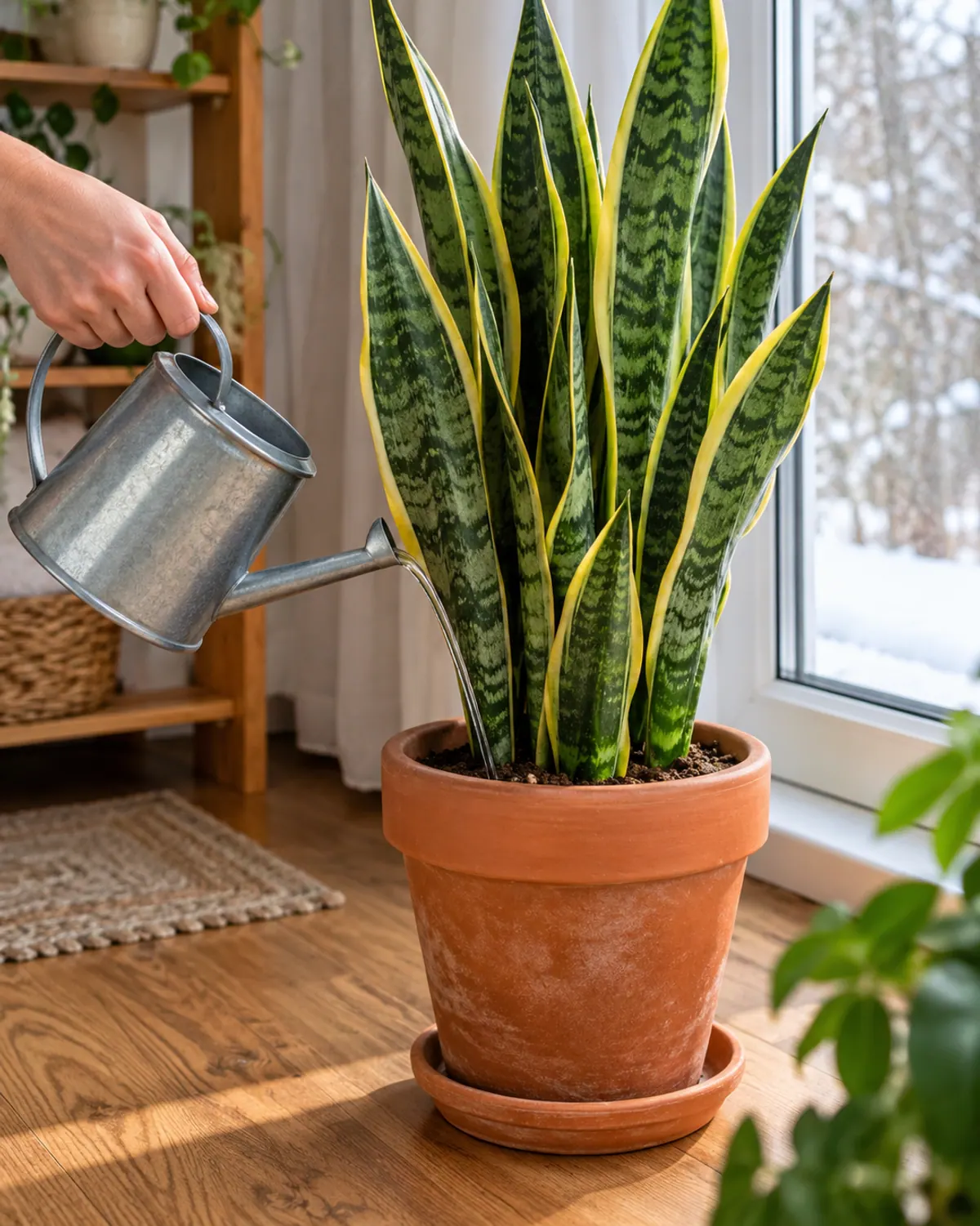
Winter rhythm: often once a month or less in a dim, cool apartment.
Pour: at the soil edge, not into the center of the leaves.
Skip: misting; it does nothing useful for a snake plant.
Growth slows in the short days, so the plant uses little water. Overwatering in winter, when the soil stays wet for weeks, is behind most of the yellow leaves people see in January. When in doubt, wait another week.
- Write the date on a small tag in the pot, or keep it in a log. Snake plants go so long between drinks that it is easy to forget when you last watered.
Tips 7 and 8: light, soil and pot
7Low light is fine, bright indirect light is better
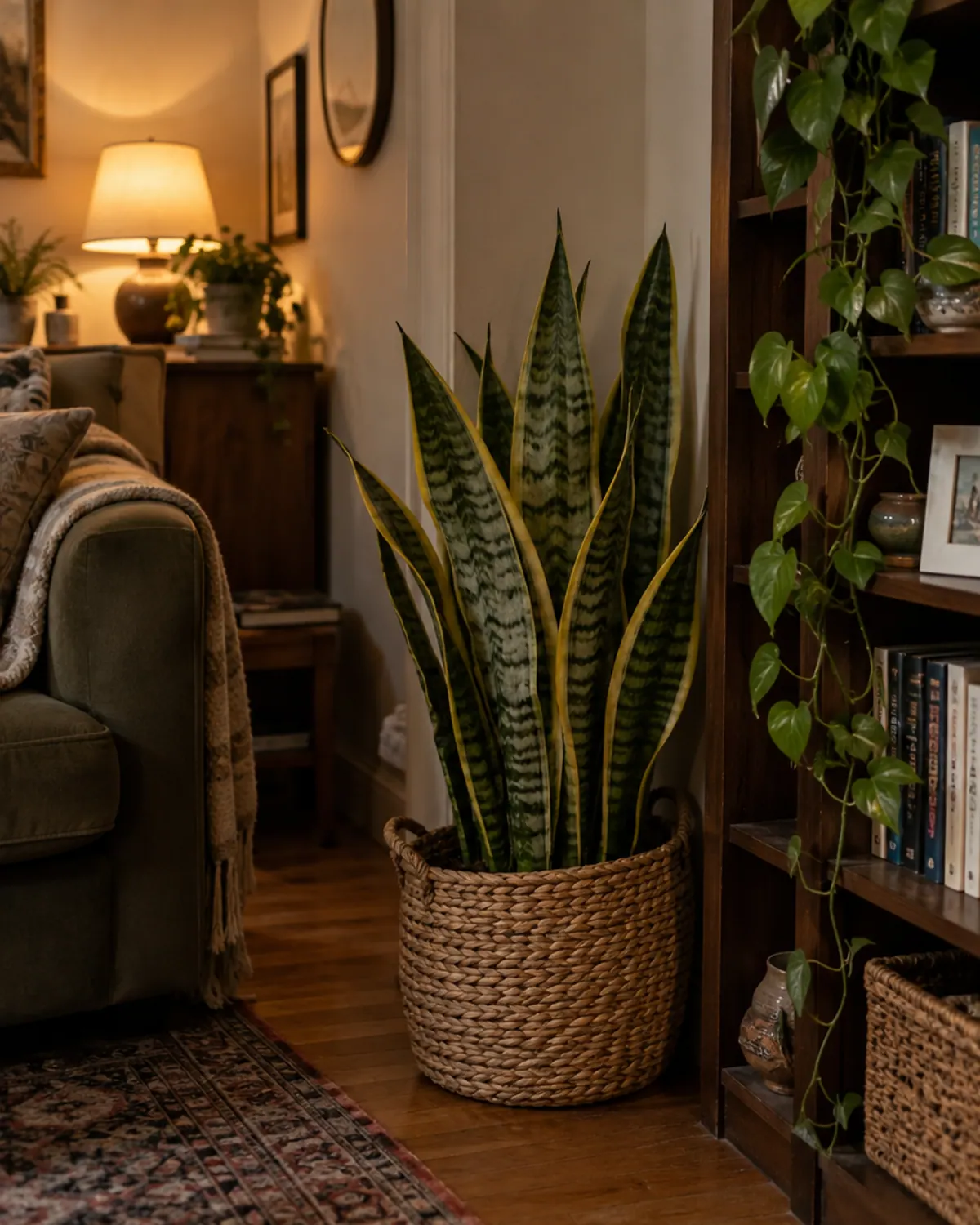
Grows best: bright, indirect light near a window.
Tolerates: low light, several feet from a window, with slower growth.
Winter tip: move it closer to the window, but not touching cold glass.
Snake plants are on every low-light list because they survive dim rooms, but they barely grow there and need even less water. In a dark apartment, a spot within a few feet of the brightest window keeps them firm and upright. Our low-light houseplants for apartments guide has more plants for the dim corners.
- If leaves start to lean or flop in a dark spot, it wants more light. A clip-on grow light for part of the day helps in winter.
Adds light to a dim winter corner.
8Use cactus mix in a terracotta pot with a drainage hole
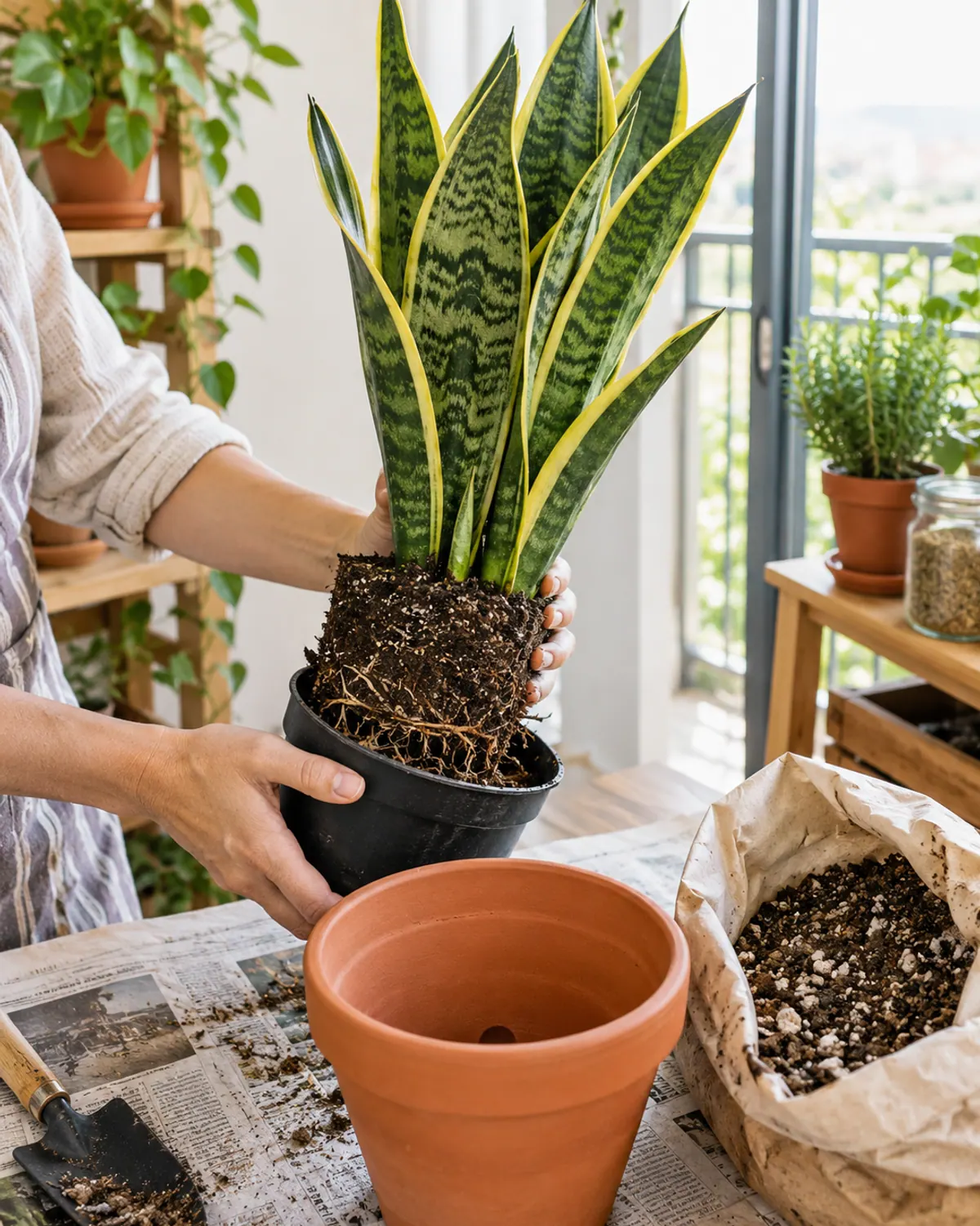
Soil: a fast-draining cactus and succulent mix, or regular potting mix with extra perlite.
Pot: terracotta or another pot with a drainage hole, only slightly wider than the roots.
Avoid: a decorative pot with no hole, unless the plant sits in a nursery pot inside it.
Dense, moisture-holding soil keeps the roots wet for weeks, and a pot much bigger than the roots holds extra wet soil the plant cannot use. Snake plants like a snug pot and usually need repotting only every few years, or when the roots crack or warp the pot.
- Choose a heavy pot. A tall snake plant in a light plastic pot tips over easily.
Clay wicks moisture away from the roots.
Tip 9: cold drafts, radiators and winter stress
9Keep it between cold glass and the radiator
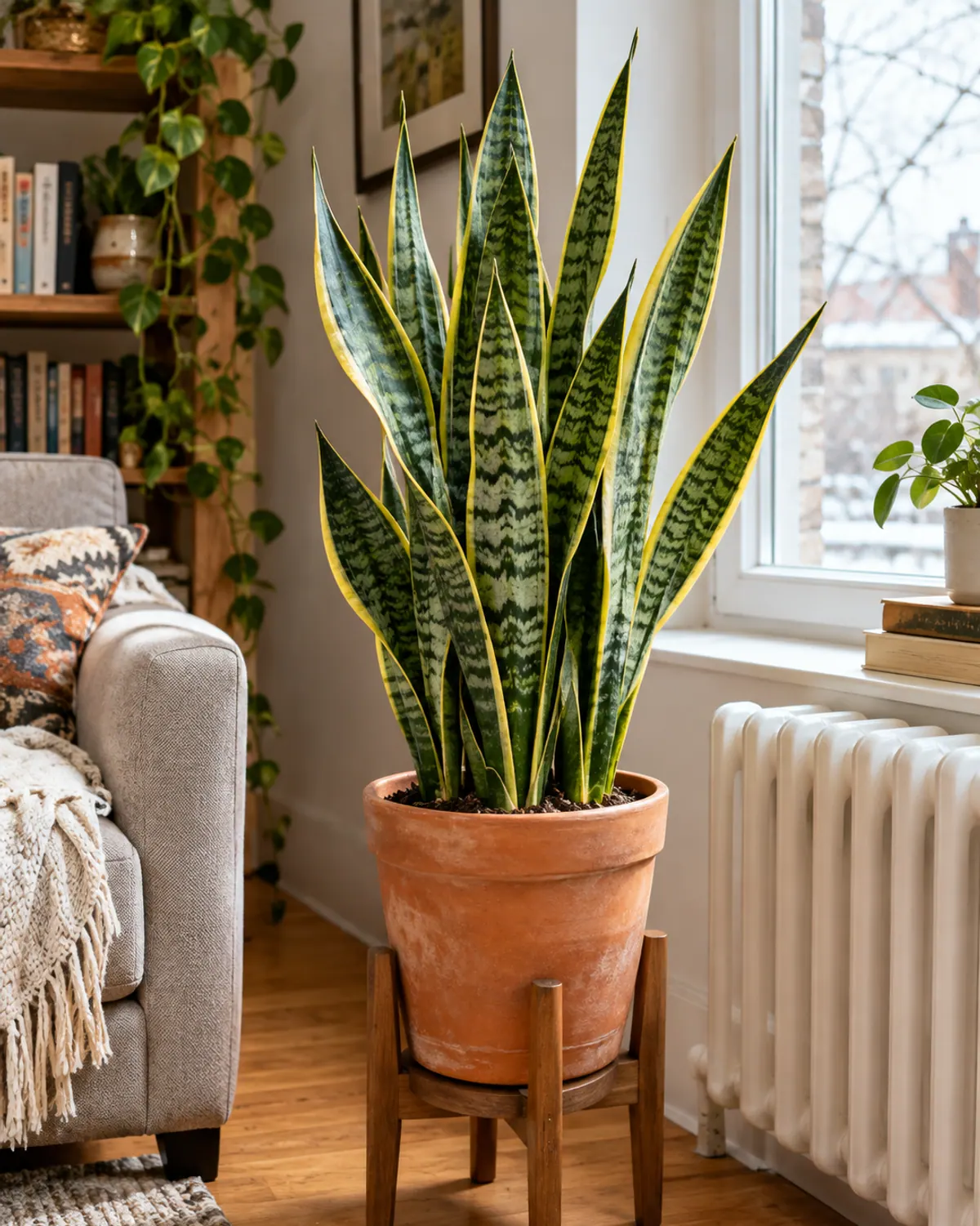
Temperature: comfortable room temperatures; keep it above about 50°F.
Avoid: touching cold windows, sitting by an outside door, or pressed against a radiator.
Humidity: ordinary indoor air is fine.
Snake plants cope well with dry heated air, which makes them easier than most houseplants in winter. The risks are the extremes: a freezing pane on one side or a hot radiator blasting the leaves on the other. A spot a few feet from each, with bright light, is the winter sweet spot.
- If you leave a window cracked for fresh air in winter, move the plant out of the draft first.
Tips 10 to 12: fertilizer, pests and root-bound plants
10Feed lightly, and never in winter
When: a few times in spring and summer.
What: a balanced houseplant fertilizer at half strength.
Never: on dry soil or in winter.
Snake plants need very little feeding. Too much fertilizer can burn the roots and cause yellow or brown leaf tips, so less is better. Water first, then feed, so the roots are not dry when the fertilizer reaches them.
- If you are unsure whether you fed it this year, skip it. A hungry snake plant is rare; an overfed one is common.
11Wipe the leaves and check for pests
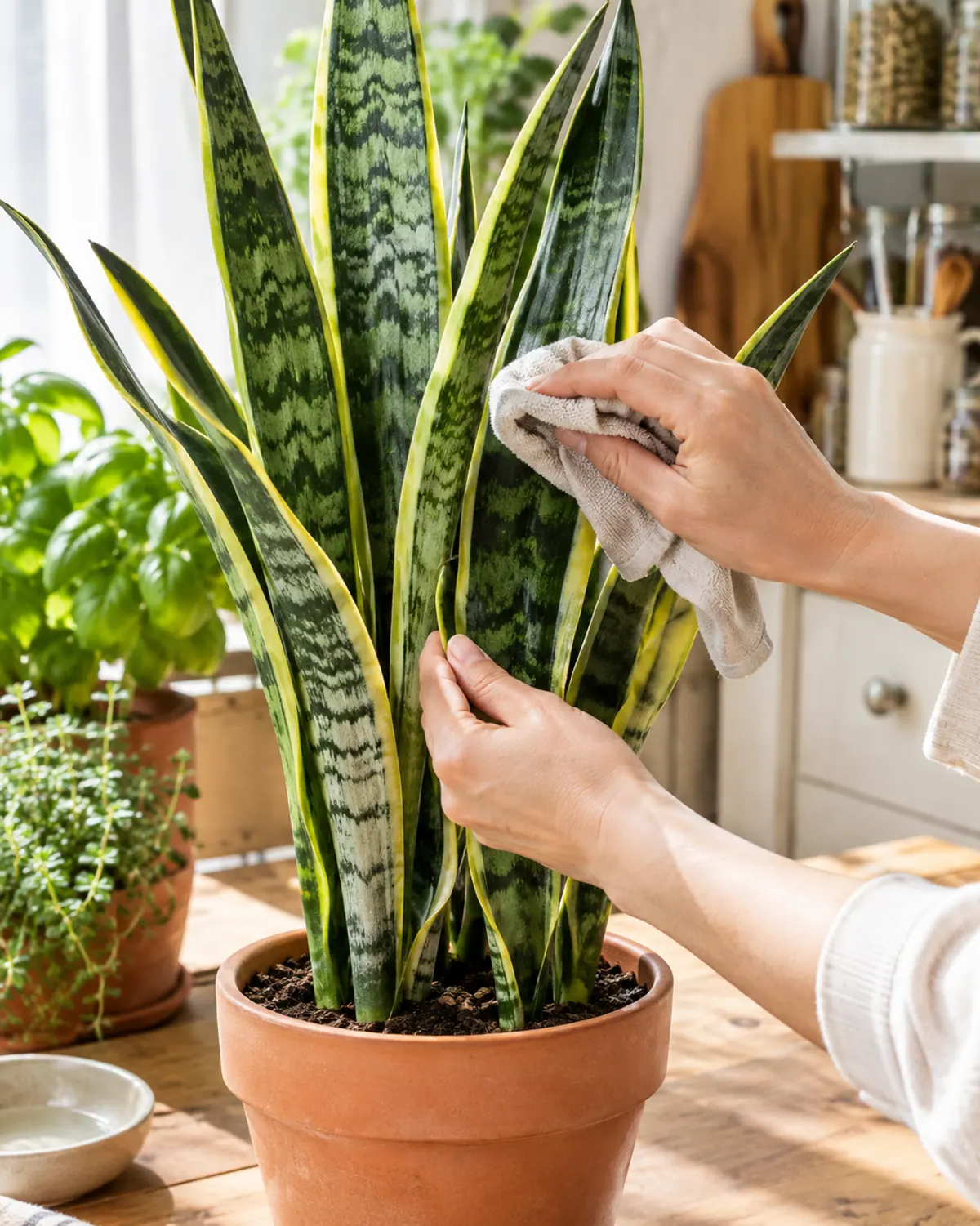
Watch for: mealybugs (white fluff at the leaf base) and spider mites (yellow speckles, fine webbing).
Fix: wipe with a damp cloth, isolate the plant, and treat with an insecticidal soap labeled for houseplants.
Routine: a dust wipe every month or two.
Snake plants rarely get pests, but mealybugs hide in the base where leaves meet. A monthly wipe removes dust that blocks light and lets you spot problems early. Follow the label on any treatment, and keep it away from pets.
- Wipe with plain water only. Leaf shine products can clog the leaf surface.
For mealybugs and spider mites.
12Divide a root-bound plant
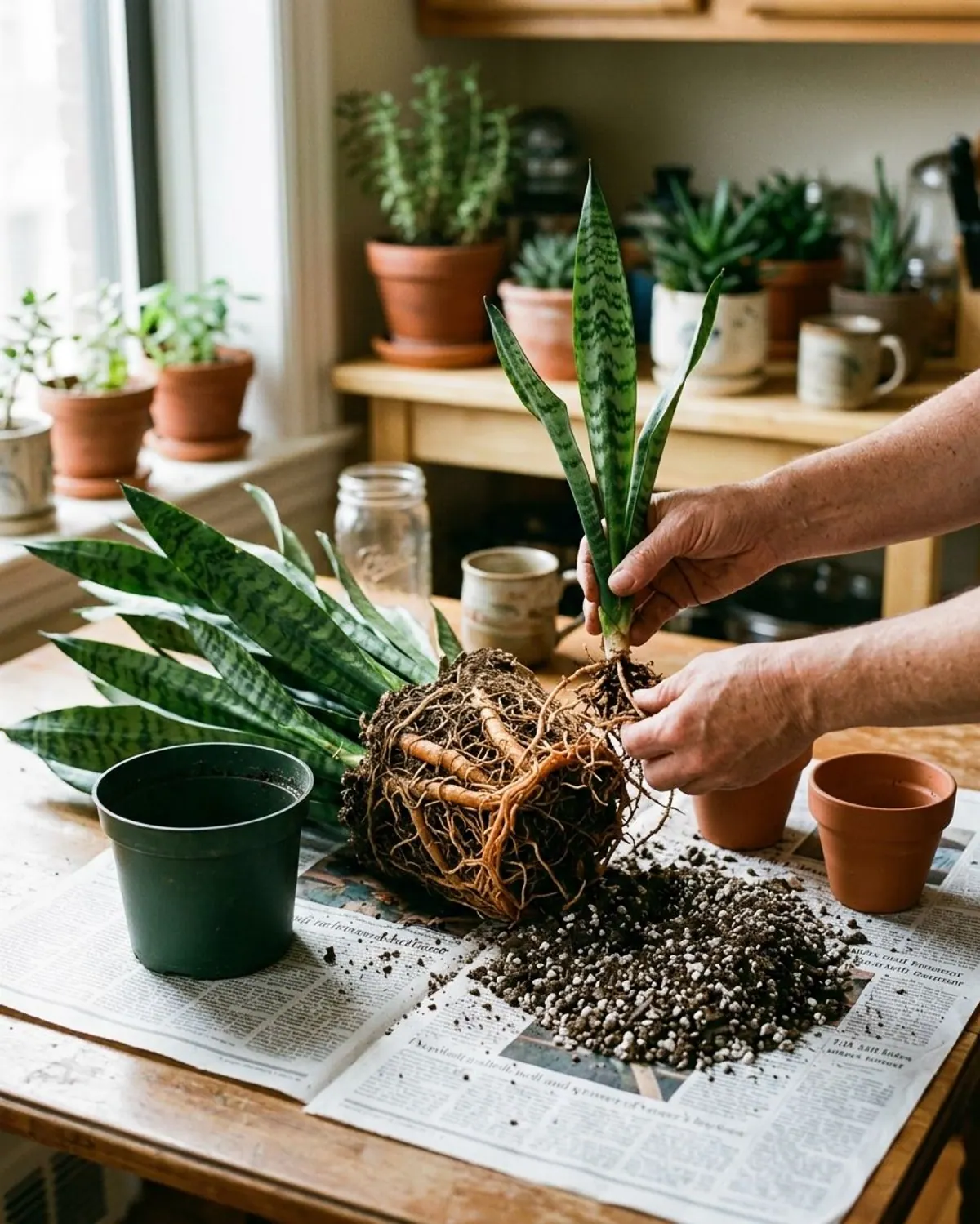
Signs: roots circling or pushing out the drainage hole, a cracked or bulging pot, water running straight through.
Fix: divide in spring or summer.
How: cut the rhizome into sections, each with leaves and roots, and pot each one.
Snake plants spread by thick underground rhizomes, and after a few years they fill the pot. Dividing them is the fastest way to get more plants, and it is the only way to keep the yellow edges on varieties like Laurentii, which lose them when grown from leaf cuttings.
- Let cut rhizomes dry for a day before potting. Then wait about a week before the first watering.
Tip 13: Moonshine, bird's nest and cylindrical snake plants
All three take the same basic care: bright indirect light, dry soil between waterings and warmth. The differences are small but they matter.
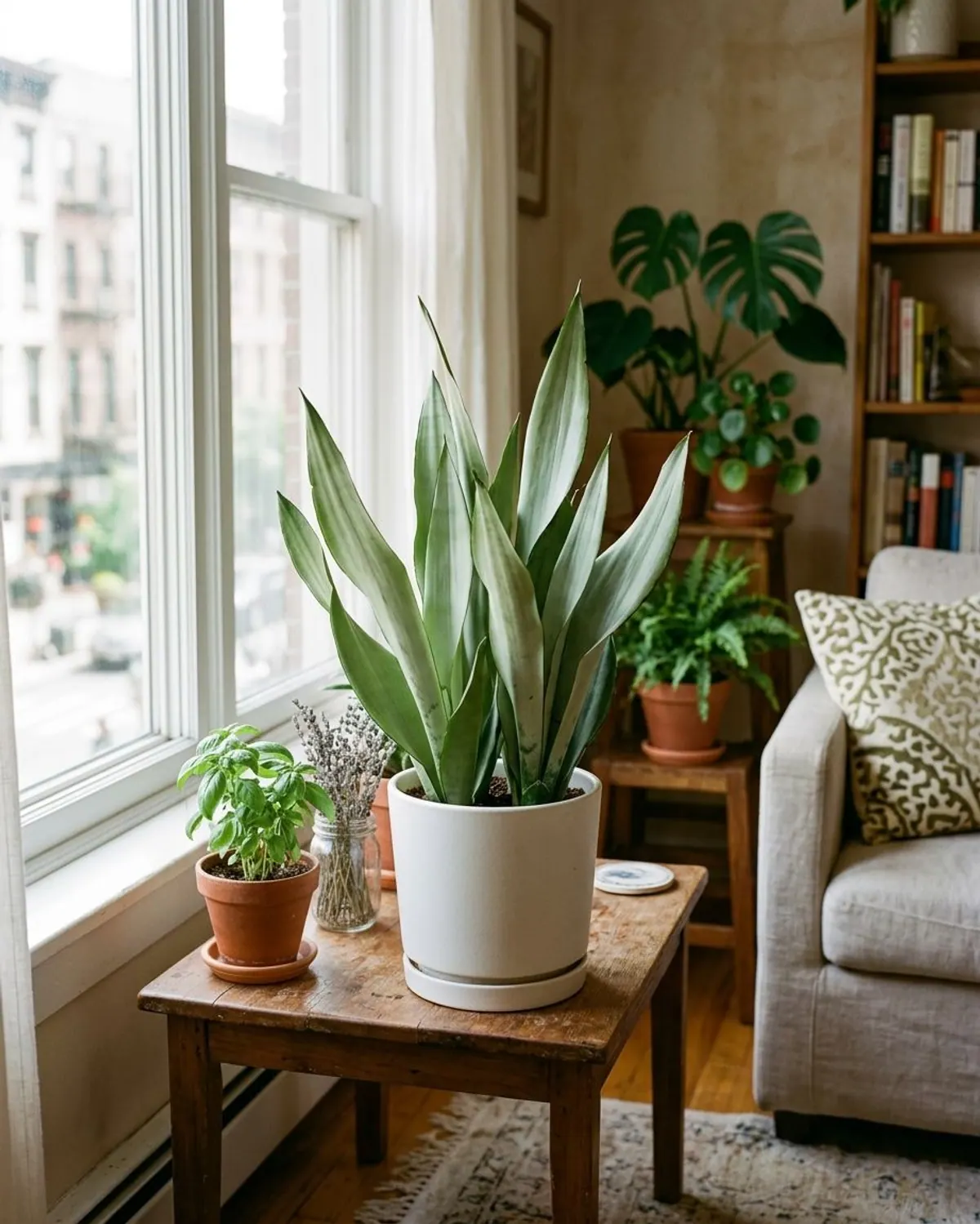
Moonshine: broad, silvery-green leaves. In low light it can turn a darker green, so it does best near a bright window.
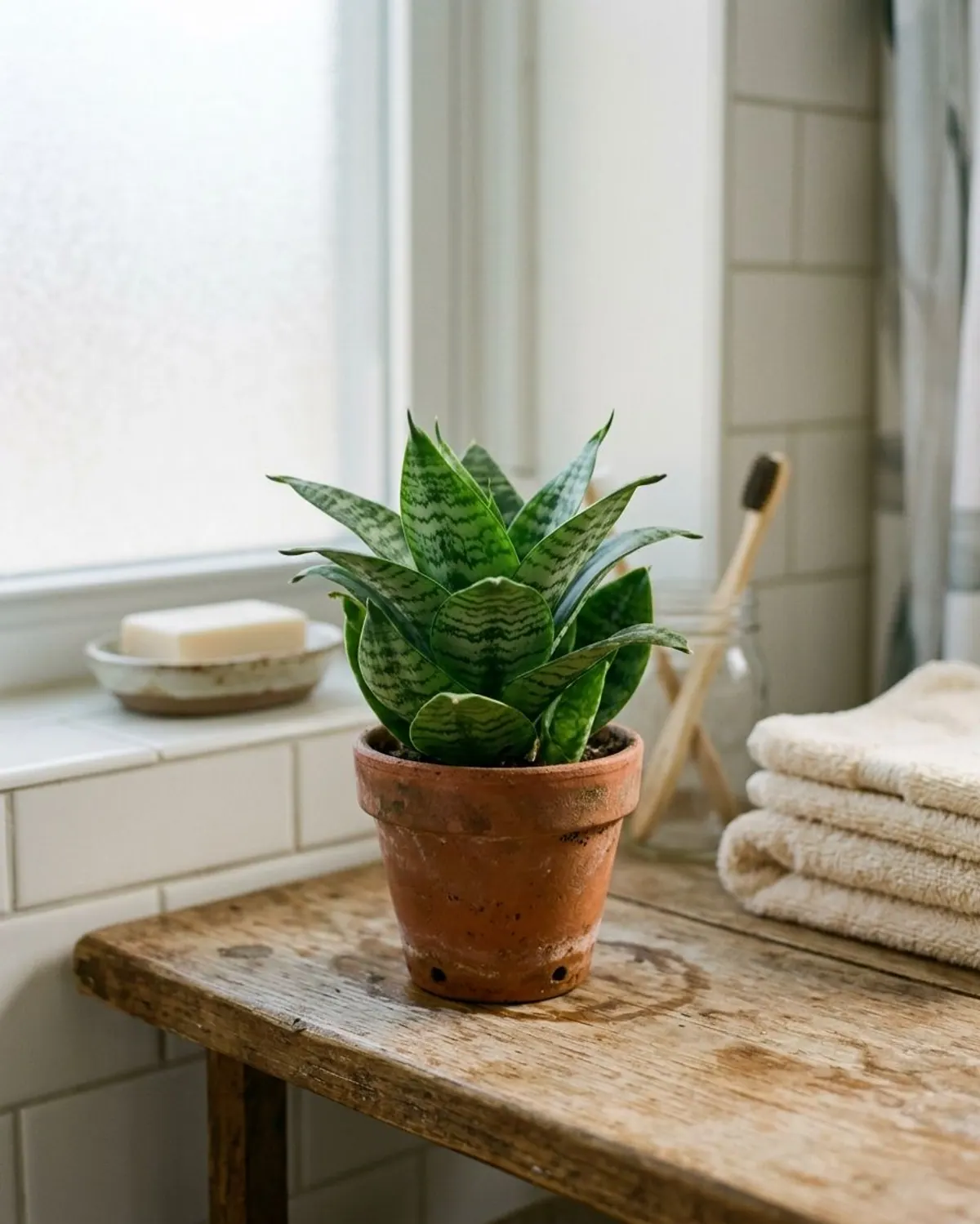
Bird's nest (Hahnii): a short, low rosette of cupped leaves, often under a foot tall. Water at the soil edge, never into the center of the rosette, where water can sit and rot it.
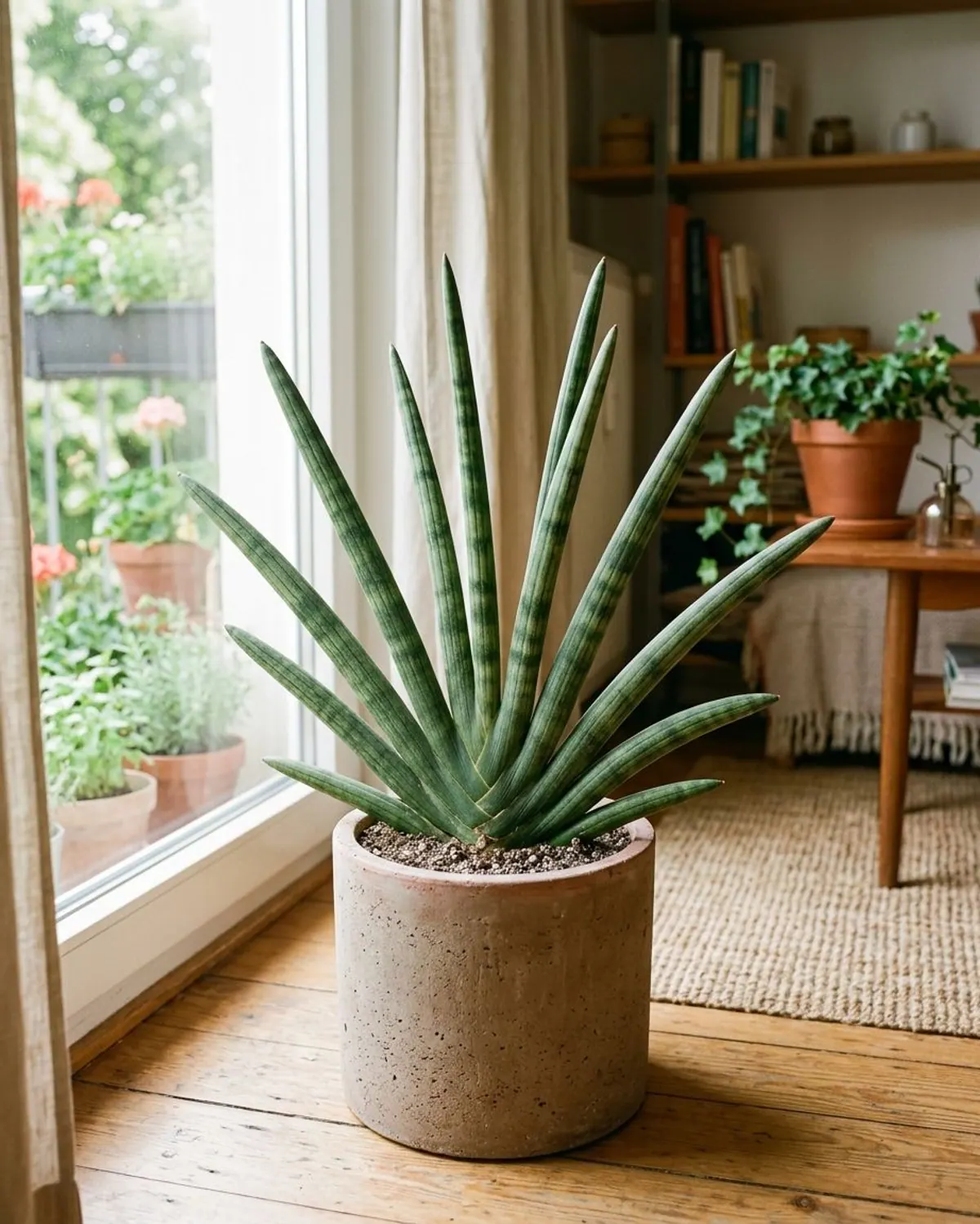
Cylindrical (Dracaena angolensis): round, spear-like leaves that store a lot of water. It wants the soil to dry out even longer than the classic snake plant.
Propagation: leaf cuttings in water or soil
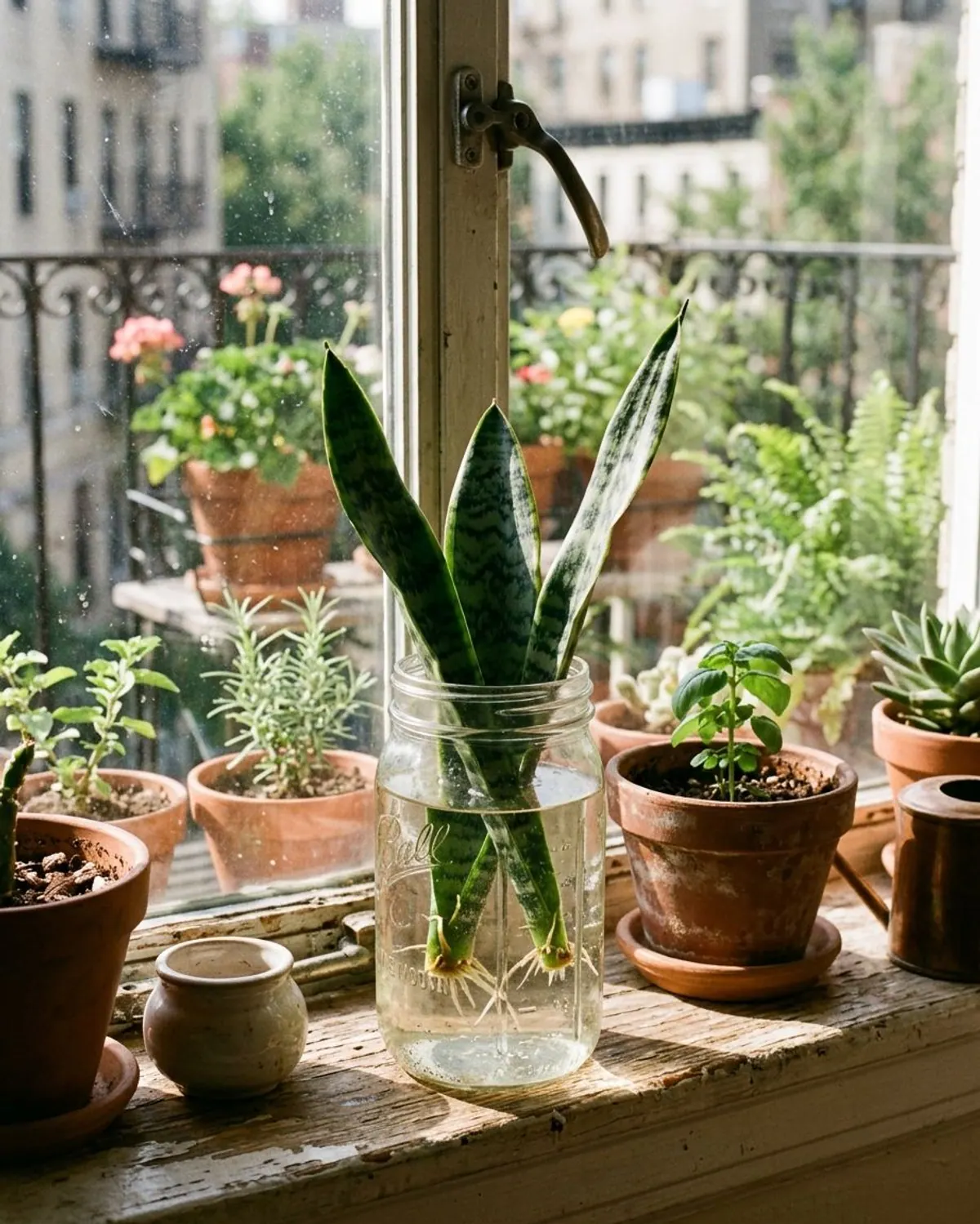
Cut a healthy leaf into pieces 3 to 4 inches long, keeping track of which end was down, and let the cuts dry for a day or two. Stand them cut end down in a jar of water or in barely damp cactus mix. Roots can take several weeks to a couple of months, and new shoots come later still. Change the water weekly. Our propagation station ideas show a few ways to hold the jars.
Snake plant care card
| Need | What to do |
|---|---|
| Light | Bright, indirect; tolerates low light |
| Water | When the pot is fully dry, about every 2 to 6 weeks; less in winter |
| Soil | Cactus and succulent mix |
| Pot | Drainage hole; terracotta helps |
| Temperature | Room temperature; keep above about 50°F |
| Feeding | Half-strength, a few times in spring and summer |
| Repot | Every few years, or when roots crack the pot |
| Pets | Toxic to cats and dogs (ASPCA) |
Snake plant rescue checklist
Snake plant care shopping list
Soil, pots and tools
- Start here
Cactus and succulent potting mix, 4 qt
Typically $12 to $17
Drains fast so roots never sit wet.
Check price on Amazon for Cactus and succulent potting mix, 4 qt -
6 inch terracotta pot with saucer
Typically $3 to $23 (single or 3 to 4 pack)
Clay wicks moisture away from the roots.
Check price on Amazon for 6 inch terracotta pot with saucer -
3-in-1 soil moisture meter
Typically $12 to $15
Shows when the whole pot is dry, not just the top.
Check price on Amazon for 3-in-1 soil moisture meter -
Clip-on full spectrum grow light
Typically $10 to $35
Adds light to a dim winter corner.
Check price on Amazon for Clip-on full spectrum grow light -
Bypass pruning snips
Typically $10 to $20
Clean cuts at the soil line.
Check price on Amazon for Bypass pruning snips -
Perlite, 8 qt
Typically $8 to $15
Lightens regular potting mix.
Check price on Amazon for Perlite, 8 qt -
Insecticidal soap for houseplants
Typically $8 to $15
For mealybugs and spider mites.
Check price on Amazon for Insecticidal soap for houseplants
Most snake plant problems come from kindness: too much water, too often. Let it dry, keep it warm and bright, and it will outlast nearly every other plant in the apartment. For more forgiving plants, see our easy houseplants for beginners.
Frequently asked questions
Why are my snake plant leaves turning yellow?
Most often from overwatering, especially in a dim room in winter. A single old outer leaf yellowing slowly is normal aging. Pale patches on the window side mean sunburn, and soft translucent patches after cold weather mean cold damage.
How often should I water a snake plant indoors?
Only when the soil is dry most of the way down, which is about every 2 to 6 weeks depending on light and warmth. In a cool, dim winter apartment that can be once a month or less.
Can a yellow snake plant leaf turn green again?
No. Once a leaf yellows it stays that way. Fix the cause, then cut fully yellow or mushy leaves at the soil line; new leaves grow from the roots.
How much light does a snake plant need?
It grows best in bright, indirect light near a window and tolerates low light with slower growth. Avoid a sudden move into hot direct afternoon sun, which can scorch the leaves.
Should I cut off yellow snake plant leaves?
Cut leaves that are fully yellow or soft at the base, using clean snips at the soil line. A leaf with only a small damaged patch can stay, since its green part still feeds the plant.
Is it a myth that snake plants need weekly watering?
Yes. Weekly watering is the most common way snake plants rot. They store water in their leaves and want the soil to dry out fully between drinks.

Save it for later
Pin this to your Houseplants board so it's there when you need it.
Save to Pinterest