This post contains affiliate links. As an Amazon Associate we earn from qualifying purchases, at no extra cost to you. Read our disclosure.
Safety first: Herbs can be powerful. If you are pregnant, nursing, take medication or have a health condition, check with your doctor or pharmacist first. Please read our herbal & garden safety notes before you start.
Key takeaways
- Water when the top 2 inches are dry, roughly every 1 to 2 weeks, less in winter. Yellow leaves almost always mean too wet.
- Light: medium is best; low light works for plain golden and jade types, while marble queen, n joy and neon fade without more.
- Pet homes: pothos is toxic to cats and dogs per the ASPCA. Hang it high, or swap in a hoya.
- Fuller plant: cut vines back and root the cuttings in water, then plant them back into the same pot.
- Renters: train vines along a shelf, a tension rod or removable hooks instead of drilling.
In this post11 sections
- Which pothos to buy for your light
- Pothos light: how much is enough in a dim apartment
- Watering pothos: the top 2 inches rule
- Soil, pots and when to repot
- Yellow leaves, brown tips and leggy vines: what each one means
- Make it fuller: pruning and propagating pothos in water
- Trailing or climbing: training pothos without drilling
- Pothos in winter, and the pet warning
- Pothos care card: print or copy into your plant notes
- Pothos care supplies
- FAQ
| Need | Target |
|---|---|
| Light | Medium indirect light; tolerates low light; no hot direct sun |
| Water | When the top 2 inches of soil are dry; every 1 to 2 weeks |
| Temperature | 65 to 85F; keep above 55F and away from cold glass |
| Soil | Standard indoor potting mix with a handful of perlite |
| Pot | Any pot with a drainage hole, one size bigger than the roots |
| Feeding | Half-strength liquid fertilizer monthly in spring and summer, none in winter |
| Pets | Toxic to cats and dogs (ASPCA); keep out of reach |
Which pothos to buy for your light
All pothos share the same care, but the amount of white, yellow or silver on the leaves decides how much light each one needs. More variegation means less green to make food, so the plant needs a brighter spot. Match the variety to the window you actually have.
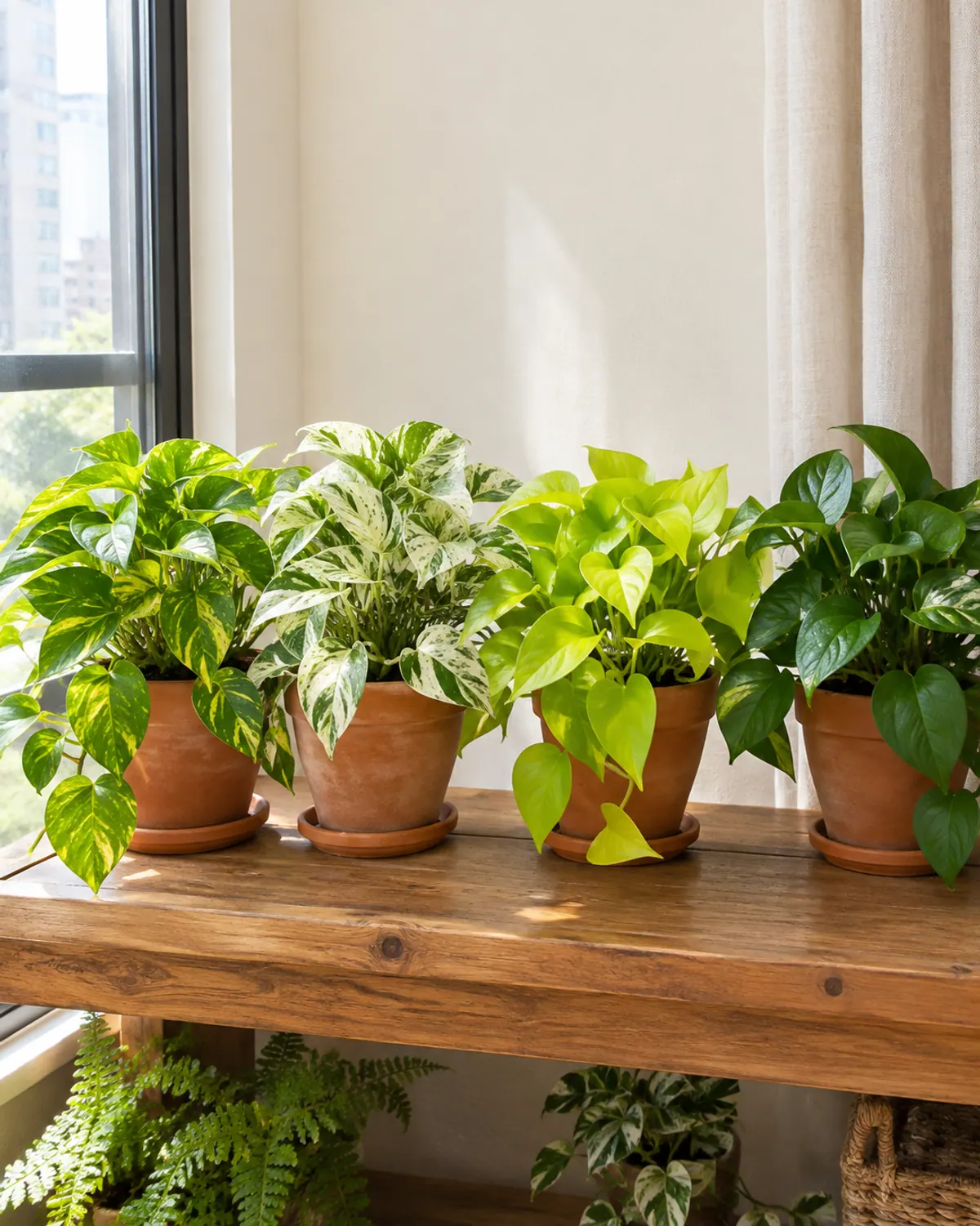
| Variety | Leaf | Light it needs | Typical price (4 in pot) |
|---|---|---|---|
| Golden pothos | Green with yellow marbling | Low to medium; the most forgiving | $10 to $20 |
| Jade pothos | Solid dark green | Low; best for the dimmest room | $10 to $20 |
| Marble queen | Heavily white and green | Medium to bright; reverts to green in low light | $12 to $25 |
| Neon pothos | Bright chartreuse | Medium; dulls in low light | $12 to $25 |
| N joy / Pearls and Jade | Small leaves, white edges | Medium to bright; slow grower | $12 to $25 |
| Cebu blue | Silvery blue, narrow | Medium; climbs well | $15 to $30 |
| Satin or silver pothos | Dark green with silver spots | Medium; not a true pothos (Scindapsus pictus), same care | $12 to $25 |
For a one-window apartment, golden pothos is the safe first buy, and jade pothos is the one for a hallway or bathroom. It is the first plant in our easy houseplants for beginners list for exactly that reason.
Pothos light: how much is enough in a dim apartment
Pothos does best in medium indirect light, which means within about 6 feet of an east, west or shaded south window, or right at a north window. It survives low light, 8 to 10 feet back from a window, but grows slowly and loses variegation there. Hot direct afternoon sun through glass scorches the leaves.
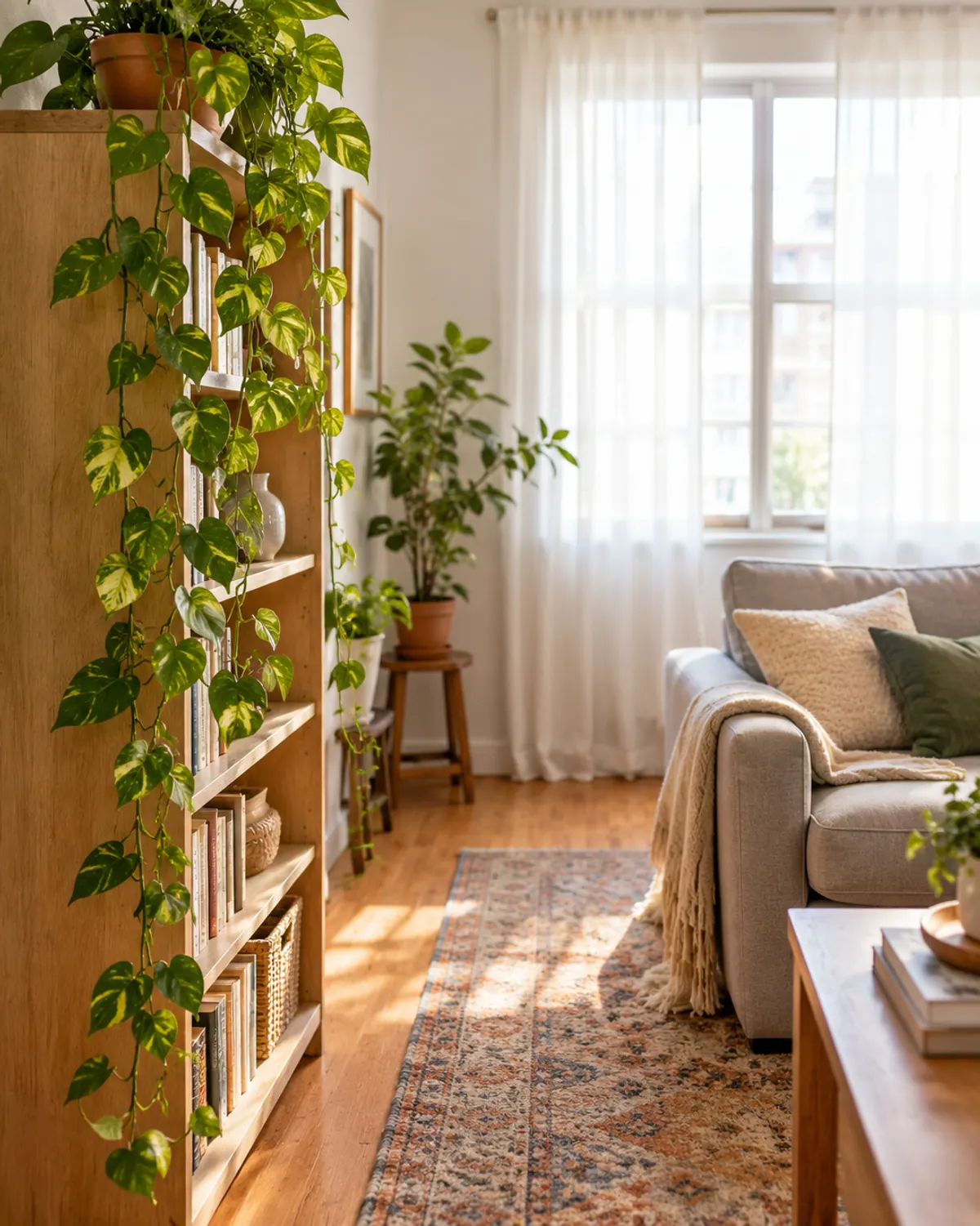
A quick test: hold your hand a foot above the pot at midday. A soft, fuzzy shadow means medium light. No shadow at all means low light, and a sharp dark shadow means direct sun. In a windowless room, a clip-on LED for 10 to 12 hours a day keeps a pothos alive; see our grow lights for small spaces roundup.
Watering pothos: the top 2 inches rule
Push a finger into the soil. If the top 2 inches are dry, water until it runs out of the drainage hole, then empty the saucer after 15 minutes. If the soil is damp, wait. For most apartments that works out to every 7 to 10 days in summer and every 2 to 3 weeks in winter.
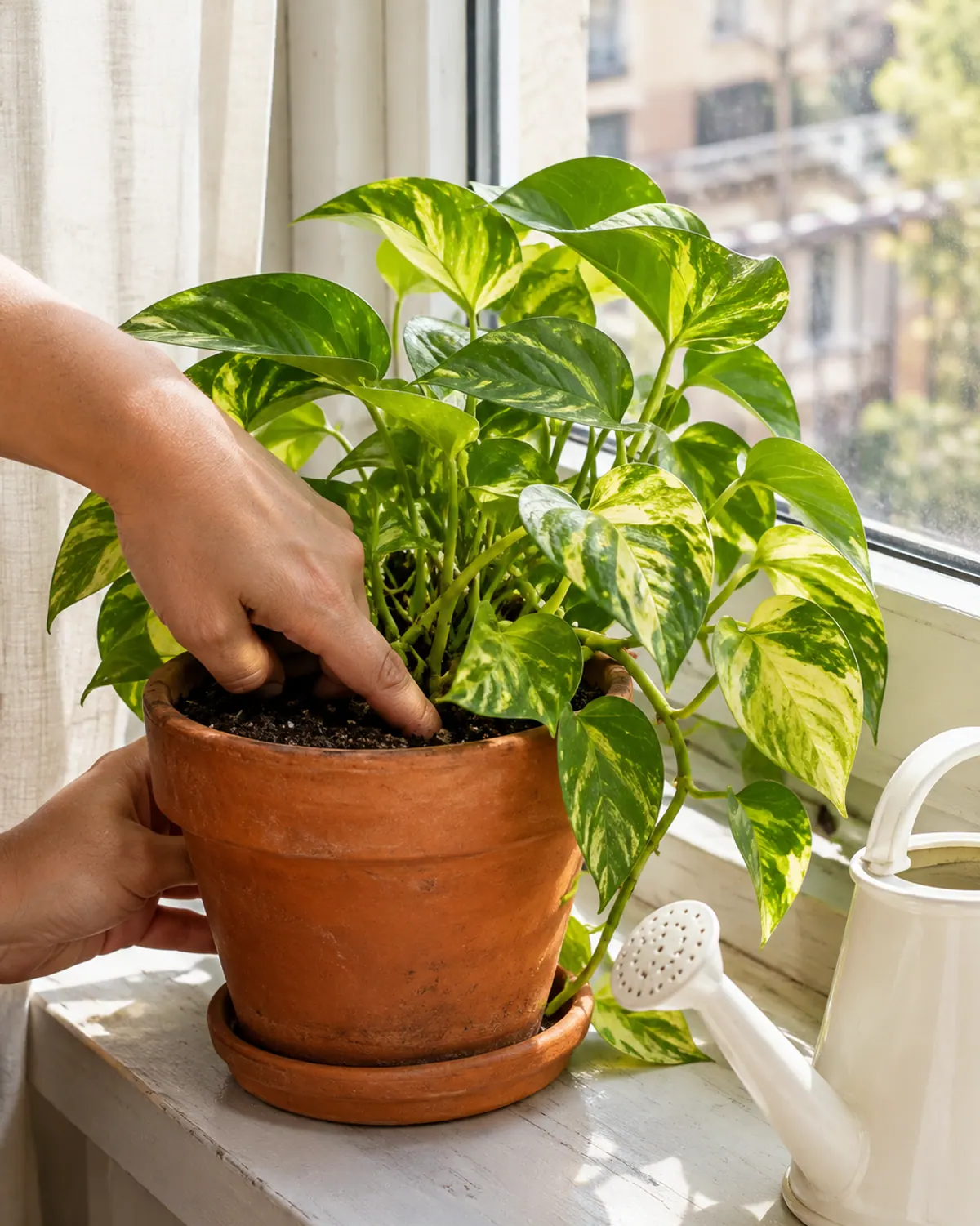
Pothos tells you when it is thirsty: the leaves go soft and droop slightly, then stand back up an hour after a drink. That is a safe signal to water by. What it cannot survive is sitting in wet soil for weeks, which rots the roots. A moisture meter helps in a deep pot where a finger cannot reach.
Soil, pots and when to repot
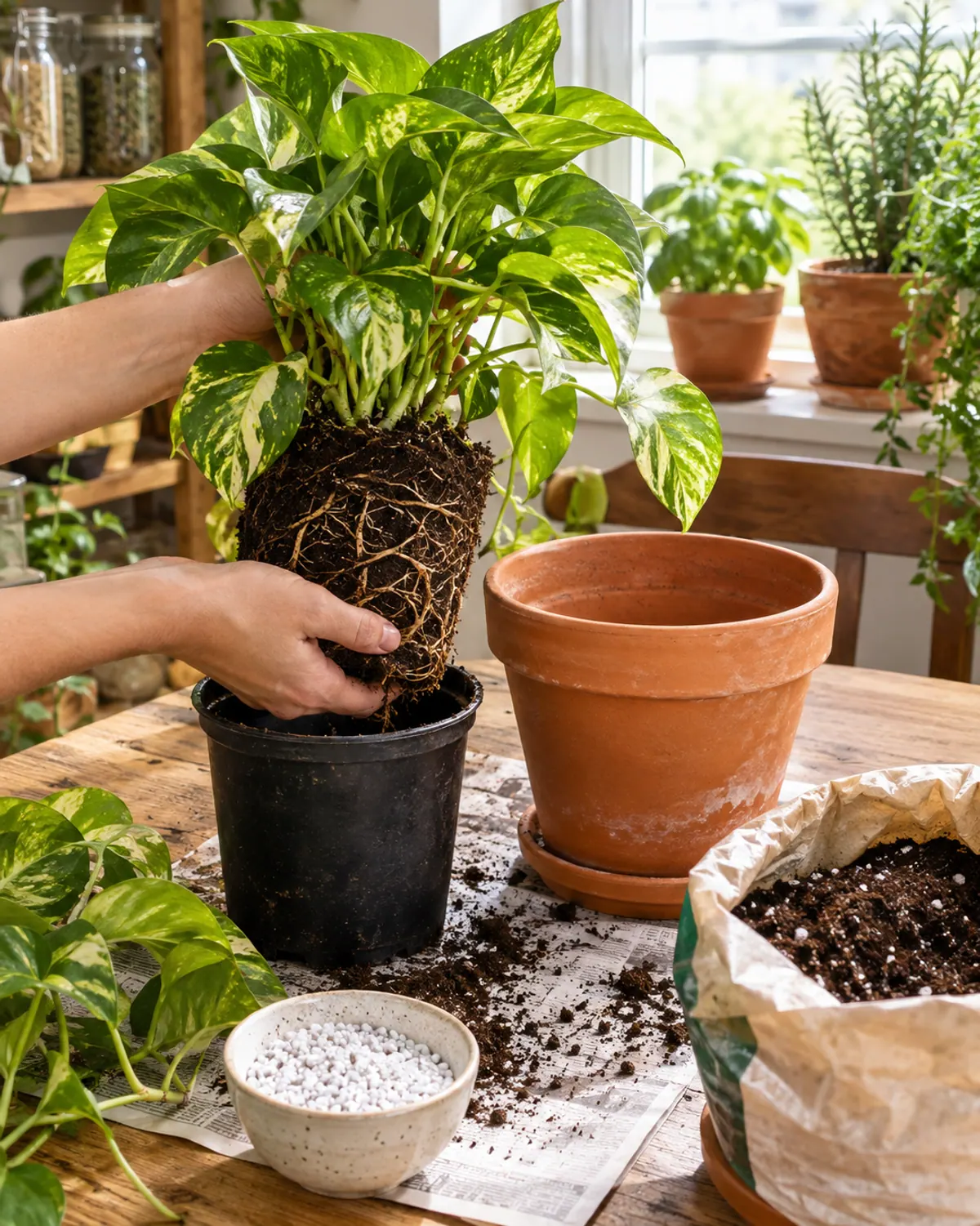
Any indoor potting mix works, and a handful of perlite mixed in keeps it draining. The pot must have a drainage hole. A pretty pot without one can be a cover: keep the plant in its plastic nursery pot inside it, and lift it out to water.
Repot every 1 to 2 years in spring, or when roots circle the bottom and water runs straight through. Go up only one pot size, about 2 inches wider. A pot that is far too big holds wet soil for weeks, which is the number one way beginners lose a pothos.
Yellow leaves, brown tips and leggy vines: what each one means
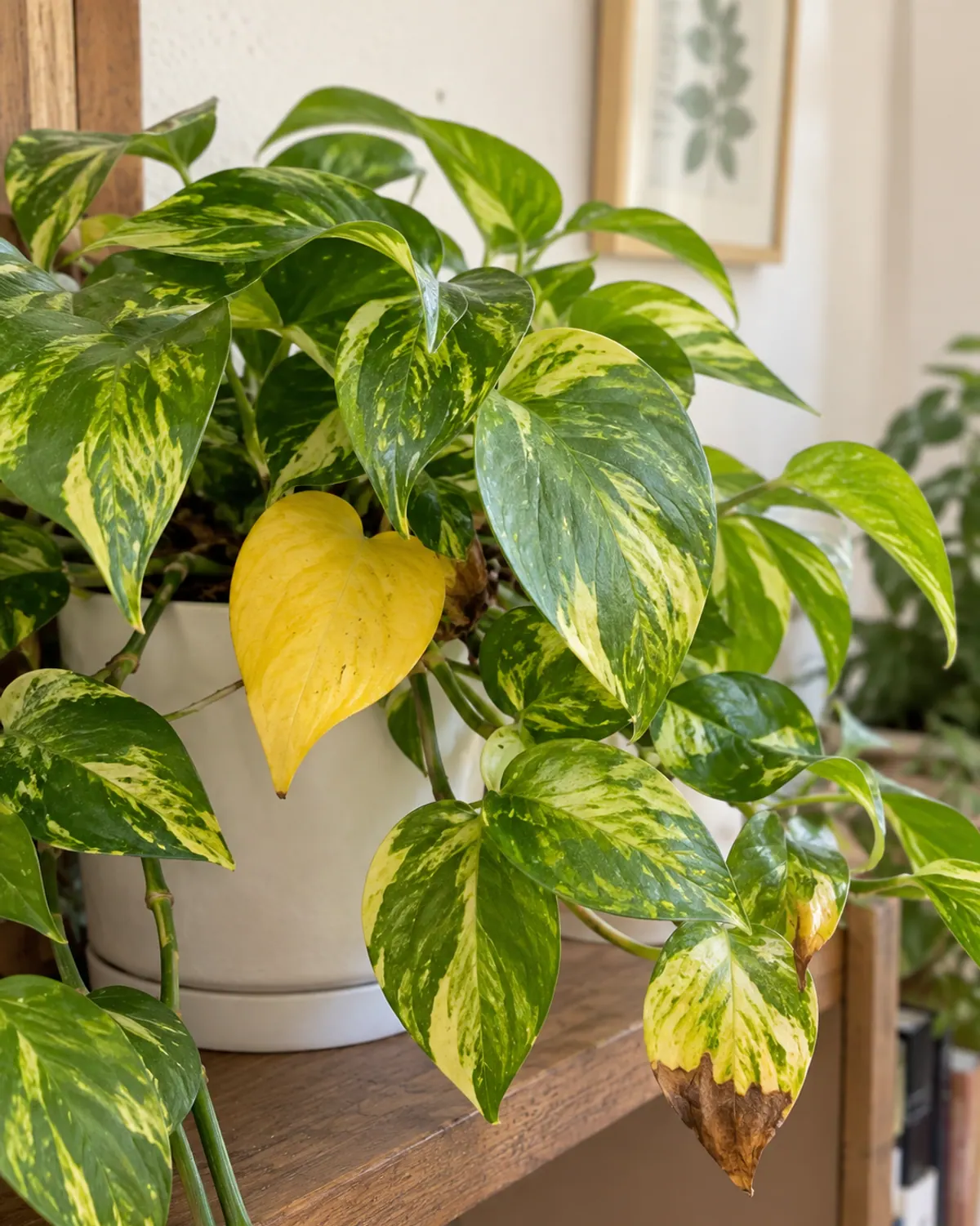
Almost every pothos problem traces back to water or light. Use the table to match the symptom to the cause before you change anything.
| What you see | Likely cause | Fix |
|---|---|---|
| Several yellow leaves, soil damp | Overwatering, roots sitting wet | Let the top 2 inches dry fully. Check the drainage hole. Repot into fresh mix if soil smells sour. |
| One old yellow leaf near the base | Normal aging | Pull it off. Nothing to fix. |
| Leaves limp and curling, soil bone dry | Underwatering | Water well and let it drain. It recovers within a day. |
| Brown crispy tips | Dry heated air, or inconsistent watering | Move away from radiators, water when the top 2 inches are dry, group with other plants. |
| Long bare vines with small leaves | Not enough light | Move closer to a window or add a clip-on light. Cut vines back to encourage new growth. |
| Variegation fading to green | Low light | Move marble queen or neon types to a brighter spot. |
| Black soft stems at the soil line | Root rot | Cut healthy vines above the rot and root them in water. Discard the rotted base. |
| Fine webbing under leaves | Spider mites | Rinse under the tap, wipe leaves, repeat every few days for two weeks. |
Make it fuller: pruning and propagating pothos in water
A pothos gets leggy because every vine grows from the center outward and the base thins over time. The fix is to cut long vines back, root the cuttings, and plant them back into the same pot so the plant fills in from the top.
-
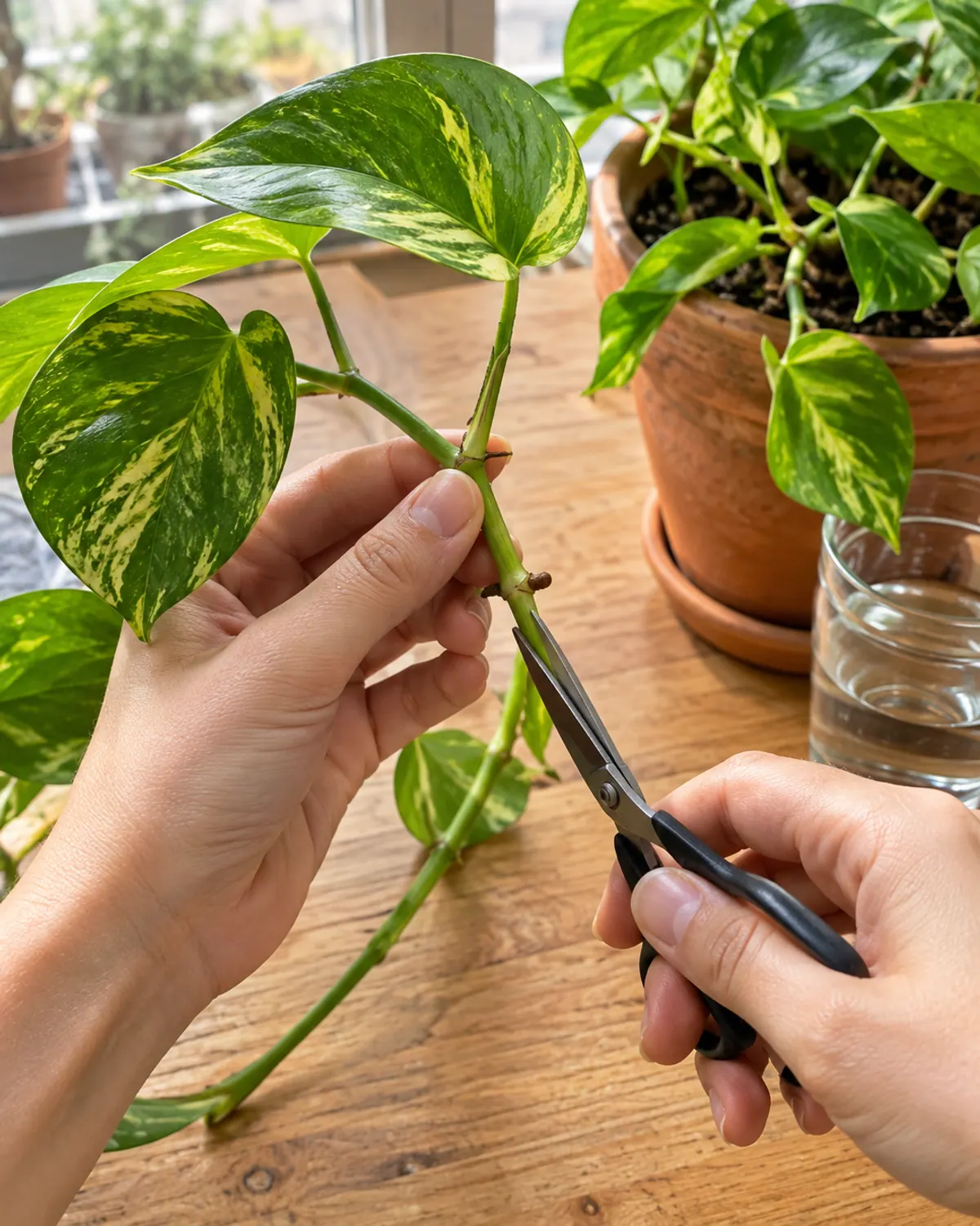
Step 1: Cut below a node
Find the small brown bump on the vine where a leaf meets the stem. That is a node, and roots grow from it. Cut a 4 to 6 inch piece just below a node with clean scissors, leaving 2 to 4 leaves on it.
-
Step 2: Strip the lowest leaf
Pull off the leaf closest to the cut so the node sits bare. Leaves under water rot.
-
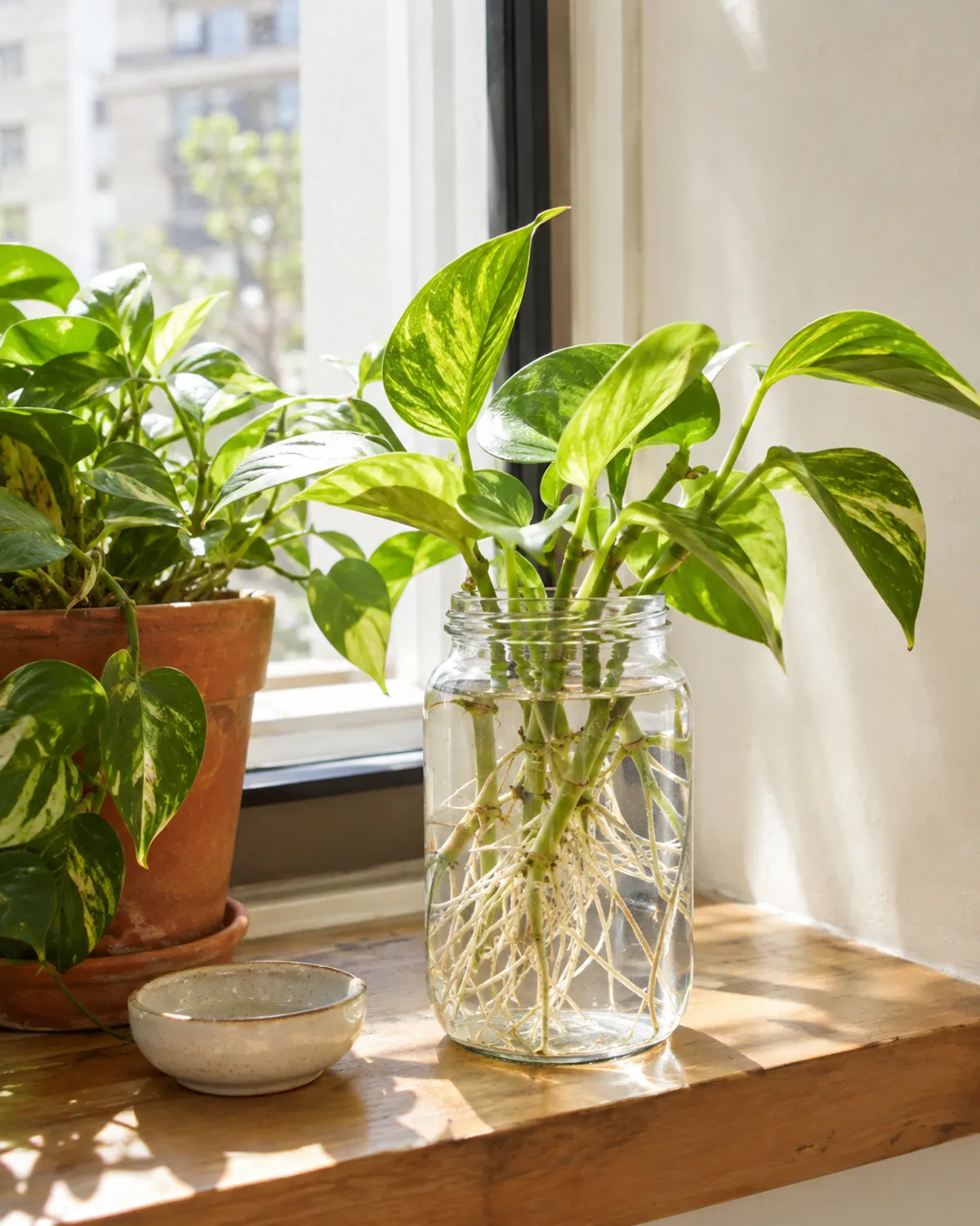
Step 3: Stand in water for 2 to 4 weeks
Set the cutting in a glass of water on a windowsill with the node under water. Change the water weekly. White roots show in 1 to 2 weeks and are ready to plant at about an inch long.
-
Step 4: Plant back into the pot
Poke holes in the soil around the edge of the mother plant and tuck the rooted cuttings in. Water lightly and keep the soil barely moist for two weeks while the roots settle into soil.
Once a plant is established, pinching the tip of each vine every month or two also pushes side shoots and keeps it bushy. Spare cuttings make free plants for friends.
Trailing or climbing: training pothos without drilling
Left alone, pothos trails. Given something to climb, it grows bigger leaves. Renters can do either without a single hole in the wall.
Trailing (no drilling)
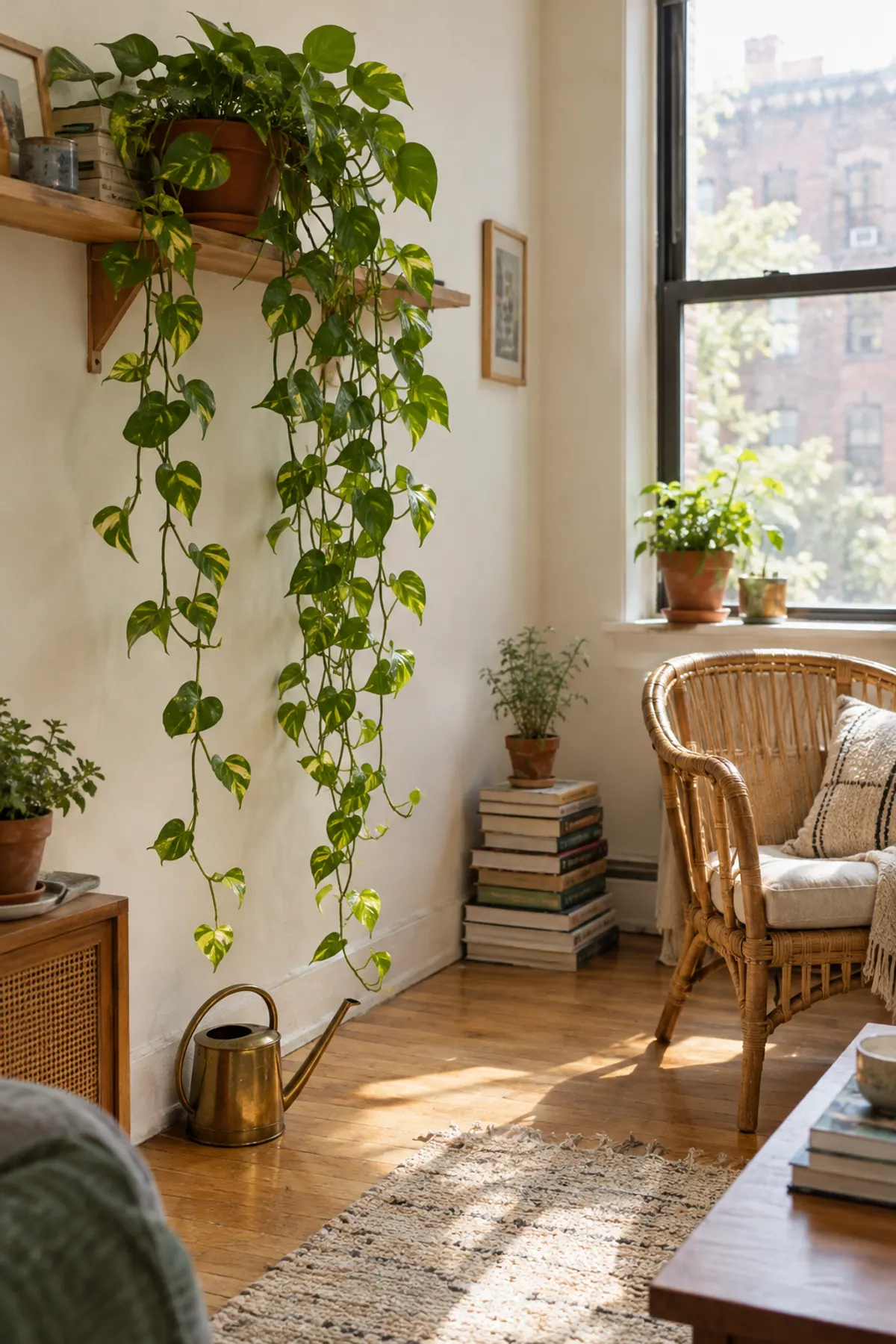
- Set the pot on top of a bookcase or kitchen cabinet and let vines fall
- Run vines along the top of a curtain rod or a tension rod in a window
- Drape vines across a shelf and hold them with clear removable hooks
- Hang from a ceiling hook only with the landlord's okay; a plant stand is the safe option
Climbing (no drilling)
- Push a moss pole or coir pole into the pot and tie vines loosely with soft ties
- Lean a small trellis in the pot for a bushier upright plant
- Use removable adhesive hooks on the wall to guide one vine up and across
- Mist the pole in dry winter air so aerial roots grip it
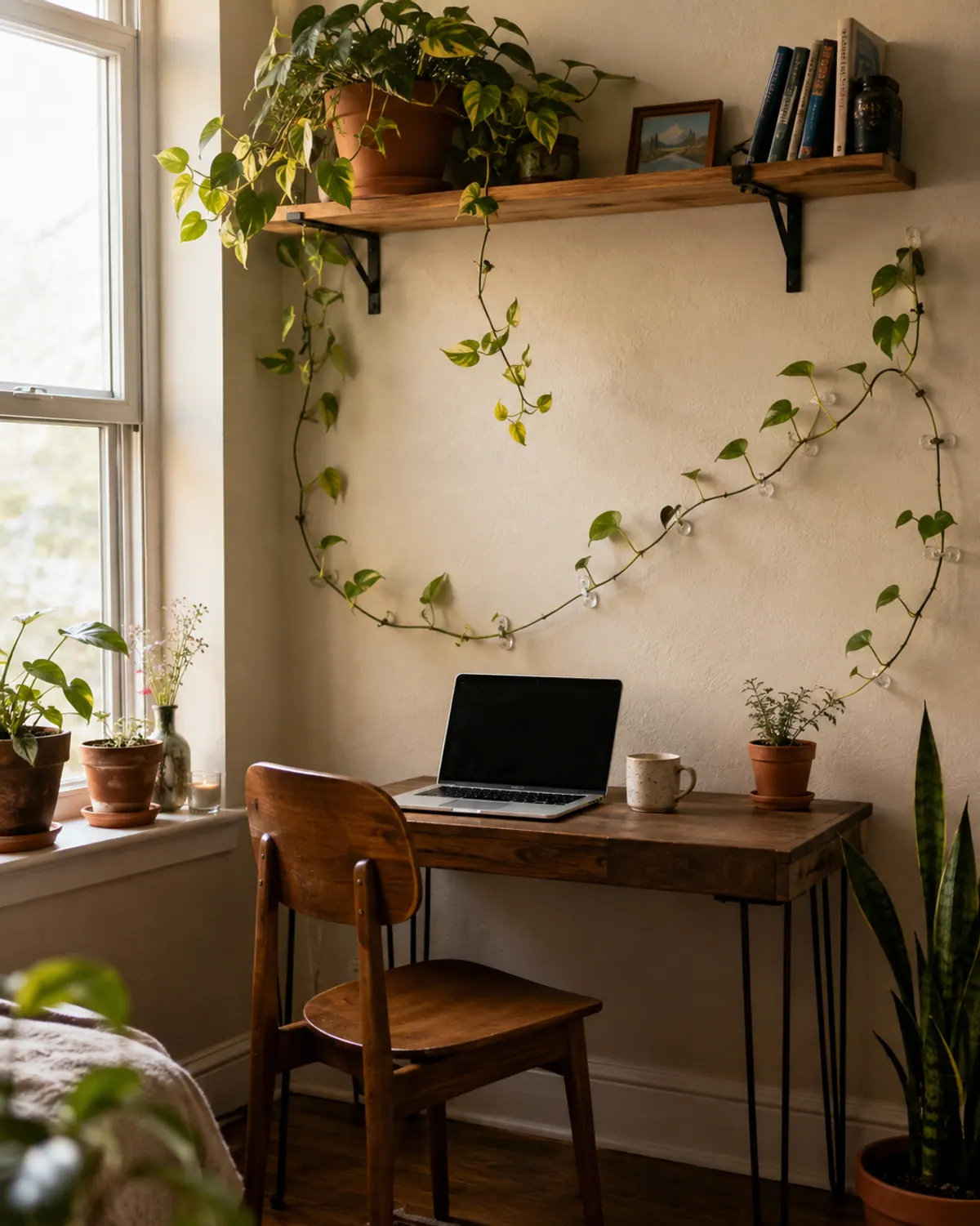
For more ways to fit vines into a small room, the indoor plant decor ideas for small spaces roundup covers shelves, rails and stands.
Pothos in winter, and the pet warning
Winter care is mostly doing less. Water every 2 to 3 weeks instead of weekly, stop feeding from October to March, and keep the plant off cold windowsills and away from radiators. Growth slows or stops, which is normal. Our winter houseplant care tips covers dry air and short days in more detail.
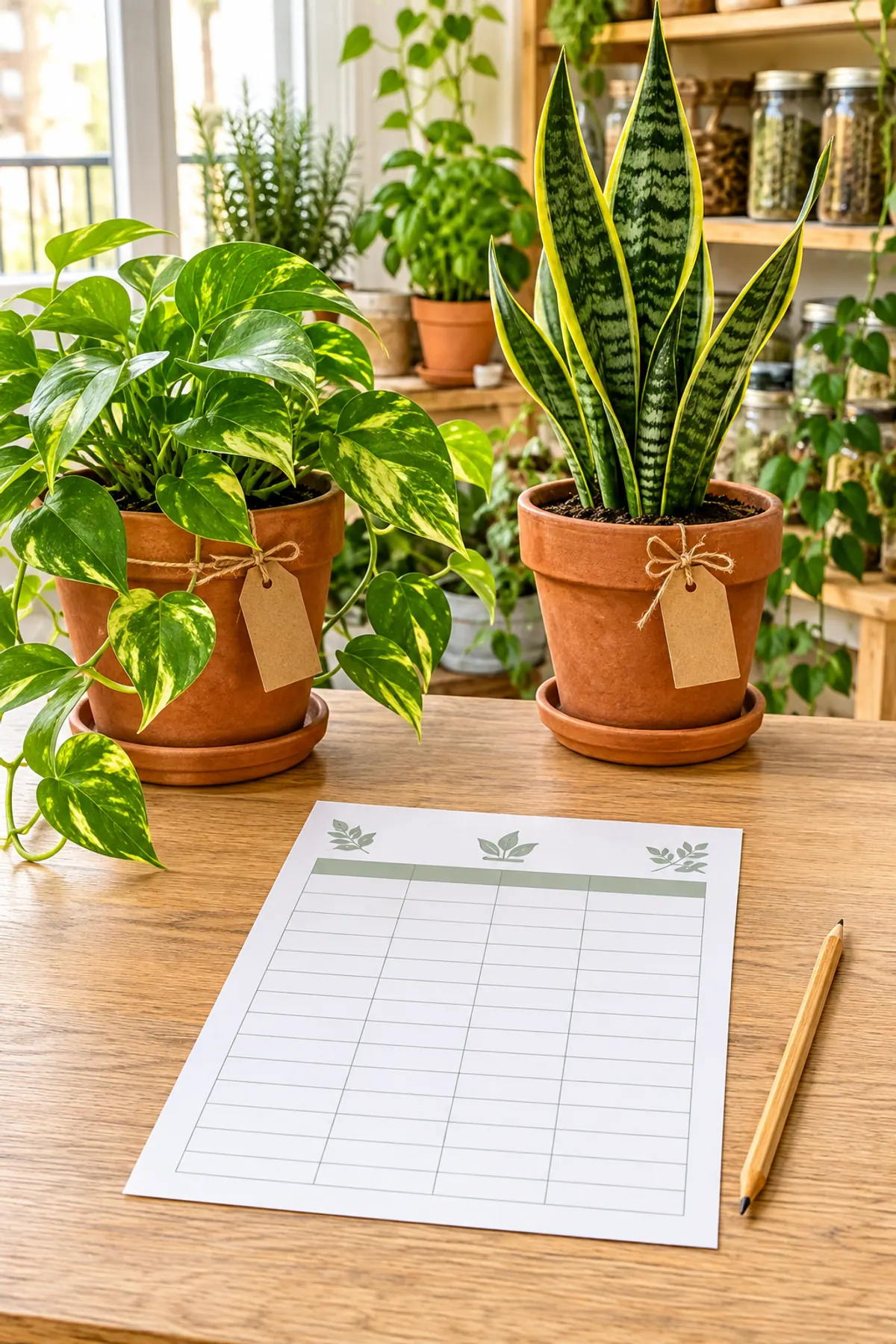
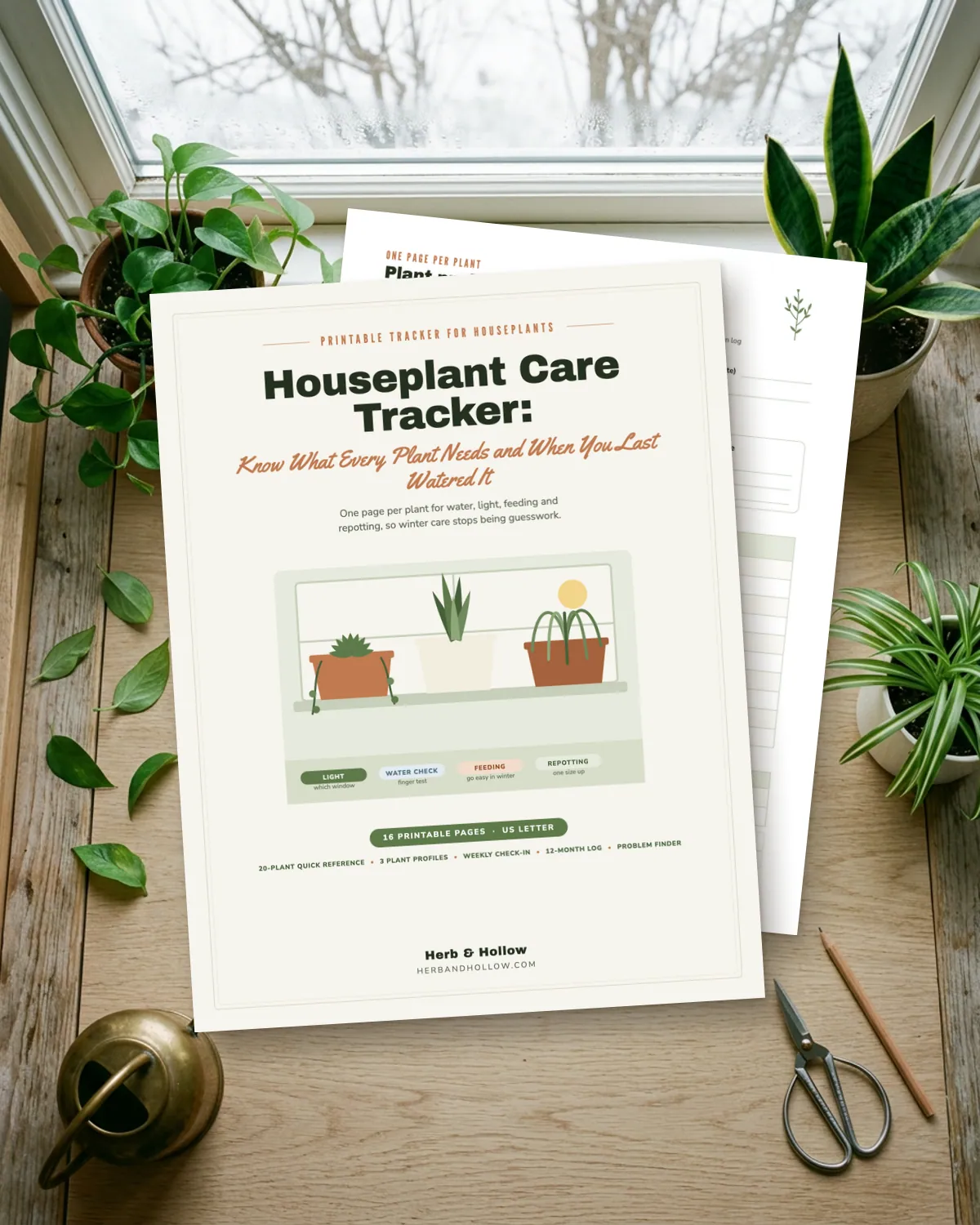
Pothos care card: print or copy into your plant notes
Pothos care checklist
Pothos care supplies
The short list for one pothos
- Start here
Live golden pothos, 4 to 6 in pot
Typically $10 to $20
The forgiving variety for a dim room.
Check price on Amazon for Live golden pothos, 4 to 6 in pot -
Live marble queen pothos
Typically $12 to $25
For a brighter east or west window.
Check price on Amazon for Live marble queen pothos -
Soil moisture meter
Typically $8 to $15
Reads the bottom of a deep pot.
Check price on Amazon for Soil moisture meter -
Indoor potting mix with perlite
Typically $8 to $15
Drains fast enough to prevent root rot.
Check price on Amazon for Indoor potting mix with perlite -
Coir moss pole, 24 to 36 in
Typically $10 to $20
Bigger leaves when the vine climbs.
Check price on Amazon for Coir moss pole, 24 to 36 in -
Clear removable adhesive wall hooks
Typically $6 to $12
Train vines across a rented wall without drilling.
Check price on Amazon for Clear removable adhesive wall hooks - Pet safe
Live hoya carnosa (pet safe swap)
Typically $12 to $30
The non-toxic trailing look-alike for cat and dog homes.
Check price on Amazon for Live hoya carnosa (pet safe swap)
We earn from qualifying purchases, which never changes what we recommend. Read our disclosure and editorial guidelines.
Frequently asked questions
How often should I water a pothos?
When the top 2 inches of soil are dry, usually every 7 to 10 days in summer and every 2 to 3 weeks in winter. Water until it drains from the hole, then empty the saucer. Drooping leaves that perk up after a drink are a safe signal.
Why are my pothos leaves turning yellow?
Several yellow leaves with damp soil almost always mean overwatering. Let the top 2 inches dry fully and check the pot drains. One old yellow leaf near the base is normal aging. Limp leaves with bone-dry soil mean it just needs water.
Can pothos live in low light?
Yes. Golden and jade pothos survive 8 to 10 feet from a window, though they grow slowly and lose variegation. Marble queen, neon and n joy need medium light to keep their color. No pothos lives in a windowless room without a small grow light.
Is pothos safe for cats and dogs?
No. The ASPCA lists pothos as toxic to cats and dogs; chewing causes mouth irritation, drooling and vomiting. Keep it on a high shelf out of reach, or choose a hoya, which looks similar and is listed non-toxic.
How do I make my pothos fuller?
Cut long vines back to 4 to 6 inch pieces just below a node, root them in water for 2 to 4 weeks, then plant them back into the same pot around the edge. Pinching vine tips every month or two also pushes side shoots.
What is the difference between golden pothos and marble queen?
Golden pothos has green leaves with yellow marbling and tolerates low light. Marble queen is heavily splashed with white, grows slower, and needs medium to bright light or it reverts to green. Care is otherwise the same.

Save it for later
Pin this to your Houseplants board so it's there when you need it.
Save to Pinterest