This post contains affiliate links. As an Amazon Associate we earn from qualifying purchases, at no extra cost to you. Read our disclosure.
Safety first: Herbs can be powerful. If you are pregnant, nursing, take medication or have a health condition, check with your doctor or pharmacist first. Please read our herbal & garden safety notes before you start.
Key takeaways
- Tinsel is the one to skip. The ASPCA says swallowed tinsel can cause vomiting, a blockage and sometimes surgery.
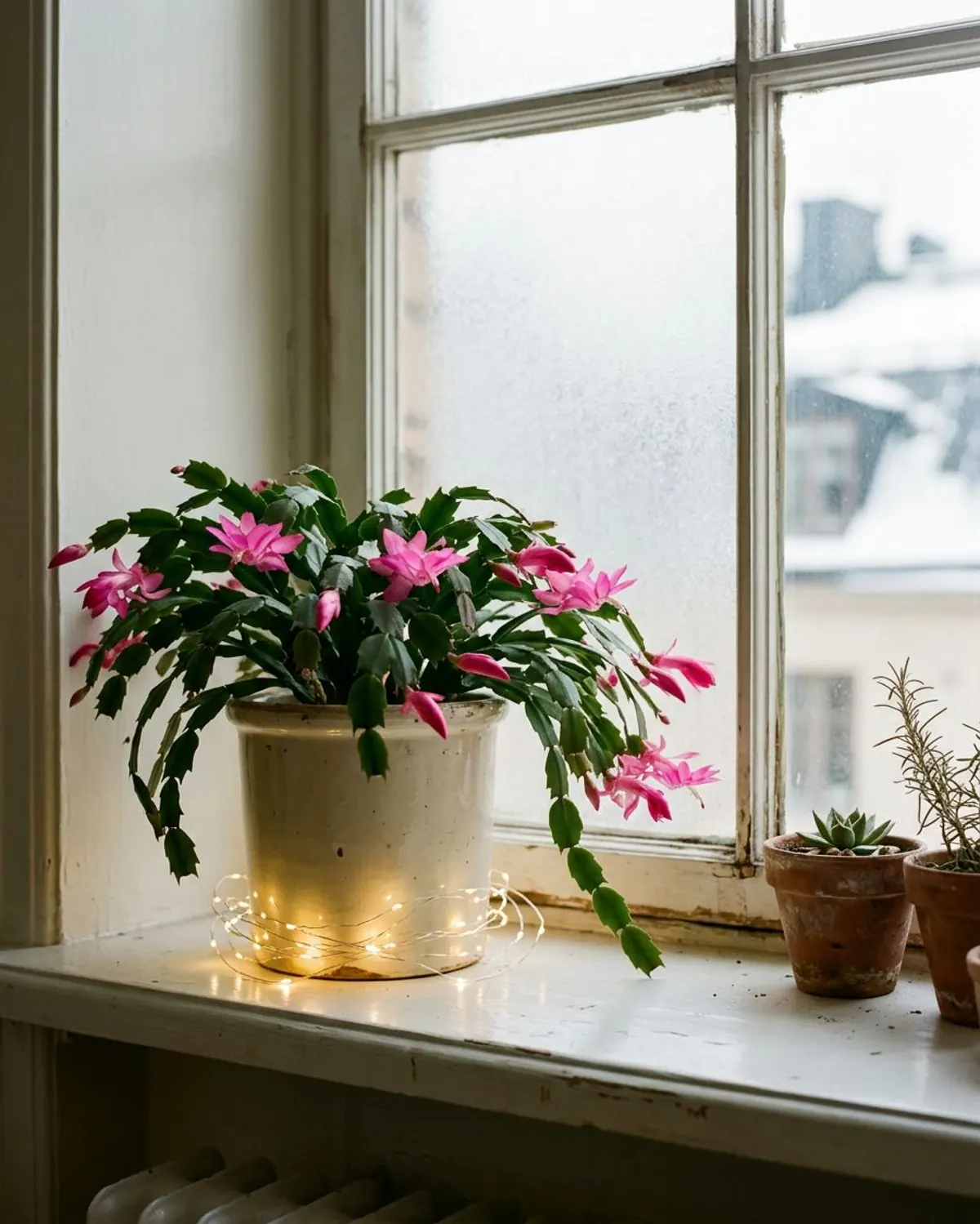
- Use LED or battery lights around the pot or on the shelf, not wound through the leaves, and switch them off at night.
- Check the plant first. Christmas cactus, Norfolk Island pine, rosemary, spider plant and Boston fern are ASPCA non-toxic. Snake plant, pothos, ivy, jade and poinsettia are listed toxic.
- Keep ornaments light and small, about five or six tiny felt or wooden pieces on a two-foot plant.
- Lights at night can stop a holiday cactus from setting buds, per Clemson Extension.
In this post11 sections
- Christmas decor for house plants at a glance
- Step by step: dress a houseplant for Christmas
- 5 things to skip on a decorated plant
- Check the plant before you decorate it (ASPCA)
- Snake plant Christmas decor, kept out of reach
- Plant shelf Christmas decor in a small space
- A Christmas tree made of plants
- Norfolk Island pine, rosemary and Christmas cactus
- What to buy for plant decor
- Giving a decorated plant as a gift
- FAQ
Christmas decor for house plants at a glance
Most pages on this topic are lists of pretty ideas. This one starts with the question a plant owner with a cat or dog asks first: what can I hang, wrap or plug in near this plant? The table below sorts the usual decor into fine, careful and skip, and every safety line comes from a source we opened: the ASPCA holiday safety page, the US Consumer Product Safety Commission and university extension guides.
| Decor | Verdict | Why |
|---|---|---|
| Tinsel | Skip | The ASPCA says to steer clear of tinsel: if a pet swallows it, it can cause vomiting, a digestive blockage and sometimes surgery. |
| Glass or breakable ornaments | Skip near plants | The ASPCA says to keep glass or plastic ornaments out of paws' reach, because shards of breakable ornaments can damage a pet's mouth and digestive tract. |
| Mini felt or wood ornaments | Fine, a few | Light enough not to bend a branch, and nothing to shatter. Still not chew-proof, so keep the plant up and away from a pet that grabs. |
| Battery LED fairy lights | Good first choice | No outlet and no long cord. The University of Maine Extension notes LEDs give off little heat. The ASPCA says to keep batteries out of reach too, so tape the battery box shut and put it up high. |
| Plug-in light sets | Careful | Use a set tested by a recognized lab (UL or ETL), check it for damage, and turn it off at bedtime, per the CPSC. Keep wires out of a pet's reach, per the ASPCA. |
| Candles | Skip near plants | The CPSC says to keep lighted candles away from anything that can catch fire, and a plant on a shelf next to a candle counts. |
| Ribbon | Fine on the pot | Tie it around the pot, not the plant, and keep the tails short. This is our own habit, not a research finding. |
Decor is only half of the check. The other half is the plant, and the Pet-Safe Plant Guide in the next box is built for that part.
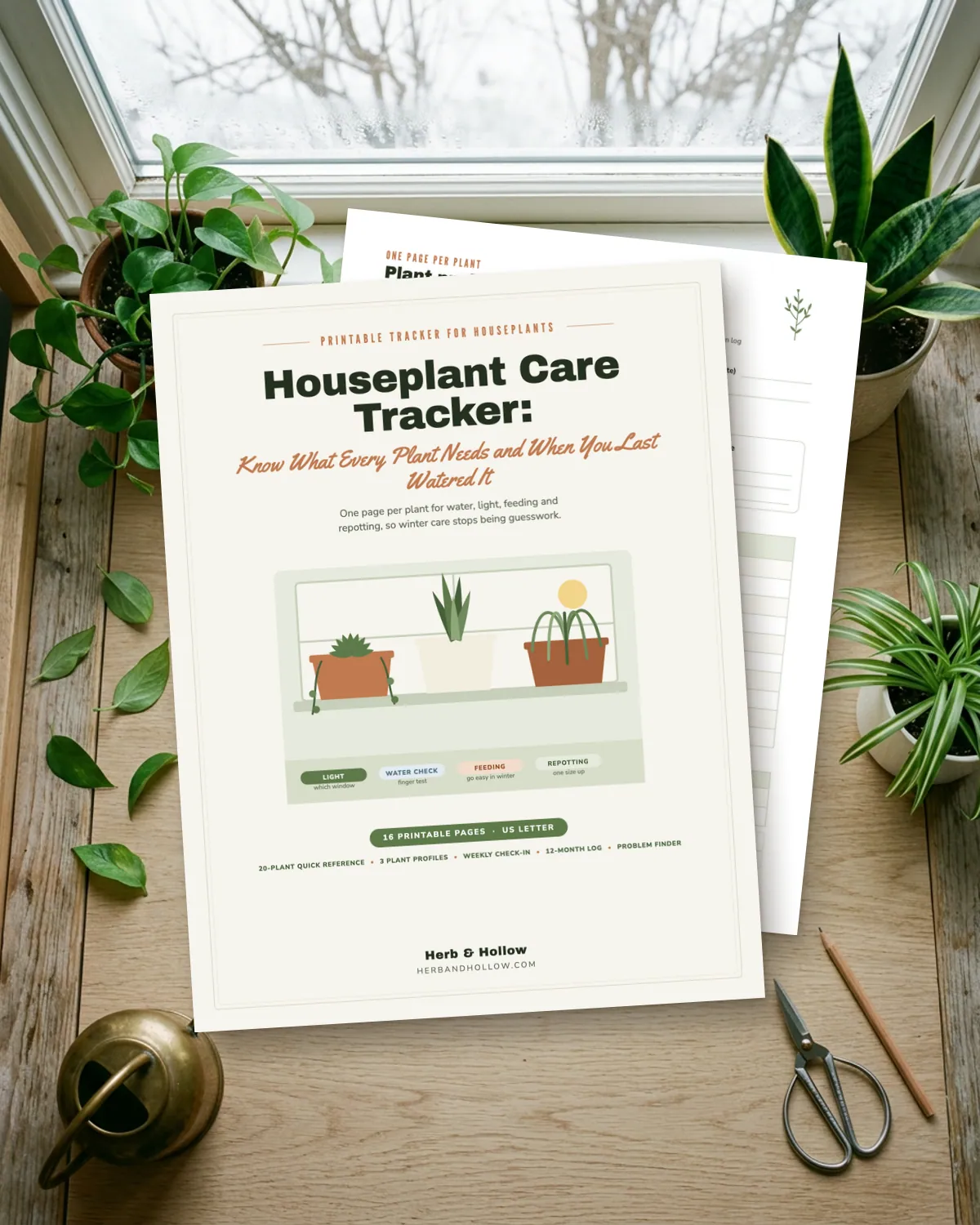
Here is the situation it fixes: you have a snake plant, a pothos or a poinsettia and you want to dress it for Christmas, but you do not know whether it is on the avoid list for cats and dogs. The guide ($4) lists 62 common houseplants and kitchen herbs with a Safe or Avoid mark for cats and for dogs, read from each plant's own ASPCA page and dated 2026-11-18, so you can look yours up before you add a single ornament.
Step by step: dress a houseplant for Christmas
Six steps, in order. The first one decides how much of the rest you can do.
-
Step 1: Look the plant up on the ASPCA list first
Search the plant's common name on the ASPCA toxic and non-toxic plants list and read the line for dogs and for cats. A non-toxic plant can be dressed freely. A toxic one goes on a high shelf or in a room the pet does not enter, or you swap it for a look-alike. The ASPCA also notes that eating any plant material may cause vomiting and stomach upset, so even a safe plant is better kept out of reach of a determined chewer.
-
Step 2: Water it a day ahead and let it drain
Do this before any lights come out. A pot that is still dripping sends water toward cords, sockets and battery packs. Check the soil with a finger and water only if the top inch is dry. Our winter watering schedule by light level shows how often each window needs it.
-
Step 3: Pick cool lights: LED or battery strings
For a single plant, a thin battery LED string is the easiest choice because it needs no outlet and no long cord. The University of Maine Extension says LEDs "are inexpensive to operate and give off little heat" in its guide to growing houseplants under lights. If you use a plug-in set, the CPSC advises choosing lights tested by a recognized lab such as UL or ETL, checking every set for broken sockets and worn wires, and throwing out damaged ones.
-
Step 4: Put the lights around the pot, not through the leaves
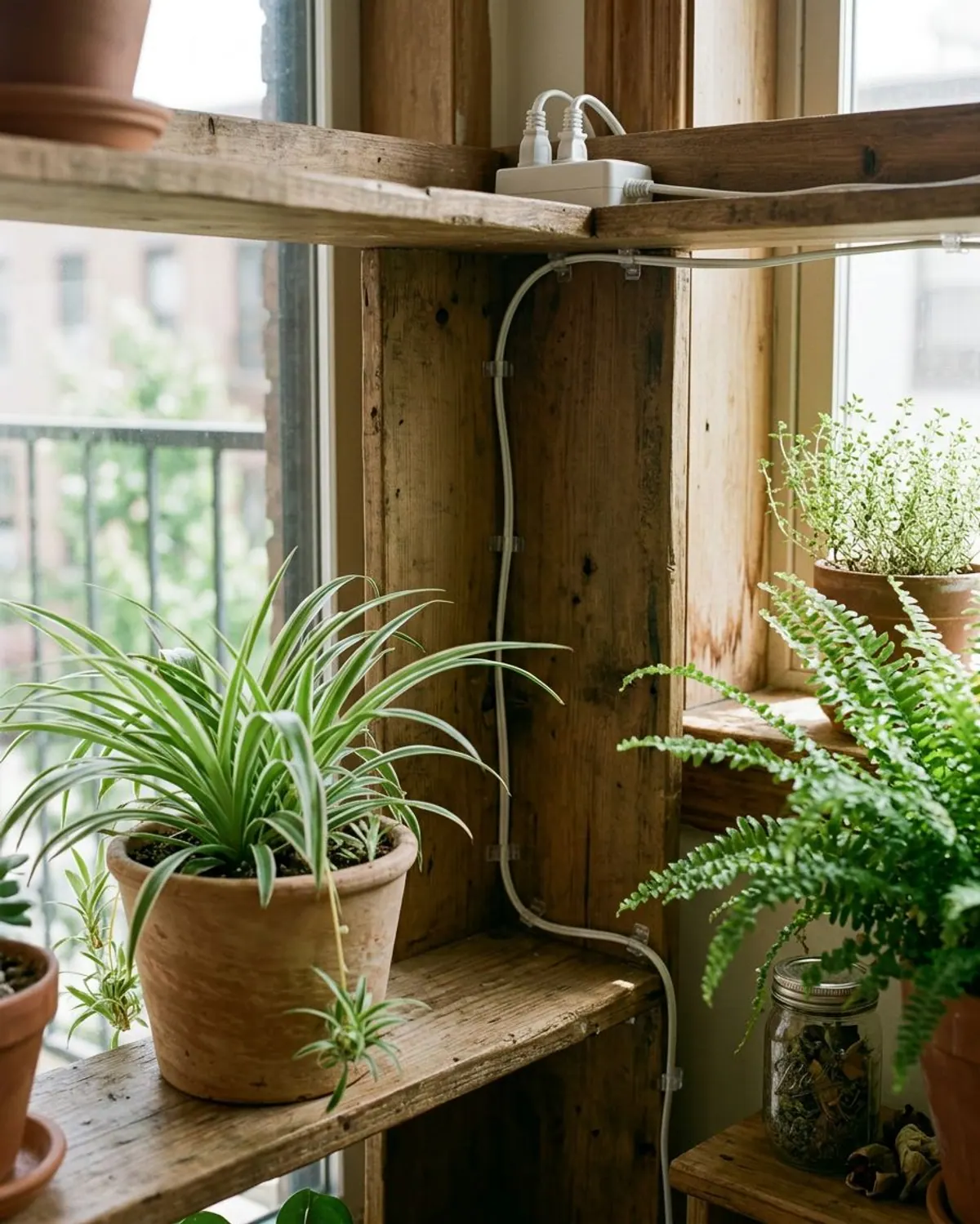
Circle the rim of the pot or lay the string along the shelf edge, and leave the foliage free. This is our method, not a rule from a study: leaves stay clear of any warm bulb, and you can lift the string off in January without untangling a plant. Tuck the cord along the back of the shelf with small clear clips so there is nothing dangling to pull.
-
Step 5: Add a few light ornaments, never a full set
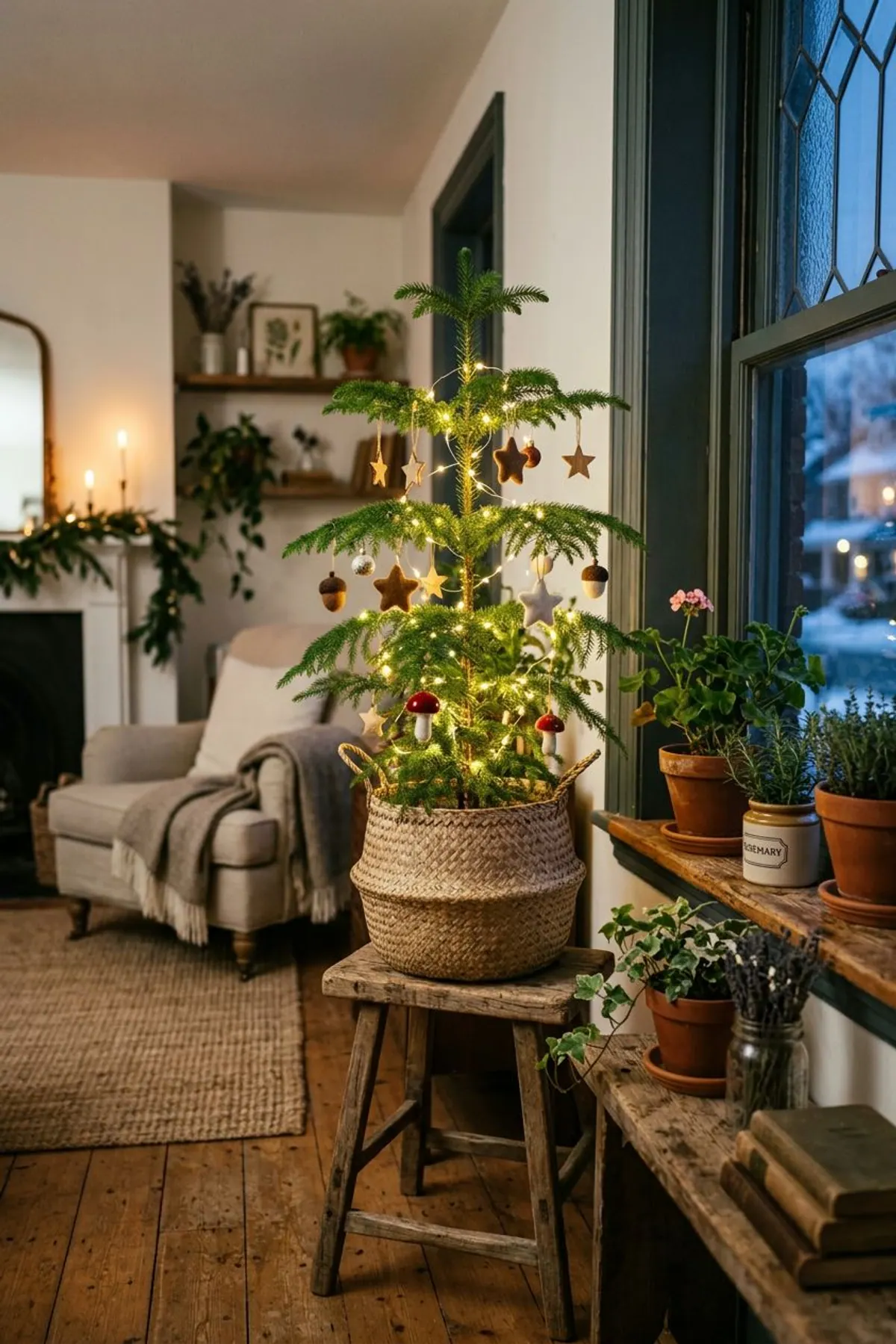
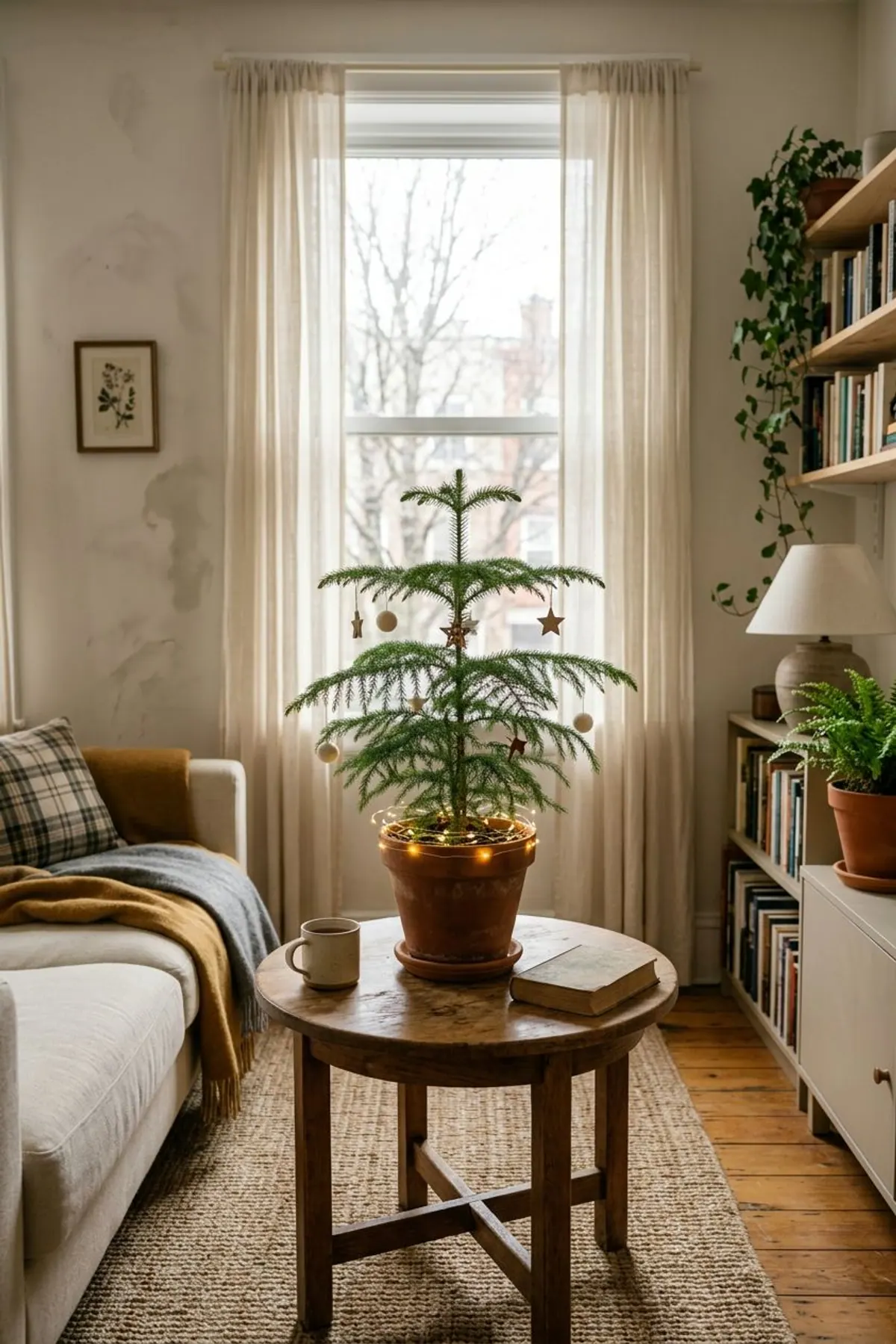
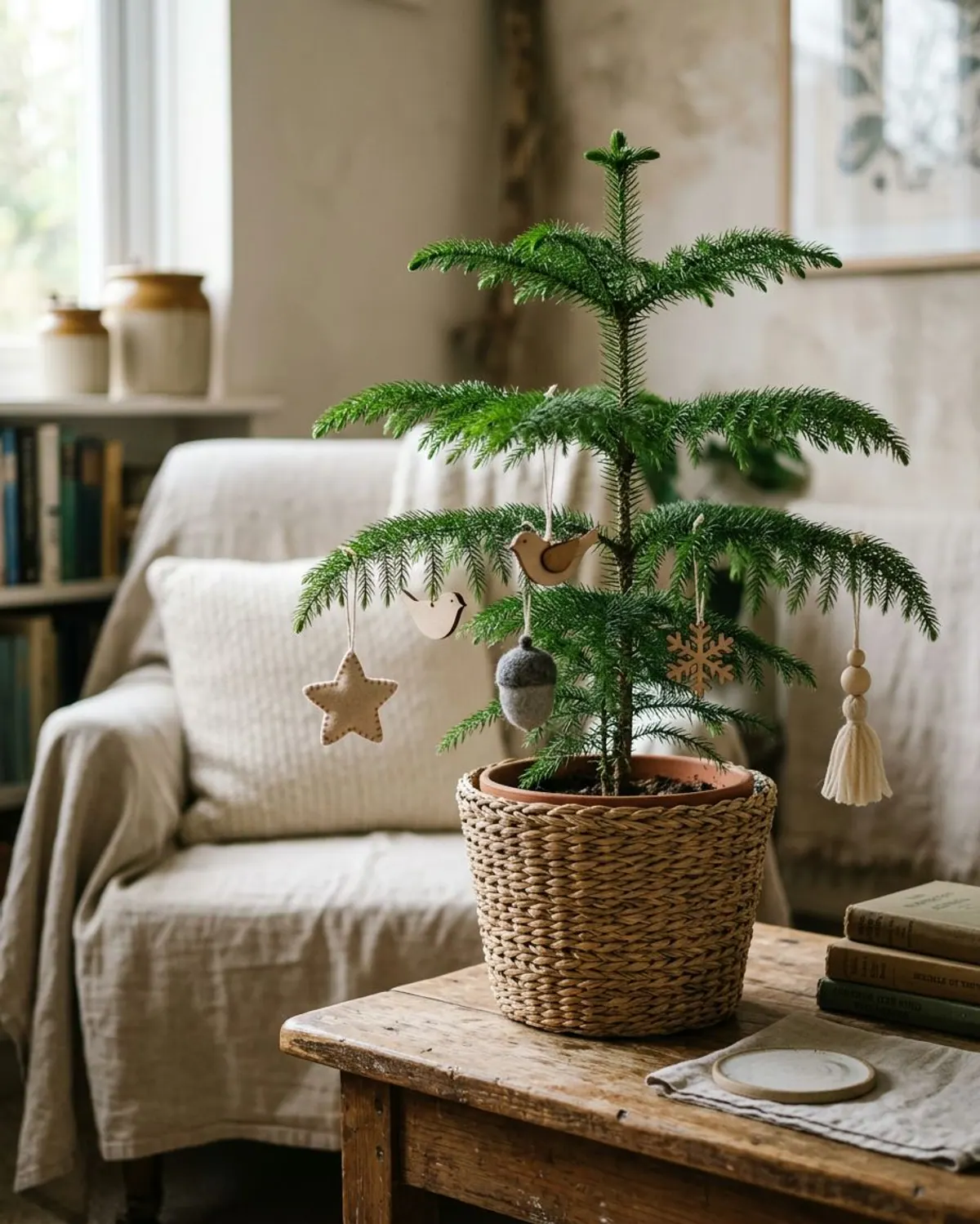
Choose tiny felt or wooden ornaments and hang them from the sturdier branch tips of a plant like a Norfolk Island pine, or tuck them on the soil surface. Five or six small pieces dress a two-foot plant. Skip glass balls: the ASPCA says shards of breakable ornaments can damage a pet's mouth and digestive tract, and it also lists plastic ornaments among the things to keep out of paws' reach.
-
Step 6: Turn the lights off at night
The CPSC says to turn off all holiday lights when you go to bed or leave the house. For a holiday cactus there is a second reason: Clemson Cooperative Extension says light that interrupts the long dark nights can stop flower buds from forming, and as little as 2 hours of interrupted lighting will inhibit bud set. A plain plug-in timer set to switch off at bedtime handles both.
5 things to skip on a decorated plant
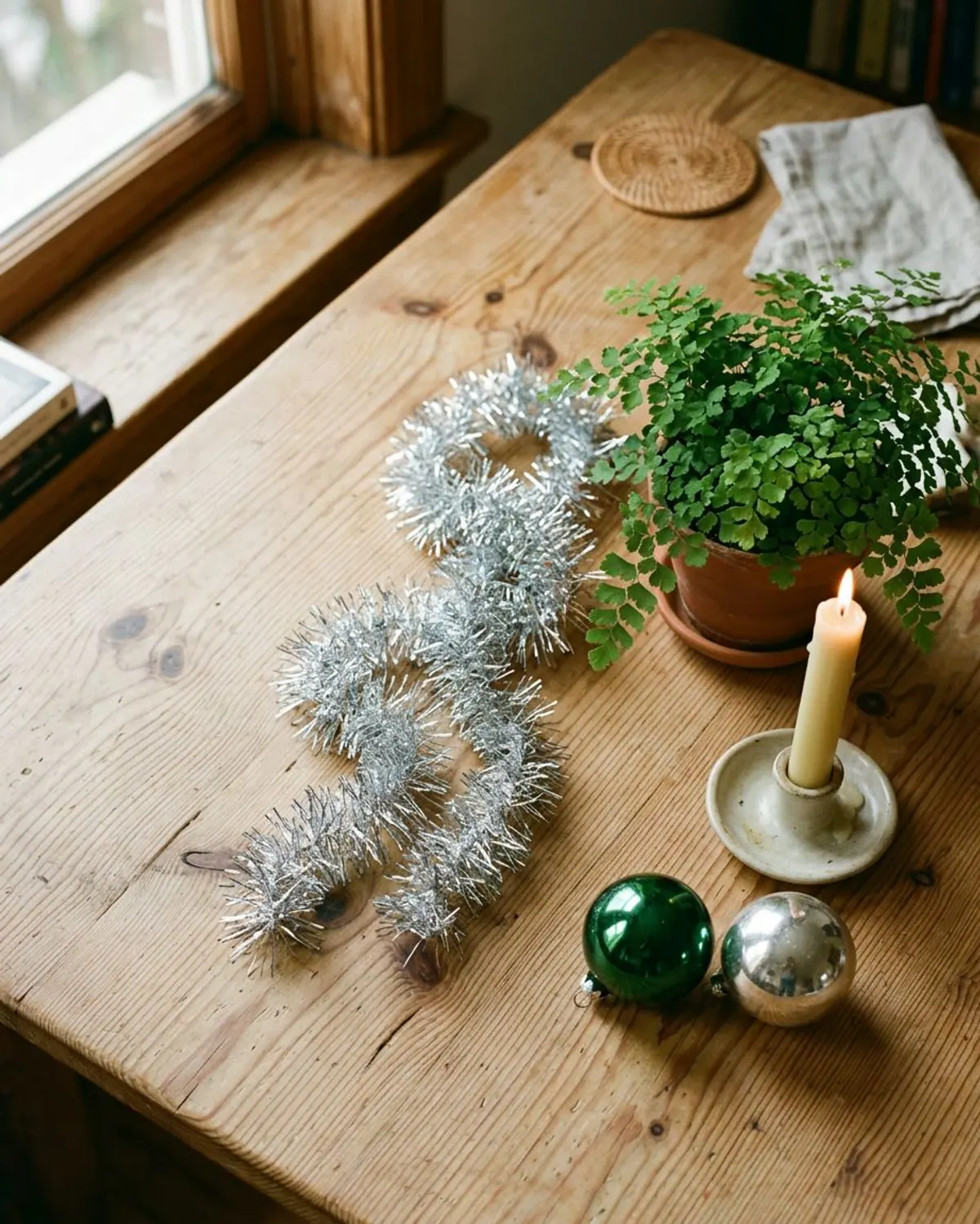
1. Tinsel. The ASPCA says to steer clear of tinsel, since swallowed tinsel can block the gut. Use a strand of lights or a few small ornaments for the sparkle instead.
2. Glass ornaments within reach. A plant on the floor or a low table is within a cat's reach. If you want glass, hang it on a tree or wall, not on a plant.
3. Candles next to foliage. Plant leaves, ribbon and paper tags are all things that can catch fire. Use battery tea lights for the candle look.
4. Loose cords and open battery boxes. The ASPCA says a wire can deliver a potentially lethal electrical shock and a punctured battery can cause burns to the mouth and esophagus. Clip cords along the back of the shelf, keep battery boxes closed and out of reach, and unplug at night.
5. A toxic plant at pet height. Decor does not change a plant's ASPCA listing. If it is on the avoid list, raise it or replace it, which is what the next section covers.
Check the plant before you decorate it (ASPCA)
The listings below were read from each plant's own ASPCA page. A snake plant is a popular pick for Christmas decor, but the ASPCA lists it as toxic to dogs and cats, so it needs a different spot than a spider plant does.
| Plant | ASPCA listing | What it means for decor |
|---|---|---|
| Christmas cactus | Non-toxic to dogs and cats | Dress the pot with ribbon. Its flowers are the decor. |
| Norfolk Island pine (ASPCA lists it as Australian pine) | Non-toxic to dogs and cats | Best tiny tree: a few mini ornaments on the branch tips. |
| Rosemary | Non-toxic to dogs and cats | Trim to a cone and tie a ribbon on the pot. |
| Spider plant | Non-toxic to dogs and cats | Safe trailing green for a shelf. |
| Boston fern | Non-toxic to dogs and cats | Safe for a plant stand or a shelf. |
| Snake plant | Toxic to dogs and cats; saponins, with nausea, vomiting and diarrhea | High shelf only, out of reach, or swap for a spider plant. |
| Pothos (devil's ivy) | Toxic to dogs and cats; insoluble calcium oxalates, with mouth irritation, drooling and vomiting | Skip trailing it as a garland where a pet can reach. |
| English ivy | Toxic to dogs and cats; vomiting, abdominal pain, hypersalivation and diarrhea | Skip ivy garlands in a pet home. |
| Jade plant | Toxic to dogs and cats; vomiting, depression and incoordination | Keep out of reach, and do not tuck ornaments into it. |
| Poinsettia | Toxic listing; the ASPCA says it is irritating to the mouth and stomach, sometimes causing vomiting, but generally over-rated in toxicity | Fine as a gift plant on a high surface. Keep out of reach. |
This is general information, not veterinary advice. If a pet eats a plant, tinsel or part of an ornament, call your veterinarian or ASPCA Poison Control at (888) 426-4435 right away. For a longer list of safe choices, see our pet-safe houseplants guide and the pet-safe Christmas plants list.
Snake plant Christmas decor, kept out of reach
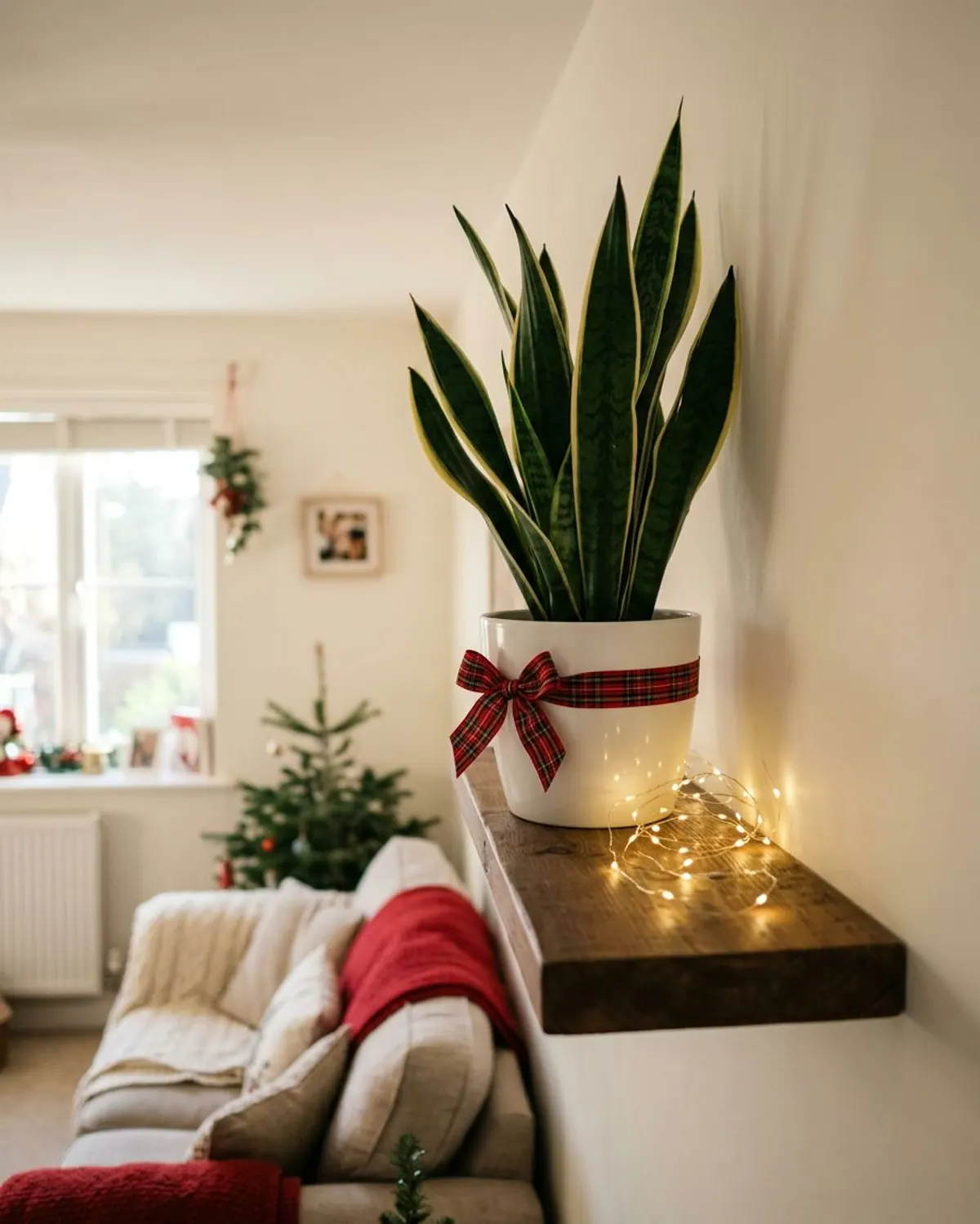
A snake plant looks good with a plaid ribbon, and its upright leaves do not need ornaments at all. Because the ASPCA lists it as toxic, set it on a high wall shelf or in a room the pet cannot enter, and put the string lights on the shelf beside it rather than on the leaves. If you have a cat that climbs, a high shelf is not a guarantee, so a spider plant or Boston fern in that spot is the safer swap.
Plant shelf Christmas decor in a small space
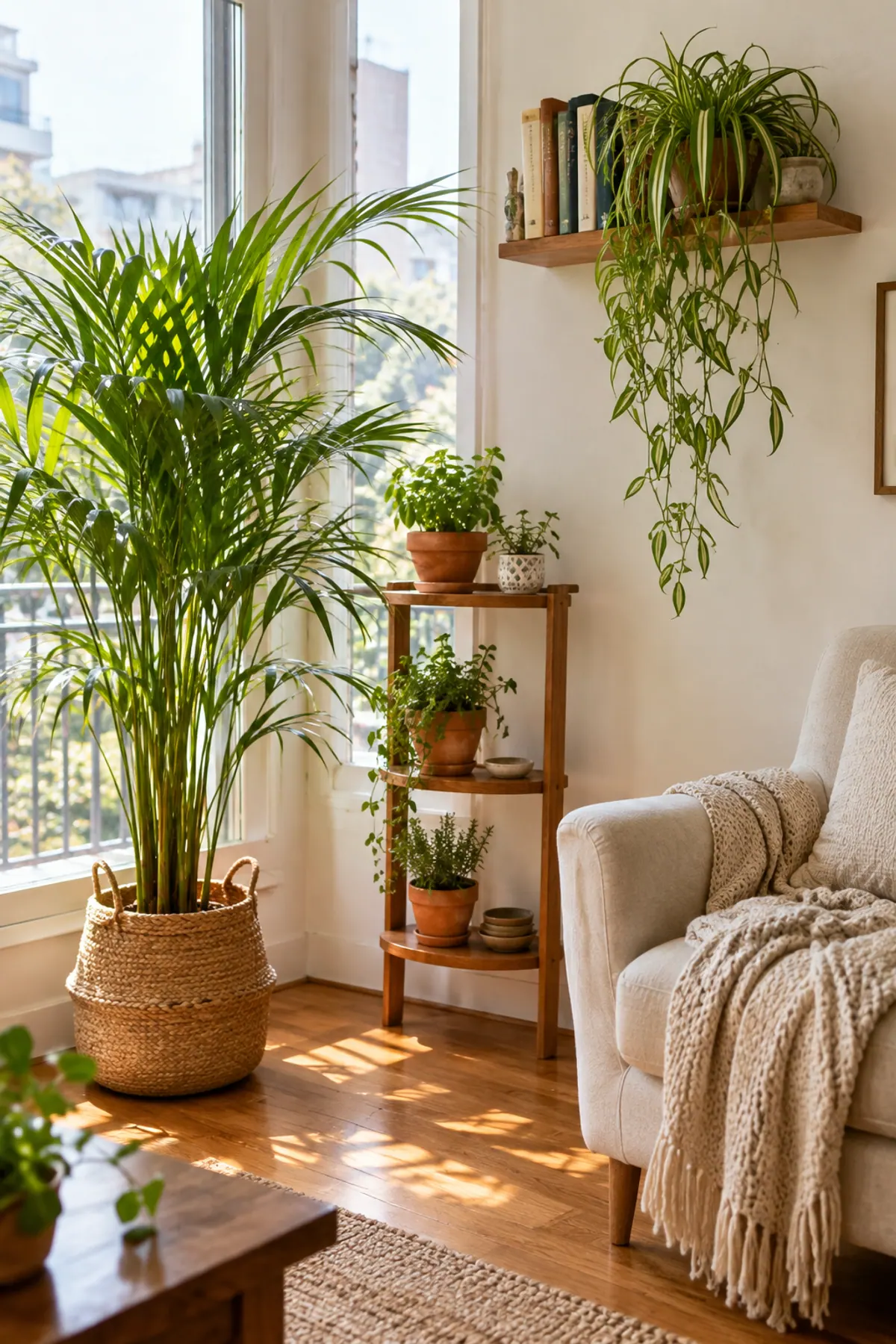
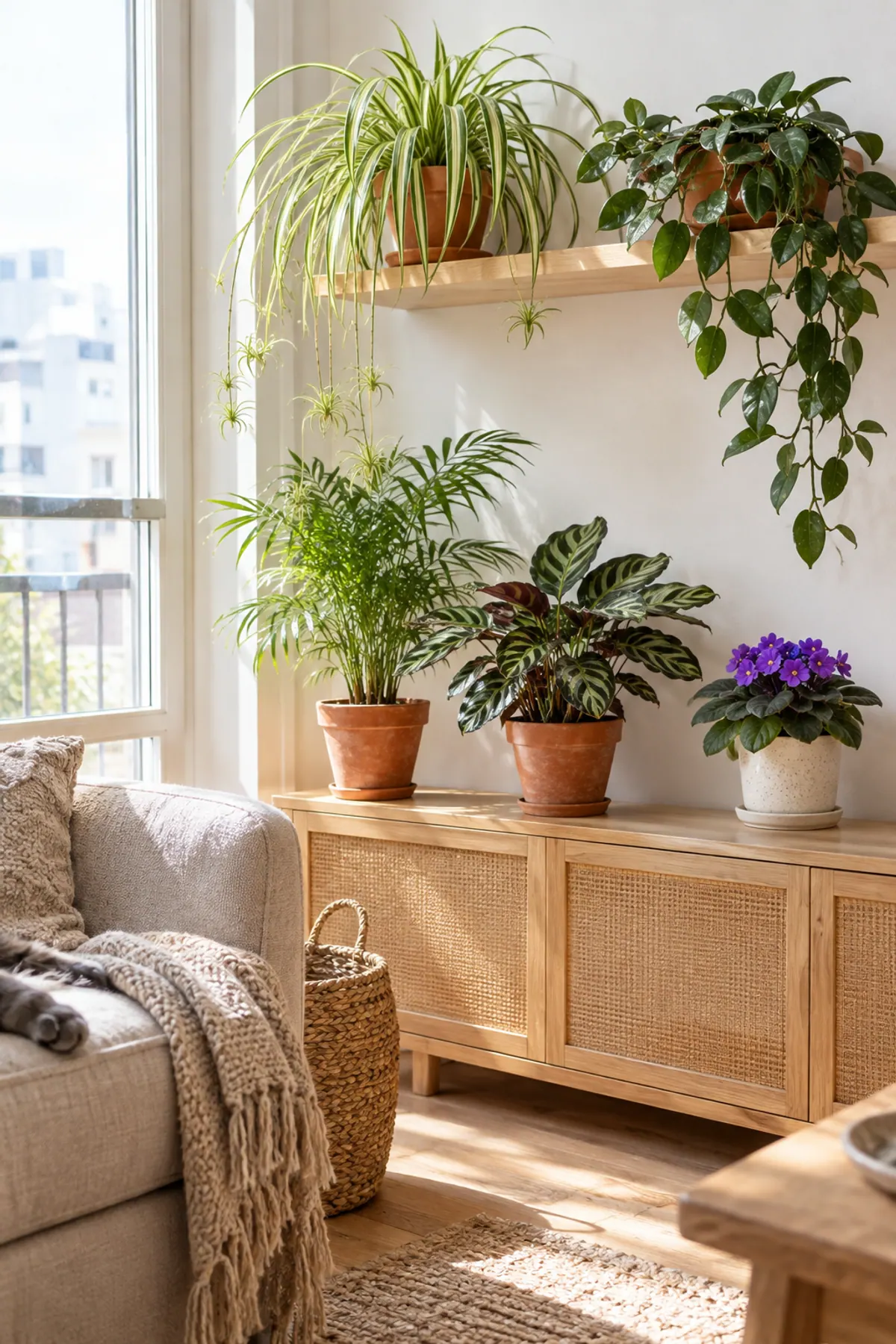
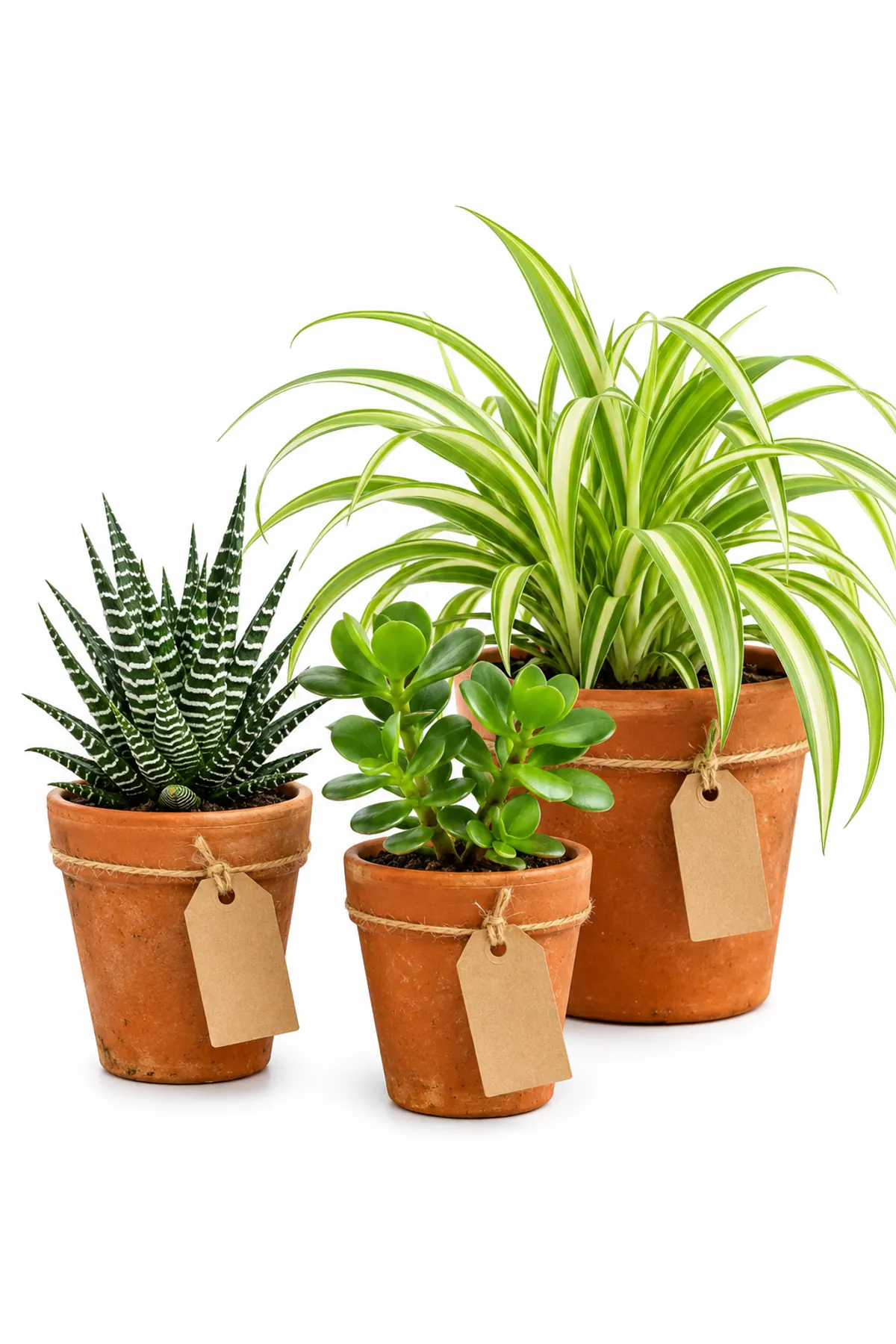
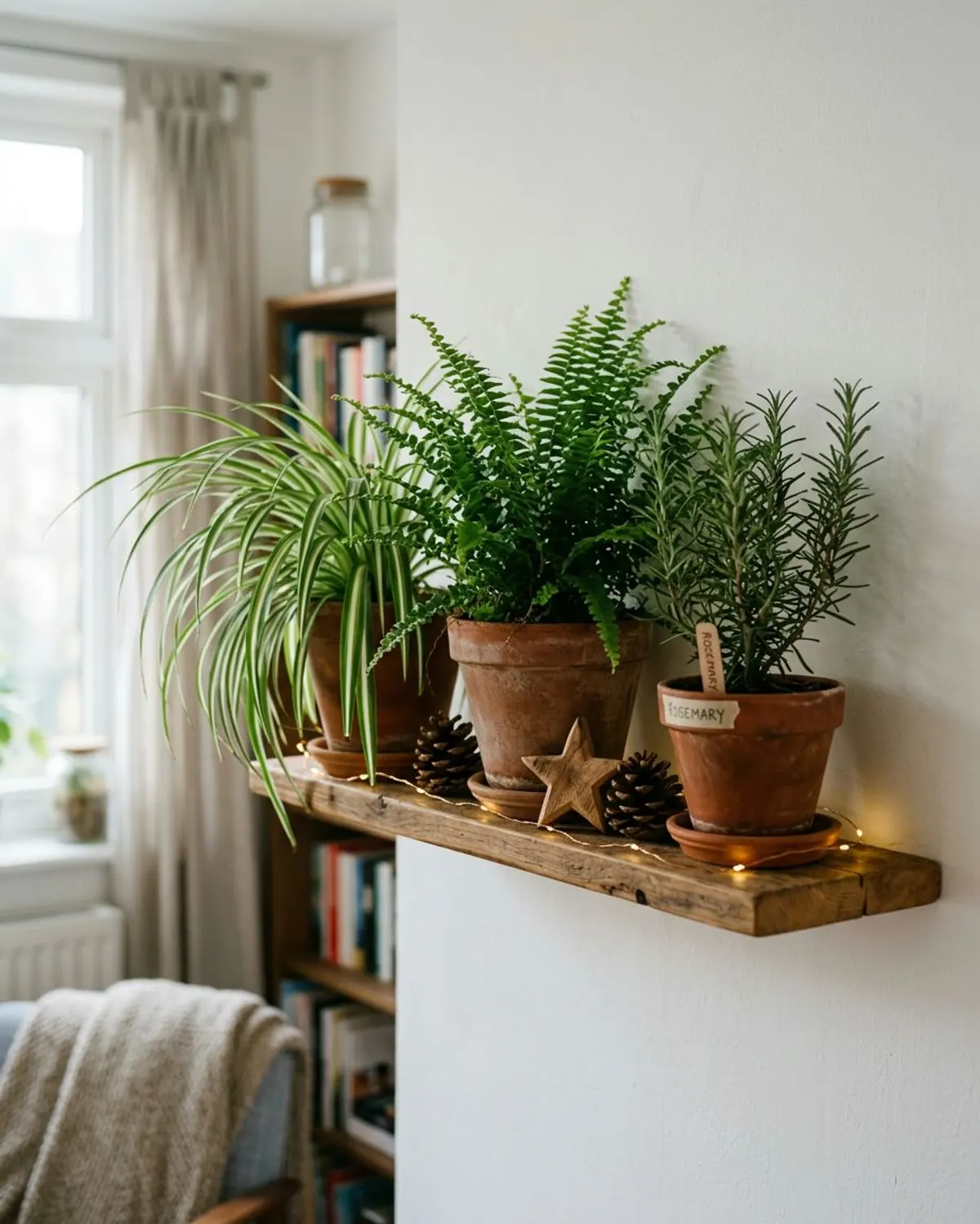
A single shelf can carry a whole holiday look. Line up a spider plant, a Boston fern and a rosemary, lay a thin battery string along the front edge and add a few pine cones or a small wooden star. All three plants are listed non-toxic by the ASPCA, and nothing on the shelf is glass or tinsel. For more ways to style plants without taking over a room, see our indoor plant decor ideas for small spaces.
A Christmas tree made of plants
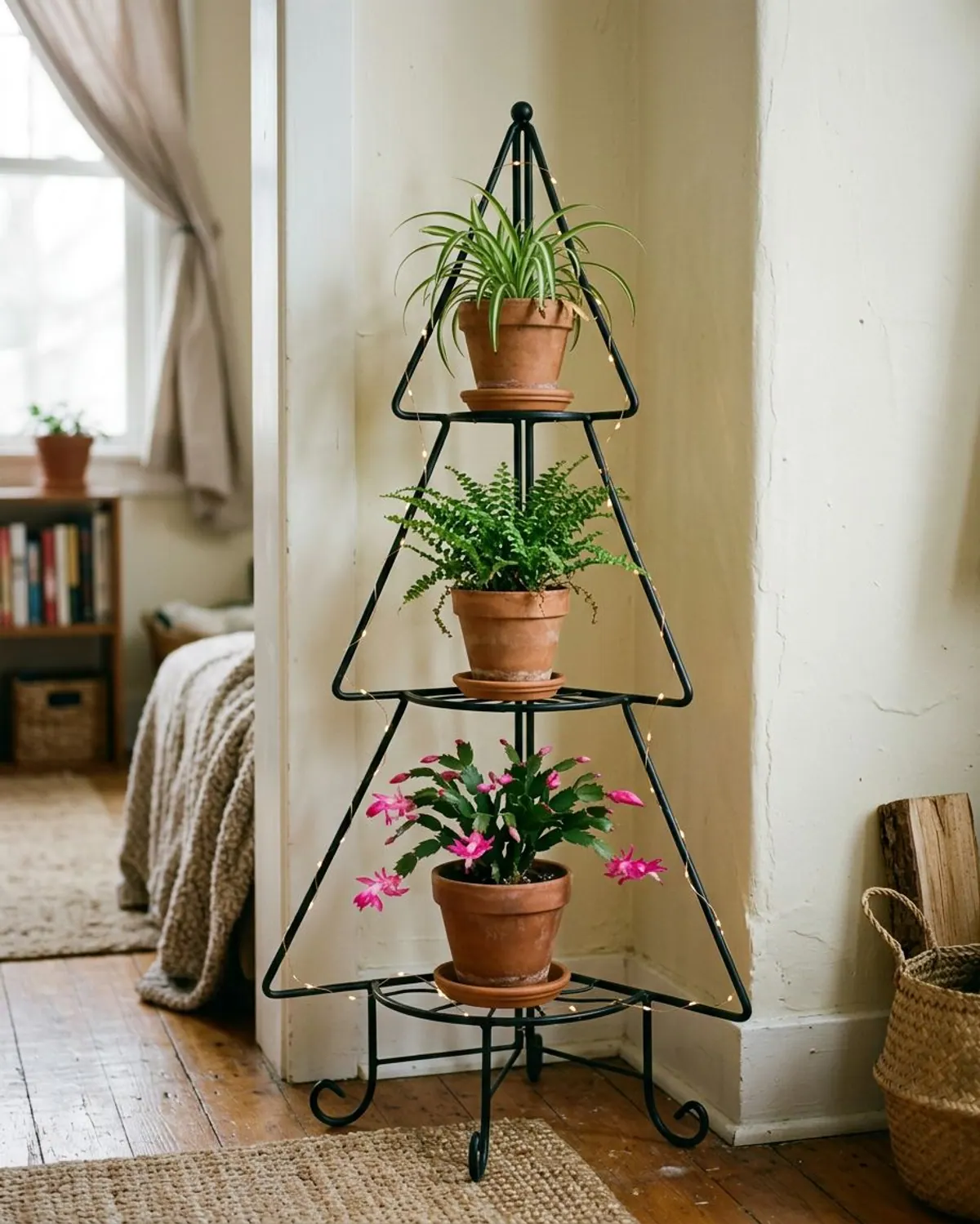
A three-tier plant stand shaped like a tree turns small pots into a tiny Christmas tree. Put the Christmas cactus on the wide bottom tier, the Boston fern in the middle and a spider plant on top, all non-toxic on the ASPCA list. Lay a battery string along the frame, not through the leaves, and move the whole stand away from a heater.
Norfolk Island pine, rosemary and Christmas cactus
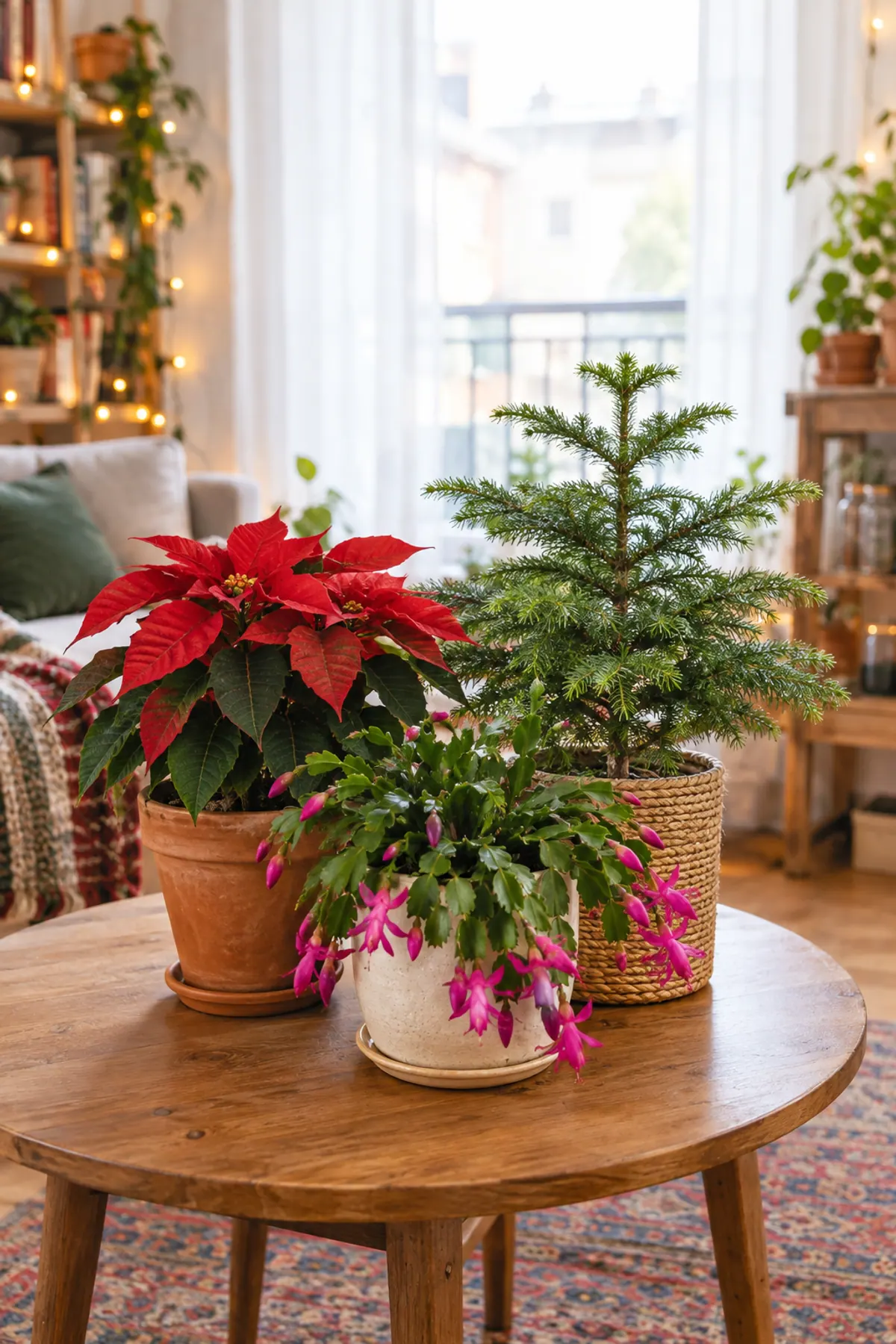
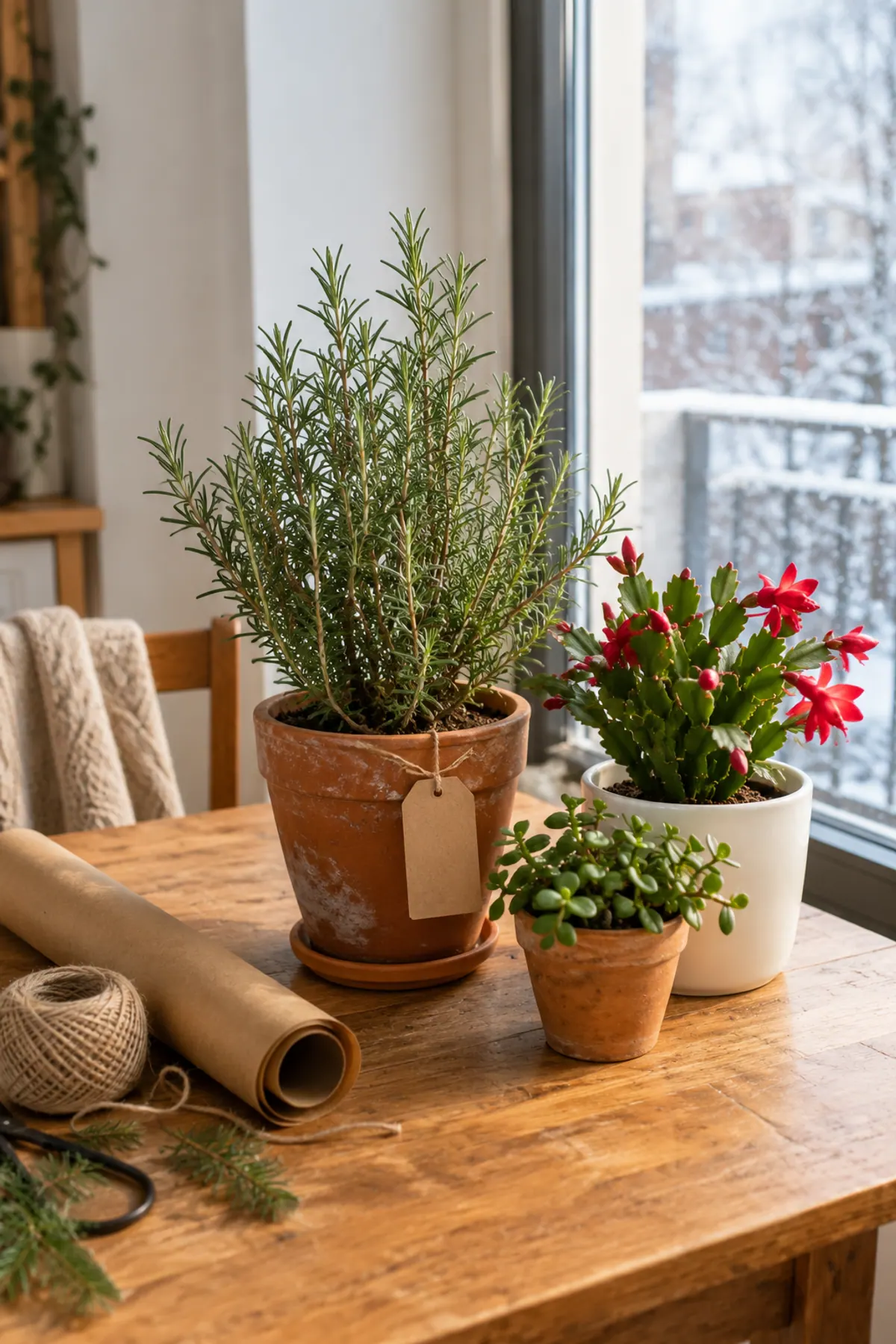
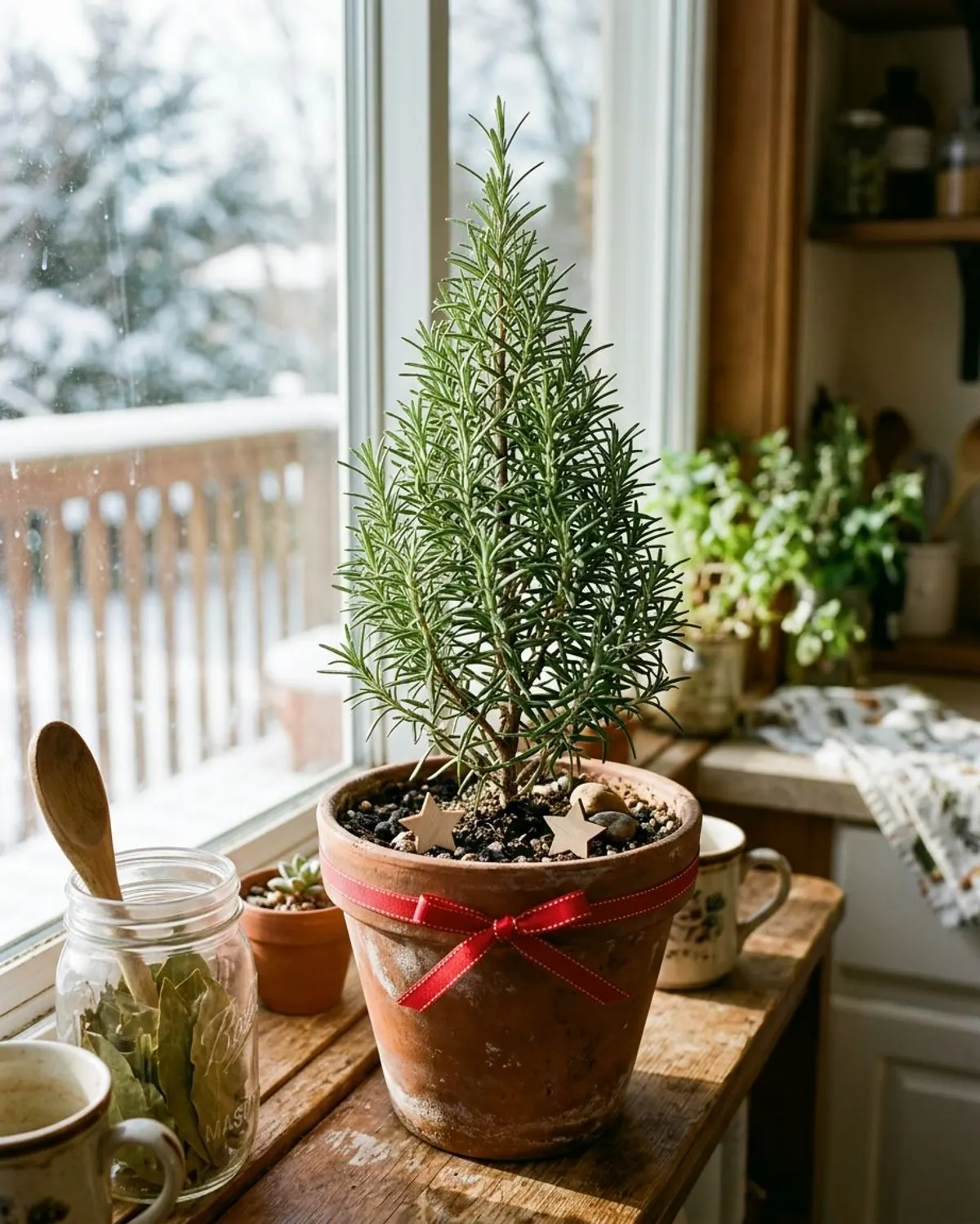
These three need almost no decor. A Norfolk Island pine already looks like a tree, so a handful of mini ornaments is plenty (the full plan for keeping one alive after the holidays is in our Norfolk Island pine care guide). A rosemary trimmed to a cone only needs a ribbon, and a Christmas cactus in bloom needs a ribbon on the pot and nothing else.
What to buy for plant decor
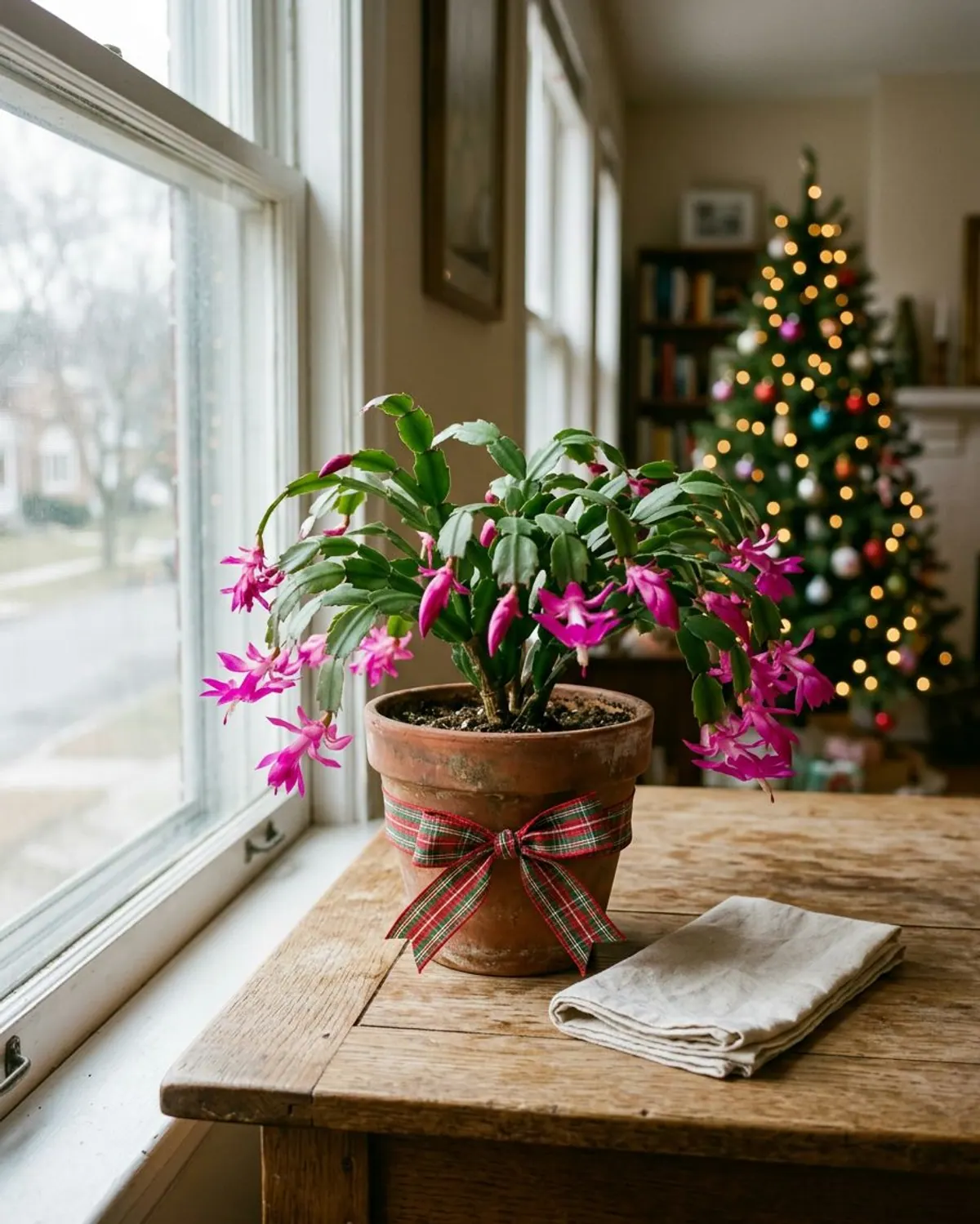
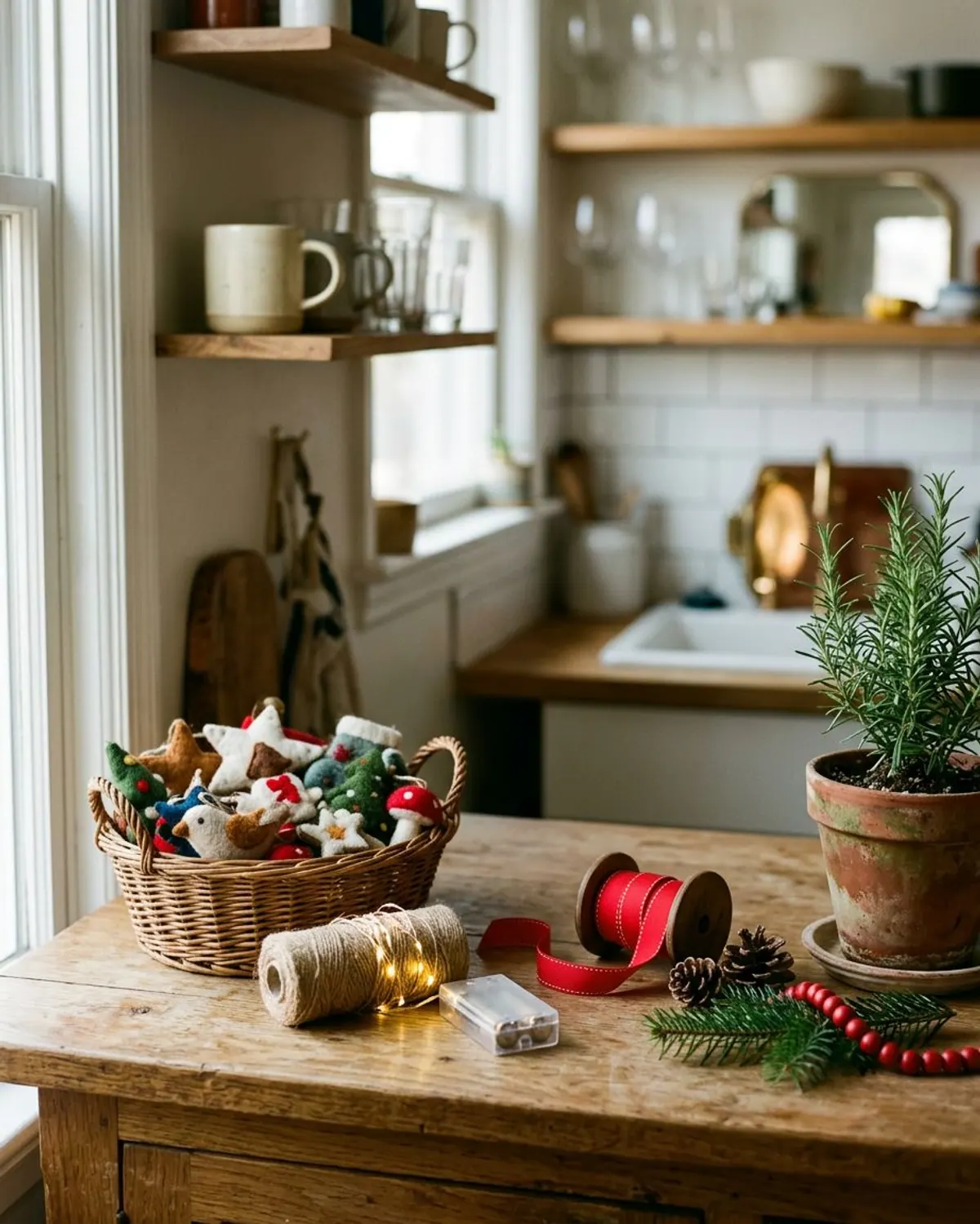
Everything you need fits in one small basket, as the photo shows. Choose battery LED fairy lights with a closed battery box, felt or wooden mini ornaments and ribbon.
Shop the look
- Check the label
Battery LED fairy lights, warm white
Typically $8 to $15
A thin string with a small battery box needs no outlet, so there is no long cord near a pet.
Check price on Amazon for Battery LED fairy lights, warm white -
Mini felt or wooden ornaments
Typically $8 to $15
Light enough for a Norfolk pine branch and nothing to shatter. Keep the plant out of a pet's reach.
Check price on Amazon for Mini felt or wooden ornaments -
Clear adhesive cord clips
Typically $5 to $10
Keeps a cord flat along the back of a shelf instead of hanging.
Check price on Amazon for Clear adhesive cord clips -
Plug-in outlet timer
Typically $8 to $15
Switches plug-in lights off at bedtime, as the CPSC advises.
Check price on Amazon for Plug-in outlet timer -
Plaid ribbon, 1.5 inch wide
Typically $5 to $10
Tie it around the pot, not the plant.
Check price on Amazon for Plaid ribbon, 1.5 inch wide
We earn from qualifying purchases, which never changes what we recommend. Read our disclosure and editorial guidelines.
Giving a decorated plant as a gift
A plant you decorate is also an easy gift, and the person who gets it needs to know how to keep it alive and whether it is safe around their cat or dog. The Plant Gift Tags and Care Cards ($5) give you 8 tie-on care cards (rosemary tree, Norfolk Island pine, basil, thyme, mint, pothos, snake plant and a generic houseplant card), each with a pet note taken from the ASPCA lists, plus 12 gift tags, so the person who gets the plant also gets the care steps. For wrapping, see our guide to wrapping a potted plant as a gift in winter.
Before you plug in a decorated plant
Frequently asked questions
Is it safe to put Christmas lights on houseplants?
It can be, with some care. Choose LED or battery strings, since the University of Maine Extension notes LEDs give off little heat, and use plug-in sets only if they are tested by a lab such as UL or ETL and free of damage, as the CPSC advises. Place the lights around the pot or along the shelf rather than through the leaves, and switch them off at night.
What Christmas decorations are bad for cats and dogs near plants?
The ASPCA says to steer clear of tinsel, since ingested tinsel can cause severe vomiting, an obstructed digestive tract, dehydration and possible surgery, and to keep glass or plastic ornaments out of paws' reach. It also says a wire can deliver a potentially lethal electrical shock and a punctured battery can cause burns to the mouth and esophagus.
Which houseplants are safe to decorate for Christmas if I have a cat?
The ASPCA lists Christmas cactus, Norfolk Island pine (listed as Australian pine), rosemary, spider plant and Boston fern as non-toxic to cats and dogs. Even a non-toxic plant can upset a stomach if eaten, so keep decor light and tidy.
Can I decorate a snake plant for Christmas?
Yes, but the ASPCA lists the snake plant as toxic to dogs and cats, with nausea, vomiting and diarrhea listed as signs. Keep it on a high shelf or in a room the pet cannot enter, tie a ribbon on the pot, and put lights on the shelf instead of the leaves. A spider plant is a non-toxic swap.
Will string lights stop my Christmas cactus from blooming?
They can, if they light the plant during its long dark nights. Clemson Cooperative Extension says light that interrupts the dark period can prevent flowering, and as little as 2 hours of interrupted lighting will inhibit bud set. Keep the strings off a cactus that has not set buds yet, or switch them off early.
How many ornaments can I put on a small plant?
There is no tested number. Our rule of thumb is five or six tiny felt or wooden pieces on a two-foot Norfolk Island pine, hung from the sturdier branch tips. If a branch bends, take one off.
Save it for later
Pin this to your Houseplants board so it's there when you need it.
Save to Pinterest