This post contains affiliate links. As an Amazon Associate we earn from qualifying purchases, at no extra cost to you. Read our disclosure.
Safety first: Herbs can be powerful. If you are pregnant, nursing, take medication or have a health condition, check with your doctor or pharmacist first. Please read our herbal & garden safety notes before you start.
Key takeaways
- Rule one: check the soil first. Dry an inch or so down means water (Iowa State); Illinois Extension tests two inches deep.
- Light changes everything: less light in winter means less water, so low-light plants wait longer between checks.
- The chart is a starting point. Its day ranges are our rule of thumb, since no extension page we opened gives days per light level.
- Log what happens, so your own windows replace our ranges by January.
In this post8 sections
- The rule first: check the soil, then use the chart
- Plant watering schedule chart by light level for winter
- Match your spot to a row: what bright, medium and low light look like
- What changes the numbers: pot size, heat and season
- A weekly 5-minute routine that replaces the calendar
- Quick answers for the plants that fight the chart
- Make it stick: your next step
- FAQ
Best use of this chart: let it tell you when to start checking, then let the soil decide. A plant watering schedule by light level works as a starting rhythm only, because university extension pages say to water when the plant needs it and not by the calendar. The ranges below are for the dark, dry months, when plants use less water and a fixed weekly routine is how most get overwatered.
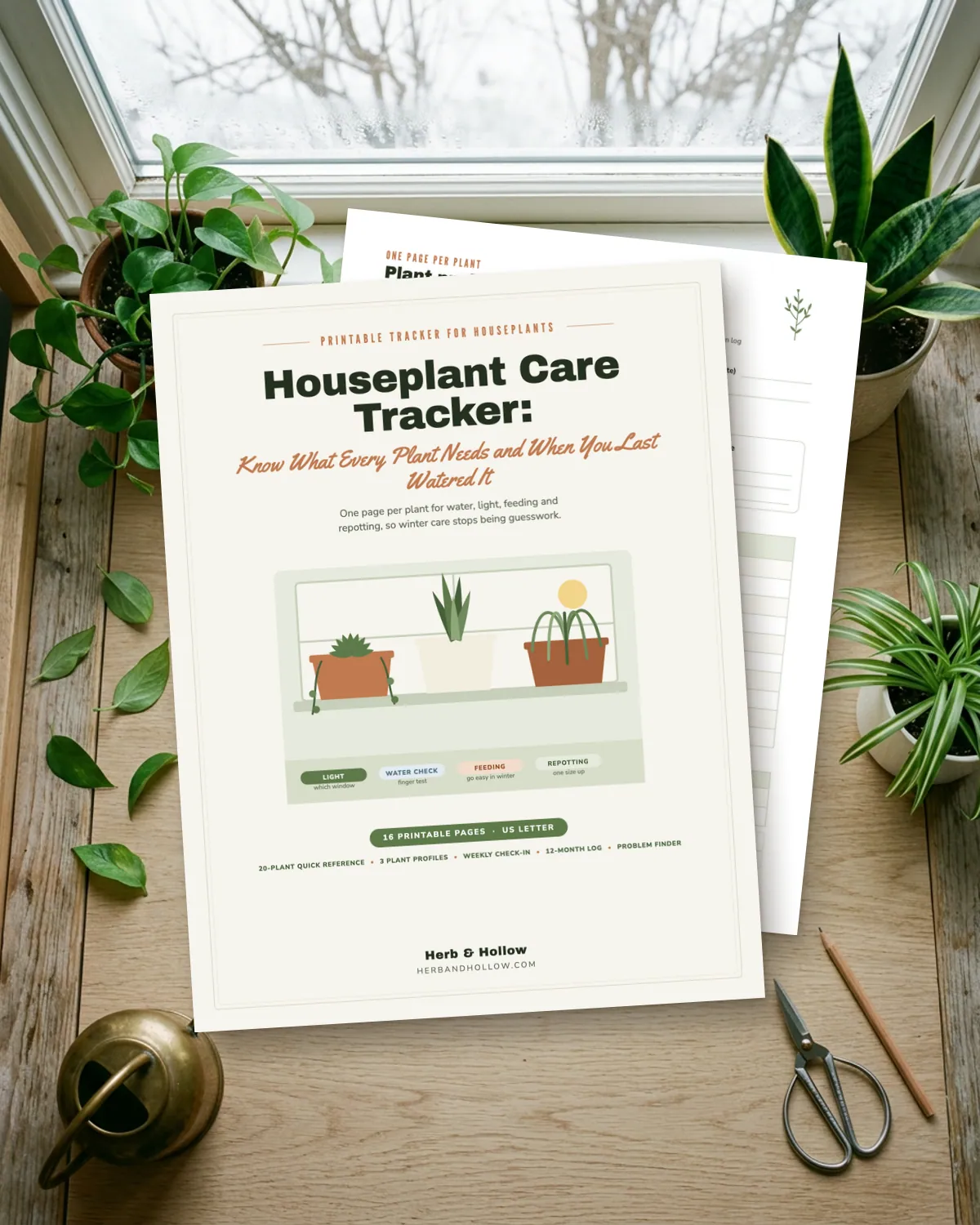
If you keep forgetting what you checked and when, the Houseplant Care Tracker ($4) gives each plant one page with a log for the last check, so you stop guessing. It holds the finger test, the pot-weight test and a winter page, and it is the fill-in version of this chart.
The rule first: check the soil, then use the chart
Iowa State Extension says that if the soil is dry to the touch down an inch or so, it is time to water, and if it feels wet, wait and check again in a day or two. University of Illinois Extension says to test with your finger to a depth of two inches, and that plants should be watered when they need it and not by the calendar. Both agree on the idea and differ on depth, so pick one depth (an inch for small pots, two for big ones is a sensible habit) and stay with it.
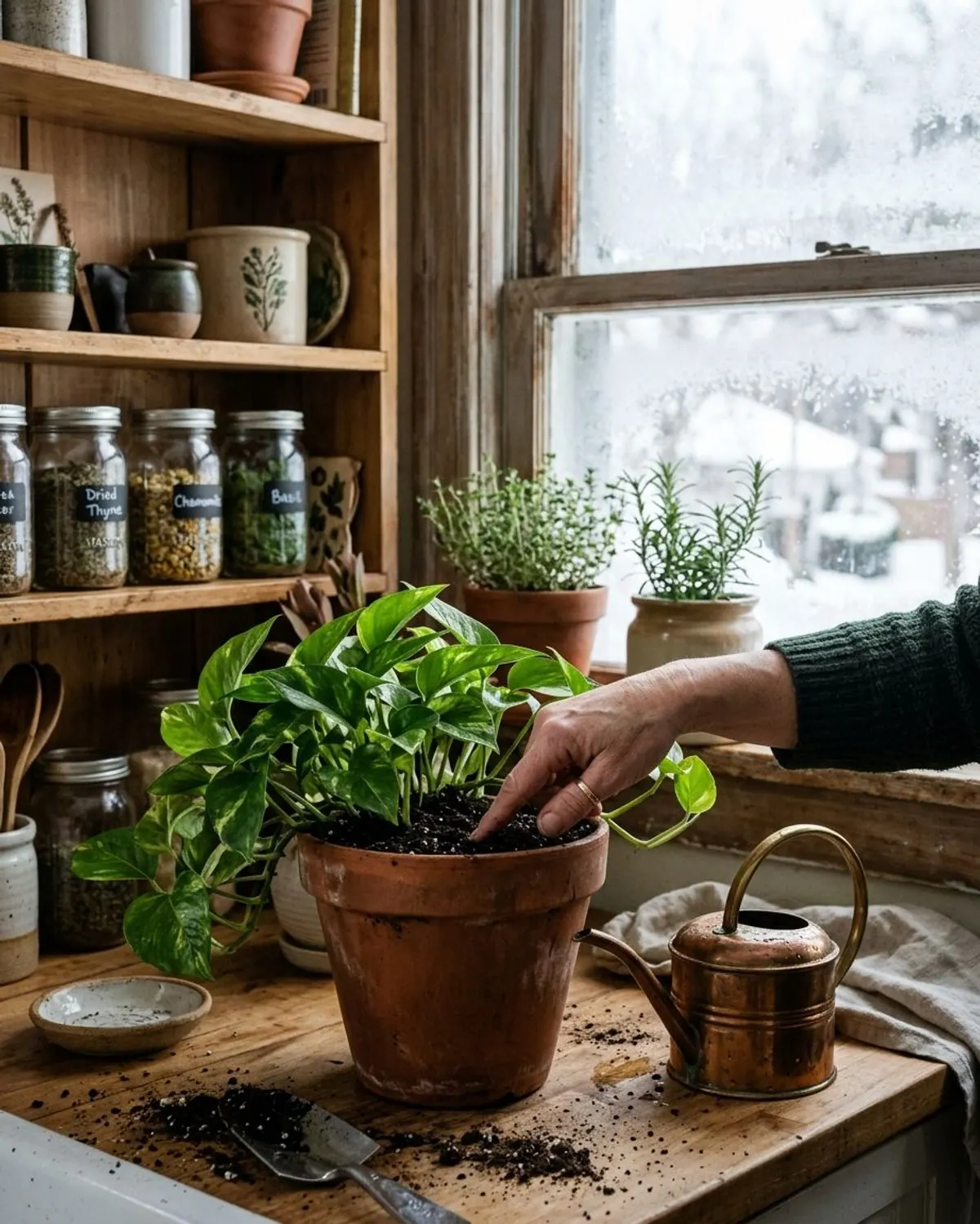
Sources: Iowa State, How to Care for Houseplants (last reviewed Oct 2023), University of Illinois Extension, Watering.
Plant watering schedule chart by light level for winter
Here is the chart. These day ranges are our own rule of thumb for when to begin checking, not numbers from an extension page. We looked, and the extension pages we opened (Iowa State, Illinois, Nebraska and NC State) give no day counts per light level. They say watering frequency depends on light, temperature, humidity, pot size, plant size, potting mix and drainage, so your home can land outside every range.
| Light in your spot | Succulents and cacti | Snake plant, ZZ plant | Leafy tropicals (pothos, philodendron, peace lily) |
|---|---|---|---|
| Bright: a south or west window, light that casts a sharp shadow | 14 to 21 days | 10 to 14 days | 5 to 7 days |
| Medium: a few feet back from a bright window, a soft shadow | Too dim for most; move closer to the glass | 10 to 14 days | 7 to 10 days |
| Low: a corner or hallway, barely a shadow | Not a good spot | 14 to 21 days | 10 to 14 days |
How to read it: water, wait for the first number in the row, then check. If the soil is still damp, check again every two to three days. Water only when the soil says dry, and empty the saucer afterward.
Sources: UNL Water, Winter Care of Indoor Plants (Nov 2020), NC State Extension, Winter Considerations for House Plants (Dec 2023).
Match your spot to a row: what bright, medium and low light look like
Iowa State describes bright, indirect light as light bright enough to cast a distinctive shadow without sun rays hitting the leaves directly. That is a handy test: hold your hand over the plant at midday and look at the shadow. A sharp shadow is bright, a soft one is medium, and a faint blur is low.
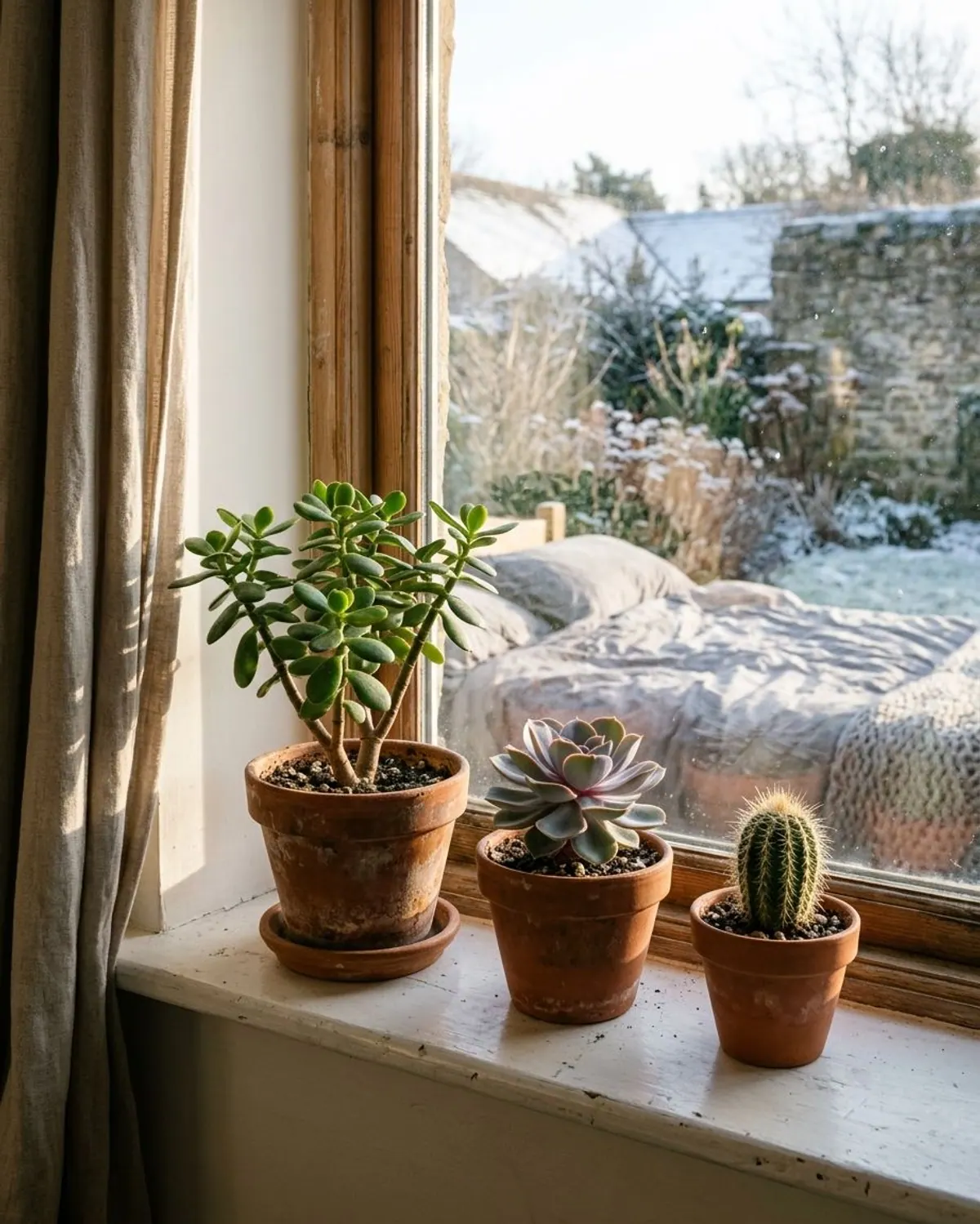
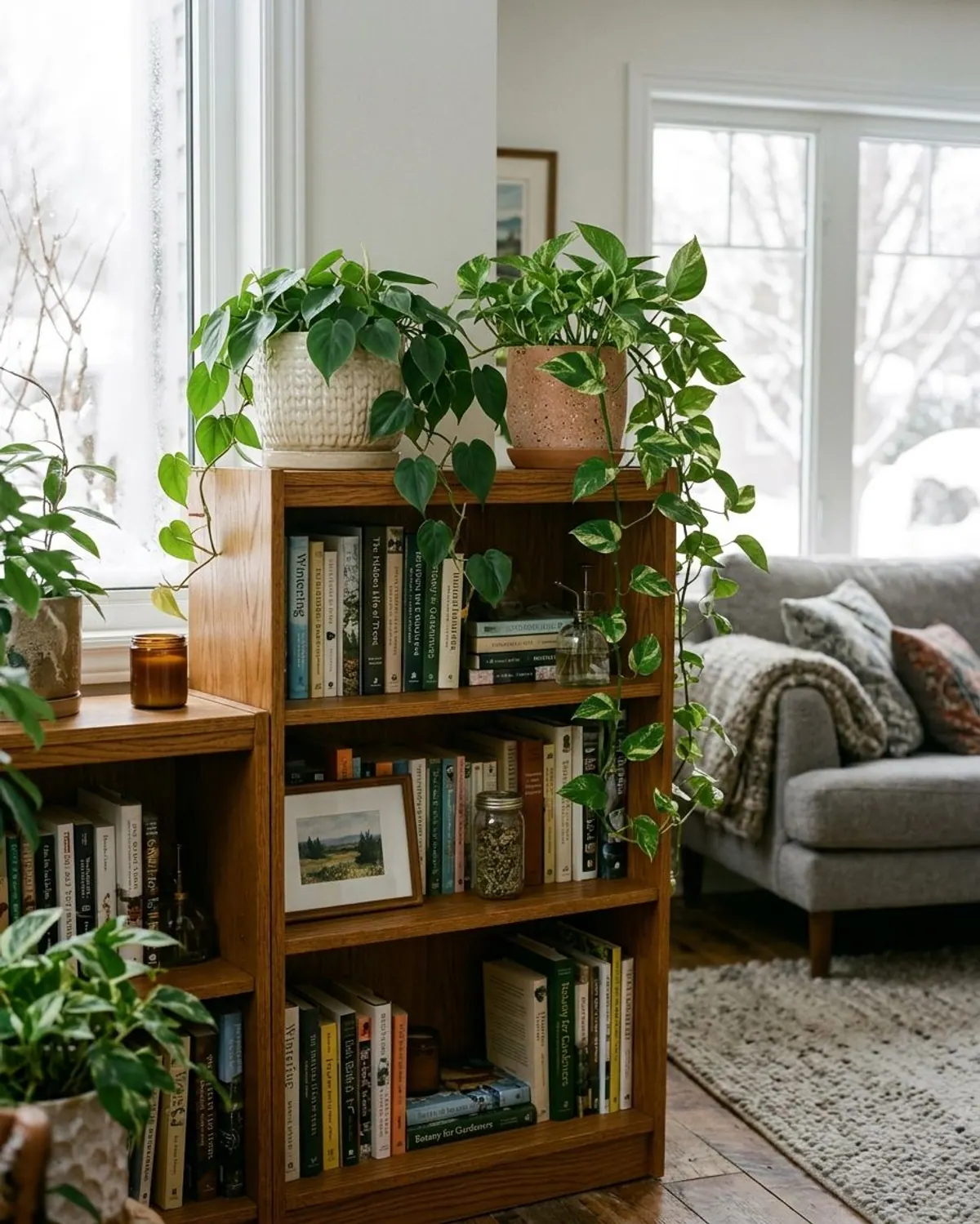
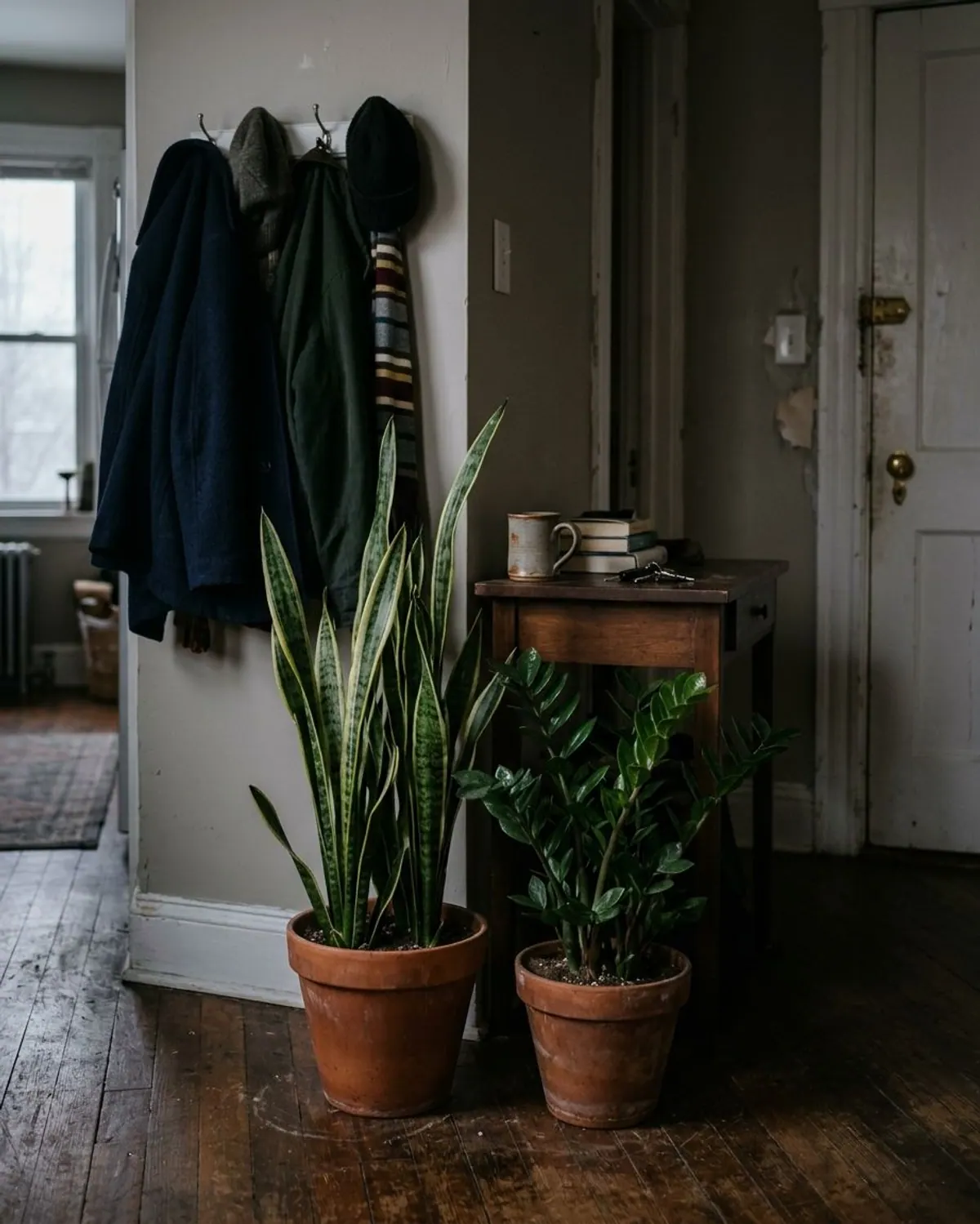
NC State Extension says light tends to be the greatest limiting factor in winter, because shorter days and a lower sun can make north and east windows too shady. If a plant has drifted to the low row since autumn, move it closer to the glass or read our guide to grow lights for small spaces.
What changes the numbers: pot size, heat and season
Illinois Extension lists pot size, plant size, potting mix and drainage among the things that change how often a plant needs water. These are our adjustments, built on that list, so treat them as habits and not as science.
| If this is true | Start checking | Why |
|---|---|---|
| Small pot, such as a 4 inch nursery pot | A day or two sooner | Less soil holds less water |
| Large pot, soil mostly in the middle | A few days later | More soil stays damp longer |
| Pot with no drainage hole | Later, and water in small amounts | Water has no way out |
| Plant sits near a heat vent | Sooner | Warm air dries soil faster |
| Cool room, plant by a cold window | Later | Cold, dim spots stay wet longer |
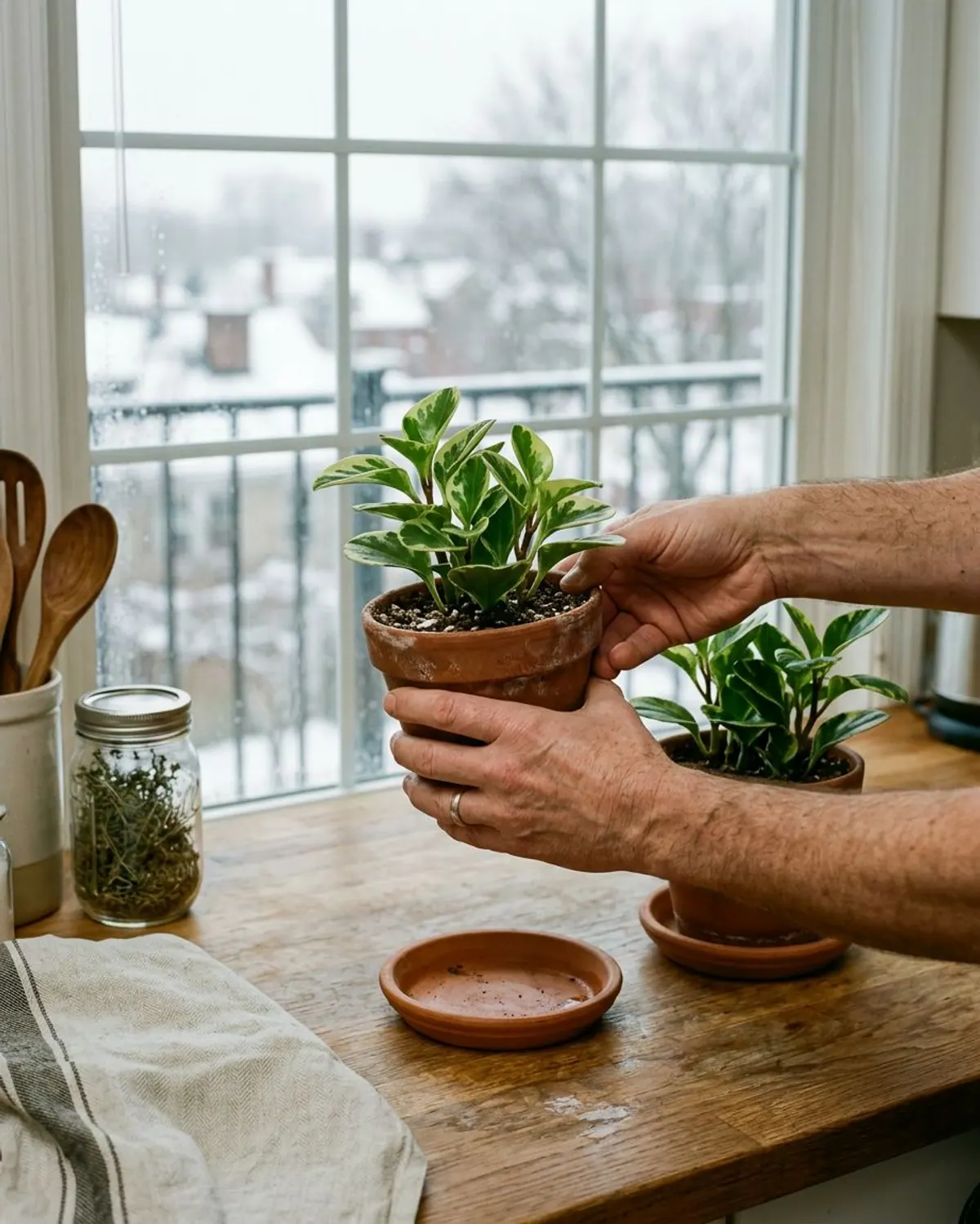
The pot-weight test helps with big pots where a finger cannot reach the bottom. Lift the pot right after watering so you know what wet feels like, then lift it again before the next check. When it feels much lighter, it is time to test the soil.
A weekly 5-minute routine that replaces the calendar
Weekly check-in for winter houseplants
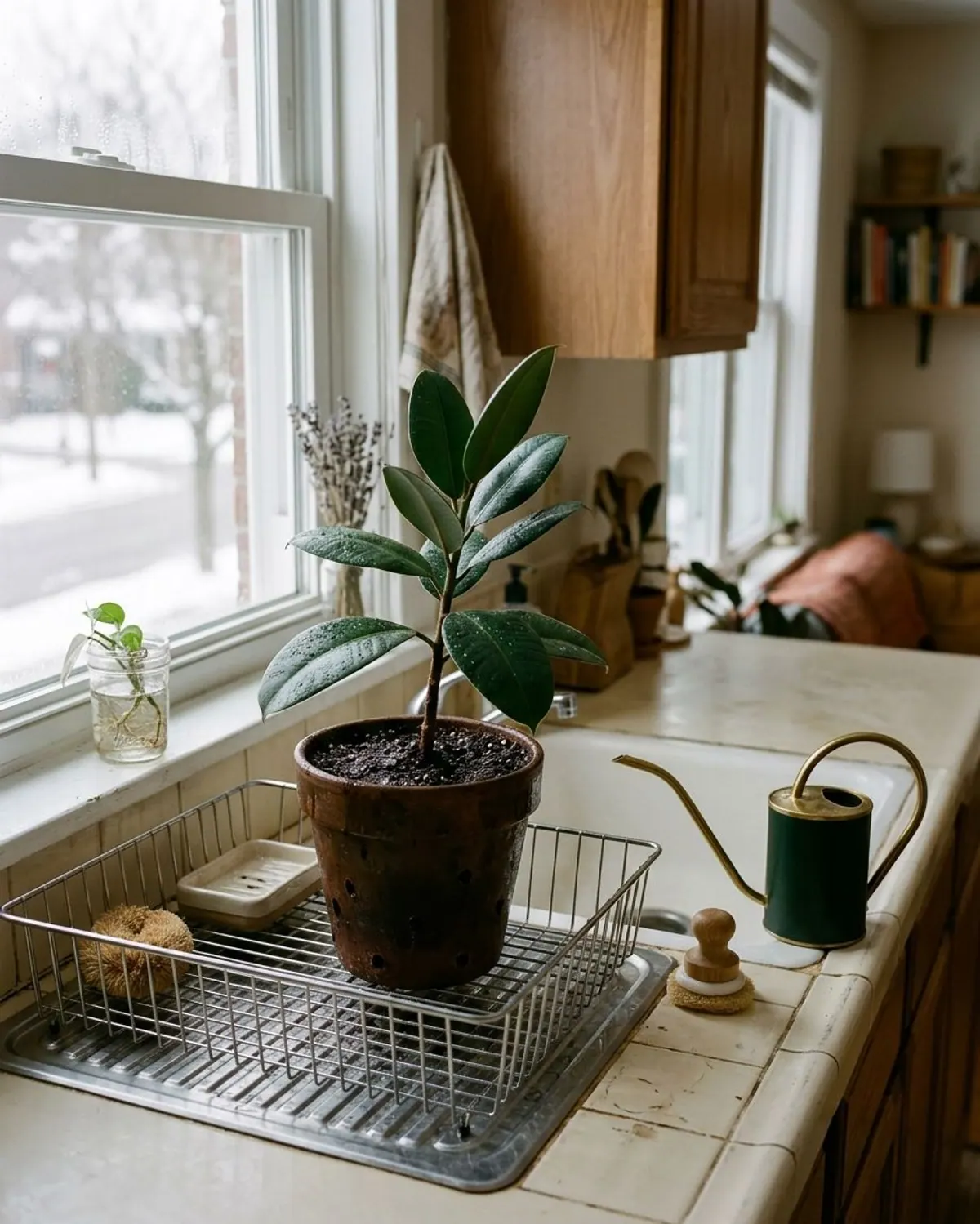
Iowa State says to leave water in the saucer for no more than about 30 to 45 minutes. A plant on a wet saucer for days is the classic overwatering story.
Want a free grid first? The free Herb Journal starter pages include a monthly watering tracker with 31 day columns for 18 pots. It was written for herbs, but the mark-W-for-water, dot-for-checked grid works for any potted plant on this chart.
Quick answers for the plants that fight the chart
Plants with big thirsty leaves, such as peace lilies, sulk faster when dry, so they sit at the short end of every range. Succulents, snake plants and ZZ plants forgive a skipped week, so they sit at the long end. For a plant labeled constantly moist, moderately dry or very slightly moist, Illinois Extension says labels use exactly those phrases, so follow the label over the chart.
Yellow lower leaves with soil that stays wet usually point to too much water, while crisp brown tips with dry soil point to the opposite. If a snake plant is turning yellow, see snake plant care and what yellow leaves mean, or add a self-watering pot for a plant you travel away from.
Watering tools
-
Slim-spout watering can
Typically $10 to $25
A long thin spout puts water on the soil, not the leaves, and is easier to control on a crowded windowsill.
Check price on Amazon for Slim-spout watering can -
Soil moisture meter
Typically $8 to $20
A probe that reads deeper in the pot than a finger. Treat it as a second opinion, since cheap ones can read wrong.
Check price on Amazon for Soil moisture meter -
Plant saucers with a lip
Typically $8 to $20
Catch the drain water so you can empty it after 30 to 45 minutes.
Check price on Amazon for Plant saucers with a lip
Make it stick: your next step
The chart gets you started, and your own notes make it accurate. Print the Houseplant Care Tracker ($4) and log the first check for each plant this week, so by January you have real numbers for your own windows. If you also grow herbs, seeds and pots, the Herb Garden Binder ($25) holds all nine of our printables, including the tracker, in one download.
Related: winter houseplant care tips for dark, dry months and low-light houseplants for apartments.
We earn from qualifying purchases, which never changes what we recommend. Read our disclosure and editorial guidelines.
Frequently asked questions
How often should I water houseplants in winter?
There is no single number. Extension pages say frequency depends on light, temperature, humidity, pot size and potting mix, and that winter watering can be significantly reduced. Use the chart as a start, then water only when the soil is dry about an inch or two down.
Is there an indoor plant watering schedule by light level?
Not from any extension page we opened, so the chart on this page is our own rule of thumb for when to start checking: sooner in bright light, later in low light. The soil check always comes first.
Should I water on the same day every week?
Pick one day to check every plant, not to water every plant. Iowa State says not to water on a fixed calendar but to check for water on a regular schedule.
How deep should I check the soil?
Iowa State says dry to the touch down an inch or so means it is time to water. Illinois Extension says to test about two inches deep. Choose one depth and use it every time.
Is there a free printable watering schedule?
Our free Herb Journal starter pages include a monthly watering tracker with 31 day columns for 18 pots. For a page per plant with the finger test and a winter page, the Houseplant Care Tracker is $4.
Why do plants need less water in winter?
Light is lower and many houseplants rest, so the soil stays damp longer. NC State Extension calls light the greatest limiting factor indoors in winter.
Save it for later
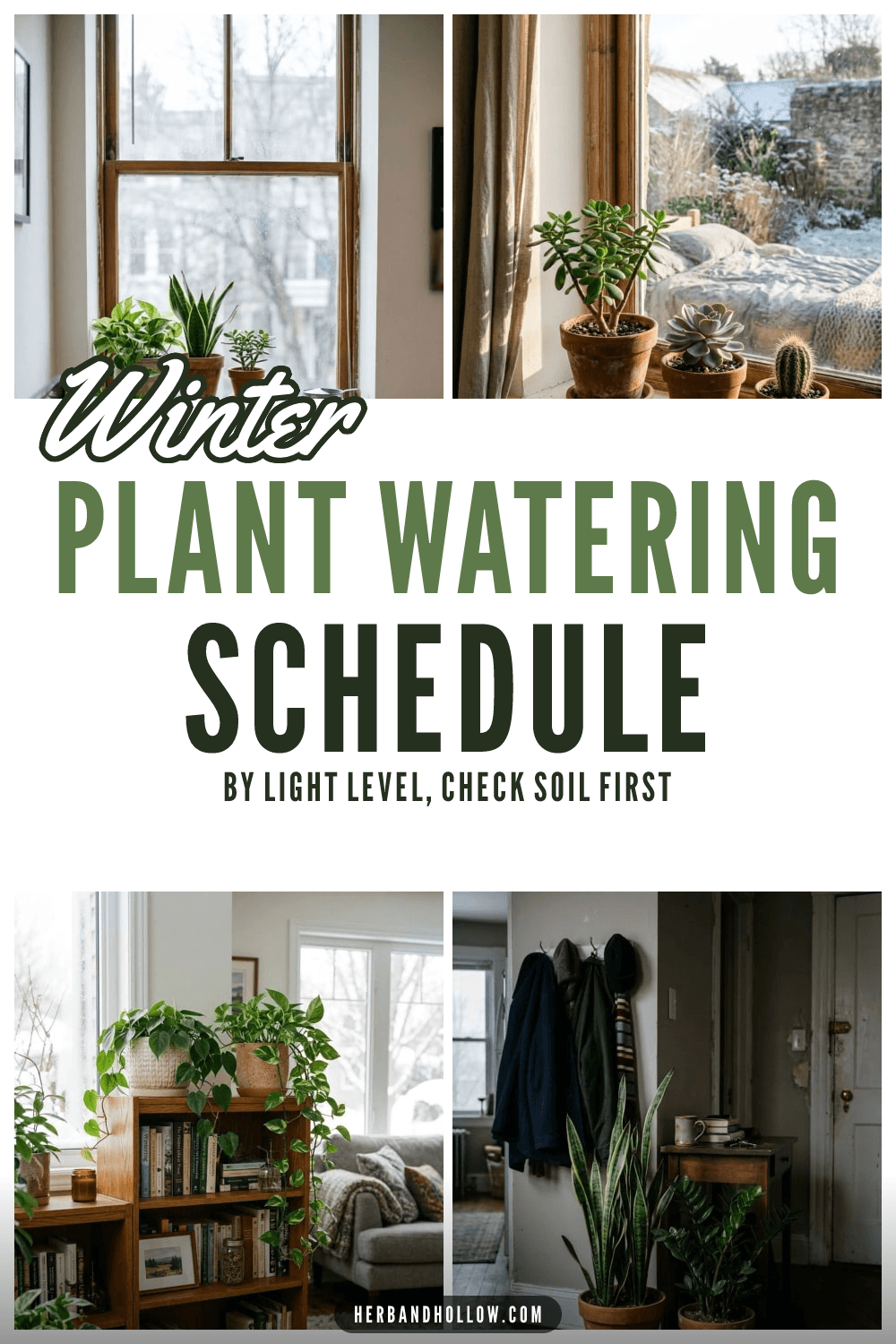
Pin this to your Houseplants board so it's there when you need it.
Save to Pinterest