This post contains affiliate links. As an Amazon Associate we earn from qualifying purchases, at no extra cost to you. Read our disclosure.
Safety first: Herbs can be powerful. If you are pregnant, nursing, take medication or have a health condition, check with your doctor or pharmacist first. Please read our herbal & garden safety notes before you start.
Key takeaways
- Keep days at 60 to 65F and nights near 50F; buds fail above 70F per Clemson
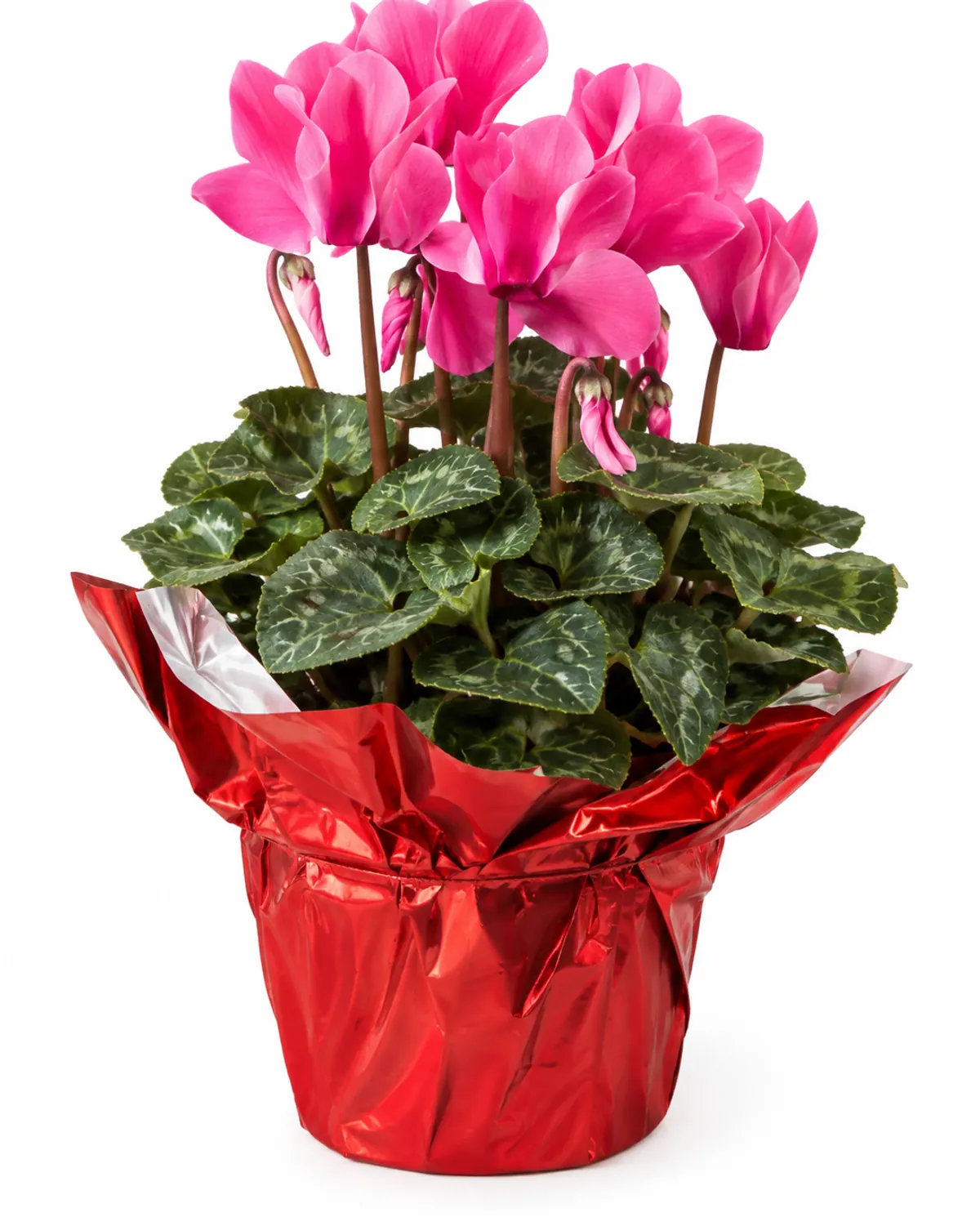
- Water from the saucer or at the pot edge, and remove or puncture decorative foil
- The ASPCA lists cyclamen as toxic to dogs, cats and horses, with tubers the most dangerous part
- Dormancy advice differs: Clemson says keep the soil from drying out, Illinois Extension says keep the tuber dry
- Reblooming indoors is difficult, so treating it as a seasonal plant is a fair choice
In this post10 sections
- Cyclamen care at a glance
- Light and temperature: cool air is what keeps the flowers
- How to water a cyclamen without rotting the tuber
- Cyclamen and pets: what the ASPCA says
- Why cyclamen stops blooming or drops leaves
- After the flowers: dormancy, and where the sources disagree
- Waking it up in September
- Keep it or treat it as a seasonal plant?
- A yearly cyclamen calendar (starting point)
- FAQ
Cyclamen care at a glance
Four extension and gardening sources agree on the basics and differ on what to do after the flowers fade. The table shows the range and the starting point we suggest.
| Need | What to do | Source |
|---|---|---|
| Light | Bright, indirect light while it blooms | Clemson |
| Temperature | Days about 60 to 65F (no warmer than 68F), nights about 50F, away from heat vents | Clemson, Rural Sprout, Illinois Extension |
| Watering | Moist, not soggy; water at the pot edge or from below, never on the tuber | Clemson |
| Drainage | Remove or puncture decorative foil so water can drain | Illinois Extension |
| Bloom time | About a month, sometimes 5 to 6 weeks | Rural Sprout, Clemson |
| Pets | Toxic to dogs and cats; tubers are the worst part | ASPCA |
Light and temperature: cool air is what keeps the flowers
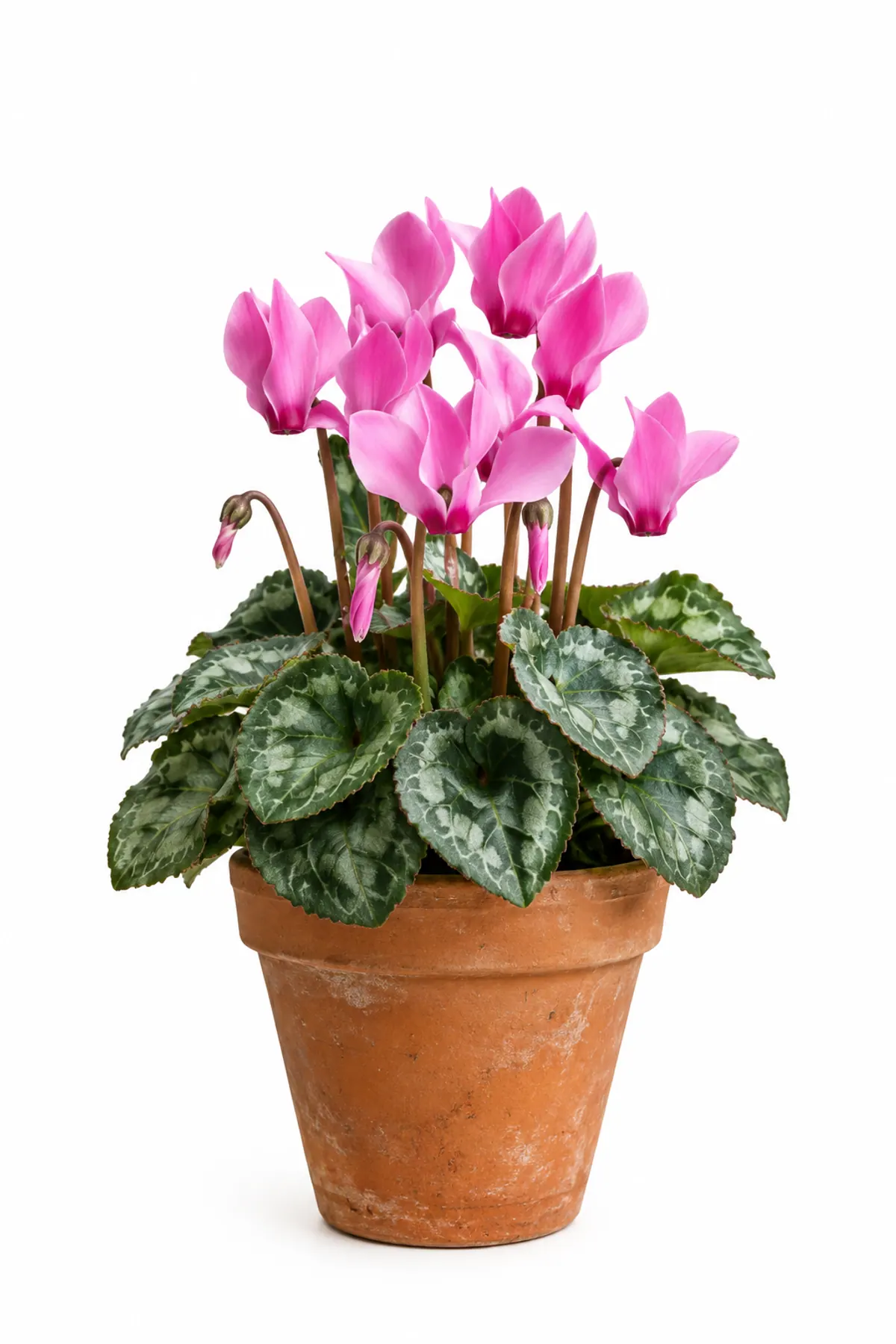
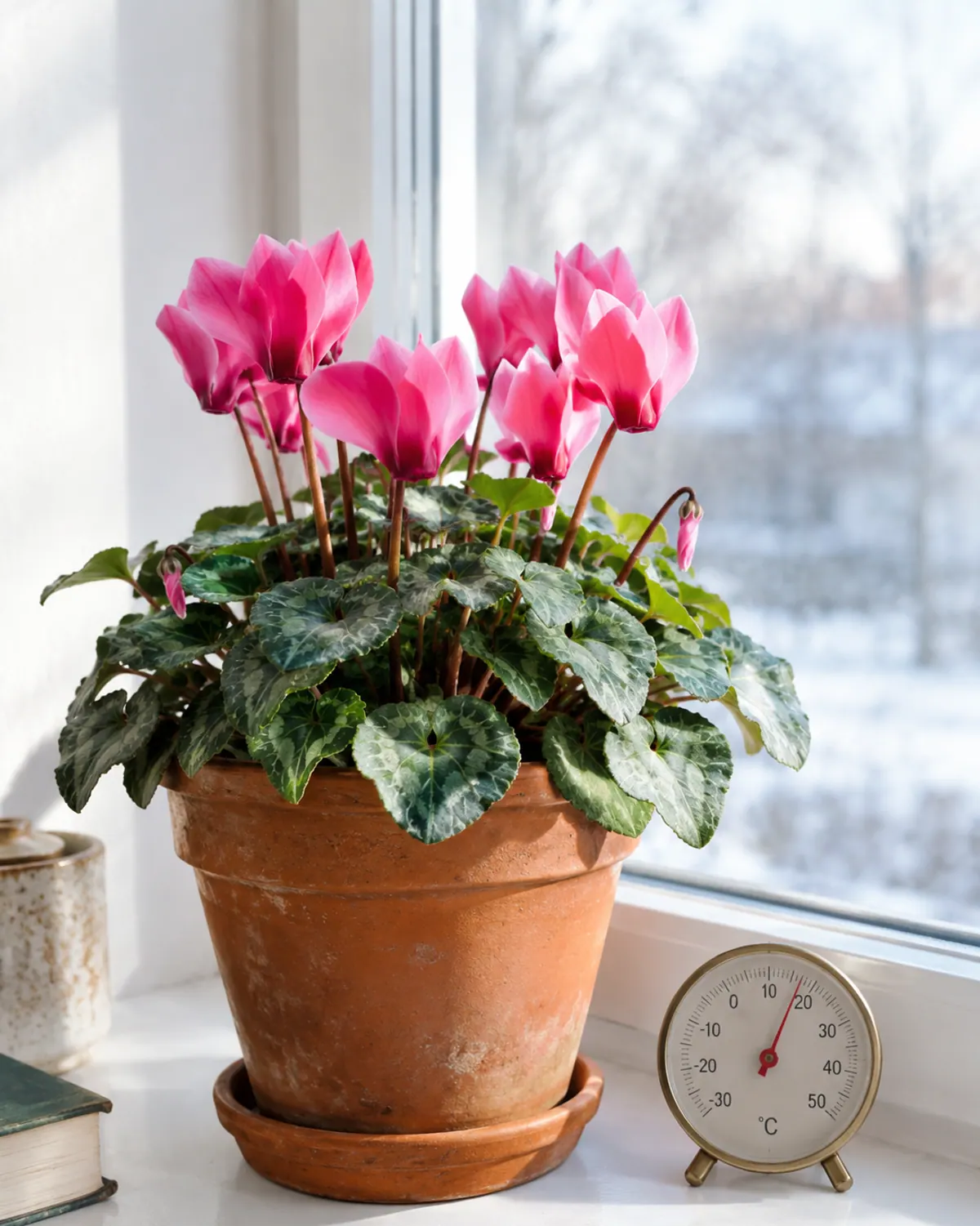
Cyclamen is a cool-room plant. Clemson says to keep daytime temperatures at 60 to 65F with nights around 50F, and warns that above 70F the buds fail to develop (Clemson). Rural Sprout puts the daytime ceiling at 68F and says nights can drop to 50F but not below 40F (Rural Sprout). Illinois Extension gives the same 68F limit and says hot or cold drafts can make the blooms fall off (Illinois Extension).
In a small apartment that usually means a bright windowsill in the coolest room, not the shelf above a radiator. Keep it away from heat vents, which dry the soil too quickly. A cheap room thermometer on the sill tells you more than guessing.
How to water a cyclamen without rotting the tuber
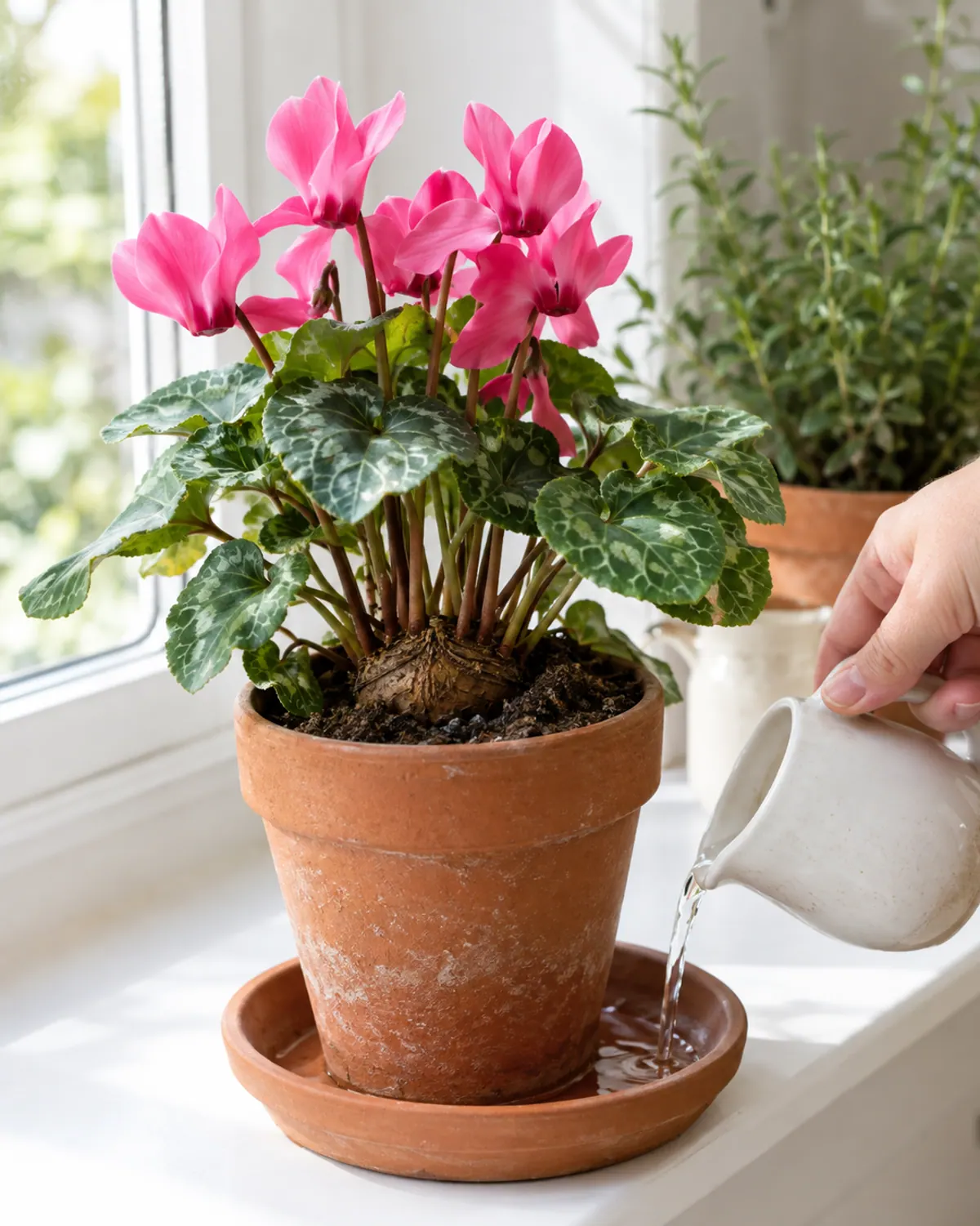
Overwatering is the most common problem. Illinois Extension names overwatering and poor air movement as the main causes of death, usually through disease (Illinois Extension). Clemson says to water when the surface feels dry, along the edge of the pot or from below, so water never sits on the tuber (Clemson).
Cyclamen and pets: what the ASPCA says
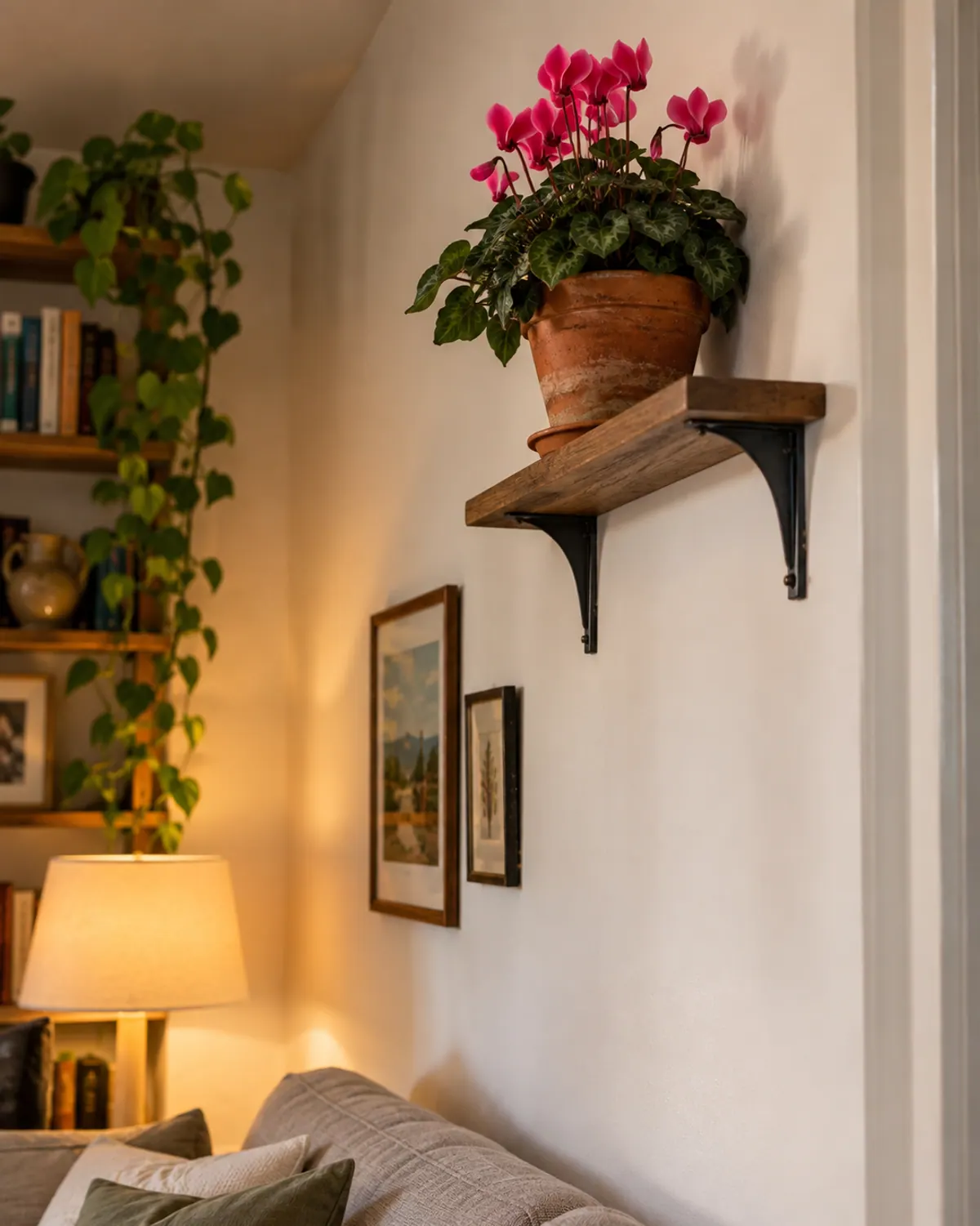
The ASPCA lists cyclamen as toxic to dogs, cats and horses. The toxins are terpenoid saponins, and the signs are drooling, vomiting and diarrhea. After large ingestions of tuber, the ASPCA lists heart rhythm changes, seizures and death. The risk rises with the tuber, so a plant with an exposed tuber on the soil is a worse idea in a home with a digging dog.
Clemson, Epic Gardening and Rural Sprout do not mention pet safety in the pages we read, so do not assume silence means safe. Put the plant on a high shelf or in a room pets cannot enter. If a pet eats any part and seems ill, call your vet or the ASPCA Animal Poison Control Center at (888) 426-4435. A consultation fee may apply. This is general information, not veterinary advice.
For gifts to pet owners, a pet-safe Christmas plant is the safer choice. Our list of Christmas plants with pet-safe picks flagged has more.
Why cyclamen stops blooming or drops leaves
| Sign | Likely cause | What to try |
|---|---|---|
| Yellow leaves in winter | Too warm, or too much water | Move to a cooler sill and let the surface dry before watering |
| Buds do not open | Room above 70F | Clemson: buds fail to develop above 70F; find a cooler spot |
| Flowers fall | Hot or cold drafts | Move away from vents and cold glass |
| Soft, mushy base | Rot from water on the tuber | Water from the saucer and drain it; remove damaged stems |
| All leaves yellow after weeks of flowers | Natural dormancy | See the next section |
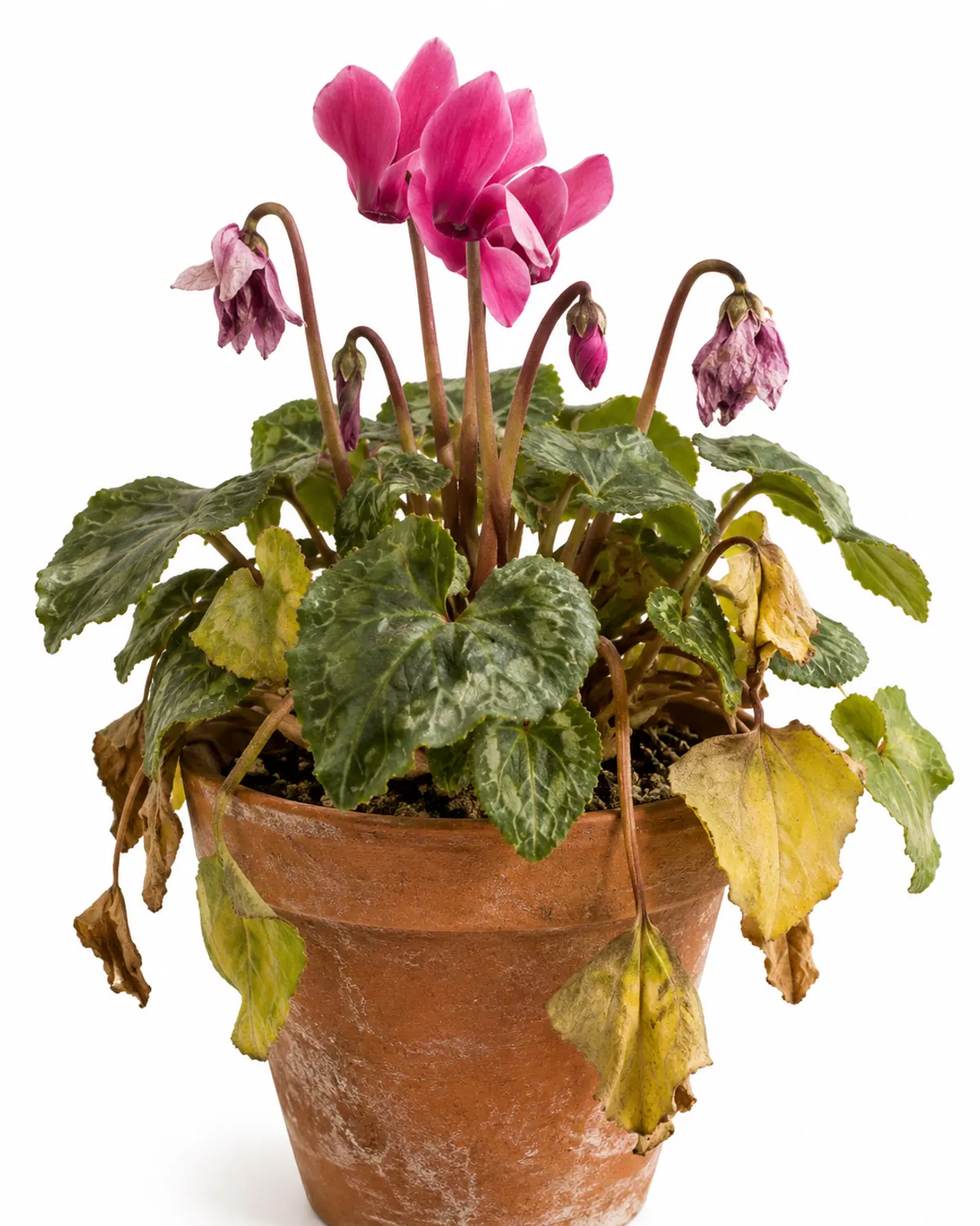
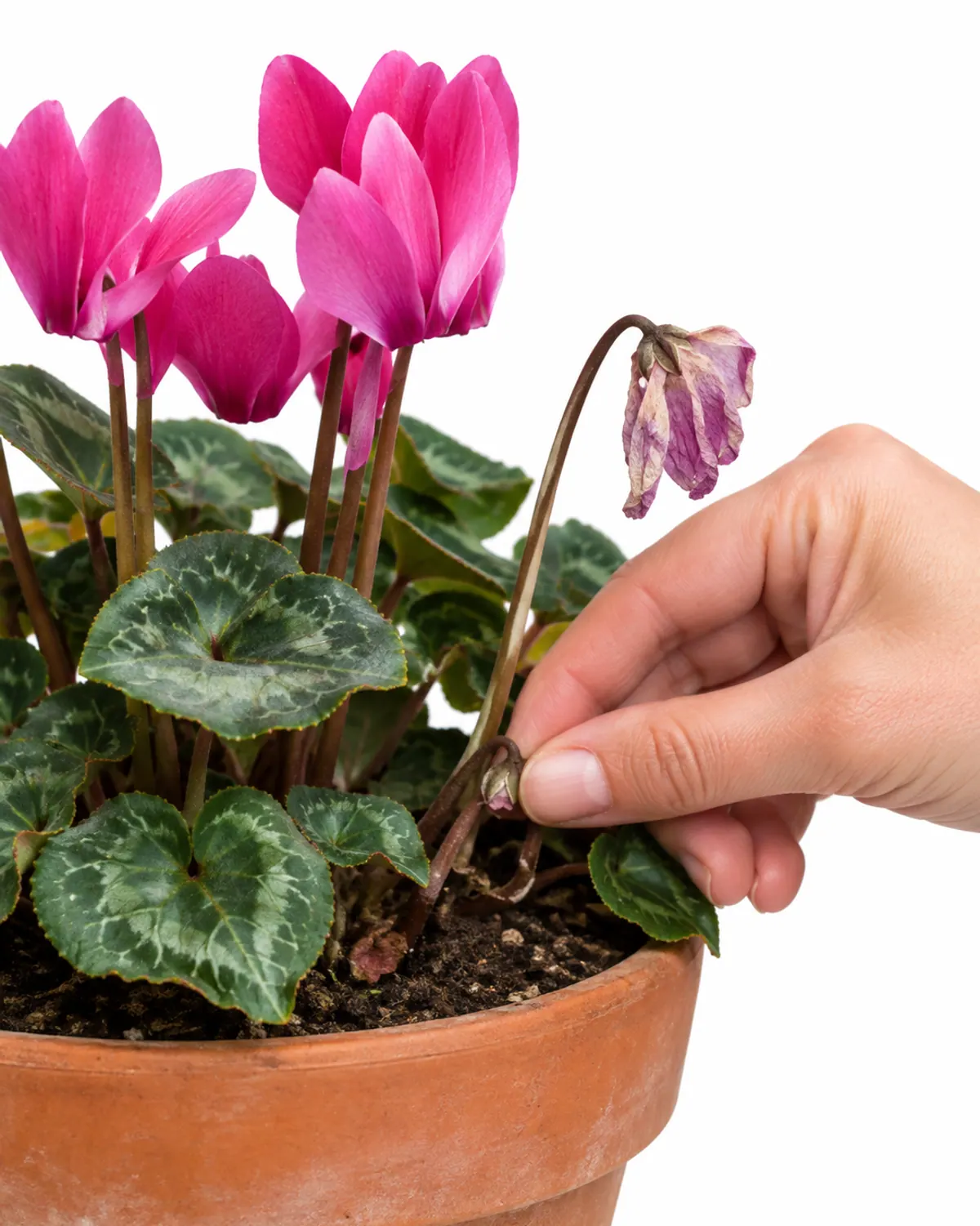
Remove spent flowers by pulling the whole stem off at the crown, as Clemson advises (Clemson). Cutting leaves a stub that can rot.
After the flowers: dormancy, and where the sources disagree
After about a month of bloom, the leaves yellow and drop. Every source calls this normal dormancy, not death. They disagree on what to do next, so here are the versions side by side.
| Source | Water during dormancy | Where | How long |
|---|---|---|---|
| Clemson | Do not let the soil dry out completely | Shady spot | Until new leaves appear in mid-September |
| Illinois Extension (2009) | Keep the tuber dry through summer | Not specified | Resume watering in fall; no length given |
| Rural Sprout | Light, occasional watering so it is not bone dry | Cool, dark pantry or garage, or tuber in a paper bag | Rest of summer; leaves return around September |
| Epic Gardening | Reduce water and fertilizer | Shade outdoors above 50F, or tuber in vermiculite at about 50F | Up to 12 weeks (about 3 months) |
So Clemson and Illinois Extension contradict each other on water: one says keep the soil from drying out, the other says keep the tuber dry. The Illinois piece is from 2009 and Clemson was revised in 2023. We suggest the middle path from Rural Sprout: a very light drink now and then so the soil is never bone dry, in a cool, dark, out-of-the-way place. If the tuber turns soft, you are giving too much.
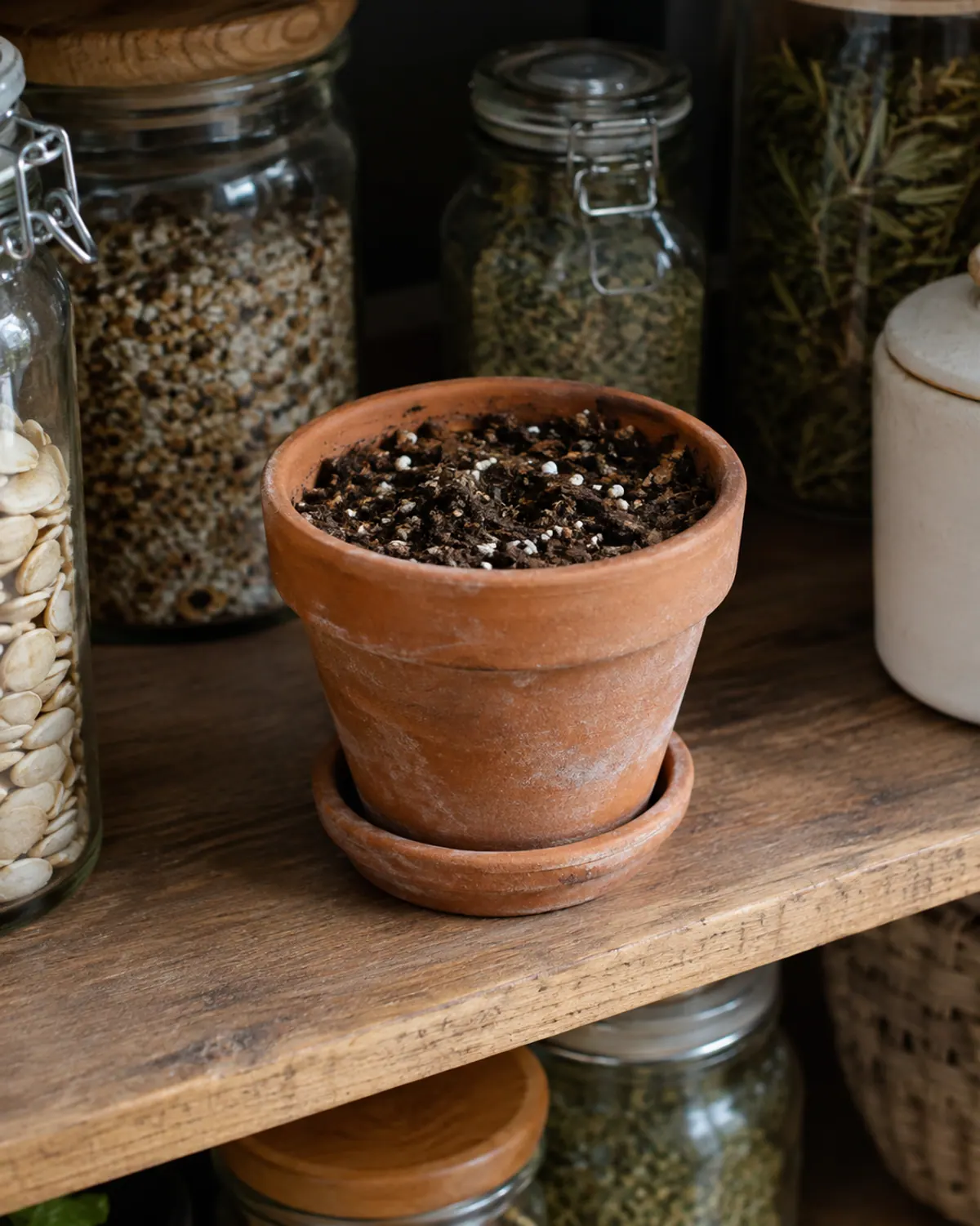
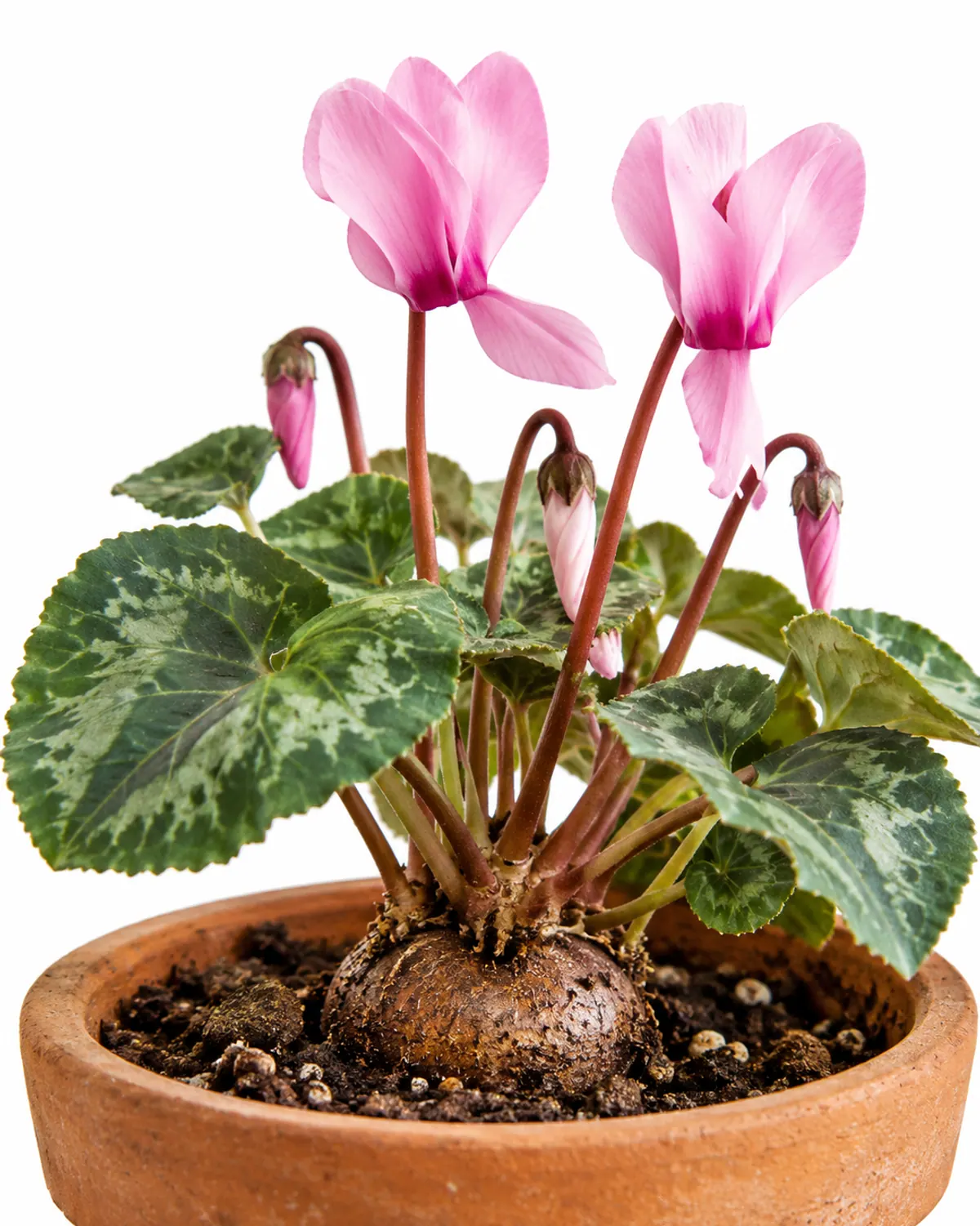
Epic Gardening says to plant the tuber 1 to 2 inches deep when you repot it in autumn, and to wait until roots form so you can tell which end is up (Epic Gardening).
Waking it up in September
New leaves usually appear around September. Clemson says to water thoroughly, feed monthly with liquid houseplant fertilizer, move it to bright light and keep nights near 50F, and that it may rebloom by mid-winter (Clemson). Epic Gardening expects flowers in December or January. Rural Sprout warns later blooms may be fewer and spindlier.
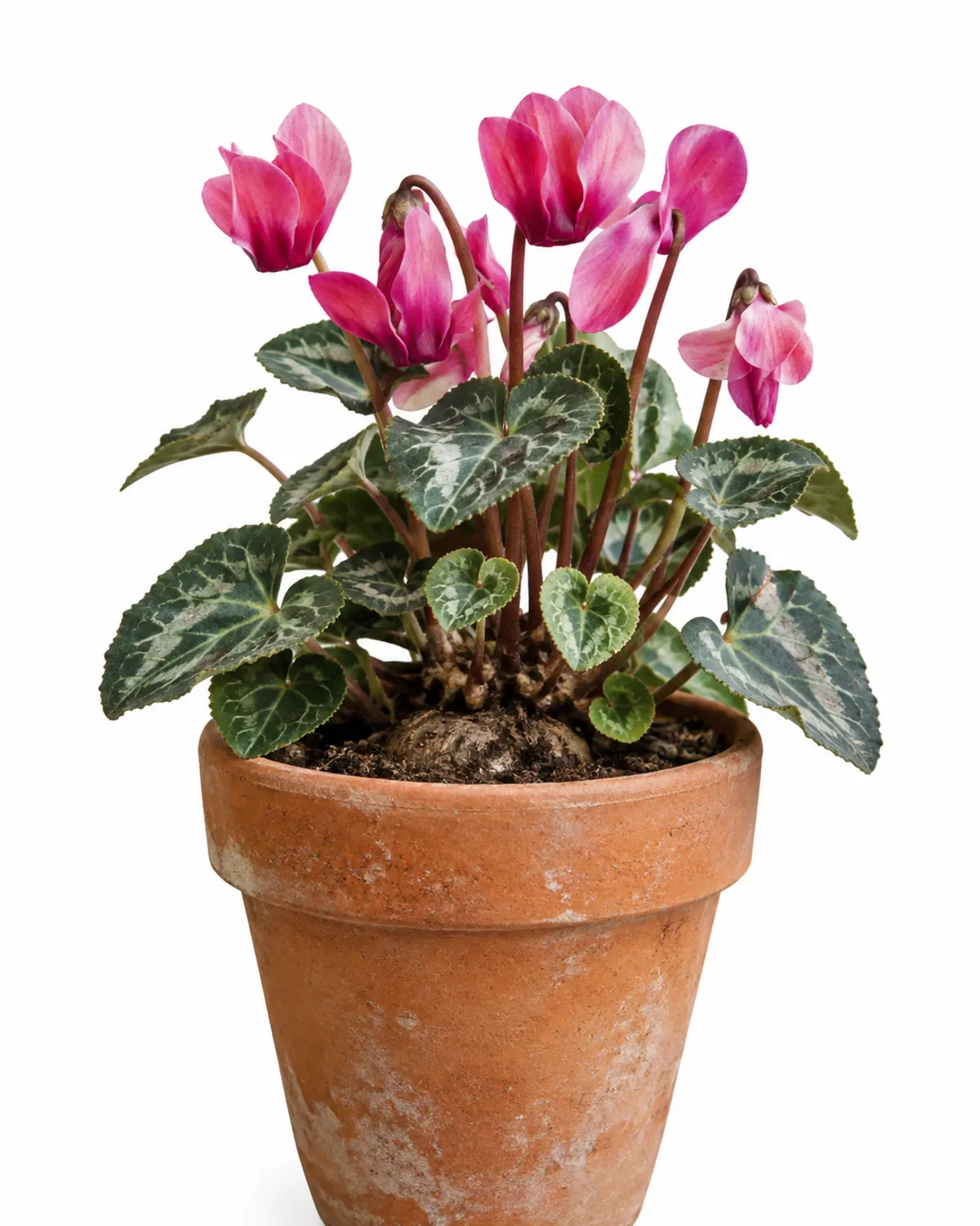
Clemson also says reblooming indoors is difficult because home light is often too low. Treat any rebloom as a bonus.
Keep it or treat it as a seasonal plant?
What we like
- A saved tuber can bloom again for the next winter
- Costs nothing after the first purchase
- A small yearly routine with a clear September restart
Keep in mind
- Home light and warmth often make a rebloom difficult
- Needs a cool, dark rest space for the summer
- Toxic tubers sitting in a pantry still need to be out of pets' reach
- A fresh $8 to $20 plant each December is simpler for many people
If you have a cool room and no pets, try the cycle once. If not, enjoy it as a six-week Christmas plant and compost it. Both are honest choices.
A yearly plan helps either way. The Small-Space Garden Binder has a plant log and planning pages so you remember when the dormancy rest begins and when to wake the tuber. See the Binder page for what is inside and the price.
A yearly cyclamen calendar (starting point)
| When | What to do |
|---|---|
| December to January | Bloom: bright, cool room, water from below, remove spent stems |
| February to March | Keep going until the leaves yellow; stop feeding |
| Spring to early summer | Dormancy starts; follow the version you chose above |
| Summer | Rest in a cool, dark, pet-proof spot; check the tuber is firm |
| September | New leaves; water, feed monthly, move to bright light |
| October to November | Cooler nights and bud formation; keep under 68F |
Supplies for cyclamen care
-
Small room thermometer
Typically $6 to $15
Shows whether a sill stays under 68F
Check price on Amazon for Small room thermometer -
Terracotta pot with saucer, 5 inch
Typically $6 to $15
Drains well; the saucer catches water for bottom watering
Check price on Amazon for Terracotta pot with saucer, 5 inch -
Liquid houseplant fertilizer
Typically $7 to $15
For monthly feeding once new leaves return
Check price on Amazon for Liquid houseplant fertilizer -
Long-spout watering can
Typically $10 to $20
Reaches the pot edge without wetting the tuber
Check price on Amazon for Long-spout watering can -
Paper bags for storing tubers
Typically $3 to $8
One method Rural Sprout describes for a dormant tuber
Check price on Amazon for Paper bags for storing tubers
Frequently asked questions
How do you care for a cyclamen indoors?
Give it bright indirect light in a cool room, days about 60 to 65F and nights near 50F. Water at the pot edge or from the saucer when the surface feels dry, and keep it away from heat vents.
Is cyclamen toxic to cats and dogs?
Yes. The ASPCA lists cyclamen as toxic to dogs, cats and horses, with drooling, vomiting and diarrhea, and heart rhythm changes or seizures after large tuber ingestions. Keep it out of reach.
What do you do with cyclamen after it blooms?
The leaves yellow and the plant goes dormant. Sources differ: Clemson says keep the soil from drying out in a shady spot, Illinois Extension says keep the tuber dry, and Epic Gardening allows up to 12 weeks. New leaves return around September.
Why is my cyclamen drooping and yellow?
Common causes are a room above 68F, too much water, or natural dormancy after about a month of bloom. Move it somewhere cooler and let the surface dry between waterings.
Will a cyclamen bloom again?
It can, but Clemson says reblooming indoors is difficult because home light is often low. Later blooms may be fewer, per Rural Sprout.
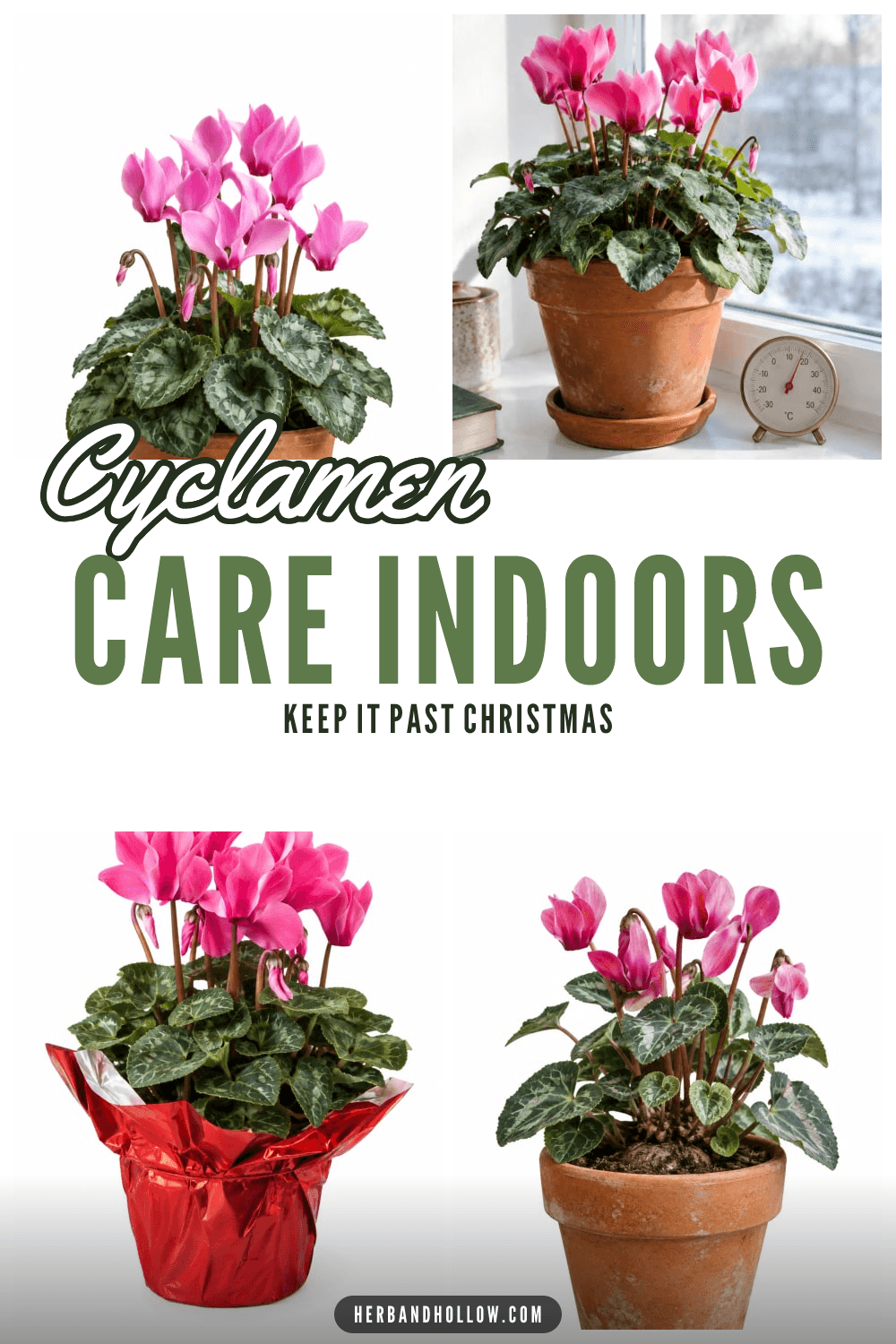
Save it for later
Pin this to your Houseplants board so it's there when you need it.
Save to Pinterest