This post contains affiliate links. As an Amazon Associate we earn from qualifying purchases, at no extra cost to you. Read our disclosure.
Safety first: Herbs can be powerful. If you are pregnant, nursing, take medication or have a health condition, check with your doctor or pharmacist first. Please read our herbal & garden safety notes before you start.
Key takeaways
- Short answer: about 1 gallon per annual herb, 1 to 5 gallons per perennial herb, 2 to 5 gallons for most vegetables, 5 to 25 for tomatoes
- Perennial herbs vary: University of Georgia Extension says 5 gallons; other guides say 1 to 2, so we show a range
- Width matters as much as volume: Penn State says a single tomato needs a pot at least 20 inches wide, and any pot should be at least as tall as it is wide
- Convert with one table: a 12 inch pot holds about 5 gallons, a 10 inch about 3, a 16 inch about 10 (Illinois Extension)
In this post10 sections
- What size pot for herbs and vegetables? The short answer
- Pot size in inches and gallons: the converter
- Vegetable pot size chart: 25 crops
- Herb pot size chart: annual and perennial herbs
- Which herbs can share one pot?
- Signs your pot is too small
- A worked example: a three pot balcony plan
- Supplies for pots and potting
- Sources
- FAQ
What size pot for herbs and vegetables? The short answer
Herbs need about 1 to 5 gallons per plant and vegetables 2 to 25, depending on the crop. University of Georgia Extension in Fulton County puts annual herbs at 1 gallon each and perennial herbs at 5, while Illinois Extension says herbs need a pot more than 10 inches wide. Tomatoes are the big ones: Penn State Extension says a single tomato needs a pot at least 20 inches wide.
The sources do not agree on every crop, especially perennial herbs, so each row below names where its number comes from. Where a number comes from only one source, we say so instead of filling the gap. Use the chart as a range, then check the plant tag for your variety.
Pot size in inches and gallons: the converter
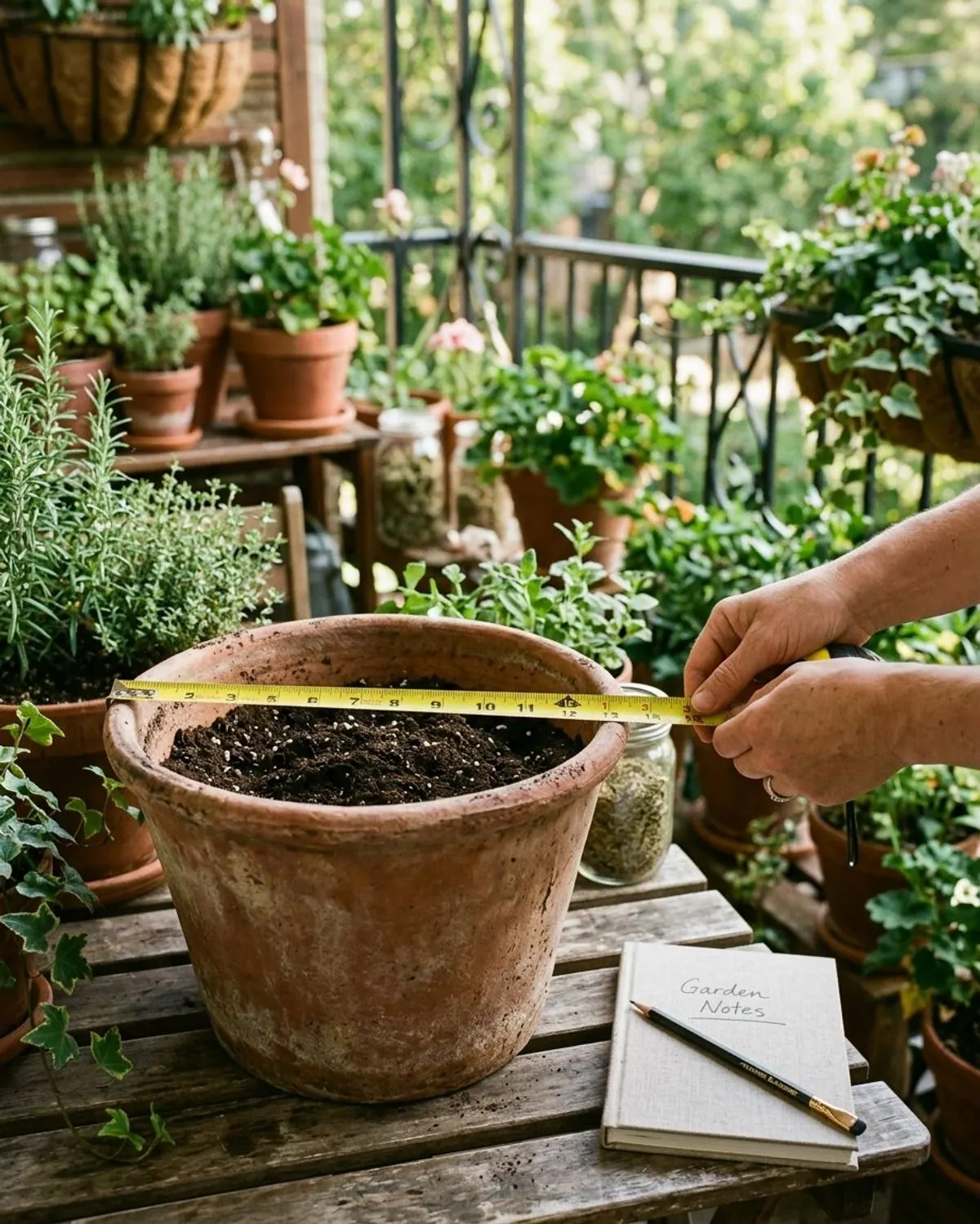
Pots are sold by width in inches, but charts use gallons of soil. Illinois Extension gives this conversion for a standard round pot, and it is the one table worth taping inside a cupboard door.
| Pot width across the top | Soil volume | Fits (from the chart below) |
|---|---|---|
| 10 inches | about 3 gal | one basil, a pot of lettuce, green onions |
| 12 inches | about 5 gal | one perennial herb, one pepper, one determinate tomato (low end) |
| 14 inches | about 7 gal | one eggplant or pepper (Penn State suggests 14 in), a bush cucumber |
| 16 inches | about 10 gal | one determinate tomato, one zucchini |
| 18 inches | about 15 gal | low end of an indeterminate tomato |
| 24 inches | about 25 gal | one indeterminate tomato, a potato tub |
| 30 inches | about 30 gal | a large potato planting |
The right-hand column is our own matching of the chart to those sizes, so treat it as a starting point rather than a rule. Penn State adds one more rule that is easy to check: pots should be at least as tall as they are wide, so roots have room to go down.
Vegetable pot size chart: 25 crops
The main column comes from the Old Farmer's Almanac container chart, which gives one pot size and a plants-per-pot count for each crop. It is a publisher's chart, not an extension service, so the last column shows what University of Georgia, Illinois or Penn State Extension say for the same crop where they cover it. Gallons are per pot, and the plant count is how many the Almanac fits in that pot.
| Crop | Almanac pot size | Plants per pot | Extension figures |
|---|---|---|---|
| Beets | 2 gal | 2 to 3 | not listed |
| Bok choy | 2 gal | 1 to 2 | not listed |
| Broccoli | 5 gal | 1 | not listed |
| Bush beans | 2 gal | 1 to 3 | 2 to 3 gal (UGA, beans) |
| Pole beans | 5 gal | 1 to 2 | 2 to 3 gal (UGA, beans) |
| Carrots | 5 gal | 10 to 15 | over 12 in wide (Illinois) |
| Swiss chard | 3 gal | 2 to 3 | not listed |
| Collards | 3 to 5 gal | 1 to 2 | not listed |
| Bush cucumbers | 5 gal | 1 to 2 | 10 gal (UGA, cucumbers and squash) |
| Eggplant | 5 gal | 1 | 5 gal (UGA); 14 in pot (Penn State) |
| Kale | 3 to 5 gal | 1 to 2 | not listed |
| Leeks | 3 to 5 gal | 6 to 8 | not listed |
| Lettuce | 1 to 2 gal | 2 to 6 | over 10 in wide (Illinois, leafy greens) |
| Mustard greens | 2 to 3 gal | 4 to 6 | over 10 in wide (Illinois, leafy greens) |
| Okra | 5+ gal | 1 | not listed |
| Onions, bulbing | 3 to 5 gal | 4 to 6 bulbs | over 10 in wide (Illinois) |
| Green onions | 2 gal | 10 to 12 | over 10 in wide (Illinois, onions) |
| Peppers | 3 to 5 gal | 1 | 2 to 3 gal (UGA, bell); over 16 in (Illinois); 14 in (Penn State) |
| Potatoes | 10 to 30 gal | 3 to 5 seed potatoes | not listed |
| Radishes | 2 gal | 5 to 6 | over 10 in wide (Illinois) |
| Spinach | 2 gal | 6 to 8 | over 10 in wide (Illinois, leafy greens) |
| Tomatillos | 5 to 10 gal | 1 (plant 2 nearby) | not listed |
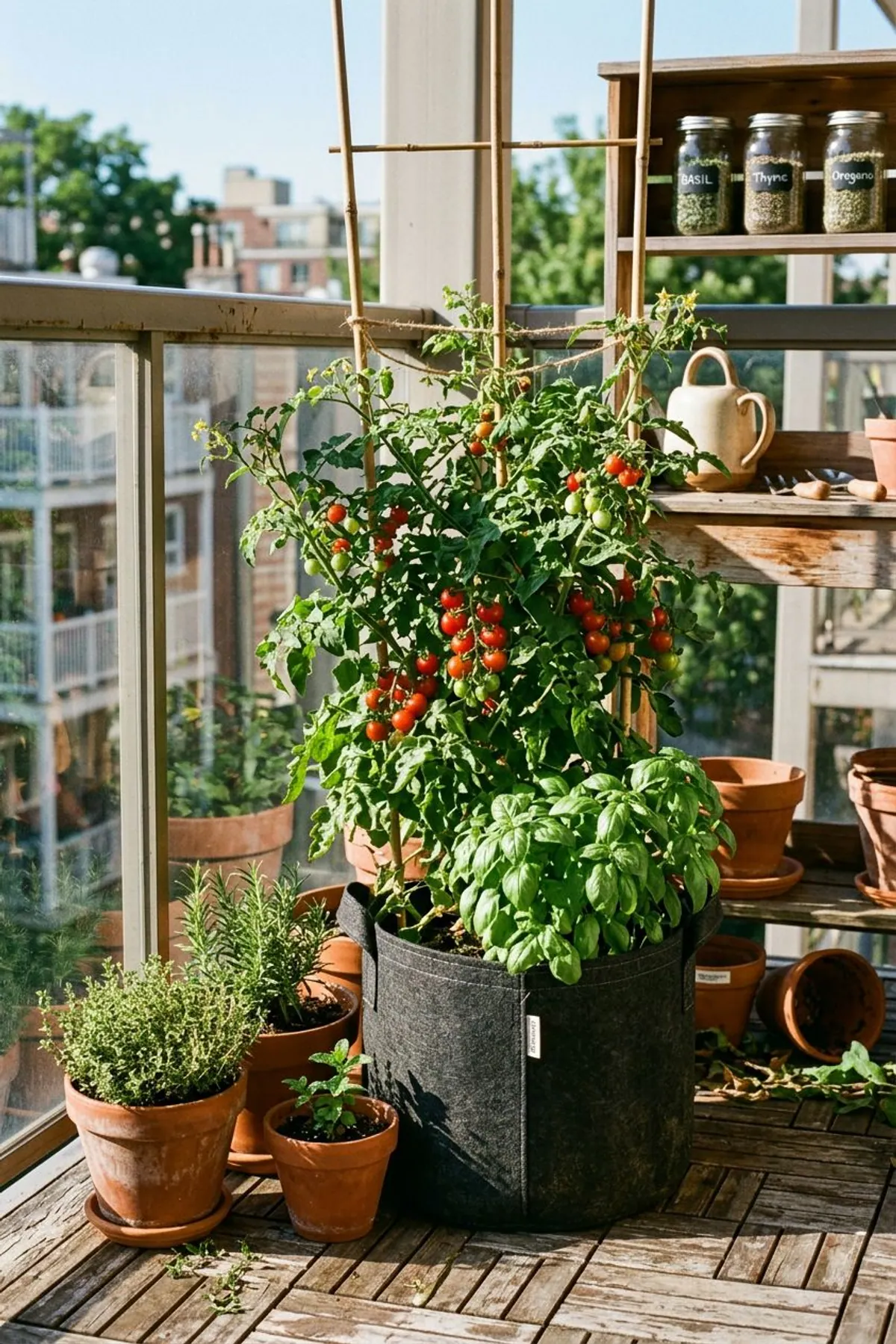
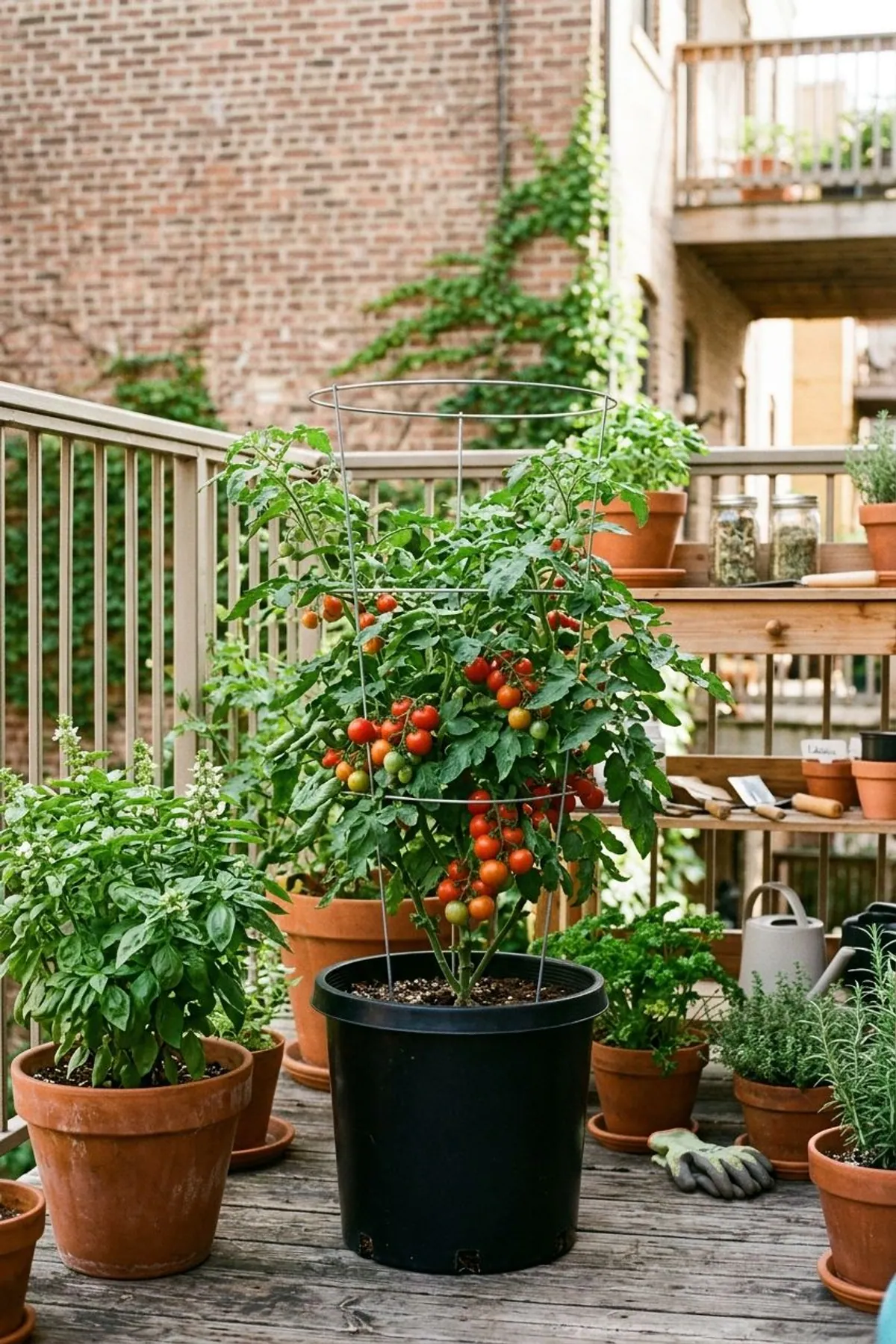
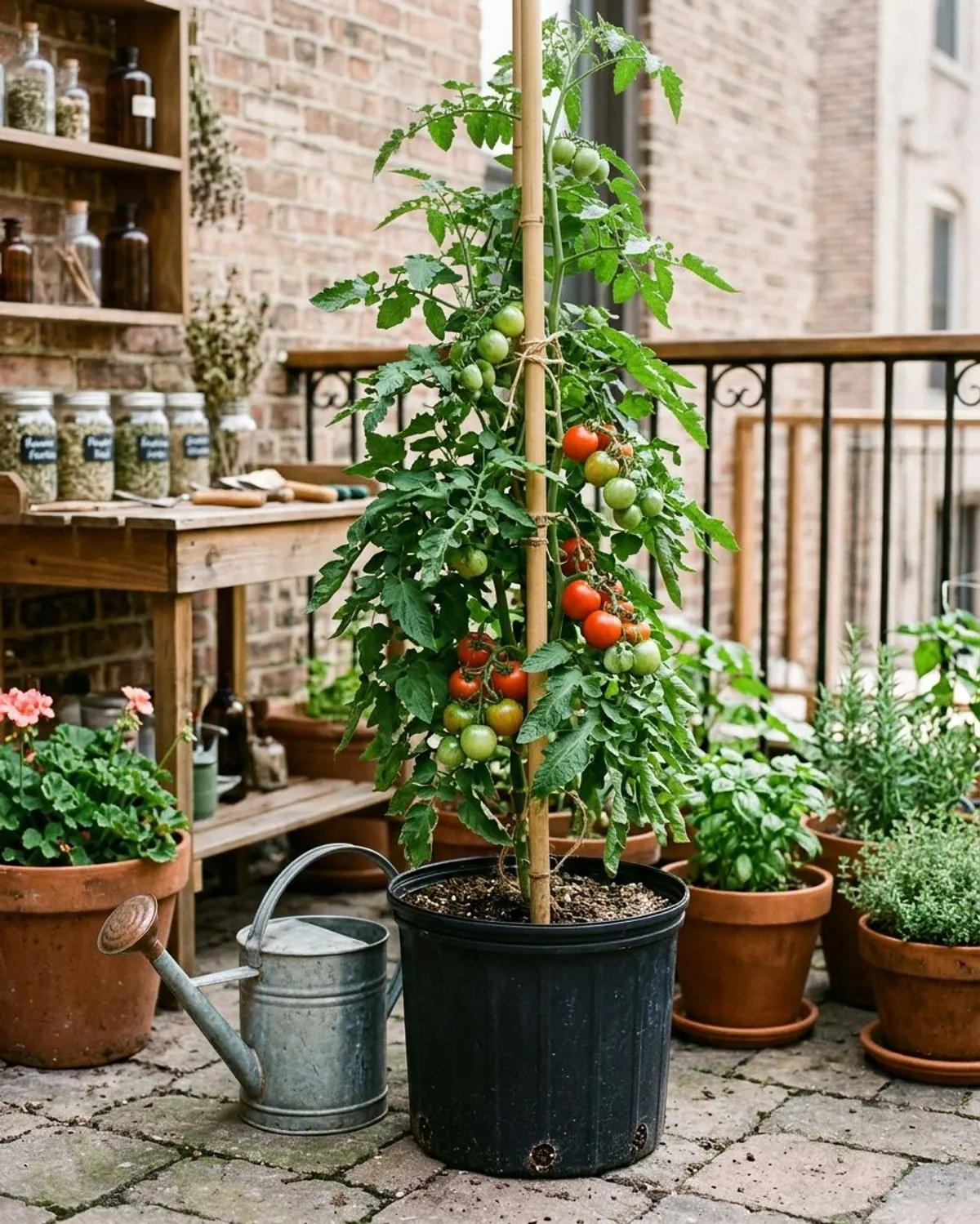
| Tomato, determinate | 5 to 10 gal | 1 | 5 gal (UGA); over 20 in wide (Illinois, Penn State) |
| Tomato, indeterminate | 15 to 25 gal | 1 | 10 gal (UGA); over 20 in wide (Illinois, Penn State) |
| Zucchini and summer squash | 5 to 10 gal | 1 | 10 gal (UGA, cucumbers and squash) |
Two things stand out. Tomatoes are the only crop where the sources point to a 20-inch pot, and potatoes need the most soil of anything here at 10 to 30 gallons. Almost everything else works in a 2 to 5 gallon pot, which is why a balcony can hold a surprising amount.
Herb pot size chart: annual and perennial herbs
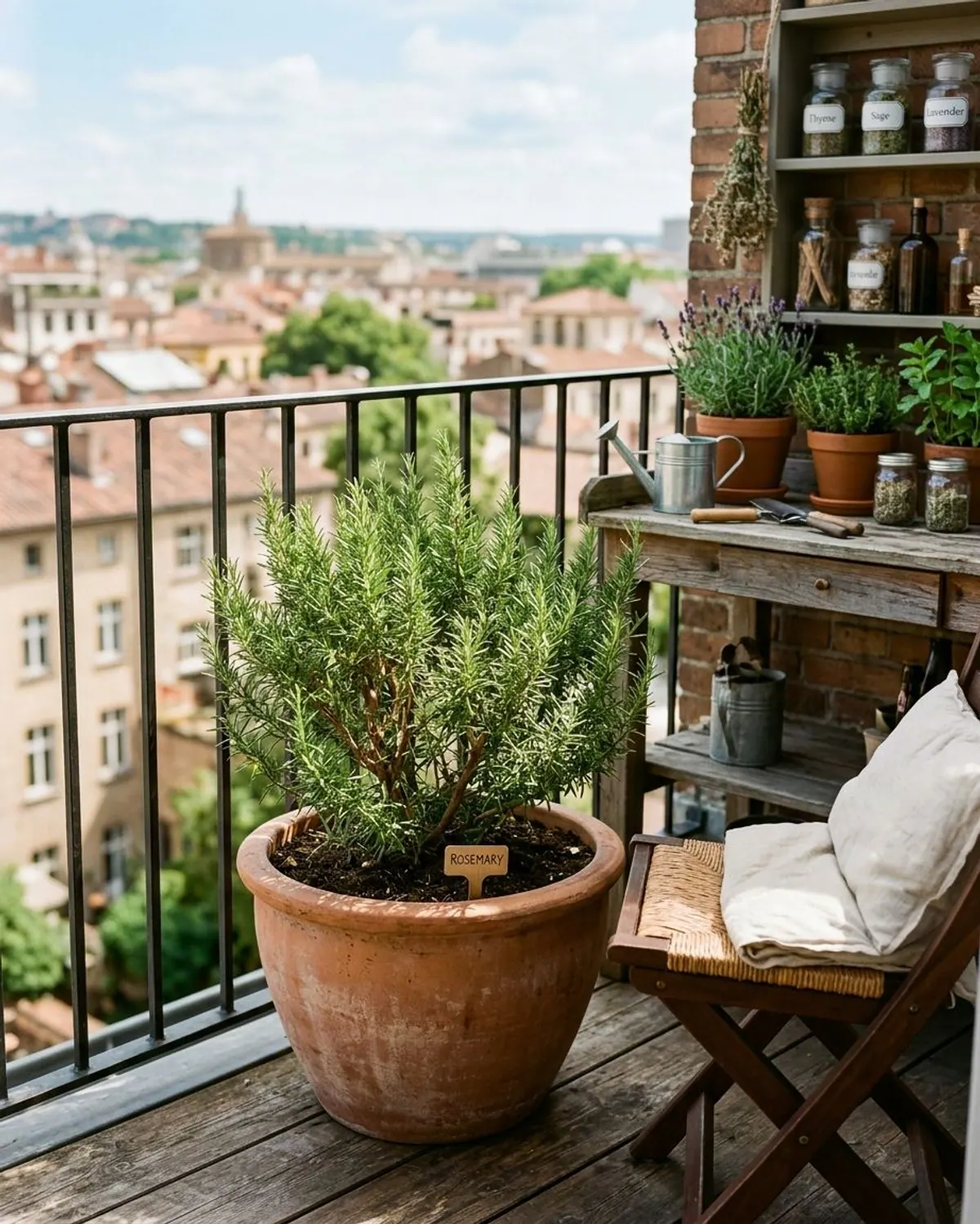
For herbs we found one extension chart with volumes per plant, from University of Georgia Extension, Fulton County (April 2020), and one width rule from Illinois Extension (April 2021). Penn State says herbs and greens suit smaller pots but gives no size. A search summary of another gardening guide gives 1 to 2 gallons for perennial herbs, so the perennial range really is 1 to 5 gallons depending on who you ask.
| Herb | Type | University of Georgia Extension | Illinois Extension |
|---|---|---|---|
| Basil | annual | 1 gal | over 10 in wide |
| Dill | annual | 1 gal | over 10 in wide |
| Cilantro | annual | 1 gal | over 10 in wide |
| Savory | annual | 1 gal | over 10 in wide |
| Sage | perennial | 5 gal | over 10 in wide |
| Rosemary | perennial | 5 gal | over 10 in wide |
| Lavender | perennial | 5 gal | over 10 in wide |
| Mint | perennial | 5 gal | over 10 in wide |
Illinois gives one number for all herbs, which is why every row repeats it. That is a minimum width, and it fits the 1 gallon figure for annuals. For perennials, the 5 gallon figure is the safer choice if the plant will stay in the pot for years, and a smaller pot works for a first season if you plan to move it up.
Which herbs can share one pot?
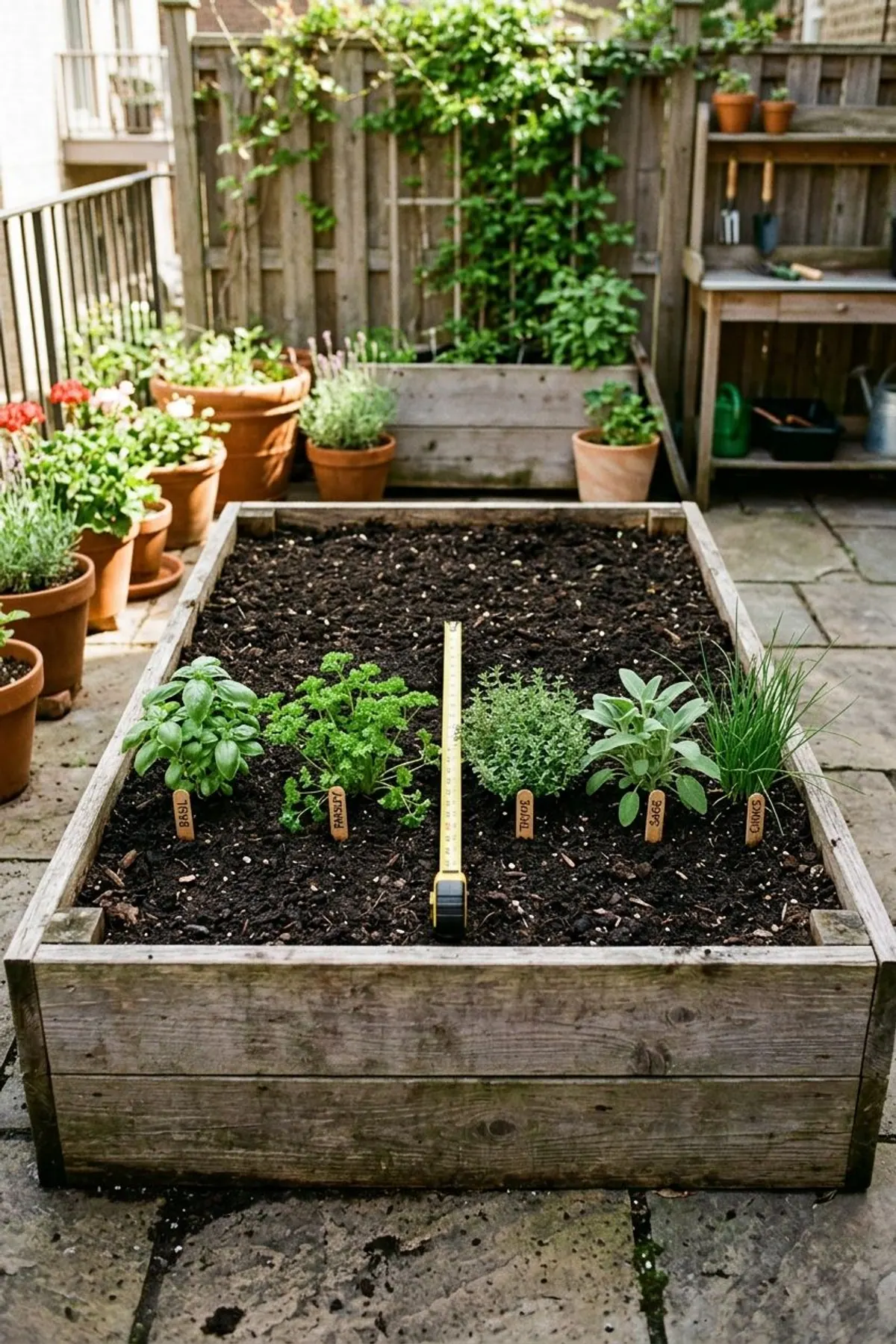
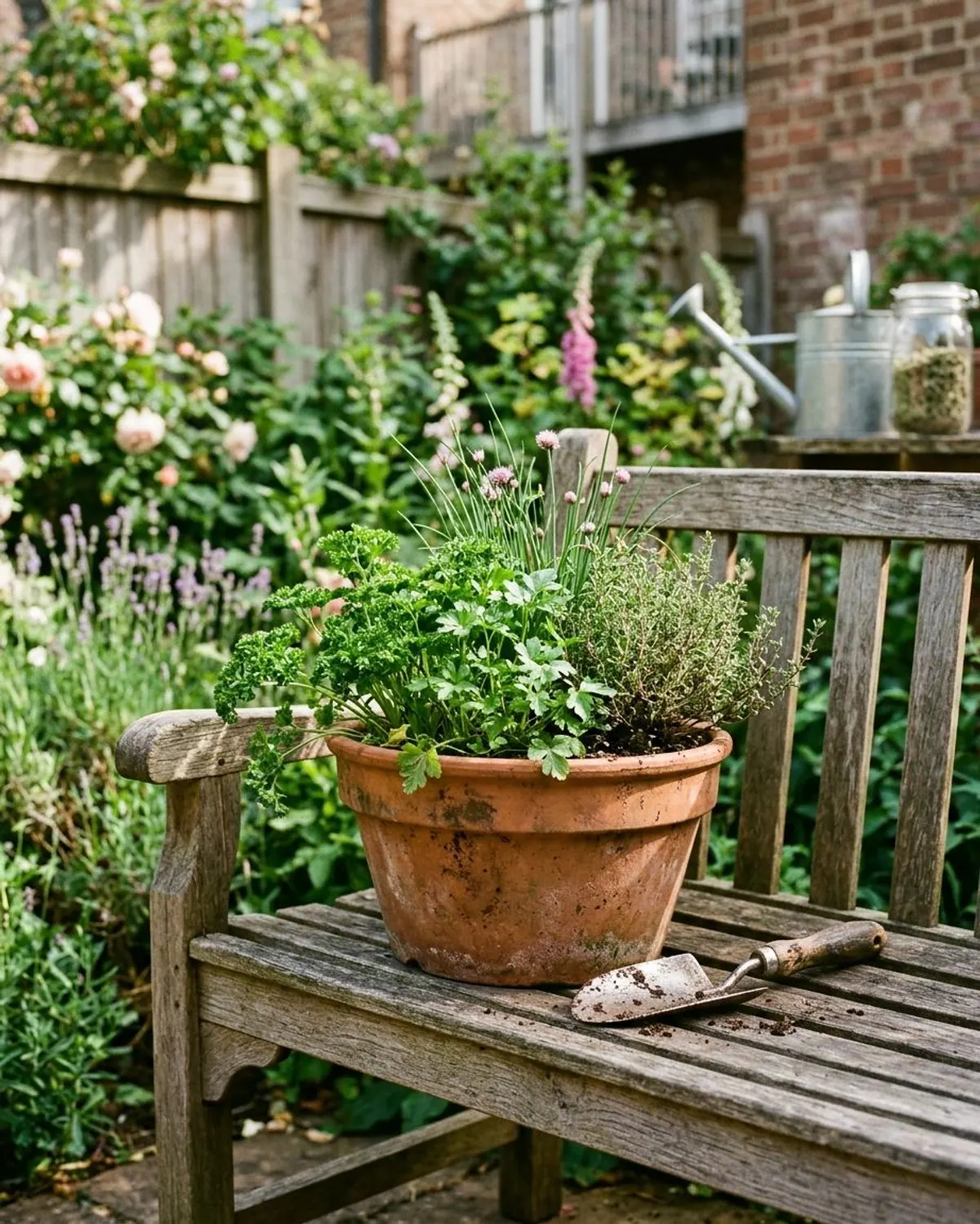
Think of a shared pot as a soil budget. The University of Georgia figures give 1 gallon per annual herb, so a 12 inch pot of about 5 gallons has room, by simple arithmetic, for roughly three to five annual herbs with matching sun and water needs. That is our arithmetic from the chart, not a tested planting plan.
Perennial herbs are different. At 5 gallons each by the UGA figure, one perennial fills a 12 inch pot alone, and mint spreads, so most gardeners give it a pot to itself. For pairings that have been graded for sun, water and root depth, our companion planting in containers guide covers which herbs and vegetables can share.
Signs your pot is too small
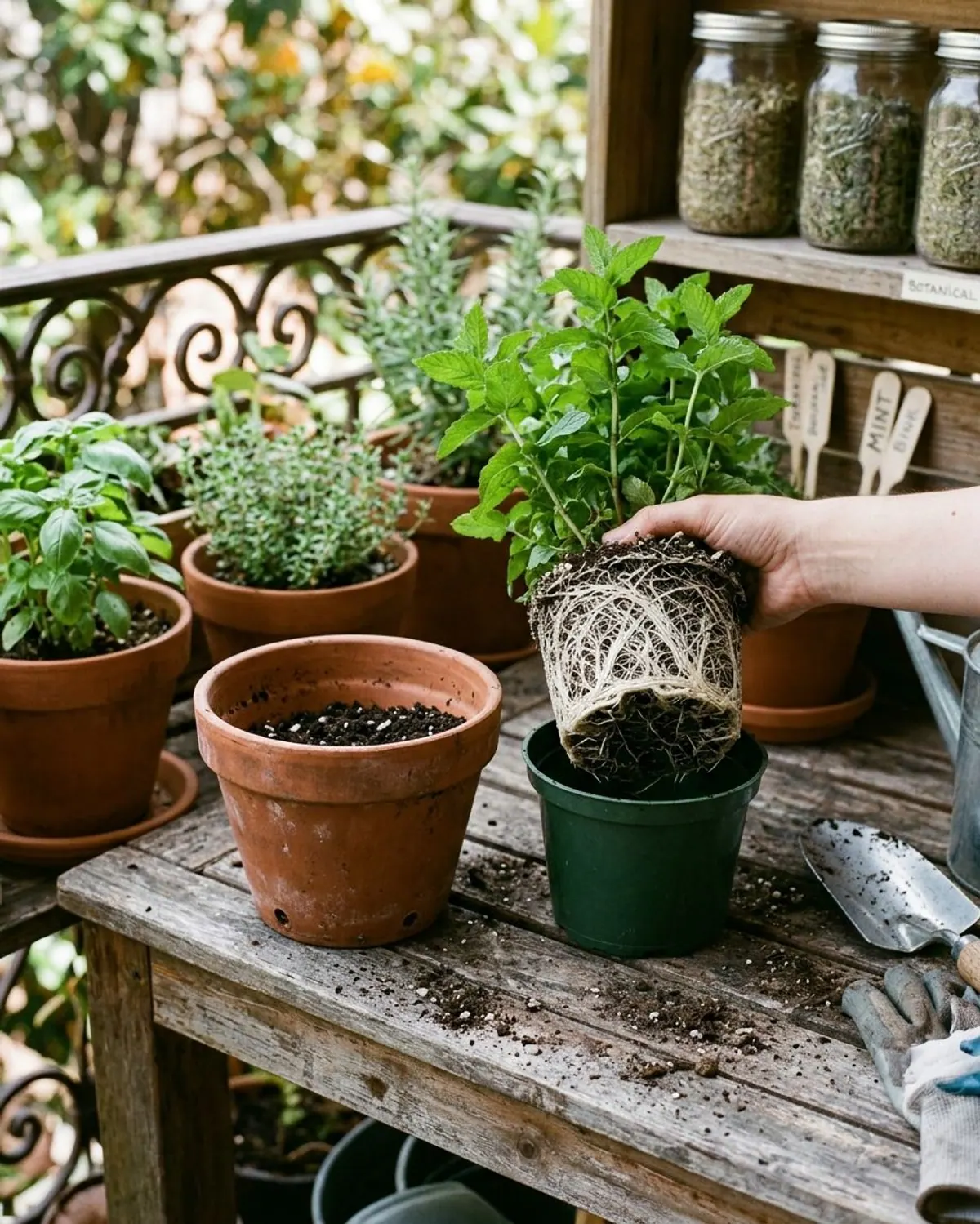
Common signs are a plant that wilts again within a day of watering, roots poking out of the drainage hole, and growth that stalls in the growing season. Lifting the plant out shows it: a tight mat of roots circling the soil means it has outgrown the pot.
-
Step 1: Check the drainage hole
Roots growing out of the hole mean the pot is full.
-
Step 2: Slide the plant out
Tip the pot on its side, hold the stem base and ease the root ball out. A solid mat of roots with little soil showing is root-bound.
-
Step 3: Move up one size
Choose a pot 2 to 4 inches wider, add fresh mix around the sides and water well. Going up one step is easier on the plant than jumping to a huge pot.
-
Step 4: Match the pot to the crop next season
Write the plant and pot size down so next year you start in the right size.
Before you buy a pot
A worked example: a three pot balcony plan
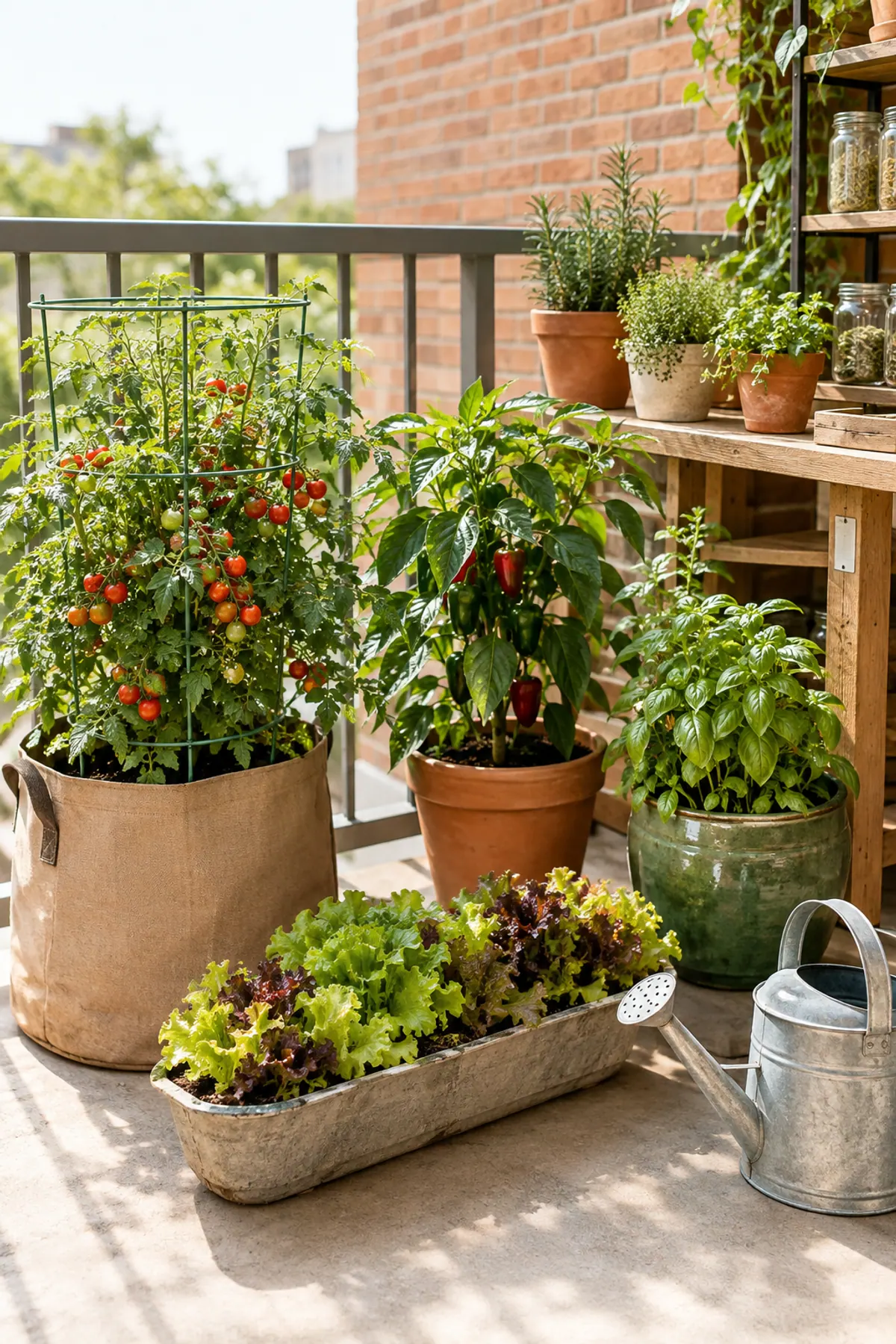
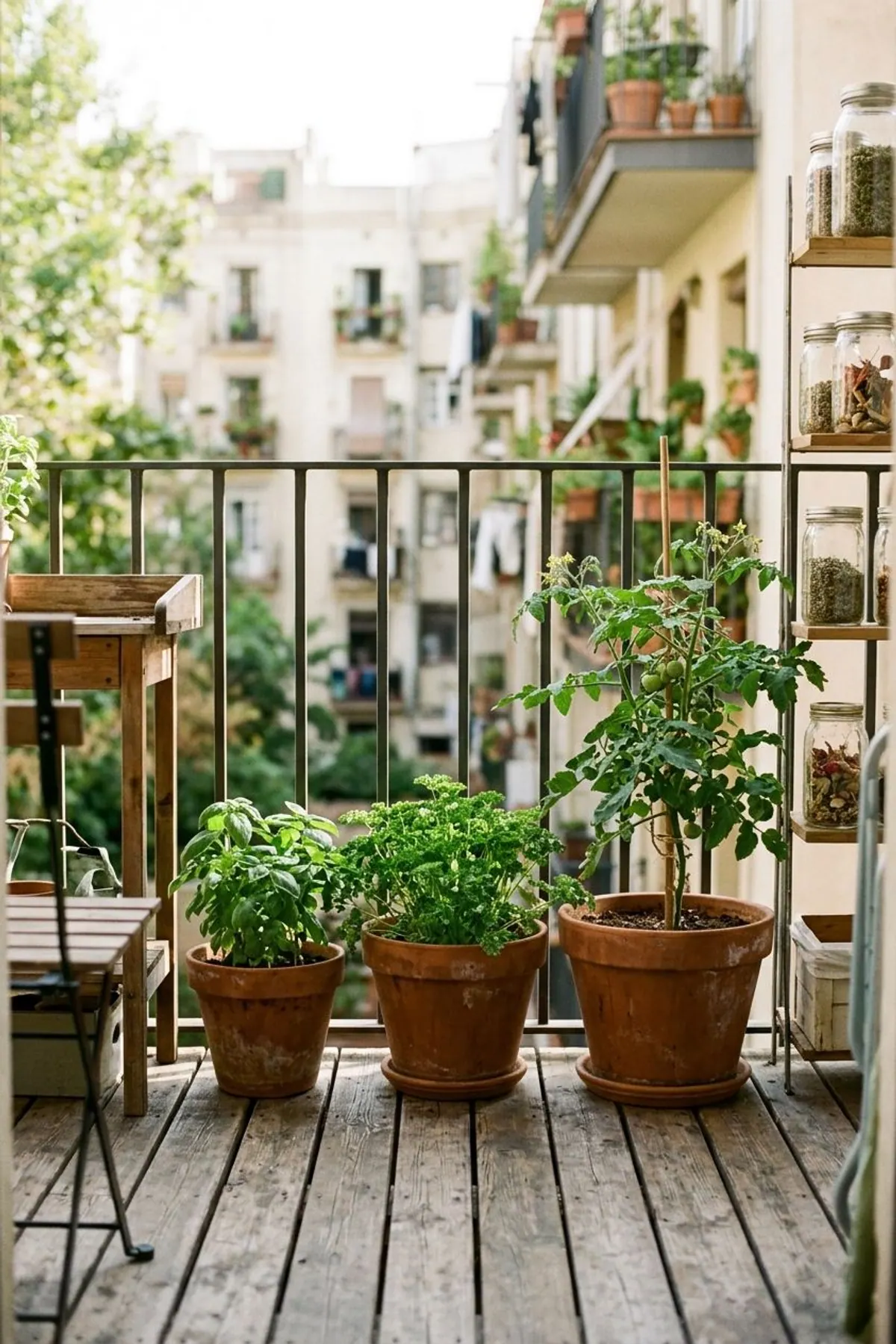
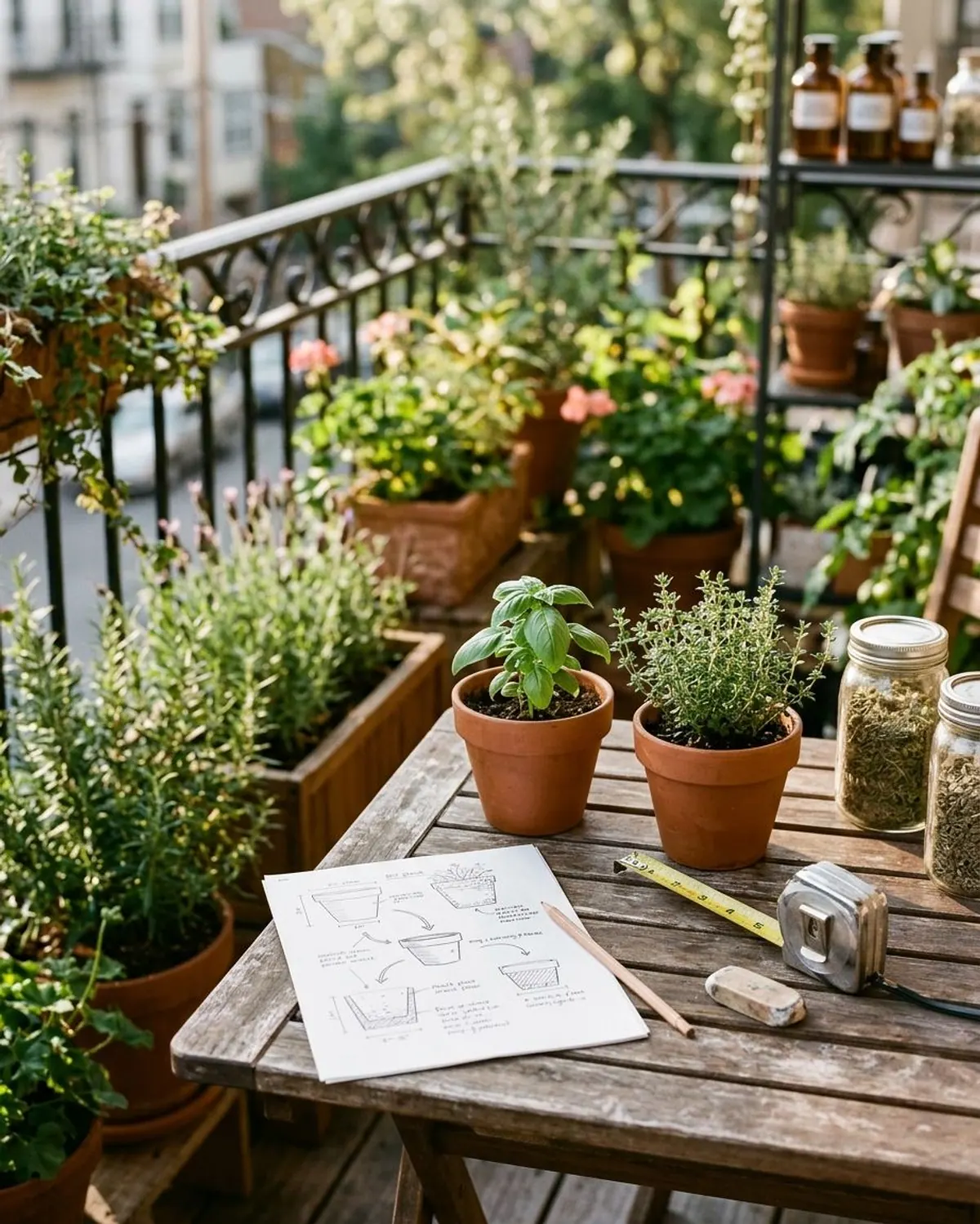
Say you have a sunny rail and room for three pots, and you want a tomato, a pepper and basil. By the chart, a determinate tomato wants 5 to 10 gallons, a pepper 3 to 5 and a basil 1 gallon. That adds up to about 9 to 16 gallons of soil. By the converter, that is a 16 inch pot (about 10 gallons) for the tomato, a 12 inch pot (about 5) for the pepper and a 10 inch pot (about 3) for the basil, though Penn State suggests going to 20 inches for a tomato if you have the room. This is an example, not a prescription: your variety, sun and building rules change the answer.
If you are brand new to pots, start with our container gardening for beginners guide, and see growing tomatoes in containers for the biggest pot on the list. Weighing pots against a bed? Read raised beds vs containers.
Supplies for pots and potting
Supplies for container planting
- Start here
Terracotta pots with drainage holes, 10 to 14 inch
The 10 to 14 inch range covers most herbs, peppers and eggplant.
Check price on Amazon for Terracotta pots with drainage holes, 10 to 14 inch -
Fabric grow bags, 5 gallon and 10 gallon
Light, drain well and fold flat in winter. Good for tomatoes and squash.
Check price on Amazon for Fabric grow bags, 5 gallon and 10 gallon -
Plant saucers in several sizes
Keeps water off a balcony floor.
Check price on Amazon for Plant saucers in several sizes -
Potting mix for containers
Use mix made for pots, not garden soil, which packs down.
Check price on Amazon for Potting mix for containers -
Retractable tape measure
To measure pot width and your railing.
Check price on Amazon for Retractable tape measure
Sources
Illinois Extension, Small-space containers (April 12, 2021). University of Georgia Extension, Fulton County, container gardening (April 24, 2020). Penn State Extension, Container vegetable gardening: four keys to success (updated March 30, 2026). Old Farmer's Almanac vegetable container size chart, read 2026-11-06. Sizes are ranges and vary by variety; check your plant tag.
We earn from qualifying purchases. Read our disclosure and editorial guidelines.
Frequently asked questions
What size pot do I need for herbs?
About 1 gallon per annual herb such as basil, dill and cilantro, and 1 to 5 gallons per perennial such as rosemary, sage and lavender. University of Georgia Extension gives 1 and 5 gallons; Illinois Extension says herbs need a pot more than 10 inches wide.
What size pot for herbs indoors?
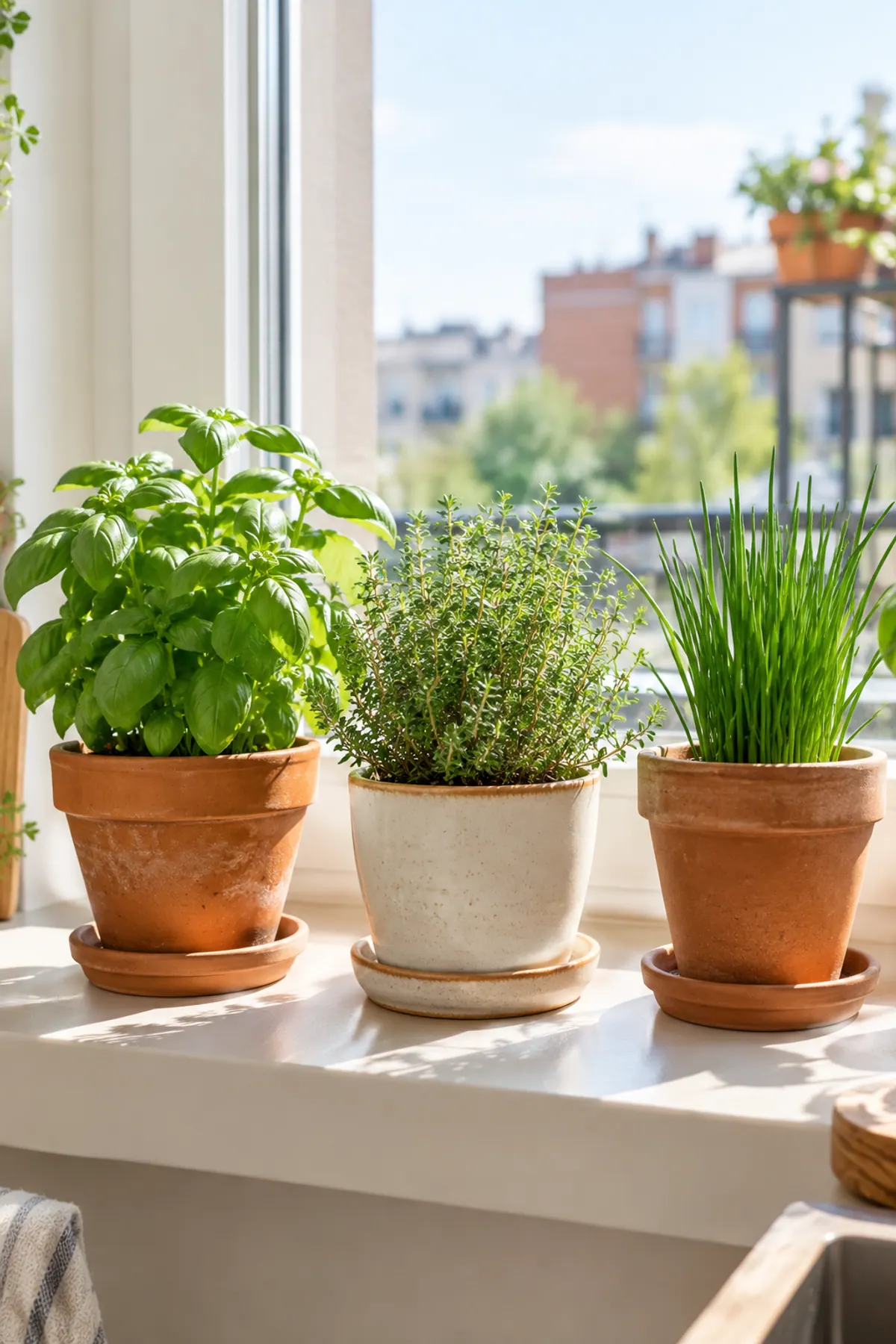
The same volumes apply, but windowsills limit width. A 10 inch pot holds about 3 gallons, which fits one annual herb with room to spare. Put a saucer under it and check the pot has a drainage hole.
What size pot do tomatoes need?
Penn State Extension says at least 20 inches wide for a single tomato. The Almanac gives 5 to 10 gallons for determinate tomatoes and 15 to 25 for indeterminate; University of Georgia says 5 and 10 gallons.
Can I plant several herbs in one pot?
Often yes, if they need similar sun and water. By volume, a 12 inch pot of about 5 gallons has room for roughly three to five annual herbs, but that is our arithmetic, not a tested plan. Mint is usually better alone because it spreads.
Is a bigger pot always better?
Not always. A pot far larger than the root ball stays wet longer. Move up 2 to 4 inches in width when the plant is root-bound, and keep the pot at least as tall as it is wide.
Save it for later
Pin this to your Container Gardening board so it's there when you need it.
Save to Pinterest