This post contains affiliate links. As an Amazon Associate we earn from qualifying purchases, at no extra cost to you. Read our disclosure.
Safety first: Herbs can be powerful. If you are pregnant, nursing, take medication or have a health condition, check with your doctor or pharmacist first. Please read our herbal & garden safety notes before you start.
Key takeaways
- Short answer: pairs can share a pot when they want the same water and light, and when the pot is big enough for both root systems
- Water group first: Colorado State Extension says parsley and chives need more moisture, and sage, rosemary and thyme need less, so keep each group together
- Evidence is thin: Penn State Extension says herbs confuse pests rather than repel them, so treat any pairing as a small bonus, not a pest fix
- Three grades: research-backed (listed by Extension), traditional (gardeners use it, little testing) and same needs (no claim, just matching care)
- Pot sizes: the University of Georgia Extension lists 5 gallons for a determinate tomato and 1 gallon for basil, and combined sizes here are a rule of thumb, sources vary
- Mint gets its own pot, because it spreads and crowds out neighbors
In this post10 sections
- Can you plant herbs and vegetables together in one pot?
- How the three grades work, and what the evidence says
- The share-a-pot test: water group first
- How big a pot do you need for companion planting?
- Five sample pots for a balcony or windowsill
- Drainage and saucers: the part no pairing fixes
- Pet notes for the plants in these pots
- Pots and supplies for shared containers
- Sources
- FAQ
Can you plant herbs and vegetables together in one pot?
Yes, when the plants share the same water and light needs and the pot is big enough. Iowa State Extension says to make sure the water needs of herbs grouped in one container are comparable, and to use pots with drainage holes. That is a better test than a pairing chart alone, because a plant that sits too wet or too dry will struggle whatever its neighbor is.
The table below grades 12 pairs. We link to the extension pages we used, we mark every pot size as sourced or rule of thumb, and the links to Amazon are plain search links. We may earn a small commission if you buy through them, which never changes what we recommend. Our companion planting chart covers more pairings for beds and pots in one printable, and this guide is pot-first.
| Pair | Grade | Why it is graded this way | Water match | Pot to start with |
|---|---|---|---|---|
| 1. Tomato + basil | Research-backed | Penn State lists it, and a 2024 growth-chamber study saw a response, not a yield gain | Both like steady water | About 7 gallons (determinate) or 12 (indeterminate) |
| 2. Lettuce + dill | Research-backed | Penn State lists dill with lettuce to attract aphid predators | Both like even moisture | 30 inch window box |
| 3. Lettuce + cilantro | Research-backed | Penn State lists cilantro with lettuce | Both like cool, even moisture | 30 inch window box |
| 4. Kale + dill | Research-backed | Penn State lists dill with kale and collards | Similar, keep evenly damp | About 5 gallons |
| 5. Rosemary + thyme | Same needs | No benefit claimed, both are in the drier group | Both dry between waterings | About 6 gallons |
| 6. Sage + thyme | Same needs | No benefit claimed, both are in the drier group | Both dry between waterings | About 6 gallons |
| 7. Parsley + chives | Same needs | No benefit claimed, both are in the moister group | Both like more moisture | About 3 gallons |
| 8. Rosemary + sage + thyme | Same needs | Three dry-group herbs, a classic Mediterranean pot | All three dry between waterings | 7 to 10 gallons |
| 9. Pepper + basil | Traditional | Gardeners pair them, we found little testing | Both like regular water | 3 to 4 gallons |
| 10. Lettuce + chives | Traditional | A common pairing, little testing | Both like even moisture | 30 inch window box |
| 11. Carrot + chives | Traditional | The onion smell is said to mask carrots, little testing | Even moisture | Deep pot, about 3 gallons |
| 12. Tomato + parsley | Traditional | Gardeners pair them, we found little testing | Both like regular water | Same as tomato + basil |
Pairs that Penn State lists but that fail the water test in a small pot: tomato with thyme, and kale with thyme. Thyme likes to dry out between waterings, while tomato and kale like steady water. Give thyme its own pot, or plant it at the edge of a very large pot in a free-draining mix.
How the three grades work, and what the evidence says
We use three grades so you can see how well each pairing is backed. Research-backed means an extension page lists the pairing. Traditional means gardeners use it and we found little or no testing. Same needs means no benefit is claimed, the plants simply share water, sun and root room.
Penn State Extension, in its page on herb plant partners, says herbs confuse pests rather than repel them. A 2024 study in Plant Cell Reports found that a tomato beside basil switched on wound-response genes faster, but it was done in a growth chamber and was not a yield trial. So basil beside a tomato is a low-cost try, and it is not a guarantee of fewer pests or a bigger harvest.
The share-a-pot test: water group first
Before you pair anything, put each plant in a water group. Colorado State Extension says parsley, chives and oregano need more moisture, and sage, rosemary and thyme need less. Iowa State Extension adds that full sun means 4 to 6 hours of direct light, and that herbs sharing a container should have comparable water needs.
| Group | Herbs | Water habit | Source |
|---|---|---|---|
| Drier | Rosemary, sage, thyme | Let the soil dry between waterings | Colorado State Extension PlantTalk 1081 |
| Moister | Parsley, chives, oregano | Keep evenly damp, never soggy | Colorado State Extension PlantTalk 1081 |
| Own pot | Mint | Spreads by runners, containers corral it | Colorado State Extension PlantTalk 1081 |
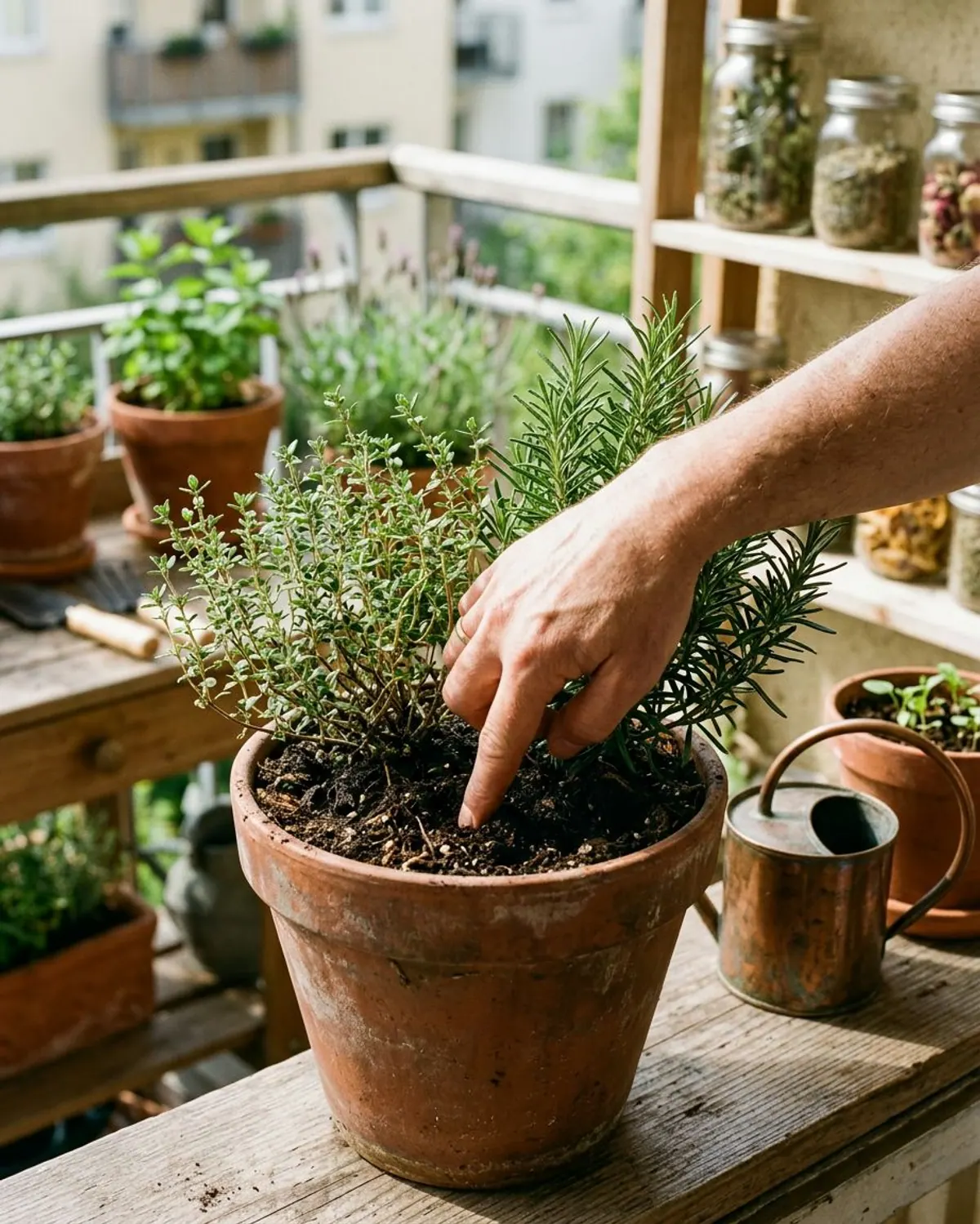
Our practical test is the finger test. Push a finger into the soil up to the first knuckle. Dry-group herbs should feel dry at that depth before you water, and moist-group plants should feel just damp. If two plants in one pot need opposite answers, they are in the wrong pot.
How big a pot do you need for companion planting?
Pot size is where most pairing lists go quiet. The University of Georgia Extension gives sizes for single plants in its container gardening page. Combined sizes are our own rule of thumb: start from the largest plant, add about 1 gallon for each extra herb, and round up. Sources vary on combined pots, so treat those rows as a starting point.
| Plant or pair | Pot size | Basis |
|---|---|---|
| Determinate tomato, alone | 5 gallons | University of Georgia Extension |
| Indeterminate tomato, alone | 10 gallons | University of Georgia Extension |
| Bell pepper, alone | 2 to 3 gallons | University of Georgia Extension |
| Basil, alone | 1 gallon | University of Georgia Extension |
| Dill, alone | 1 gallon | University of Georgia Extension |
| Rosemary or sage, alone | 5 gallons each | University of Georgia Extension |
| Mint, alone | 5 gallons | University of Georgia Extension |
| Determinate tomato + basil | About 7 gallons | Rule of thumb, sources vary |
| Indeterminate tomato + basil | About 12 gallons | Rule of thumb, sources vary |
| Pepper + basil | 3 to 4 gallons | Rule of thumb, sources vary |
| Rosemary + thyme | About 6 gallons | Rule of thumb, sources vary |
| Rosemary, sage + thyme | 7 to 10 gallons | Rule of thumb, sources vary |
| Parsley + chives | About 3 gallons | Rule of thumb, sources vary |
| Lettuce + chives + dill | 30 inch window box | Rule of thumb, sources vary |
Five sample pots for a balcony or windowsill
Each pot below groups plants by water, uses one pairing from the table and has a pet note. The sizes follow the rule of thumb above.
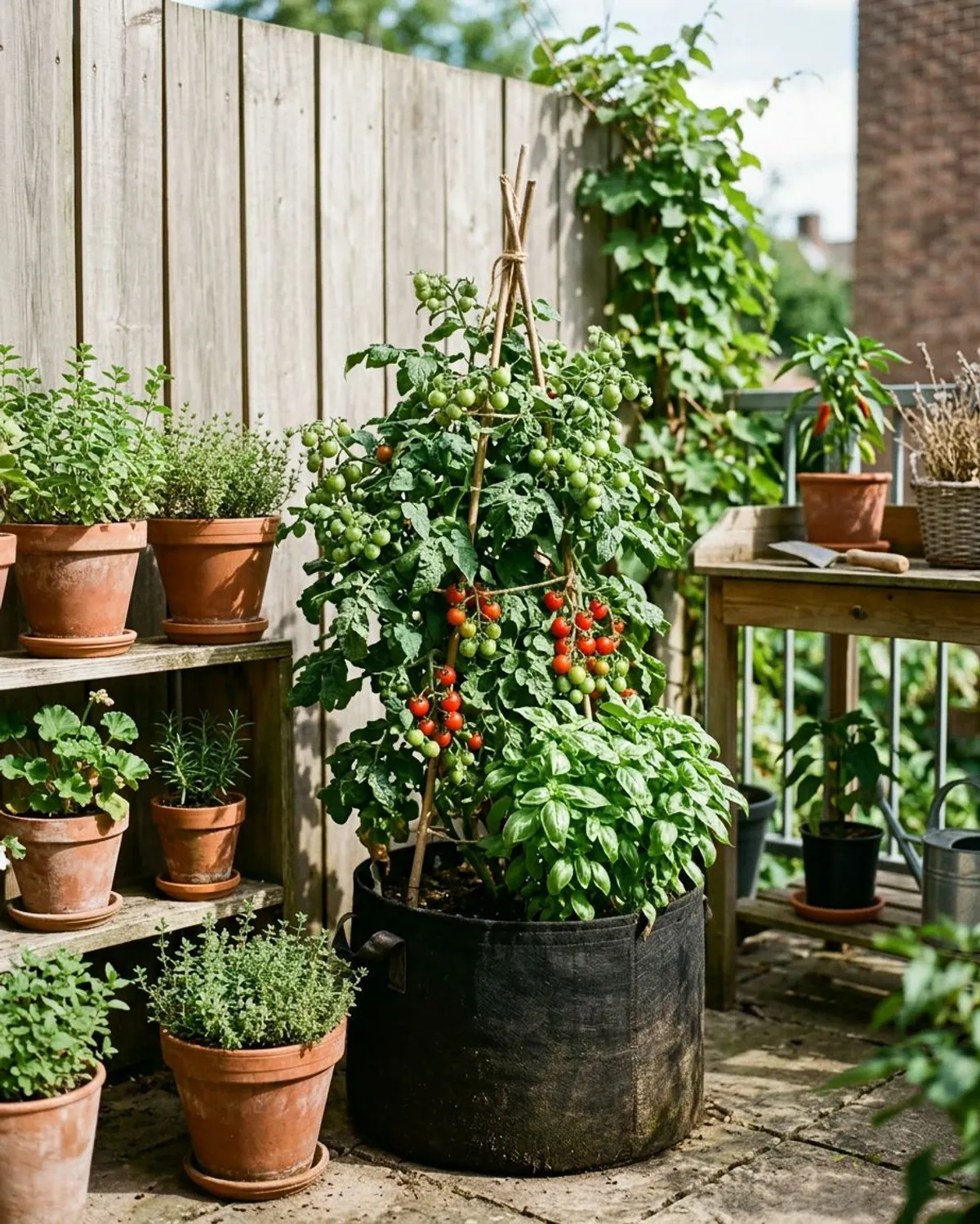
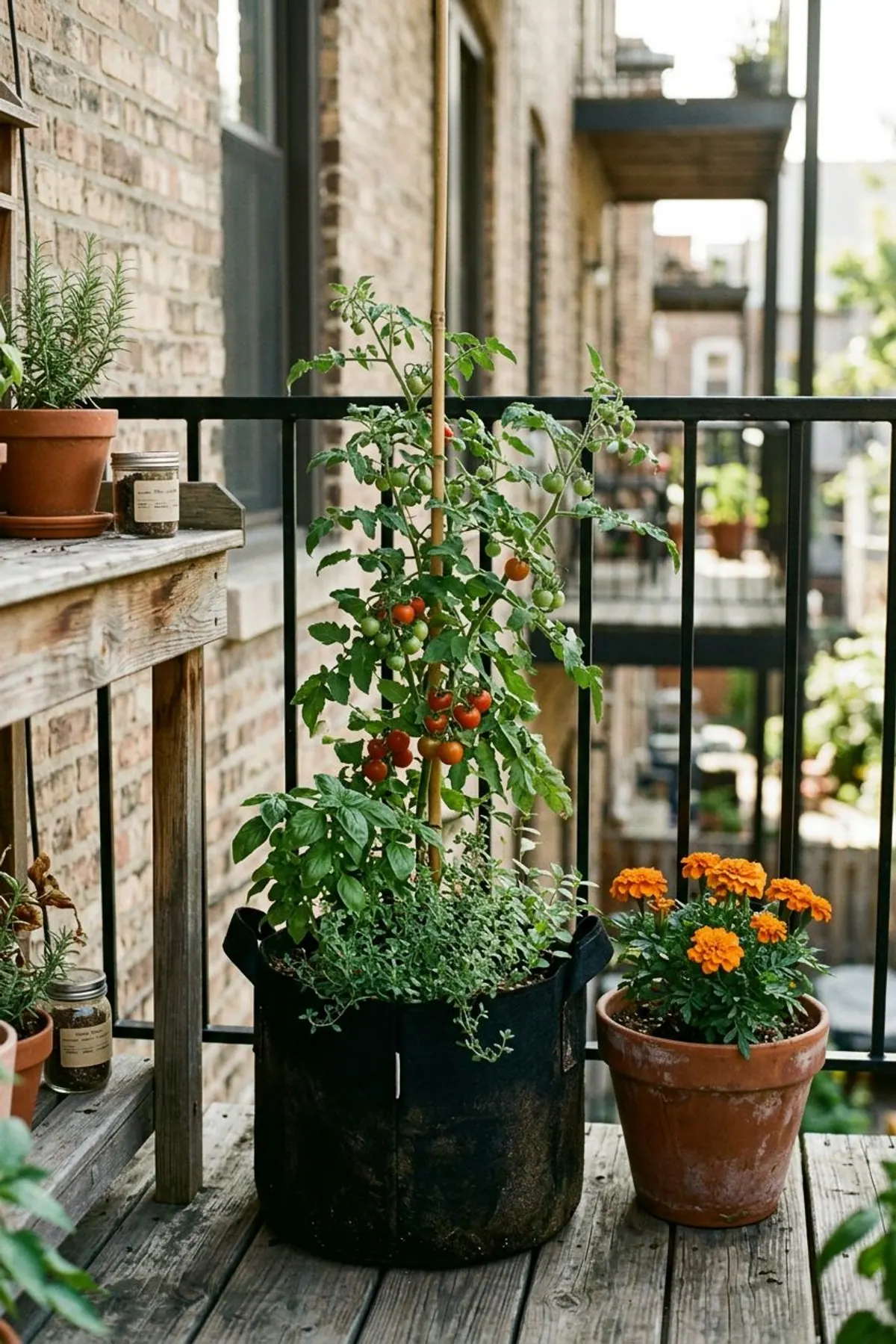
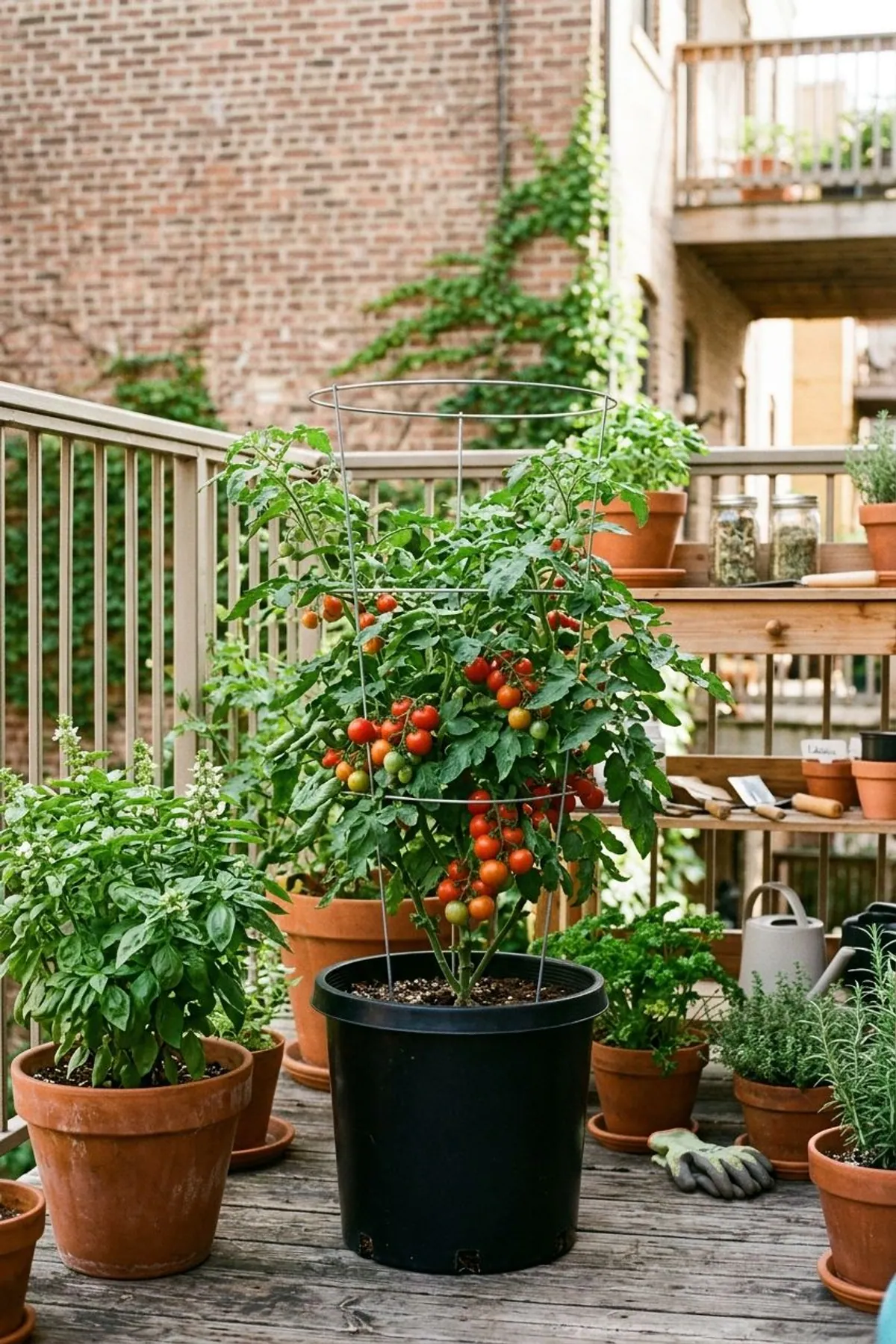
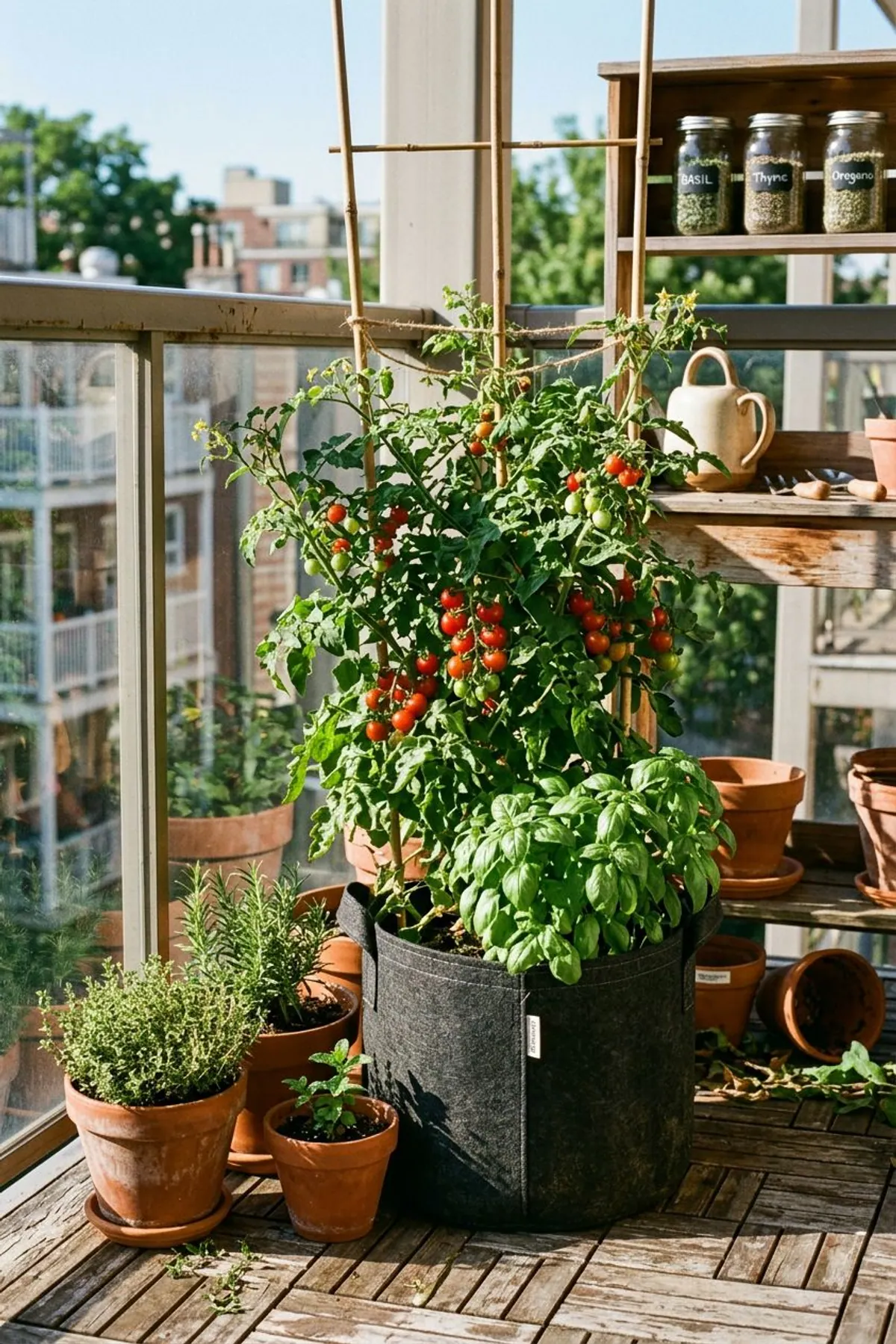
Plant one determinate tomato in a pot of about 7 gallons and set one or two basil plants at the edge. This is the pairing with the most backing, from Penn State and the growth-chamber study. Water when the top inch feels dry, since both like steady moisture. The ASPCA lists the tomato plant as toxic to cats and dogs, while basil is non-toxic, so keep the pot out of a pet's reach. Our tomato container guide covers staking and feeding.
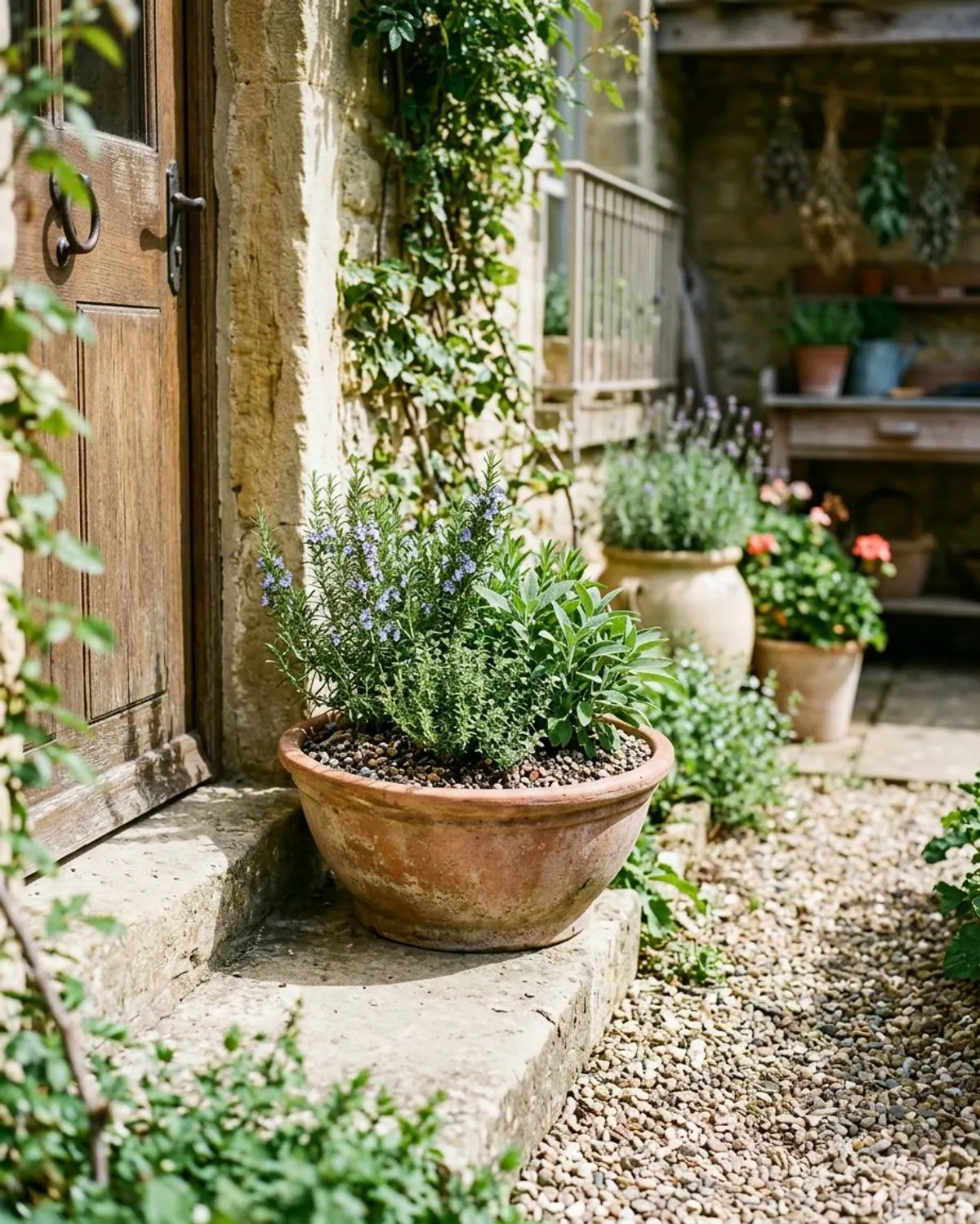
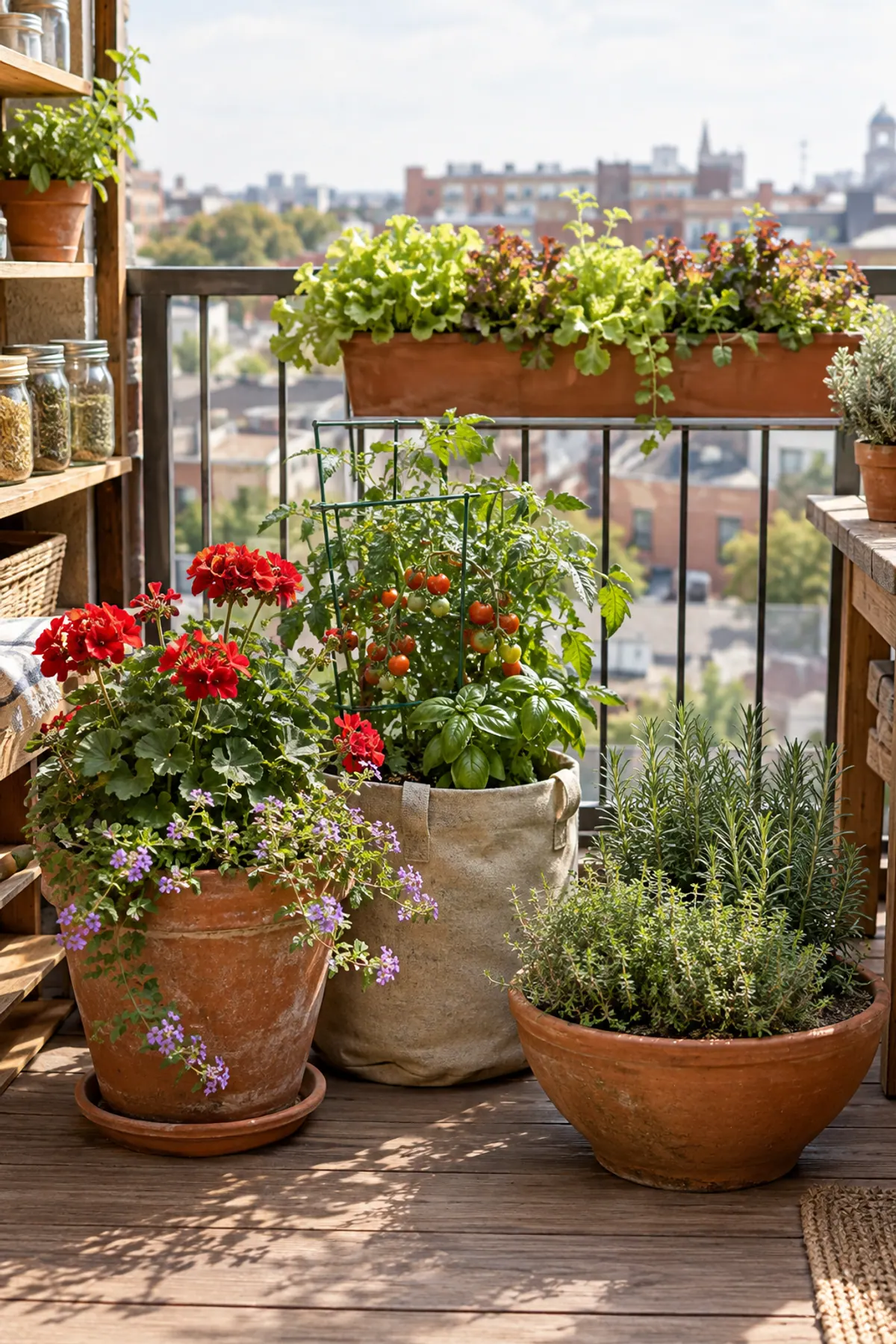
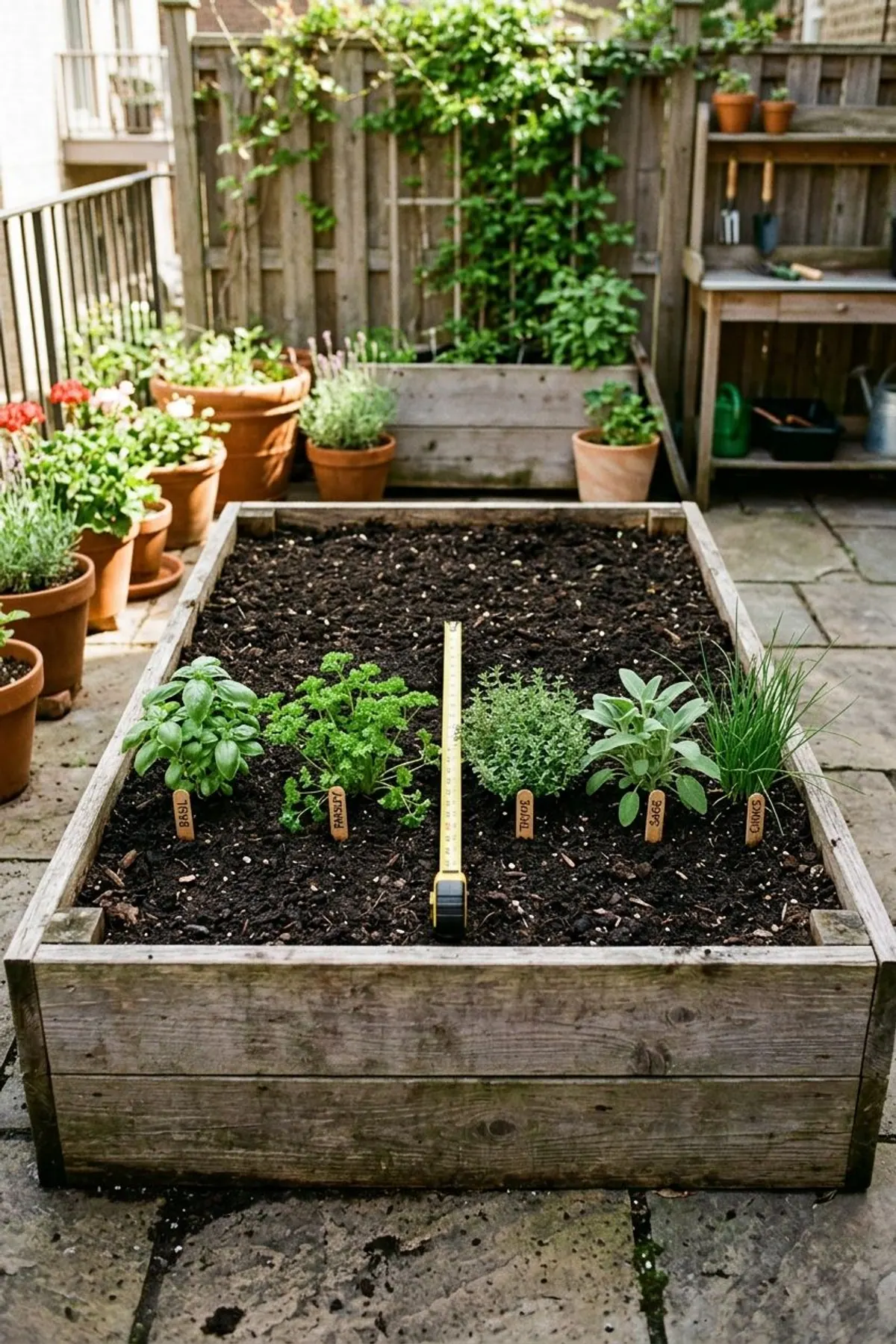
Rosemary, sage and thyme share a pot of 7 to 10 gallons with a gritty, free-draining mix. All three are in the drier group, so one watering habit suits them all. The ASPCA lists rosemary, sage and thyme as non-toxic to cats and dogs.
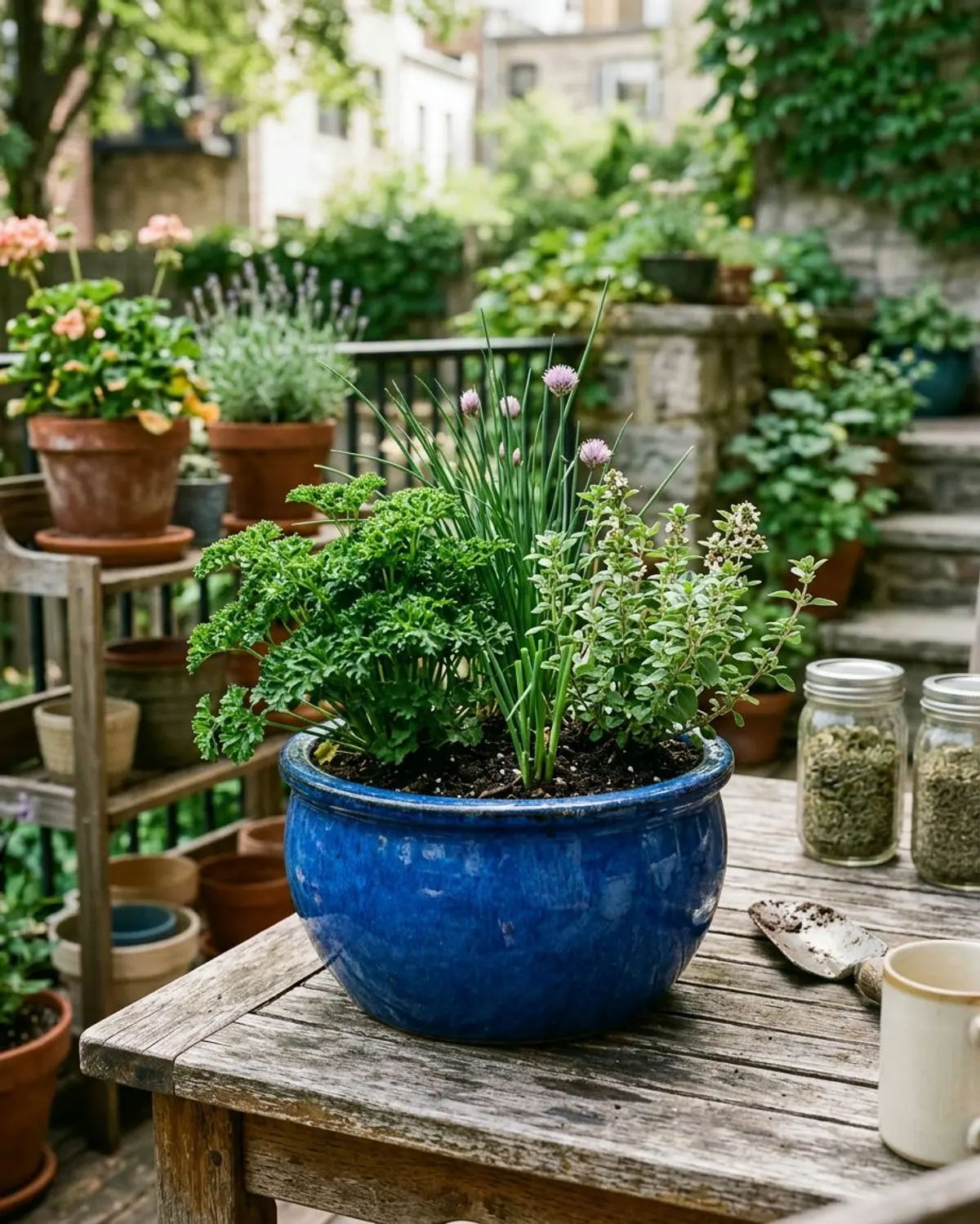
Parsley and chives share a pot of about 3 gallons and want evenly damp soil. A glazed pot dries out more slowly than terracotta, so check for a drainage hole before you plant. The ASPCA lists parsley and chives as toxic to cats and dogs, so this pot belongs out of reach in a pet home.
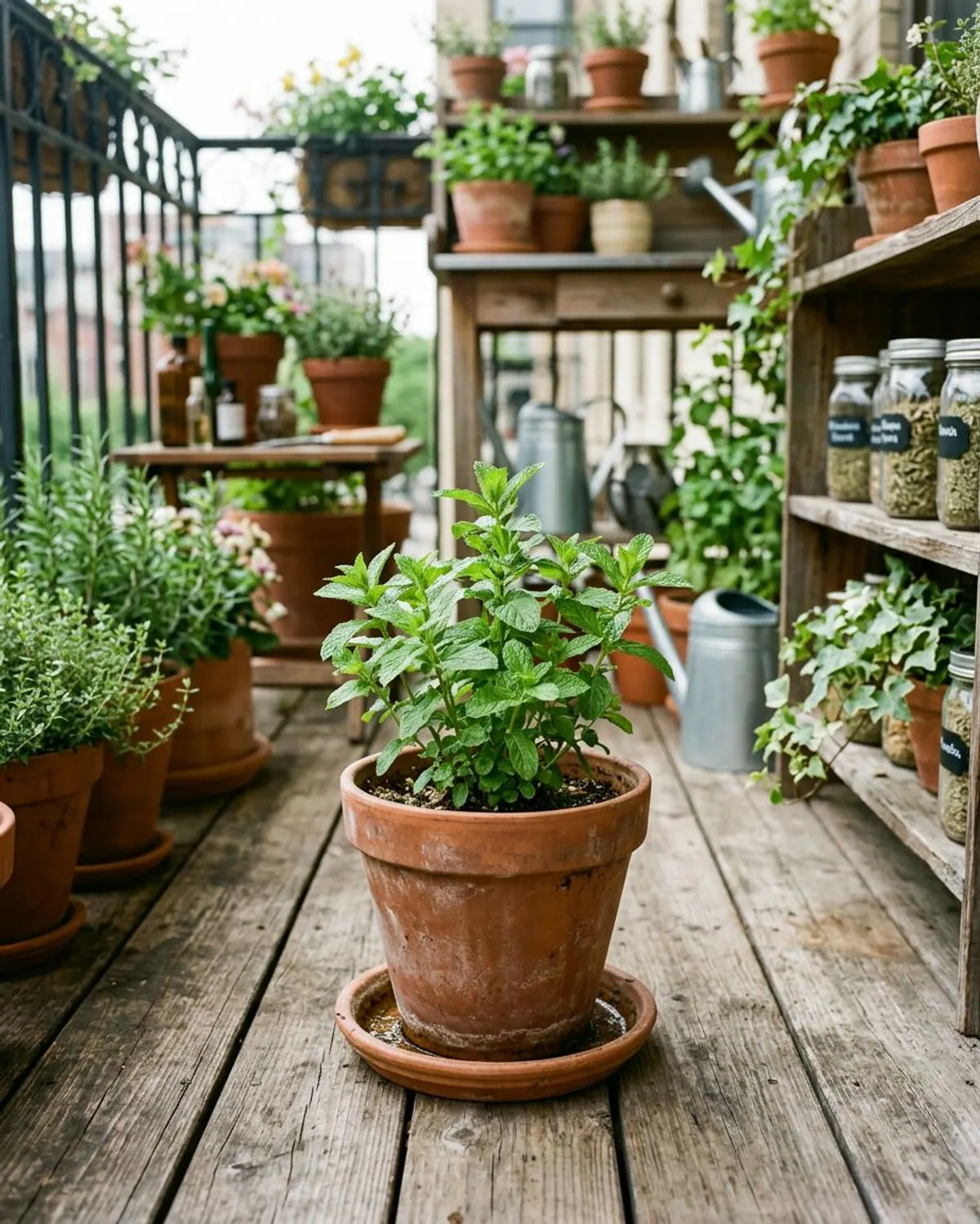
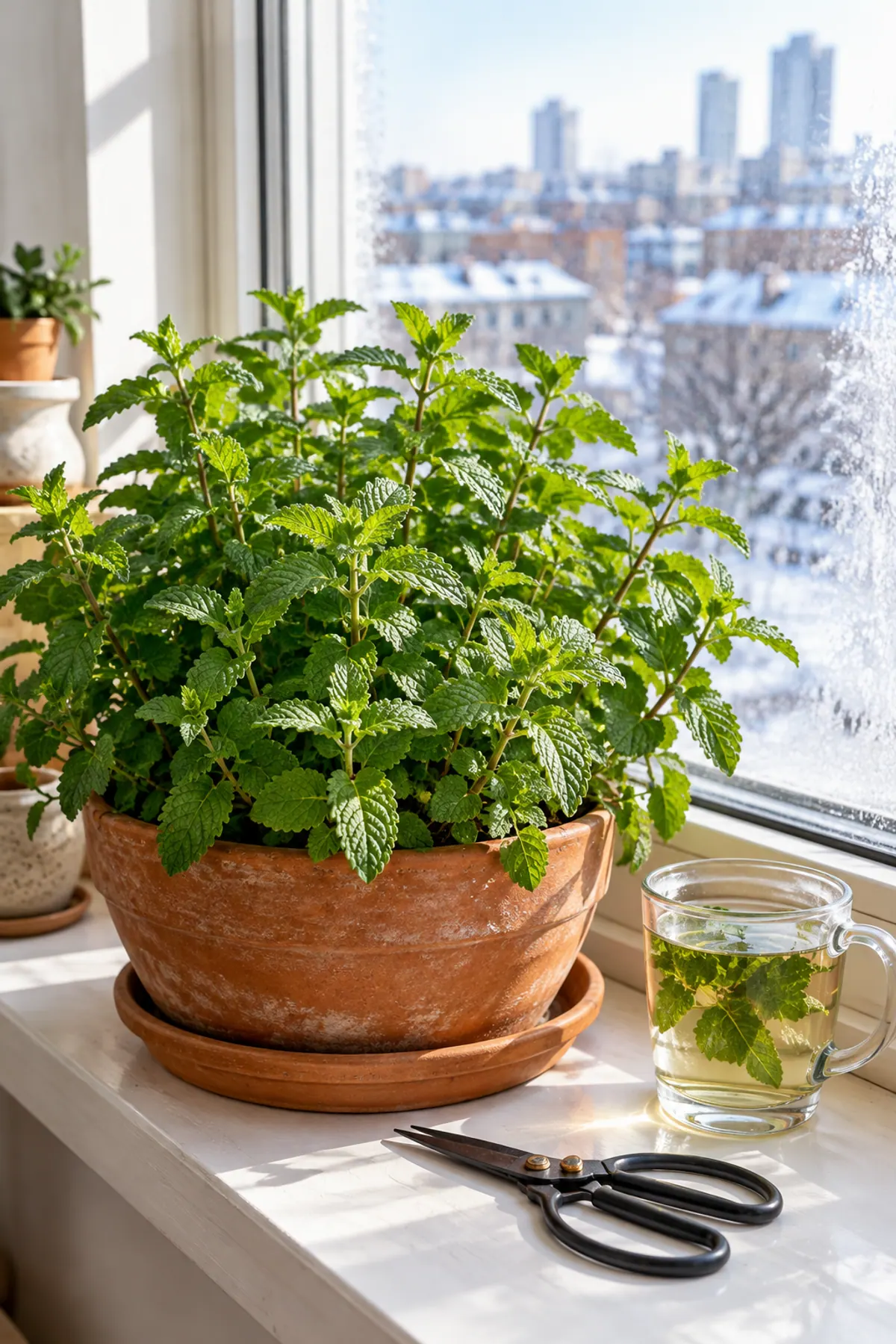
Mint spreads by runners, and Colorado State Extension notes that containers corral it. Give it a pot to itself, about 5 gallons per the University of Georgia Extension, and keep it out of the dry-group pot. The ASPCA lists mint as toxic to cats and dogs. Our mint pot guide covers watering.
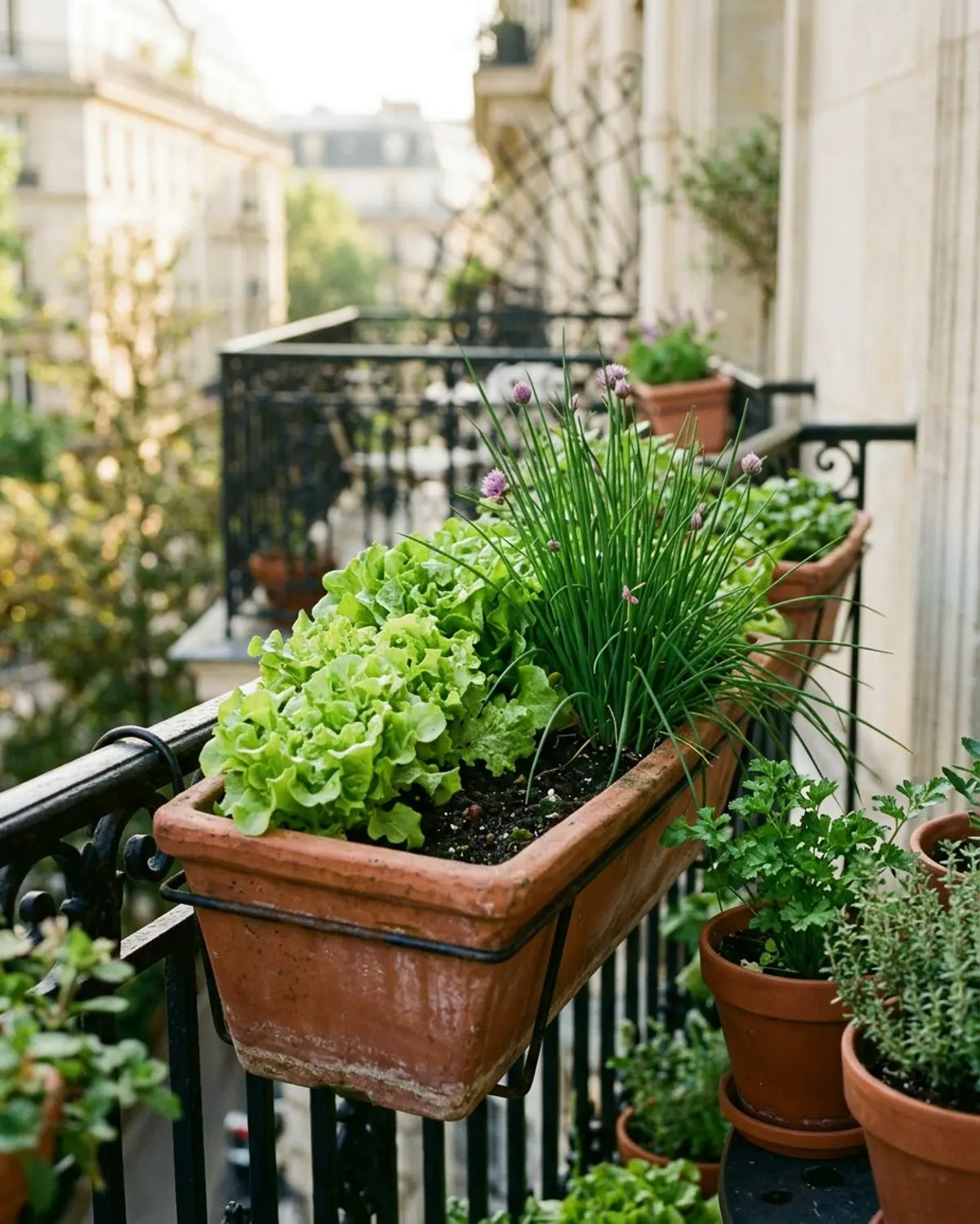
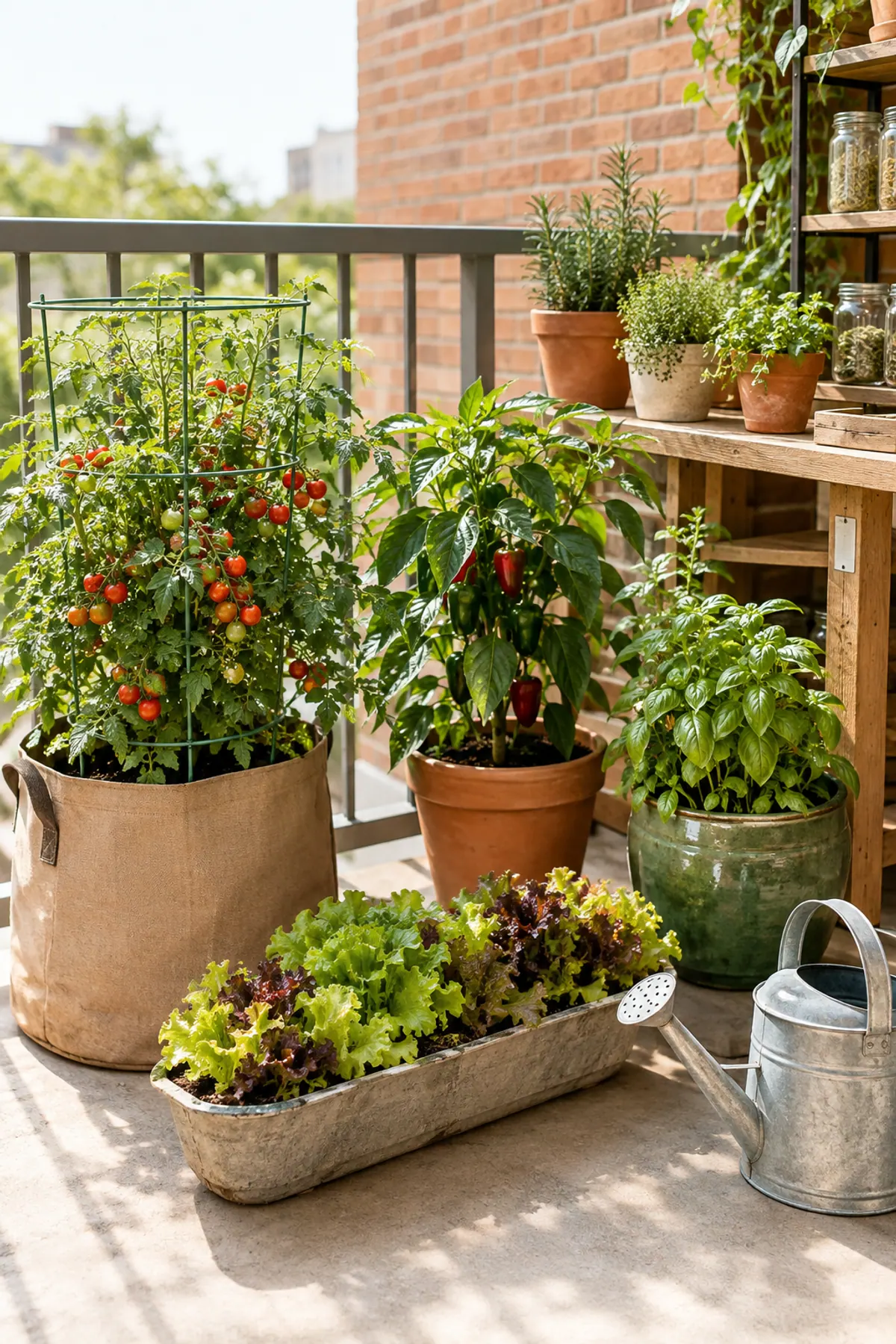
Fill a 30 inch window box with four loose-leaf lettuces and two chives, and put one dill at the end. Dill with lettuce is a research-backed pair, and chives with lettuce is a traditional one. All three like even moisture. The ASPCA lists dill as non-toxic and chives as toxic to cats and dogs.
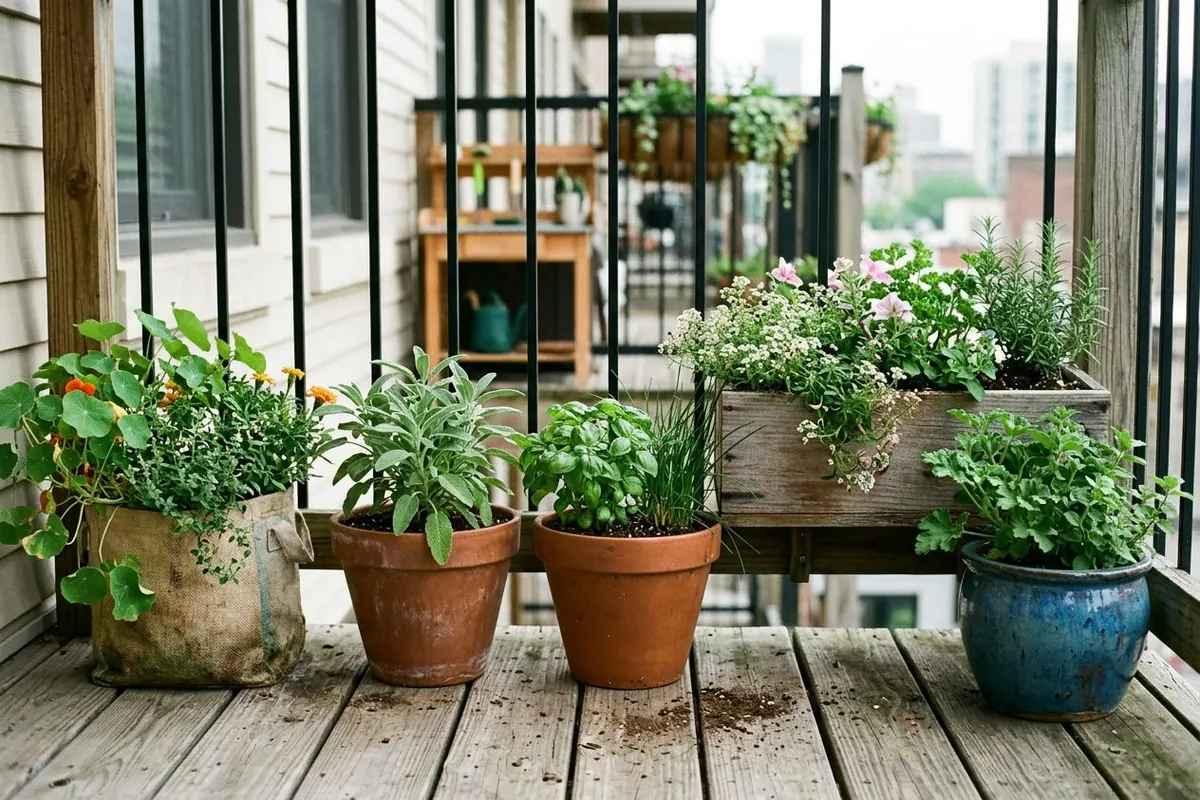
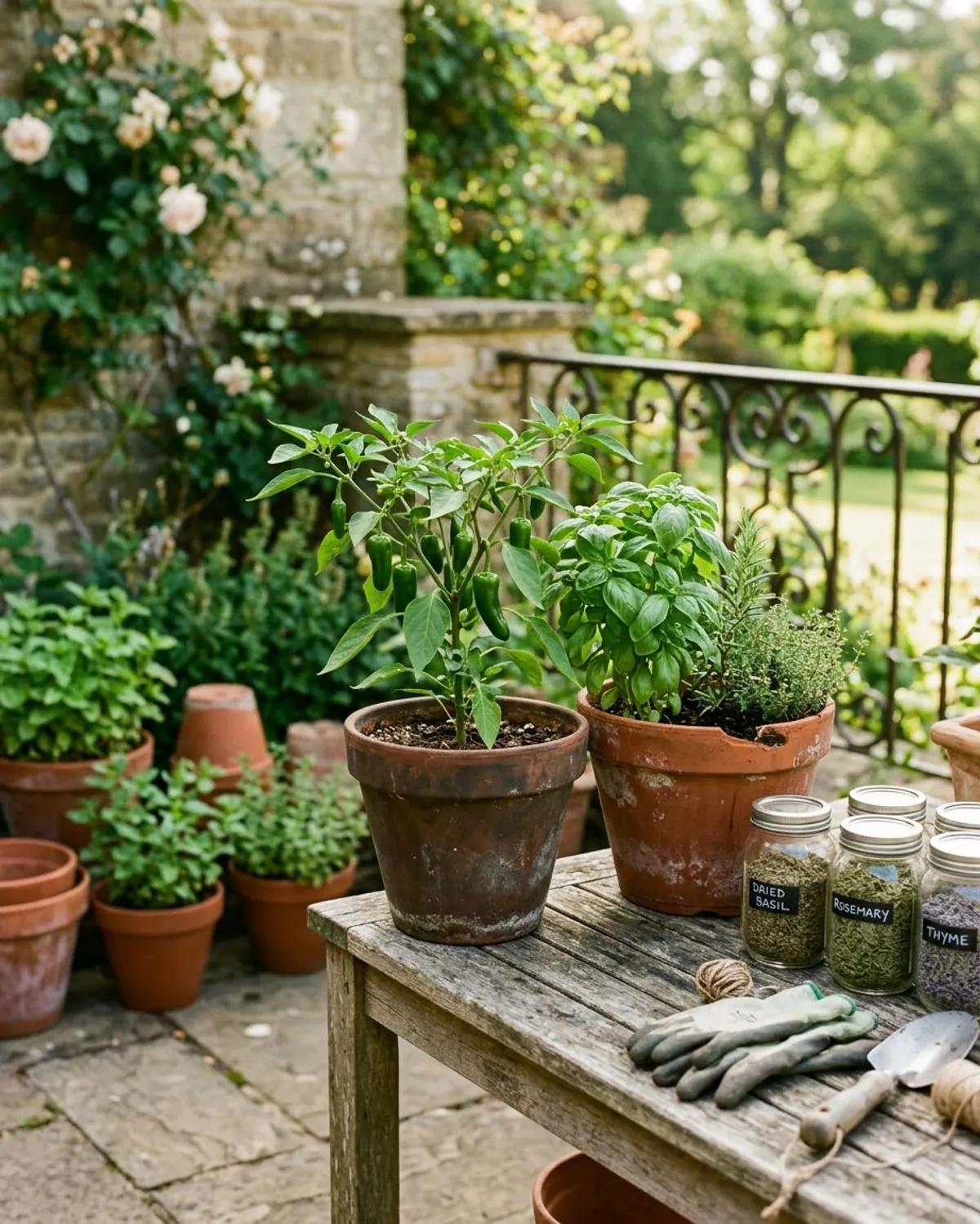
One more traditional pair to try is pepper with basil, in a pot of 3 to 4 gallons.
Drainage and saucers: the part no pairing fixes
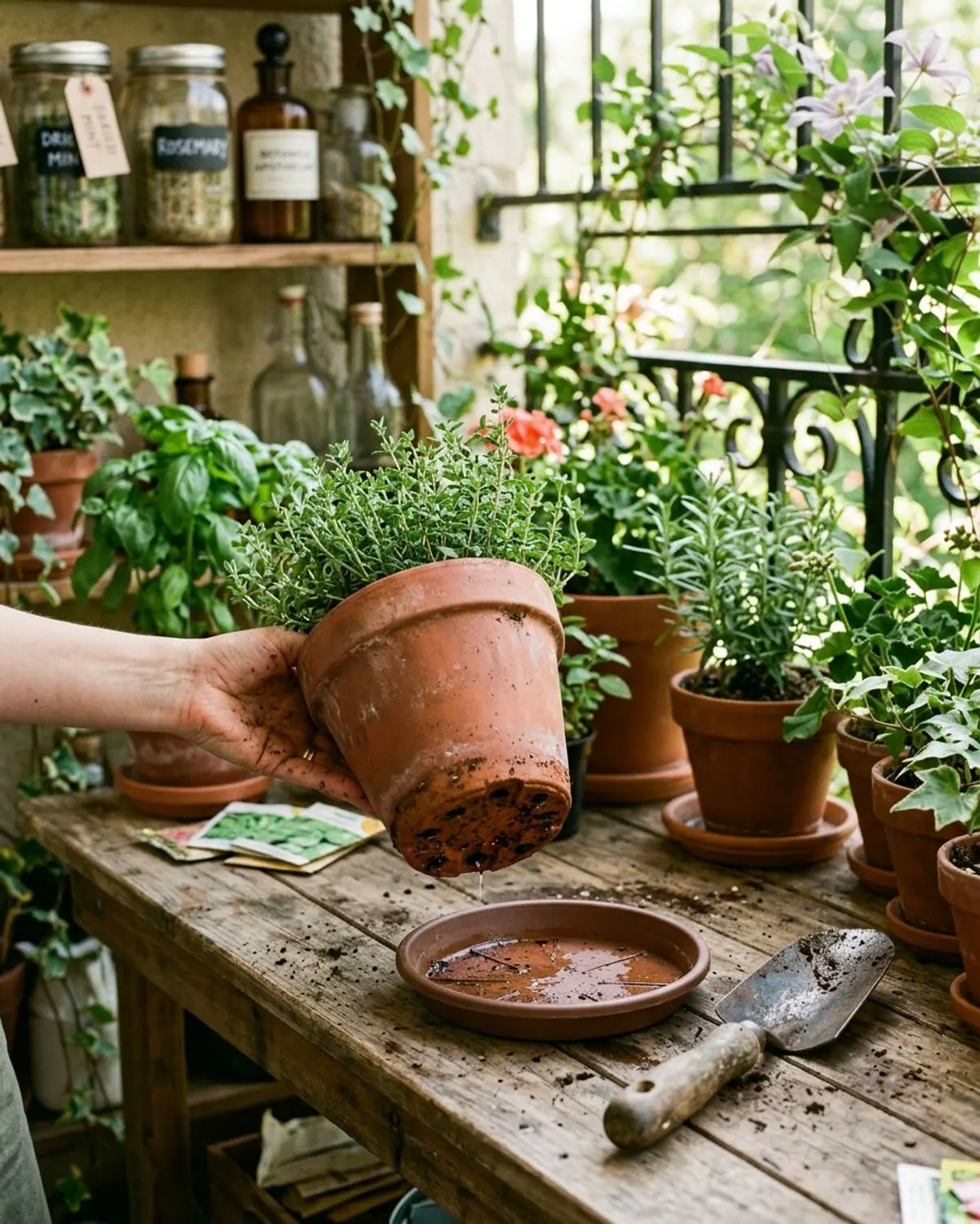
Iowa State Extension says container herbs need drainage holes. Without one, water collects at the bottom and the roots rot, whatever the neighbor. Use a saucer to protect a sill or balcony floor, and tip out standing water after watering.
Pet notes for the plants in these pots
| Plant | Cats and dogs |
|---|---|
| Basil | Non-toxic |
| Rosemary | Non-toxic |
| Thyme | Non-toxic |
| Sage | Non-toxic |
| Dill | Non-toxic |
| Tomato plant | Toxic |
| Chives | Toxic |
| Parsley | Toxic |
| Mint | Toxic |
| Oregano | Toxic |
Check any plant on the ASPCA list for your own pet. Nothing here is medical advice, and herbs in a pot are for growing, not for a pet or a person to treat anything with. If a pet eats a plant, call your vet.
Pots and supplies for shared containers
Supplies for shared pots
- Start here
Fabric grow bags, 10 gallon
Typically $15 to $30
A roomy pot for a tomato and basil pair.
Check price on Amazon for Fabric grow bags, 10 gallon -
Window box planter, 30 inch
Typically $15 to $35
For lettuce, chives and dill.
Check price on Amazon for Window box planter, 30 inch -
Terracotta pots with saucers, 12 inch
Typically $20 to $40
For the dry herb pots.
Check price on Amazon for Terracotta pots with saucers, 12 inch -
Plant labels and markers
Typically $7 to $14
So you remember who shares which pot.
Check price on Amazon for Plant labels and markers -
Moisture meter for plants
Typically $8 to $16
A second opinion on the finger test.
Check price on Amazon for Moisture meter for plants
Sources
Iowa State Extension, Growing herbs in containers. Colorado State Extension, PlantTalk 1081, growing herbs in containers. Penn State Extension, Herbs make good plant partners and companions. Plant Cell Reports, 2024 growth-chamber study. University of Georgia Extension, Container gardening. We read these pages on November 4, 2026.
We earn from qualifying purchases. Read our disclosure and editorial guidelines.
Frequently asked questions
Can you plant basil and tomatoes together in a pot?
Yes. Penn State Extension lists basil with tomato. Use a pot of about 7 gallons for a determinate tomato, set one or two basil plants at the edge, and water when the top inch is dry. The benefit for pests is modest.
What herbs can be planted together in one pot?
Group by water. Rosemary, sage and thyme like it drier, while parsley and chives like more moisture, per Colorado State Extension. Keep mint in its own pot.
How big a pot do I need for companion planting?
The University of Georgia Extension lists 5 gallons for a determinate tomato and 1 gallon for basil. For pairs, start from the largest plant and add about 1 gallon per extra herb. That is a rule of thumb and sources vary.
Does companion planting really work in pots?
The evidence is thin. Penn State Extension says herbs confuse pests rather than repel them, and the tomato and basil study was done in a growth chamber. Matching water and light is the part that reliably helps.
Can you plant mint with other herbs in a pot?
It is better not to. Mint spreads by runners and crowds out neighbors, so give it a pot of its own.
Save it for later
Pin this to your Container Gardening board so it's there when you need it.
Save to Pinterest