This post contains affiliate links. As an Amazon Associate we earn from qualifying purchases, at no extra cost to you. Read our disclosure.
Safety first: Herbs can be powerful. If you are pregnant, nursing, take medication or have a health condition, check with your doctor or pharmacist first. Please read our herbal & garden safety notes before you start.
Key takeaways
- Short answer: 6 to 12 inches for most herbs; 24 inches or more for rosemary and sage
- Sources disagree: rosemary is 12 inches in one source and 24 to 36 in two others, so the chart shows each source
- Pots: a 12 inch pot keeps two parsley or one basil at full spacing (our arithmetic)
- Mint: give it a 10 inch pot of its own (Old Farmer's Almanac)
In this post10 sections
- How far apart to plant herbs: the short answer
- Herb spacing chart: 11 herbs, three sources
- Why herb spacing sources disagree
- Herb spacing in pots: how many herbs fit in one pot
- Herb spacing in a raised bed: a square-foot example
- Spacing mistakes: too close and too far
- Mint and other spreaders: give them a pot
- Supplies for spacing and planting
- Sources
- FAQ
How far apart to plant herbs: the short answer
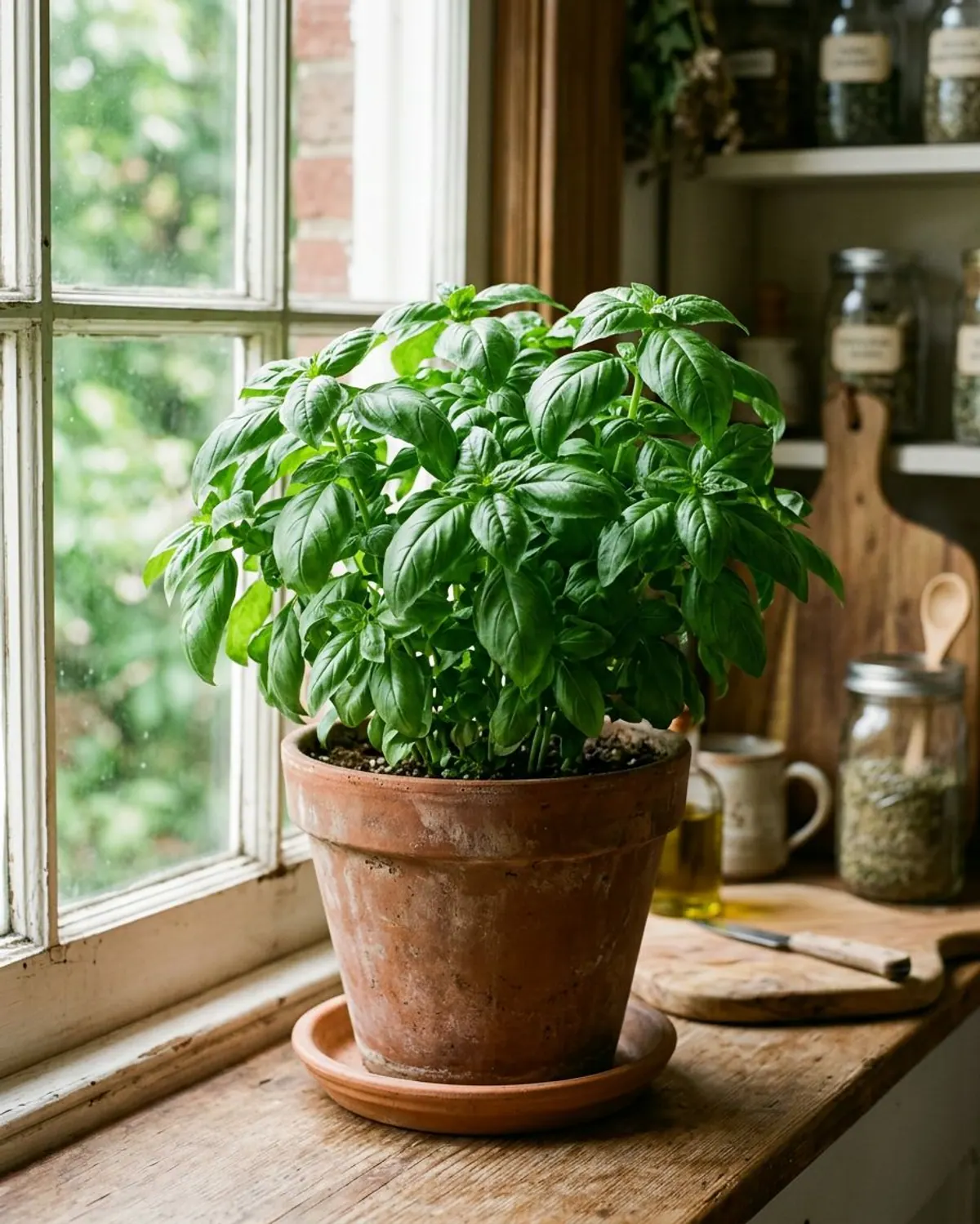
Plan on 6 to 12 inches for most herbs, and 24 inches or more for rosemary and sage. Basil, dill and oregano land in a tight 8 to 12 inch band across the three sources below, while thyme, rosemary, sage, mint and chives swing from 4 to 36 inches depending on who you ask.
The chart uses the Old Farmer's Almanac herb pages (read 2026-11-09), Gardening Know How's herb spacing chart (updated December 13, 2022) and a Texas A&M AgriLife Extension herb publication, E-561. Every number is shown as the source gives it, so you can see where they disagree, and the last column is our own planning pick.
Herb spacing chart: 11 herbs, three sources
Spacing means center to center: the distance from the stem of one plant to the stem of the next. All figures are inches. "No value" means we did not read that source's page for that herb, not that the source says nothing.
| Herb | Almanac | Gardening Know How | Texas A&M AgriLife | Range across sources | Our planning pick |
|---|---|---|---|---|---|
| Basil | 10 to 12 | 12 | 12 | 10 to 12 | 12 |
| Parsley | 6 to 8 (8 to 10 for larger plants) | 6 | 6 to 8 | 6 to 8 | 6, or 8 for large plants |
| Thyme | 12 to 24 (one line on the page says 9) | 12 | 10 to 12 | 10 to 24 | 12 |
| Rosemary | 24 to 36 | 12 | 24 | 12 to 36 | 24 |
| Sage | 24 | 12 | 30 | 12 to 30 | 24 |
| Mint | 24 | 18 | 8 to 10 | 8 to 24 | its own pot, or 18 in a bed |
| Chives | thin seedlings to 4 to 6 | 12 | 5 | 4 to 12 | 6 |
| Cilantro | no value | 18 | 10 (thin to) | 10 to 18 | 12 |
| Oregano | 8 to 10 | 9 | 8 to 10 | 8 to 10 | 9 |
| Dill | 10 to 12 (thin to) | 12 | 12 (thin to) | 10 to 12 | 12 |
| Lavender | no value | 18 | 18 | 18 | 18 |
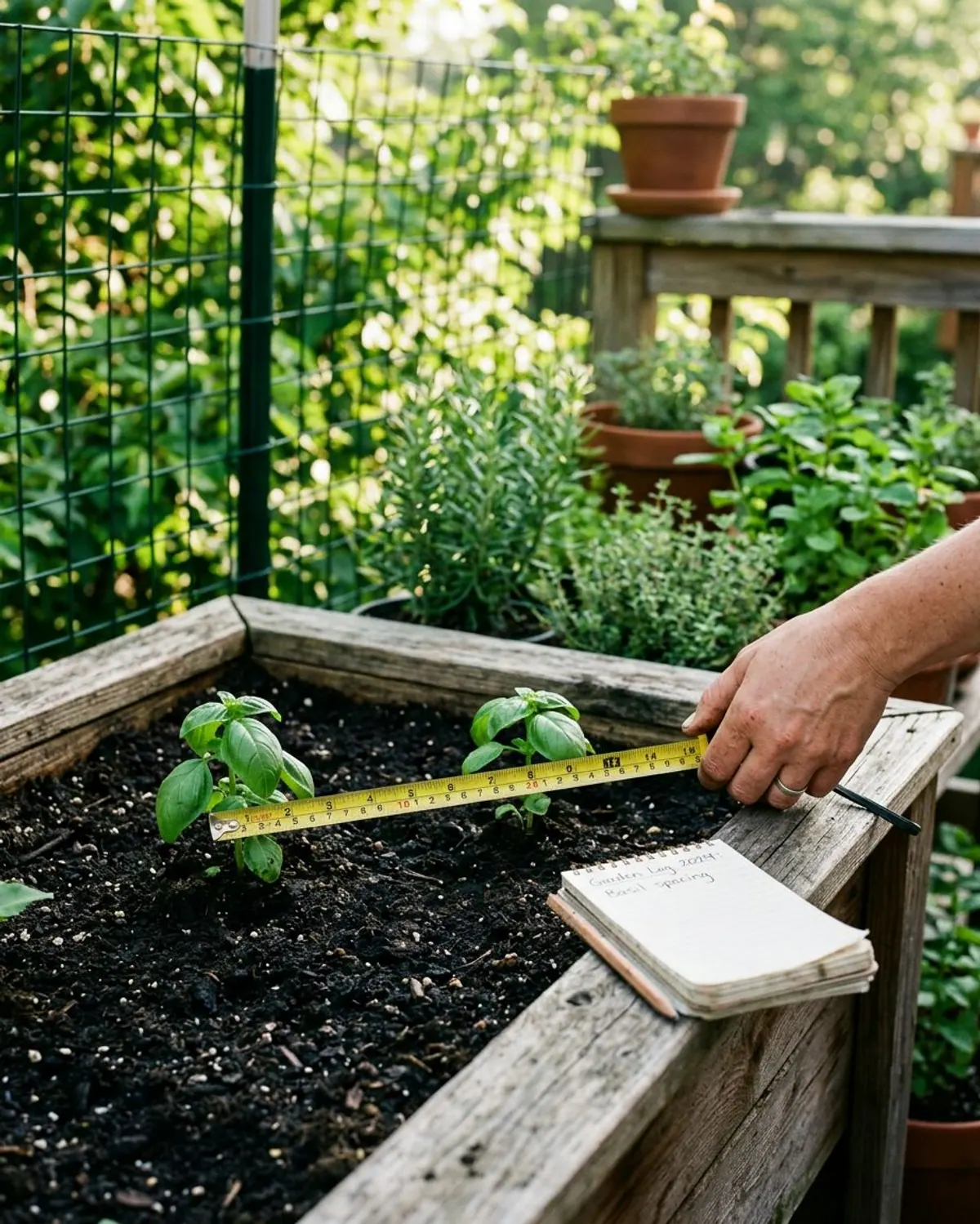
You will see guides that give one number for every herb. None of the three sources here does: the full range runs from 4 inches for chives to 36 inches for rosemary, which is why a single "all herbs" figure is a poor guide.
Why herb spacing sources disagree
Gardening Know How says spacing is based on the size of the mature plant, and mature size varies. The Almanac's thyme page says to space young plants 12 to 24 inches apart "depending upon the specific variety", which is the widest range for any herb in the chart. Rosemary shows the same split: the Almanac says 2 to 3 feet and says rosemary does not like being crowded, while Gardening Know How gives 12 inches.
Four things move the number. We name each one with the herb where a source shows it, and we mark where the reason is our reading rather than something a source states.
| Cause | Example from the sources | How to use it |
|---|---|---|
| Mature size versus young size | Rosemary: 12 inches (Gardening Know How) versus 24 to 36 (Almanac, Texas A&M) | For woody herbs, plan for the mature size |
| Variety | Thyme: 12 to 24 inches "depending upon the specific variety" (Almanac) | Read the plant tag for your variety first |
| Seed thinning versus transplant spacing | Chives: thin seedlings to 4 to 6 inches (Almanac); cilantro: thin to 10 inches (Texas A&M) | Sow close, then thin to the final gap |
| Who wrote it and where | Mint: 8 to 10 inches (Texas A&M) versus 24 (Almanac) | Our reading: mint spreads by runners, so a bed number matters less than a pot of its own |
Herb spacing in pots: how many herbs fit in one pot
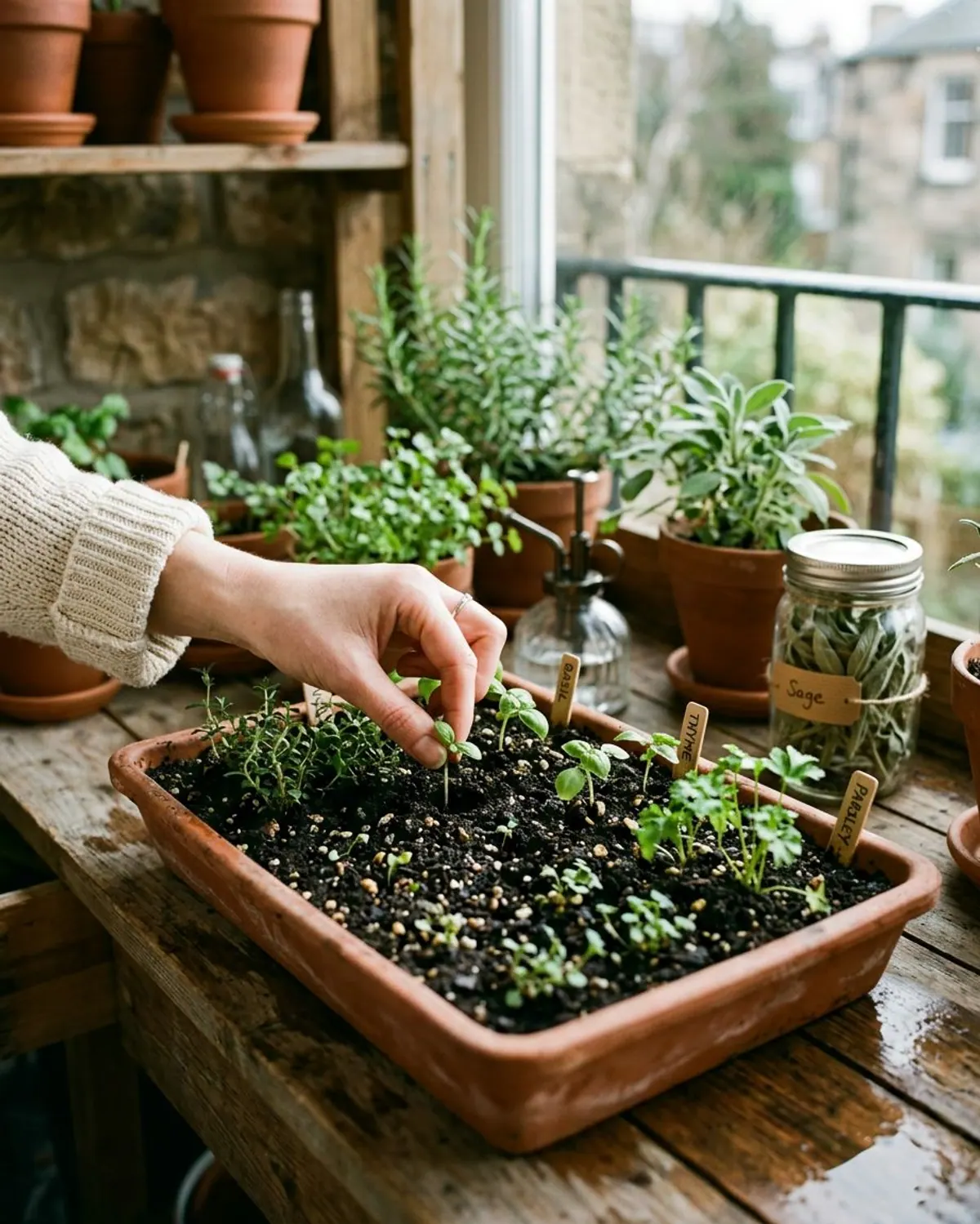
The three sources give bed spacing, and none gives a separate in-pot figure. What they do say: Gardening Know How says a container between 10 and 18 inches is appropriate for most herbs, Iowa State Extension says several herbs can share one container if their water needs are comparable, and the Almanac says to give each basil plant its own container at least 6 to 10 inches across.
To turn bed spacing into a pot count, we treated each plant as needing a circle as wide as its spacing, then worked out how many circles fit across the pot. This is our own geometry, not a tested planting plan, and it is the no-crowding case, with at least one plant in every pot.
| Pot width across the top | 12 inch herbs (basil, dill, thyme) | 6 inch herbs (parsley) | 5 inch herbs (chives, Texas A&M figure) | 24 inch herbs (rosemary, sage) |
|---|---|---|---|---|
| 10 inches | 1 | 1 | 2 | 1 |
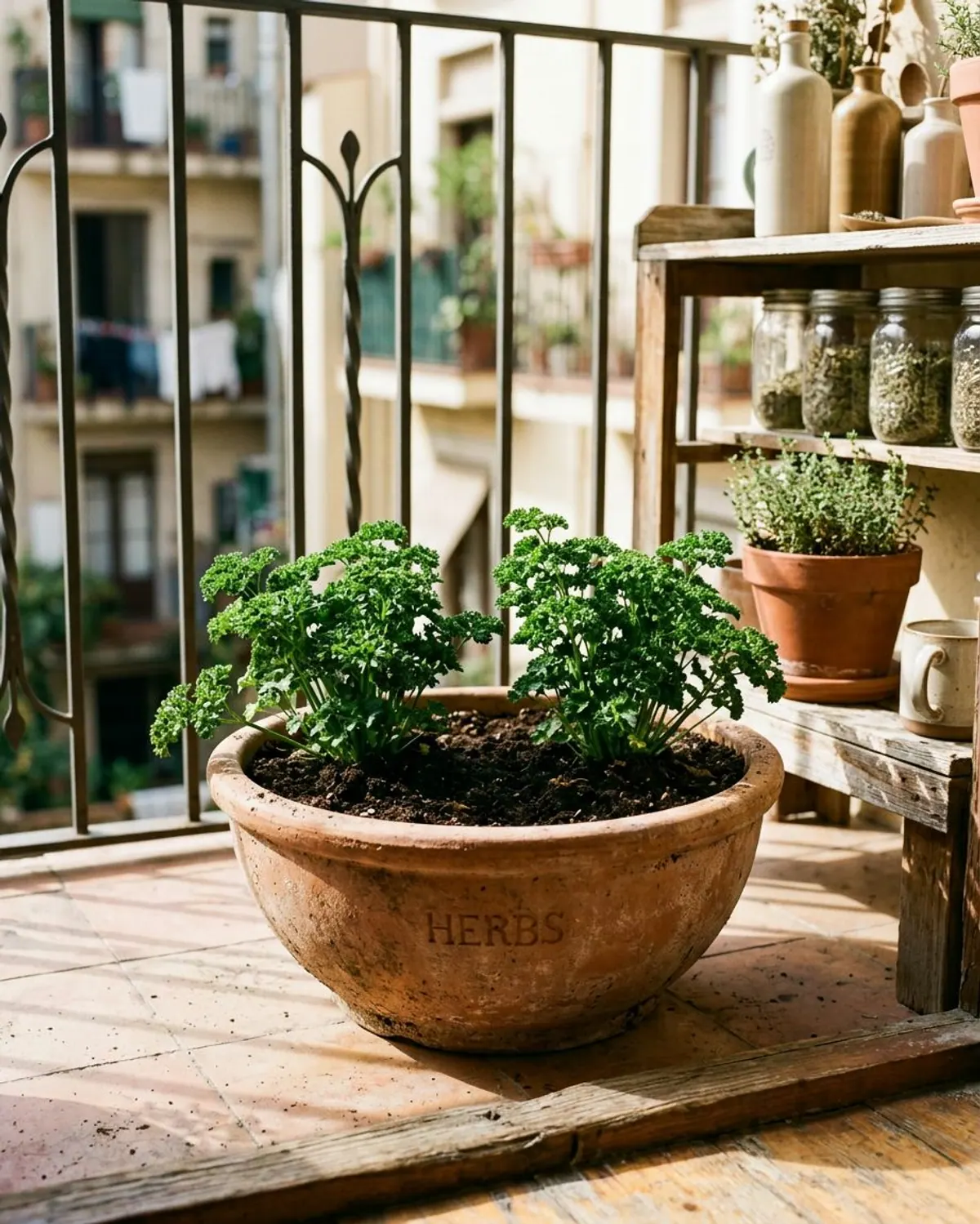
| 12 inches | 1 | 2 | 3 | 1 |
| 14 inches | 1 | 3 | 5 | 1 |
| 16 inches | 1 | 4 | 7 | 1 |
Gardeners who harvest often do pack pots tighter than this, and our pot size chart counts soil volume and so allows more annual herbs in a 12 inch pot. We have no tested figure for how much crowding is safe, so use the table above when you want plants that never touch, and read the note on crowding below before you squeeze more in.
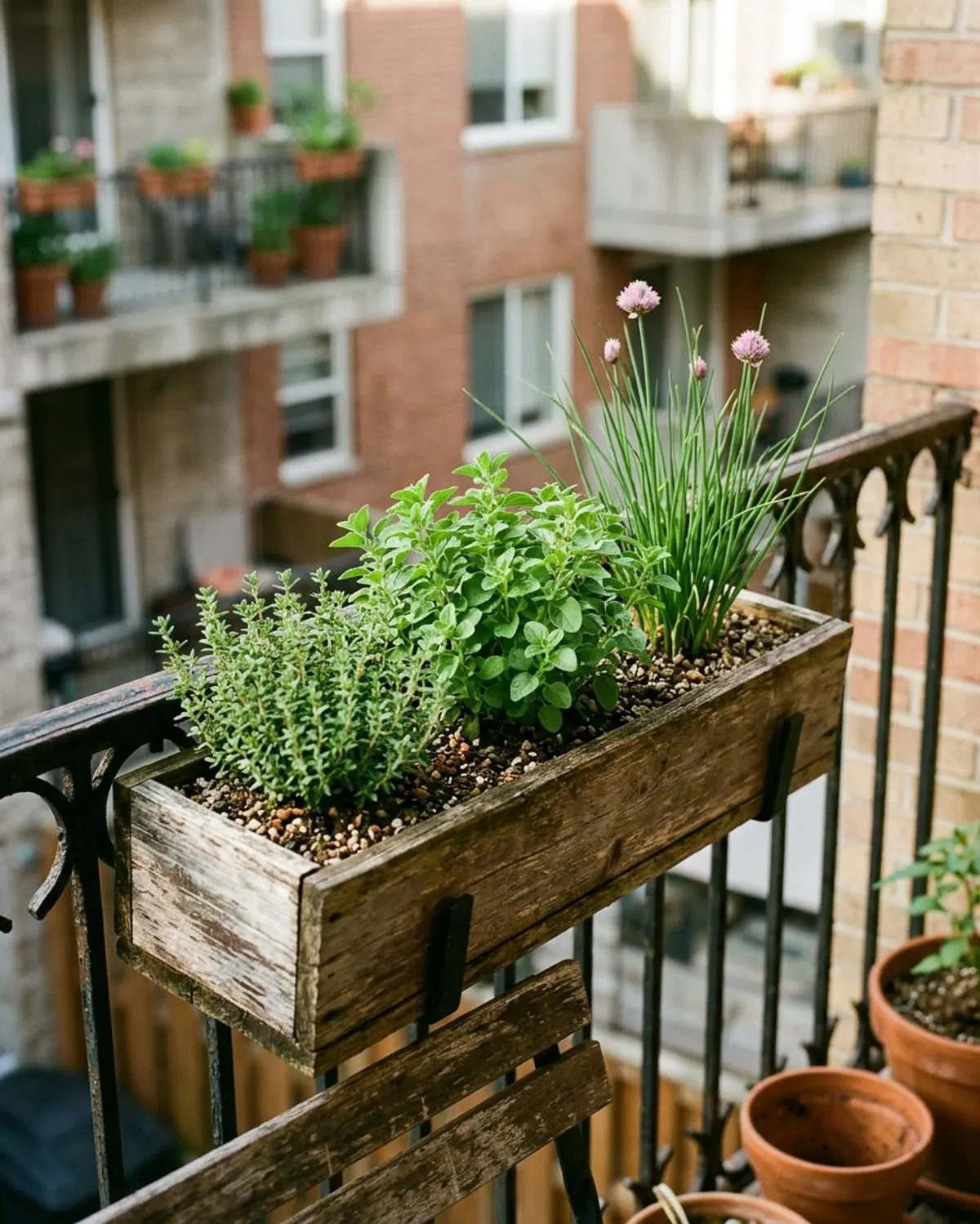
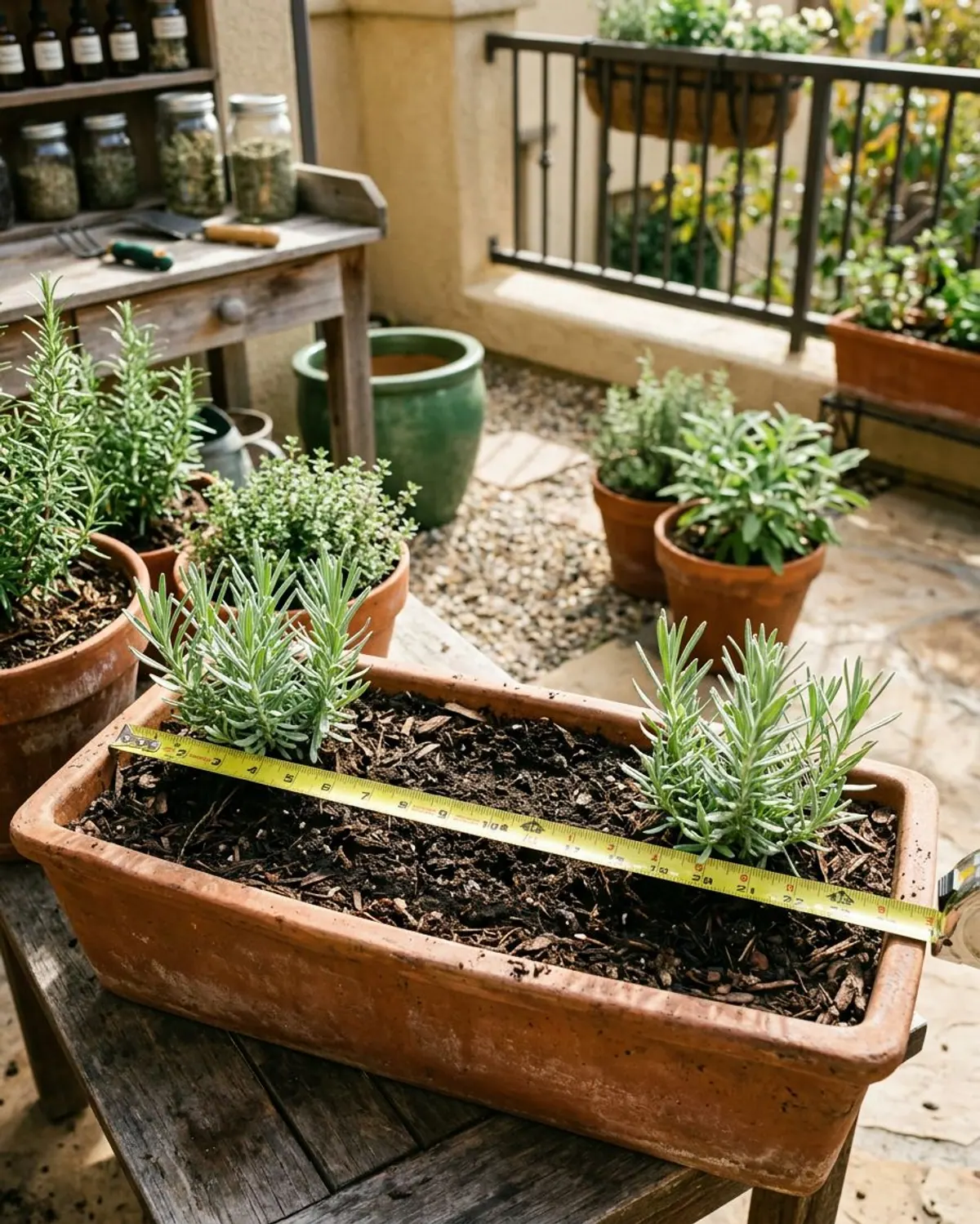
Rosemary, sage and lavender are better in a pot of their own at these sizes, and pairing is a separate question. Our companion planting in containers guide covers which herbs share a pot well, and the best herb garden planters roundup covers what to put them in.
Herb spacing in a raised bed: a square-foot example
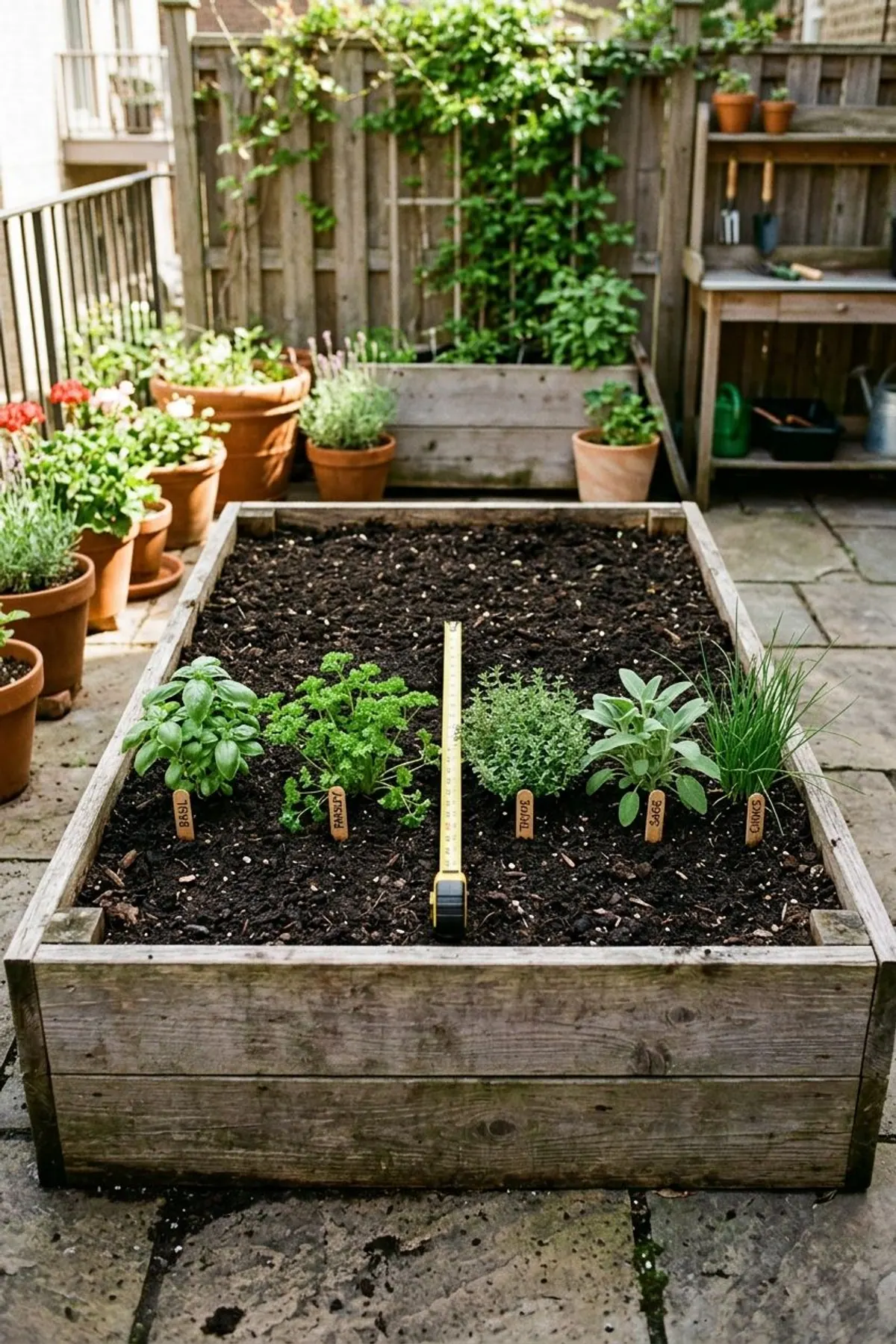
In a bed, a 12 by 12 inch square is a handy unit. By the spacing above, a 12 inch herb takes one square, a 6 inch herb fits four to a square (two by two), and a 24 inch herb takes four squares (two feet by two feet). Our raised beds versus containers comparison covers the trade-offs of each.
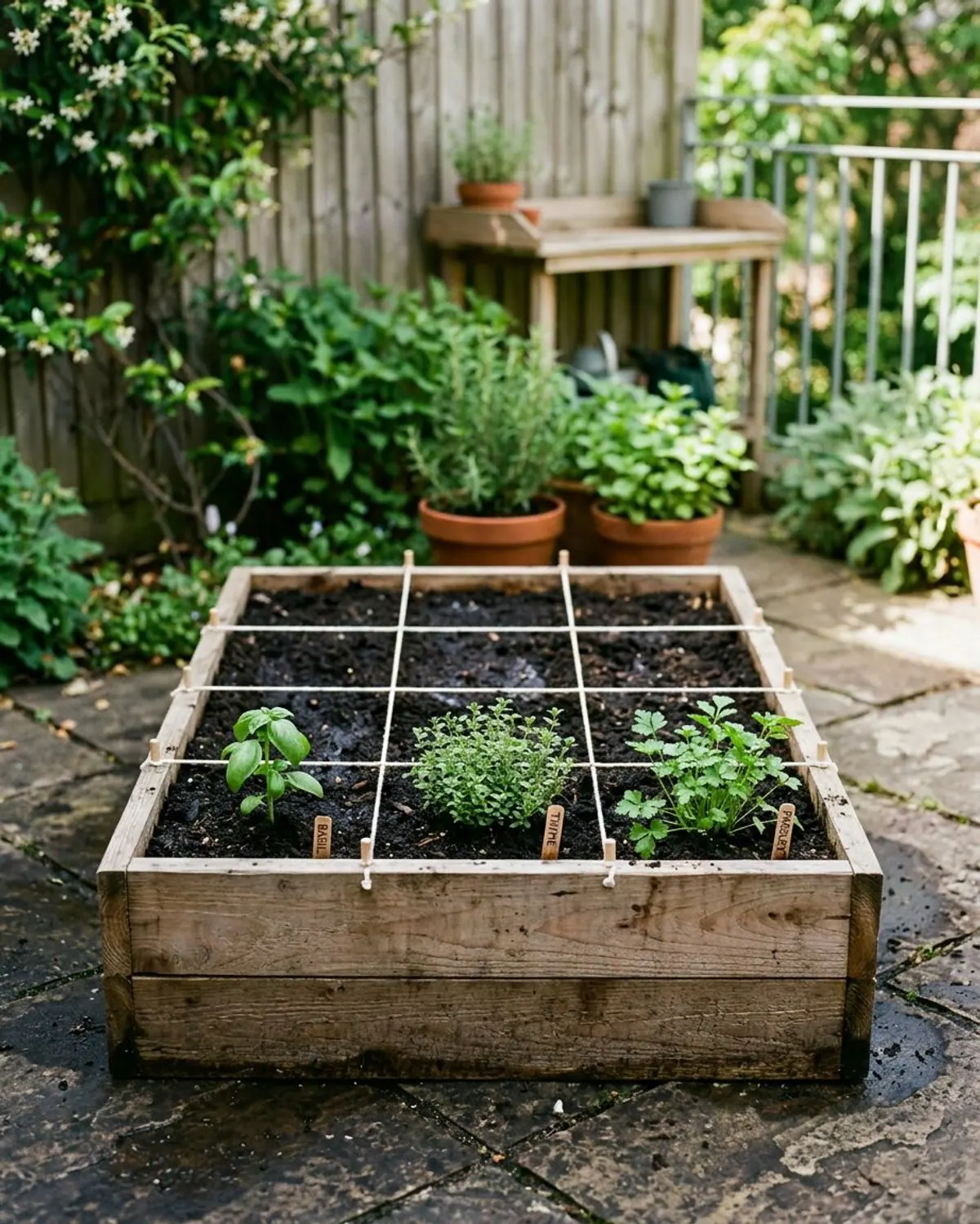
Here is one way to fill a 4 by 4 foot bed, 16 squares, using the planning picks from the chart. Iowa State Extension says herbs grouped together should have comparable water needs, so the left half holds the woody herbs and the right half the leafy ones. That grouping is our reading of that rule, so check your plant tags.
| Herb | Spacing used | Squares used | Plants |
|---|---|---|---|
| Rosemary | 24 inches | 4 | 1 |
| Sage | 24 inches | 4 | 1 |
| Basil | 12 inches | 3 | 3 |
| Cilantro | 12 inches | 2 | 2 |
| Dill | 12 inches | 1 | 1 |
| Parsley | 6 inches | 1 | 4 |
| Chives | 6 inches | 1 | 4 |
| Total | 16 | 16 |
The arithmetic: 4 + 4 + 3 + 2 + 1 + 1 + 1 = 16 squares, and 1 + 1 + 3 + 2 + 1 + 4 + 4 = 16 plants. Cilantro is given 12 inches, which sits inside its 10 to 18 inch range, and chives are given 6 inches, one inch above the Texas A&M figure.
Spacing mistakes: too close and too far
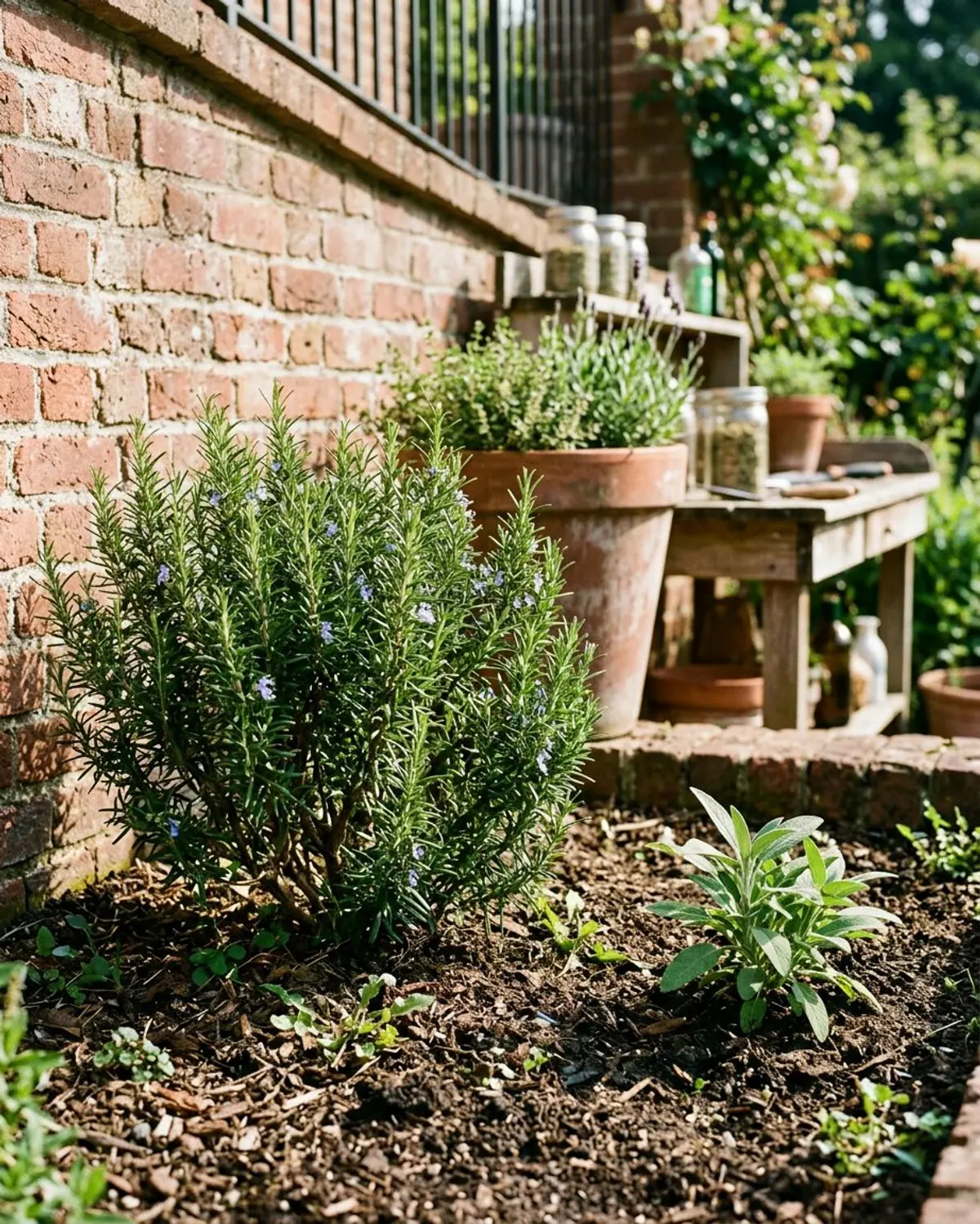
Gardening Know How says the biggest spacing problem is putting plants too close together: they compete for nutrients, a disease spreads quickly from one plant to the next, less airflow encourages fungal disease and rot, and weeds are harder to pull. Planting farther apart than recommended is safe for the plants but, as that page notes, leaves gaps and fewer plants in the space.
| Too close | Too far | |
|---|---|---|
| What happens | Competition for nutrients, disease passes plant to plant, rot (Gardening Know How) | Fewer plants in the space, visible gaps (Gardening Know How) |
| What it looks like | Tangled stems, leaves touching and staying wet | Bare soil and weeds between small plants |
| Fix | Thin seedlings, move one plant, or shift to a bigger pot | Fill gaps with a quick annual like basil or cilantro, then pull it as the big herb grows |
Mint and other spreaders: give them a pot
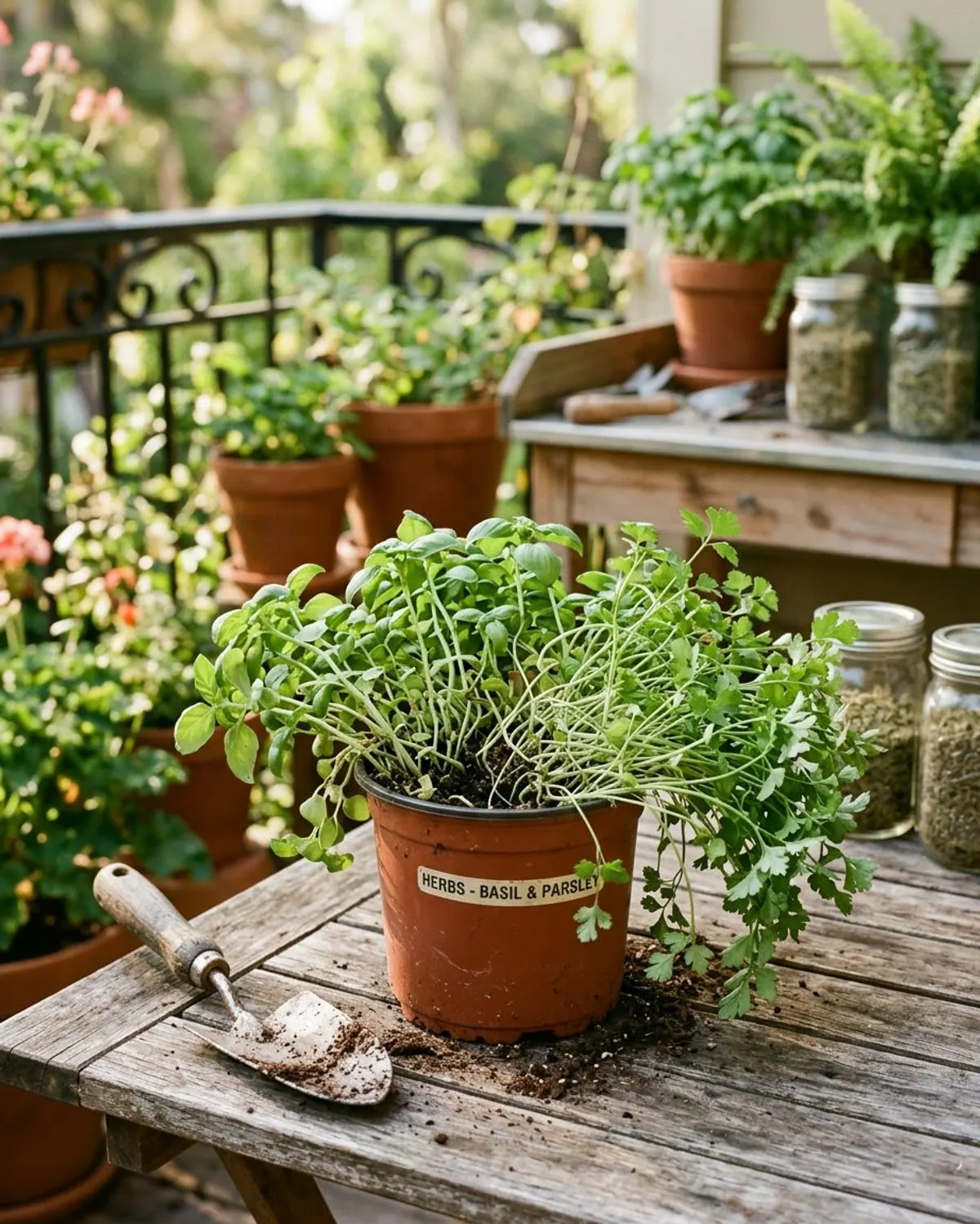
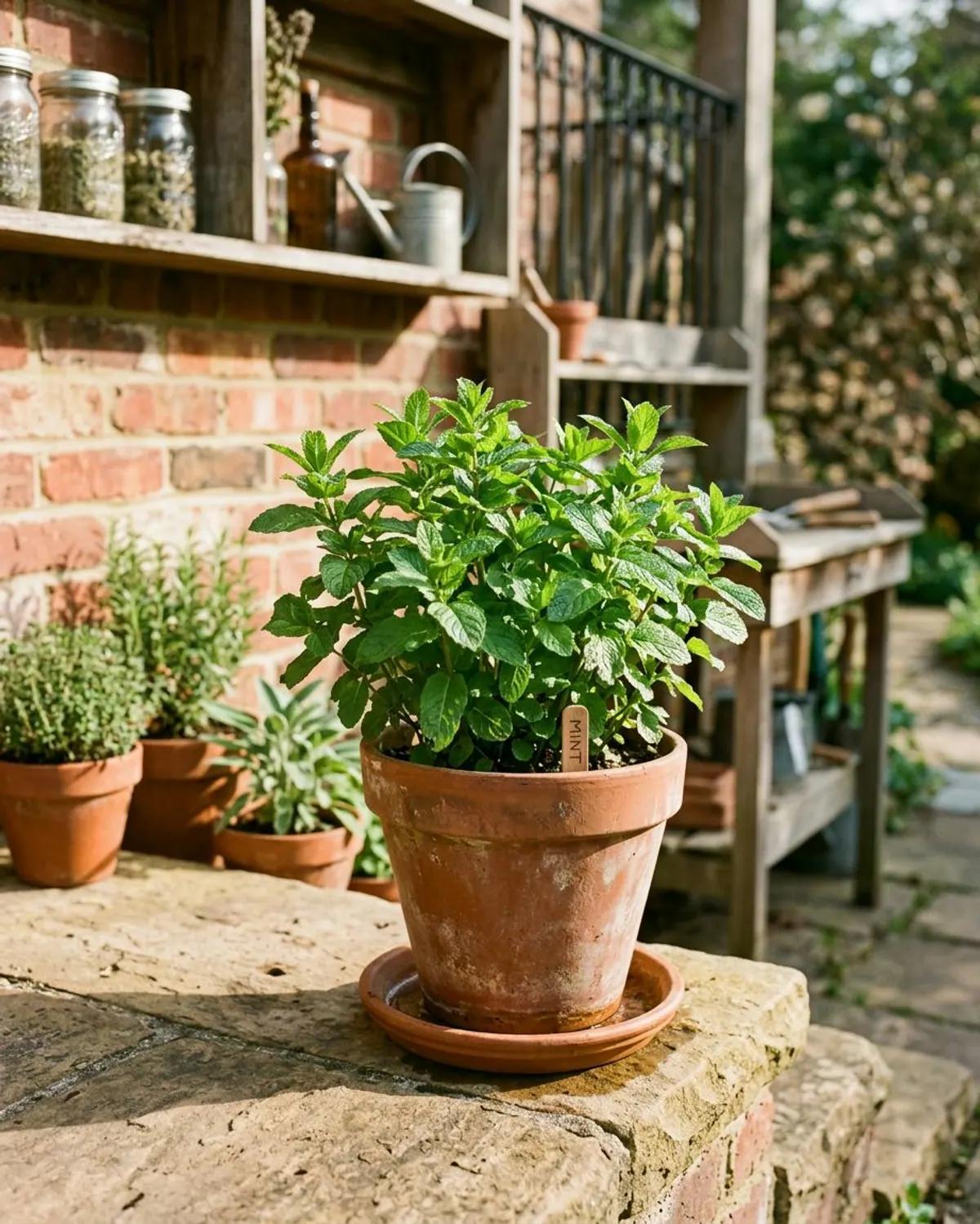
Mint is the herb where the chart matters least. The Almanac suggests planting each mint in its own 10-inch pot with drainage holes, even in the ground, and sinking the pot to hold the roots in. That is why we list a pot instead of a bed number.
Before you plant
Supplies for spacing and planting
Supplies for planting herbs
- Start here
Terracotta pots with drainage holes, 10 to 14 inch
The 10 to 14 inch range holds one big herb or a few small ones.
Check price on Amazon for Terracotta pots with drainage holes, 10 to 14 inch -
Wooden window box planter, 24 inch
A long, narrow box suits a row of small herbs at even gaps.
Check price on Amazon for Wooden window box planter, 24 inch -
Retractable tape measure
For measuring the gaps from stem to stem.
Check price on Amazon for Retractable tape measure -
Plant markers for herbs
Mark each spot before you dig so the gaps stay even.
Check price on Amazon for Plant markers for herbs -
Potting mix for containers
Use mix made for pots, not garden soil.
Check price on Amazon for Potting mix for containers
Sources
Old Farmer's Almanac plant pages for basil, parsley, thyme, rosemary, sage, mint, chives, oregano and dill, read 2026-11-09 (the cilantro and lavender Almanac pages were not read). Gardening Know How, Herb Spacing Chart, by Mary Ellen Ellis, updated December 13, 2022. Texas A&M AgriLife Extension, herb publication E-561 (PDF, 2009 file date; it cites 2005 crop data). Iowa State University Extension, Growing Herbs in Containers (last reviewed January 2023). ASPCA toxic and non-toxic plant list, read 2026-11-09. Spacing is a range and varies by variety; check your plant tag. Herbal notes here are not medical advice.
Frequently asked questions
How far apart should herbs be planted?
Most herbs need 6 to 12 inches between plants, and rosemary, sage and lavender need 18 to 24 inches or more. The three sources we read (Old Farmer's Almanac, Gardening Know How, Texas A&M AgriLife) disagree on several herbs, so check your plant tag for your variety.
How far apart do you plant basil?
Basil is 10 to 12 inches apart across the Almanac, Gardening Know How and Texas A&M AgriLife. In a pot, the Almanac says each plant needs its own container at least 6 to 10 inches across.
Can you plant herbs close together?
You can, but Gardening Know How warns that plants set too close compete for nutrients, pass disease along and get less airflow. We have no tested figure for safe crowding, so use the chart and thin when plants touch.
How many herbs fit in one pot?
At full spacing, a 12 inch pot holds one basil or two parsley (our arithmetic). Iowa State Extension says herbs sharing a container should have comparable water needs.
How far apart should rosemary be planted?
The Almanac says 2 to 3 feet and Texas A&M AgriLife says 24 inches, while Gardening Know How gives 12 inches. We plan for 24 inches because rosemary grows into a shrub.
How far apart do you plant mint?
Sources range from 8 to 24 inches, but the Almanac suggests a 10 inch pot of its own even in the ground, because mint spreads.
Save it for later
Pin this to your Container Gardening board so it's there when you need it.
Save to Pinterest