This post contains affiliate links. As an Amazon Associate we earn from qualifying purchases, at no extra cost to you. Read our disclosure.
Safety first: Herbs can be powerful. If you are pregnant, nursing, take medication or have a health condition, check with your doctor or pharmacist first. Please read our herbal & garden safety notes before you start.
Key takeaways
- Pick a patio, dwarf or cherry type for your first pot (Iowa State Extension)
- Standard plants want about 5 gallons; where sources disagree, take the larger pot
- Bury the stem and set the cage at planting, not later
- Water evenly, since uneven watering is tied to cracking and blossom end rot
- Liquid feed every 1 to 2 weeks starting 2 to 3 weeks after planting
In this post10 sections
- Pick a tomato type that suits a pot
- How big should the pot be?
- When to plant tomatoes outside
- Plant it right: four steps on planting day
- Watering: the habit that decides the harvest
- Feeding: how often and with what
- Support and pruning
- Blossom end rot: two explanations, one fix
- When to pick, and what heat does
- FAQ
Pick a tomato type that suits a pot
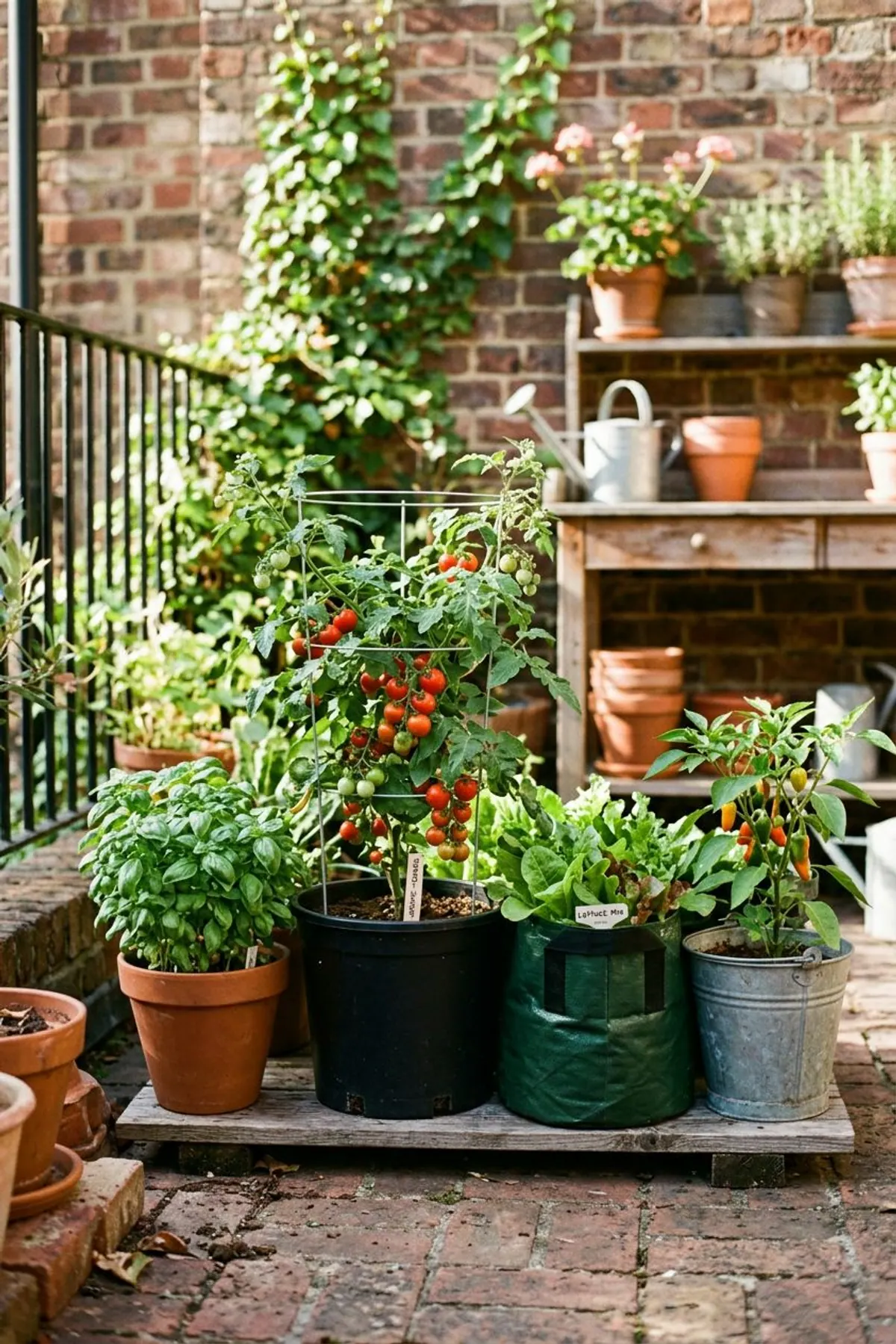
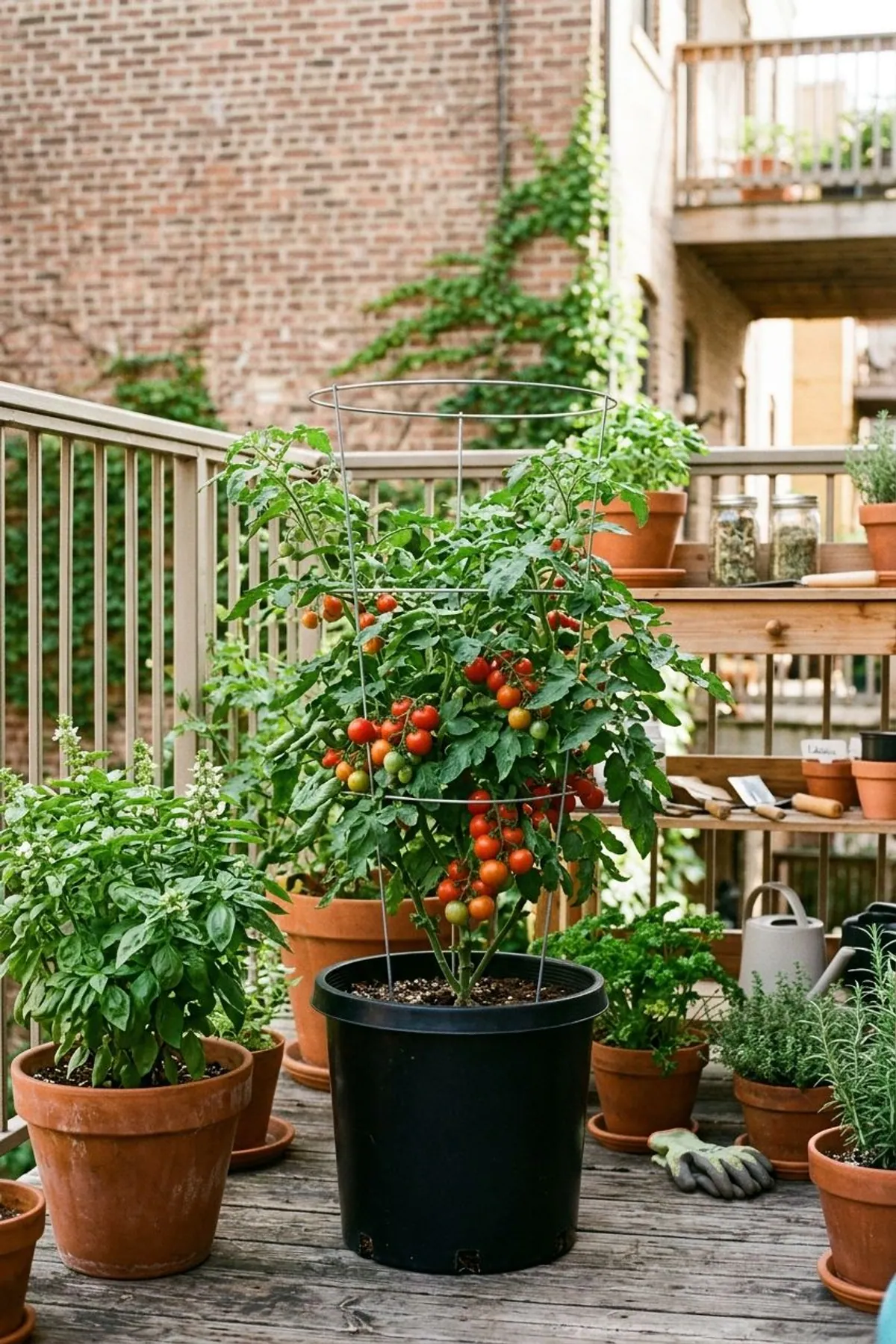
Tomatoes sort into two habits. Determinate and dwarf types stop at a set height and ripen over a few weeks, so they stay manageable in a pot. Indeterminate types keep growing and fruiting until frost and need a tall support. Iowa State Extension says determinate and dwarf types do better in containers, and its suggestions include Bush Early Girl, Celebrity and Jetstar, plus patio types such as Patio Hybrid, Patio Princess and Mega Bite and the cherry types Little Sun Yellow and Terenzo.
The Old Farmer's Almanac container list adds Window Box Roma, Tumbler, Tiny Tim and Better Bush. If you want a tall indeterminate plant anyway, the Almanac says it needs netting or a larger trellis, so plan the support before you buy the plant.
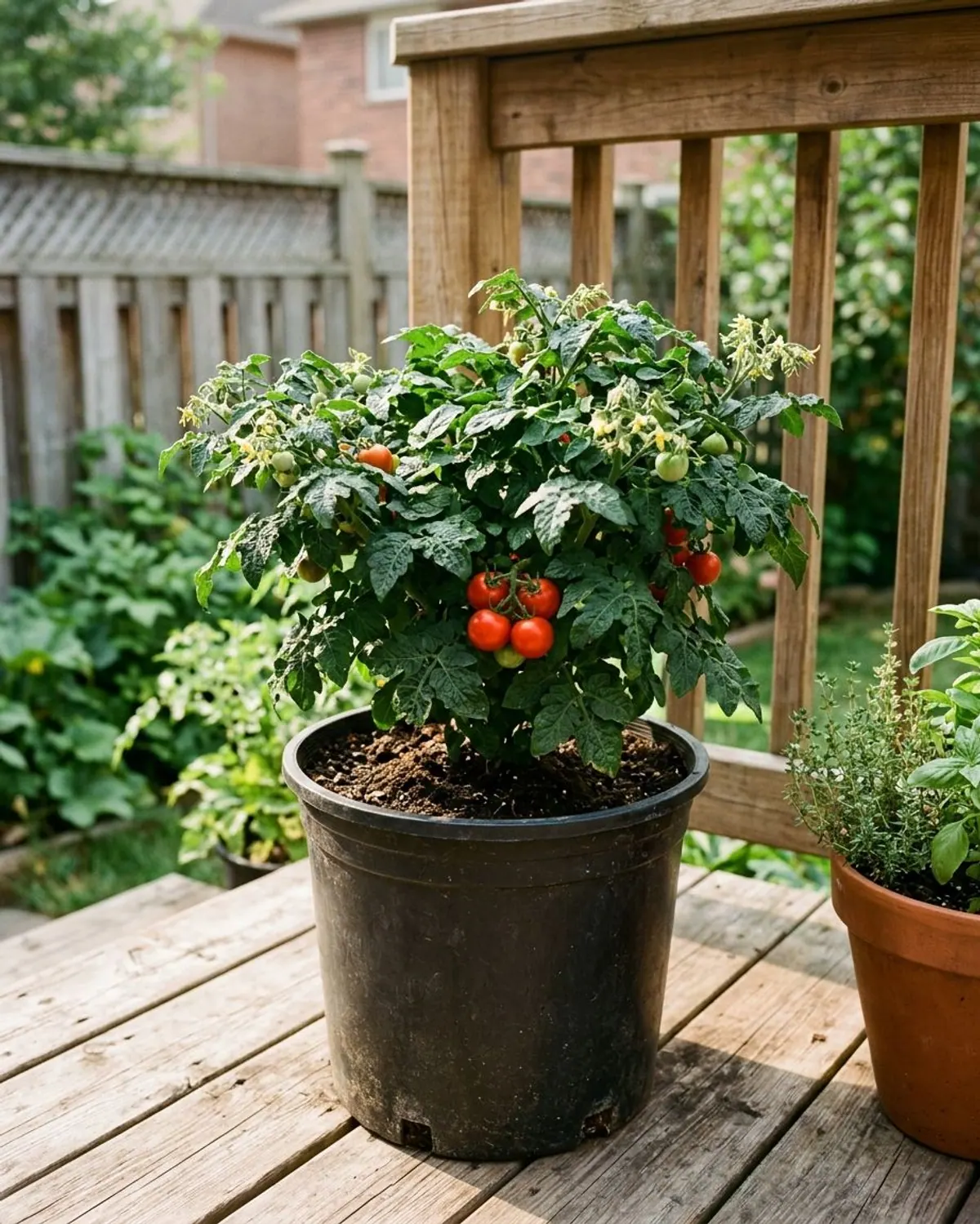
Our pick for a first pot is a patio or cherry type. Cherry tomatoes forgive the uneven watering that every container gardener hits sooner or later, and they ripen earlier than large fruit.
How big should the pot be?
Our container vegetable garden guide already has the full pot size chart for ten vegetables, so we will not repeat it. For tomatoes, the two extension sources we read give slightly different numbers, and the safe move is to follow the larger one.
| Plant | Iowa State Extension | Almanac |
|---|---|---|
| Cherry or small type | At least 2 gallons | 2 to 3 gallons |
| Standard type | At least 4 gallons (12 to 14 in) | About 5 gallons, at least 12 in deep |
| Large type | Not listed | 10 gallons or more |
Where they differ, buy the bigger pot. A five gallon pot is the number to remember for a standard plant, because it holds water through a hot afternoon. For the cost, weight and drainage side of buying pots, see our raised beds vs containers comparison.
When to plant tomatoes outside
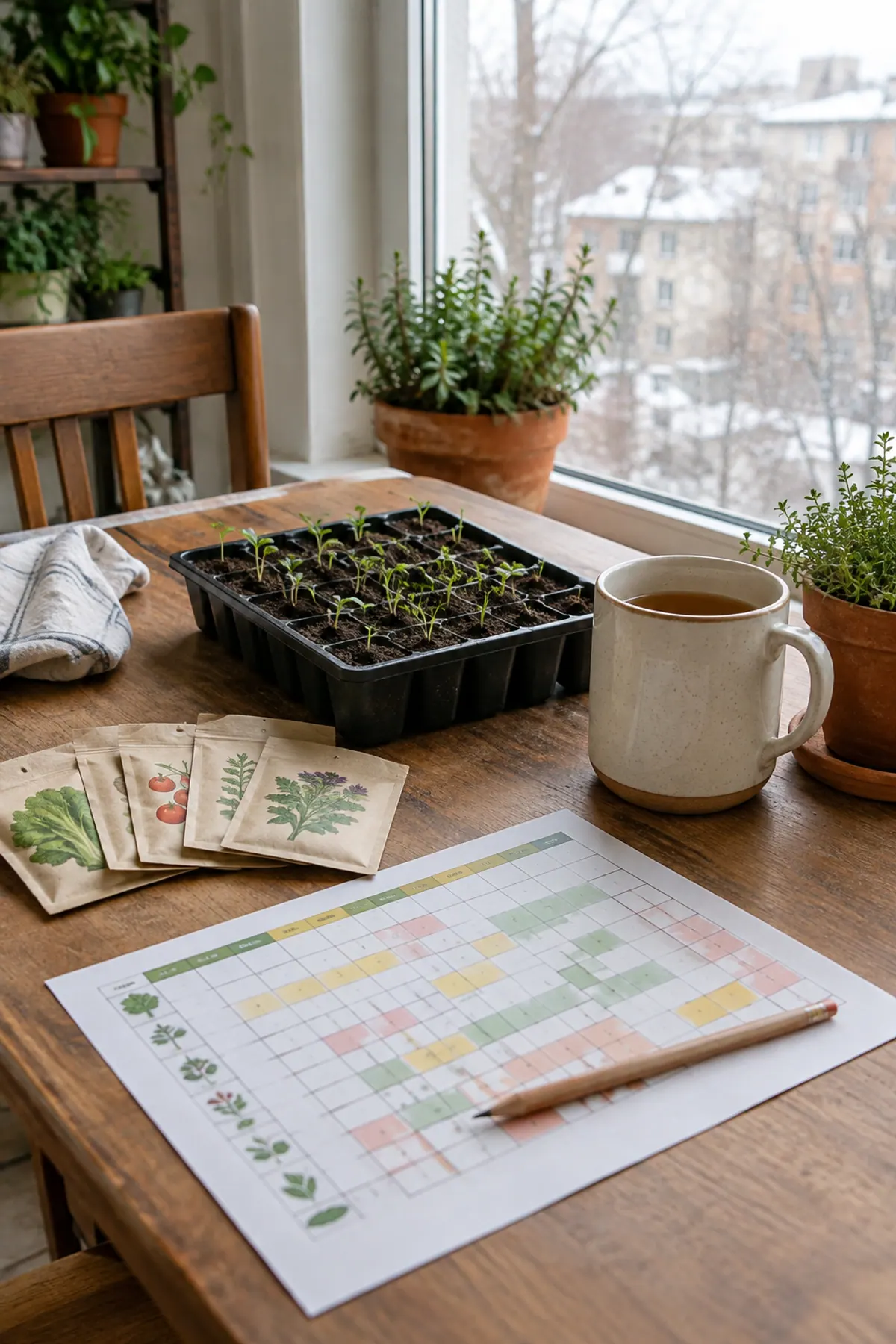
The Almanac says to wait until nights stay above 55°F. Cold nights stall a young plant even if the days feel warm. That makes February too early to set plants outside in most places, but it can be the right month to start seeds indoors, depending on your zone. Check the date for your area in our seed starting calendar or the when to start seeds indoors guide, then count back from your last frost.
Sun matters as much as dates. Iowa State Extension asks for 6 or more hours of sun. If your balcony gets less, a cherry type is your best bet, and our Container & Balcony Garden Planner has a sun-check grid so you can count your real hours before you buy a plant.
Plant it right: four steps on planting day
-
Step 1: Fill the pot with potting mix
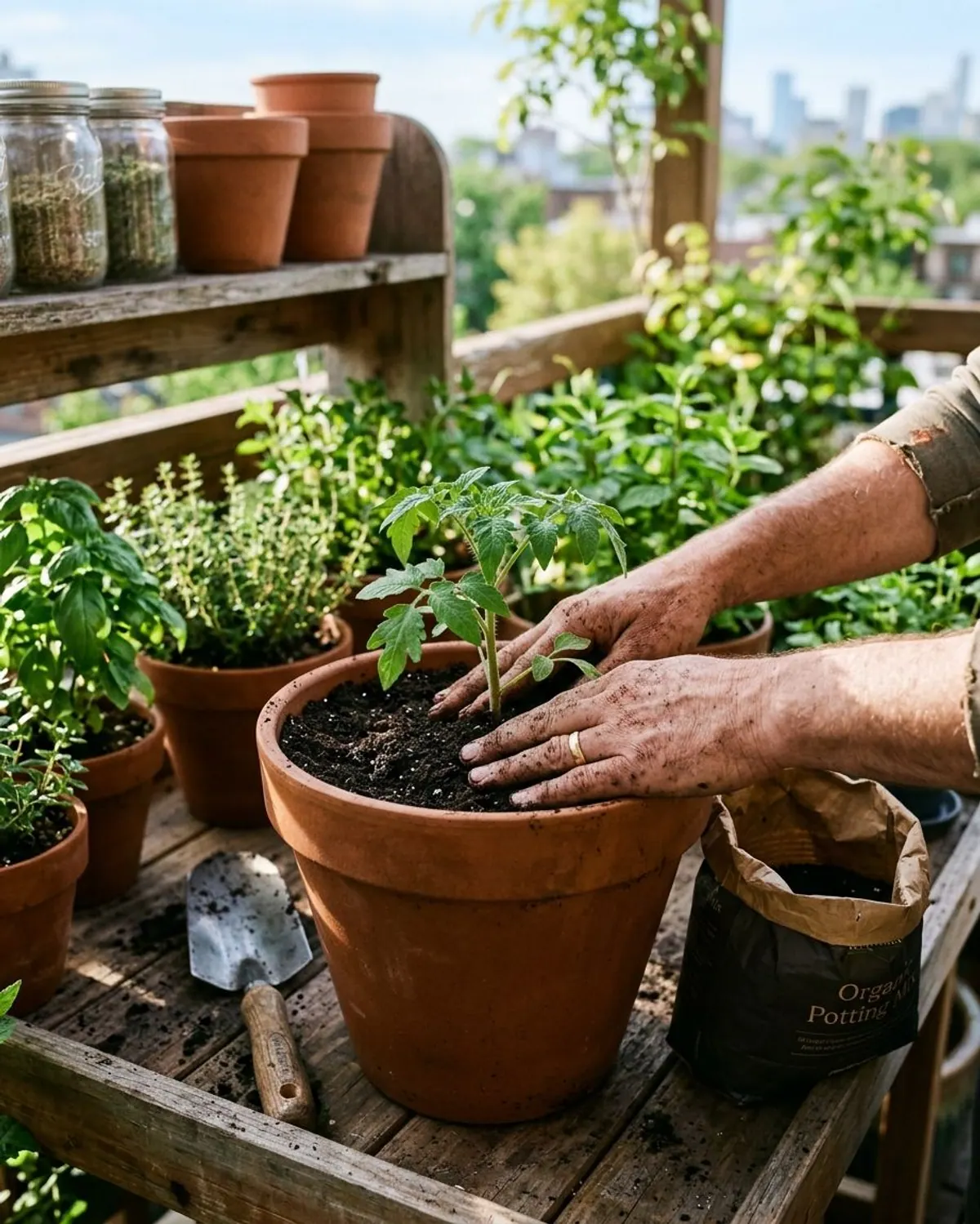
Use a soilless potting mix, as Iowa State Extension advises, not soil from the yard. Leave about an inch below the rim for watering. Make sure the pot has drainage holes before you add anything.
-
Step 2: Bury the stem up to the first leaves
The Almanac says to bury the stem to the first set of leaves. The buried stem grows extra roots, which makes the plant steadier and better at finding water.
-
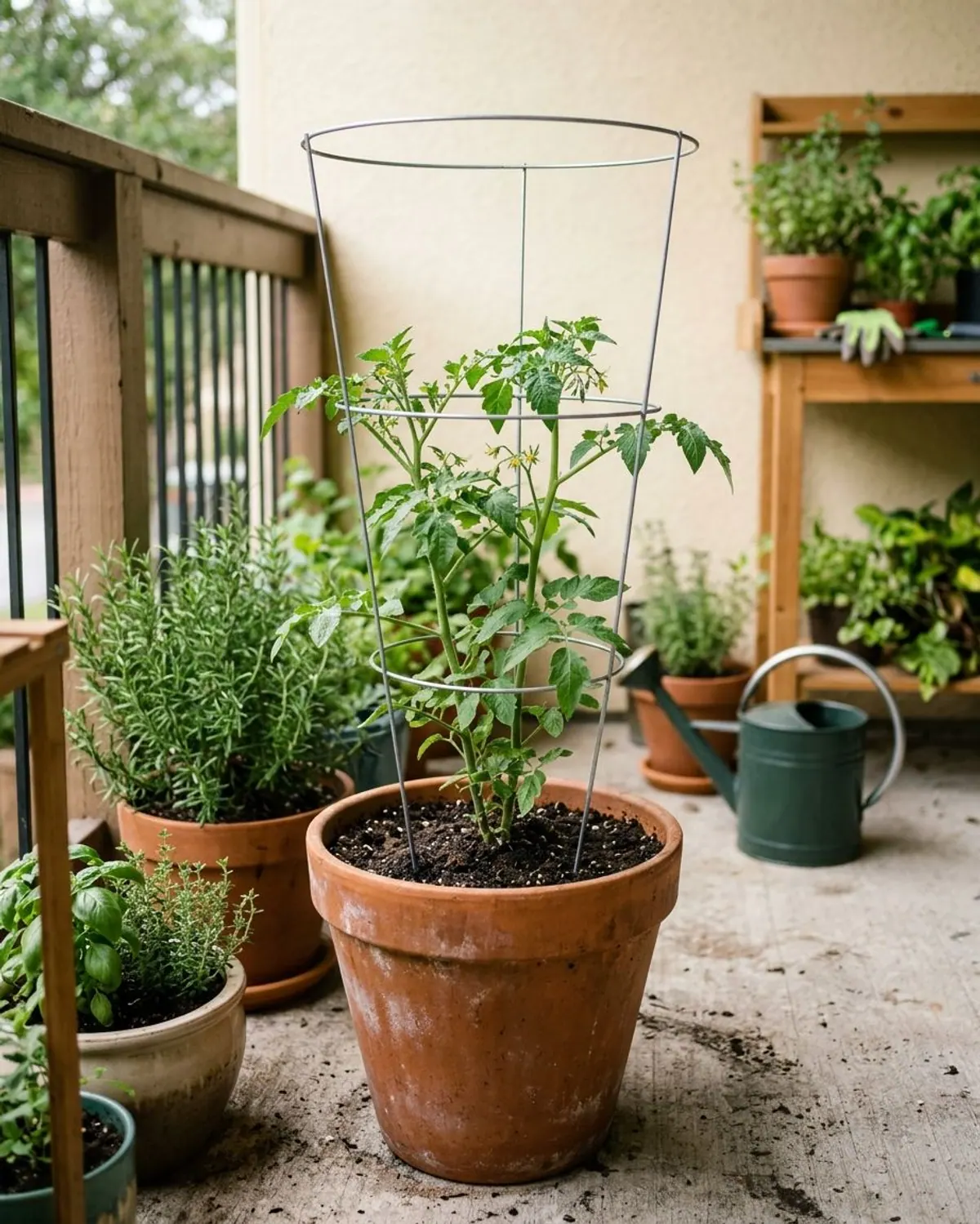
Step 3: Set the support right away
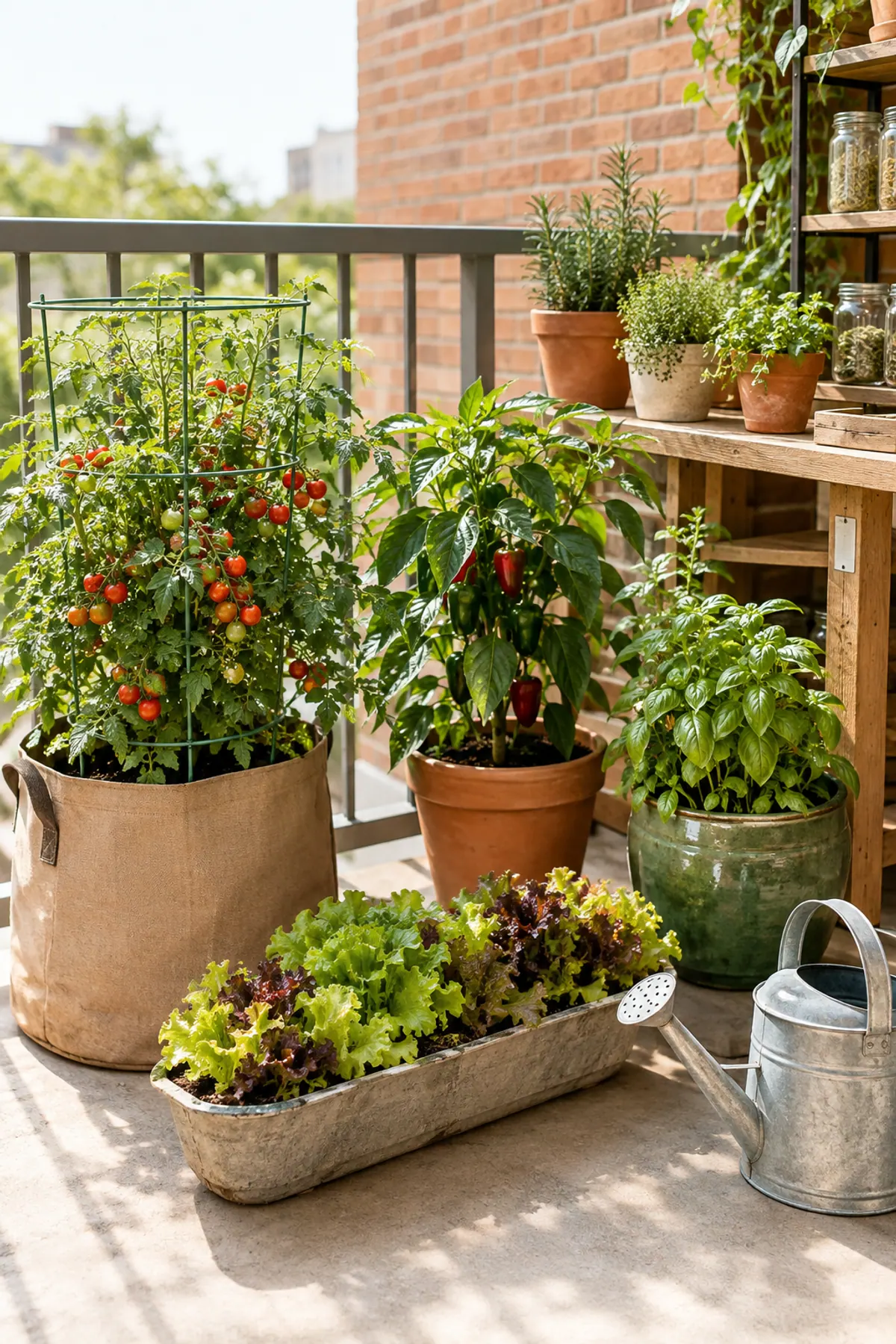
Put the cage or stake in on planting day, not later, so you do not stab the roots when the plant is big. Iowa State Extension says cages should have 4 inch mesh and be at least 24 inches across. Standard types need a stake or cage.
-
Step 4: Water it in and mulch lightly
Water until it runs from the drainage holes, then let the pot settle. Slow-release fertilizer goes in at planting per the Almanac, which we cover below.
Watering: the habit that decides the harvest
Both extension sources tie cracked fruit and blossom end rot to uneven watering, and pots swing between wet and dry faster than a bed. Press a finger into the top inch of mix. If it feels dry, water slowly at the base until water drains out, and keep leaves dry. Iowa State Extension advises against wetting leaves late in the day.
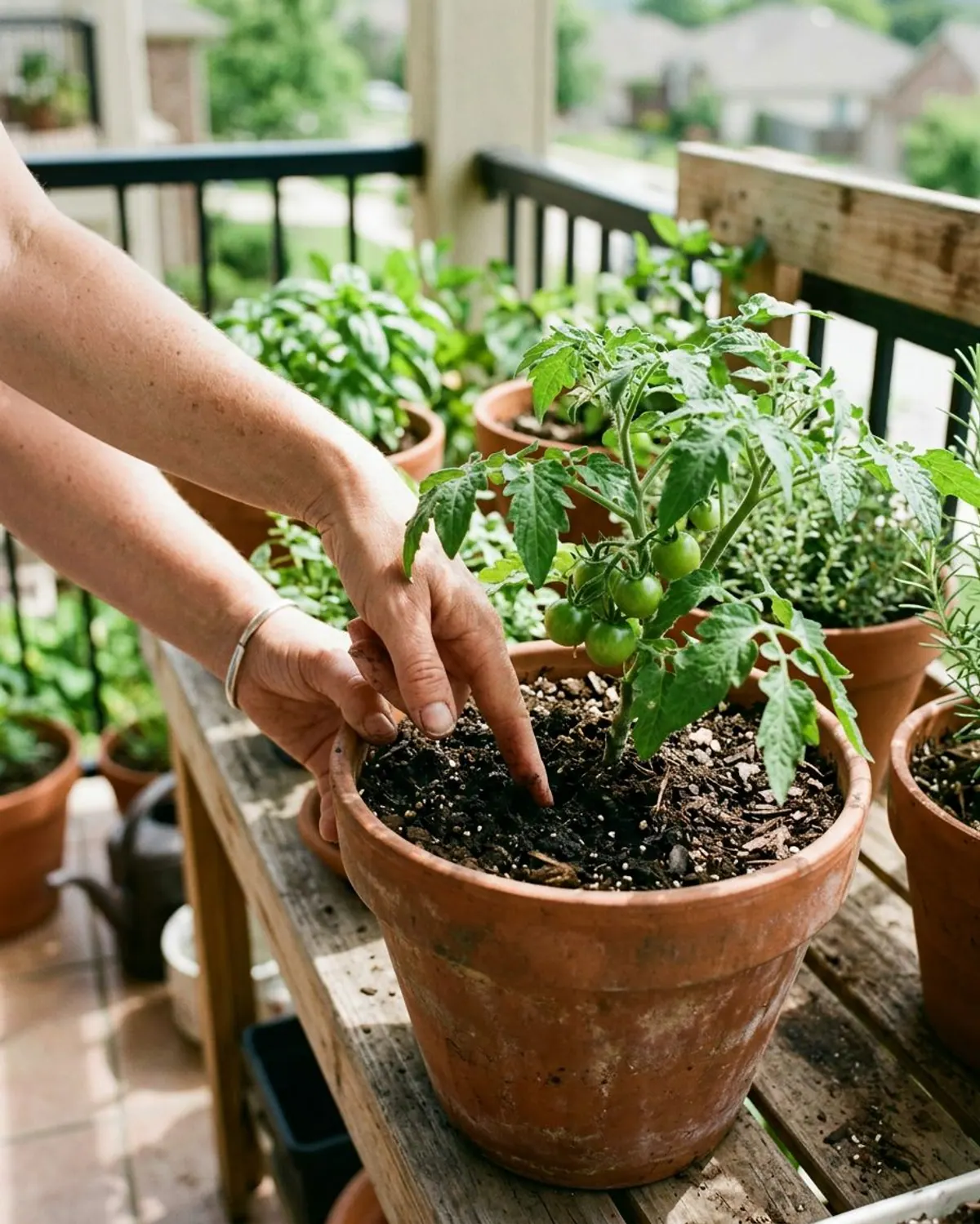
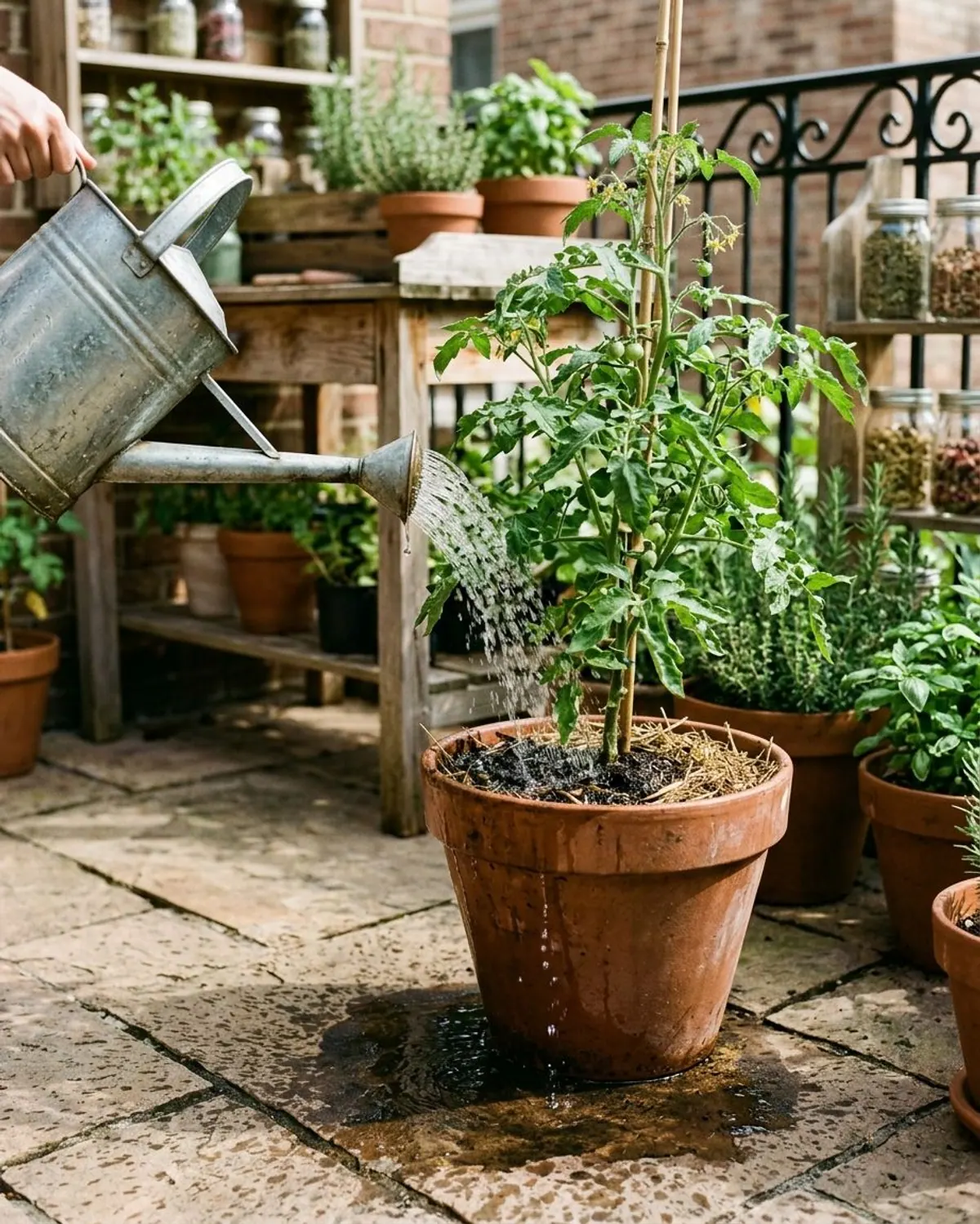
In hot weather a pot can need water every day, and sometimes twice. A self-watering pot evens the swings; our self-watering pots guide shows a DIY version.
Feeding: how often and with what
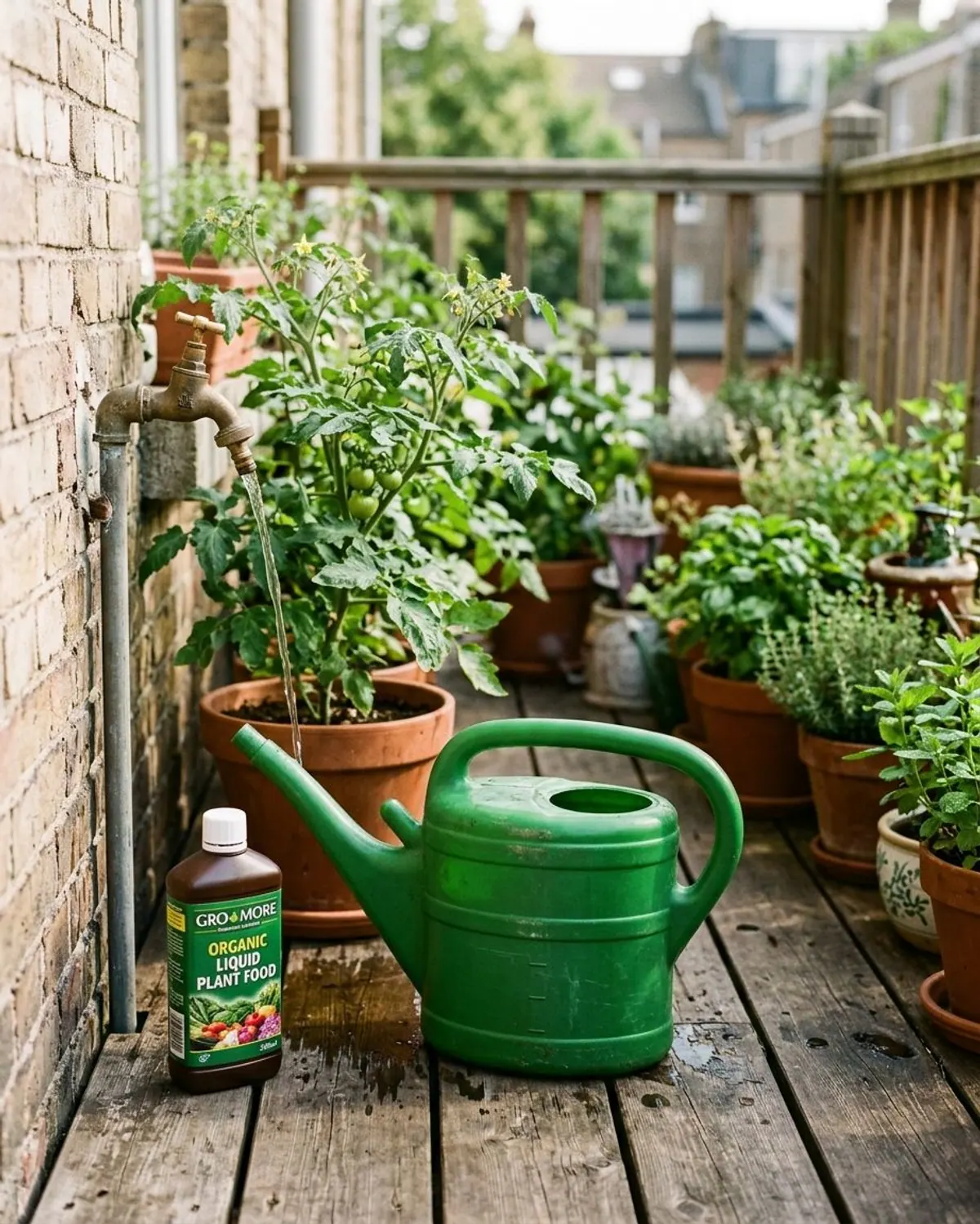
Potting mix runs out of nutrients because every watering rinses some out. The Almanac recommends slow-release fertilizer at planting, then liquid feed starting 2 to 3 weeks after planting and every 1 to 2 weeks after that. Iowa State Extension suggests a soluble 15-30-15 or 20-20-20 fertilizer every 1 to 2 weeks. Follow the label rate on whichever product you buy.
Support and pruning
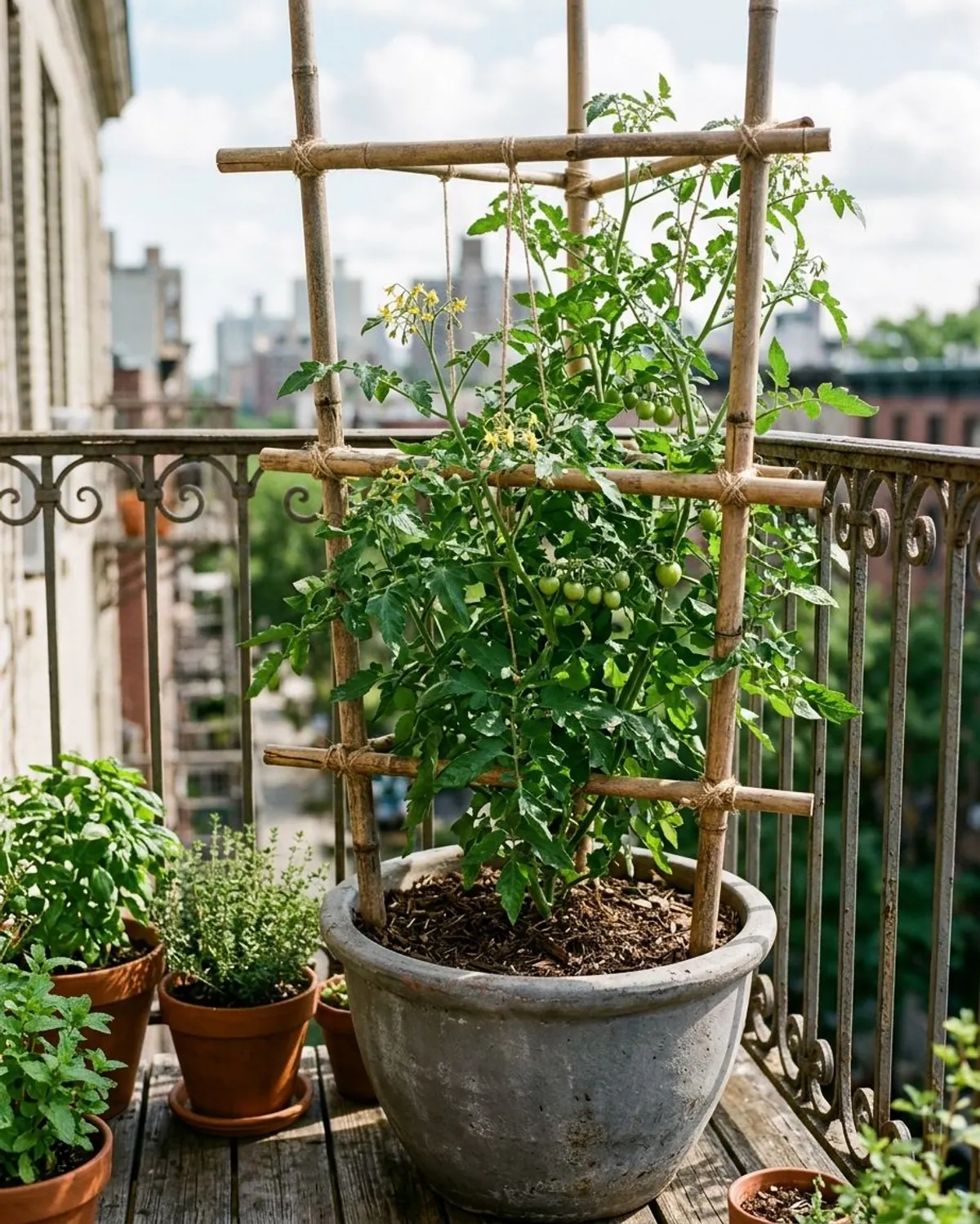
A tall tomato in a pot is top heavy. A cage at least 24 inches across or a trellis tied with soft twine keeps it upright in wind. Iowa State Extension says standard types do best pruned to 1 or 2 stems. That means pinching out the side shoots that grow between a leaf and the main stem.
Blossom end rot: two explanations, one fix
Blossom end rot is the dark, sunken patch on the bottom of a fruit. The sources disagree on the cause. Iowa State Extension and the Almanac tie it to uneven watering. New Mexico State University (NMSU) ties it to calcium reaching the fruit end. The practical fix is the same either way: keep the mix evenly moist with the finger test above and do not let the pot dry out and then flood. Plants in the biggest pot you can fit are the least likely to swing.
When to pick, and what heat does
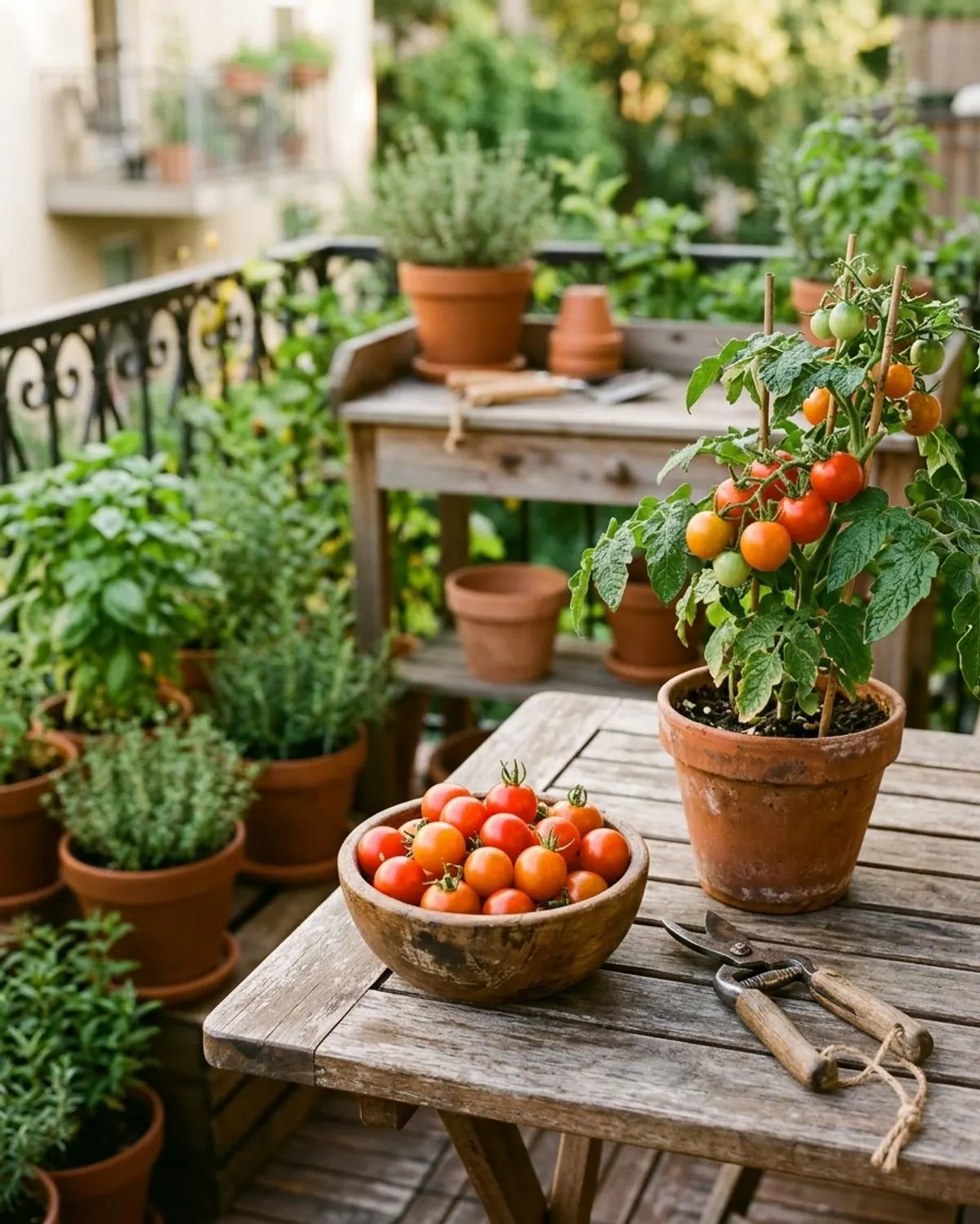
In Iowa State Extension's region, most types ripen from August and early types ripen in mid to late July. Dates move with your zone, so count days to maturity on the plant tag from the day you set it out. Fruit pigment fails above 90°F, so a pot on a hot south wall can give pale fruit even when it is ripe; shift the pot to afternoon shade if you can.
| When | Do this |
|---|---|
| Planting day | Potting mix, bury the stem, set the cage, water in, slow-release fertilizer |
| 2 to 3 weeks later | Start liquid feed |
| Every 1 to 2 weeks | Liquid feed; prune side shoots on standard types |
| Daily in hot weather | Finger test, water at the base |
| Fruit turns color | Harvest, and move the pot to shade if it is above 90°F |
Container tomato checklist
What to buy for container tomatoes
- Support
Tomato cages, 24 inch wide
Typically $15 to $35 for a set
Matches the 24 inch width Iowa State Extension asks for.
Check price on Amazon for Tomato cages, 24 inch wide -
5 gallon fabric grow bags
Typically $12 to $25 for a pack
Light, drain well and meet the 5 gallon size for a standard plant.
Check price on Amazon for 5 gallon fabric grow bags -
Water-soluble 20-20-20 fertilizer
Typically $8 to $20
The feed Iowa State Extension names for a 1 to 2 week schedule.
Check price on Amazon for Water-soluble 20-20-20 fertilizer -
Soilless potting mix
Typically $10 to $25 a bag
Drains and stays light in a pot, as extension advice recommends.
Check price on Amazon for Soilless potting mix
Want every vegetable's dates, pot sizes and a tomato-ready seed calendar in one place? The Small-Space Garden Binder includes the seed starting calendar, which covers tomato and 17 container vegetables, along with the planner pages.
Frequently asked questions
What size pot do I need to grow tomatoes?
Iowa State Extension says at least 2 gallons for cherry types and at least 4 gallons for standard types. The Almanac says 5 gallons for most types and 10 or more for large ones. Choose the larger number.
Do tomatoes in pots need a cage?
Standard types do. Iowa State Extension says to stake or cage them, with cages that have 4 inch mesh and are at least 24 inches across. Set it on planting day.
How often should I feed container tomatoes?
The Almanac says start liquid feed 2 to 3 weeks after planting and repeat every 1 to 2 weeks. Iowa State Extension gives the same 1 to 2 week range for a soluble 15-30-15 or 20-20-20 fertilizer.
What causes blossom end rot in pots?
Iowa State Extension and the Almanac say uneven watering. NMSU says calcium at the fruit end. Even moisture is the safest first fix.
Is February too early to plant tomatoes?
Outdoors, yes in most places, since the Almanac says to wait until nights stay above 55°F. Indoors, February can suit seed starting in some zones; check our seed starting calendar.
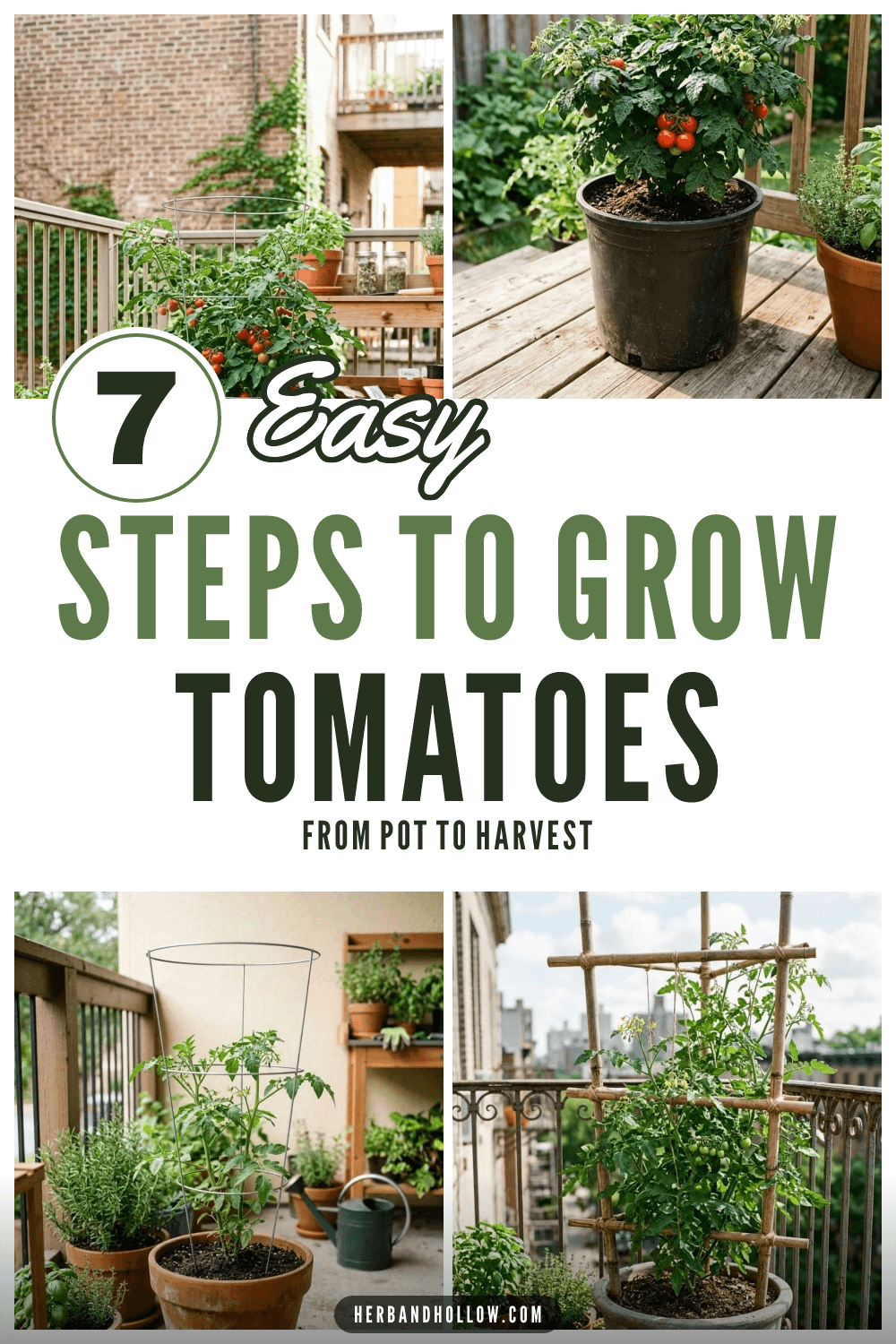
Save it for later
Pin this to your Small-Space Vegetables board so it's there when you need it.
Save to Pinterest