This post contains affiliate links. As an Amazon Associate we earn from qualifying purchases, at no extra cost to you. Read our disclosure.
Safety first: Herbs can be powerful. If you are pregnant, nursing, take medication or have a health condition, check with your doctor or pharmacist first. Please read our herbal & garden safety notes before you start.
Key takeaways
- The free PDF has a 4 by 4 foot bed grid (16 squares), a filled example of 73 plants, four pot top-views and a 13-row sow-by log
- Prints on US Letter or A4 at Actual size so the grid and the pot scale stay true
- Plant counts follow the Phipps Conservatory guide; the Square Foot Gardening Foundation differs on tomatoes, mustard greens, beets and chives, so check your packet
- Tomatoes and peppers need at least 6 hours of sun; lettuce and kale prefer some shade (Penn State Extension)
- Growing information only; the example bed is a layout, not a promise of a harvest
In this post9 sections
- What is inside the free vegetable garden planner
- Page 1: the 4 by 4 foot bed grid and a plants-per-square chart
- Page 2: one filled bed to copy, and two more bed sizes
- Page 3: pots drawn to scale for a balcony or patio
- Trellis crops: how to give beans and peas their own square
- Page 4: a sow-by and planting log for 2027
- How to plan a small vegetable garden with the printable
- The paid next step for pots and balconies
- FAQ
The PDF is five pages and prints on US Letter, and the A4 version is there too if you print on A4. It is for growing information only. A few links below go to Amazon search pages, and we may earn a small commission if you buy through them.
If you have no dug bed and cannot tell which crops will get enough sun on a balcony or fit which pot, the free pages give you the bed and pot layouts, and the Container & Balcony Garden Planner ($9, 37 pages) adds three sun-check grids and pot-size charts to work that out. Use code HERB20 for 20% off.
What is inside the free vegetable garden planner
Most free vegetable garden planner printables are one empty grid. This one starts with the grid and a spacing chart so you know how many plants go in each square, then shows a filled bed to copy, then moves to pots, where a balcony gardener actually spends their money.
| Page | What it is | Use it for |
|---|---|---|
| 1. Bed grid and chart | A blank 4 by 4 foot bed (16 squares) and a plants-per-square chart | Planning a small raised bed or a square-foot bed |
| 2. A filled example | One 4 by 4 foot bed filled in (73 plants), plus blank 2 by 4 foot and 3 by 3 foot beds | Copying a layout, or sizing a smaller bed |
| 3. Pot top-views | Four pots drawn to scale: 24, 16, 14 and 12 inch | Marking where each plant goes in a container |
| 4. Sow-by and planting log | 13 rows for crop, sow date, plant-out date and notes | Keeping 2027 dates in one place |
| 5. Next steps | Links to the paid container planner, seed starting calendar and binder | When you want sun checks and zone dates |
Print at Actual size rather than Fit to page, or the grid squares shrink and the pot drawings no longer match the scale printed on page 3.
Page 1: the 4 by 4 foot bed grid and a plants-per-square chart
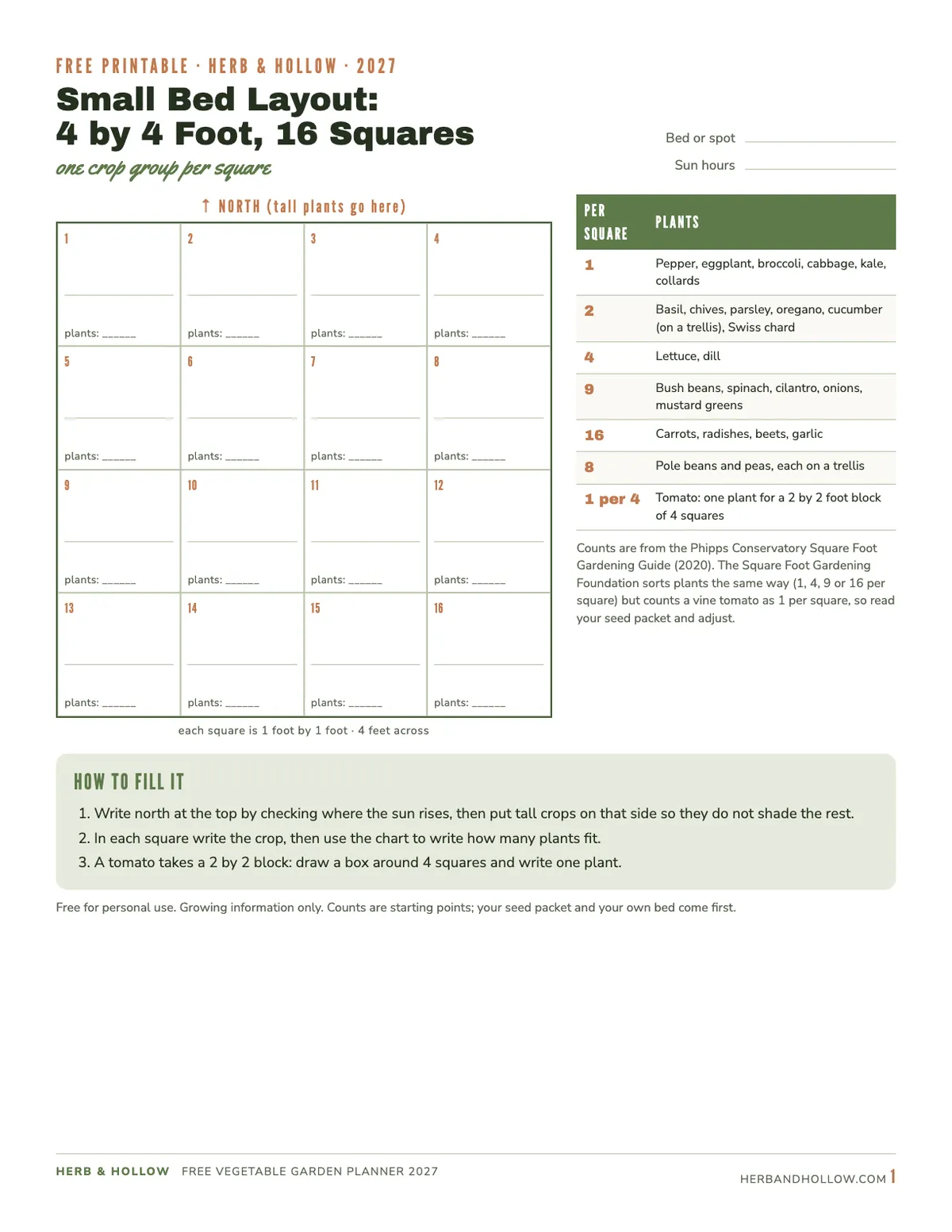
Square-foot gardening splits a bed into one-foot squares and sets a plant count by the size of the plant. The chart on the page follows the Phipps Conservatory square-foot guide (a PDF). Write a crop in each square, then use the count beside it.
| Plants per square | Crops |
|---|---|
| 1 | Pepper, eggplant, broccoli, cabbage, kale, collards |
| 2 | Basil, chives, parsley, oregano, cucumber on a trellis, Swiss chard |
| 4 | Lettuce, dill |
| 8, with a trellis | Pole beans, peas |
| 9 | Bush beans, spinach, cilantro, onions, mustard greens |
| 16 | Carrots, radishes, beets, garlic |
| 1 per 2 by 2 foot block | Tomato |
Two sources can disagree, so check your seed packet too. The Square Foot Gardening Foundation counts a vine tomato as one plant per square, where Phipps gives one per 2 by 2 foot block. It also lists mustard greens at one per square (Phipps says 9), beets at 9 (Phipps says 16) and chives at 16 (Phipps says 2). The PDF follows Phipps throughout. If your packet says to space plants further apart, use the packet.
Page 2: one filled bed to copy, and two more bed sizes
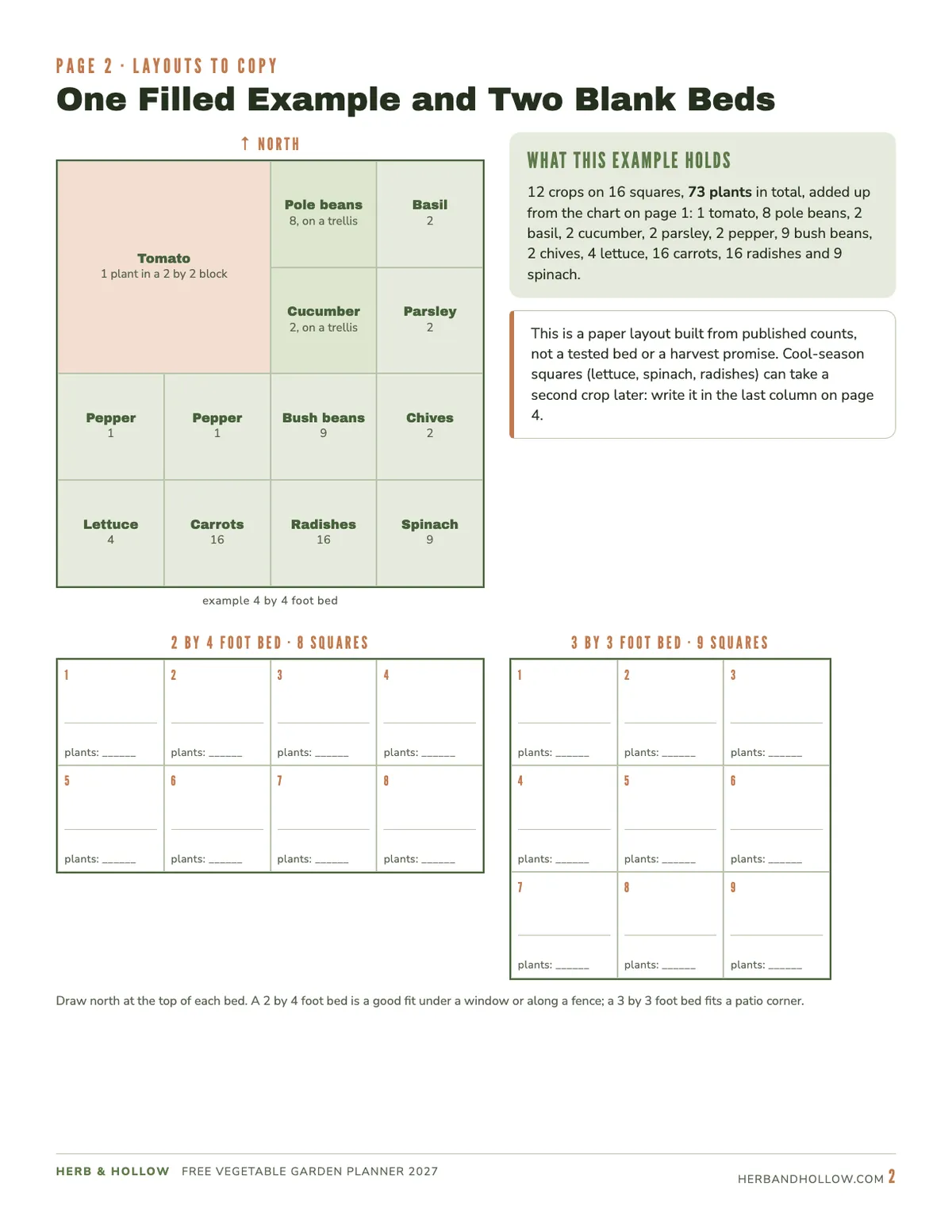
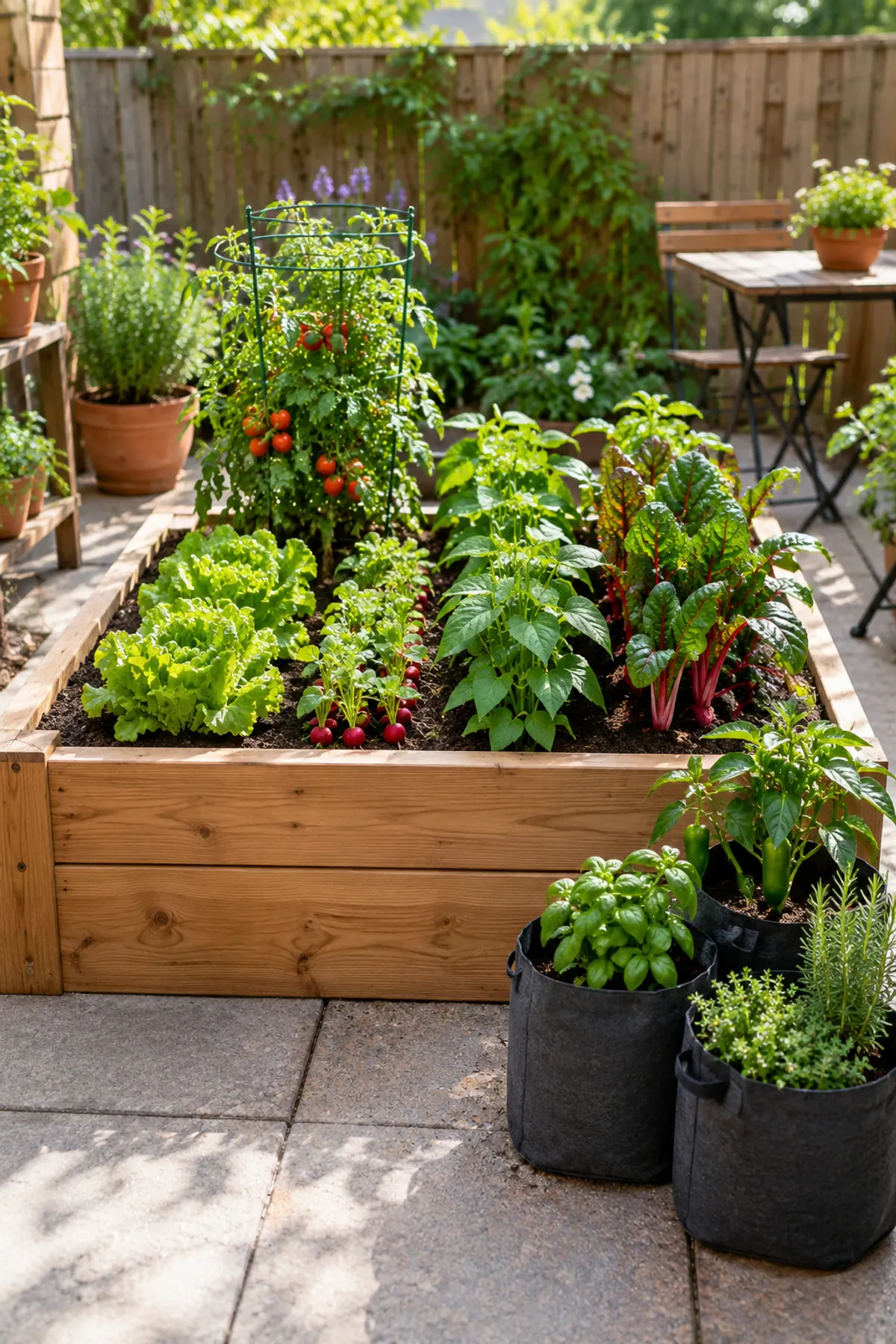
The example bed holds 12 crops on 16 squares. Added from the chart on page 1, it comes to 73 plants: 1 tomato, 8 pole beans, 2 basil, 2 cucumber, 2 parsley, 2 pepper, 9 bush beans, 2 chives, 4 lettuce, 16 carrots, 16 radishes and 9 spinach. Check the sum: 1 + 8 + 2 + 2 + 2 + 2 + 9 + 2 + 4 + 16 + 16 + 9 is 73.
Page 2 also has a blank 2 by 4 foot bed (8 squares) and a blank 3 by 3 foot bed (9 squares), for a narrow strip along a fence or a small square in a corner. Put tall crops on the north side of the bed so they do not shade the rest.
Page 3: pots drawn to scale for a balcony or patio
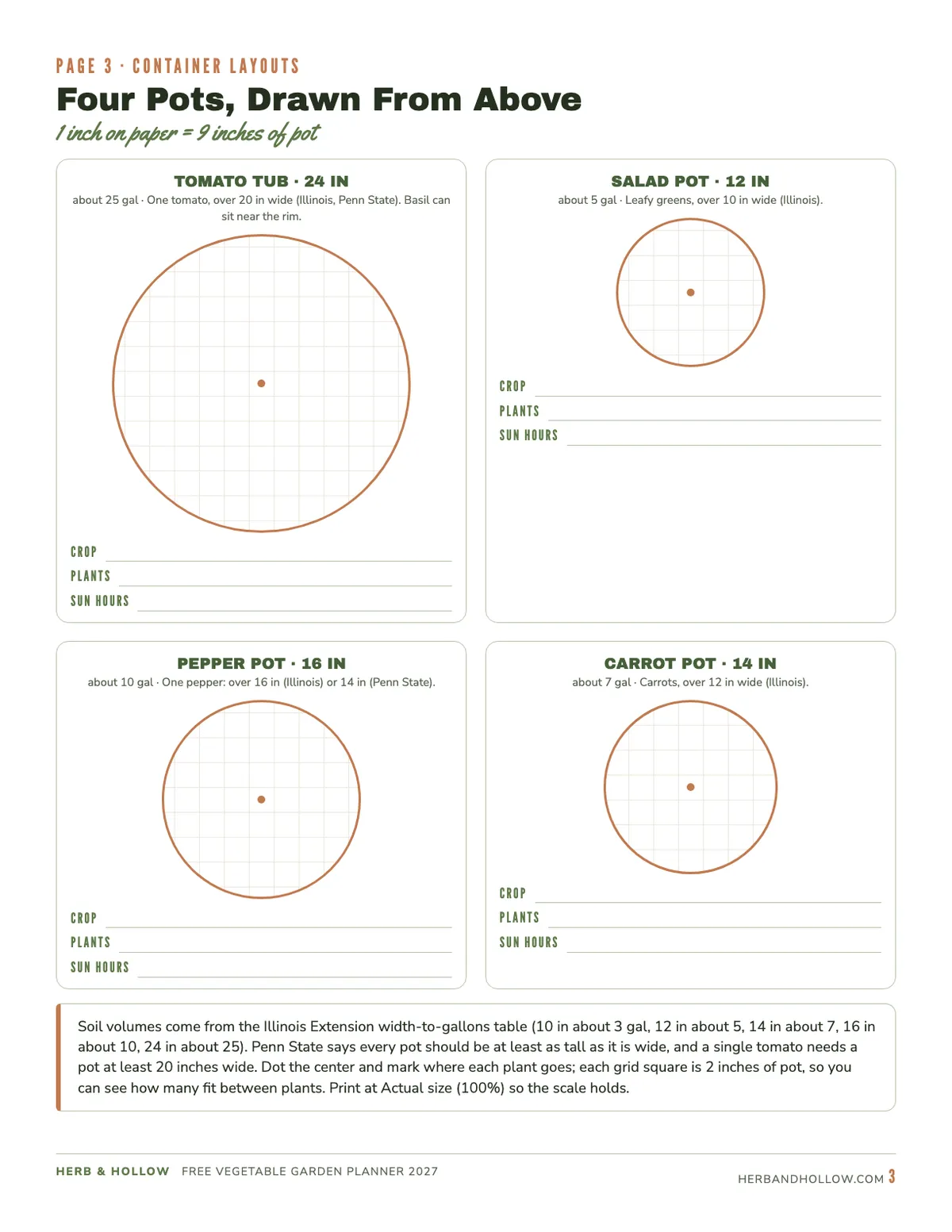
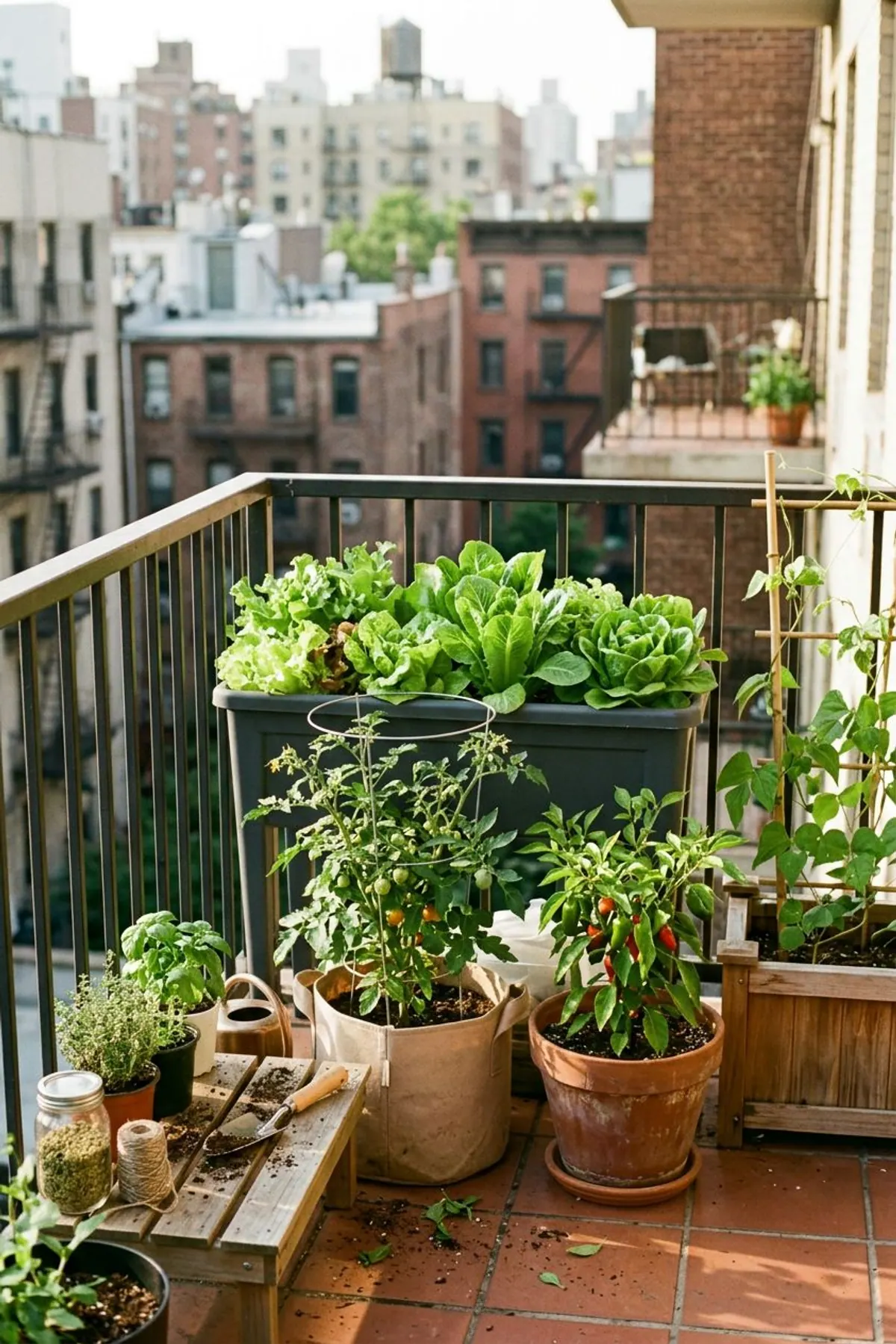
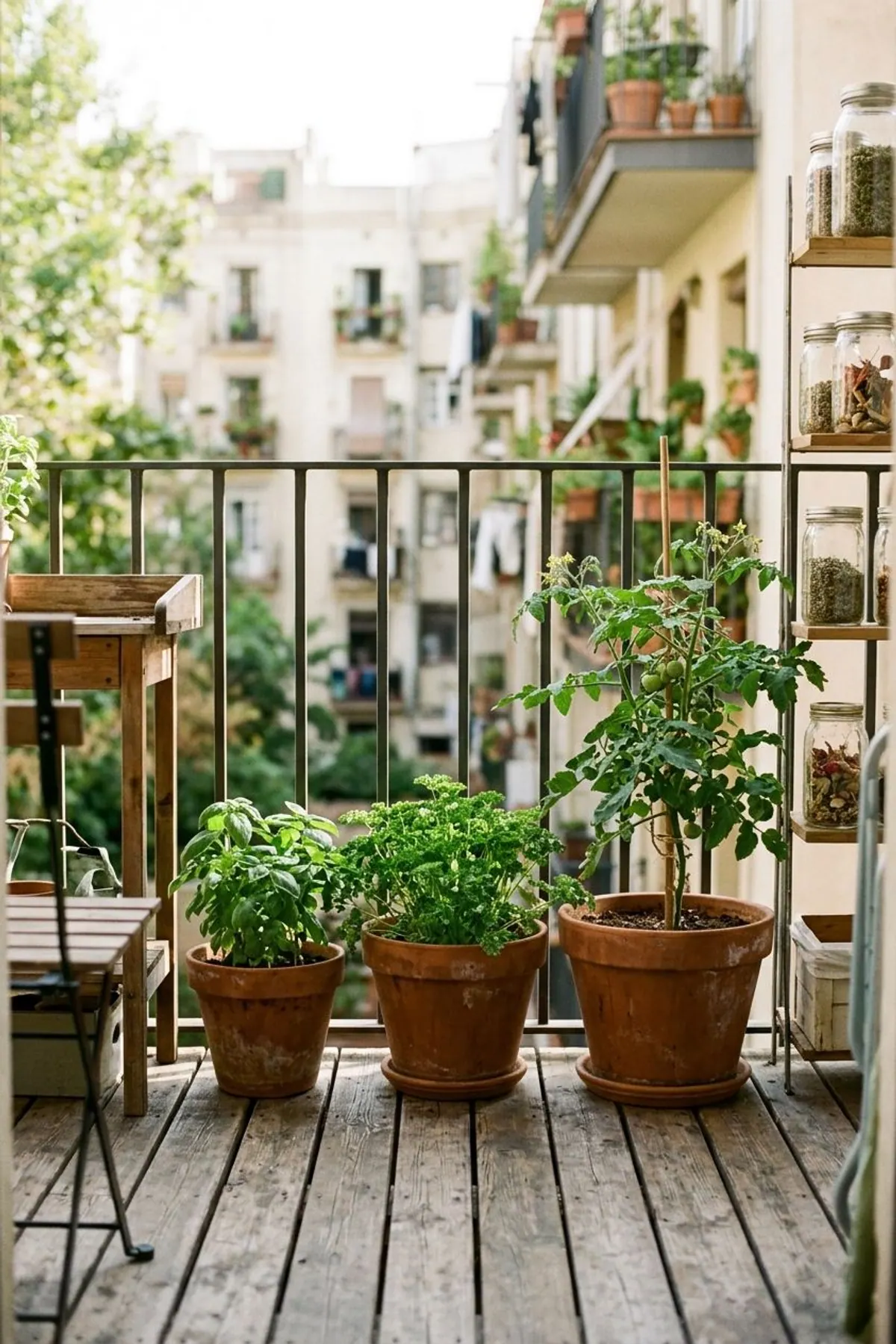
If you grow on a balcony, the bed pages still help you decide how many plants a pot can carry, and page 3 is the one you will use most. It has four pot top-views, each with a grid where one square stands for 2 inches of pot, so you can mark where each plant sits and see when a pot is full.
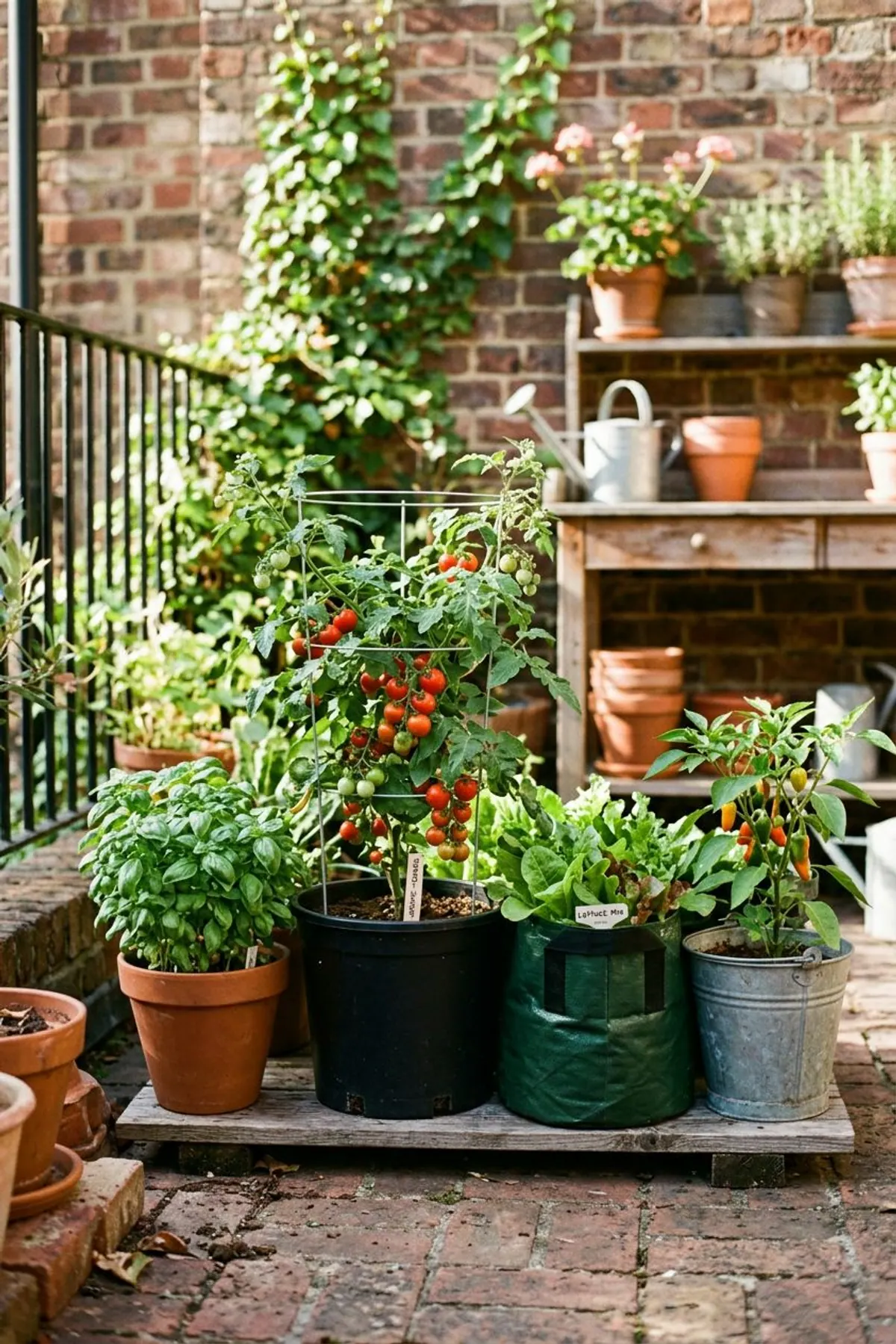
Pot size matters before plant spacing does. The University of Illinois Extension gives minimum pot sizes of more than 20 inches for tomatoes, more than 16 inches for peppers, more than 12 inches for carrots, and more than 10 inches for radish, onion, beets, leafy greens and herbs. It also lists the soil each pot holds.
| Pot on page 3 | Soil volume (Illinois Extension) | What to plant in it |
|---|---|---|
| 24 inch tomato tub | About 25 gallons | One tomato |
| 16 inch pepper pot | About 10 gallons | One pepper |
| 14 inch carrot pot | About 7 gallons | Carrots (the minimum for carrots is more than 12 inches) |
| 12 inch salad pot | About 5 gallons | Lettuce or other leafy greens |
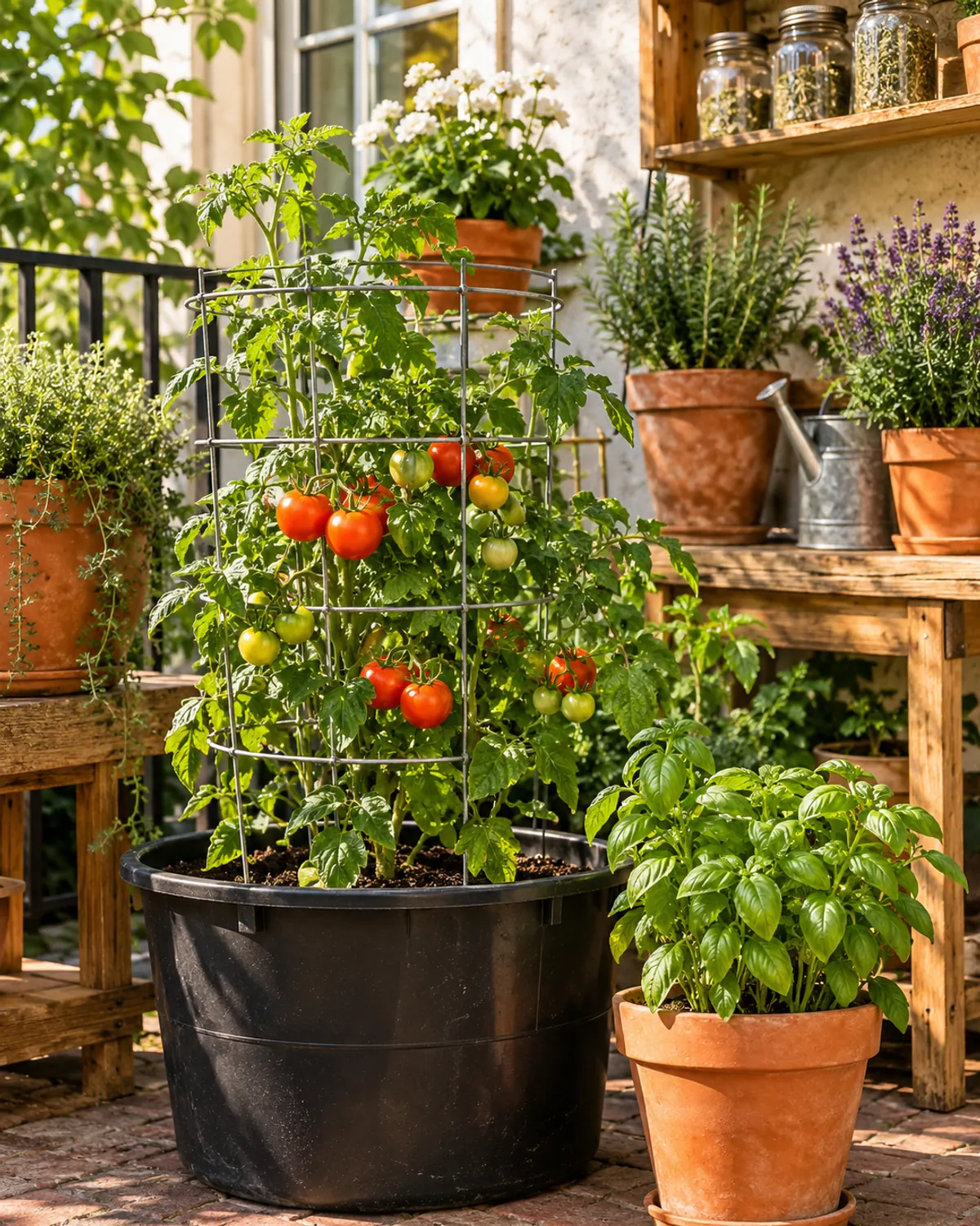
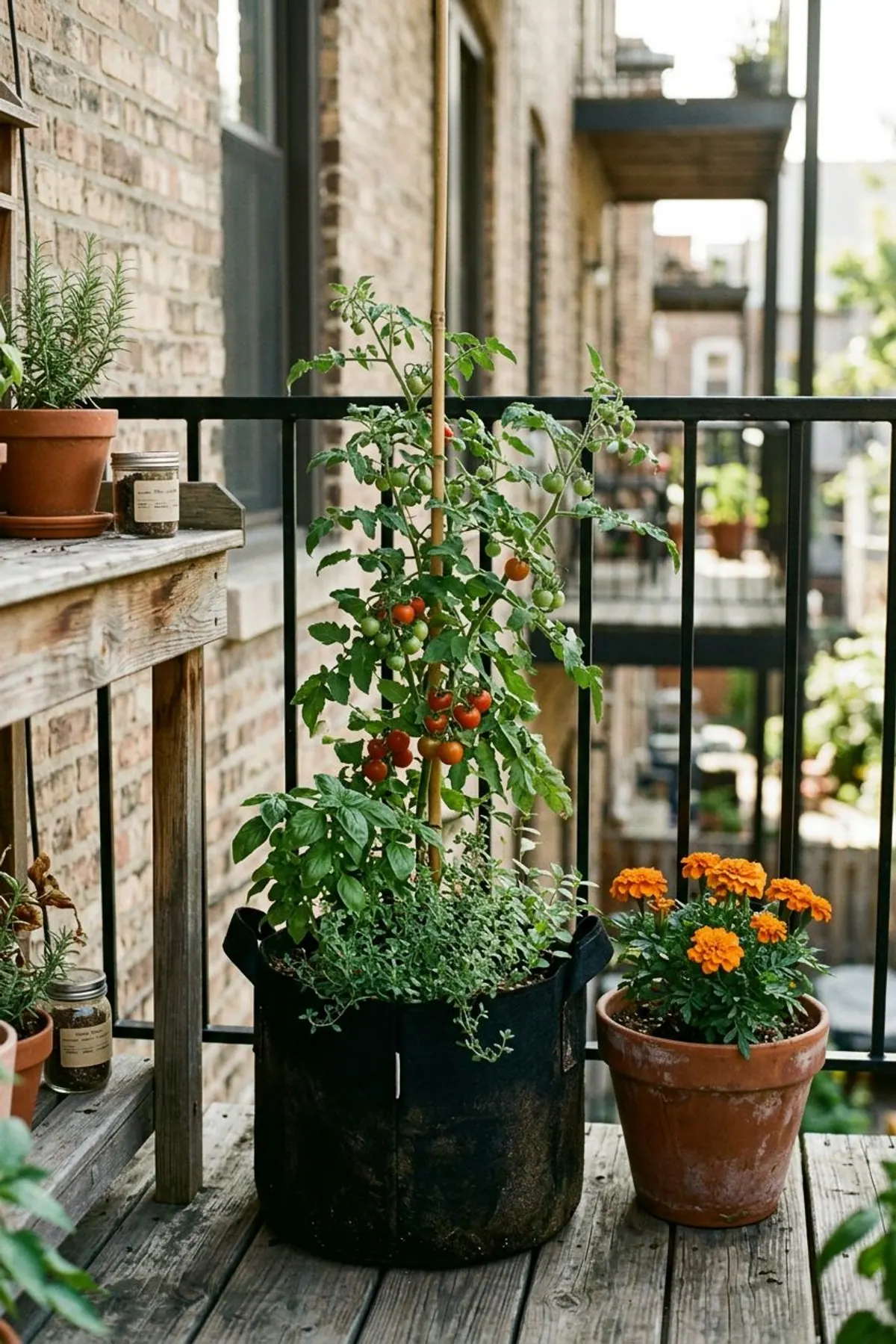
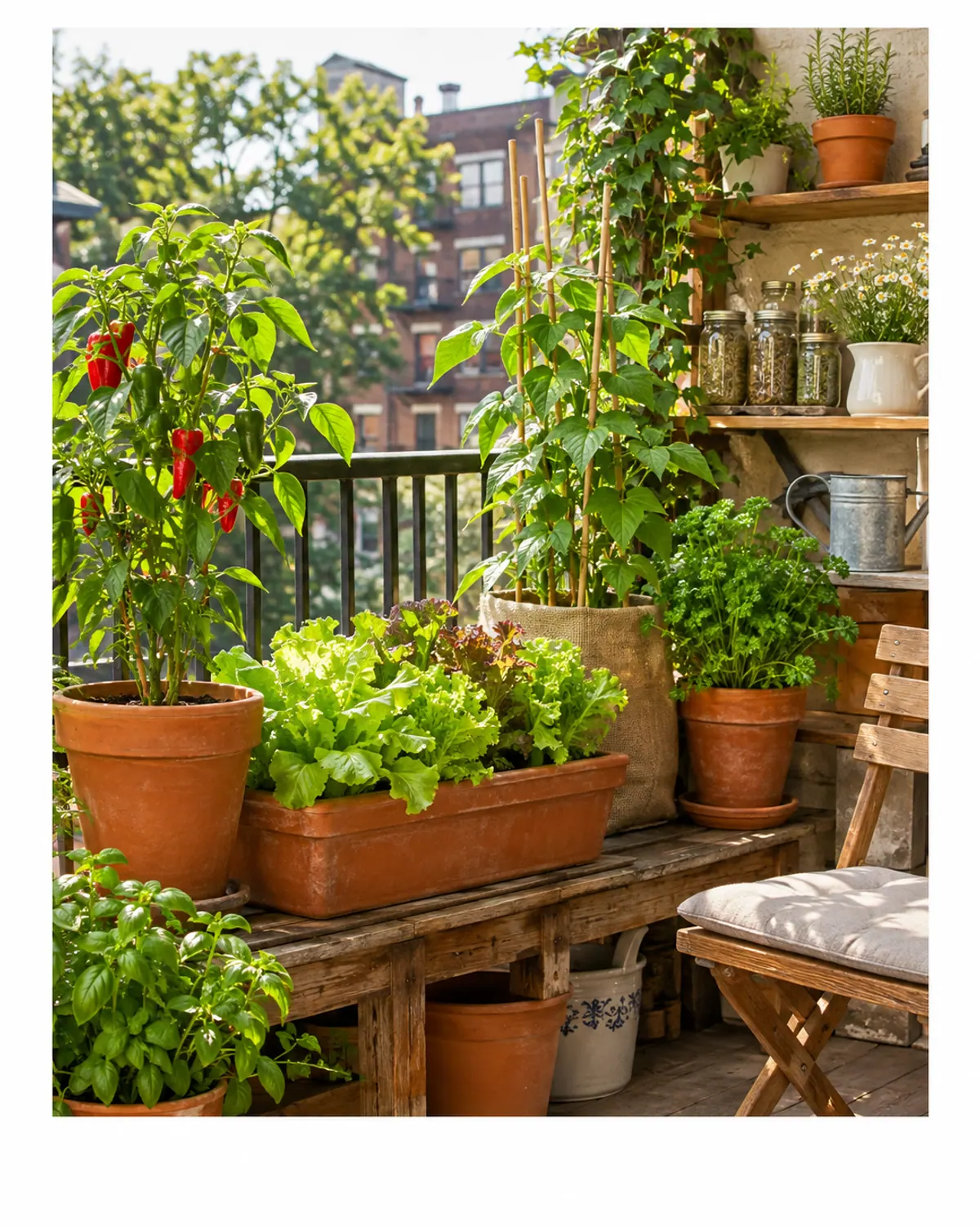
Sun decides the rest. Penn State Extension says tomatoes and peppers need at least 6 hours of sun a day, while lettuce and kale prefer some shade. On a balcony that often means tomatoes at the railing and salad pots behind them. The free pages do not measure your sun for you; the paid Container & Balcony Garden Planner has three sun-check grids for that, and our guide to what size pot herbs and vegetables need has a longer size chart.
Trellis crops: how to give beans and peas their own square
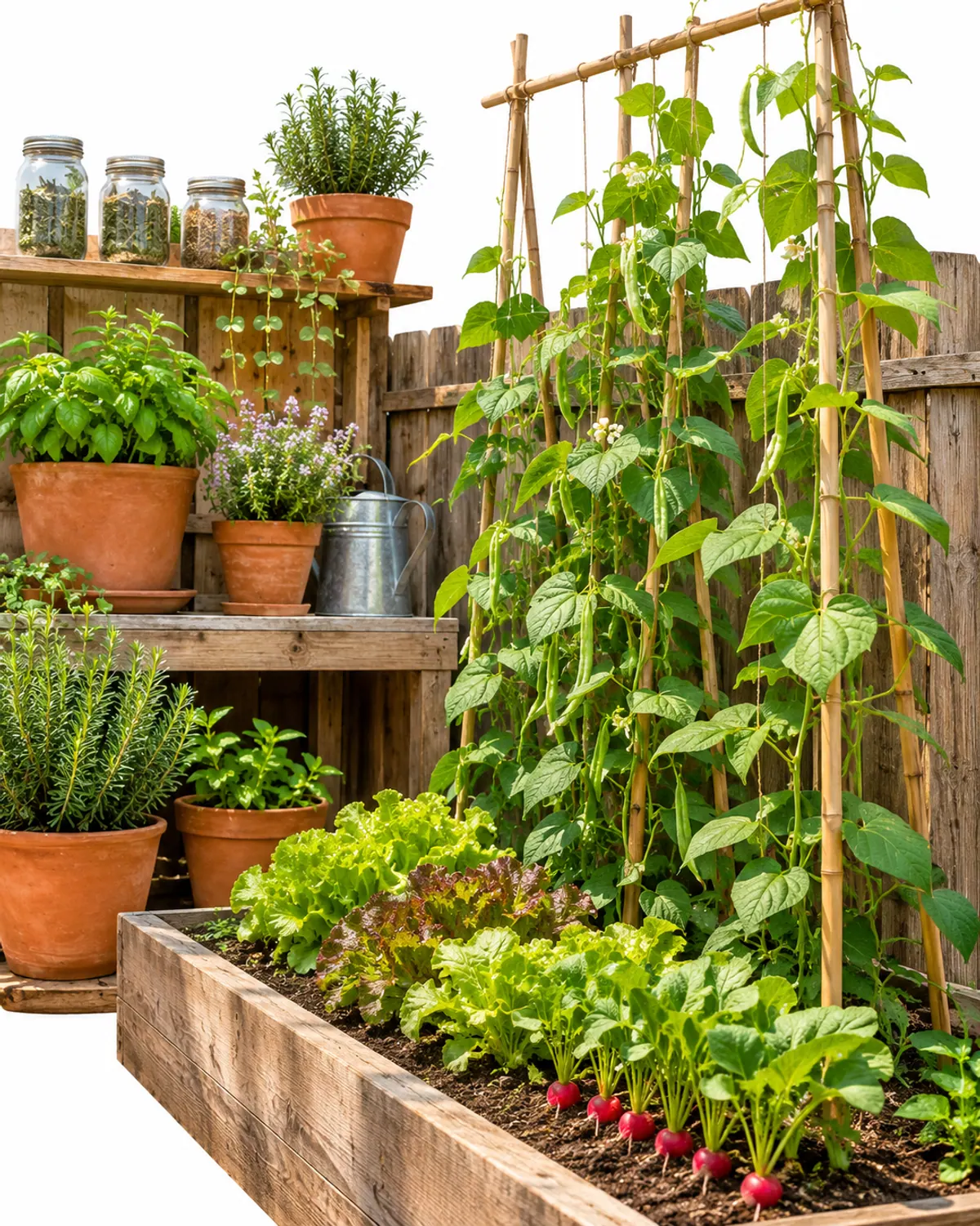
Pole beans and peas are the best fit for a small bed because they use height instead of floor space. Both the Phipps guide and the Square Foot Gardening Foundation sow them at 8 per square with a trellis behind. Put the trellis on the north side of the bed, then use the squares in front for lower crops like lettuce and carrots.
Page 4: a sow-by and planting log for 2027
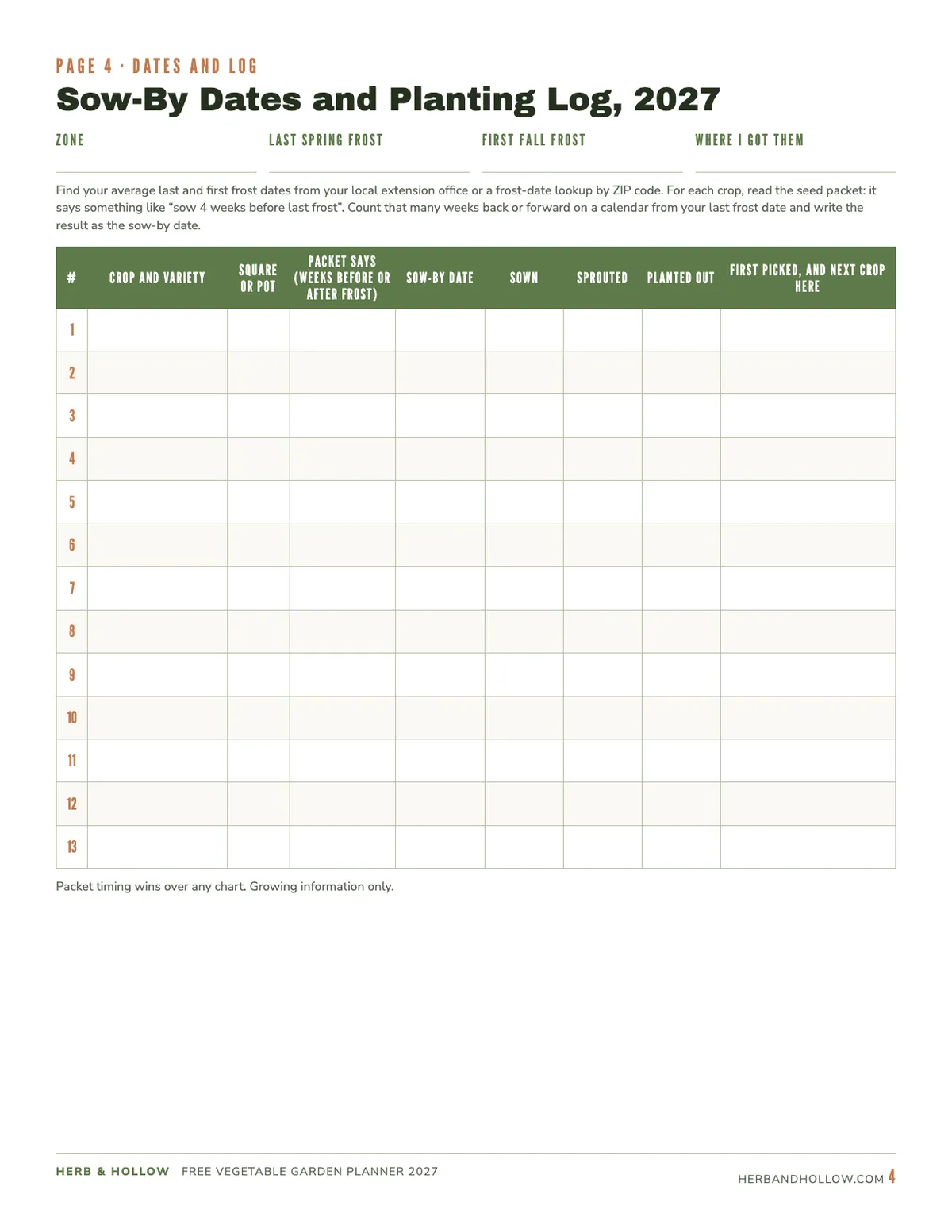
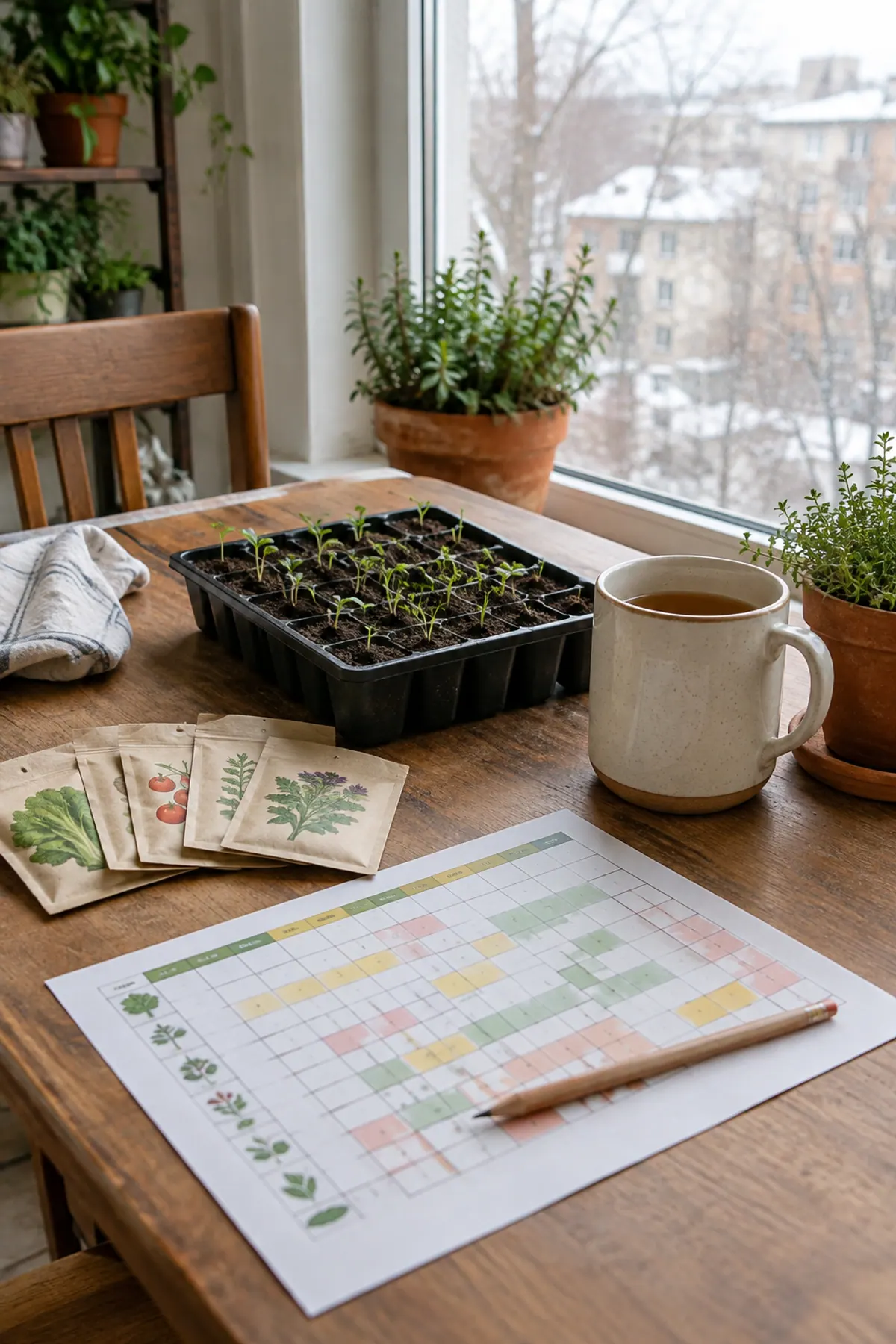
Page 4 is a log with 13 rows: crop, where it goes, sow-by date, plant-out date and a notes column. Work backward from your last frost date. For a worked example, say your last frost is April 15, 2027 and the seed packet says to start indoors 6 weeks before the last frost. Six weeks is 42 days, and April 15 minus 42 days is March 4, 2027, a Thursday. Write March 4 in the sow-by column.
That last frost date is only an example. Look up your own, and use the number on each packet, since they vary by crop. Our seed starting calendar by zone shows how the dates move by region, and the paid Seed Starting Calendar ($7) lists 30 herbs and vegetables with sow dates for your frost date.
How to plan a small vegetable garden with the printable
-
Step 1: Print the pages at Actual size
Choose US Letter or the A4 file. Plain paper is fine, and you may want two copies of page 1 so you can try two layouts.
-
Step 2: Measure your space
Pick the bed size on page 1 or 2, or find the pot on page 3 closest to the ones you own. A bed can be smaller than 4 by 4 feet: just cross out squares.
-
Step 3: Check your sun
Watch the spot for a day and write down the hours of direct sun. Tomatoes and peppers need at least 6 hours, while lettuce and kale accept some shade.
-
Step 4: Fill each square from the chart
Write one crop in each square and its count from the chart. Put pole beans and peas on the north side with a trellis.
-
Step 5: Write the dates on page 4
Use your own last frost date and each seed packet. Add a second crop for the cool-season squares if your season is long enough.
Before you buy anything
Supplies for a small bed or pots
- Start here
Fabric grow bags, 5 to 10 gallon
Typically $15 to $30 for a pack
Light, with drainage built in, and easy to move around a balcony.
Check price on Amazon for Fabric grow bags, 5 to 10 gallon -
Large plastic or resin planters, 16 to 24 inch
Typically $15 to $40 each
The sizes on page 3 for a pepper pot or a tomato tub.
Check price on Amazon for Large plastic or resin planters, 16 to 24 inch -
Bamboo stakes and garden twine
Typically $8 to $15
A simple trellis for pole beans and peas.
Check price on Amazon for Bamboo stakes and garden twine -
Seed starting trays with a humidity dome
Typically $10 to $20
For the crops you start indoors on the March date in the log.
Check price on Amazon for Seed starting trays with a humidity dome -
Garden plant labels and a pencil
Typically $6 to $12
Marks each square or pot so the plan matches the bed.
Check price on Amazon for Garden plant labels and a pencil
Prices vary by seller and season. These are links to Amazon search pages, and we may earn a small commission on a purchase.
The paid next step for pots and balconies
The free planner assumes you know your sun and your pots. If you are working from a balcony and cannot yet say which spot gets 6 hours of sun or which pot fits which crop, the Container & Balcony Garden Planner ($9) has three sun-check grids, a crop picker, pot-size charts and ready-made pot plans across 37 pages. Use code HERB20 for 20% off.
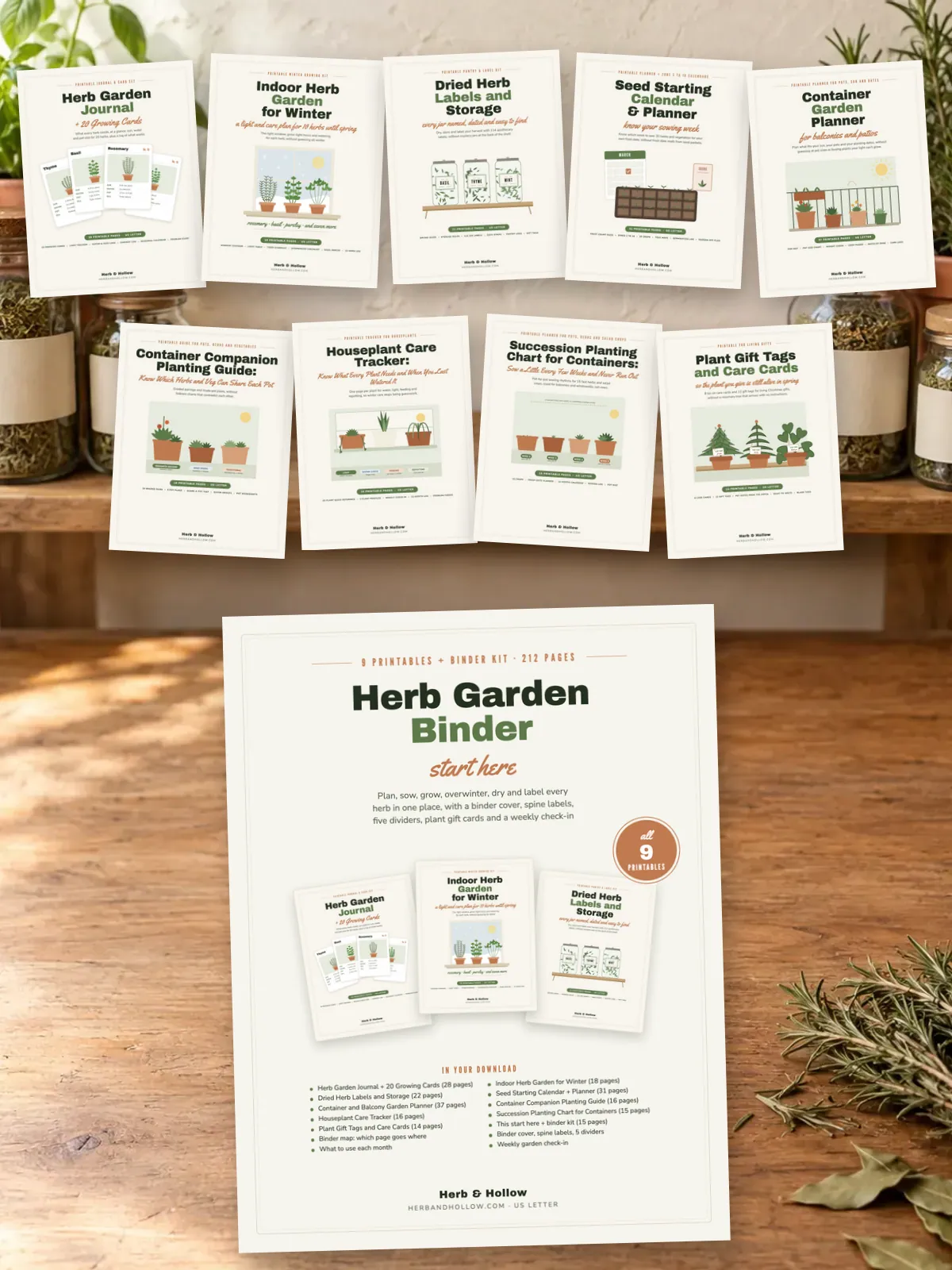
Keeping seed dates and bed layouts in one place? The Small Space Garden Binder ($25) bundles all nine of our paid printables, which cost $54 bought one at a time, including the container planner and the seed starting calendar. Use code HERB20 for 20% off.
Frequently asked questions
Is there a free vegetable garden planner printable?
Yes. The PDF on this page is free: five pages with a 4 by 4 foot bed grid, a plants-per-square chart, a filled example bed, four pot top-views and a 2027 sow-by log, in US Letter and A4.
How many plants fit in one square foot?
It depends on the plant. The Phipps Conservatory guide gives 1 for peppers and kale, 2 for basil and parsley, 4 for lettuce, 9 for bush beans and spinach, and 16 for carrots and radishes. Always check the seed packet too.
Can I use the layouts for pots instead of a bed?
Yes. Page 3 has four pot top-views drawn to scale, and each grid square stands for 2 inches of pot. Mark each plant, and check the pot size against the minimums from your extension service.
What size pot does a tomato need?
The University of Illinois Extension gives a minimum of more than 20 inches for tomatoes, and lists a 24 inch pot as about 25 gallons of soil.
How do I find the sow-by date for a crop?
Start from your last frost date and count back the weeks on the seed packet. For example, a packet that says 6 weeks before last frost and a last frost of April 15, 2027 gives March 4, 2027.
Does this planner promise a harvest?
No. The example bed is a paper layout built from published plant counts, not a tested bed. Light, water, soil and weather change what you get.
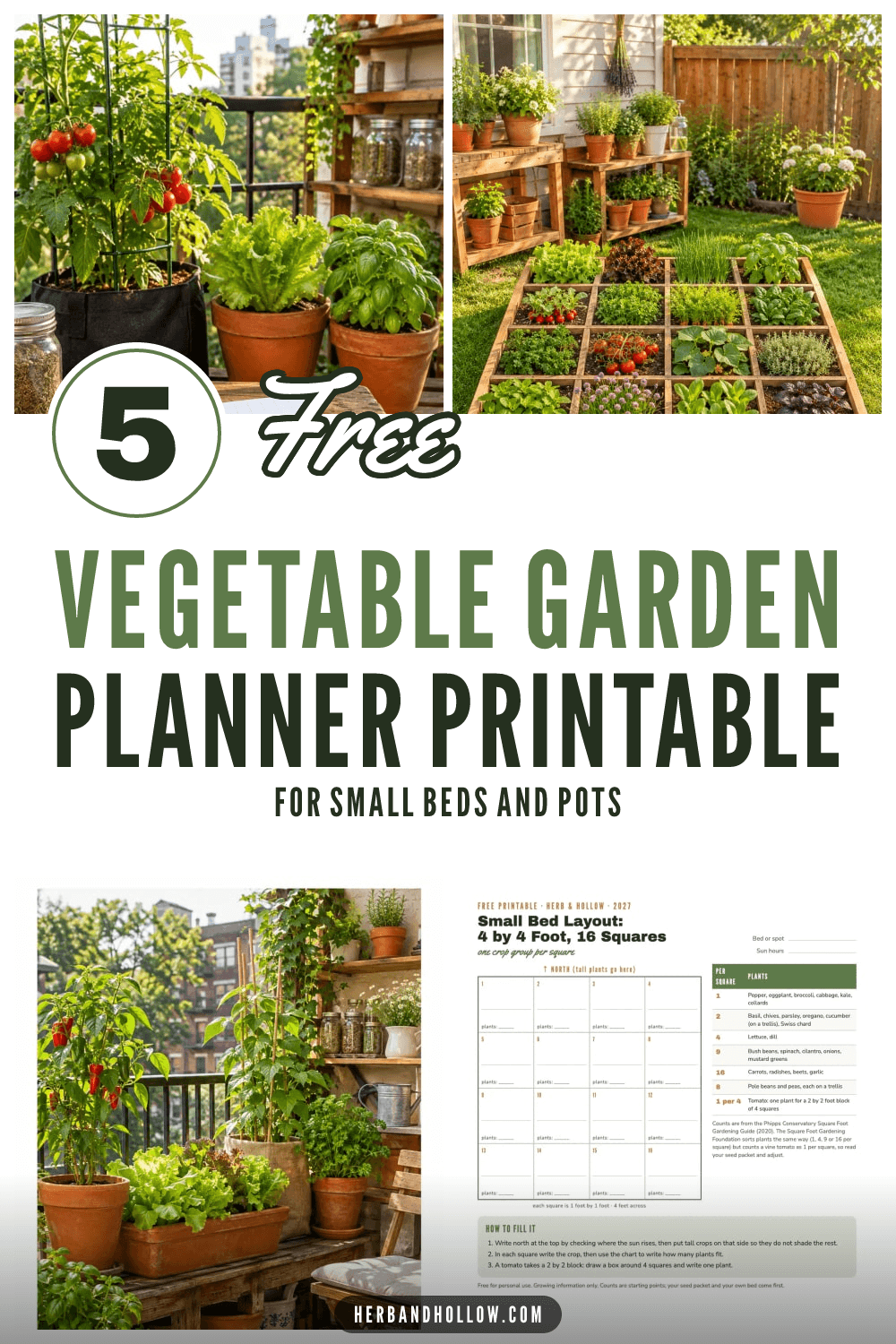
Save it for later
Pin this to your Small-Space Vegetables board so it's there when you need it.
Save to Pinterest