This post contains affiliate links. As an Amazon Associate we earn from qualifying purchases, at no extra cost to you. Read our disclosure.
Safety first: Herbs can be powerful. If you are pregnant, nursing, take medication or have a health condition, check with your doctor or pharmacist first. Please read our herbal & garden safety notes before you start.
Key takeaways
- Fruiting crops such as tomatoes and peppers need at least 6 hours of direct sun; greens manage on about 3 to 5 hours
- Wet soil is heavy, so check load limits and building rules, and choose fabric bags or plastic pots
- Use the railing and a wall trellis to grow upward instead of filling the floor
- A pepper needs about 3 gallons, an eggplant 5 gallons and a compact tomato about 5 gallons
- Sketch the layout with empty pots before filling them
In this post5 sections
Balcony vegetable garden ideas start with sun and weight
Before you buy a single pot, answer two questions: how many hours of direct sun does your balcony get, and how much weight is it allowed to hold? Sun decides what can grow. Weight and building rules decide how big the pots can be.
Iowa State Extension says fruiting crops such as tomatoes, peppers, cucumbers and eggplant need at least 6 hours of direct sun a day, and leafy vegetables tolerate more shade. The Old Farmer's Almanac puts greens such as lettuce and spinach at about 3 to 5 hours. A north-facing balcony is a greens balcony; a south or west one can grow tomatoes.
-
Step 1: Check the sun at three times of day
Stand on the balcony at about 9 am, noon and 4 pm, and note which part is in direct light each time. Mark the sunniest end with tape. Count the hours that spot is lit; 6 or more means fruiting crops are possible, 3 to 5 means plan for greens, roots and herbs.
-
Step 2: Check weight and building rules
Wet soil is heavy. One estimate puts a 10 gallon pot of wet soil at 60 to 80 pounds, so six big pots can add up to hundreds of pounds. Ask your landlord or building manager about load limits and whether railing planters are allowed, and never hang a heavy box from a railing that was not made for it.
-
Step 3: Measure the floor and the railing
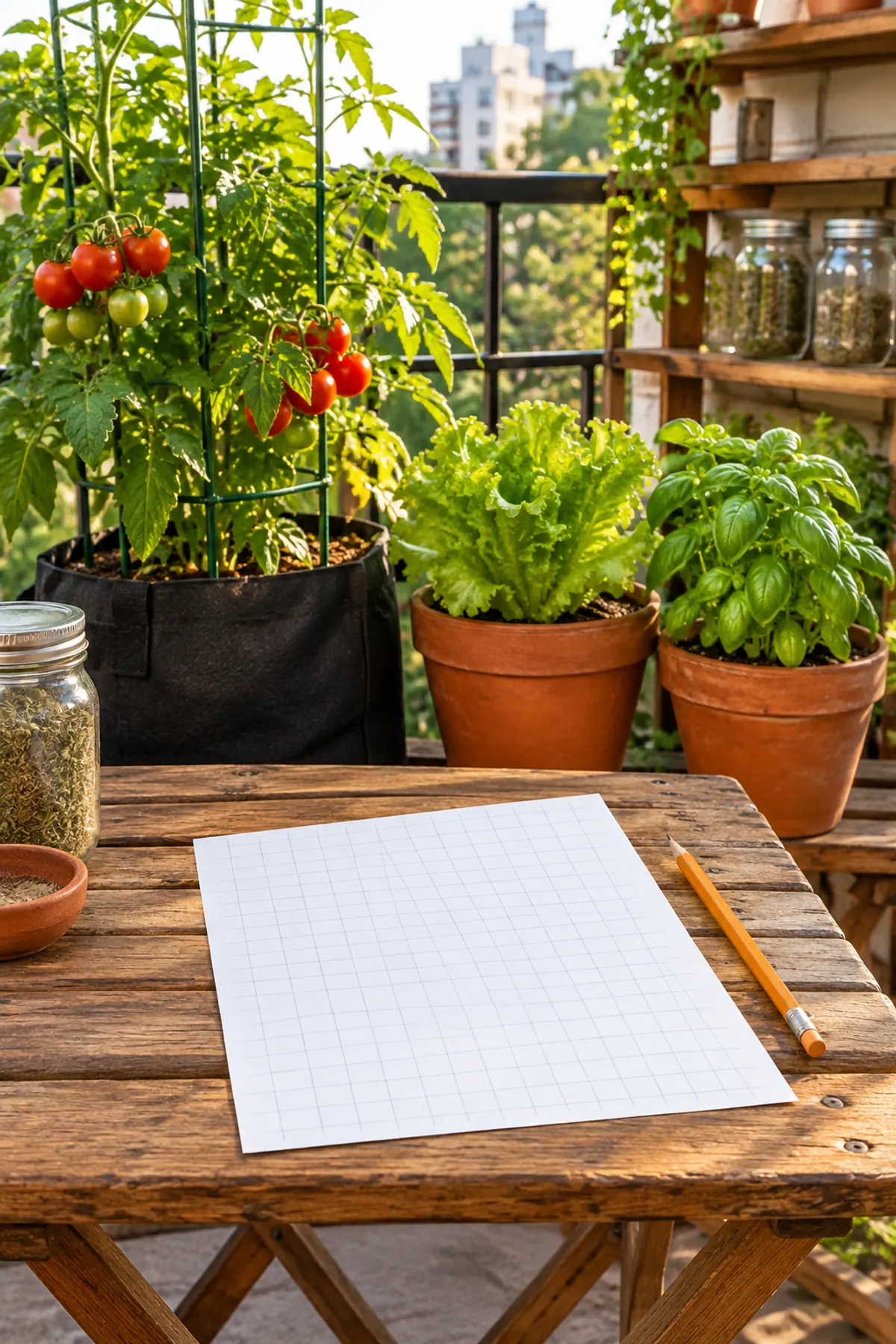
Write down the floor length and width, the railing length, and the height you can use before plants block a door or a neighbor's view. Draw the balcony on graph paper with one square per foot. Everything below is easier once you can see the floor plan.
-
Step 4: Choose light containers
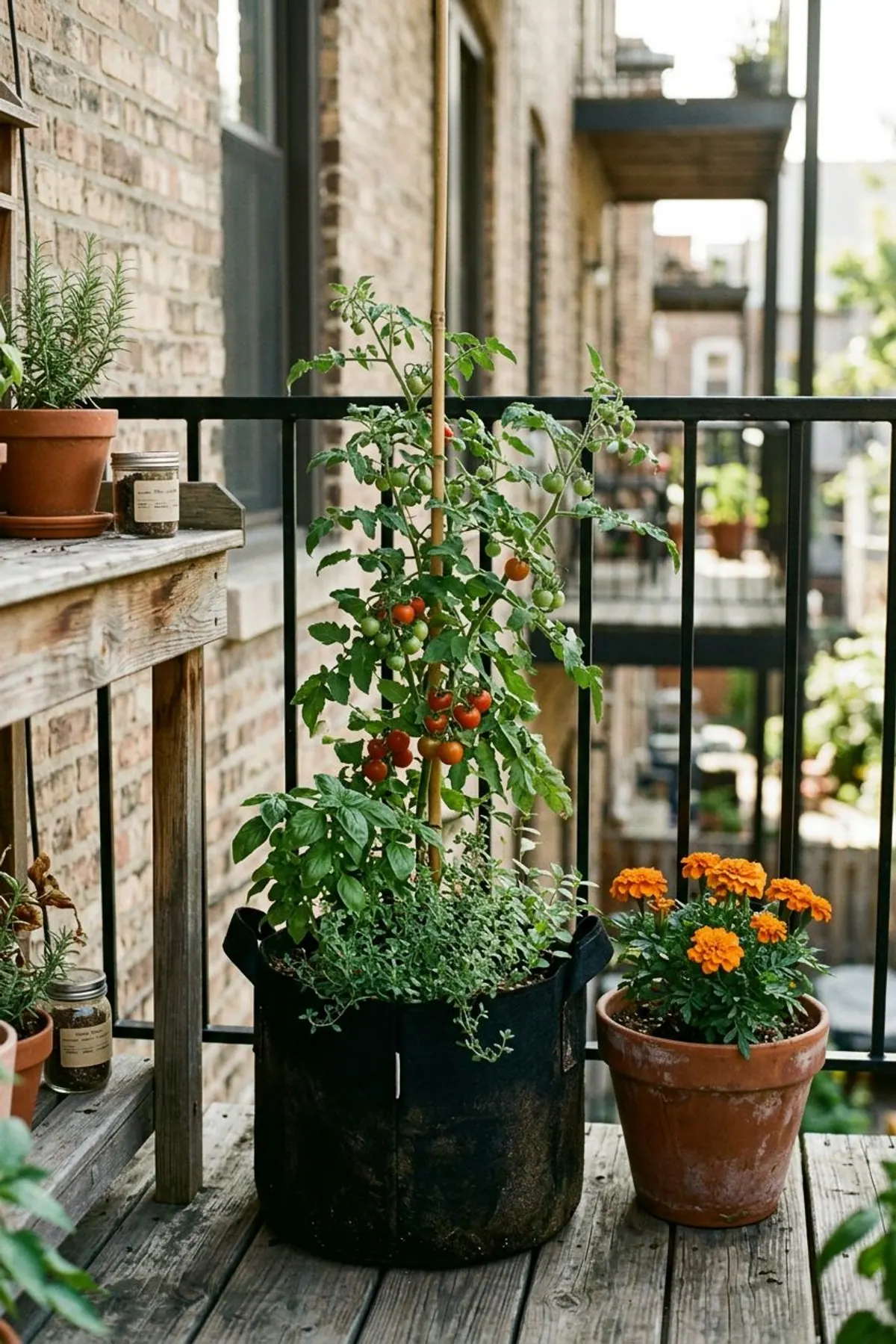
Fabric grow bags and plastic pots weigh far less than ceramic or clay. Put heavy pots on a wheeled plant dolly before you fill them so you can roll them to follow the sun. Every pot needs drainage holes, and a tray under the pot keeps runoff from dripping onto the balcony below.
-
Step 5: Match crops to pot size
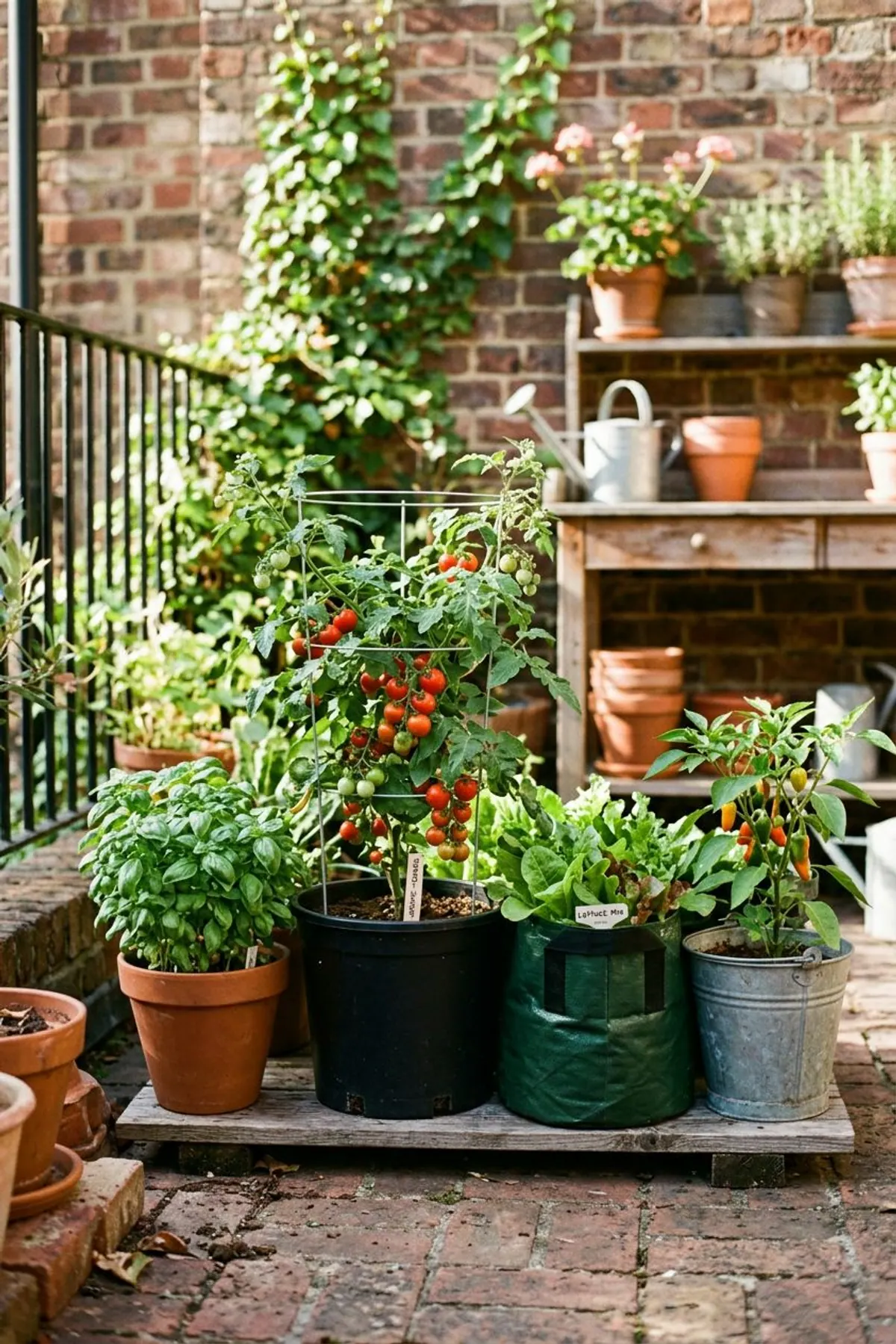
Pot sizes from Harvest to Table and the Almanac: a pepper needs about 3 gallons, an eggplant 5 gallons, a compact tomato about 5 gallons, lettuce about 1 gallon, kale 1 gallon and chard 2 gallons per plant. Our container vegetable garden guide has the full pot size chart.
-
Step 6: Use the rail and the wall
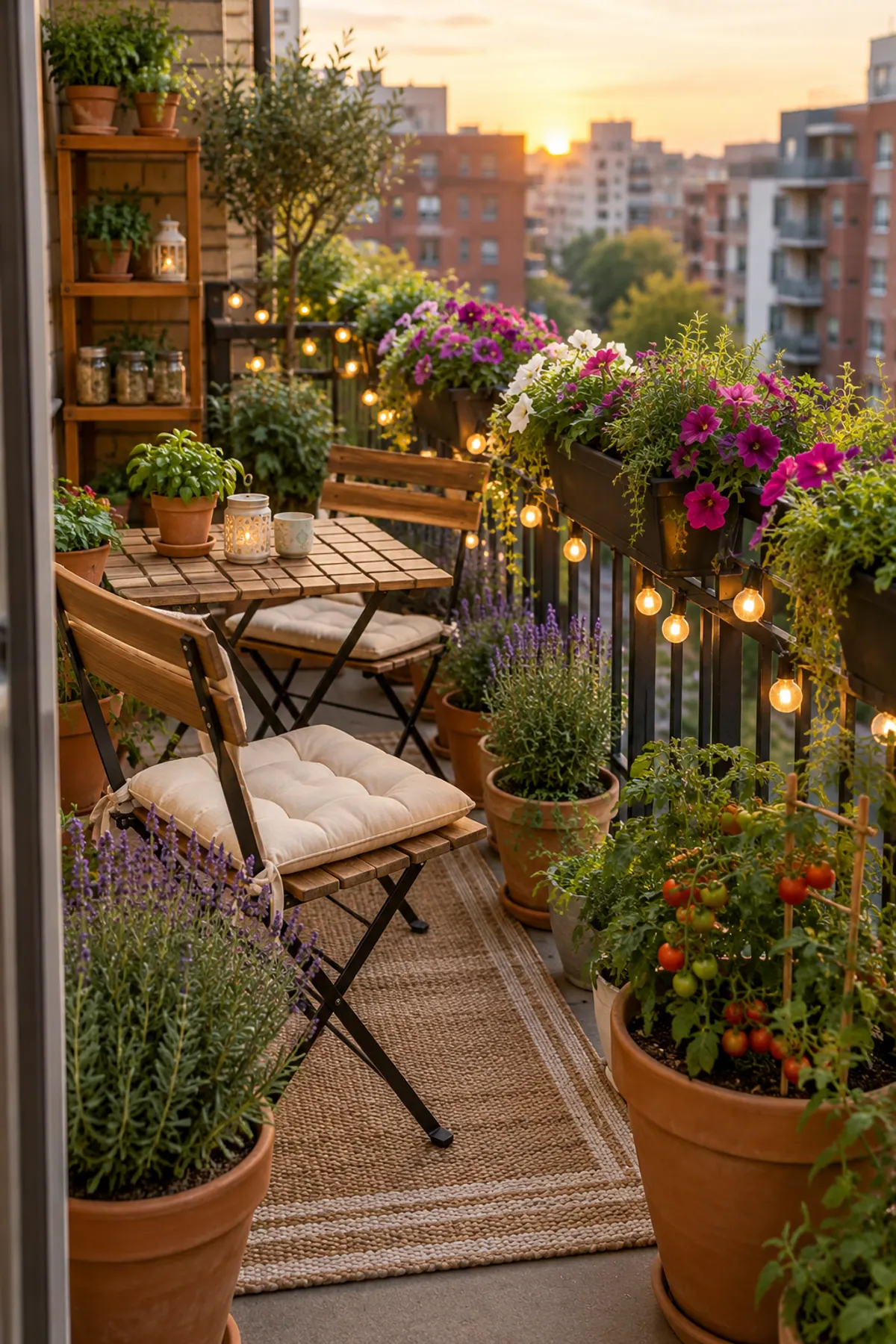
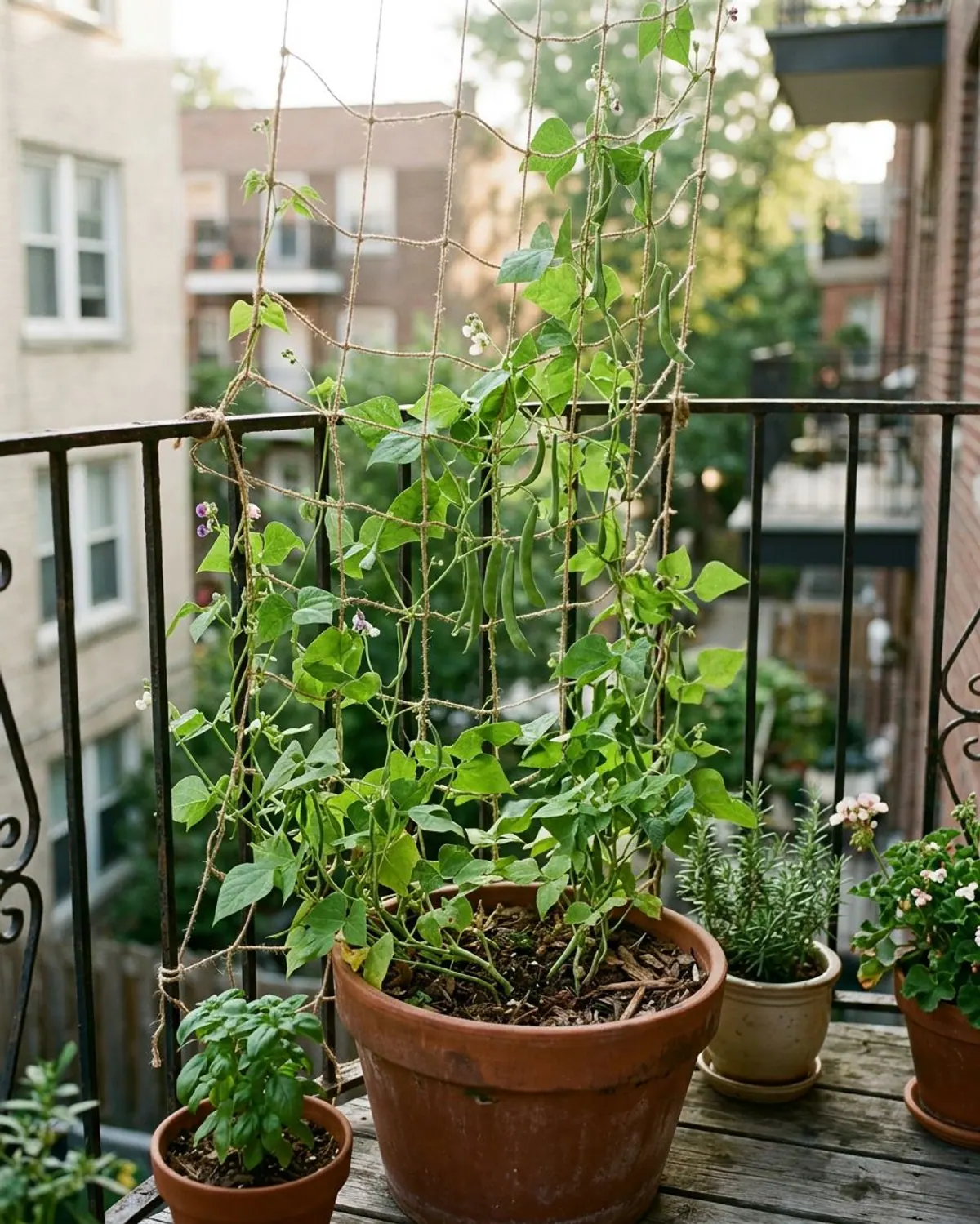
Railing planters turn the edge into growing space. Clip lettuce, radish, chives and parsley boxes to the rail, and fix a trellis or netting to the wall side for beans or cucumbers. Secure every rail box so wind cannot knock it off a balcony.
-
Step 7: Set a watering routine
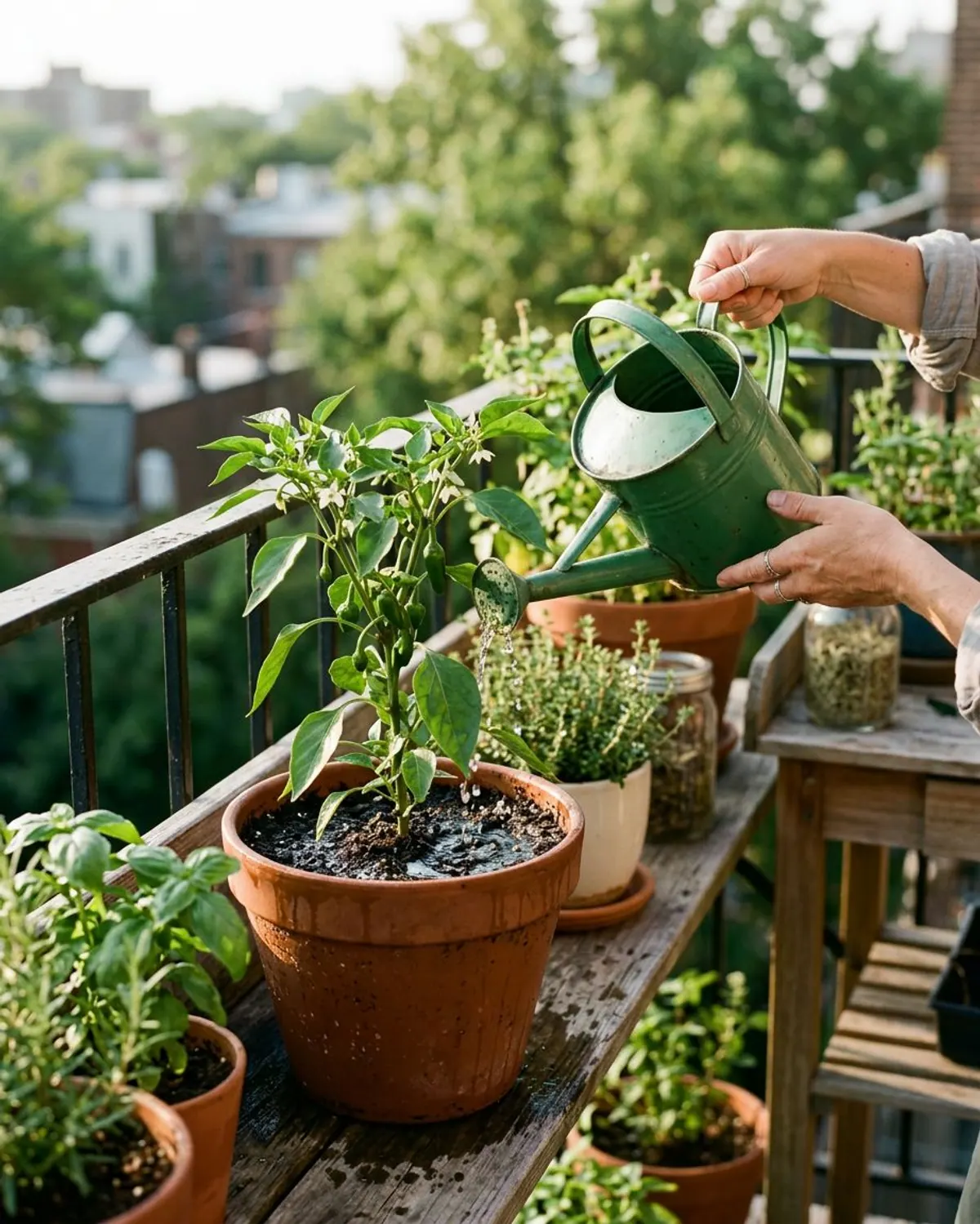
Balcony pots dry out fast in wind and sun. Water in the morning until water runs from the drainage holes, and check small pots again in the afternoon in hot weather. A self-watering planter holds a reservoir that helps on days you are out.
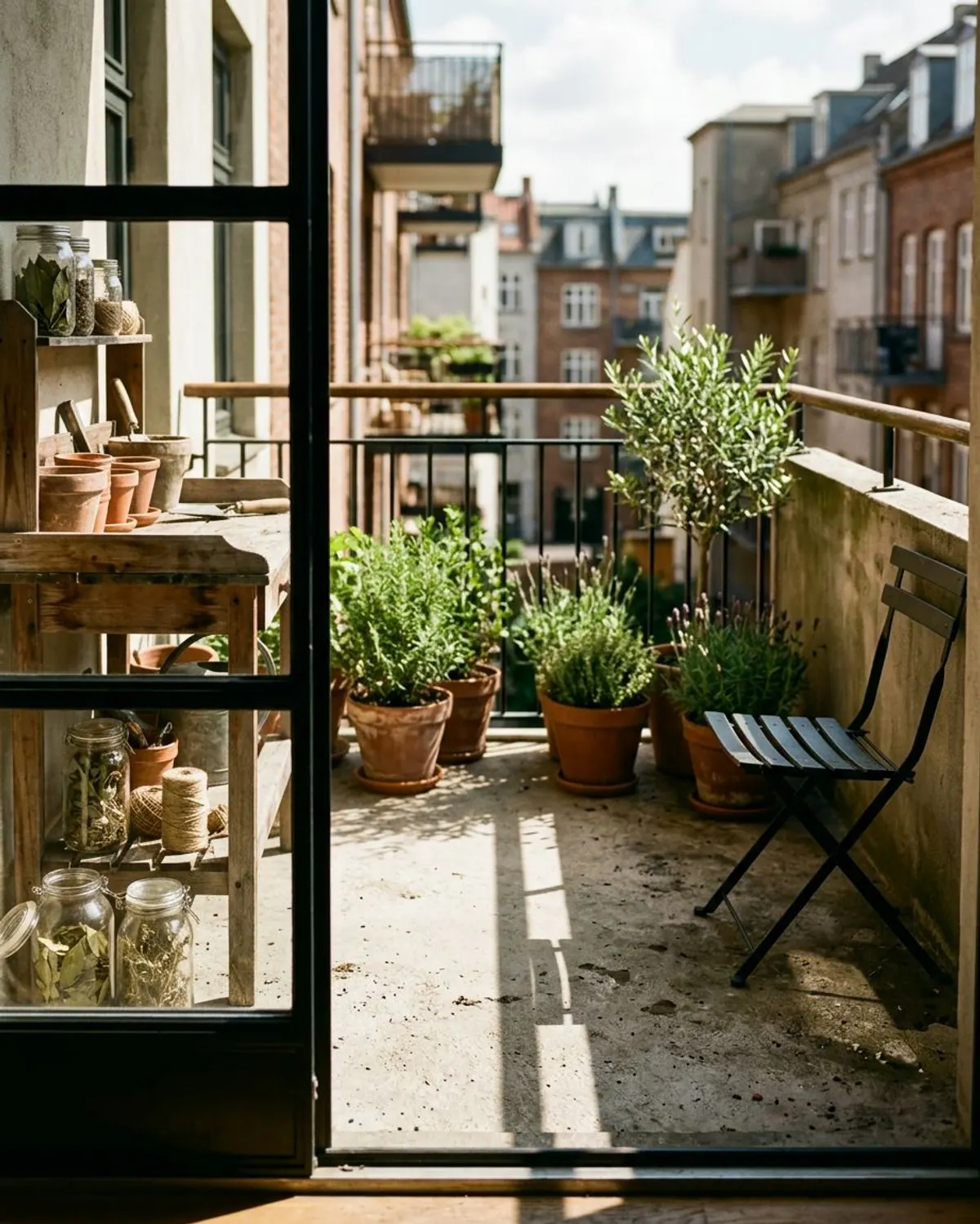
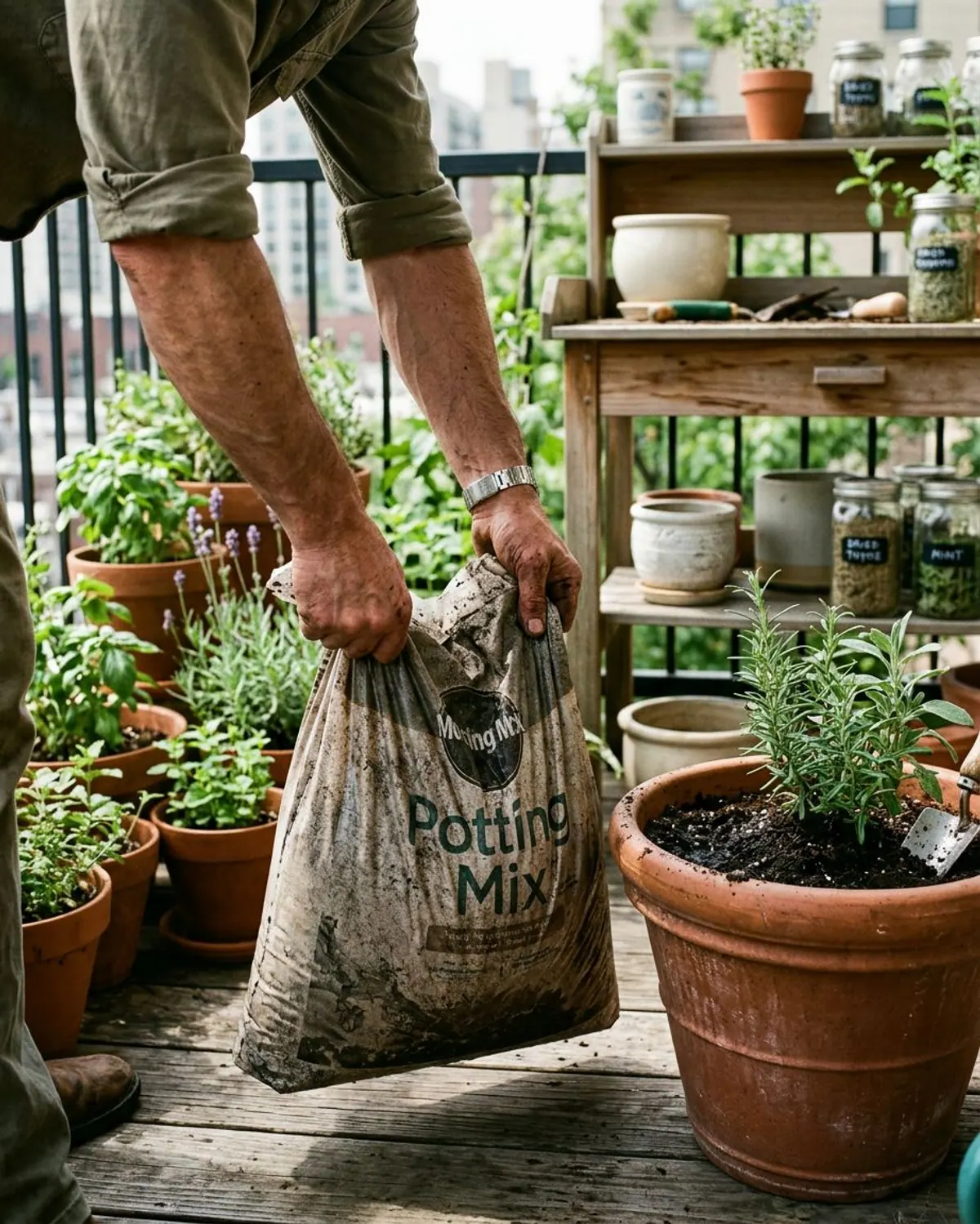
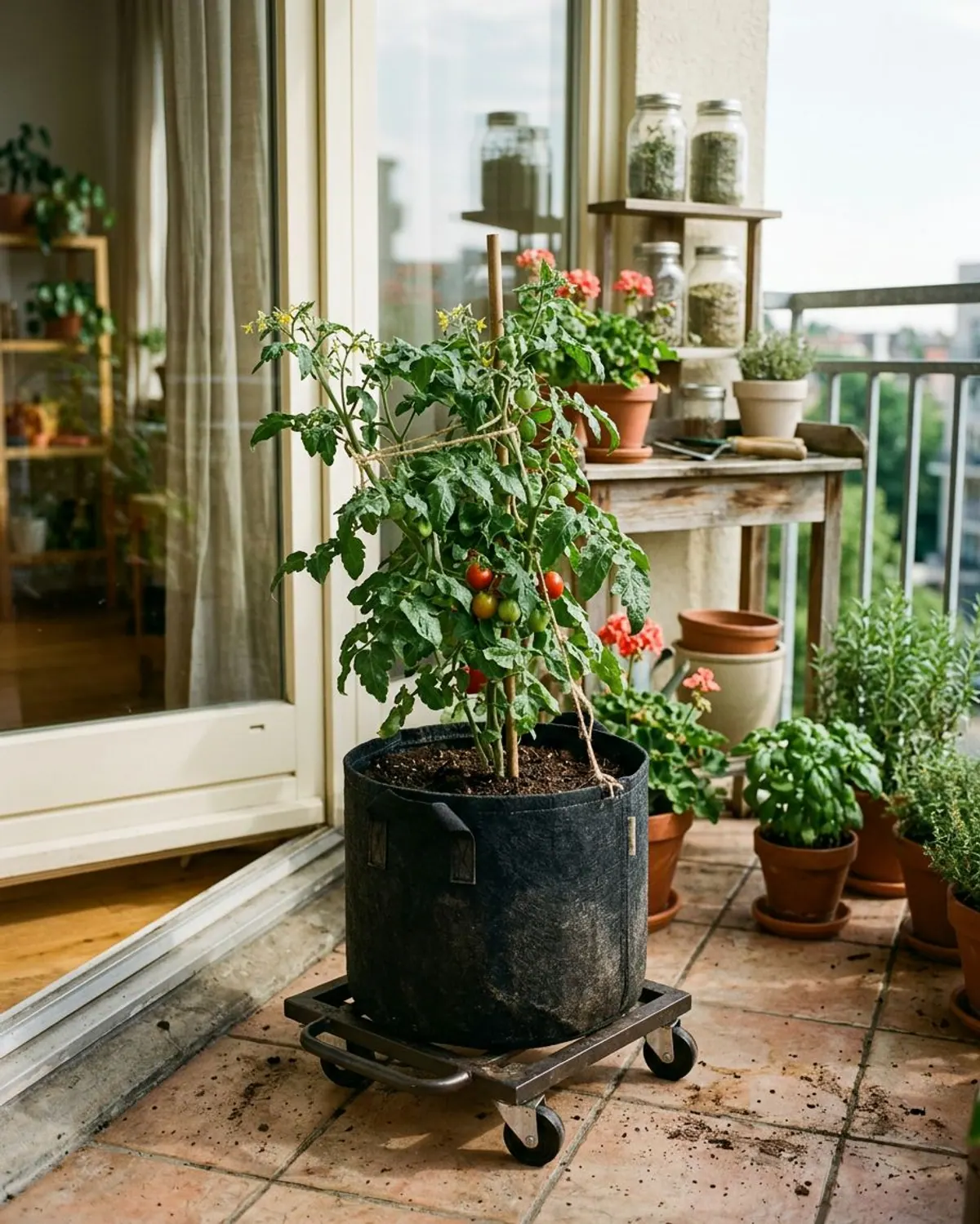
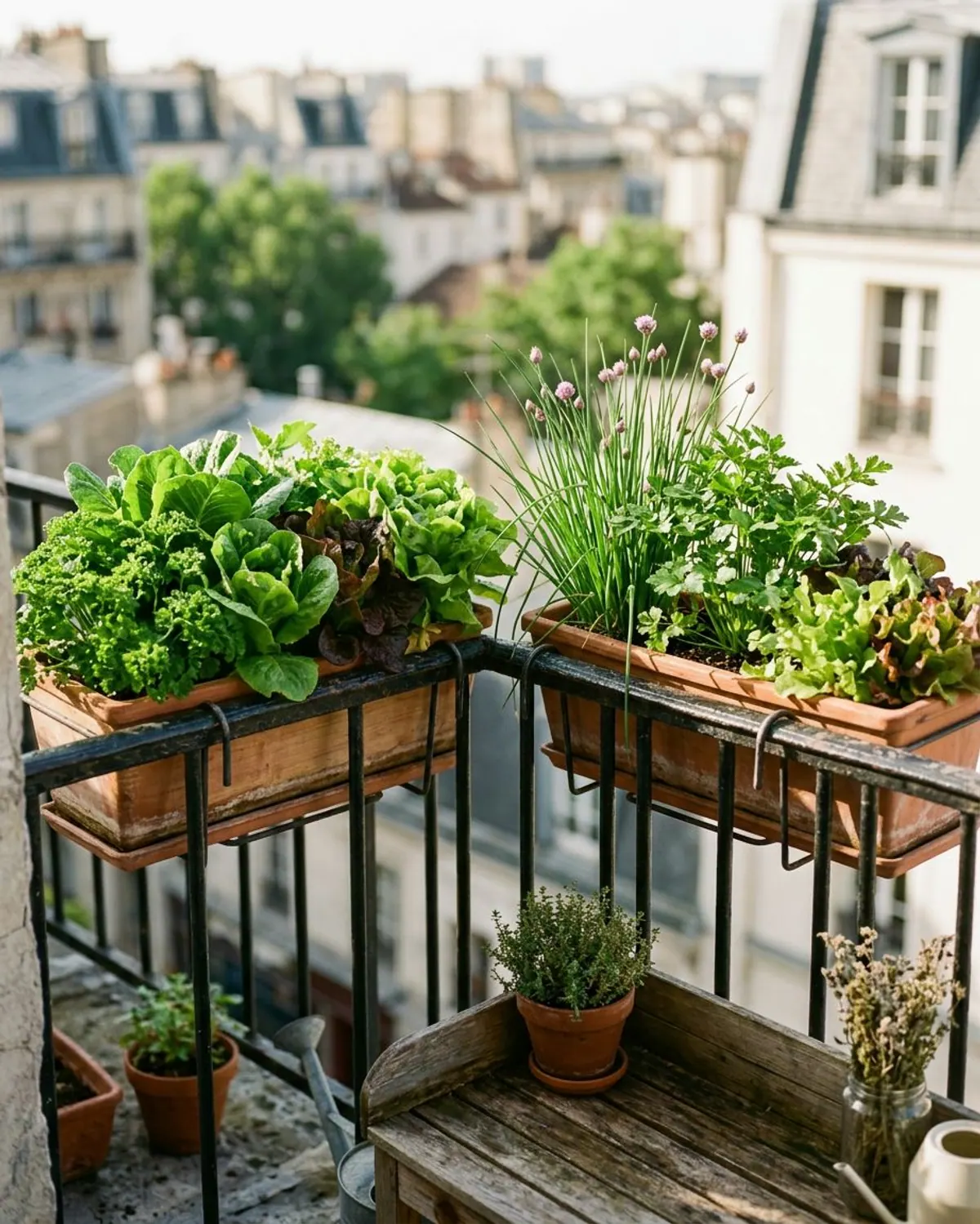
Three balcony vegetable garden layouts
These layouts use the pot sizes above. They are our planning examples, not tested plans, so adjust the counts to your own sun and rules.
| Balcony | Floor | Plants | Notes |
|---|---|---|---|
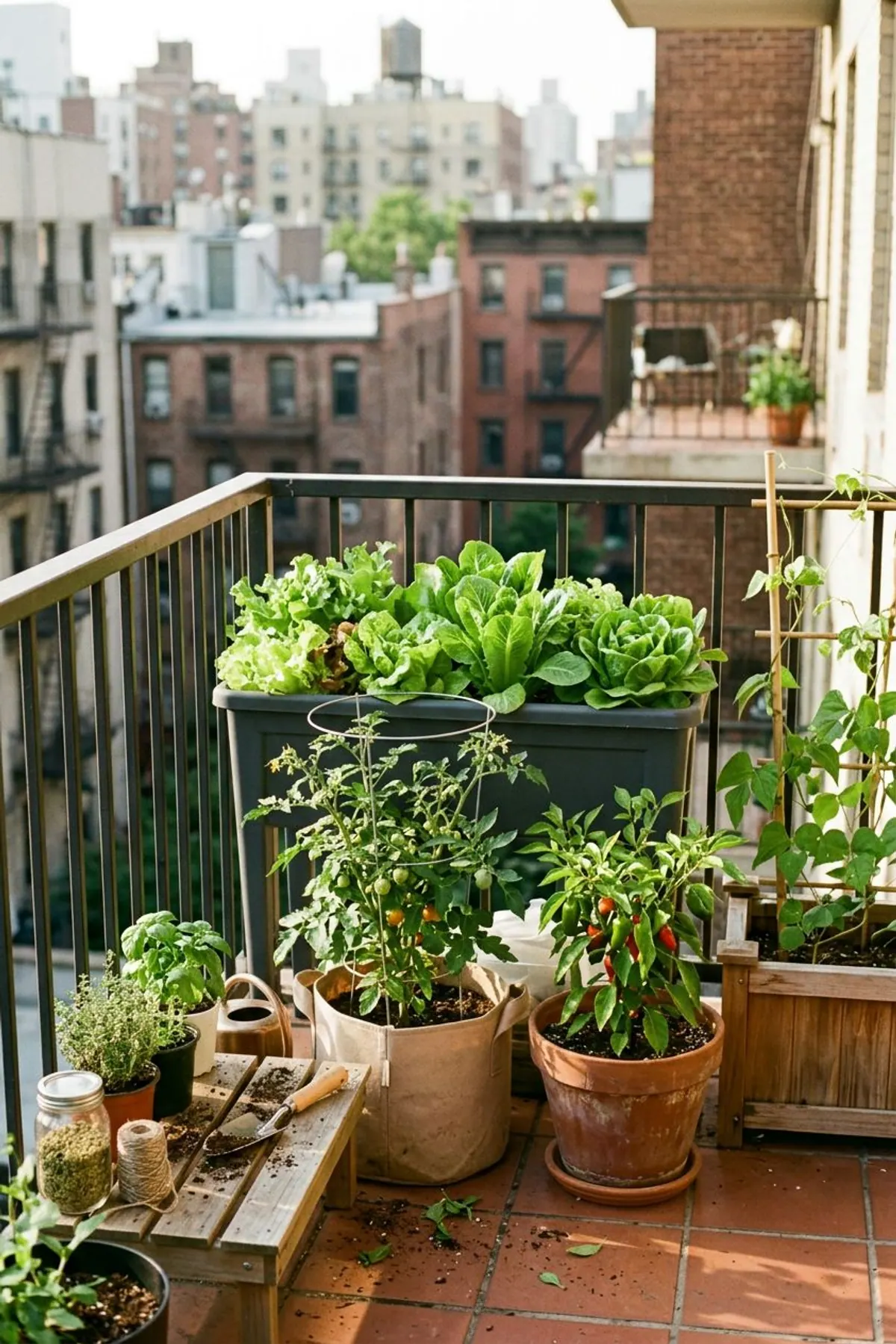
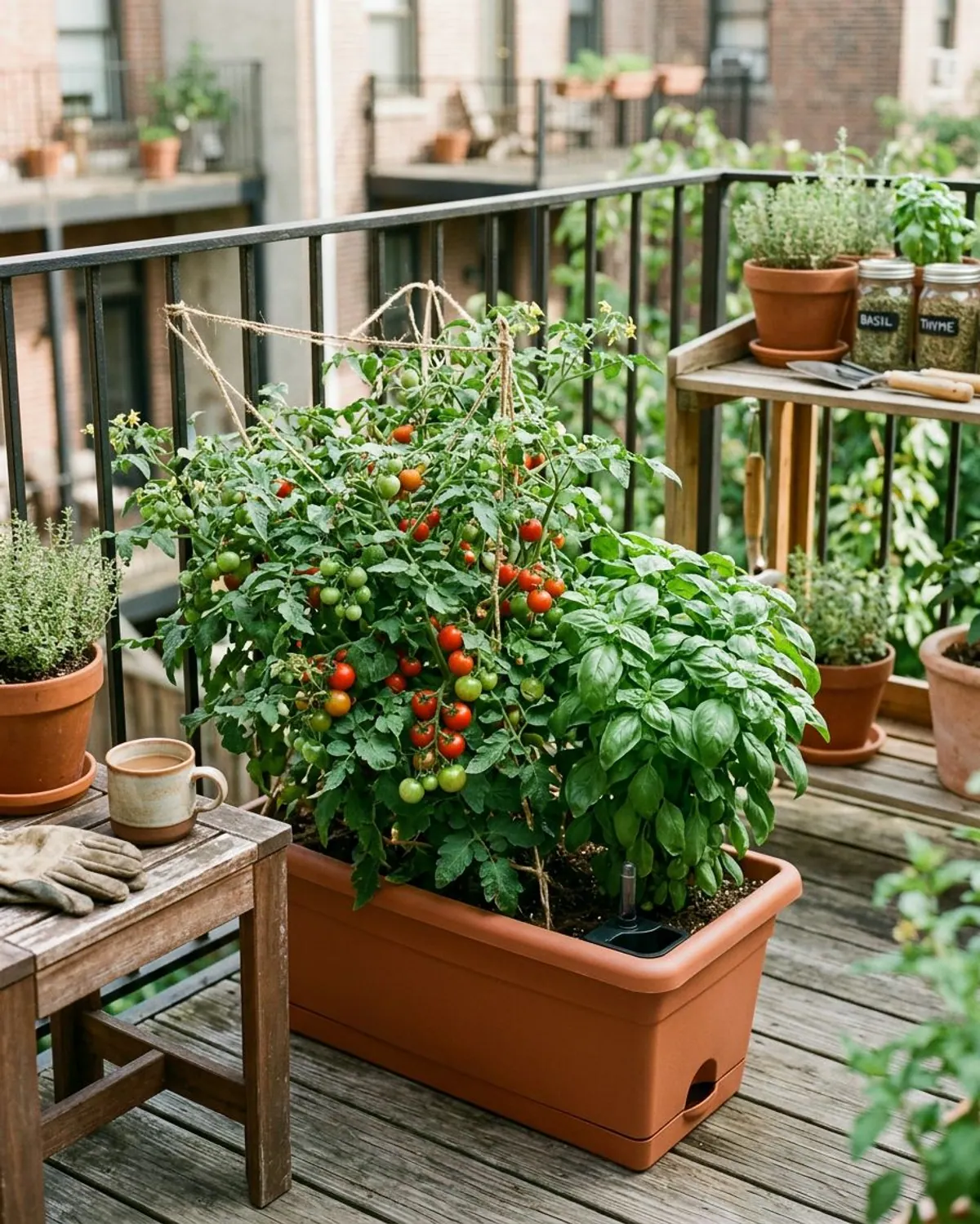
| Small | About 2 x 4 ft | 1 rail box of lettuce and radish, 1 grow bag with a compact tomato (5 gallons), 1 pot with a pepper (3 gallons), 1 herb pot | Leaves about half the floor for a stool |
| Medium | About 4 x 8 ft | 4 pots along the wall: a tomato (10 gallons), 2 peppers (3 gallons each), an eggplant (5 gallons); a trellis with cucumbers in a 5 gallon bag; 2 rail boxes of greens and herbs | Room for a bistro chair |
| Long and narrow | About 3 x 10 ft | Wall shelf with kale, chard and herbs; rail boxes of lettuce and radish; 3 grow bags of pepper, eggplant and bush beans on the far wall | Keep a path about 2 feet wide so you can reach every pot |
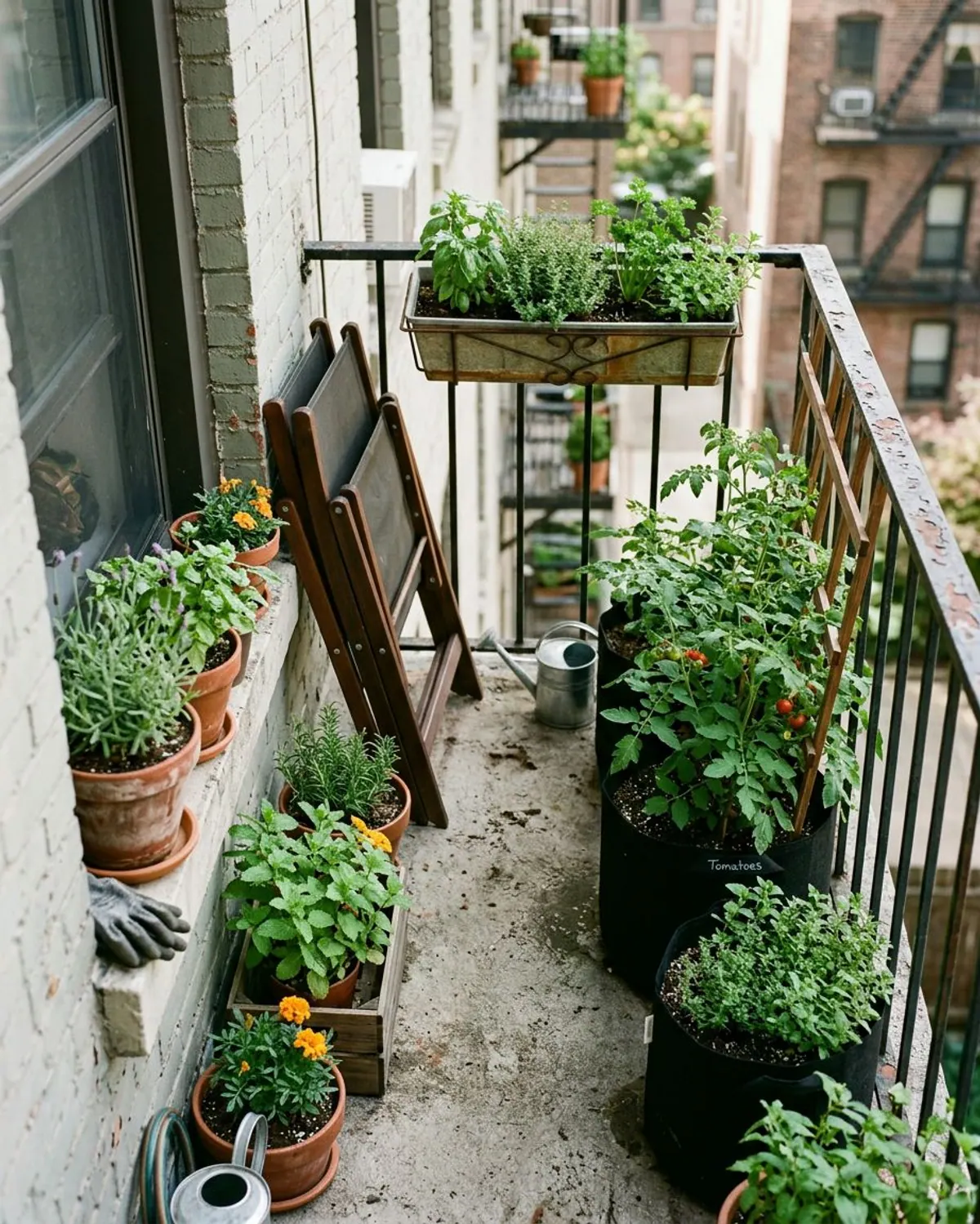
A small balcony has little floor, so go up and out. A compact tomato and a pepper take the floor, a rail box takes the lettuce and a trellis takes beans or cucumbers. Stop there; a crowded small balcony is harder to water than a tidy one.
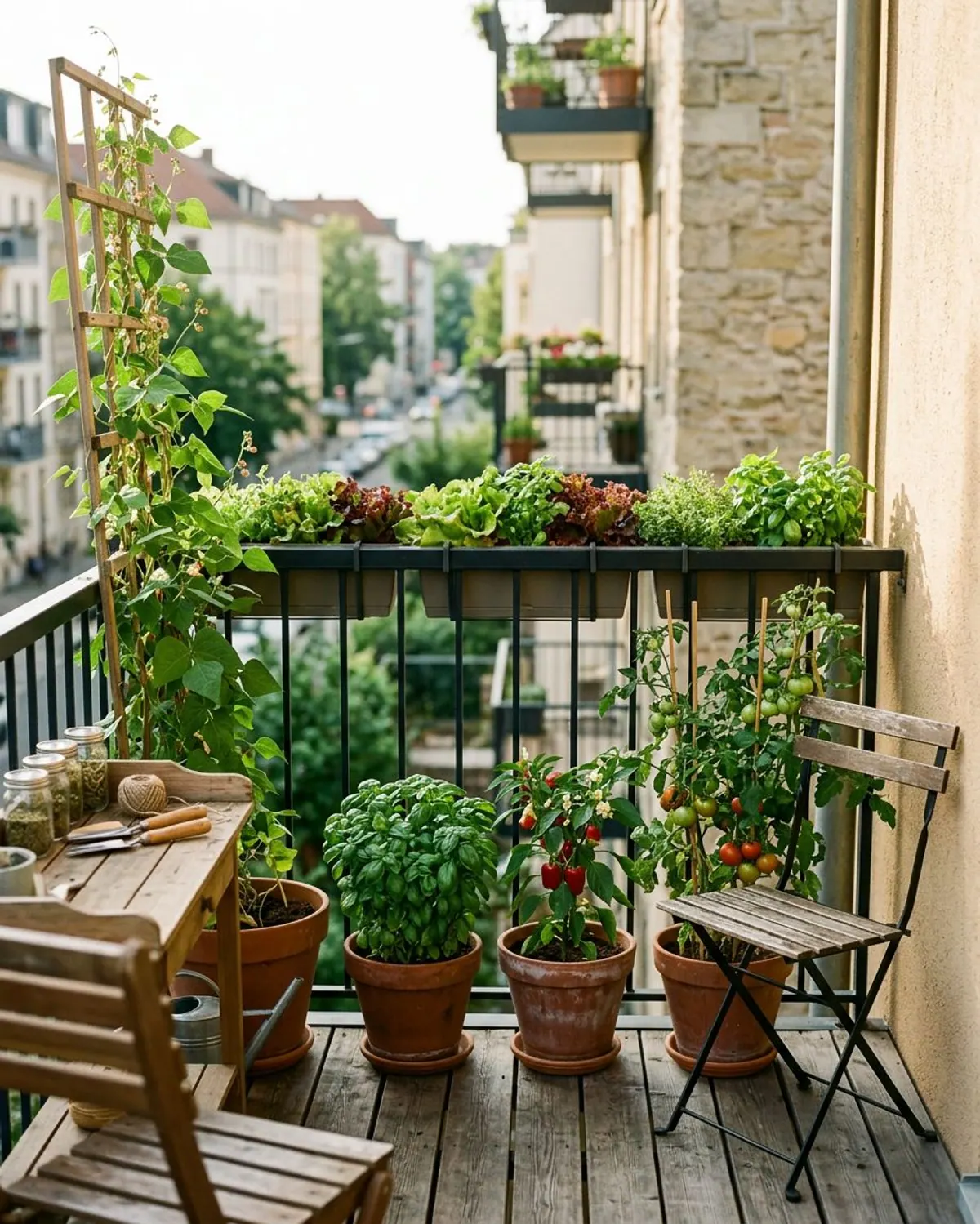
A medium balcony can take a row of larger pots against the wall, with the tallest at the north end so it does not shade the rest. Put the thirstiest plants nearest the door so you see them when they wilt.
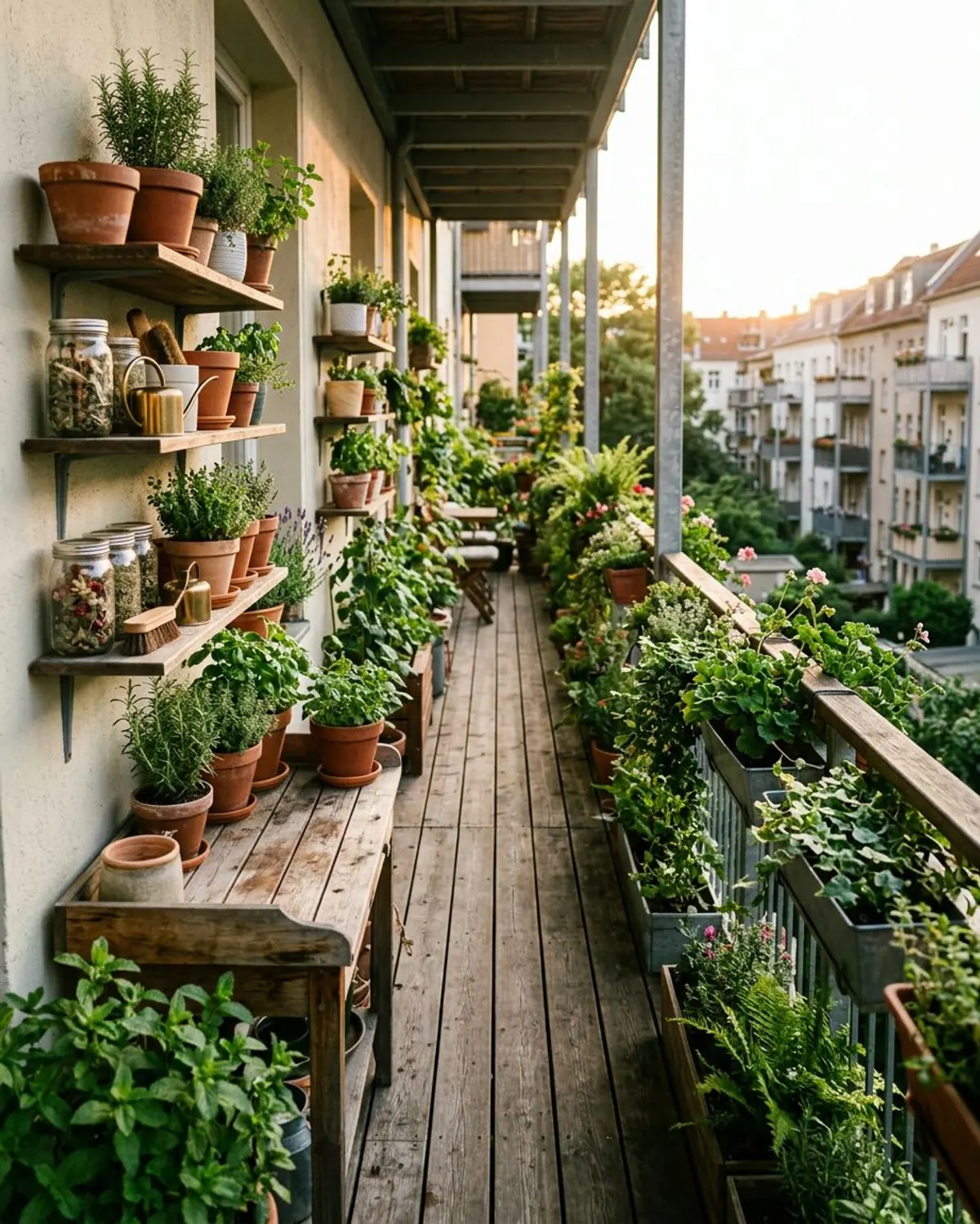
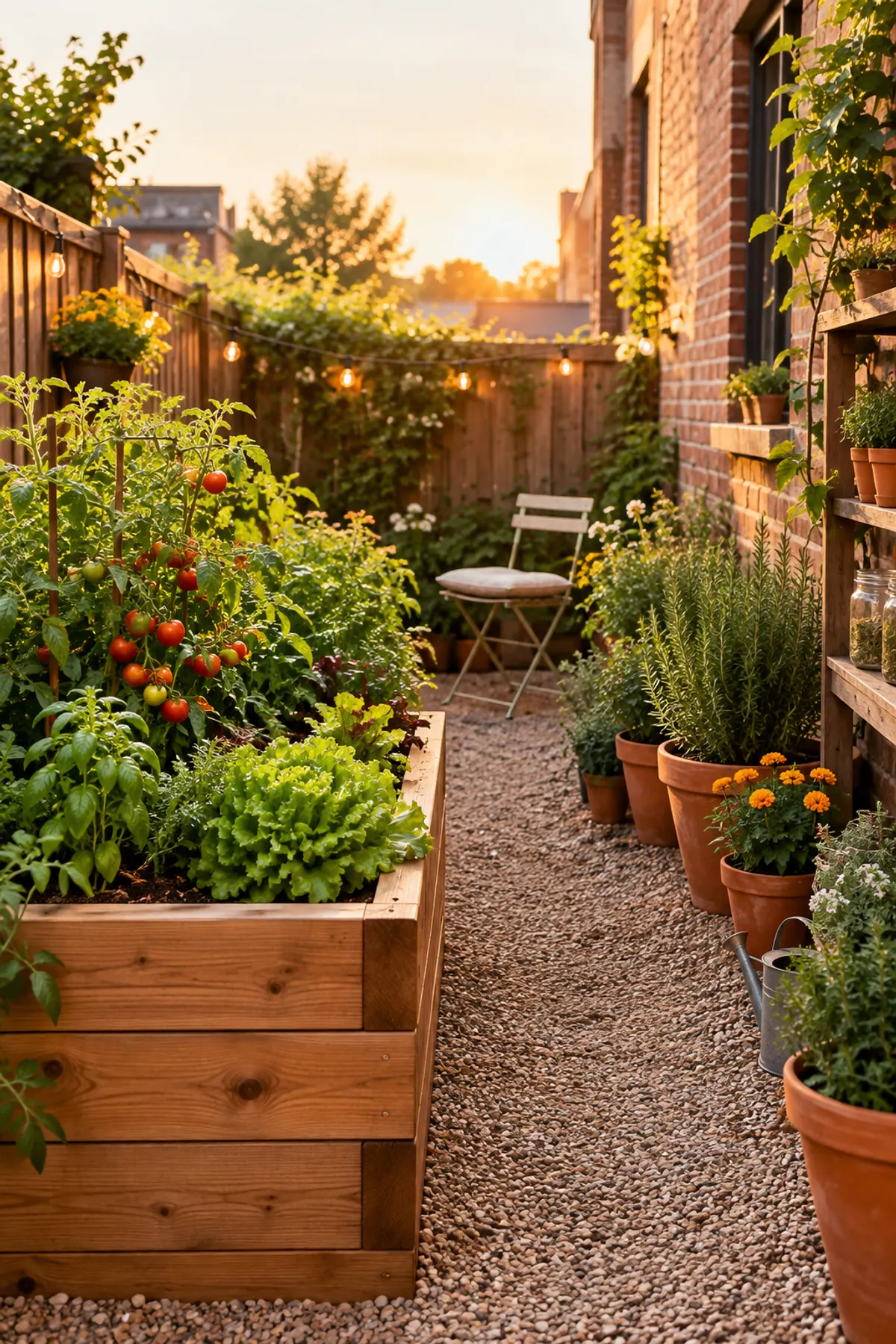
A long, narrow balcony works best as a corridor. Keep the path clear, put shallow crops on the wall shelf and rail, and use fabric bags at the far end where you do not walk.
What to grow on a balcony: 10 reliable crops
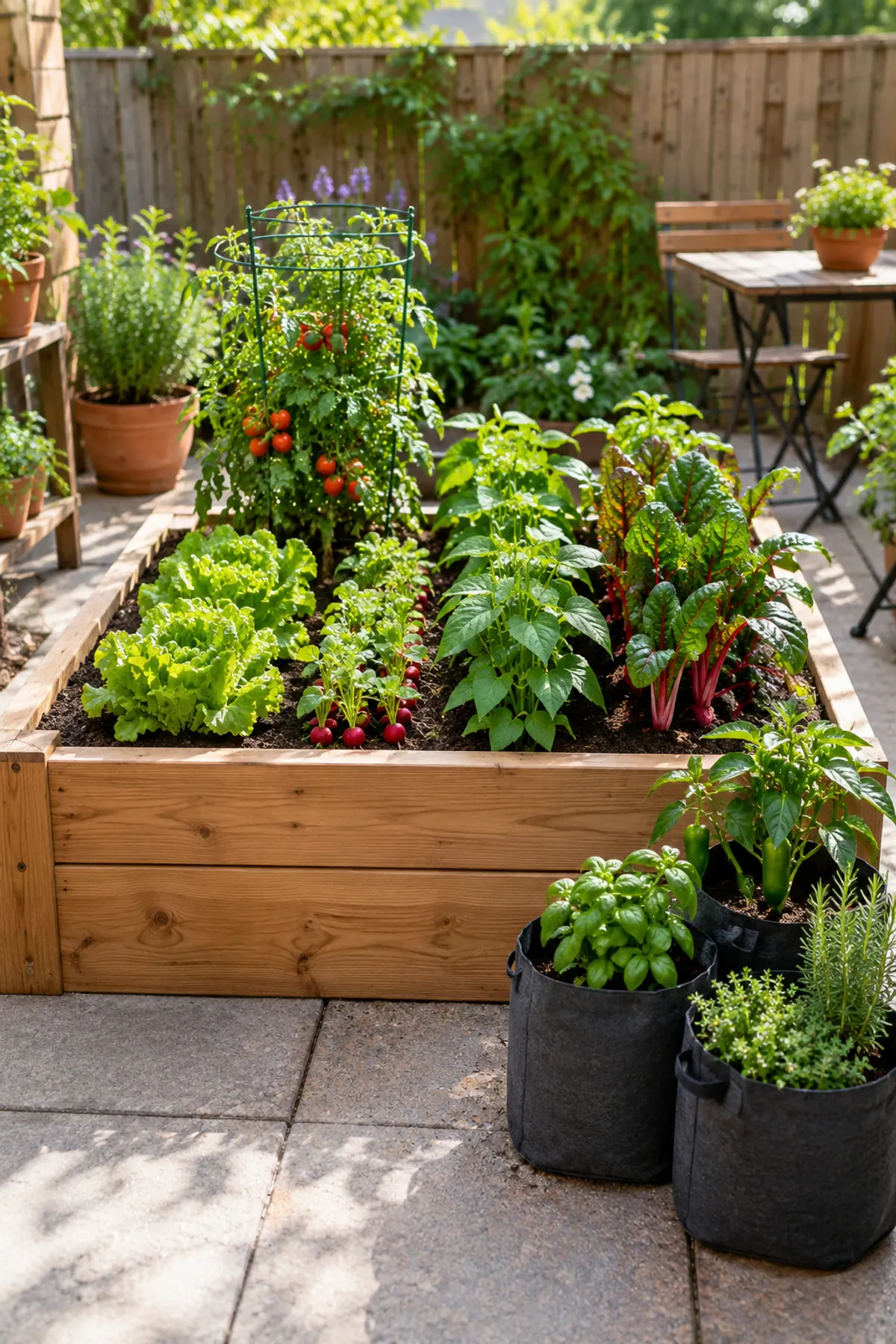
Start with plants that forgive missed waterings. Lettuce, radishes, kale, chard, bush beans, peppers, cherry tomatoes, cucumbers, eggplant and herbs all suit pots. Add a trellis for vertical growers, and look at the plant tag to choose compact or container varieties.
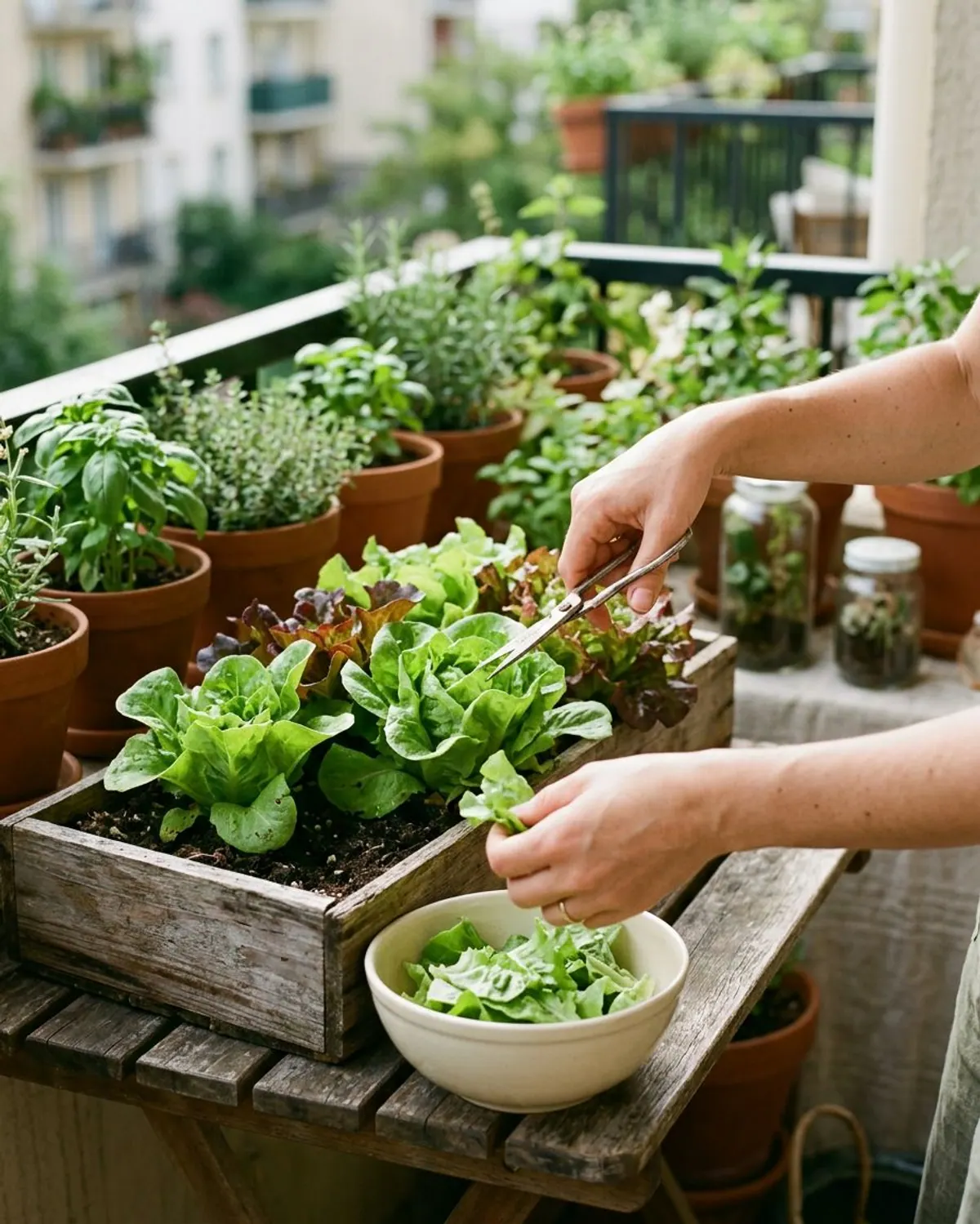
Harvest often. Snipping lettuce and herbs keeps them growing, and a small bowl of leaves a few times a week beats one big harvest. For layouts that include flowers and seating, see our balcony ideas for apartments and small space garden ideas.
Mistakes that trip up balcony vegetable gardens
What we like
- Choosing crops for the sun you have
- Using light pots on a dolly
- Watering every morning
- Fixing rail boxes securely
Keep in mind
- Planting tomatoes where only 3 hours of sun arrive
- Filling a balcony with ceramic pots
- Skipping drainage holes
- Hanging heavy boxes from a loose railing
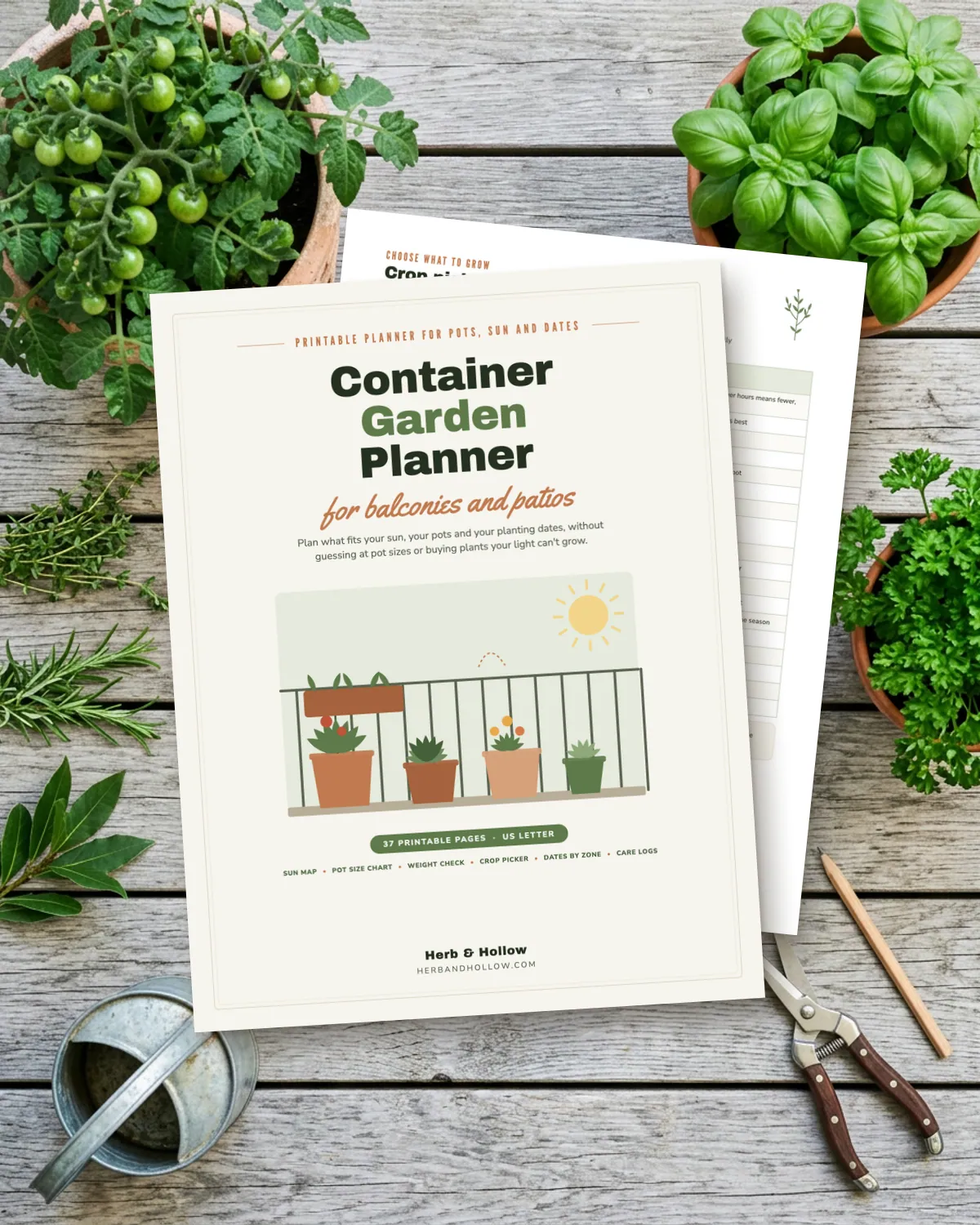
If you would rather not work out pot sizes and sun hours on scrap paper, the Container & Balcony Garden Planner is 37 printable pages that walk you through mapping your sun, sizing each pot and sketching a layout that fits your railing and weight limit.
Planning on paper helps. The free planner has a container size guide and a balcony layout grid. The paid Small-Space Garden Binder adds a seed starting calendar with sowing weeks for 17 container vegetables, so you know when to plant what you drew.
What to buy for a balcony vegetable garden
- Best for lettuce and herbs
Railing planters
Typically $20 to $40
Add growing space on the rail; check your building rules and secure them well.
Check price on Amazon for Railing planters -
Fabric grow bags, 5 gallon
Typically $12 to $25 for a pack
Light and well draining for peppers and compact tomatoes.
Check price on Amazon for Fabric grow bags, 5 gallon -
Balcony trellis or netting
Typically $8 to $25
Gives beans and cucumbers a way up.
Check price on Amazon for Balcony trellis or netting -
Wheeled plant dolly
Typically $12 to $30
Moves a heavy pot to follow the sun.
Check price on Amazon for Wheeled plant dolly -
Self-watering planter
Typically $25 to $50
A water reservoir helps when you are away for a day.
Check price on Amazon for Self-watering planter
Frequently asked questions
What vegetables grow best on a balcony?
Lettuce, radishes, kale, chard, bush beans, peppers, cherry tomatoes, cucumbers on a trellis, and herbs. Choose compact or container varieties.
How much sun does a balcony vegetable garden need?
Fruiting plants such as tomatoes and peppers need at least 6 hours of direct sun a day, and leafy greens do well on about 3 to 5 hours.
How heavy are balcony planters?
Wet soil is heavy; one estimate puts a 10 gallon pot at 60 to 80 pounds. Check your building's load limits and use fabric bags or plastic pots.
Can I put planters on a balcony railing?
Often yes, but check your lease and building rules first, use planters made for railings and secure them so wind cannot knock them off.
What is the easiest vegetable to grow on a balcony?
Lettuce and other salad greens in a shallow rail box are the easiest, because they need only about 3 to 5 hours of sun and a small pot.
Save it for later
Pin this to your Small-Space Vegetables board so it's there when you need it.
Save to Pinterest