This post contains affiliate links. As an Amazon Associate we earn from qualifying purchases, at no extra cost to you. Read our disclosure.
Safety first: Herbs can be powerful. If you are pregnant, nursing, take medication or have a health condition, check with your doctor or pharmacist first. Please read our herbal & garden safety notes before you start.
Key takeaways
- Sun first: fruiting crops need 6 to 8 hours of direct sun; leafy greens manage with 4.
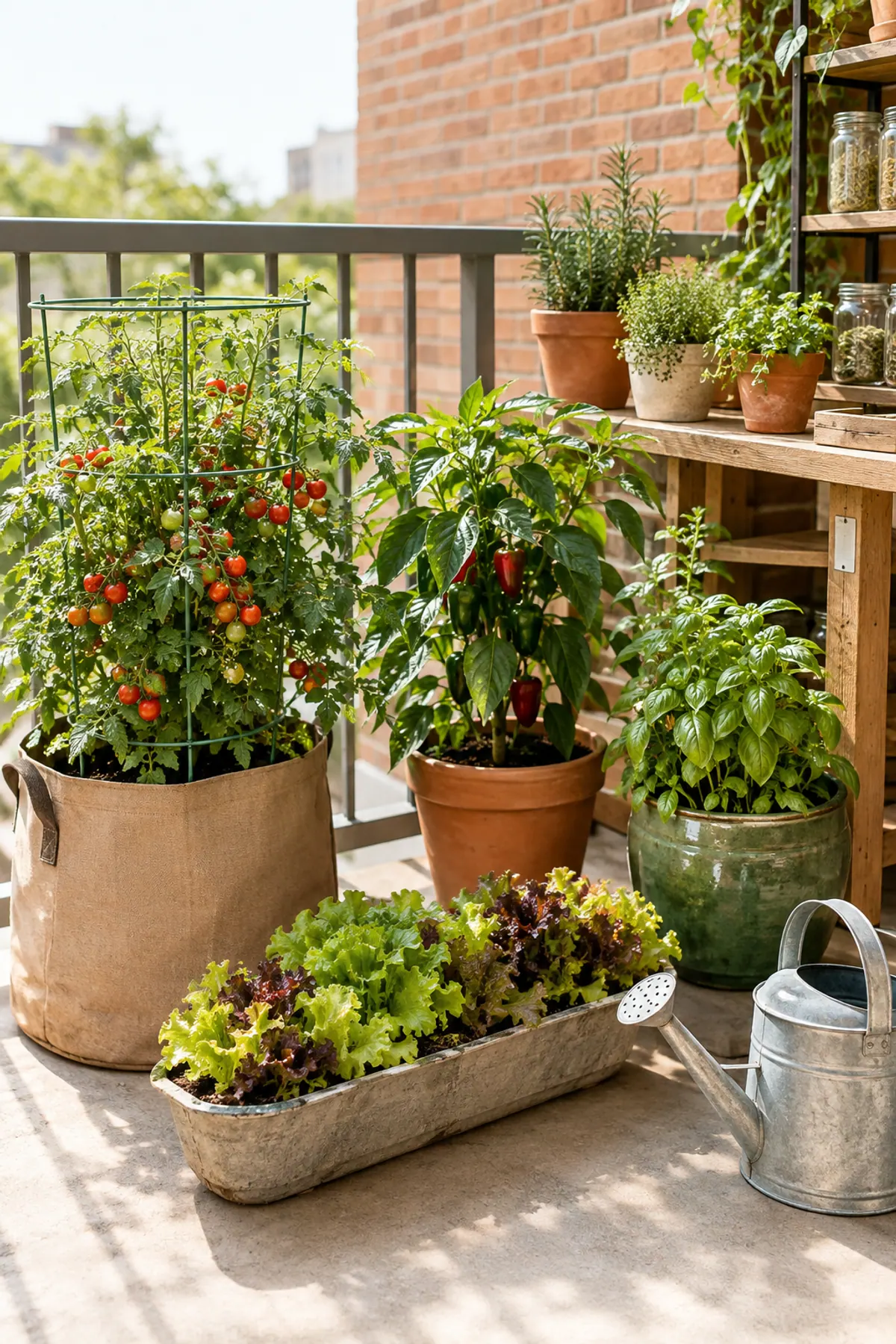
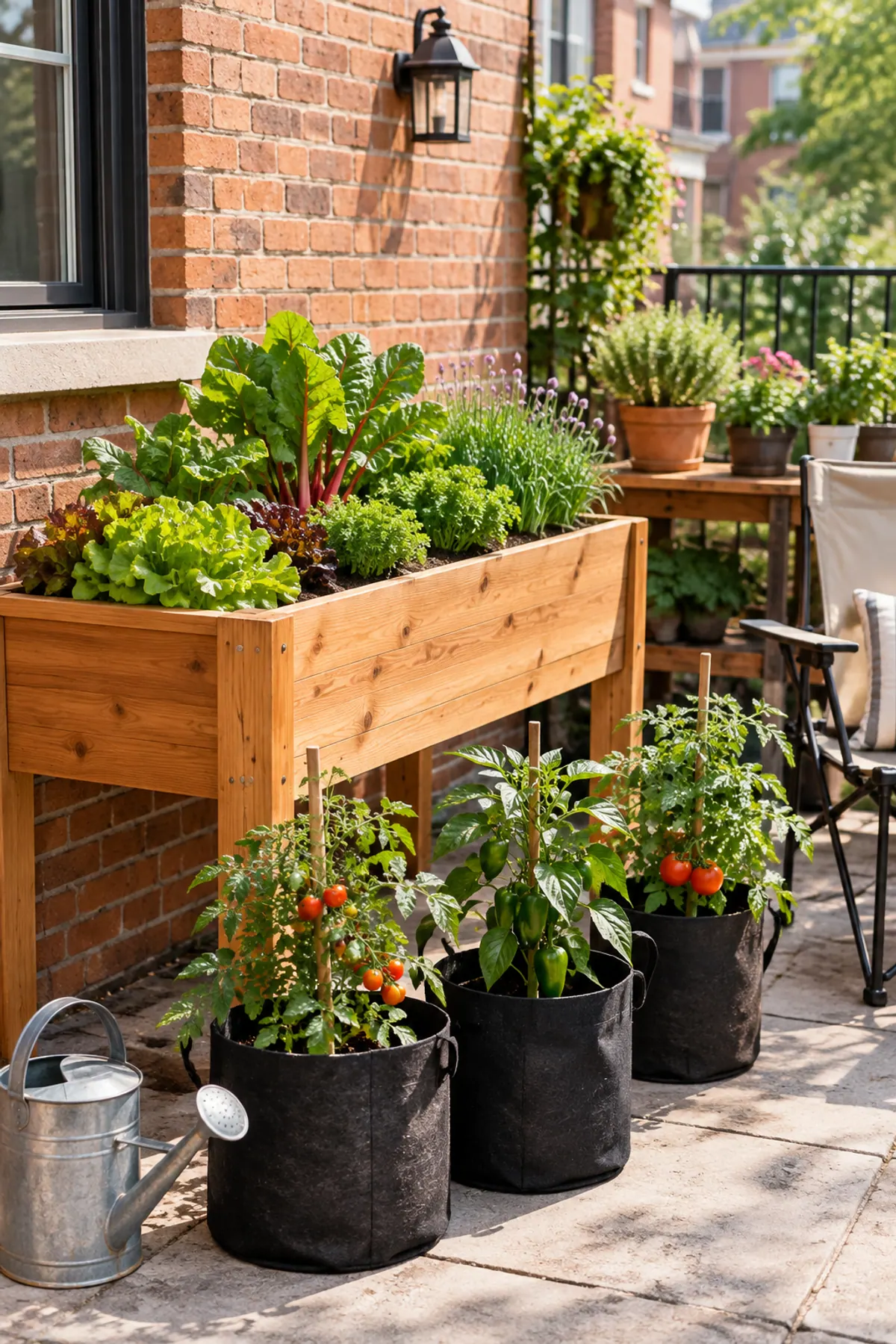
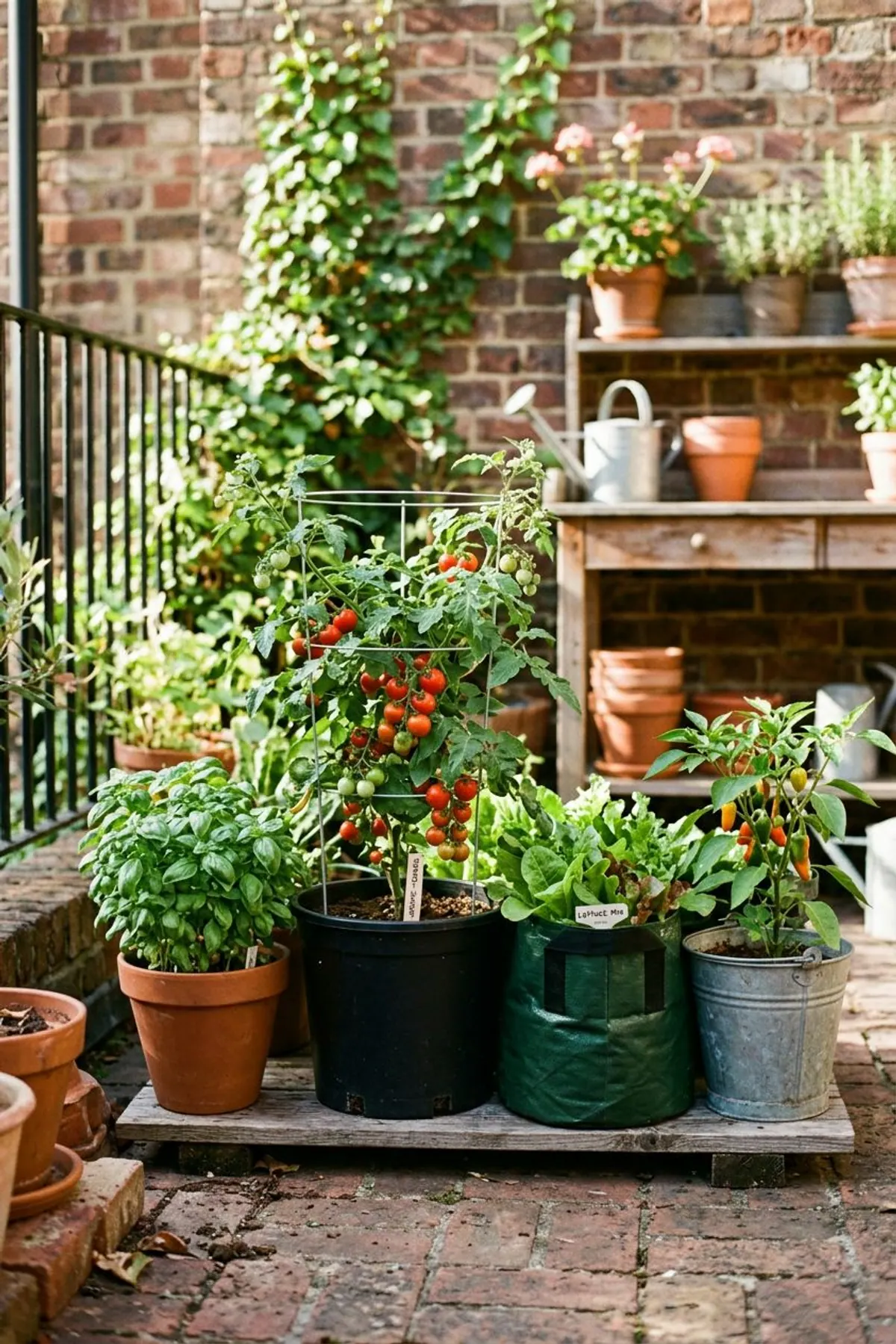
- Start at 16 to 32 square feet: one 4x4 raised bed, ten 5 to 10 gallon pots, or a balcony rail of window boxes and grow bags.
- The 8 easiest first-year crops: lettuce, radishes, bush beans, cherry tomatoes, zucchini (one plant), peppers, chard and green onions.
- Beds get compost; pots get potting mix. Garden soil in a pot is the most common first-year mistake.
- Plant by your last frost date: greens and radishes 2 to 4 weeks before it, tomatoes, beans and peppers 1 to 2 weeks after.
- A first year costs about $60 to $120 in pots and about $120 to $220 for a bed, as example numbers; most of it is reusable.
In this post10 sections
- Step 1: find the sun before you buy anything
- Step 2: pick a size you can water in 10 minutes
- Step 3: the 8 easiest vegetables for a first year (and 4 to skip)
- Step 4: soil, the one place not to save money
- Step 5: when to plant, keyed to your last frost date
- Step 6: a first-year layout for 16 square feet and for 10 pots
- Step 7: the weekly 20-minute routine (water, mulch, feed, pick)
- The first-year budget, and what you reuse
- Five beginner mistakes that end a first garden
- FAQ
We earn from qualifying purchases on Amazon links in this article, at no extra cost to you. Read our disclosure and editorial guidelines.
Step 1: find the sun before you buy anything
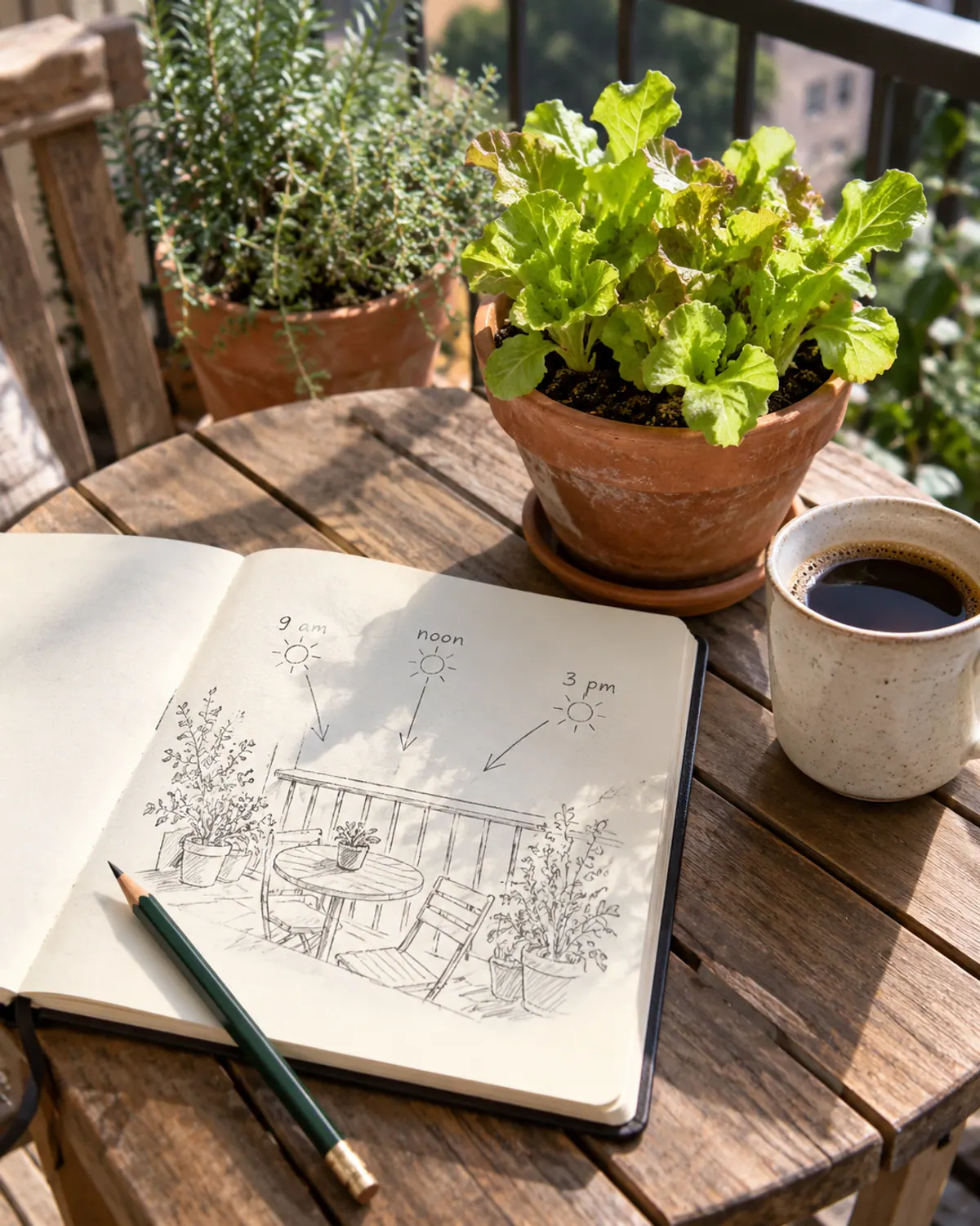
A vegetable garden for beginners lives or dies on light, so spend one clear day on a sun map before you spend a dollar. Pick the two or three spots you are considering, then look at each one at 9 am, noon and 3 pm and note whether it is in full sun or shade.
The Old Farmer's Almanac puts the target at 6 to 8 hours of direct sun for most vegetables. Tomatoes, peppers, beans and zucchini need that full dose; lettuce, chard, radishes and green onions will take 4 hours and a bright sky.
Step 2: pick a size you can water in 10 minutes
The Almanac's advice to start with a 4x4 or 4x8 bed holds for a yard. For a patio, balcony or rental, pots and grow bags give you the same 16 to 32 square feet of growing room without digging, and you can take them with you. Here is how the three starter sizes compare.
| Setup | Growing area | Soil needed | Example first-year cost | Suits |
|---|---|---|---|---|
| One 4x4 raised bed, 10 in deep | 16 sq ft | About 13 cubic feet (bed mix + compost) | $120 to $220 (kit, soil, seeds, hose) | A yard or a sunny side strip; renters with permission |
| Ten pots and grow bags, 5 to 10 gallon | About 20 sq ft of pot tops | About 70 gallons of potting mix (10 bags) | $60 to $120 (bags, mix, seeds, can) | Patio, deck, rental courtyard |
| Balcony rail: 3 window boxes + 4 grow bags | About 10 sq ft | About 35 gallons of potting mix | $50 to $90 | Apartment balcony, 4 or more hours of sun |
Costs above are rounded example numbers from typical US hardware and online prices in 2026, not quotes, and most of it (bed, pots, tools) is reused for years. If you are torn between the first two, our raised beds vs containers comparison weighs cost, effort and yield in detail.
Step 3: the 8 easiest vegetables for a first year (and 4 to skip)
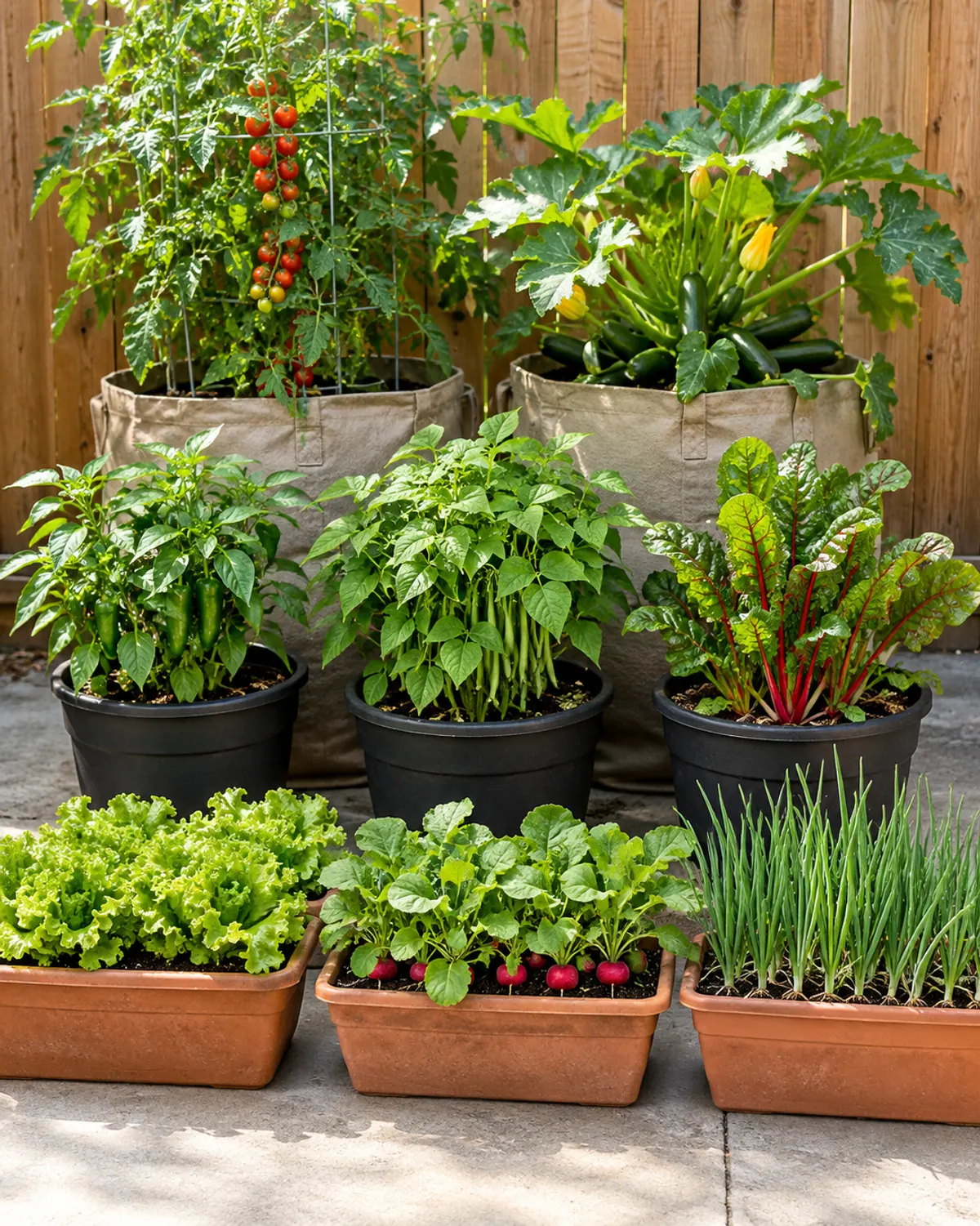
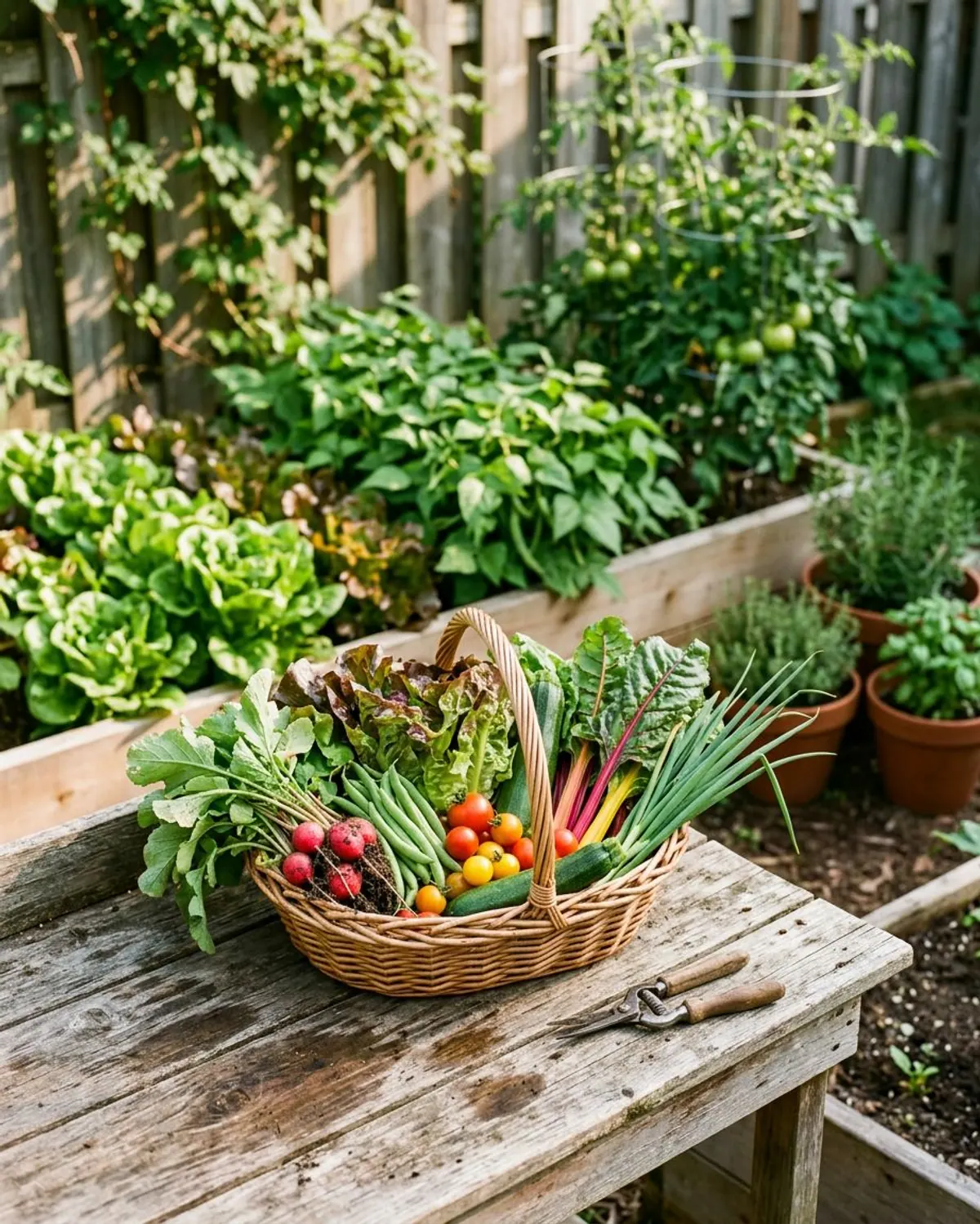
Pick five of these eight, not all of them, and grow three to five plants of each. They forgive late watering, crop within 30 to 70 days and fit a pot or a bed square.
| Crop | Pot size | Bed space | Days to first harvest | Why it is easy |
|---|---|---|---|---|
| Leaf lettuce | 6 in deep window box | 4 per square foot | 30 to 45 | Cut outer leaves and it keeps growing; takes 4 hours of sun |
| Radishes | 6 in deep box | 16 per square foot | 25 to 30 | Fastest crop there is; sow every 2 weeks |
| Bush beans | 5 gallon | 9 per square foot | 50 to 60 | No trellis, heavy crops, seeds go straight in the soil |
| Cherry tomatoes | 10 gallon with a cage | 1 per 2 square feet | 60 to 70 from transplant | Far more forgiving than big slicing tomatoes |
| Zucchini (one plant) | 10 gallon | 1 per 4 square feet | 45 to 55 | One plant feeds a household; two feeds the street |
| Peppers | 5 gallon | 1 per square foot | 65 to 80 from transplant | Compact, upright, happy in heat |
| Swiss chard | 5 gallon | 4 per square foot | 50 to 60 | Harvest for months; shrugs off heat and light frost |
| Green onions | 6 in deep box | 16 per square foot | 50 to 60 | Tuck them along any edge; cut and regrow |
Skip in year one: sweet corn (needs a block of plants and lots of space), full-size watermelon and pumpkins (space again), cauliflower (fussy about timing) and celery (slow and thirsty). Add them in year two if you want a challenge.
Step 4: soil, the one place not to save money
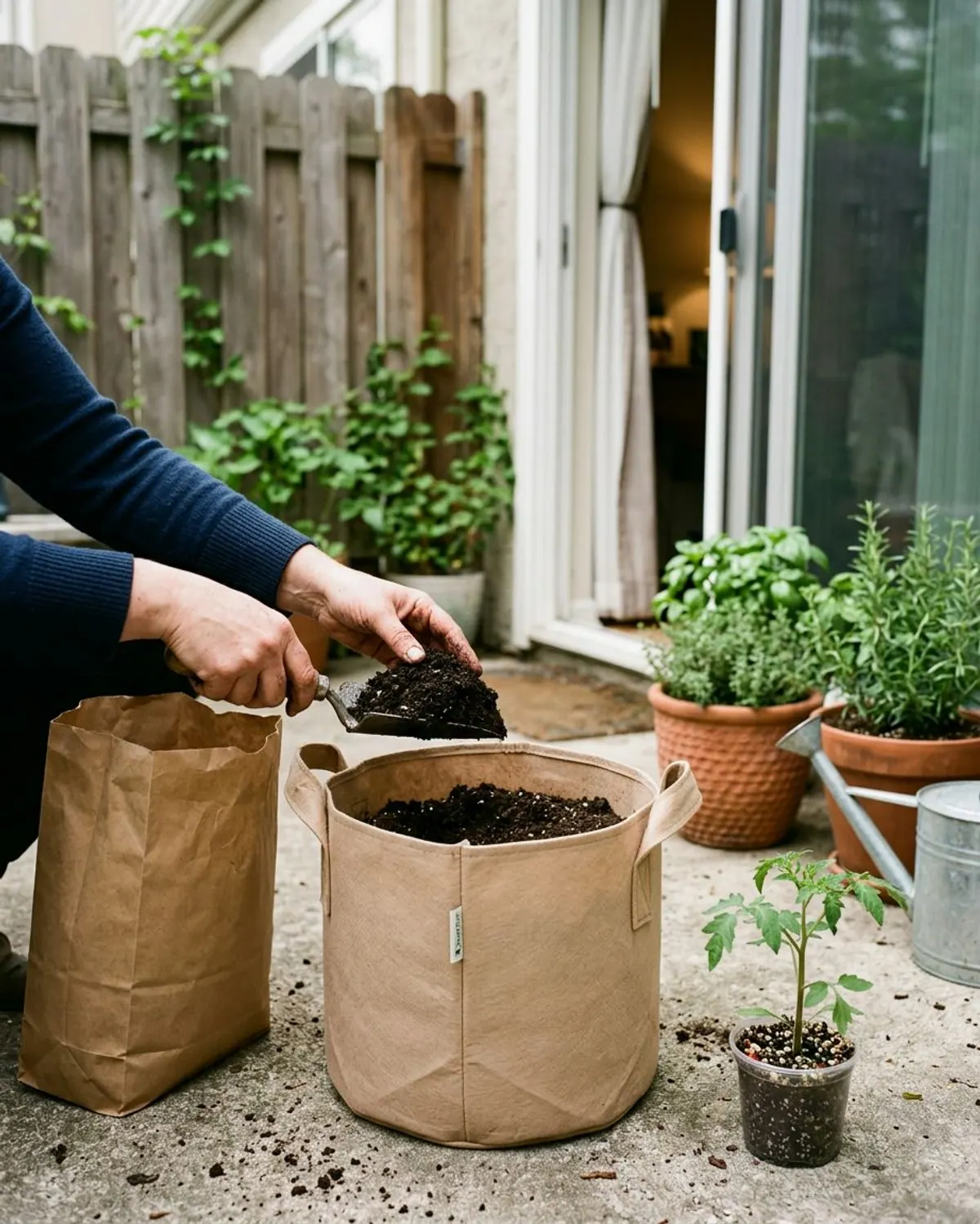
Beds and pots want different fills. A raised bed takes a bagged raised-bed mix or a topsoil and compost blend with 2 to 3 inches of compost worked into the top. Pots take potting mix only, because garden soil packs down hard in a container and drowns the roots.
Do this
- Fill pots with bagged potting mix (peat or coir based, with perlite)
- Top beds with 2 to 3 inches of compost each spring
- Buy soil by the cubic foot or gallon and add 10 percent for settling
- Mulch pots and beds with straw or shredded leaves to hold water
Not this
- Dig soil from the yard into a pot
- Use last year's pot mix without refreshing it with compost
- Fill a bed with cheap topsoil and nothing else
- Leave bare soil to bake and crust in July
Step 5: when to plant, keyed to your last frost date
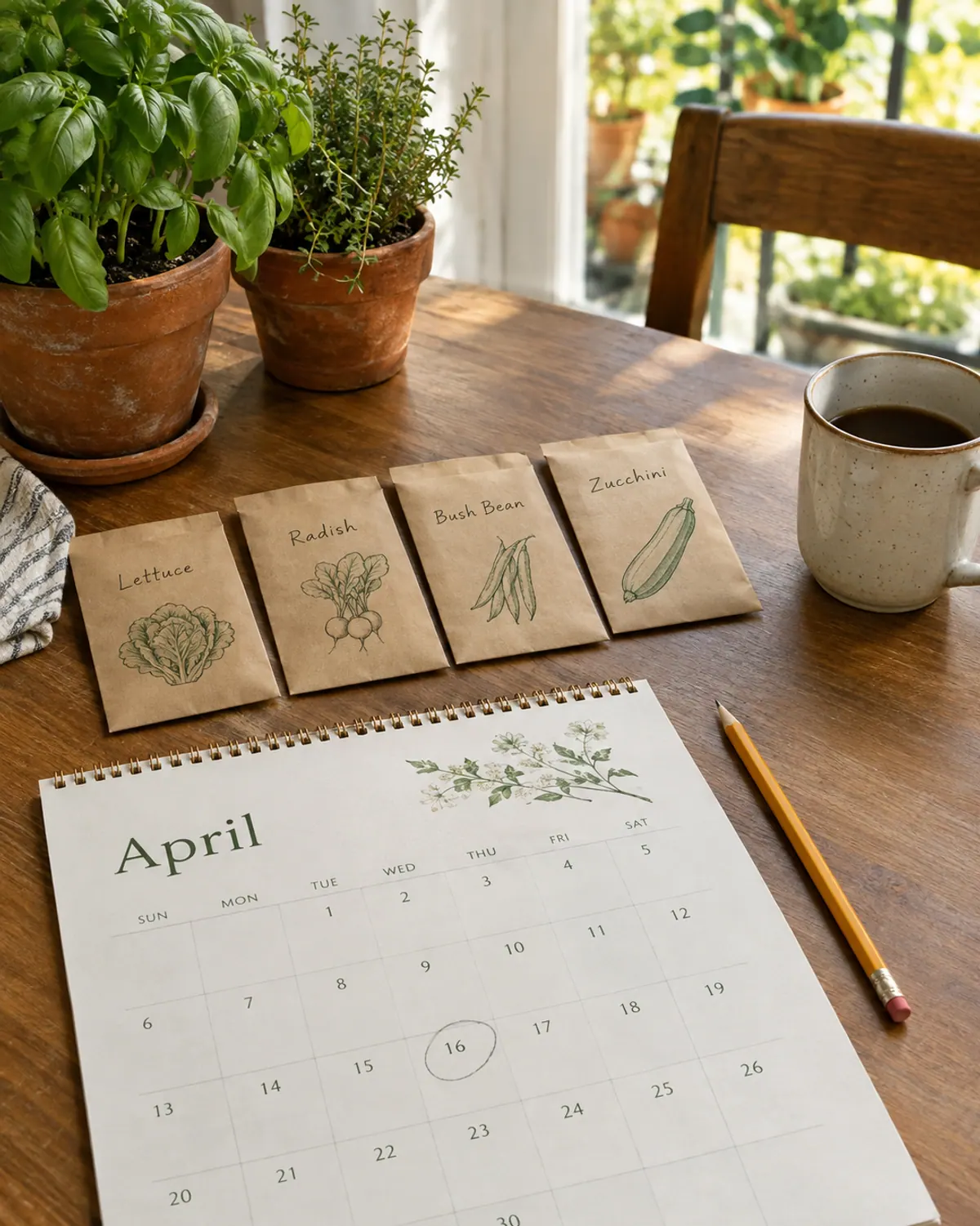
Every planting date in a beginner's vegetable garden hangs on one number: your average last spring frost. Find it for your zip code (the Almanac and your state extension service both publish it), then count backward and forward from it.
| When | Sow or plant | Seed or transplant |
|---|---|---|
| 4 weeks before last frost | Leaf lettuce, radishes, green onions | Seed, straight in the soil |
| 2 weeks before last frost | Swiss chard, a second row of lettuce and radishes | Seed |
| 1 week after last frost | Bush beans, zucchini | Seed, straight in the soil |
| 1 to 2 weeks after last frost, nights above 50 F | Cherry tomatoes, peppers | Transplants from a nursery, or seedlings started indoors 6 to 8 weeks earlier |
| Every 2 weeks through early summer | Radishes, lettuce, beans | Seed (succession sowing) |
| 8 weeks before first fall frost | Lettuce, chard, radishes again | Seed |
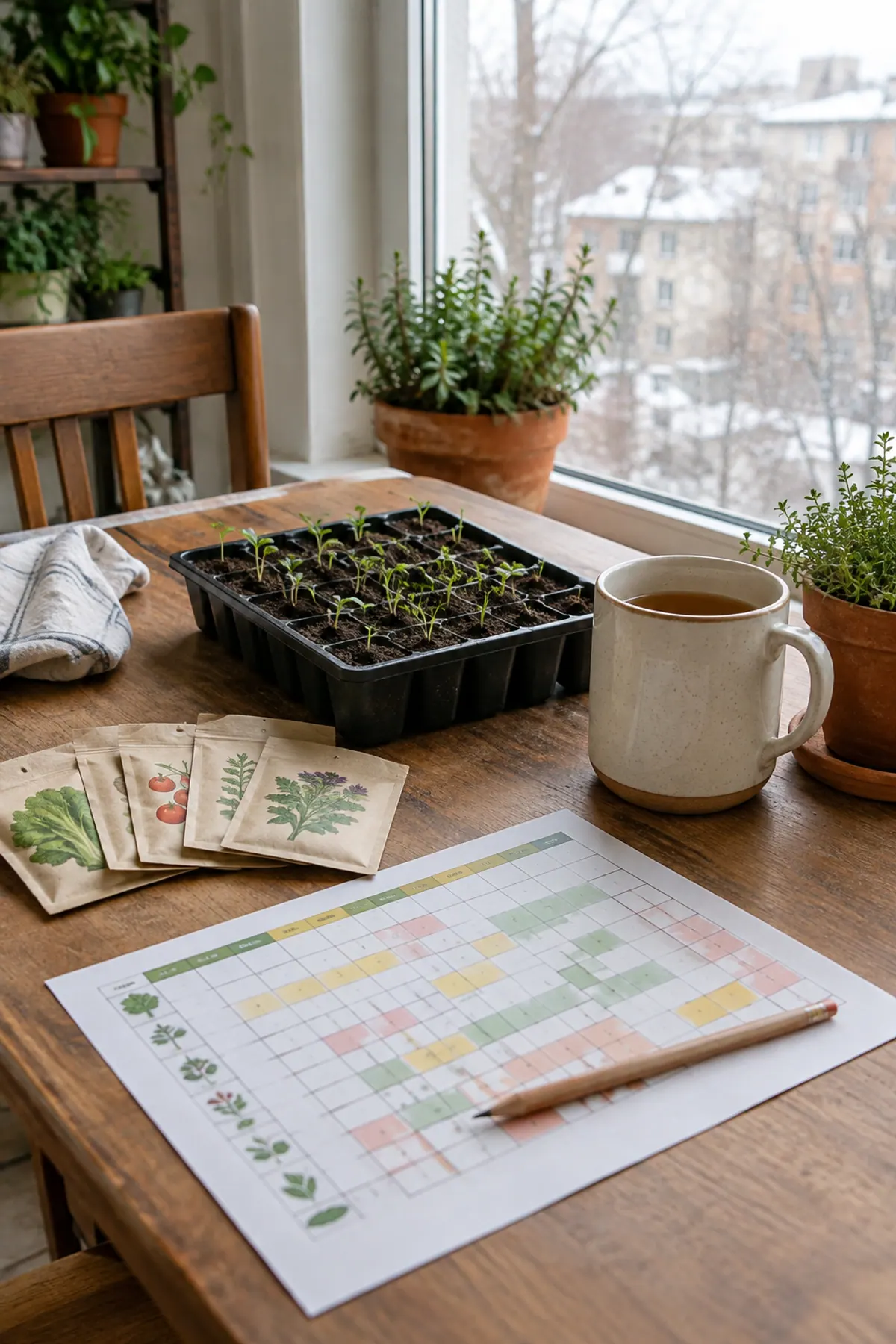
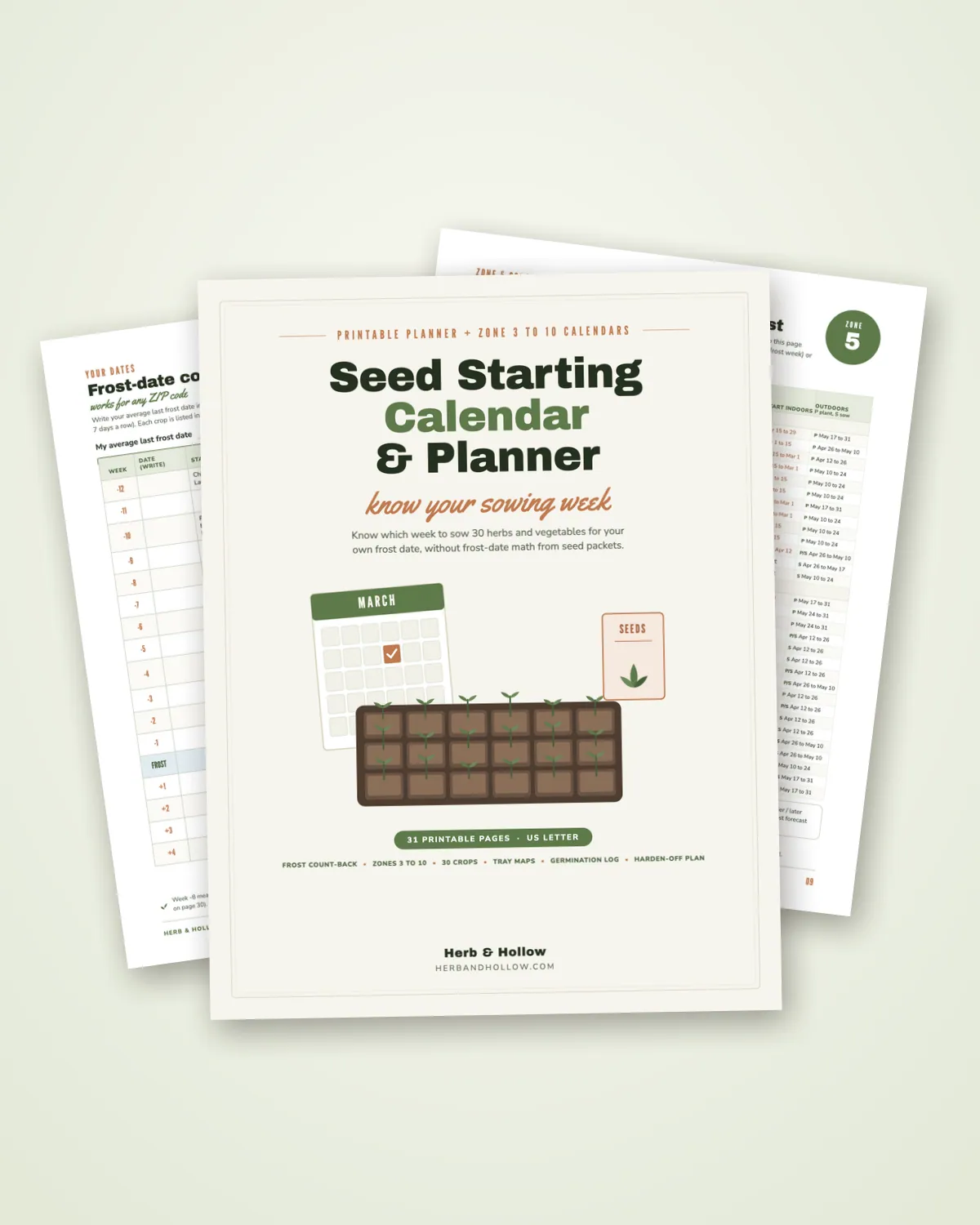
Tomatoes and peppers are the two crops worth buying as transplants in year one; everything else is cheaper and easier from seed. If you want to start those two indoors, the seed starting setup for small spaces shows a one-shelf setup, and the Seed Starting Calendar turns your frost date into a week-by-week sowing list for 30 herbs and vegetables.
Step 6: a first-year layout for 16 square feet and for 10 pots
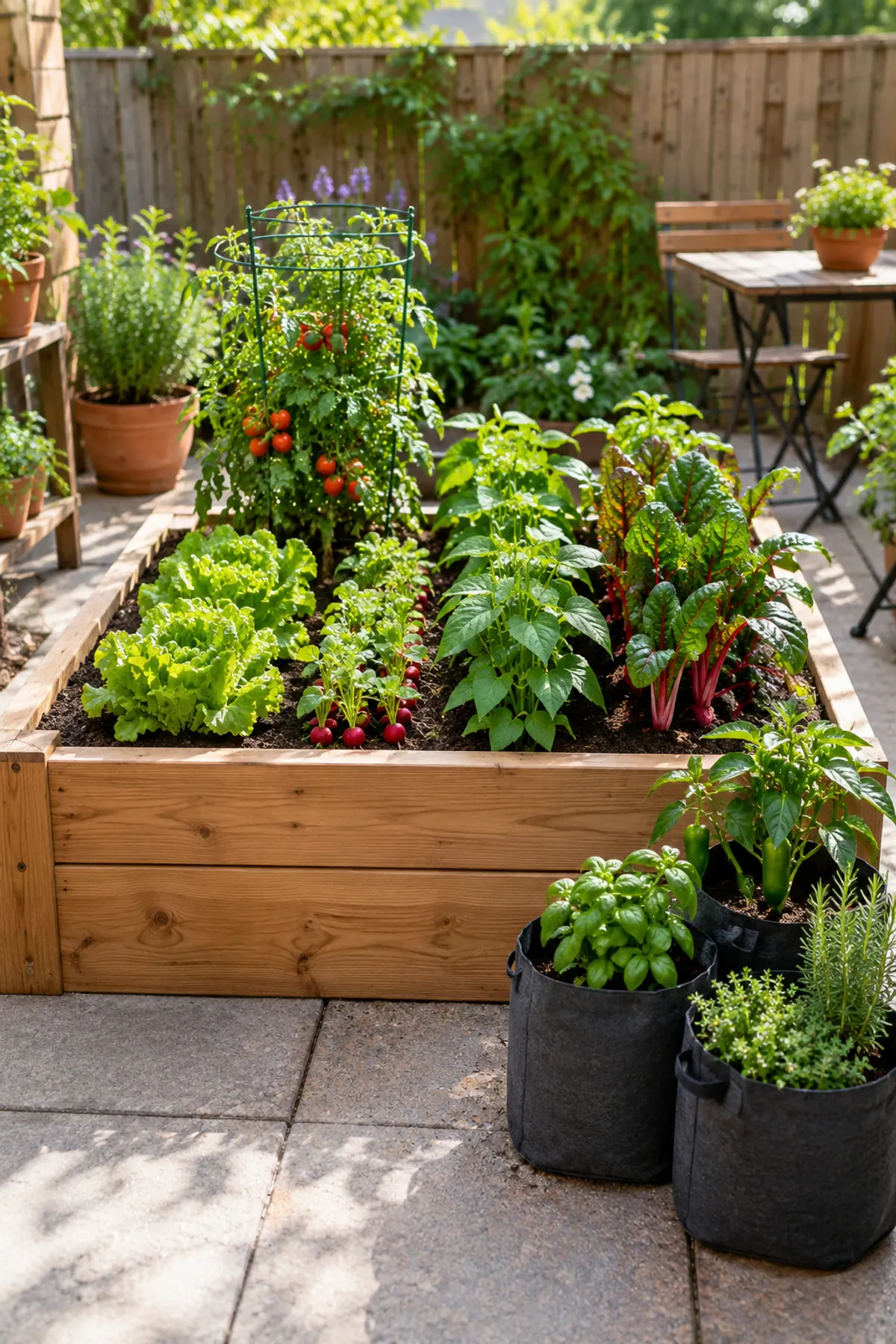
Tall crops go north or at the back so they never shade the short ones. Here is a vegetable garden layout for beginners that fits the 4x4 bed, and the same plan split into pots.
| Row | Square 1 | Square 2 | Square 3 | Square 4 |
|---|---|---|---|---|
| Back | Cherry tomato (caged, uses 2 squares) | Cherry tomato (same plant) | Peppers, 1 | Peppers, 1 |
| Second | Bush beans, 9 | Bush beans, 9 | Swiss chard, 4 | Swiss chard, 4 |
| Third | Leaf lettuce, 4 | Leaf lettuce, 4 | Radishes, 16 | Radishes, 16 |
| Front | Green onions, 16 | Leaf lettuce, 4 | Zucchini (1 plant, spills over the edge) | Zucchini (same plant) |
The same garden in 10 pots
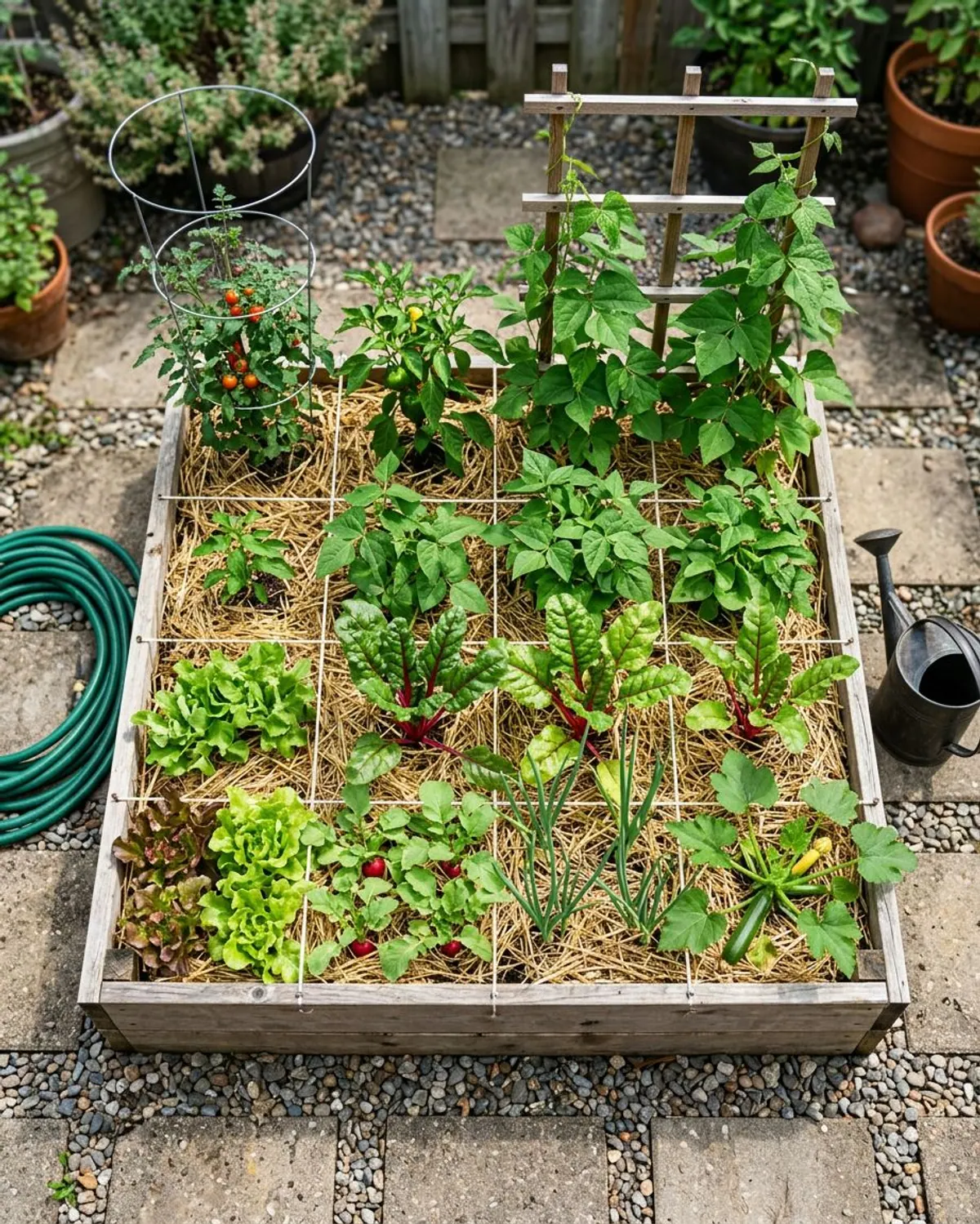
For a balcony, drop the zucchini and one pepper, keep the tomato, beans, chard and the three boxes, and hang the boxes on the rail where the sun lasts longest. The balcony garden looks for apartments article shows rail planters and vertical stands that keep the floor clear.
Step 7: the weekly 20-minute routine (water, mulch, feed, pick)
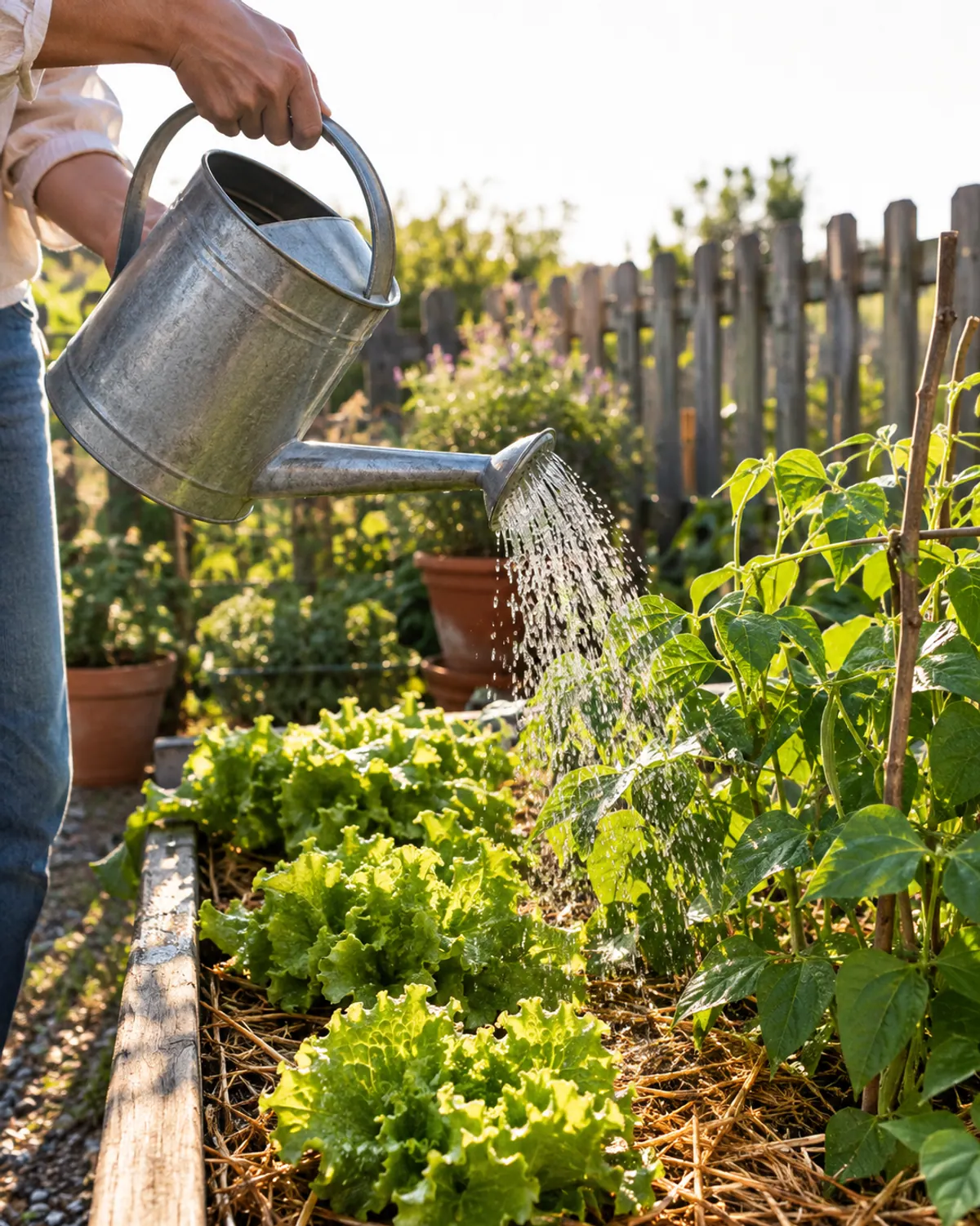
Once it is planted, a small vegetable garden for beginners needs about 20 minutes a week plus a daily glance at the pots in summer. Push a finger an inch into the soil; if it is dry, water until it runs out of the bottom of the pot or soaks the top 6 inches of the bed.
Weekly vegetable garden routine
Pots dry out far faster than beds, which is why the container gardening guide for herbs and vegetables spends so long on pot sizes and self-watering options; read it before you buy anything smaller than 5 gallons.
The first-year budget, and what you reuse
| Item | Example cost | Reused next year? |
|---|---|---|
| 4 fabric grow bags (5 and 10 gallon) + 3 resin pots + 3 window boxes | $35 to $60 | Yes, for 3 to 5 years |
| Potting mix, about 70 gallons | $30 to $50 | Half; refresh with compost |
| Seeds: lettuce, radish, bean, zucchini, chard, green onion | $12 to $18 | Yes, most packets last 2 to 3 years |
| 2 tomato and 2 pepper transplants | $10 to $16 | No |
| Watering can, liquid fertilizer, tomato cage | $20 to $30 | Yes |
| Total | About $110 to $175 | Year two is mostly seeds, mix and transplants |
These are example numbers, not a quote; prices vary by region and store. The bed version adds a cedar 4x4 kit and about 13 cubic feet of bed mix, which is why it lands closer to $120 to $220, but the kit then lasts a decade.
Five beginner mistakes that end a first garden
Too much, too soon. Twelve crops in year one means twelve things to learn at once. Five crops, three to five plants each, is the Almanac's rule and ours.
Garden soil in pots. It compacts, drains badly and brings weed seeds. Potting mix only.
Planting tomatoes on the first warm weekend. A cold night below 50 F stalls them for weeks. Wait for the frost date plus a week, and check the forecast.
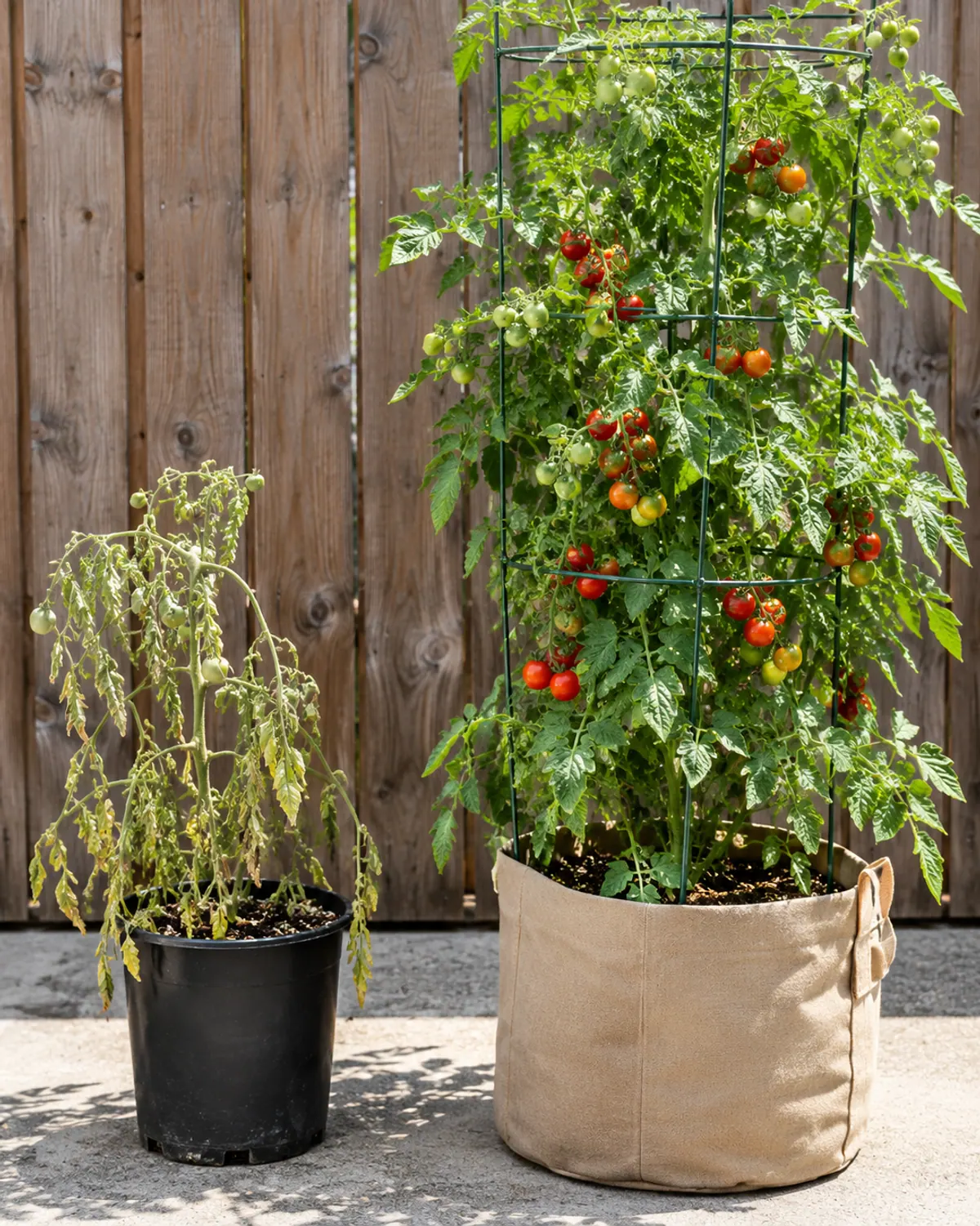
Pots under 5 gallons for fruiting crops. A tomato in a 2 gallon pot wilts by noon every day in July. Go bigger than looks necessary.
Not picking. Beans, zucchini and lettuce stop producing when you let them mature. Pick small and often.
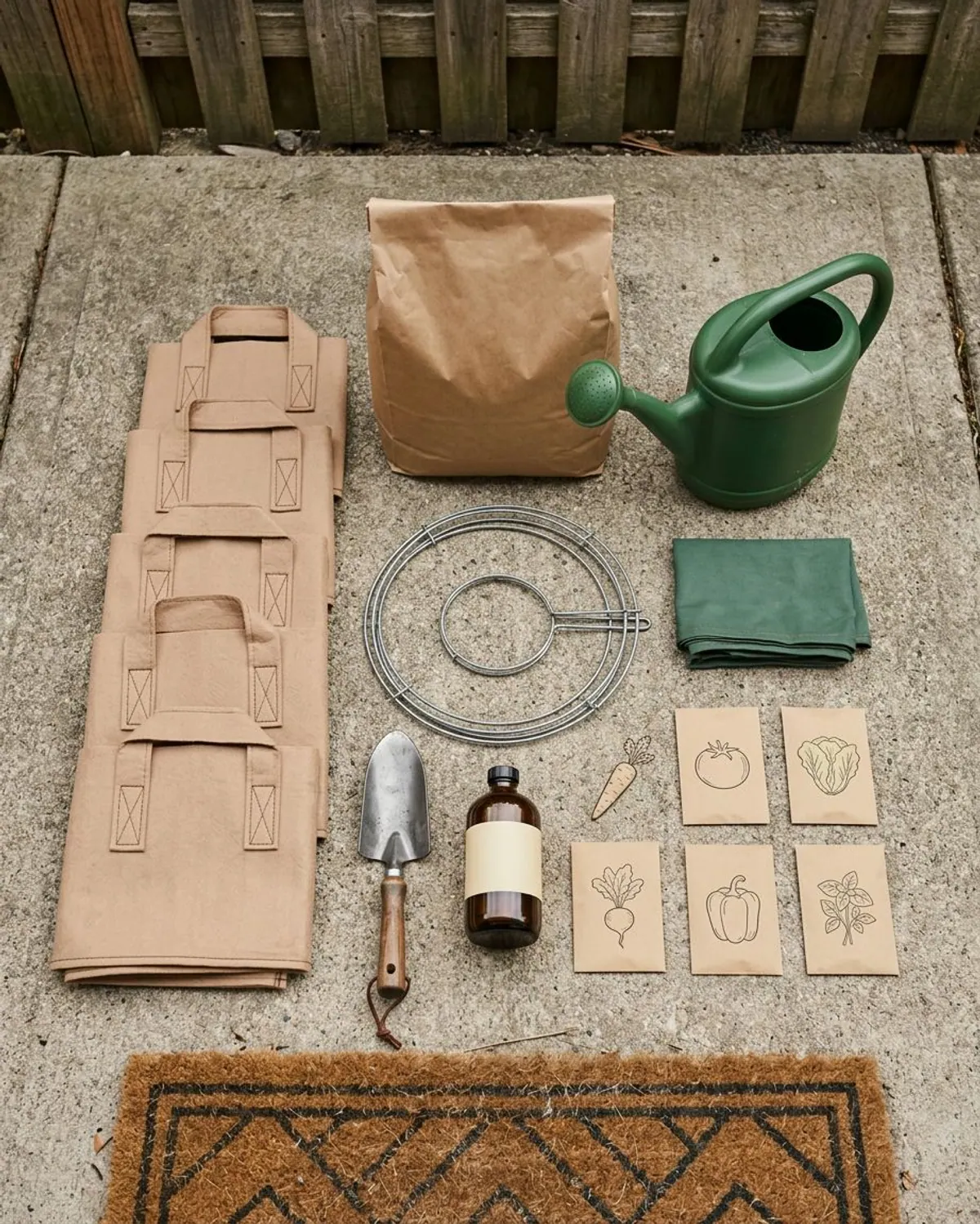
A first vegetable garden shopping list
- Start here
Fabric grow bags, 10 gallon (pack of 5)
Typically $15 to $30
Tomato, zucchini and pepper homes that fold flat in winter.
Check price on Amazon for Fabric grow bags, 10 gallon (pack of 5) -
Cedar raised garden bed kit, 4x4 ft
Typically $60 to $120
The 16-square layout above, assembled in an afternoon.
Check price on Amazon for Cedar raised garden bed kit, 4x4 ft -
Organic potting mix, 1.5 cubic foot bag
Typically $10 to $18
The right fill for every pot and grow bag.
Check price on Amazon for Organic potting mix, 1.5 cubic foot bag -
Beginner vegetable seed collection
Typically $12 to $25
Lettuce, radish, bean, zucchini and chard packets in one order.
Check price on Amazon for Beginner vegetable seed collection -
Folding tomato cage, 48 inch
Typically $12 to $25
Keeps a cherry tomato upright in a grow bag.
Check price on Amazon for Folding tomato cage, 48 inch -
Liquid vegetable fertilizer, organic
Typically $10 to $20
The every-two-weeks feed for pots.
Check price on Amazon for Liquid vegetable fertilizer, organic -
Long-spout watering can, 2 gallon
Typically $15 to $30
Reaches the back pots without soaking the leaves.
Check price on Amazon for Long-spout watering can, 2 gallon
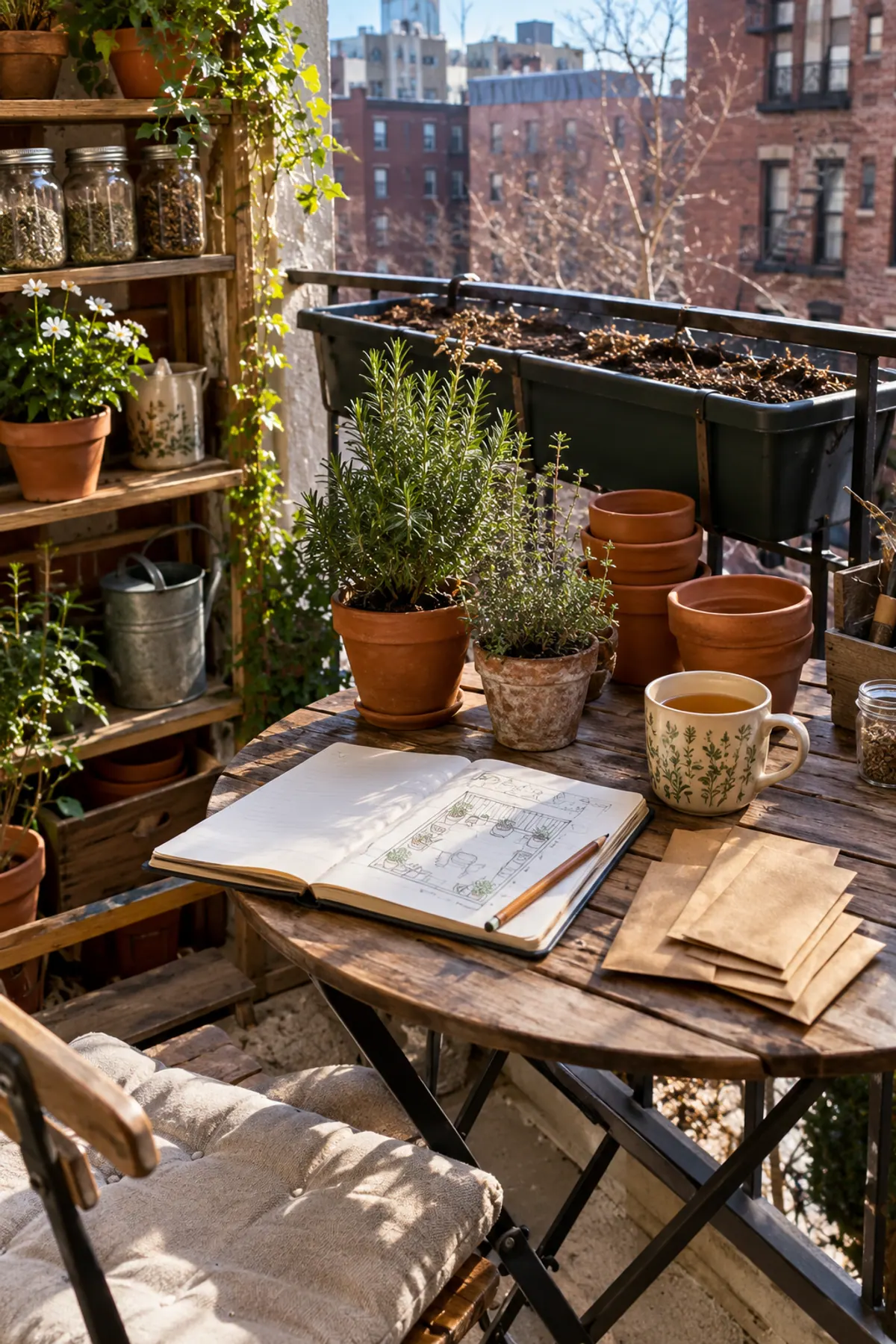
Keep the plan, the frost date and the sowing dates in one place. The Herb Garden Binder holds the pot plan, watering and overwintering pages for every crop, and the free planner below is the one-page version.
Frequently asked questions
How big should a beginner vegetable garden be?
About 16 to 32 square feet: one 4x4 raised bed, ten 5 to 10 gallon pots, or a balcony rail of three window boxes and four grow bags. The Old Farmer's Almanac suggests 4x4 or 4x8 for a first bed and no more than 12x24 for a first in-ground plot.
What are the easiest vegetables to grow for beginners?
Leaf lettuce, radishes, bush beans, cherry tomatoes, zucchini, peppers, Swiss chard and green onions. Pick five, grow three to five plants of each, and buy tomatoes and peppers as transplants in year one.
How many hours of sun does a vegetable garden need?
Six to eight hours of direct sun for tomatoes, peppers, beans and zucchini. Lettuce, chard, radishes and green onions manage with about four hours and a bright, open sky.
When should a beginner start a vegetable garden?
Plan over winter and plant by your last frost date: lettuce, radishes and green onions 4 weeks before it, chard 2 weeks before, beans and zucchini a week after, and tomatoes and peppers once nights stay above 50 F.
Can I grow vegetables on a balcony?
Yes, with 4 or more hours of sun. A cherry tomato in a 10 gallon bag, beans and chard in 5 gallon pots and lettuce, radishes and green onions in rail boxes is a full first garden on about 10 square feet.
What soil should I use for a vegetable garden in pots?
Bagged potting mix only. Garden soil compacts in a container and drowns roots. Beds take a raised-bed mix or topsoil blended with 2 to 3 inches of compost on top.
Save it for later
Pin this to your Small-Space Vegetables board so it's there when you need it.
Save to Pinterest