This post contains affiliate links. As an Amazon Associate we earn from qualifying purchases, at no extra cost to you. Read our disclosure.
Safety first: Herbs can be powerful. If you are pregnant, nursing, take medication or have a health condition, check with your doctor or pharmacist first. Please read our herbal & garden safety notes before you start.
Key takeaways
- Most vegetables want a pot that holds 2 to 5 gallons and is at least 12 inches deep (Oregon State Extension), with fruiting crops needing 6 or more hours of sun
- Tomatoes are the biggest pot: 5 gallons for a compact type, 10 to 20 gallons for a full-size plant
- Lettuce, radishes, kale and chard grow in small or shallow pots and manage on 3 to 5 hours of sun
- Use potting mix, not garden soil, and water small pots up to twice a day in hot weather
- A bucket with drilled holes or a fabric grow bag is a cheap, balcony-friendly pot
In this post7 sections
Container vegetable garden basics: sun, depth and drainage
Three things decide whether a container vegetable garden produces: how much sun the spot gets, how deep the pots are and whether water can leave them. Get those right and almost any porch step, deck corner or balcony can grow food.
Sun. Iowa State Extension says fruiting crops such as tomatoes, peppers, cucumbers and eggplant need at least 6 hours of direct sun a day, while leafy vegetables tolerate more shade. The Old Farmer's Almanac gives 6 to 8 hours for fruiting plants and 3 to 5 hours for greens such as lettuce and spinach.
Depth. The sources do not agree, so here is the range. Harvest to Table gives about 8 inches of soil as the minimum for almost any vegetable or herb. Oregon State's Food Hero (July 2021) says most vegetables do best in containers that hold 2 to 5 gallons and are at least 12 inches deep, and the Almanac asks for 18 inches or more for fruiting and root crops. When in doubt, go deeper.
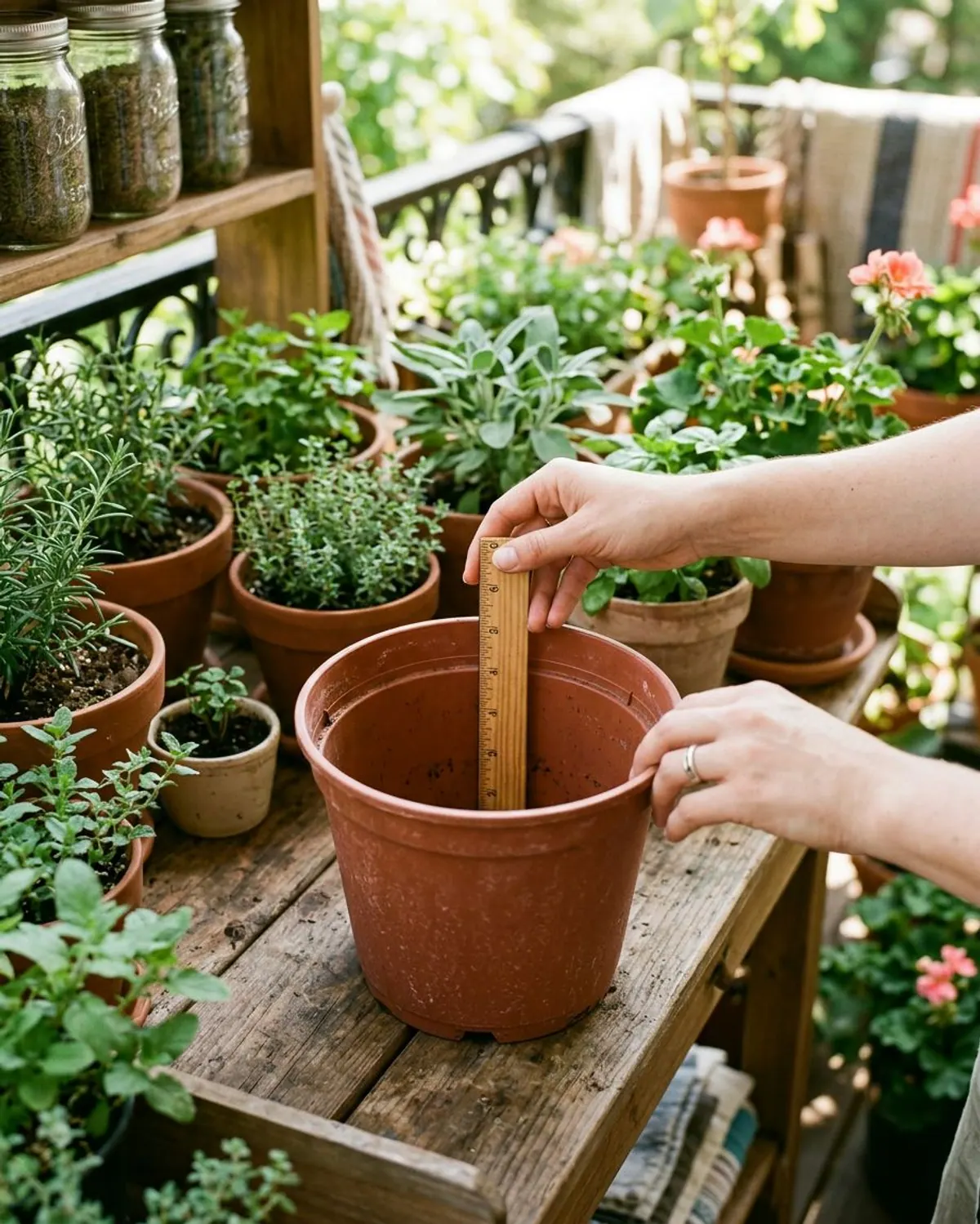
Drainage. Every pot needs holes in the bottom so extra water can leave. Oregon State says to choose a container with holes at the bottom, and the Almanac suggests 3 to 6 small holes for pots 4 to 6 inches across and 6 to 8 holes for larger ones. A pot with no holes is a bucket of mud.
What vegetables grow best in containers? Pot sizes crop by crop
Lettuce, radishes, bush beans, carrots, kale, chard, peppers, eggplant, cucumbers and compact tomatoes all grow well in containers, and each wants a different pot. The table below lists a pot size for each, taken from two published charts.
| Vegetable | Pot size | What to know |
|---|---|---|
| Lettuce | About 1 gallon, 6 to 8 in deep, 3 to 4 plants | Thin to about 10 in apart in a bigger pot; greens manage on 3 to 5 hours of sun |
| Radish | Pot with 8 in of soil; 2 gallons for 5 to 6 plants | Thin to 1 to 2 in apart |
| Bush beans | 2 gallons for 3 plants; 8 to 12 in of soil | Two plants fit a 10 gallon pot; pole beans need a trellis |
| Carrot | 1 gallon for short types; 5 gallons for 5 to 6 in roots; 10 gallons for 7 to 12 in roots | Thin to about 2 in apart; pick short varieties for small pots |
| Kale | 1 gallon for one plant; 5 gallons for two | Thin to about 16 in apart in bigger pots |
| Swiss chard | 2 gallons for one plant; 10 gallons for five | Cut outer leaves and it keeps growing |
| Pepper | 3 gallons for one plant | Space plants about 12 in apart in a shared pot |
| Eggplant | 5 gallons for one plant | Two or three plants fit a 10 gallon pot |
| Cucumber | 5 gallons for one compact plant; 7 to 10 gallons for two or three standard vines | Grow it up a trellis |
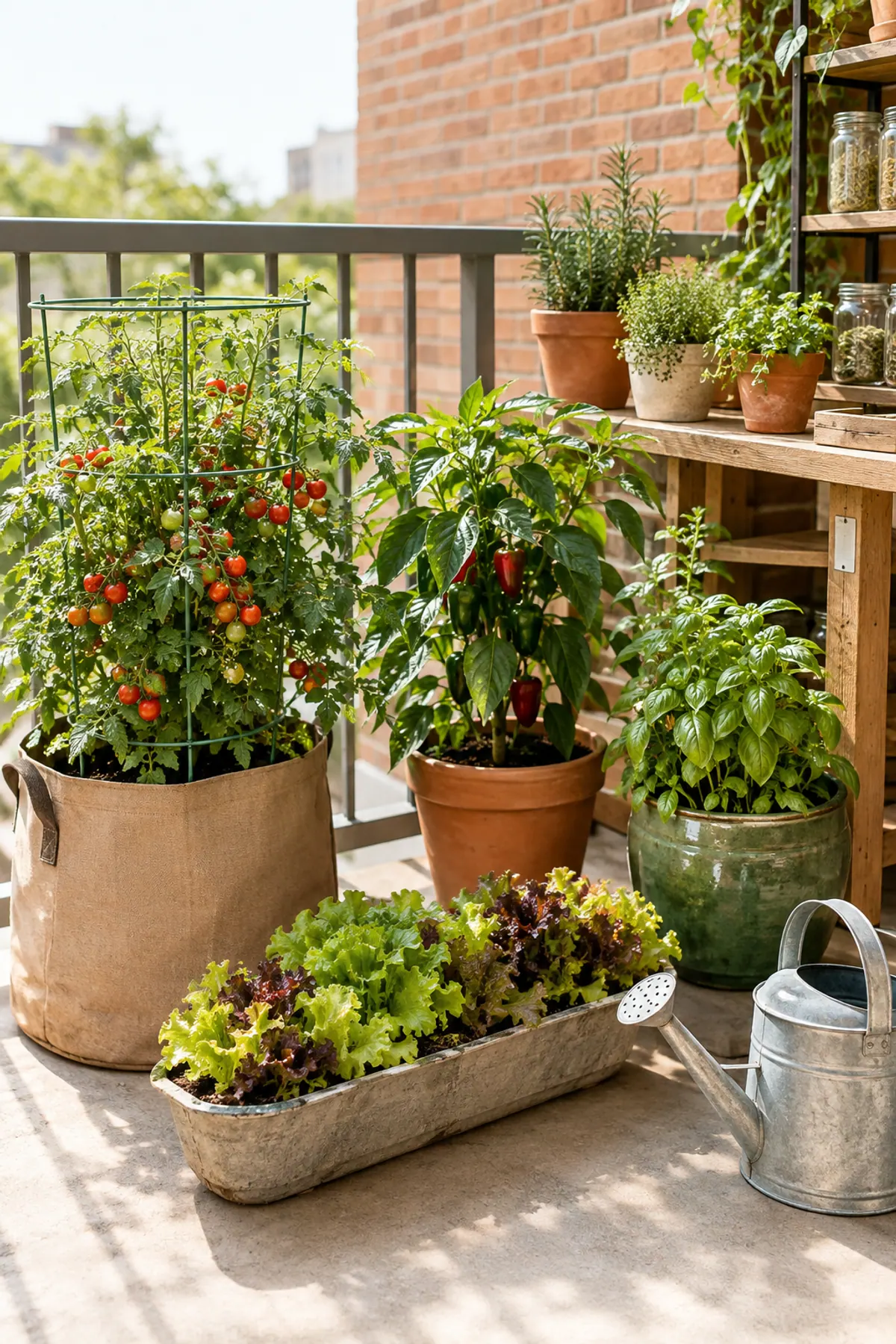
| Tomato | 5 gallons (Almanac); 10 gallon minimum and 15 to 20 preferred (Harvest to Table) | Miniature types fit 5 gallons; choose bush or compact varieties |
Tomatoes are where the two charts differ most. The Almanac lists a 5 gallon pot for one plant, while Harvest to Table sets a 10 gallon minimum for full-size types and says miniature tomatoes fit 5 gallons. A cherry or bush tomato in 5 gallons works, but a bigger pot dries out more slowly and forgives a missed watering.
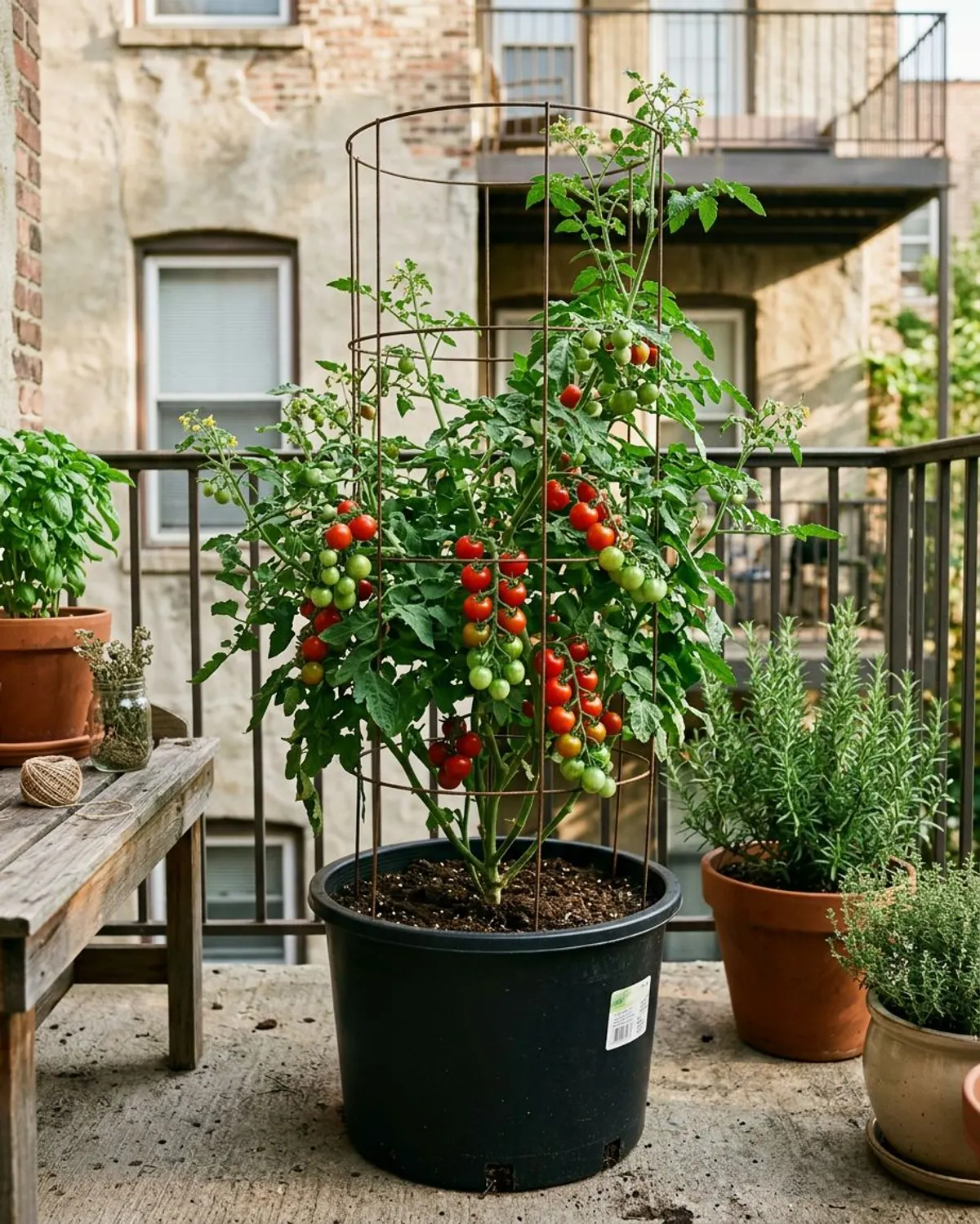
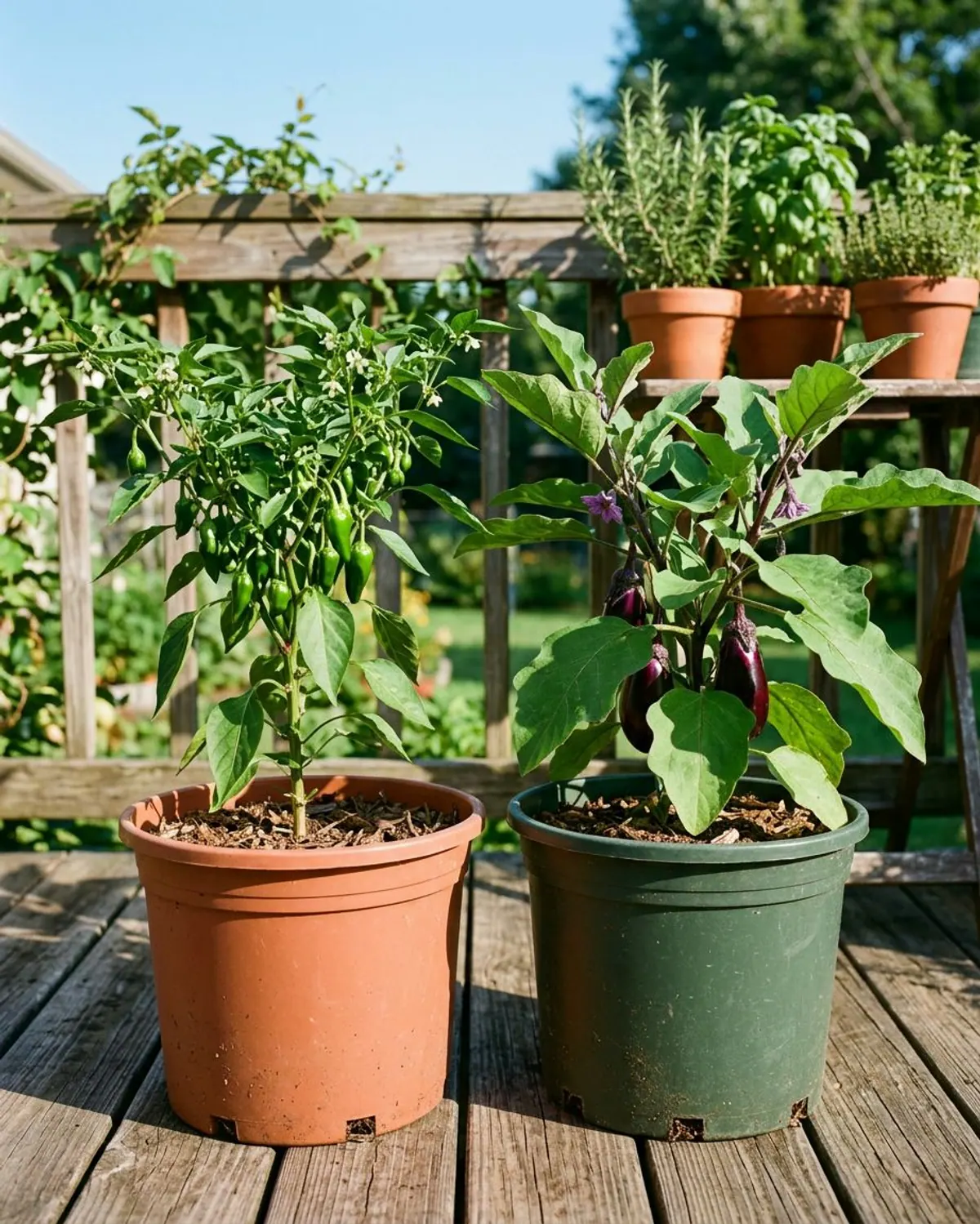
Peppers and eggplant ask for less than tomatoes. A 3 gallon pot holds one pepper plant and a 5 gallon pot holds one eggplant, so both fit a small deck.
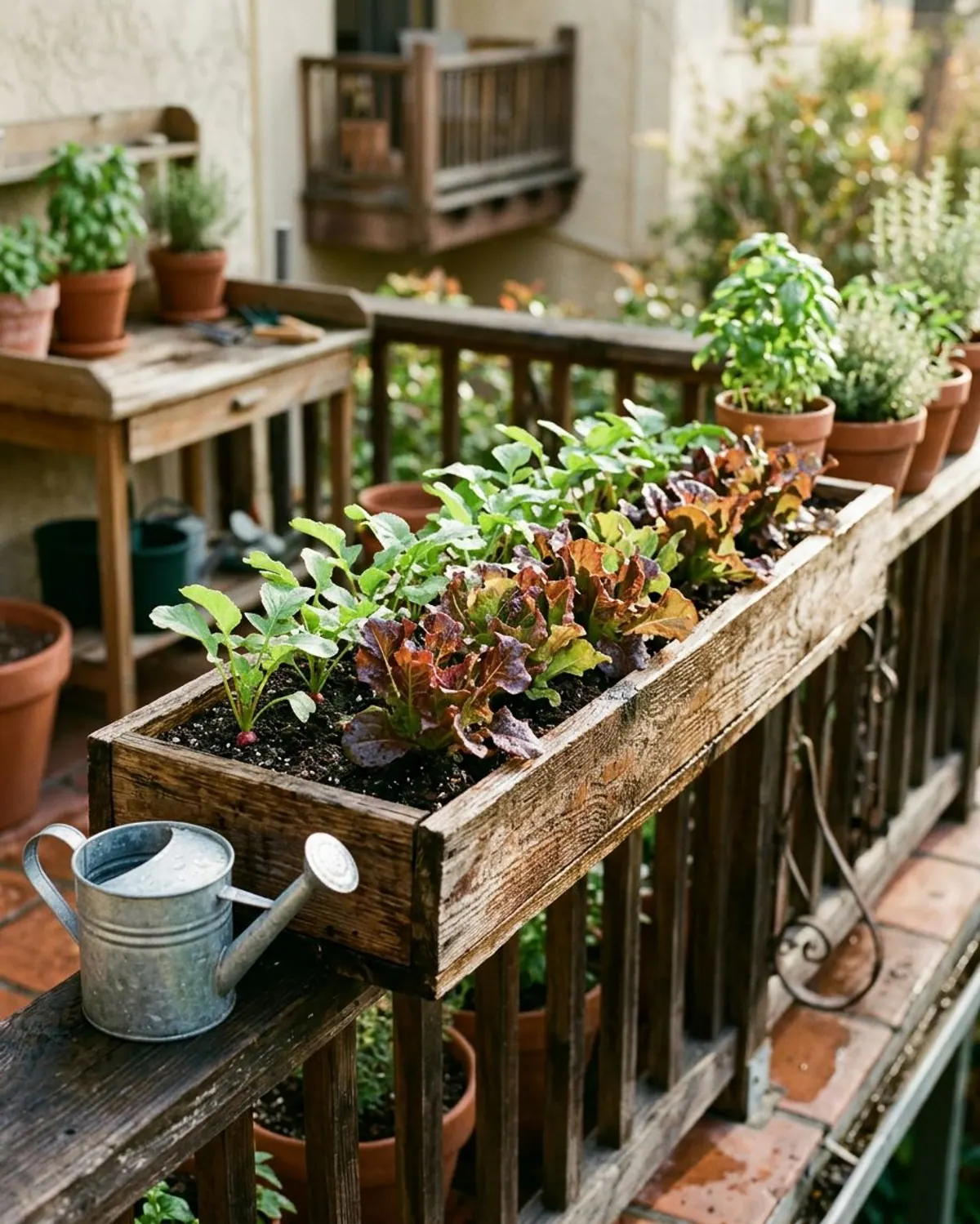
Salad crops are the easy wins for a shady spot. Lettuce and radishes grow in a shallow window box, so they fit a railing, a step or a windowsill. See our container gardening for beginners guide for herbs that share those pots.
Soil, feeding and watering in pots
Use potting mix, not soil dug from the ground. Oregon State says to use commercial potting soil, and Missouri Extension notes that yard soil will not let water drain from a container. Fill the pot to about an inch below the rim so water does not run over the edge.
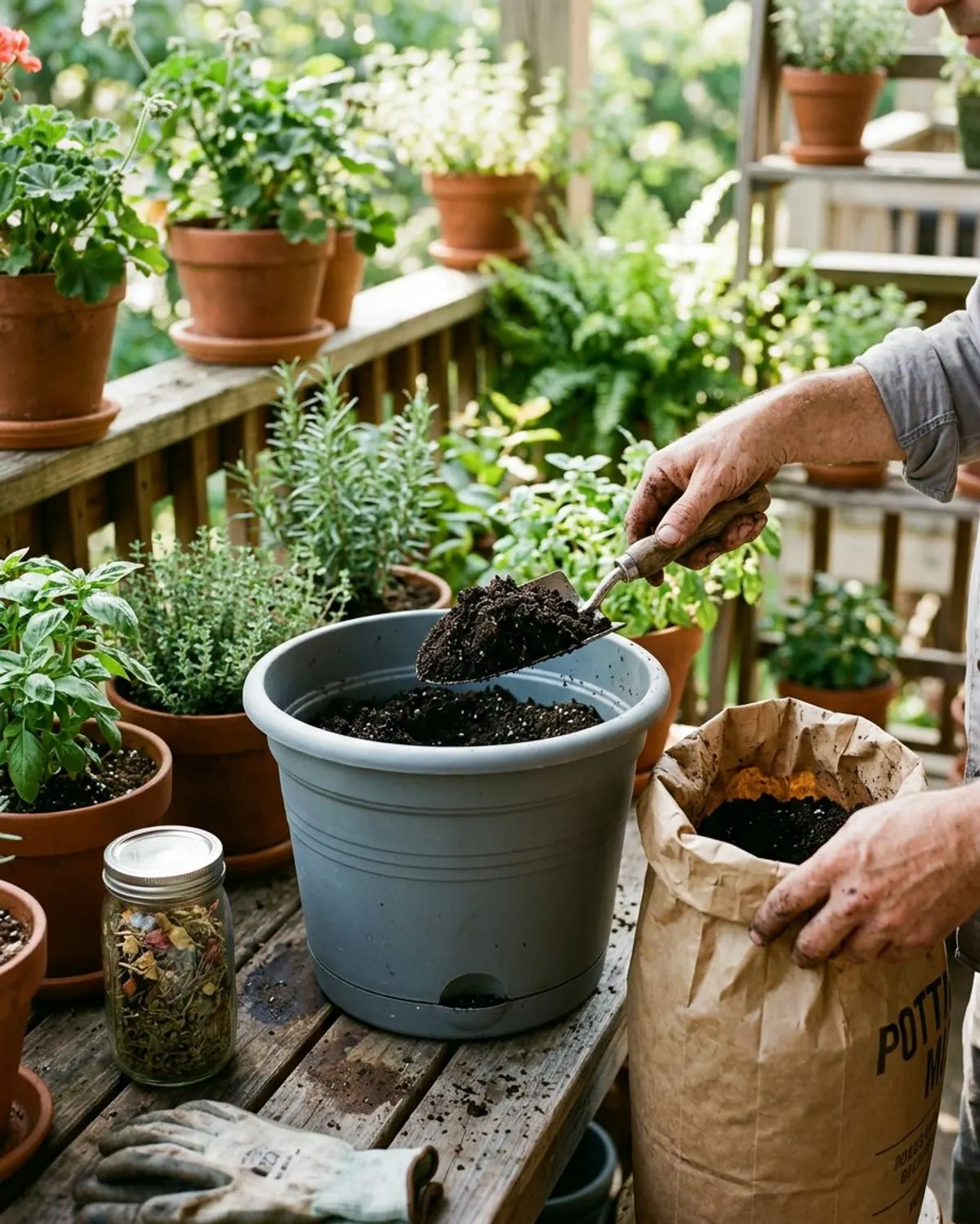
Container plants lose nutrients quickly because every watering flushes some out. Oregon State says regular fertilizer matters for that reason, and many potting mixes come with slow-release food already mixed in. Check the label for how long it lasts, then follow the feeding instructions on the package.
Watering is the daily job. Oregon State says to check the soil daily and water when it is dry, until water runs from the holes. The Almanac adds: water in the morning, soak deeply rather than sprinkling and expect to water small pots up to twice a day in a heat wave.
Three container vegetable garden layouts
Pick the layout that matches your hours of sun, then adjust the pot count to your space. These are our planning examples built from the pot sizes above, not tested plans, so use them as a starting point.
| Layout | Sun | Pots | What grows |
|---|---|---|---|
| Shady porch corner | About 4 hours | 1 window box (24 in), 2 pots of 2 gallons, 1 pot of 1 gallon | Lettuce and radish in the box, chard and kale in the pots, a herb in the small pot |
| Sunny deck | 6 to 8 hours | 1 pot of 15 gallons, 2 pots of 3 gallons, 1 pot of 5 gallons, 1 pot of 2 gallons, 1 rail box | Cherry tomato, 2 peppers, 1 eggplant, 3 bush bean plants, lettuce on the rail |
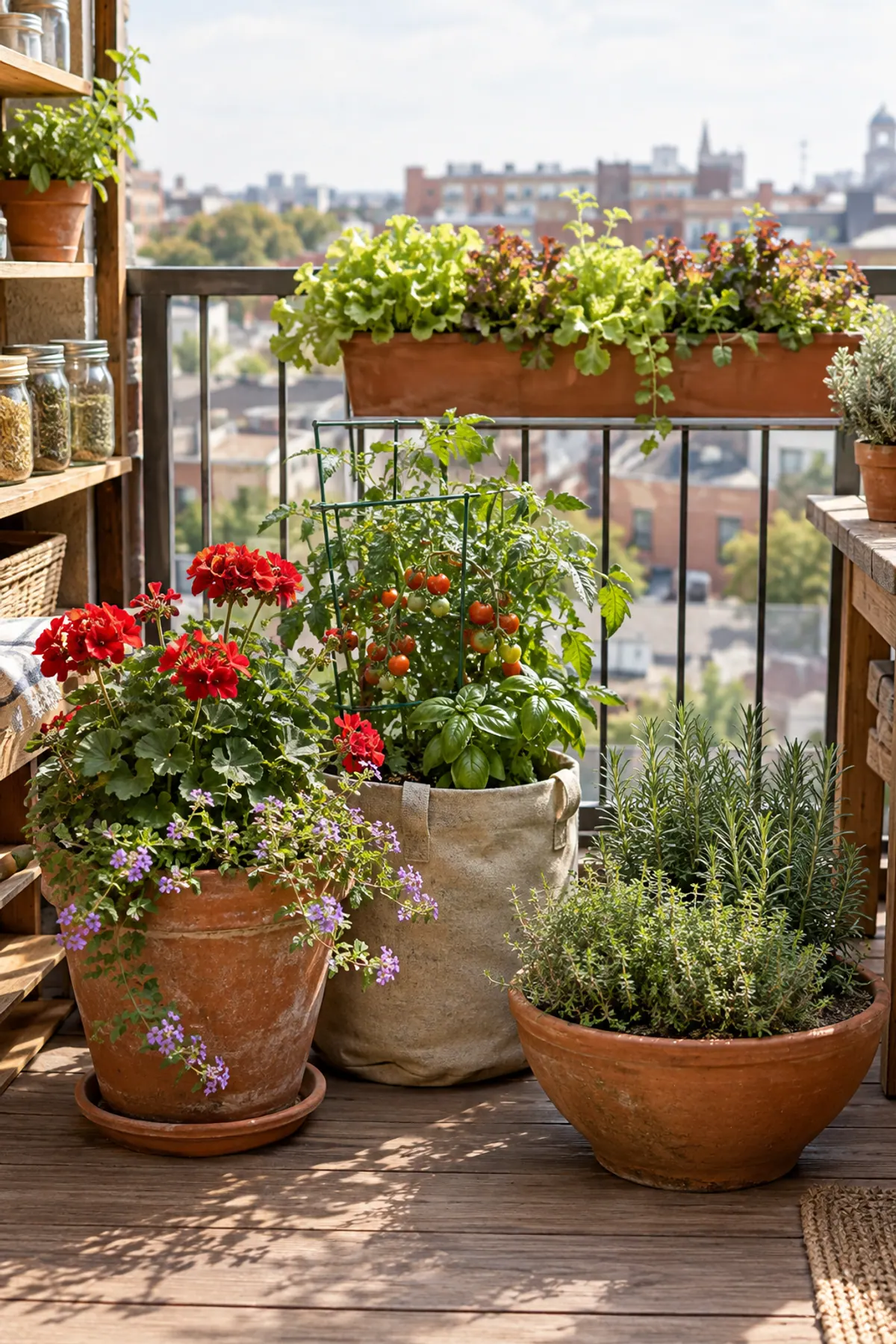
| Balcony with a weight limit | 6 hours on the sunny end | 3 fabric grow bags of 5 gallons, 1 rail box, a trellis | Cucumber on the trellis, a pepper, a compact tomato and lettuce on the rail |
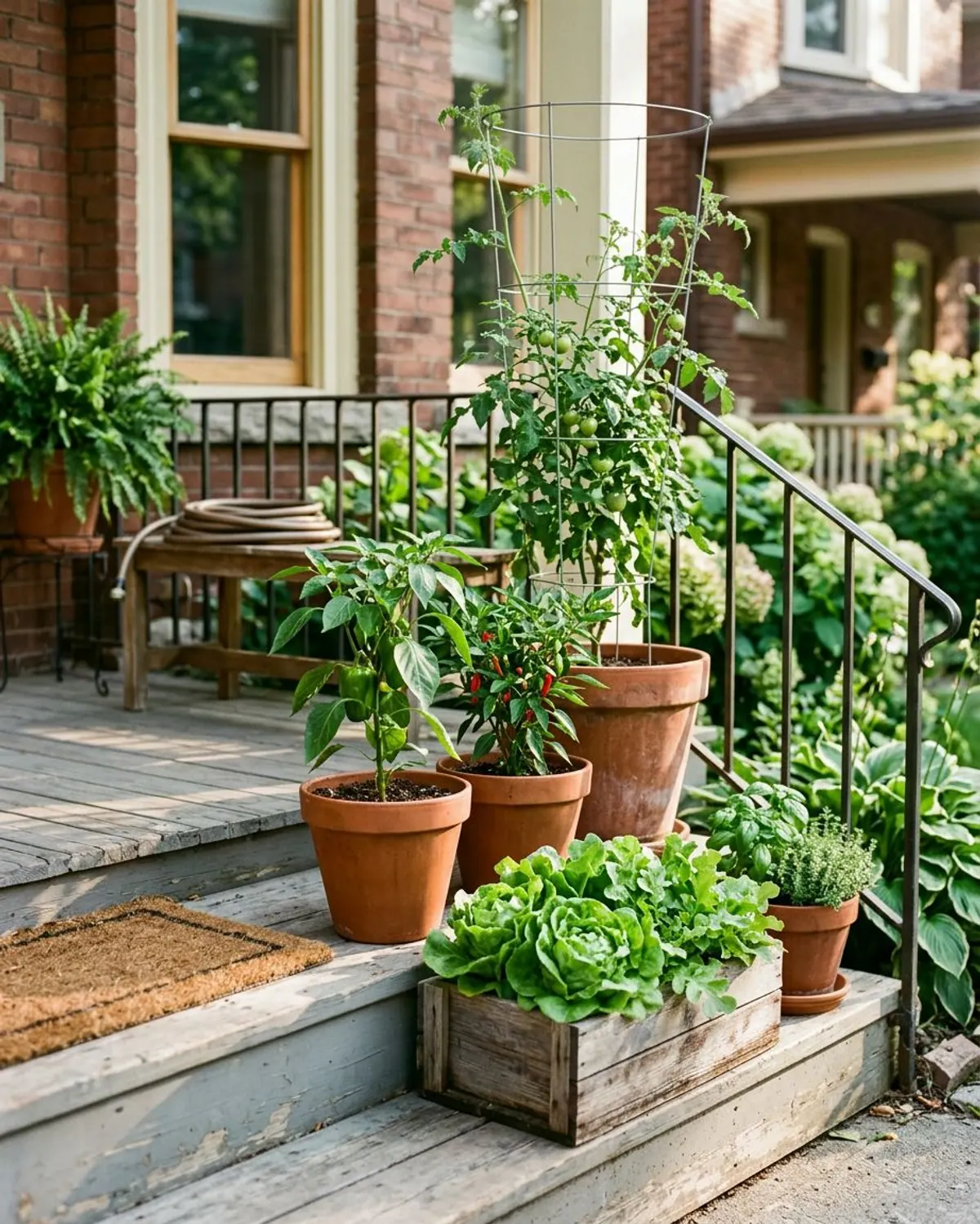
On a shady porch, grow the leafy and root crops and skip tomatoes. Put the tallest pot against the wall or door side and the low box on the step, so each plant can still see the light.
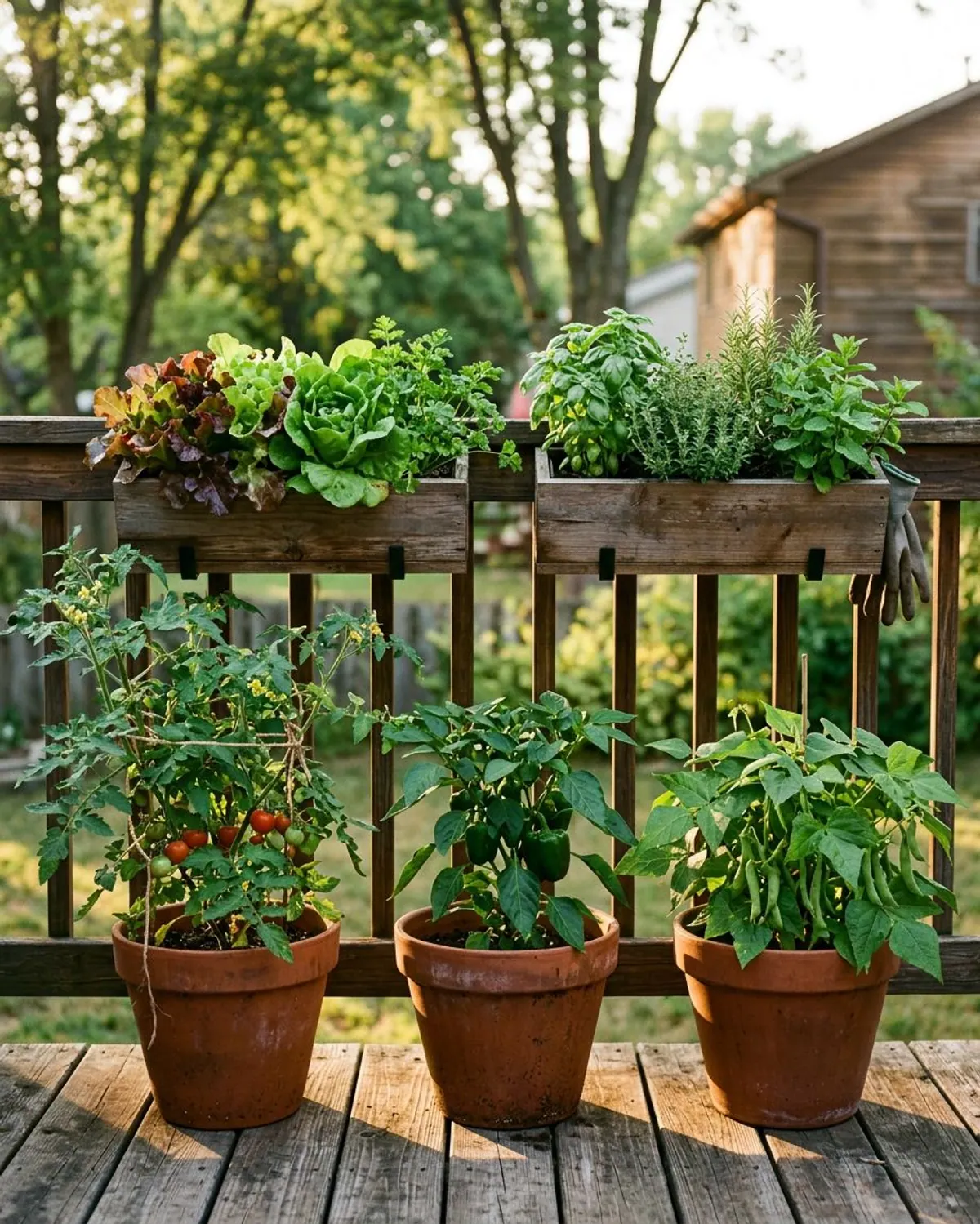
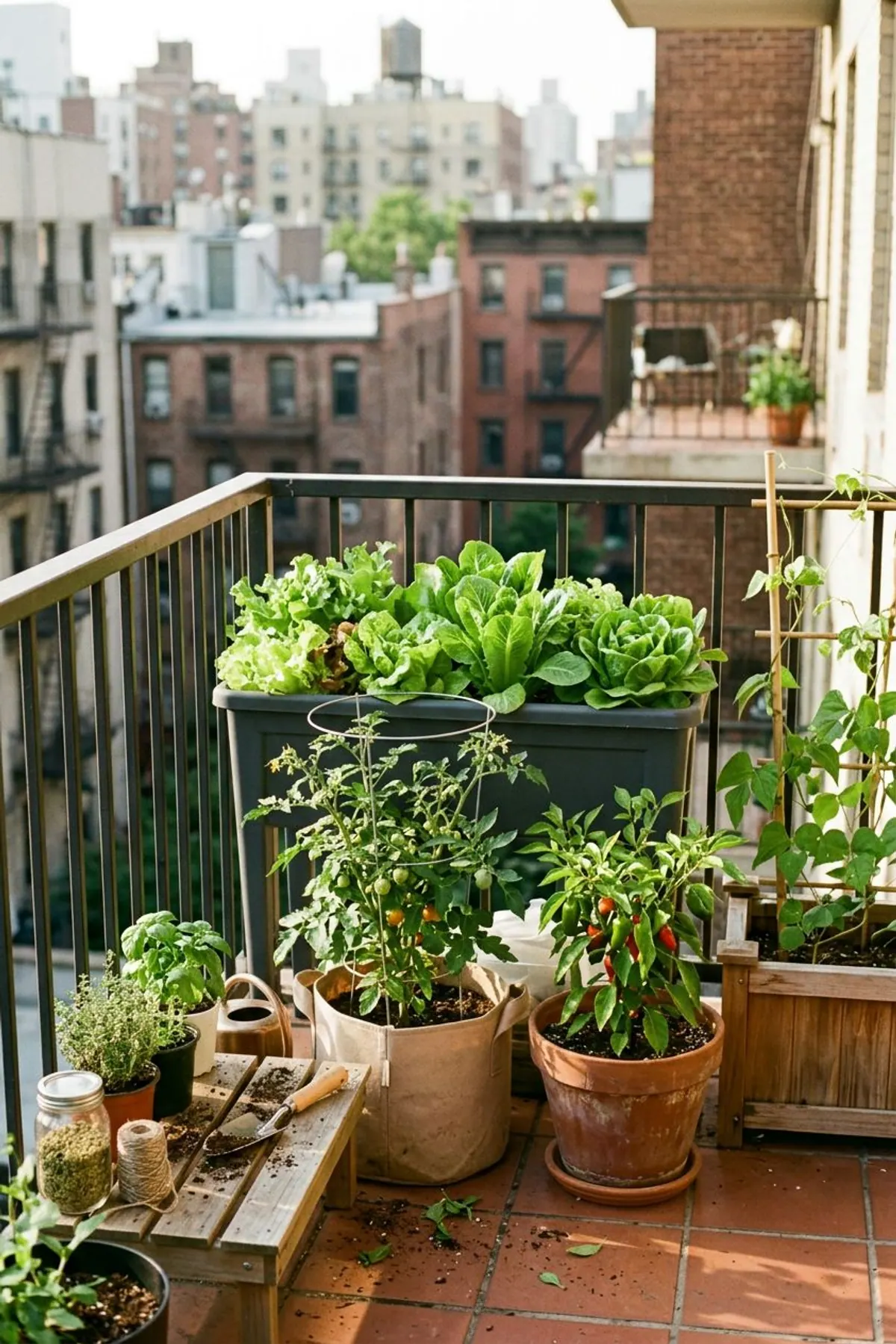
On a sunny deck, put the biggest pots where they will not shade the rest, usually on the north side. Rail boxes of lettuce add food without using floor space. Wet soil is heavy (one estimate puts a 10 gallon pot at 60 to 80 pounds), so on a balcony check your building's load rules and use fabric bags or plastic pots, and see our balcony vegetable garden guide for apartment layouts.
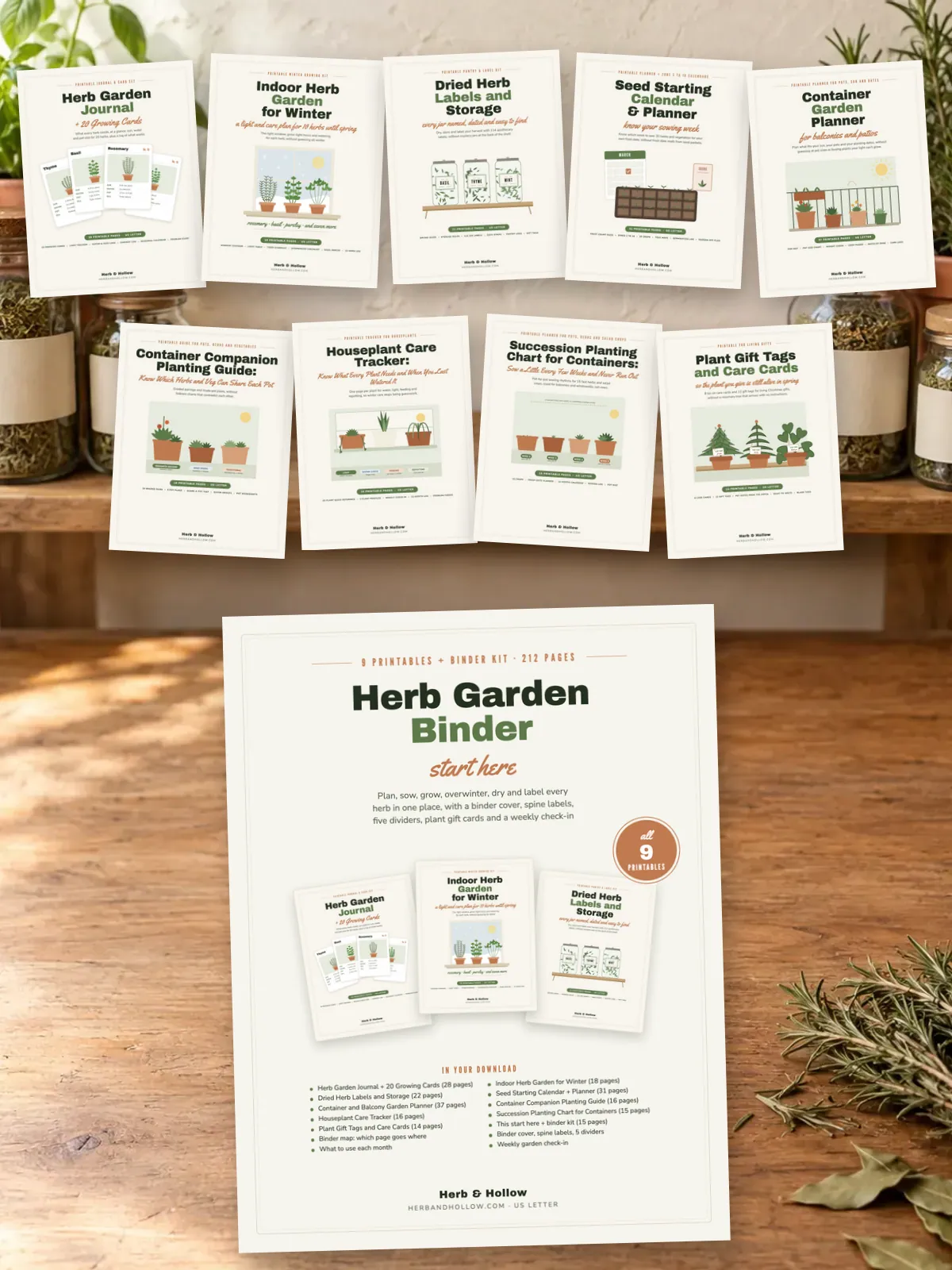
If you would rather not work out pot sizes and sun hours on scrap paper, the Container & Balcony Garden Planner is 37 printable pages that walk you through mapping your sun, sizing each pot and sketching a layout that fits your railing and weight limit.
Planning pots on paper first saves wasted money. The free planner has a container size guide and a balcony layout grid, and the paid Small-Space Garden Binder includes a seed starting calendar with sowing weeks for 17 container vegetables, so you can match the pot list above to your planting dates.
Buckets, grow bags and other cheap containers
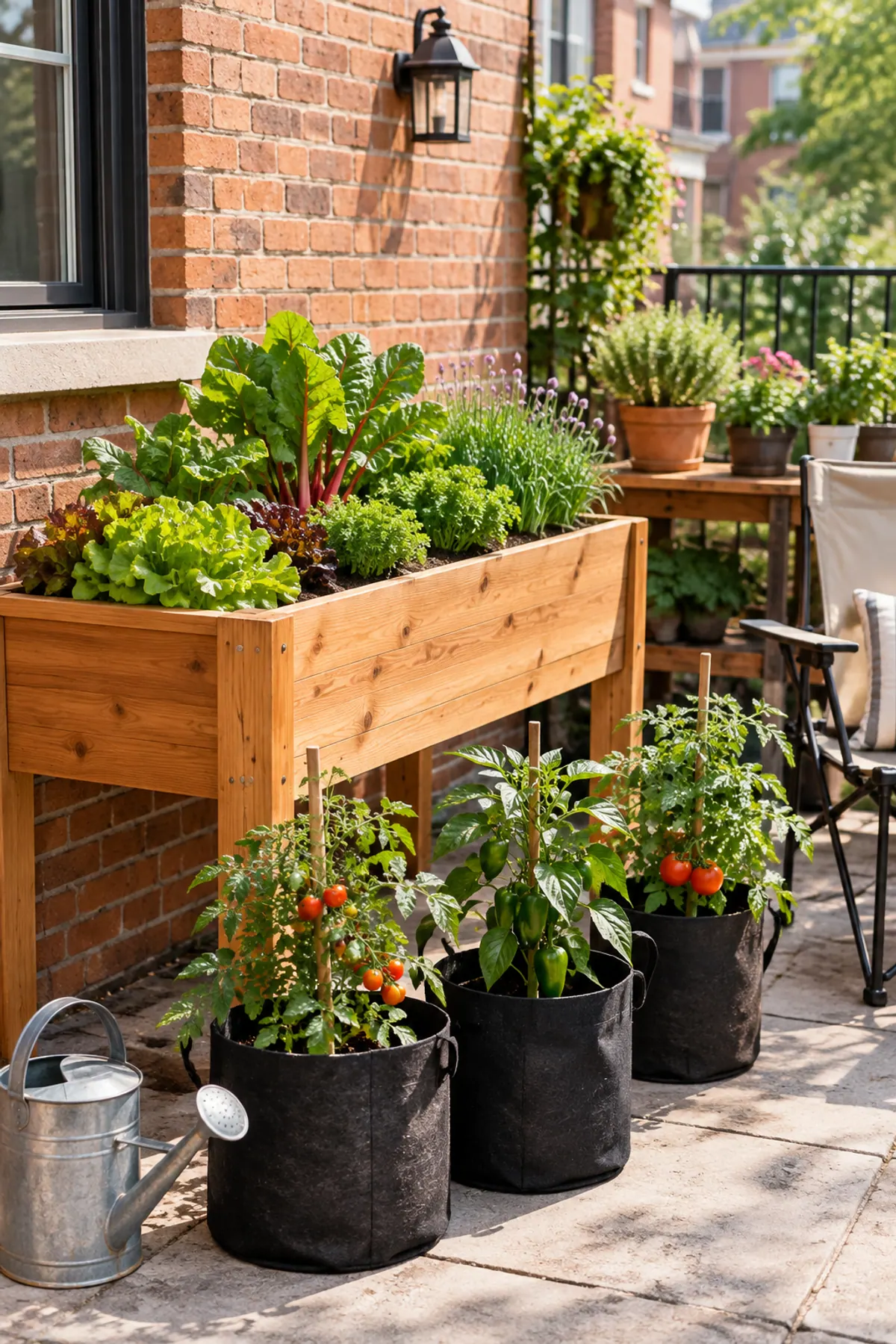
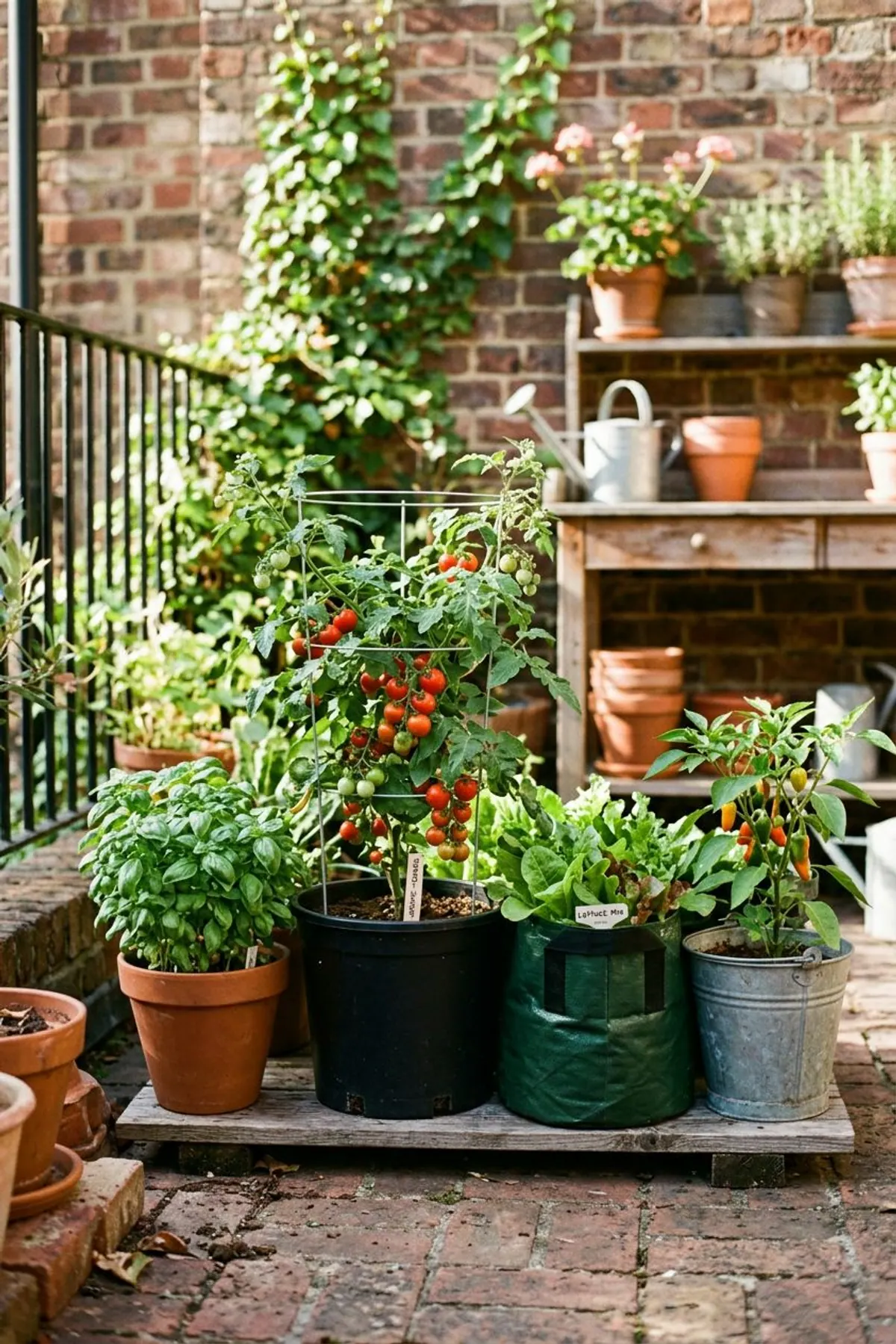
You do not need matching planters. A five gallon bucket with holes drilled in the bottom is a tomato or eggplant pot for a few dollars. Fabric grow bags are light, drain well and fold flat for winter, which suits rented balconies.
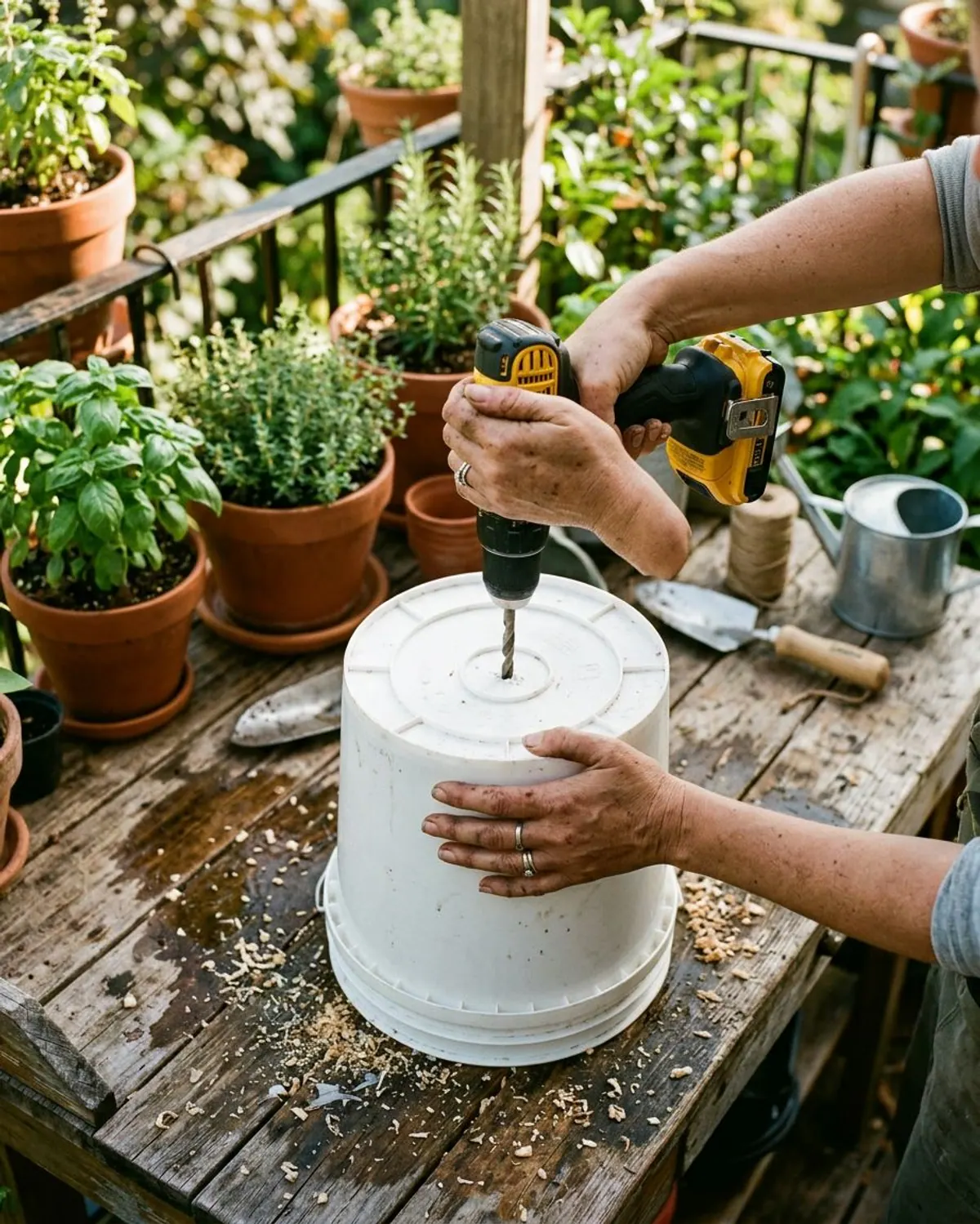
Dark pots absorb heat and terracotta dries out faster than plastic, so a black plastic pot in full afternoon sun may need water twice a day. If your spot gets baking afternoon light, choose a light-colored pot. Outdoors, let extra water drain away rather than standing in a saucer.
What to buy for a container vegetable garden
- Best for balconies
Fabric grow bags, 5 gallon
Typically $12 to $25 for a pack
Light, drain well and suit peppers, eggplant and compact tomatoes.
Check price on Amazon for Fabric grow bags, 5 gallon -
Food-grade 5 gallon buckets
Typically $6 to $12 each
Drill drainage holes and you have a cheap pot for one eggplant or two kale plants.
Check price on Amazon for Food-grade 5 gallon buckets -
Tomato cages or trellis
Typically $10 to $30
Supports tomatoes and cucumbers so they grow up instead of sprawling.
Check price on Amazon for Tomato cages or trellis -
Potting mix for vegetables
Typically $10 to $25 a bag
A potting mix drains better than garden soil and many include slow-release food.
Check price on Amazon for Potting mix for vegetables -
Wheeled plant dolly
Typically $12 to $30
Lets you roll a heavy pot to follow the sun.
Check price on Amazon for Wheeled plant dolly
Before you plant: a short checklist
Container vegetable garden checklist
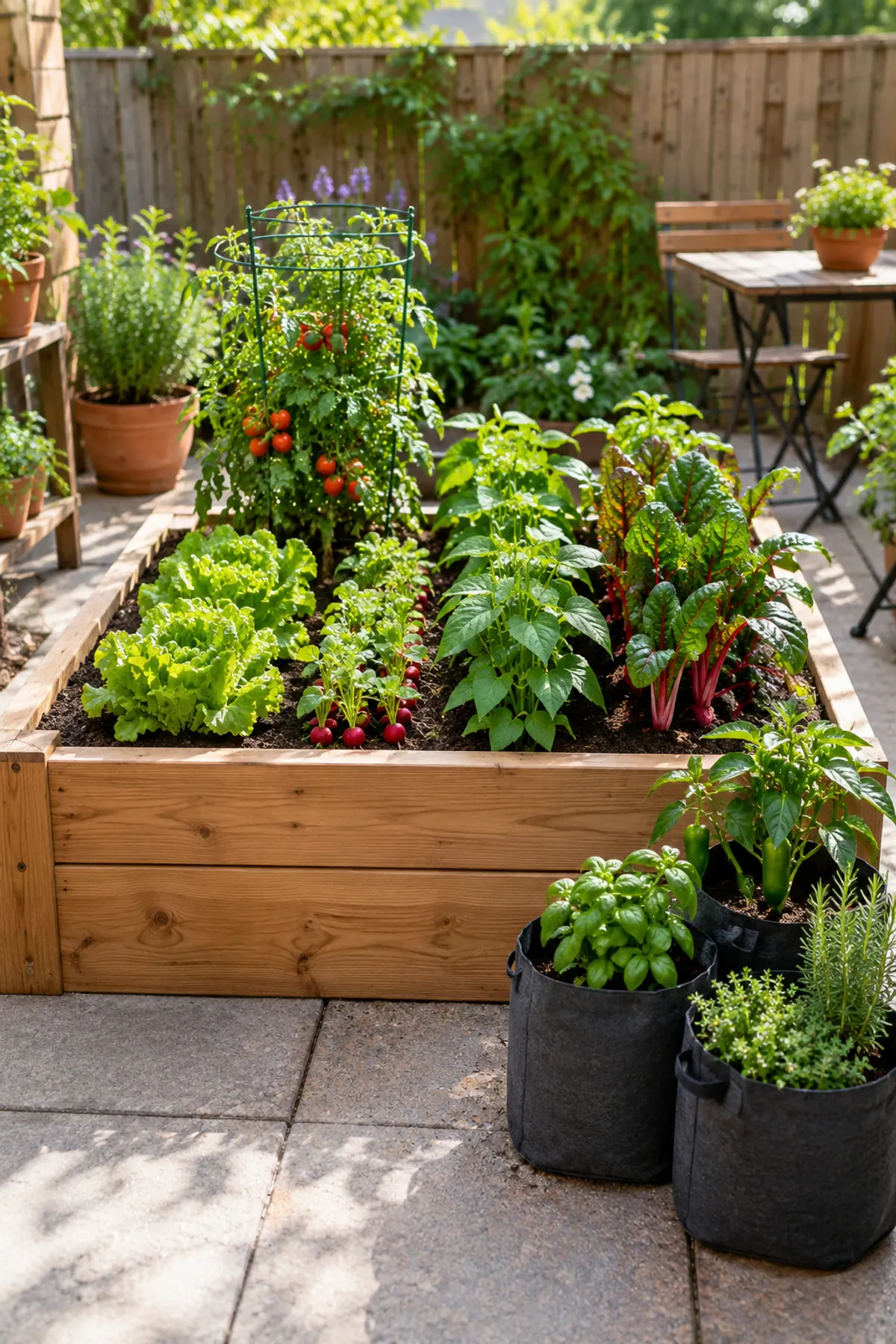
For the full beginner path from seed to harvest, our vegetable garden for beginners guide walks through planting dates, and raised beds versus containers helps if you have a little ground as well.
Frequently asked questions
What vegetables grow best in containers?
Lettuce, radishes, bush beans, carrots, kale, chard, peppers, eggplant, cucumbers and compact or cherry tomatoes. Choose varieties labeled dwarf, bush or container.
What size pot do tomatoes need?
Sources differ. The Old Farmer's Almanac lists 5 gallons for one plant, while Harvest to Table sets a 10 gallon minimum for full-size tomatoes and 15 to 20 gallons as preferred, with miniature types fitting 5 gallons.
How deep should a vegetable container be?
Harvest to Table gives about 8 inches as the minimum for almost any vegetable, while Oregon State Extension says at least 12 inches for most, and the Almanac suggests 18 inches or more for fruiting and root crops.
Can I use garden soil in containers?
No. Oregon State says to use commercial potting soil, and Missouri Extension says yard soil will not let water drain from a pot.
How much sun does a container vegetable garden need?
Fruiting plants such as tomatoes and peppers need at least 6 hours of direct sun, and leafy greens do well on about 3 to 5 hours.
How often should I water container vegetables?
Check the soil daily and water when it is dry until water runs from the drainage holes. Small pots can need water twice a day in a heat wave.
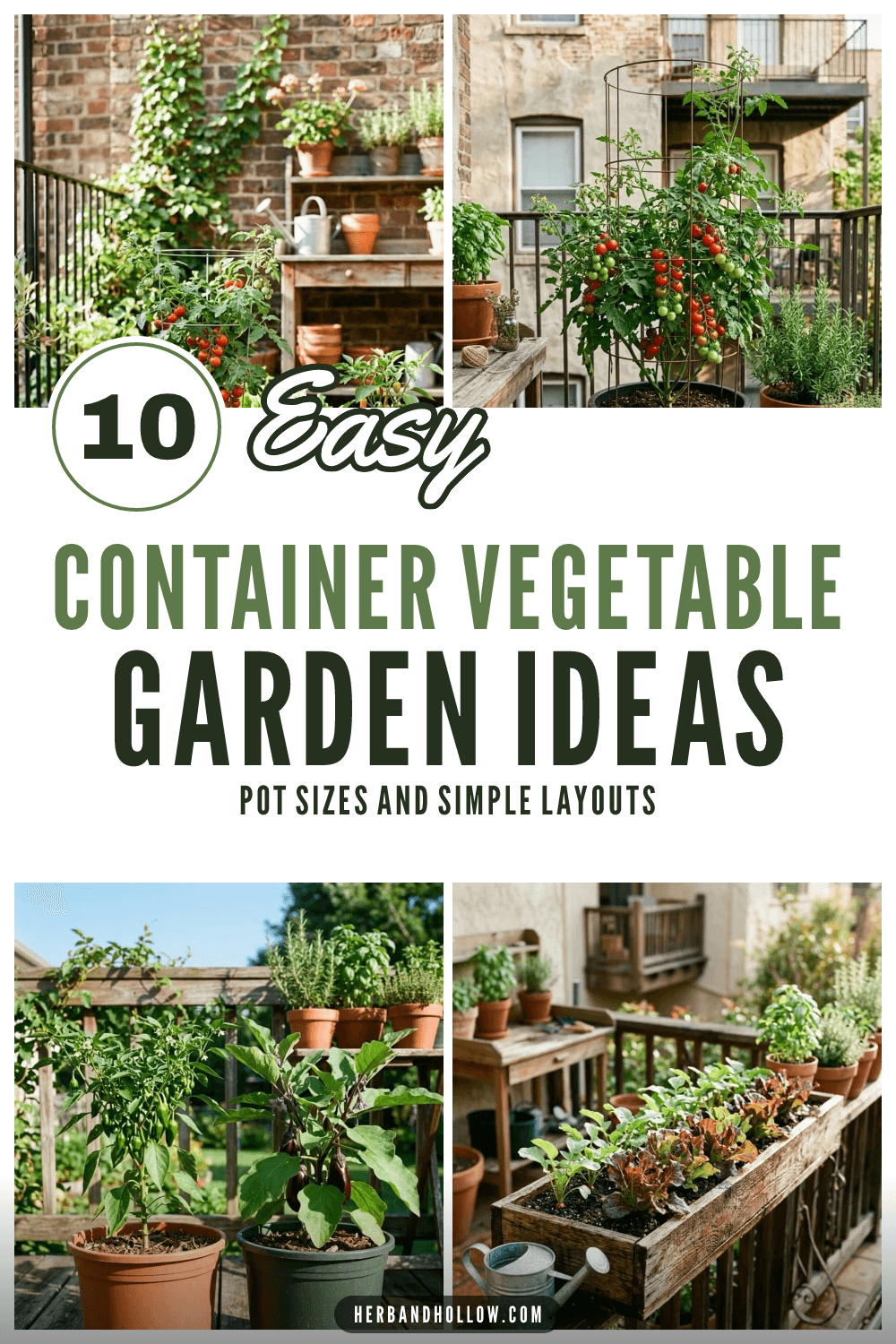
Save it for later
Pin this to your Small-Space Vegetables board so it's there when you need it.
Save to Pinterest