This post contains affiliate links. As an Amazon Associate we earn from qualifying purchases, at no extra cost to you. Read our disclosure.
Safety first: Herbs can be powerful. If you are pregnant, nursing, take medication or have a health condition, check with your doctor or pharmacist first. Please read our herbal & garden safety notes before you start.
Key takeaways
- Loose-leaf and butterhead types (Black-Seeded Simpson, Tom Thumb, Little Gem) are the easiest lettuce to grow indoors
- A tray 3 to 4 inches deep is enough; lettuce roots are shallow
- Give 12 to 14 hours of light a day from an LED hung about 6 inches above the leaves, or a bright south window plus a lamp
- Keep the room at 60 to 68 F; above 75 F lettuce bolts and turns bitter
- Sow a new tray every two weeks for salad all winter
In this post10 sections
- Can you grow lettuce indoors in winter? Three things decide it
- Supplies for one indoor lettuce tray
- Growing lettuce indoors from seed, step by step
- How much light does indoor lettuce need? The window test
- Harvest: baby leaves in 3 to 4 weeks, then cut-and-come-again
- Troubleshooting: leggy, bitter, gnats and damping off
- Other indoor lettuce garden options: jars, hydroponic kits and pots
- Grow herbs beside your lettuce under the same light
- Indoor lettuce supplies
- FAQ
Can you grow lettuce indoors in winter? Three things decide it
Yes, and it is one of the easiest winter crops for a small apartment because lettuce likes exactly what your home offers in January: cool rooms and shallow containers. Three things decide whether a tray thrives or sulks. Light is the big one, then temperature, then the variety you sow.
Light: a south-facing window gives maybe 4 to 6 hours of weak sun in midwinter, which grows thin, pale leaves. A small LED grow light fixes that for a few dollars a month in electricity. Temperature: lettuce germinates and grows best between 60 and 68 F, so a cool room beats a spot above a radiator.
Variety: head lettuce such as iceberg needs months and lots of room. Loose-leaf and small butterhead types are ready in weeks and regrow after cutting. Pick those and the rest is easy. If you only have a dim north window, start with microgreens instead; they need far less light.
| Question | Answer |
|---|---|
| Best varieties | Black-Seeded Simpson, Tom Thumb, Little Gem, Arctic King, Winter Density, any 'cut-and-come-again' mix |
| Container depth | 3 to 4 inches, with drainage holes |
| Germination | 2 to 7 days at 60 to 68 F; seed needs light, so do not bury it |
| Light | 12 to 14 hours a day under an LED 6 inches above the leaves, or a south window plus a lamp |
| Water | Bottom-water when the top half inch feels dry; never let the tray sit in water for more than 20 minutes |
| Feeding | Half-strength liquid fertilizer every two weeks after the first true leaves |
| Harvest | Baby leaves in 3 to 4 weeks, cut-and-come-again for 2 to 3 months |
Supplies for one indoor lettuce tray
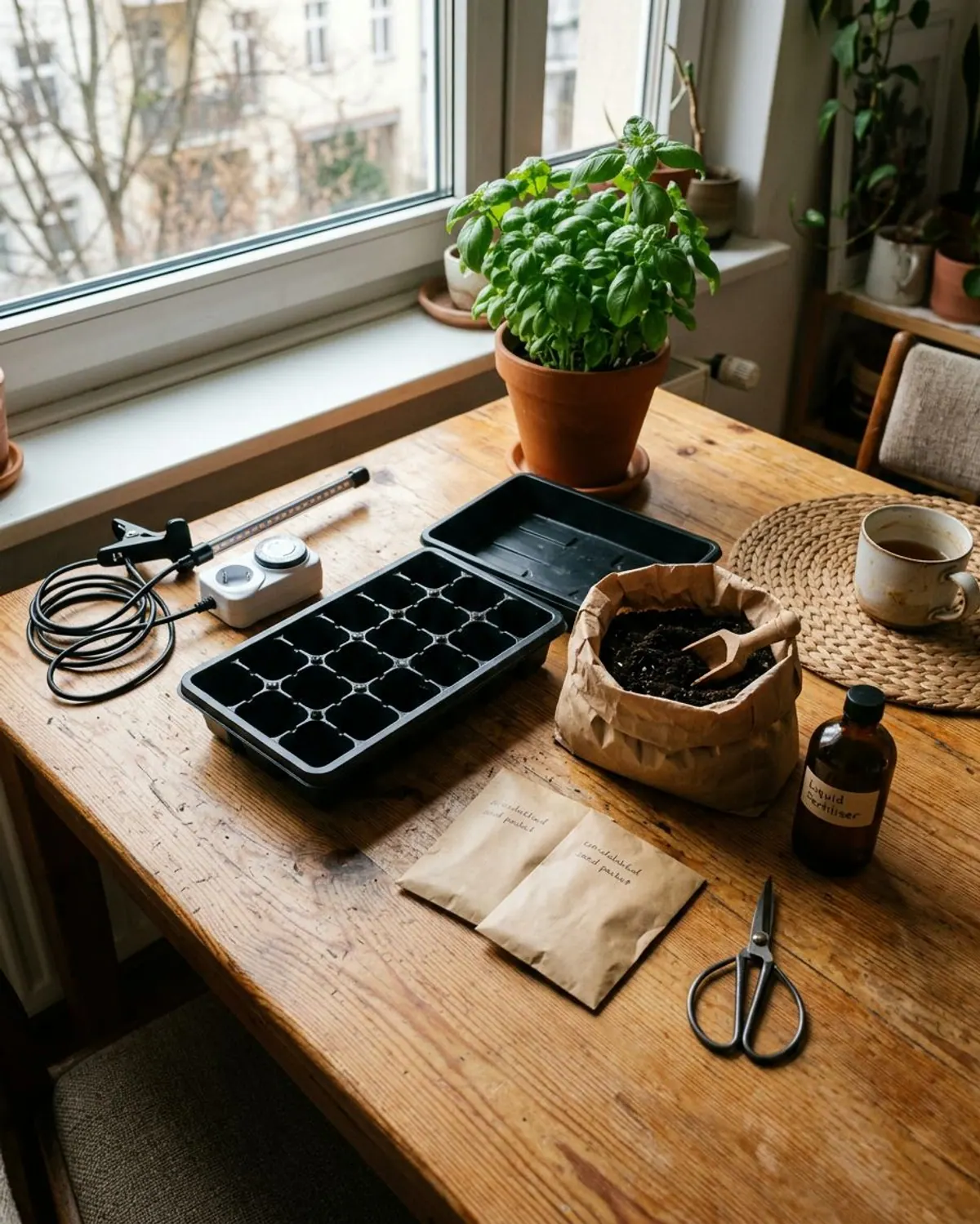
You can start with a repurposed takeout container and a sunny sill, but the list below is what makes a tray reliable. Everything fits on one shelf or a 30-inch windowsill, and most of it gets reused for seed starting in spring.
Indoor lettuce checklist
Growing lettuce indoors from seed, step by step
-
Step 1: Pick a loose-leaf or small butterhead variety
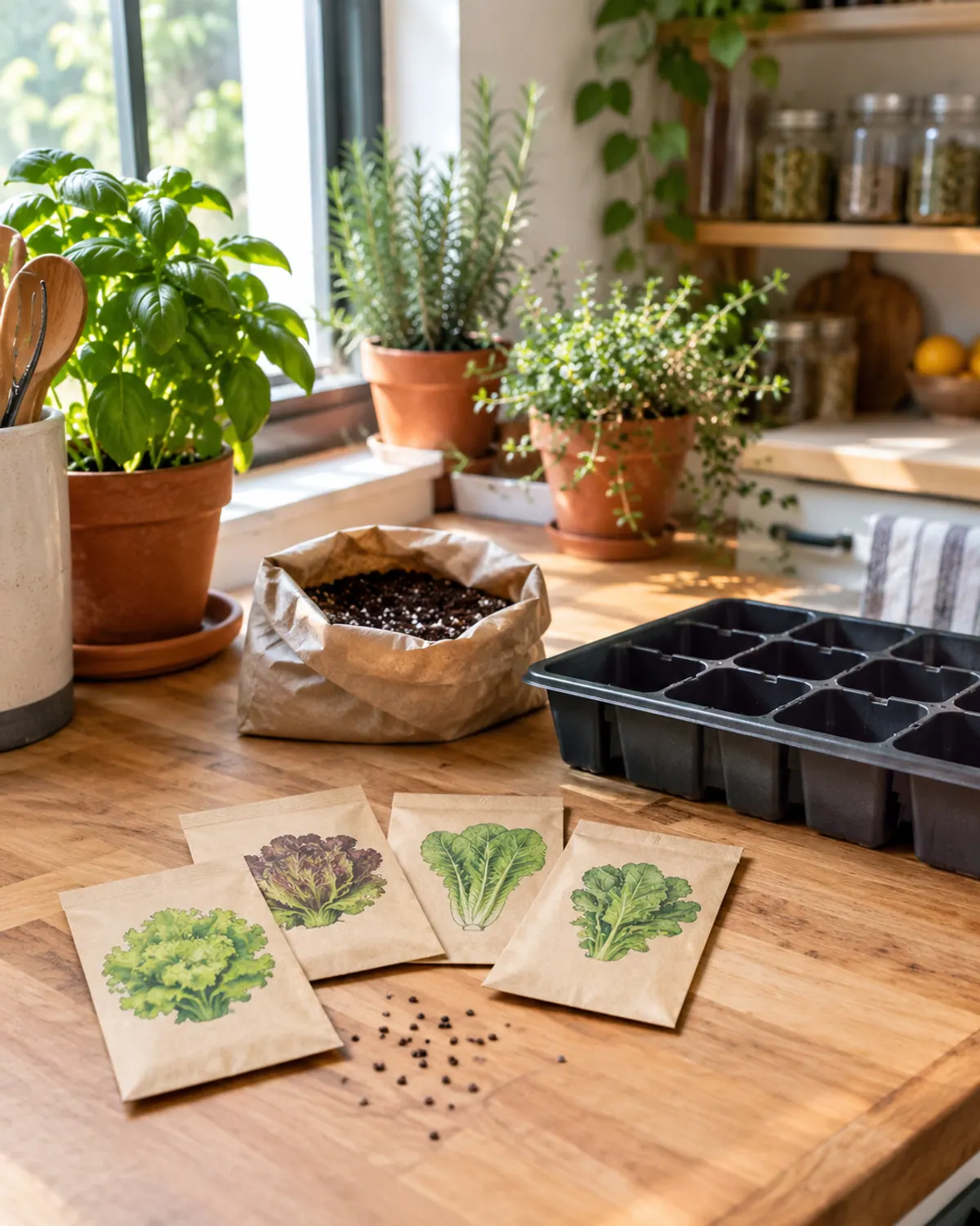
Black-Seeded Simpson is the classic quick loose-leaf; Tom Thumb and Little Gem are small butterheads that fit a 6-inch pot; Arctic King and Winter Density are bred for cool, low-light conditions. Skip iceberg and full-size romaine indoors. A 'mesclun' or 'cut-and-come-again' mix gives you several colors in one tray.
-
Step 2: Fill a shallow container with 3 to 4 inches of mix
Lettuce roots stay in the top few inches, so a deep pot only wastes soil. Use seed-starting mix or a fine potting mix, water it until it is damp like a wrung-out sponge, and level the surface. Make sure the container drains; soggy roots are the main reason indoor lettuce fails.
-
Step 3: Sow on the surface and keep it at 60 to 68 F
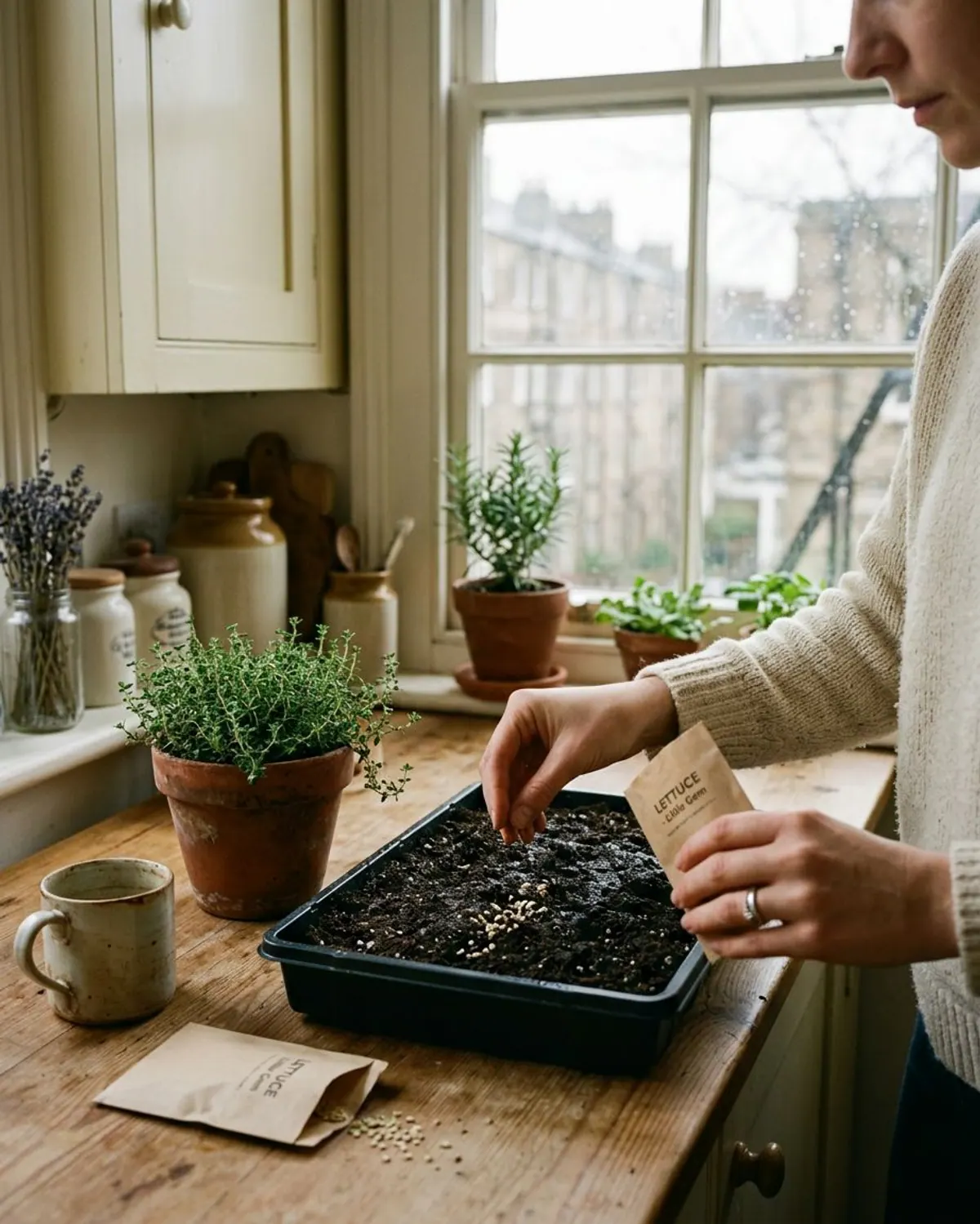
Scatter seed about half an inch apart for baby leaves, or sow three seeds per spot 4 inches apart for small heads. Press the seed into the surface and dust it with a pinch of mix at most; lettuce seed needs light to germinate. Cover with a clear lid or plastic wrap until sprouts show in 2 to 7 days, then remove it.
-
Step 4: Give it 12 to 14 hours of light a day
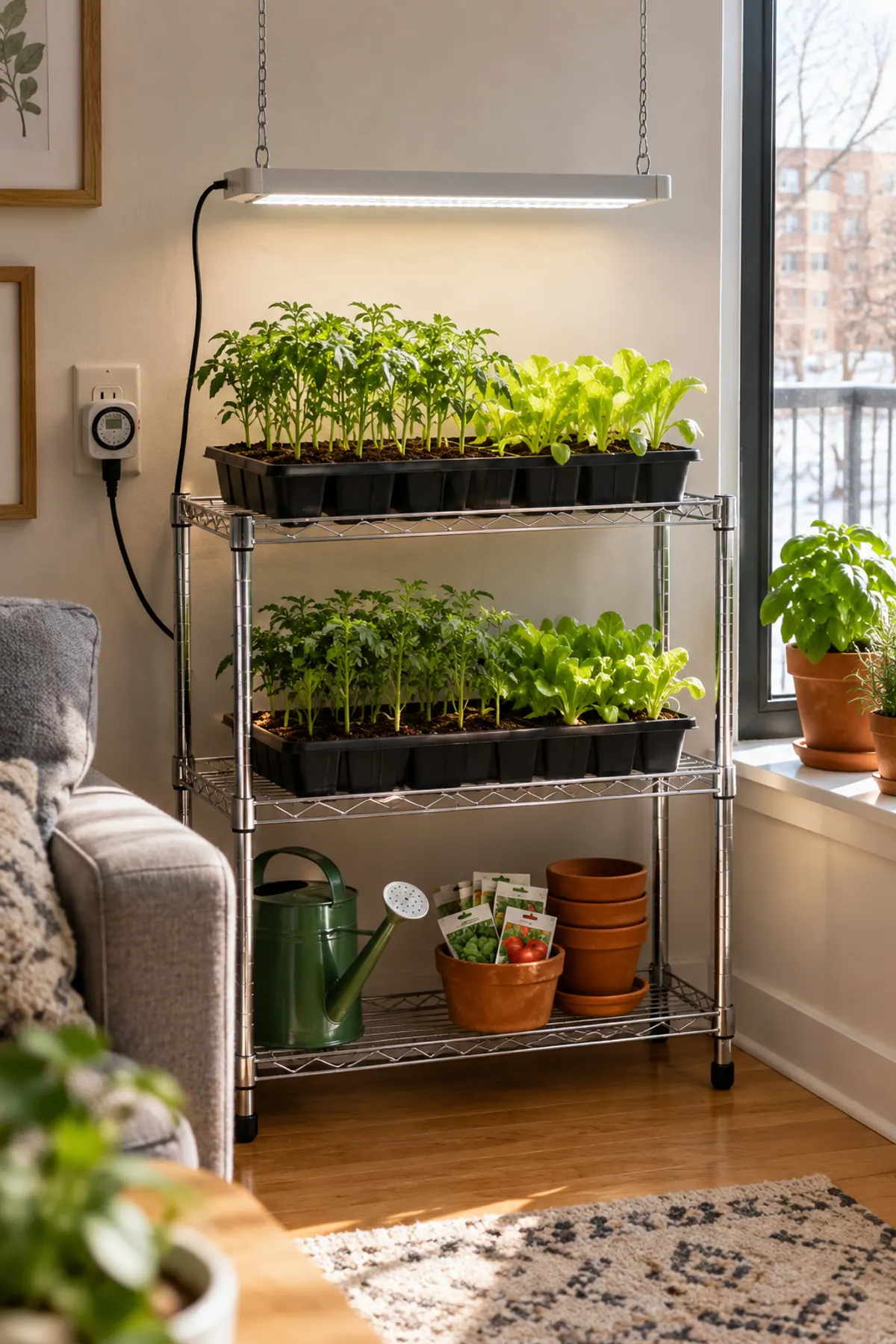
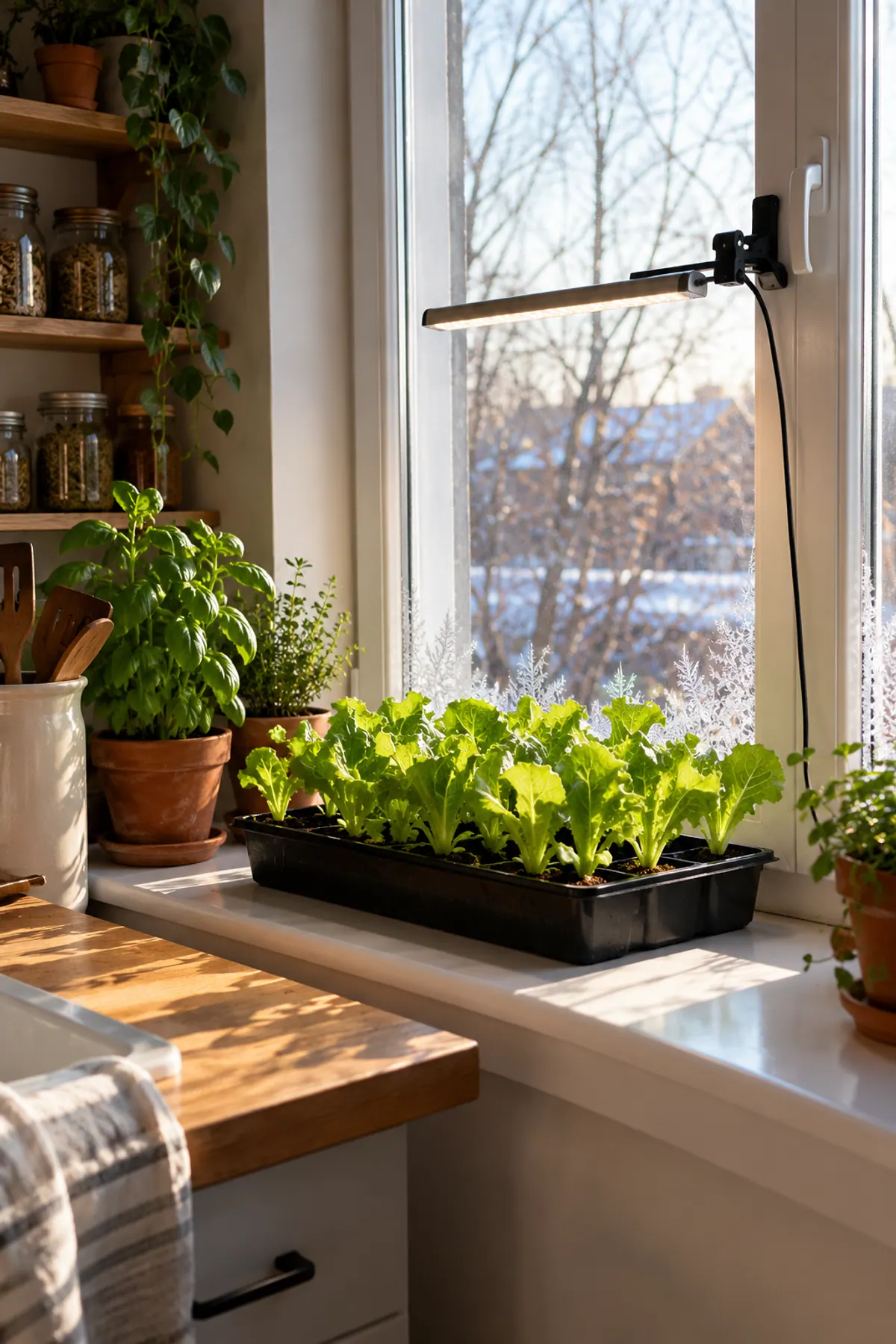
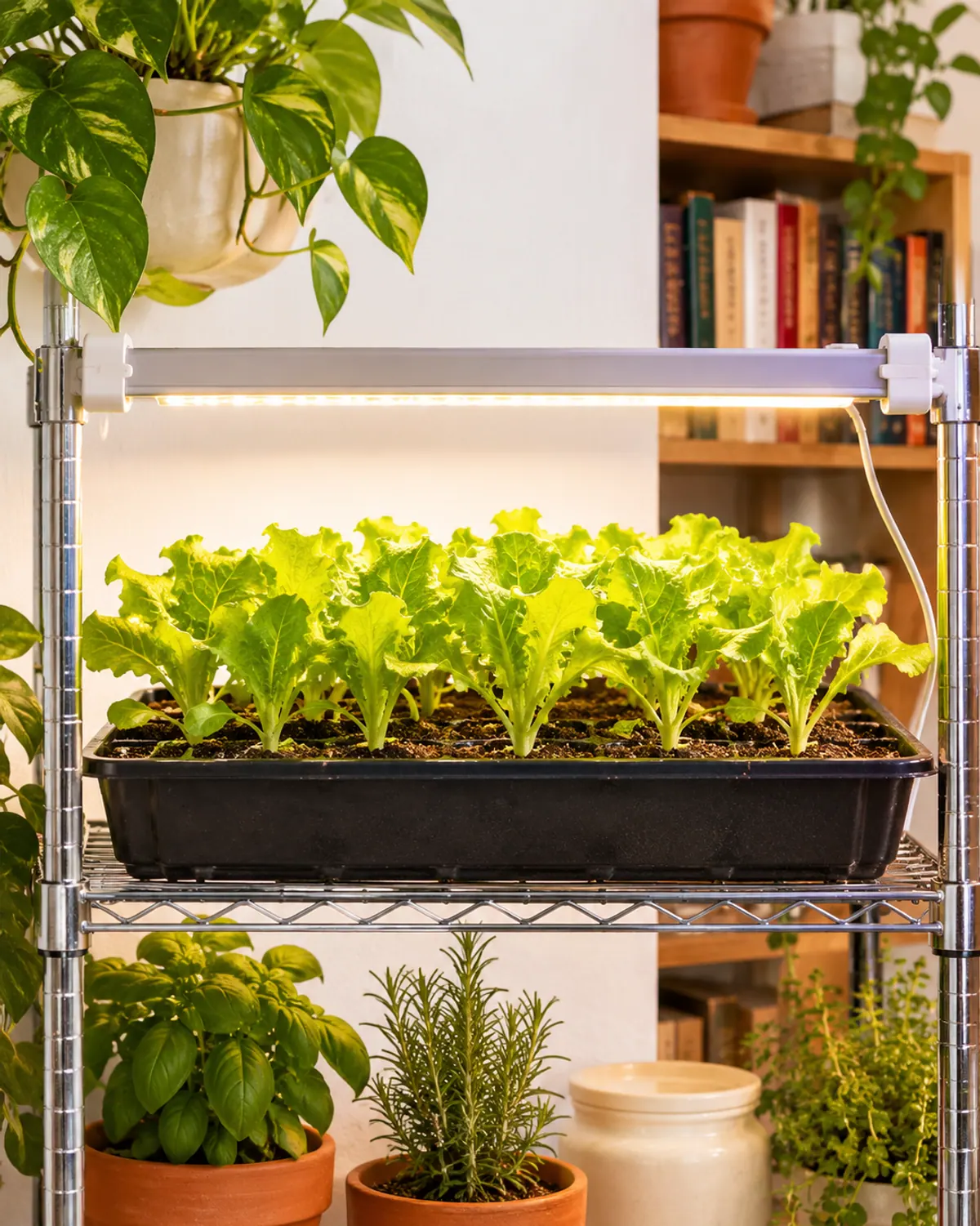
Hang or clip the LED about 6 inches above the leaves and set the timer for 12 to 14 hours. Raise the light as the plants grow. On a windowsill, turn the tray every two days so it grows evenly, and add a lamp on dull days. The light section below has the window test.
-
Step 5: Bottom-water and fight dry winter air
Set the tray in a dish of water for 10 to 20 minutes whenever the top half inch feels dry, then drain. Watering from above knocks seedlings flat and wets the leaves, which invites rot. Heated winter air dries trays fast, so check every two days; a pebble tray or a nearby humidifier helps.
-
Step 6: Feed lightly every two weeks
Seed-starting mix has almost no food in it. Once the first true leaves appear, feed with a liquid fertilizer at half strength every two weeks. More than that and leaves grow fast but taste flat. Stop feeding for a week before you plan a big harvest.

How much light does indoor lettuce need? The window test
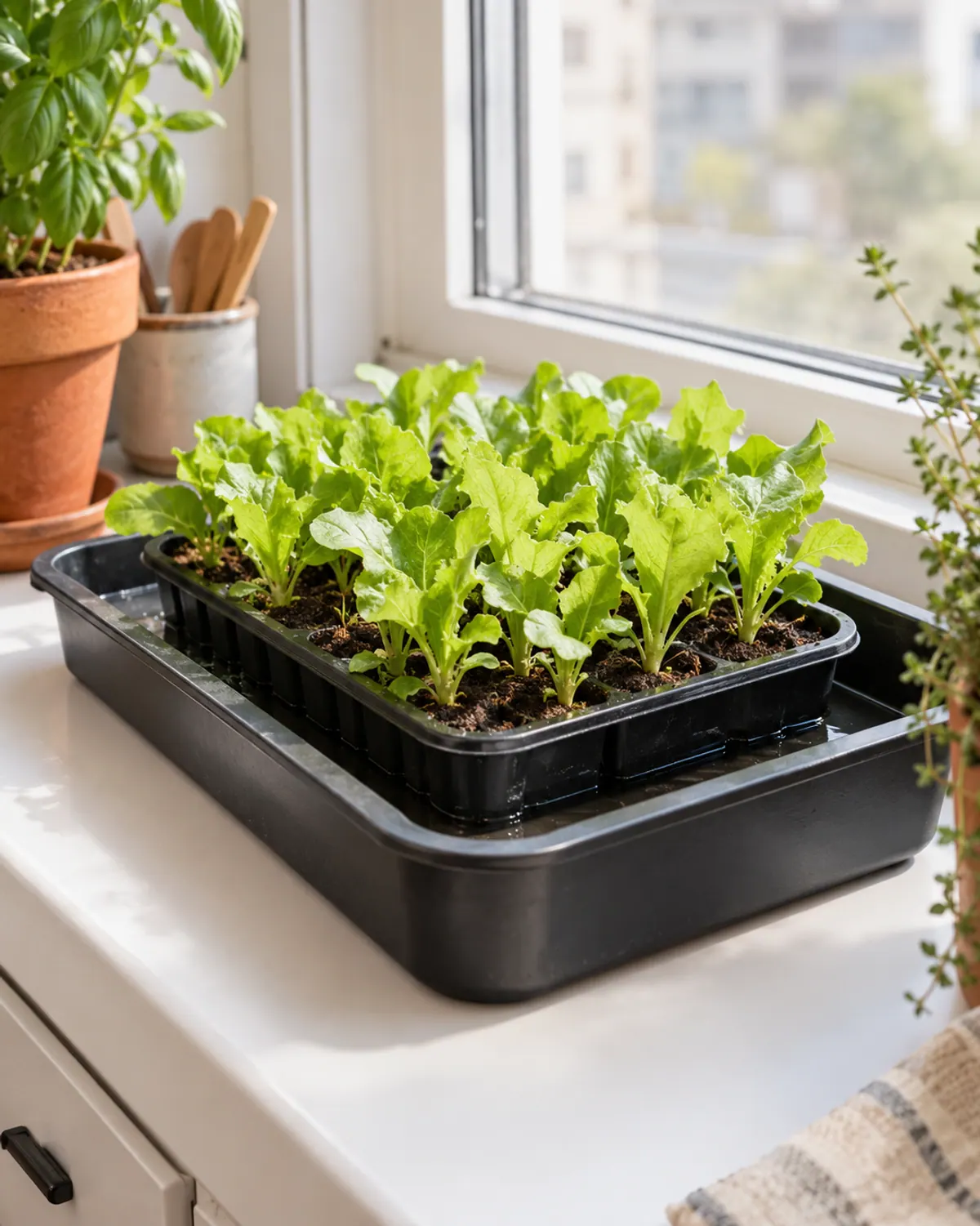
Lettuce wants the equivalent of 12 to 14 hours of bright light. Here is the test for a window: stand where the tray will sit at noon and hold up your hand. A crisp, sharp shadow means direct sun; a soft, fuzzy shadow means bright indirect light; no shadow means it is too dim for lettuce without a lamp.
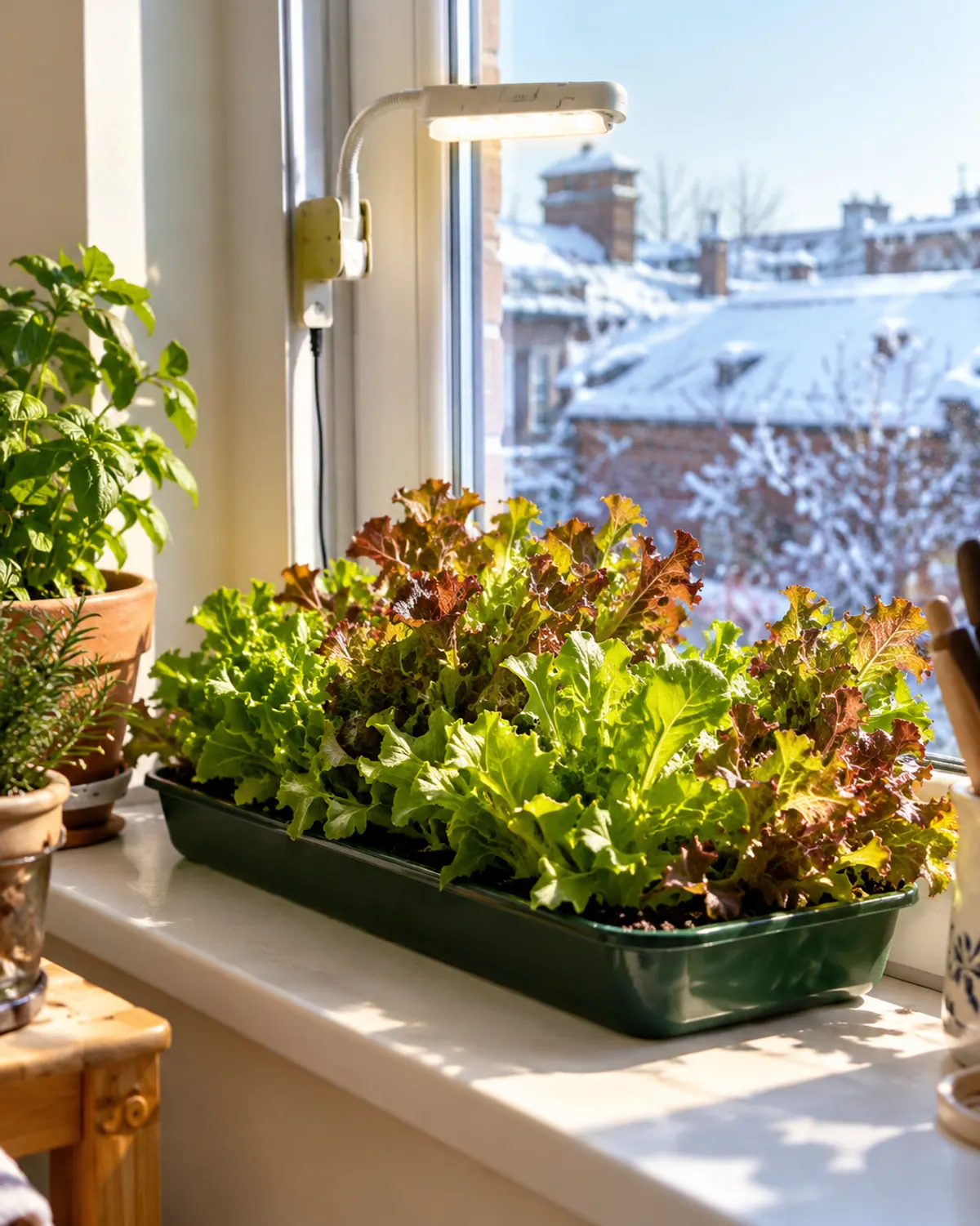
Even a south window in December gives sharp shadows for only 4 to 6 hours. That grows lettuce, but slowly and with thin leaves. Add a clip-on LED on a timer for the morning and evening to reach 12 hours, or move the tray under a light full-time and give the window to your herbs.
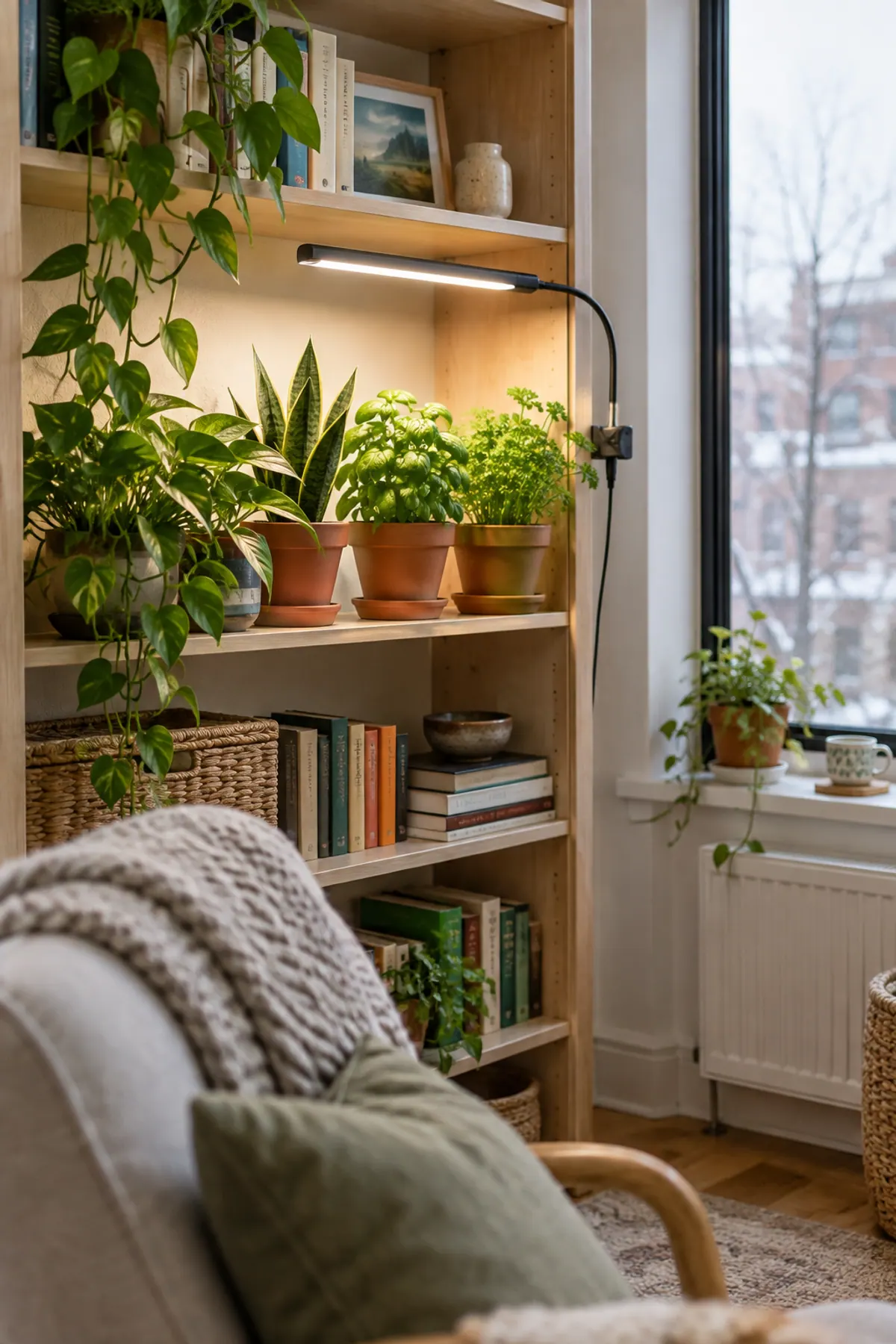
Any full-spectrum LED rated for seedlings works; a 20 to 30 watt strip covers one tray. Keep it 4 to 6 inches above the leaves and raise it as the plants grow. Our grow light guide for small spaces compares clip-ons, strips and shelf lights.
Harvest: baby leaves in 3 to 4 weeks, then cut-and-come-again
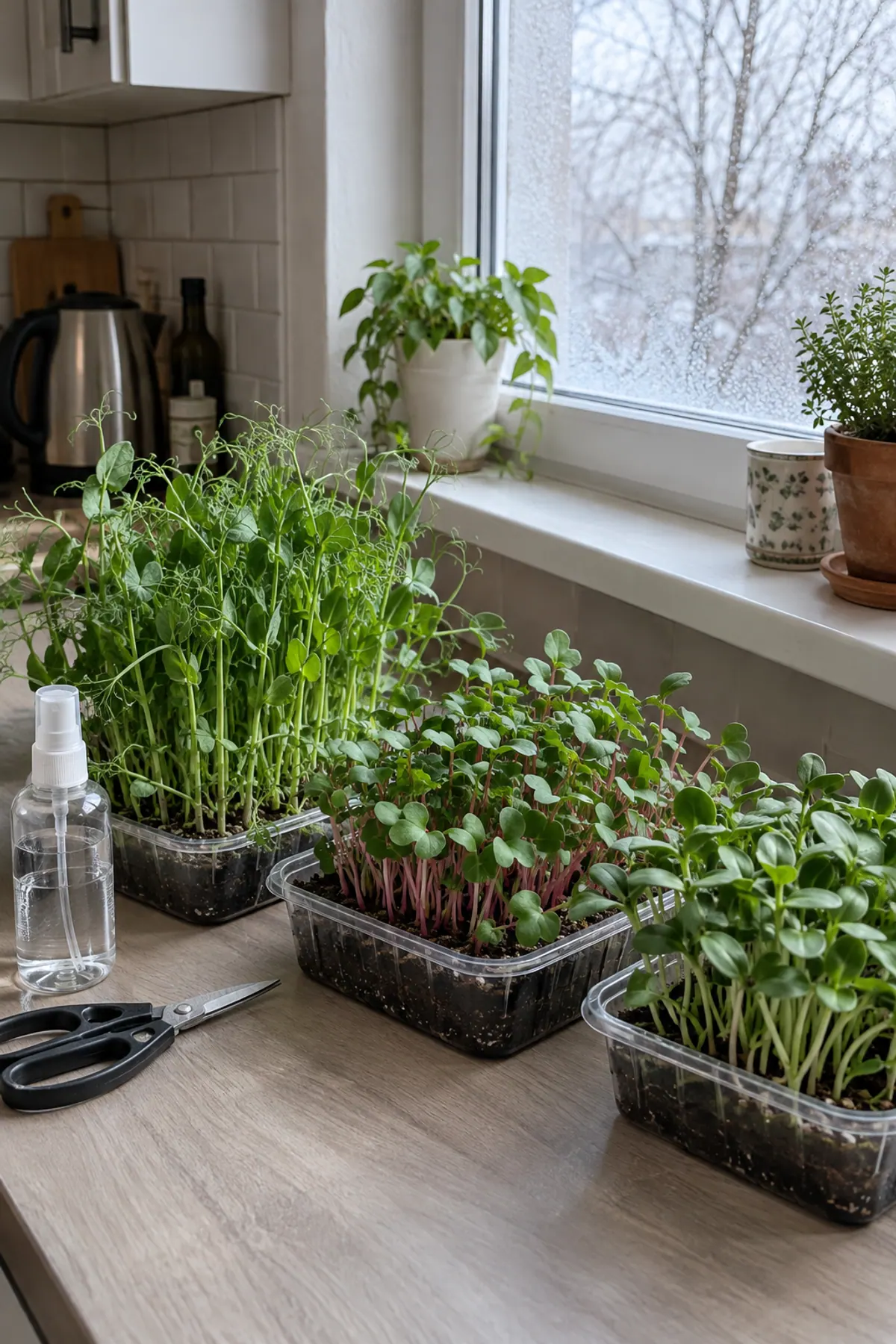
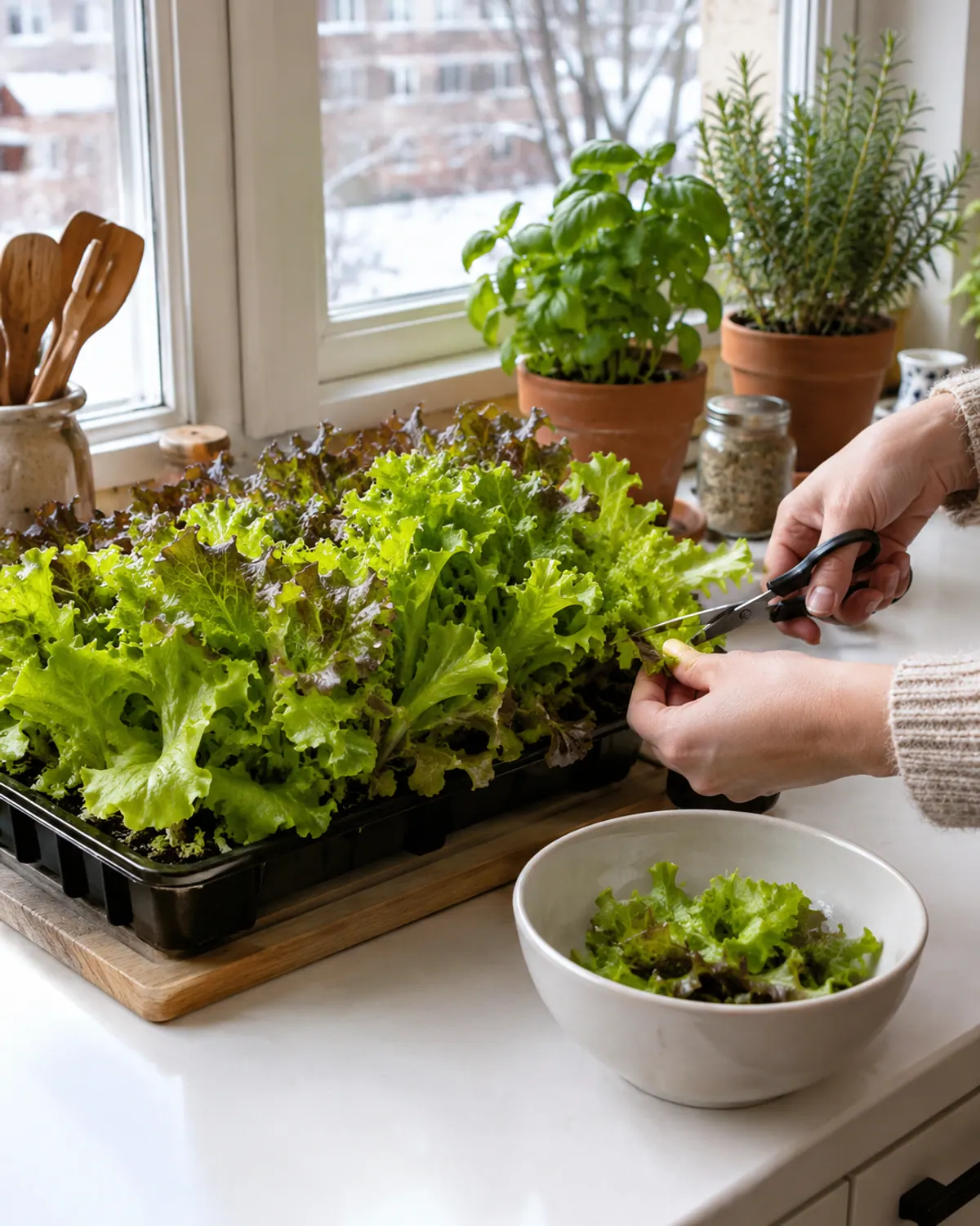
Baby leaves are ready at 3 to 4 inches tall, usually 3 to 4 weeks after sowing. Cut the outer leaves about an inch above the soil with scissors and leave the center growing. The plant pushes out new leaves and you can cut again every 10 to 14 days for 2 to 3 months.
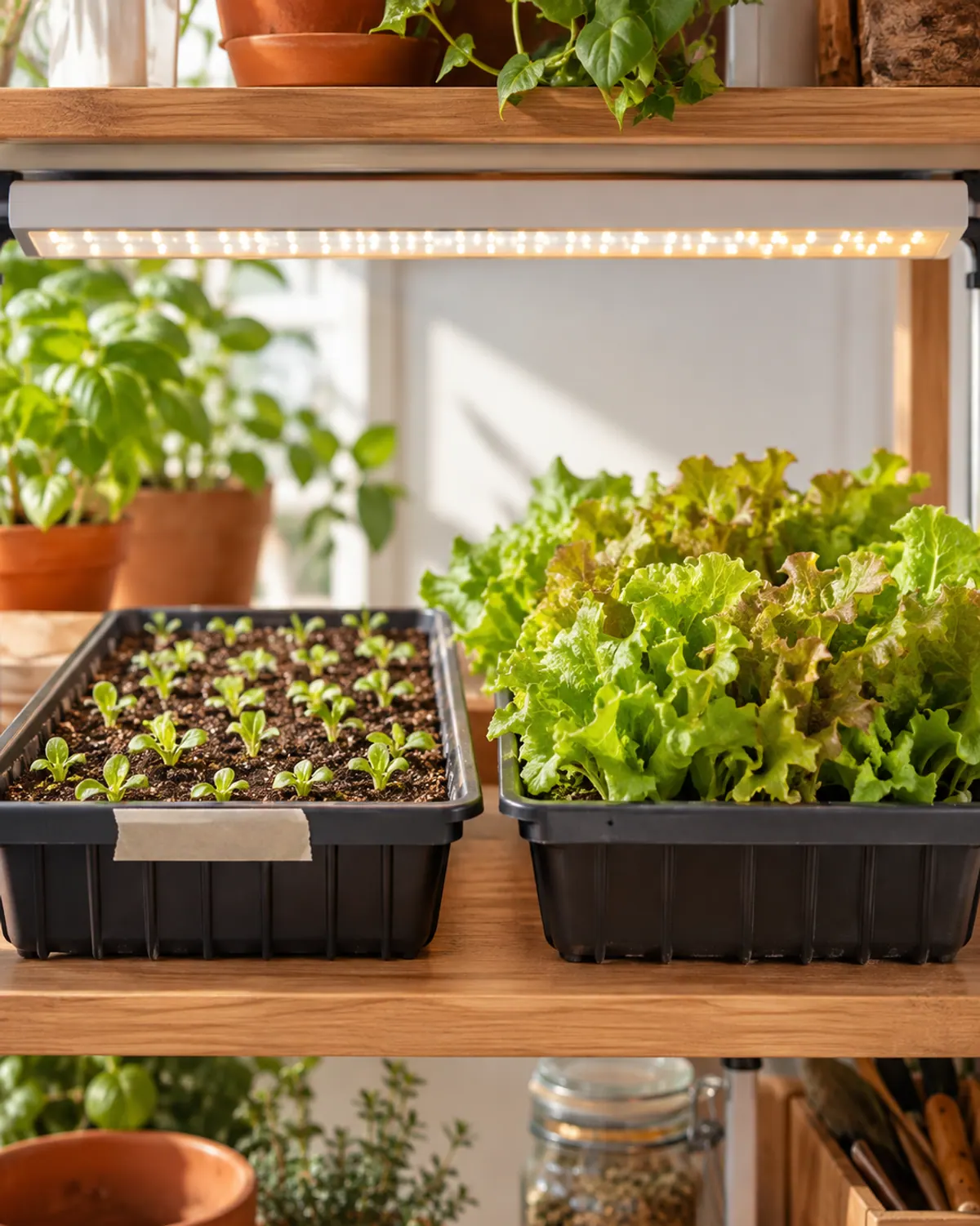
For small heads, let Tom Thumb or Little Gem grow 6 to 8 weeks and cut the whole plant. Either way, sow a fresh tray every two weeks. Two trays at different ages on one shelf keeps a salad going from November to March.
Troubleshooting: leggy, bitter, gnats and damping off
| Problem | Likely cause | Fix |
|---|---|---|
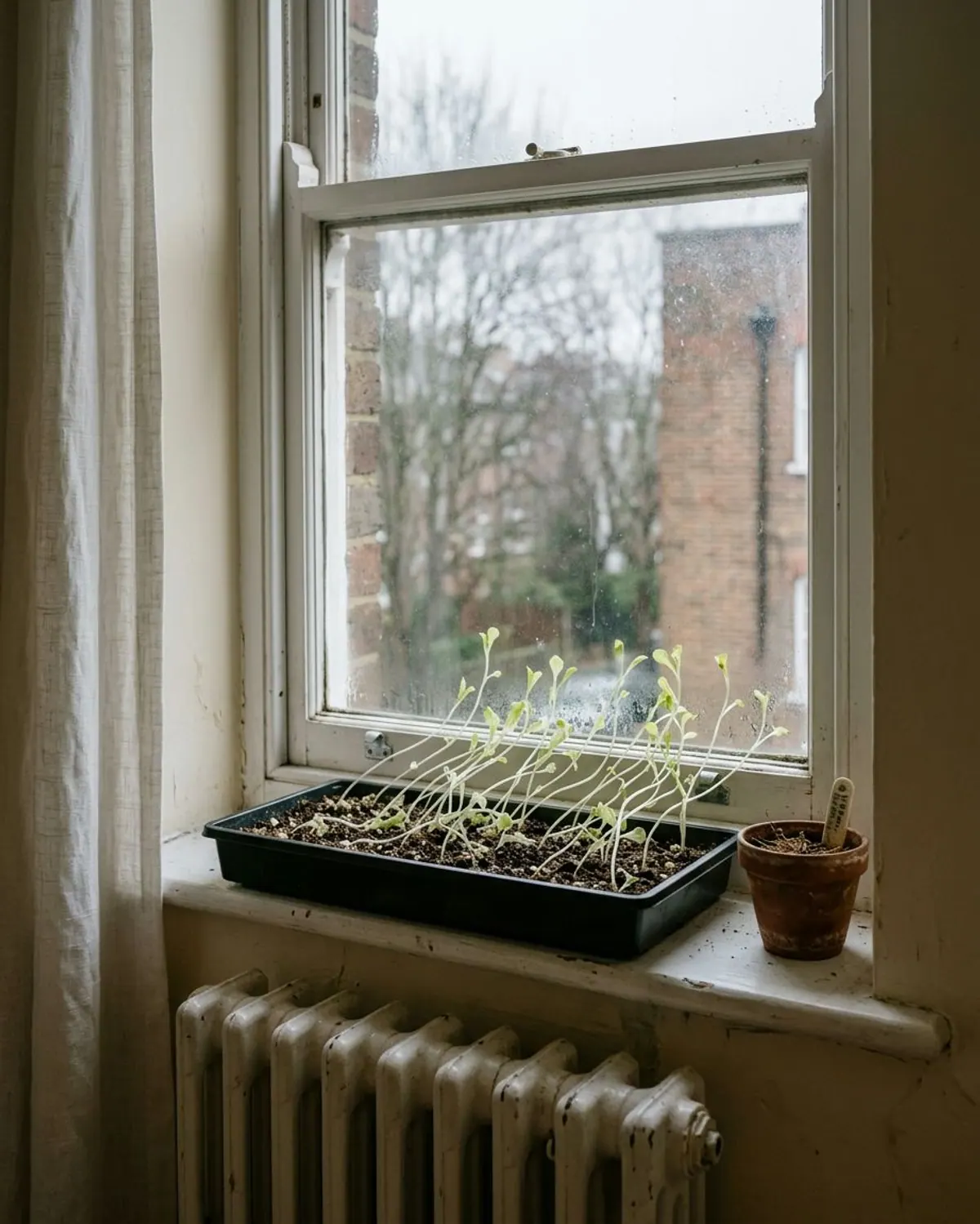
| Tall, pale, floppy seedlings | Not enough light | Lower the lamp to 4 to 6 inches, run it 14 hours, turn window trays daily |
| Bitter leaves or a tall flower stalk | Room over 75 F, or plants left too long | Move to a cooler spot, harvest younger, sow a bolt-resistant variety |
| Tiny black flies around the tray | Fungus gnats in soggy mix | Let the top inch dry, bottom-water only, add a yellow sticky trap |
| Seedlings collapse at the soil line | Damping off (a fungus in wet, still air) | Use fresh mix, thin crowded seedlings, run a small fan, remove the lid early |
| Leaf tips brown and crisp | Dry heated air or fertilizer burn | Raise humidity, feed at half strength, keep the lamp a bit higher |
Other indoor lettuce garden options: jars, hydroponic kits and pots
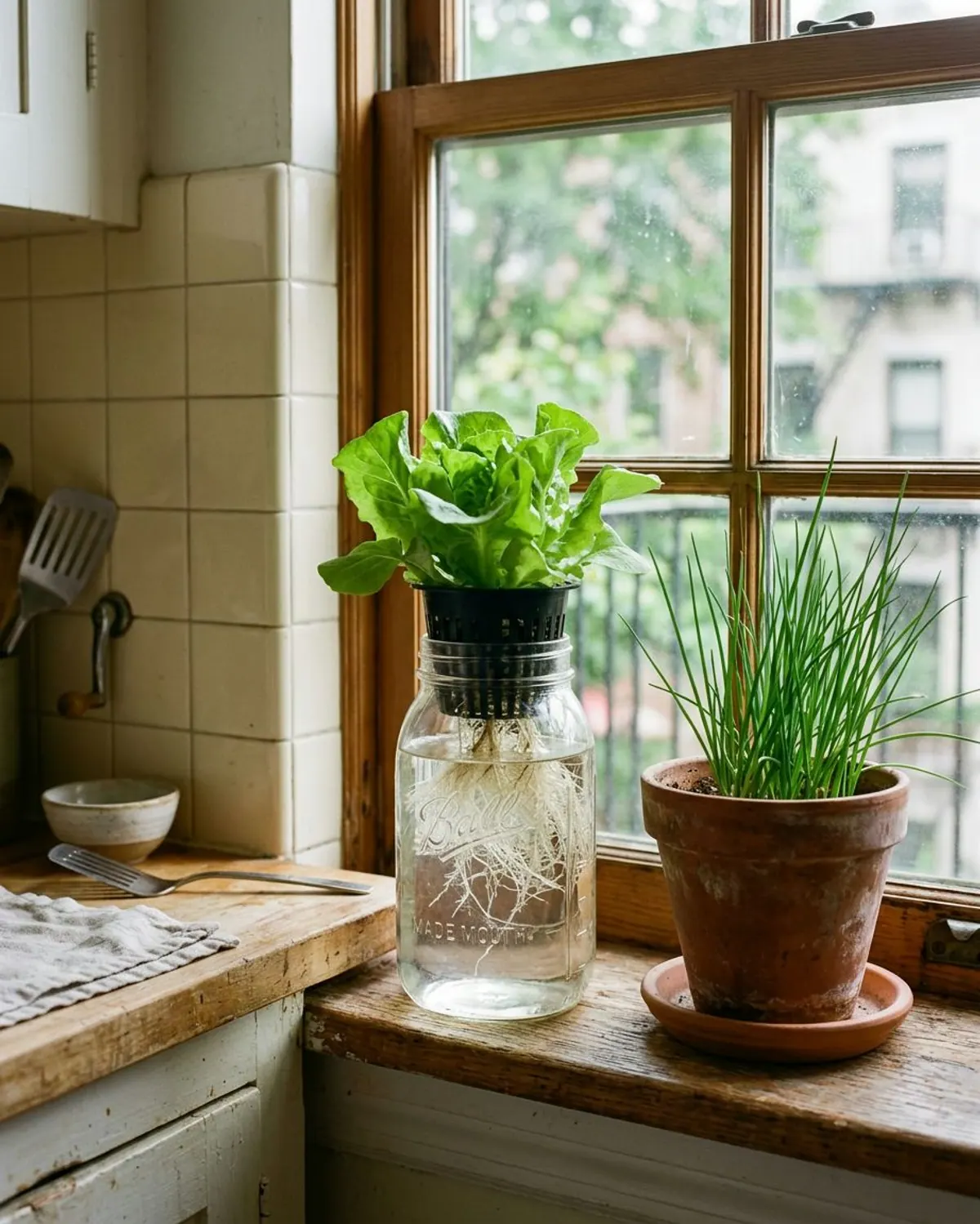
You do not need soil at all. A mason jar with a net cup, a little nutrient solution and a loose-leaf seedling is a simple no-pump setup (the Kratky method) that grows a plant in about 5 weeks. Small countertop hydroponic kits with built-in lights do the same with less fuss but cost more.
Six-inch pots work as well as trays and look nicer on a sill; one small butterhead per pot. Whatever you use, the light and temperature numbers above stay the same. The low-light herb list is worth a look if you want green on the darker windows too.
Grow herbs beside your lettuce under the same light
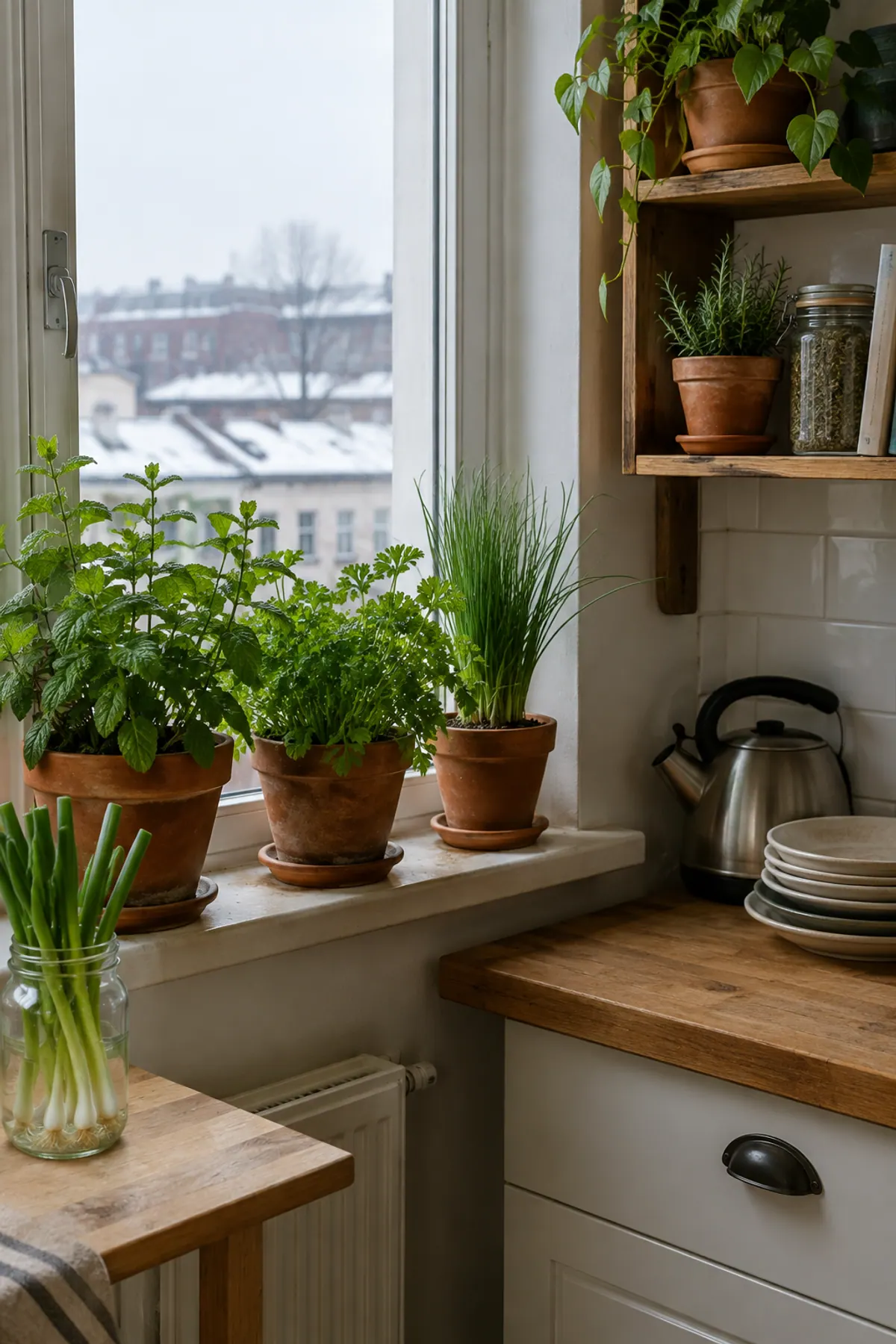
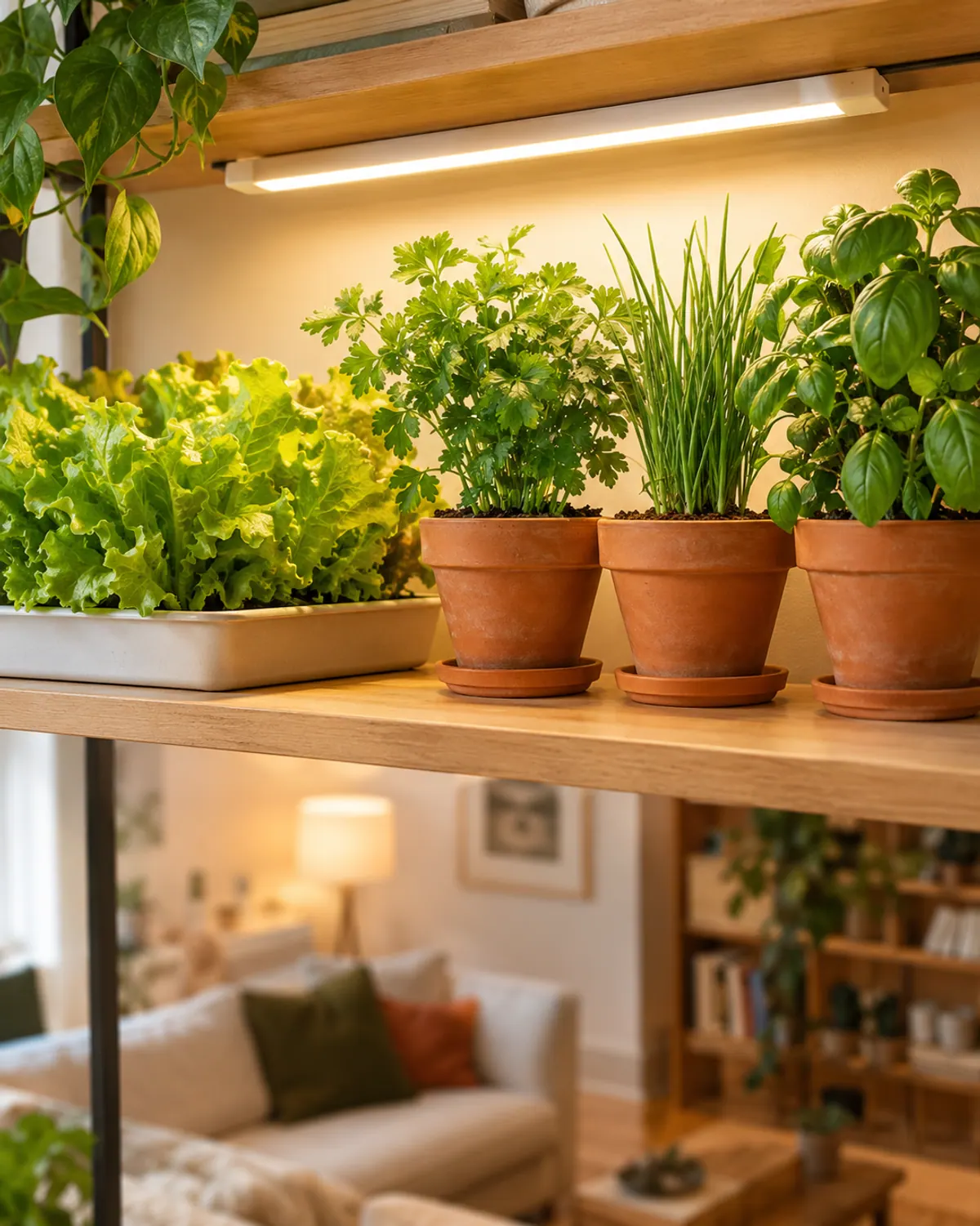
A 20 to 30 watt LED strip lights more than one tray. Parsley, chives, cilantro and dill like the same cool, bright conditions as lettuce, and basil is happy at the warmer end of the shelf. One light, one shelf, salad and herbs all winter.
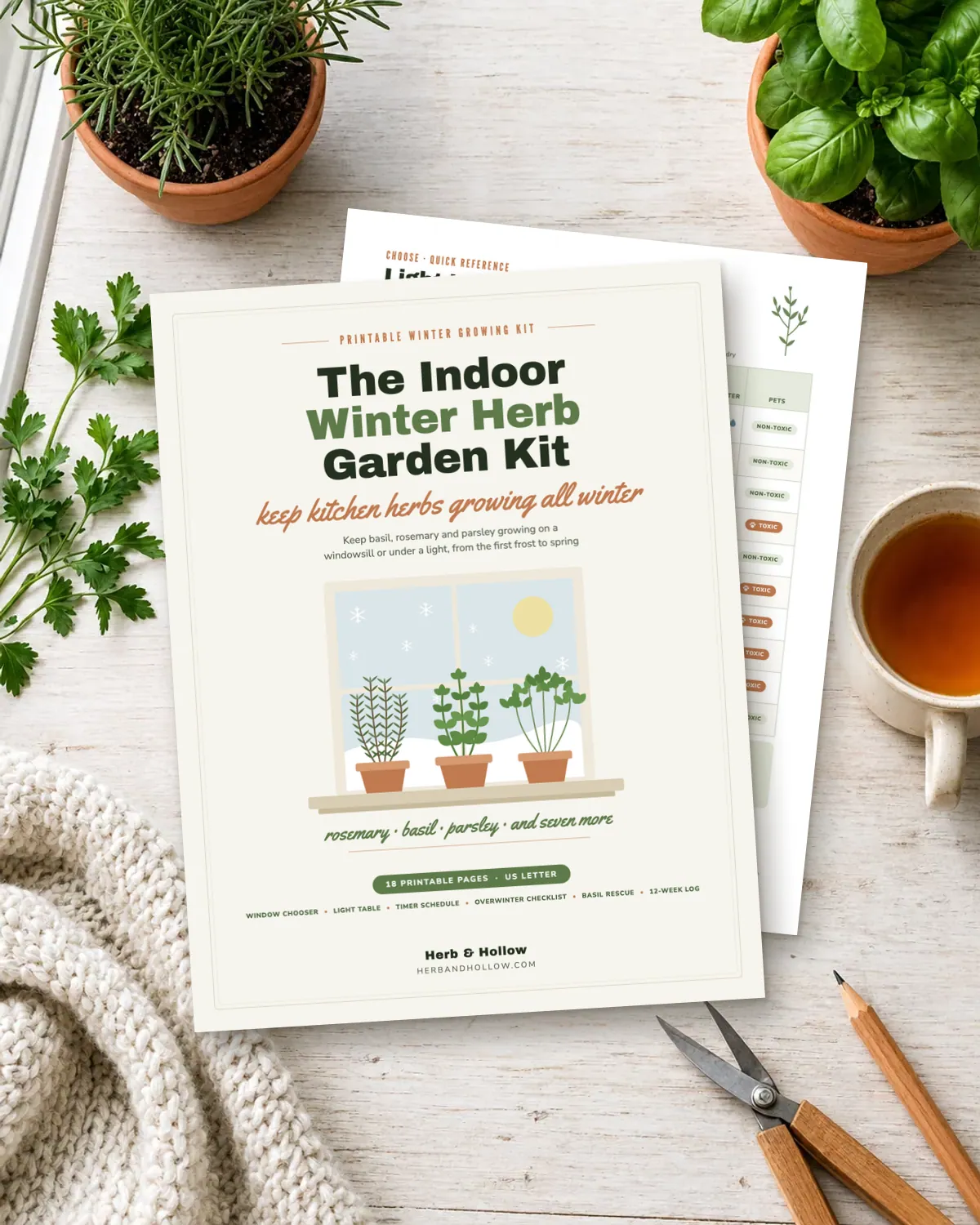
The Indoor Winter Herb Garden Kit covers that shelf: which herbs share a light, how high to hang it, a watering tracker and a harvest log. It pairs with this lettuce routine without any extra gear.
Indoor lettuce supplies
Shop the setup
-
Clip-on LED grow light with timer
Typically $15 to $30
Built-in timer gives 12 to 14 hours without you remembering to switch it on
Check price on Amazon for Clip-on LED grow light with timer -
Shallow seed trays with drainage, 10 x 20
Typically $10 to $20
The right 3 to 4 inch depth; buy a solid tray too for bottom watering
Check price on Amazon for Shallow seed trays with drainage, 10 x 20 -
Seed-starting mix
Typically $8 to $15
Fine, fast-draining, and free of the weed seed and pests in garden soil
Check price on Amazon for Seed-starting mix -
Loose-leaf lettuce seed mix
Typically $3 to $8
Mixed colors, quick baby leaves, regrows after every cut
Check price on Amazon for Loose-leaf lettuce seed mix -
Bottom-watering tray
Typically $8 to $15
Keeps leaves dry and seedlings upright
Check price on Amazon for Bottom-watering tray -
Liquid fertilizer for seedlings
Typically $10 to $18
Use at half strength every two weeks after true leaves appear
Check price on Amazon for Liquid fertilizer for seedlings
We earn from qualifying purchases, which never changes what we recommend. Read our disclosure and editorial guidelines.
Frequently asked questions
Does lettuce need a grow light indoors?
In winter, almost always. A south window alone gives 4 to 6 hours of weak sun, which grows thin, pale leaves. A clip-on LED on a timer for 12 to 14 hours a day makes the difference between a sad tray and a real salad.
How long does it take to grow lettuce indoors?
Seed sprouts in 2 to 7 days. Baby leaves are ready to cut in 3 to 4 weeks, and a loose-leaf tray keeps regrowing for 2 to 3 months. Small butterheads take 6 to 8 weeks for a whole head.
Can you grow lettuce indoors in winter?
Yes. Lettuce likes the cool rooms most homes have in winter, needs only 3 to 4 inches of soil, and grows well under a small LED light. Keep it between 60 and 68 F and away from radiators.
What is the best lettuce to grow indoors?
Loose-leaf types such as Black-Seeded Simpson and cut-and-come-again mixes, plus small butterheads like Tom Thumb and Little Gem. Arctic King and Winter Density are bred for cool, dim conditions. Skip iceberg and full-size romaine.
How many hours of light does lettuce need indoors?
12 to 14 hours a day of bright light. Set an LED about 6 inches above the leaves on a plug-in timer. More than 16 hours does not help and can stress the plants.
Why is my indoor lettuce bitter?
Heat and age. Rooms above 75 F push lettuce to bolt, and old leaves turn bitter. Harvest young, keep the tray in a cool spot, and sow a fresh tray every two weeks.

Save it for later
Pin this to your Small-Space Vegetables board so it's there when you need it.
Save to Pinterest