This post contains affiliate links. As an Amazon Associate we earn from qualifying purchases, at no extra cost to you. Read our disclosure.
Safety first: Herbs can be powerful. If you are pregnant, nursing, take medication or have a health condition, check with your doctor or pharmacist first. Please read our herbal & garden safety notes before you start.
Key takeaways
- Wording: common name, Latin name, then a dated line
- Styles: kraft rectangle, cream oval, chalkboard, brass holder, lid-top and hang tag
- Latin names: nine herbs with their ASPCA pet listing for dogs and cats
- Dates: Penn State says most dried herbs keep well up to a year, so we suggest a best-by one year after drying
- Decor jars: mark them "decor only, not for eating" and keep them apart
- Not medical advice: this guide covers labels and storage only
In this post16 sections
- What to write on apothecary jar labels
- 6 apothecary jar label styles
- 1. Kraft rectangle labels
- 2. Cream oval labels
- 3. Chalkboard tag labels
- 4. Brass label holders
- 5. Lid-top labels
- 6. Hang tags
- Latin names and pet notes for 9 kitchen herbs
- Apothecary jar label sizes by jar
- Put a date on every jar
- How to apply labels so they last
- Decor-only jars: mark them not for eating
- Style the labeled set on a shelf
- Shop the apothecary jar label supplies
- FAQ
What to write on apothecary jar labels
A good apothecary jar label has three lines: the common name in large letters, the Latin name in small letters beneath, and a dated line at the bottom. The common name is what you read in a hurry. The Latin name gives the vintage look, and it helps because common names overlap, so "mint" can mean many different plants.
Keep the look and keep the facts. If you want a vintage feel on a jar that holds nothing edible, say so on the label (more on that below).
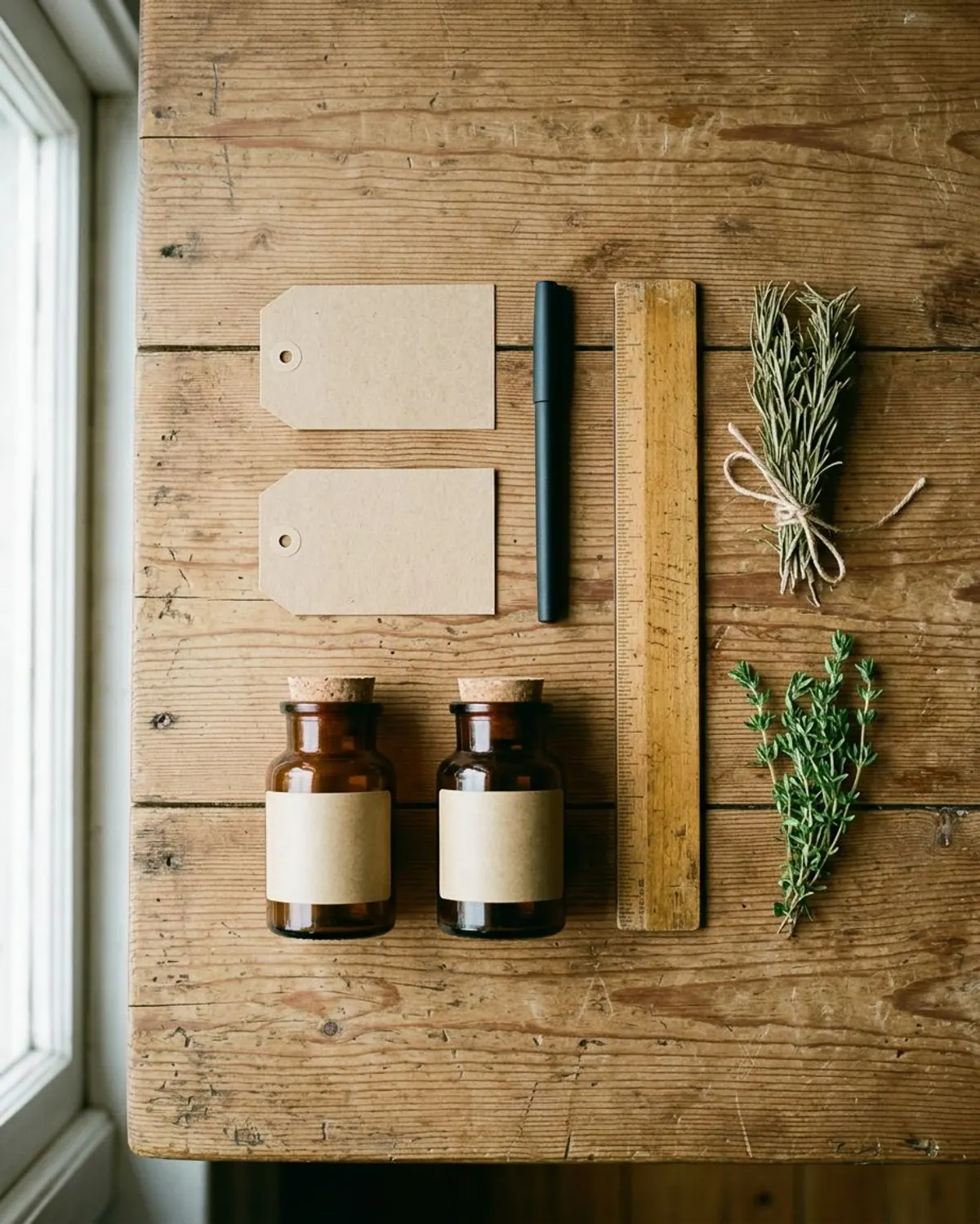
6 apothecary jar label styles
Each style below suits a different kitchen and a different jar. Pick one and repeat it across the whole shelf, because a single consistent style looks far more like an apothecary than a mix of six.
1Kraft rectangle labels
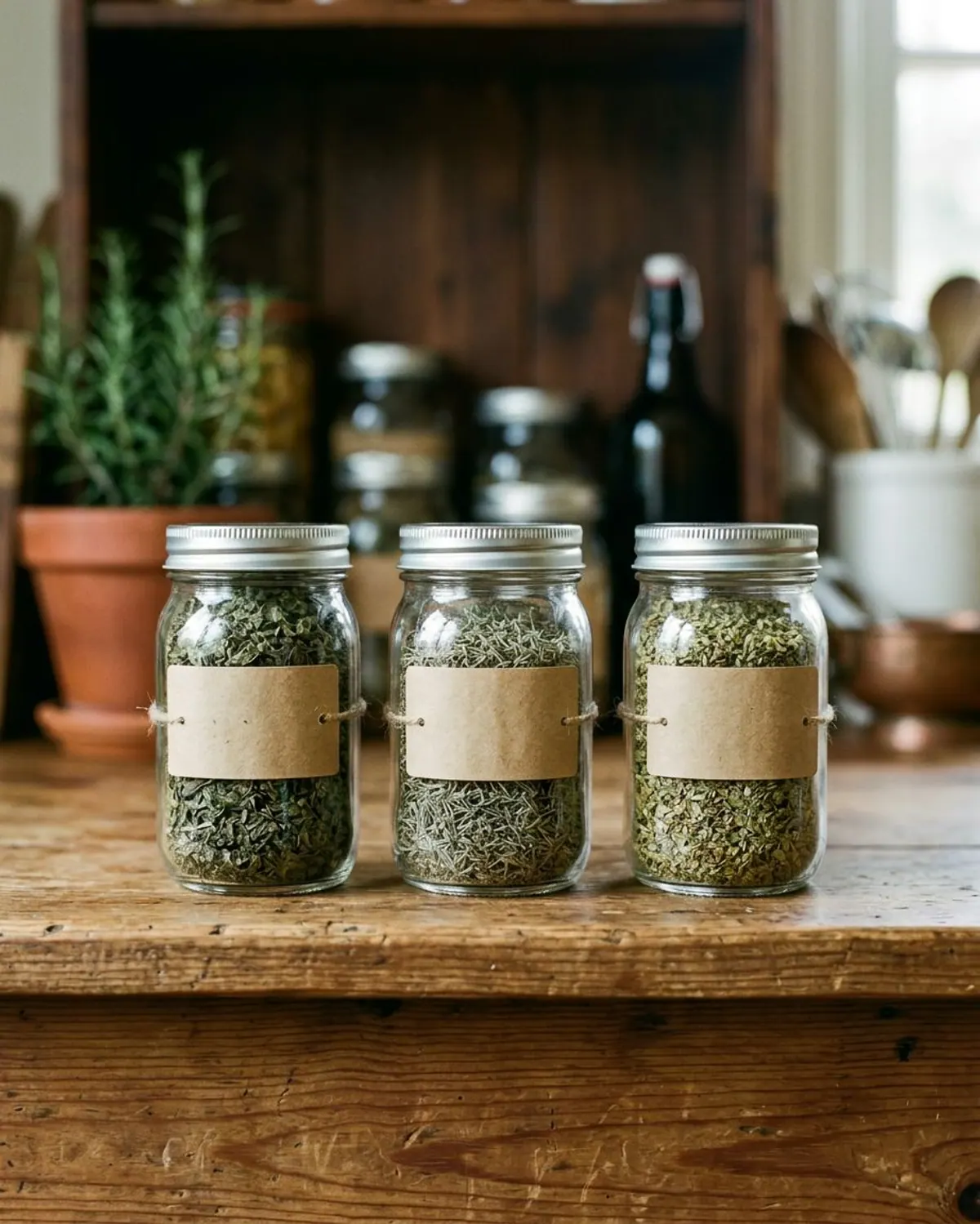
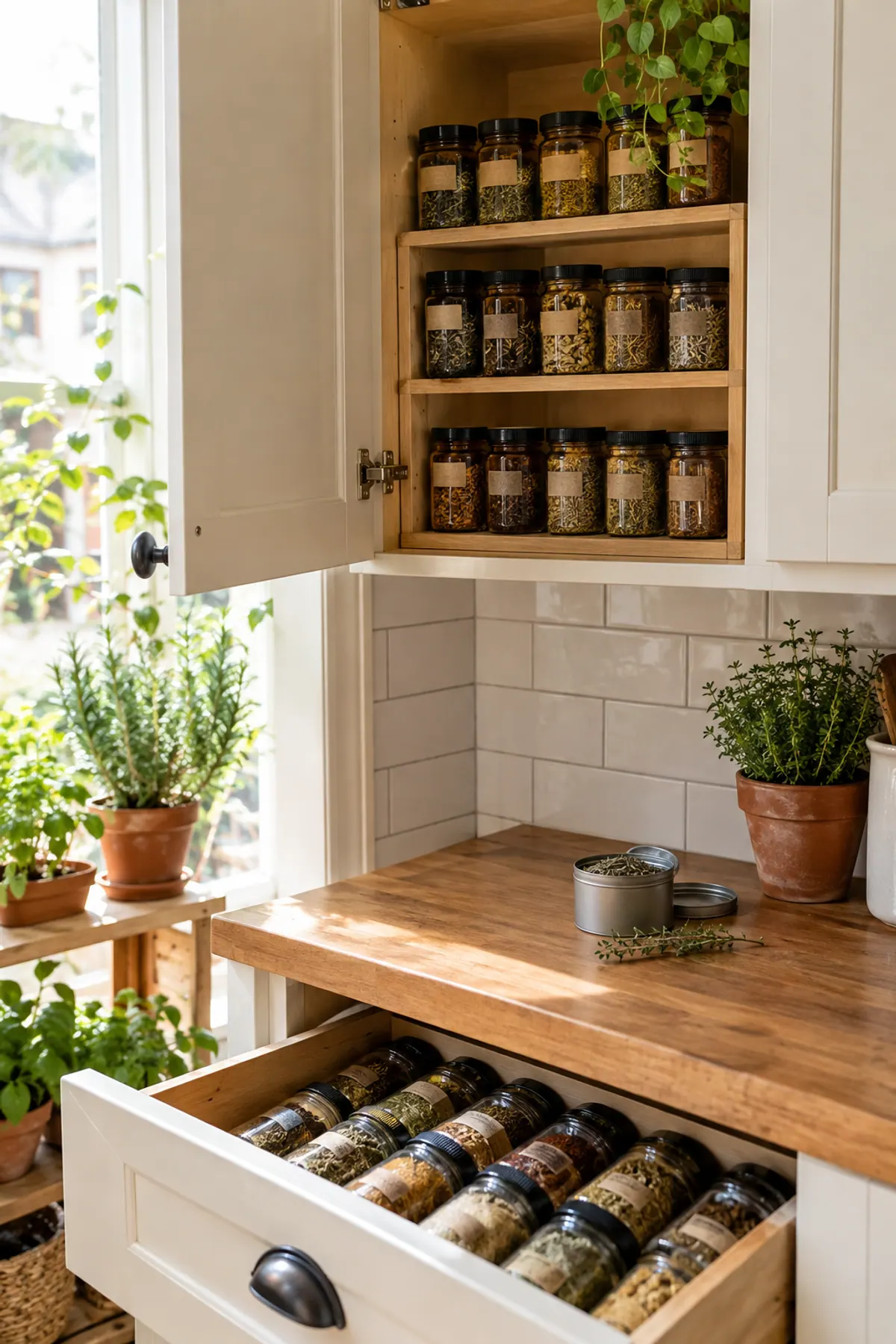
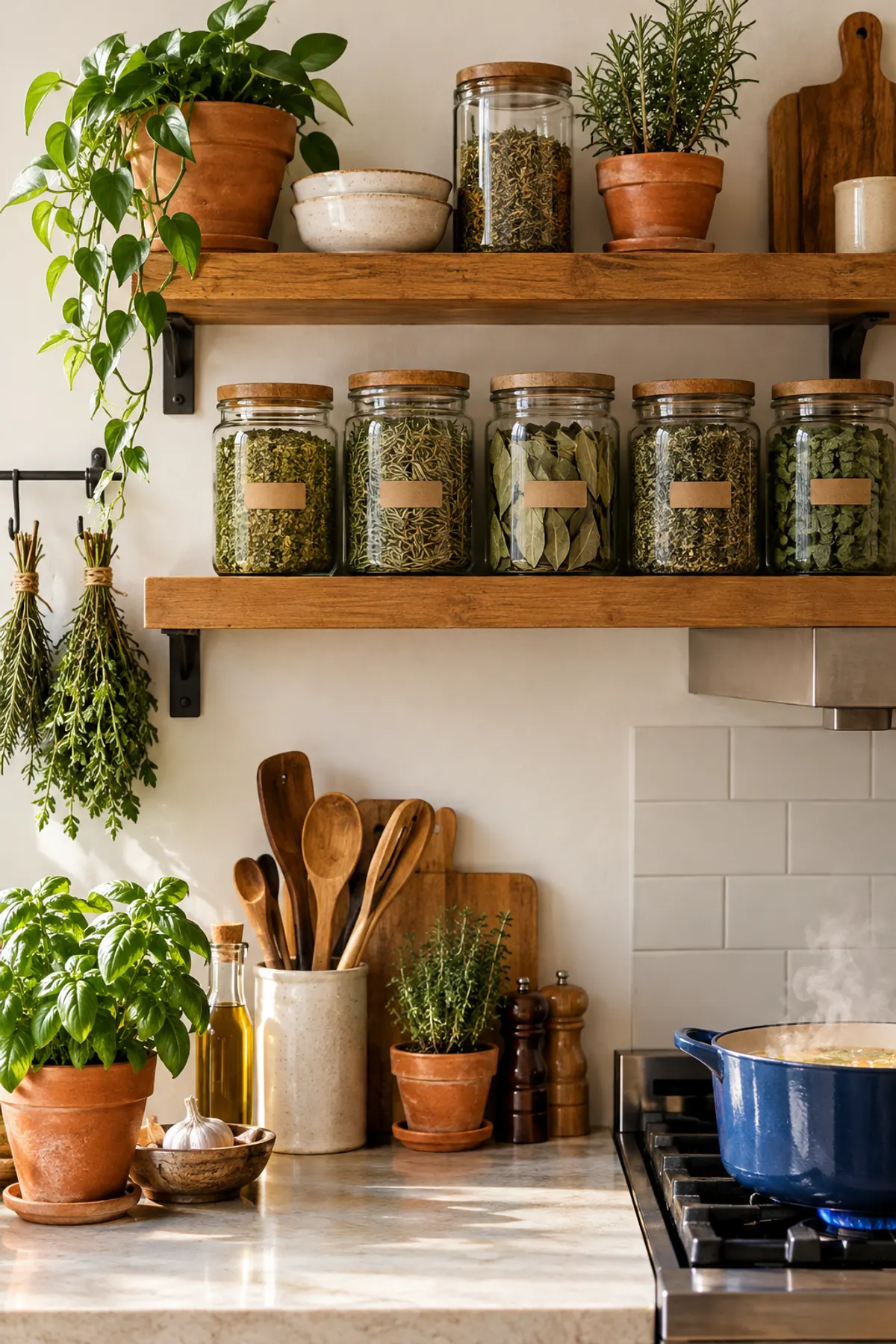
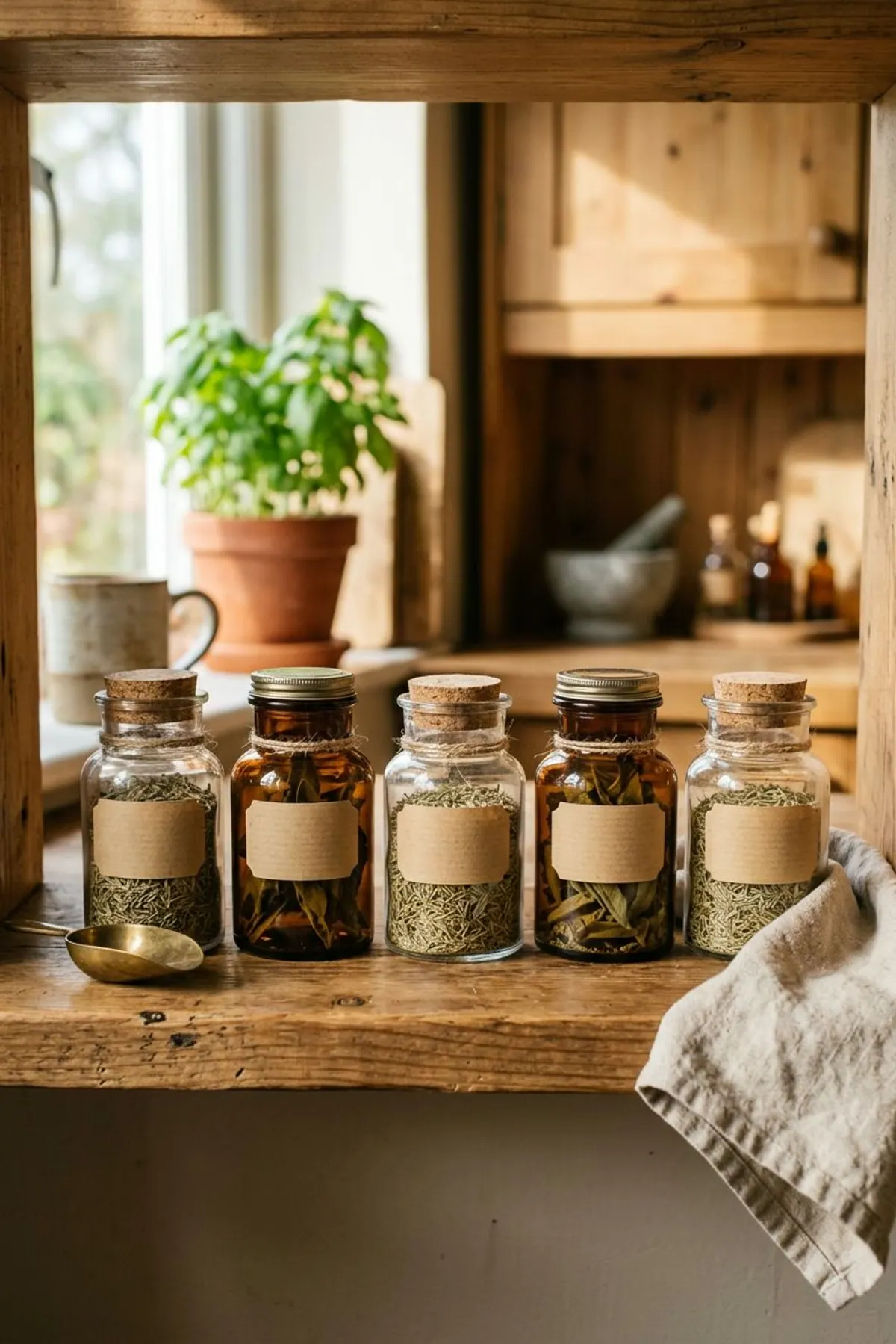
Kraft rectangles are the easiest style and the most forgiving. They hide small mistakes, they take pen well, and they look right on clear or amber jars. Print or hand write the name in dark ink, and add the Latin name on a second line.
- Use a waterproof pen, because a damp finger will smear ordinary ink.
The simplest label for a clean look, and it takes a pen or a printer.
2Cream oval labels
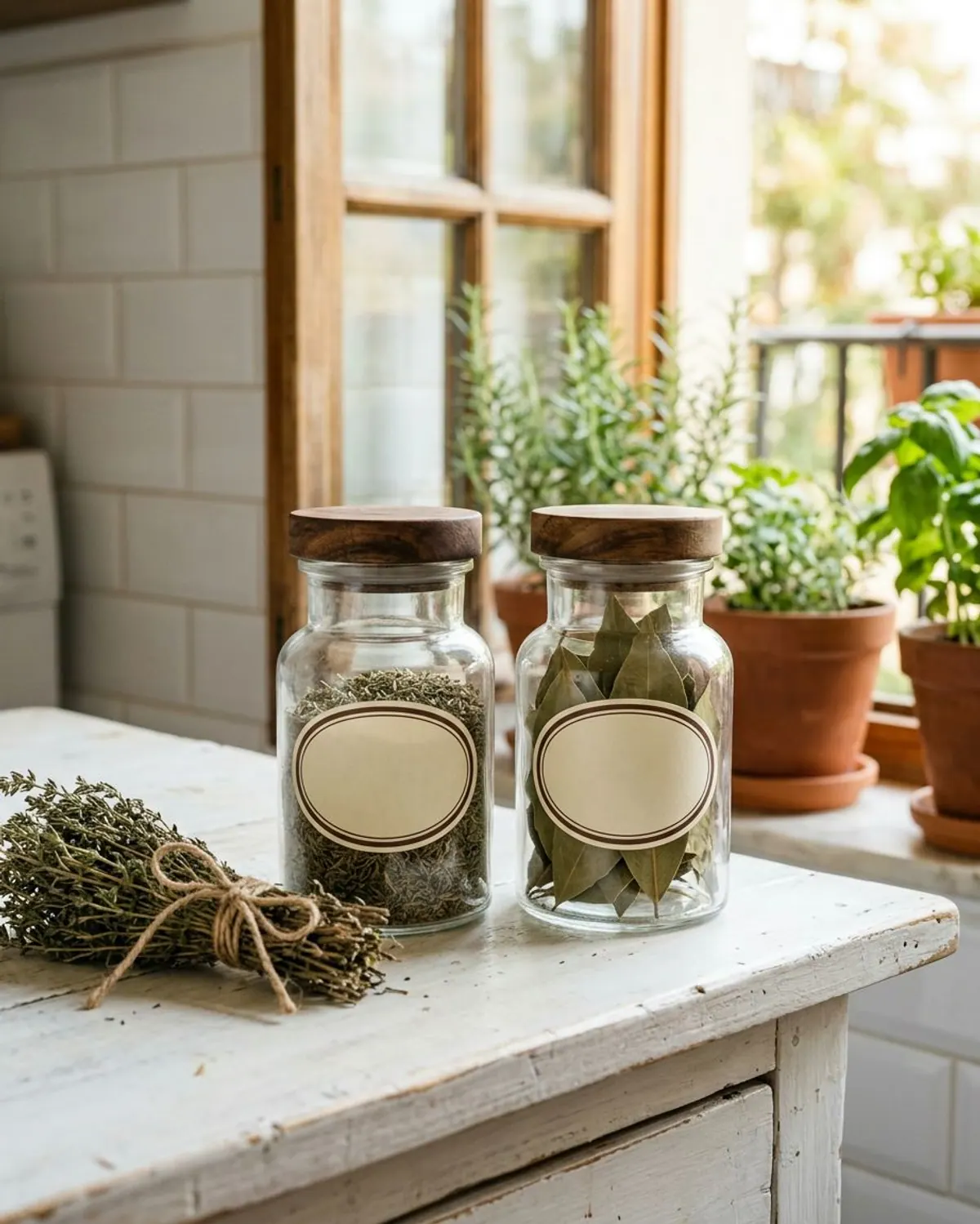
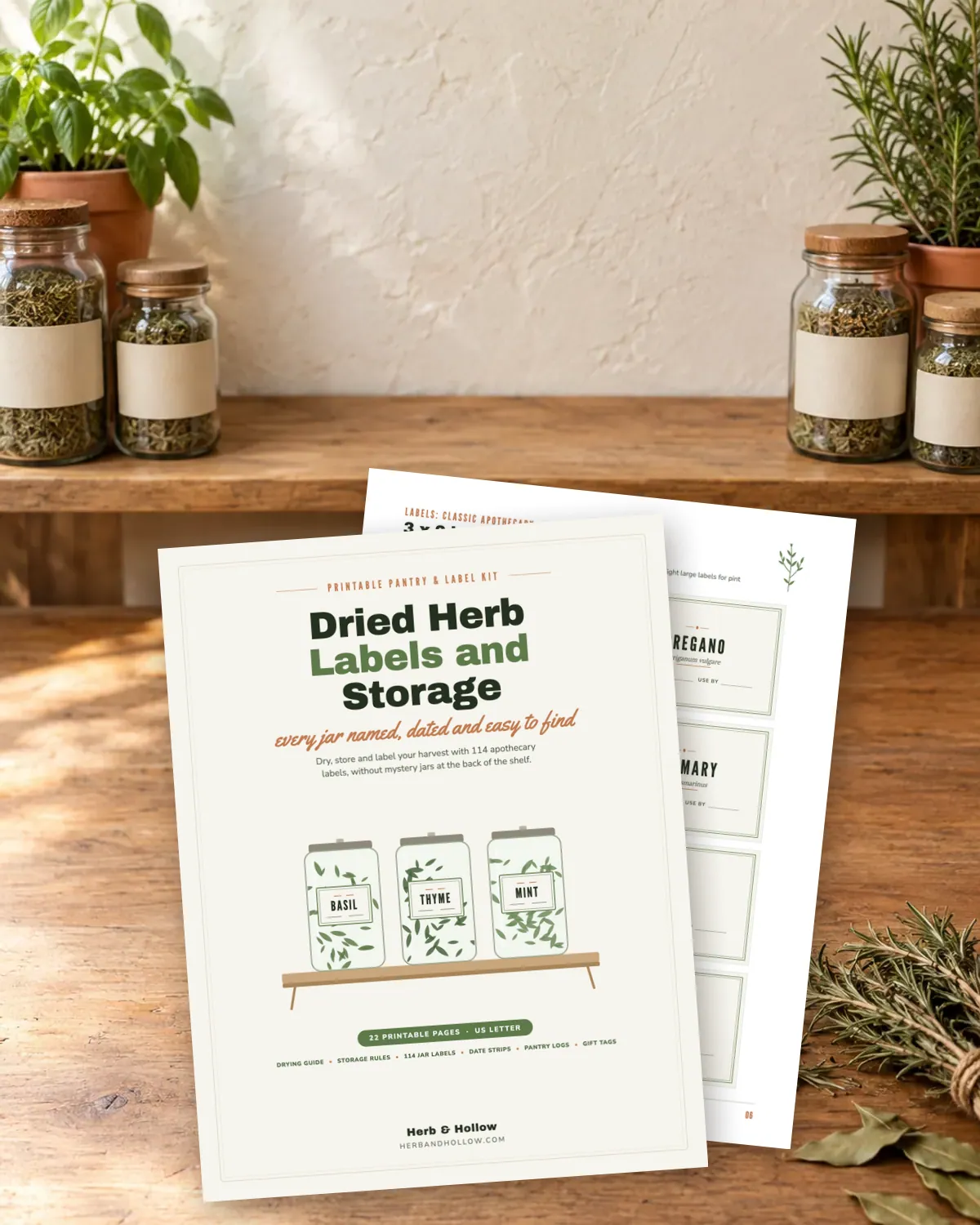
Cream ovals are the classic vintage apothecary shape. They suit straight-sided glass jars with wooden or cork lids and look best with a thin border and a short name. Our Kitchen Herb Pantry Label Kit ($6) has a classic apothecary style with 13 herbs pre-named, plus blanks.
- Oval labels need a flat, straight side on the jar, so skip them on heavily curved glass.
Gives the classic apothecary shape on straight glass jars.
3Chalkboard tag labels
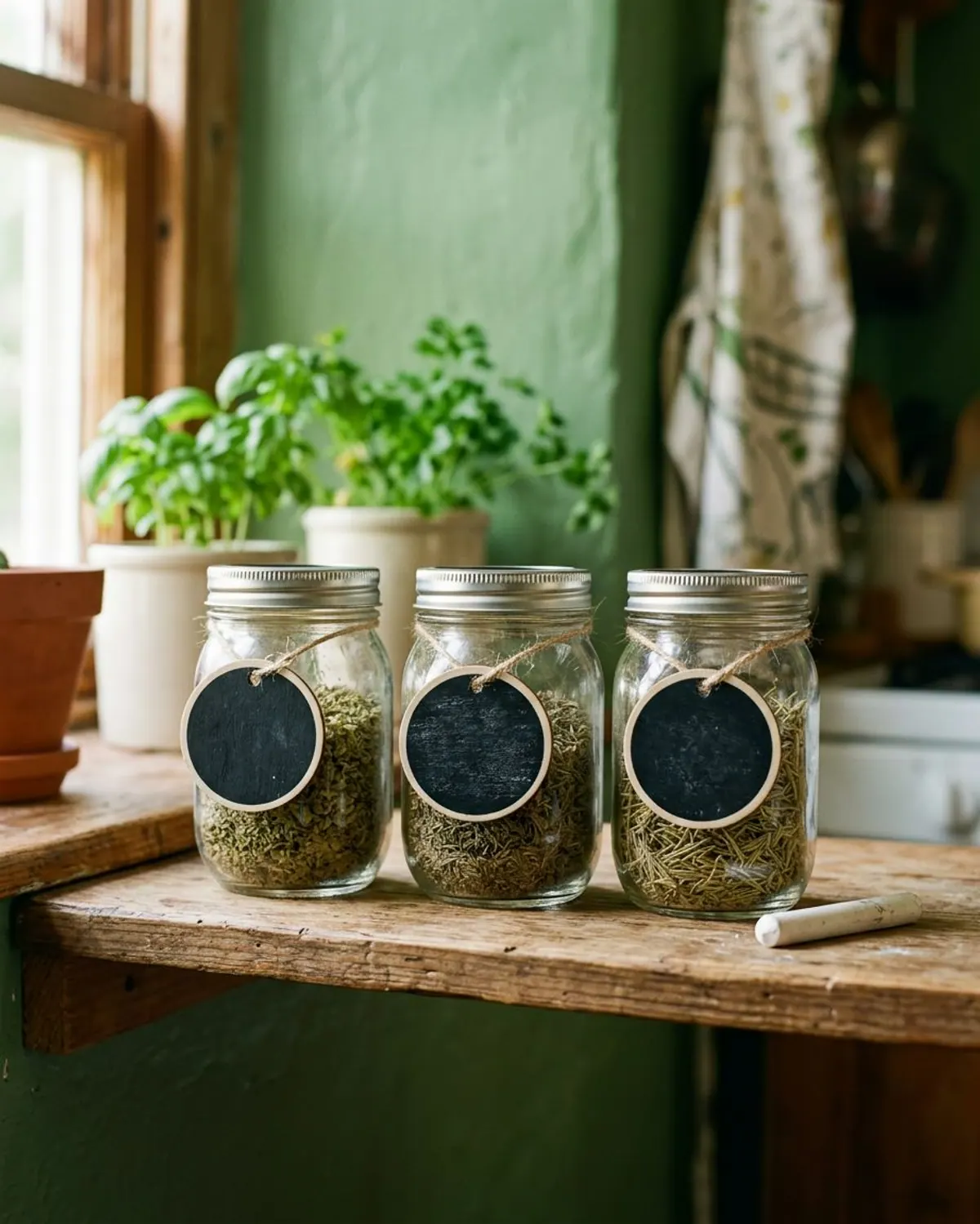
Chalkboard tags tie on with twine and can be rewritten, so they suit herbs you swap often. They are the best choice when one jar holds a seasonal herb that changes. Write with a chalk pen for a crisp line and wipe clean with a damp cloth.
- Write the date on the back of the tag so the front stays tidy.
Reusable, so you can rewrite a label when the herb inside changes.
4Brass label holders
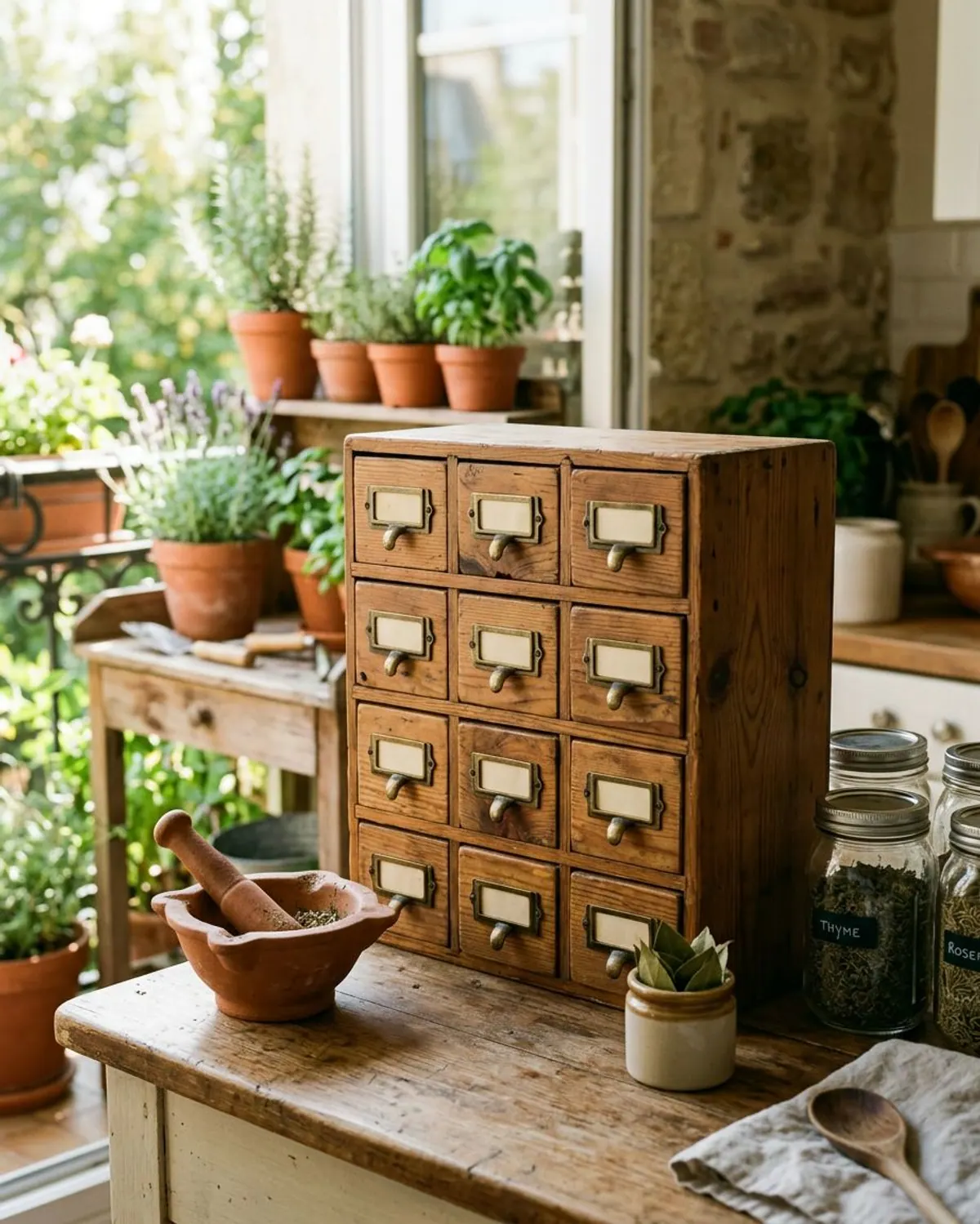
Brass holders give an old pharmacy-drawer look, and they work well on cabinet drawers as well as jar fronts. The paper slides out, so you can change the label without peeling anything. This is the most expensive style, so use it on the jars you see most.
- Cut the paper slip a hair smaller than the frame so it slides in easily.
Slide-in labels you can swap without peeling anything.
5Lid-top labels
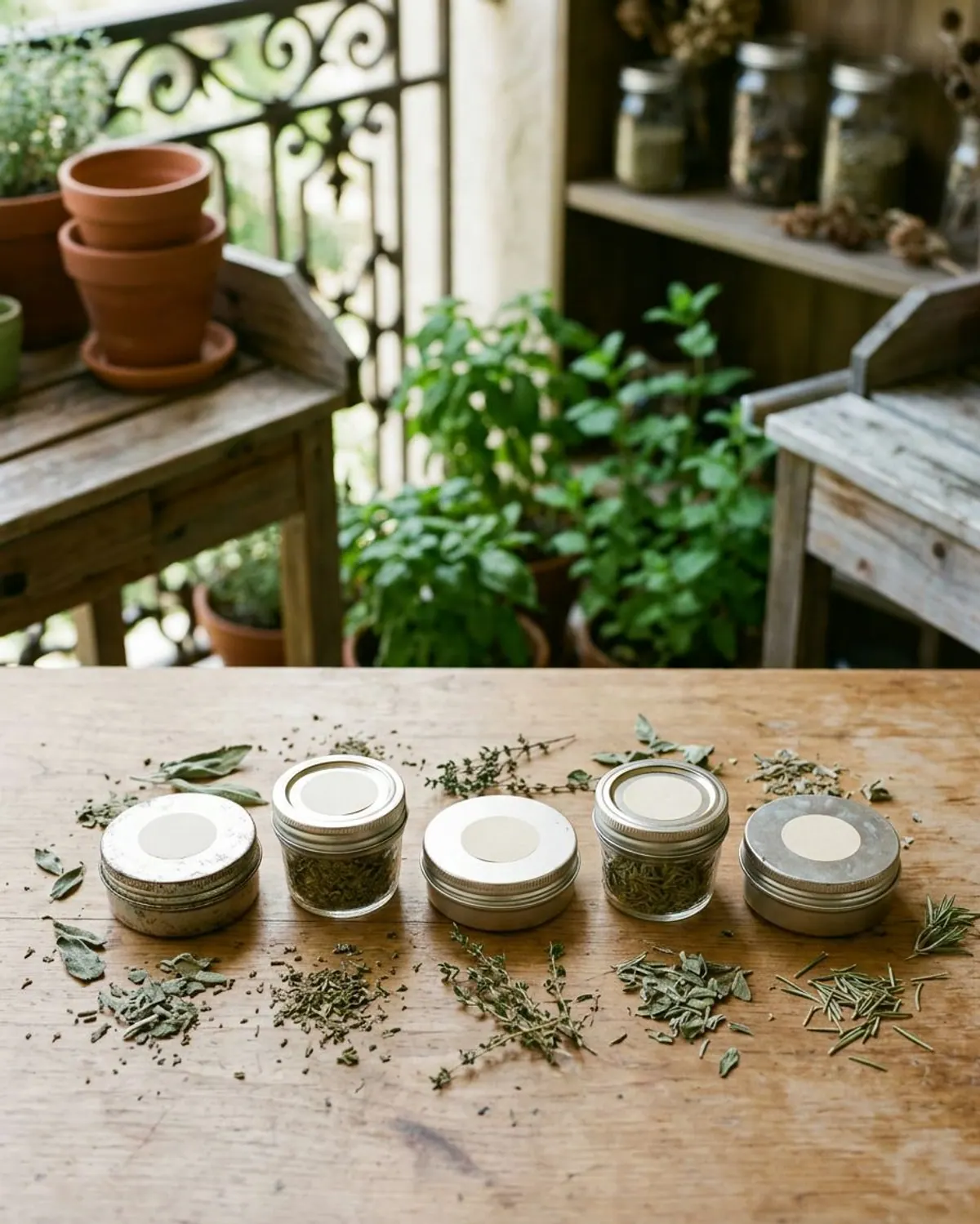
If your jars stack in a drawer or sit on a low shelf, label the lid. A round label on top is read from above, which is how you see a drawer. It is also the best place for the herb name when the jar front is covered in a pretty design.
- Use lid labels for the name only, and put the date on the jar side.
A small date or name label for the top of a lid.
6Hang tags
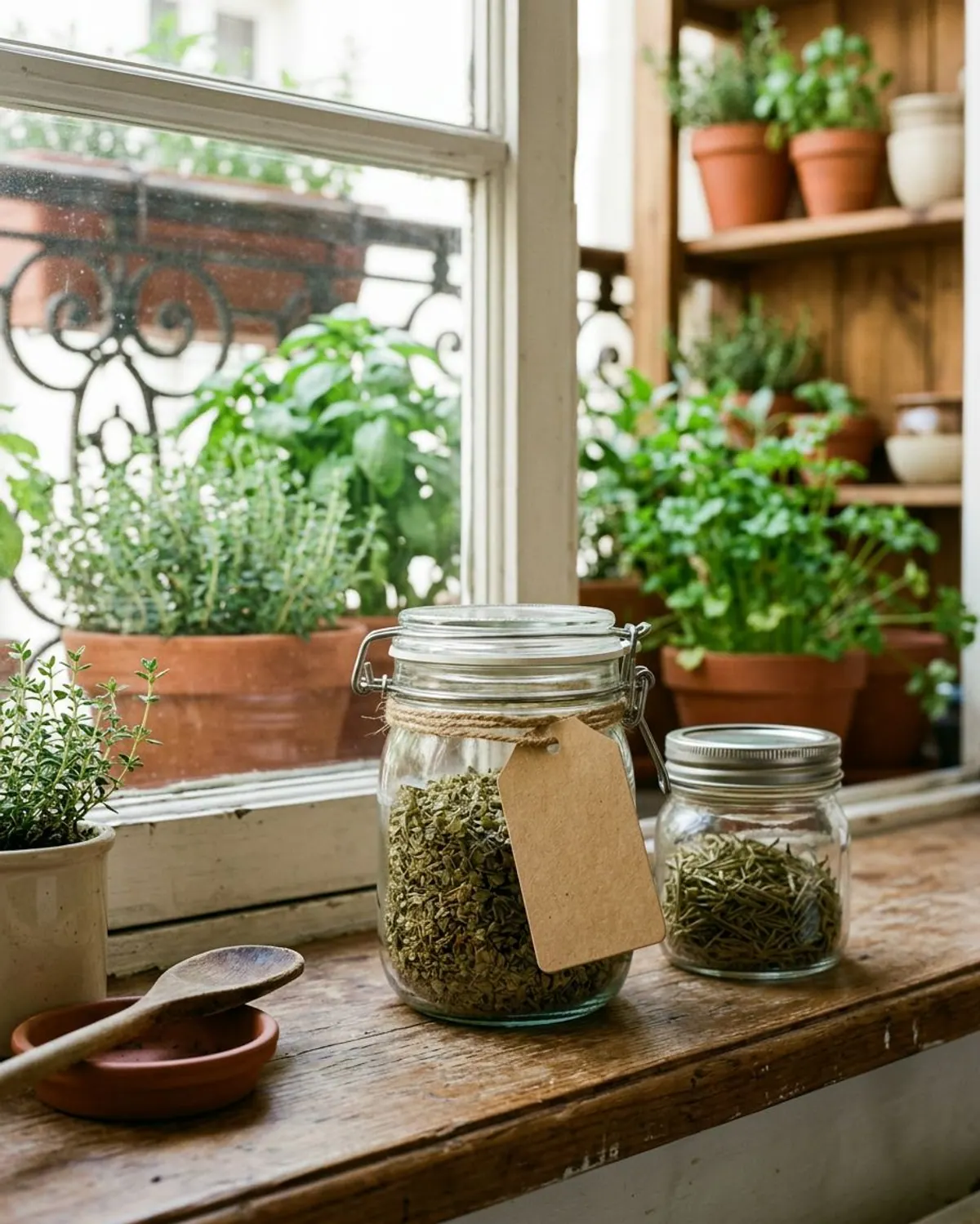
Hang tags tie around the neck of a bottle or jar and leave the glass bare. They are good for gift jars and for jars you want to relabel often. A tag can also carry a short care or use note, which a small sticker cannot.
- Punch the hole before you write, so the ink does not smudge.
A tag that ties on, so the jar surface stays clean.
Latin names and pet notes for 9 kitchen herbs
Use this table for the second line of your labels. The pet column comes from the ASPCA plant lists for dogs and cats, so check the ASPCA page for your own pet before you decide where a jar sits. Rosemary's accepted Latin name is now Salvia rosmarinus, which was once Rosmarinus officinalis, and many labels still use the old name.
| Common name | Latin name for the label | ASPCA listing |
|---|---|---|
| Rosemary | Salvia rosmarinus | Non-toxic |
| Sage | Salvia officinalis | Non-toxic |
| Thyme | Thymus vulgaris | Non-toxic |
| Basil | Ocimum basilicum | Non-toxic |
| Parsley | Petroselinum crispum | Toxic in large amounts |
| Chives | Allium schoenoprasum | Toxic |
| Bay leaf | Laurus nobilis | Toxic |
| Lavender | Lavandula angustifolia | Toxic |
| Peppermint | Mentha × piperita | Mint is listed as toxic |
Dried herbs in jars are kept out of reach, but a jar can still be knocked off a shelf. Put the toxic ones high or inside a cabinet if you have pets. This is not medical advice.
Apothecary jar label sizes by jar
The right label size depends on how much clear glass the jar shows. The sizes below are our suggested starting points, not a standard, so measure the flat part of your own jar and print one test label first.
| Jar size | Label width and height | Best style |
|---|---|---|
| 4 oz spice jar | about 1.5 by 1 inch | Kraft rectangle or lid-top |
| 8 oz jar | about 2 by 1.25 inches | Cream oval or kraft |
| 16 oz (pint) jar | about 3 by 2 inches | Cream oval, chalkboard or brass |
| Bottle or clamp jar | hang tag, about 1.5 by 2.5 inches | Hang tag |
Put a date on every jar
Penn State Extension says most dried herbs keep well for up to a year when stored airtight, away from heat, light and moisture. A dated label turns that into a rule you can follow. We suggest writing the date you dried or opened the jar, and a best-by date one year later.
The one-year best-by is our habit, not a standard from the source. Our guide to storing dried herbs covers jars, racks and where to keep them, and our drying herbs at home guide covers the drying step.
How to apply labels so they last
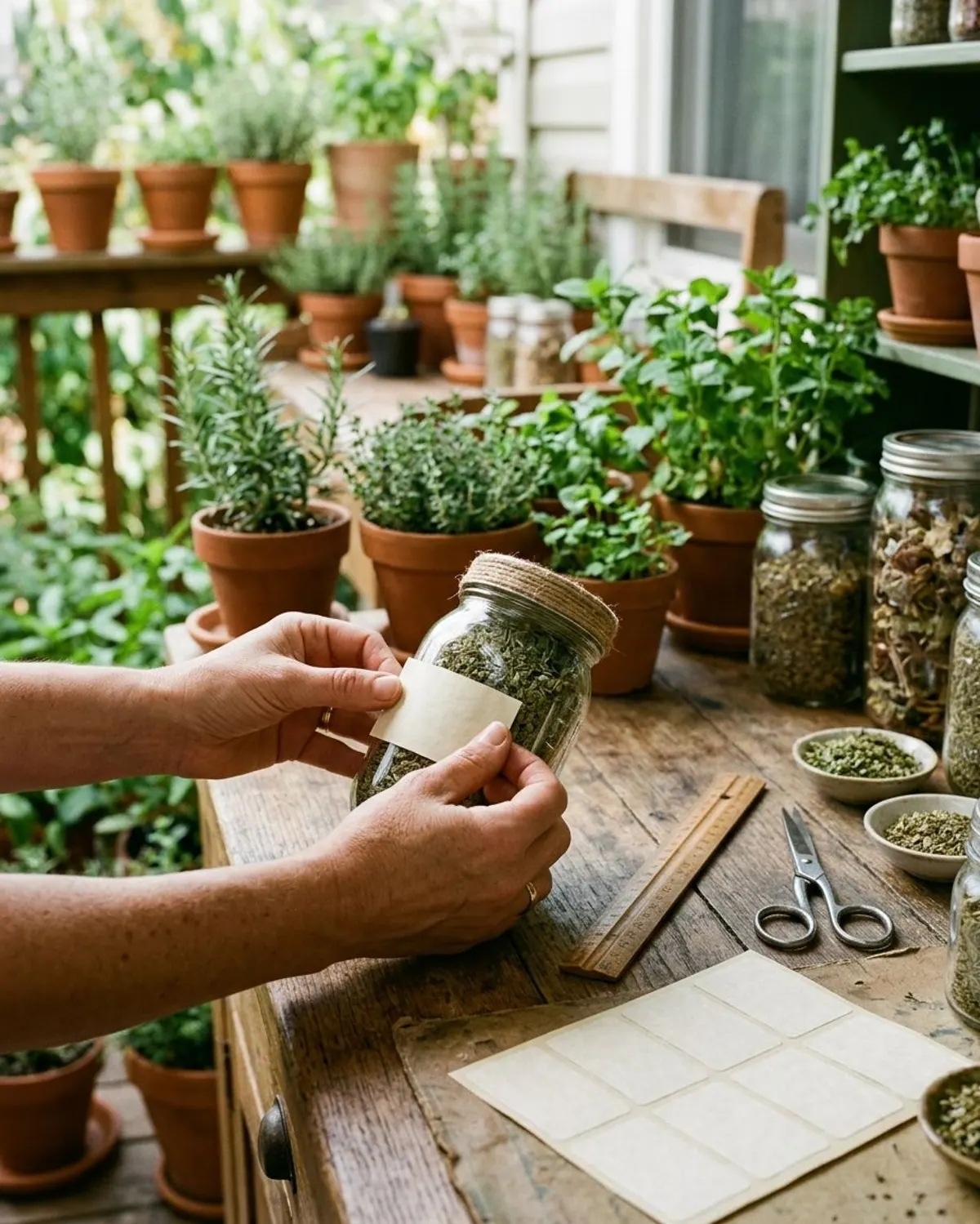
-
Step 1: Wash and dry the jar fully
Any film or moisture on the glass stops a label sticking. Let the jar dry completely before you start.
-
Step 2: Test the label size
Hold the label against the jar and check it sits flat on the straight part. Trim it if the corners lift.
-
Step 3: Stick from the center out
Press the middle first and smooth toward the edges to push out bubbles.
-
Step 4: Write the date last
Add the dried-on date after the label is stuck so you can check it against what is inside.
-
Step 5: Wipe the jar with a dry cloth
Do not scrub a paper label with a wet cloth. For jars that need washing, use removable labels.
Decor-only jars: mark them not for eating
Many apothecary shelves mix jars of cooking herbs with jars of dried flowers, wreath pieces or herbs that sat in the sun for a season. A vintage label on a decor jar looks like food, and a guest or a child may use it. Mark decor jars clearly.
Rules for decor-only jars
Style the labeled set on a shelf
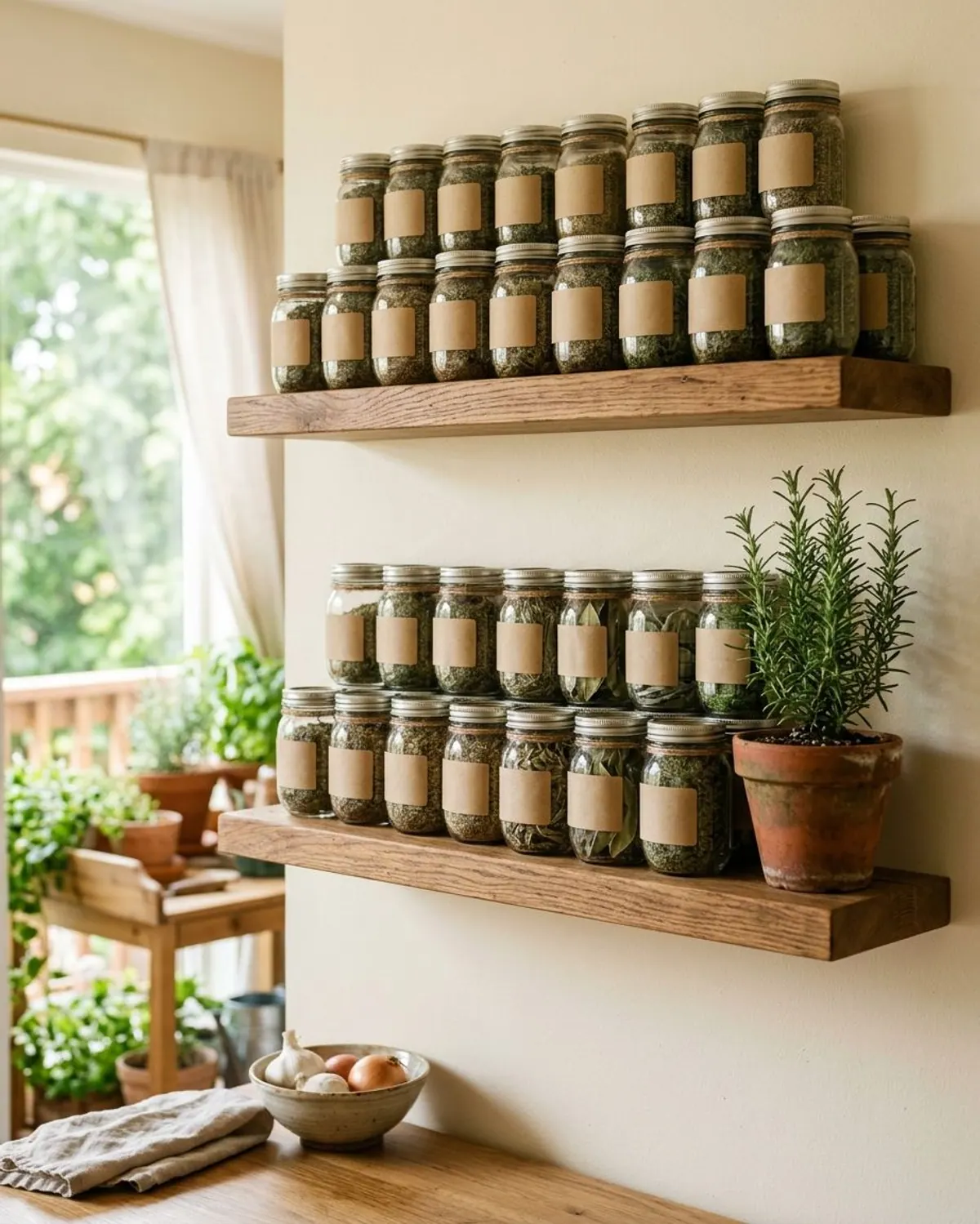
Group jars by use, such as baking, tea or Mediterranean, and keep label height consistent so the row reads as a set. Our apothecary aesthetic kitchen ideas guide has shelf layouts that pair well with the label styles above.
Looking for a binder to keep the wording, the dated log and the shelf plan together? The Small-Space Garden Binder ($25) holds our herb printables in one download.
Shop the apothecary jar label supplies
Supplies for these label styles
- Easiest start
Kraft rectangle sticker labels
Typically $7 to $12
The simplest label for a clean look, and it takes a pen or a printer.
Check price on Amazon for Kraft rectangle sticker labels -
Cream oval labels
Typically $7 to $12
Gives the classic apothecary shape on straight glass jars.
Check price on Amazon for Cream oval labels -
Chalkboard tags with twine
Typically $8 to $14
Reusable, so you can rewrite a label when the herb inside changes.
Check price on Amazon for Chalkboard tags with twine -
Brass label holder frames
Typically $9 to $16
Slide-in labels you can swap without peeling anything.
Check price on Amazon for Brass label holder frames -
Round lid-top labels
Typically $6 to $10
A small date or name label for the top of a lid.
Check price on Amazon for Round lid-top labels -
Kraft hang tags
Typically $6 to $10
A tag that ties on, so the jar surface stays clean.
Check price on Amazon for Kraft hang tags -
Amber glass jars with lids
Typically $12 to $22
Amber glass cuts light on dried herbs, and it suits every label style here.
Check price on Amazon for Amber glass jars with lids
Frequently asked questions
What should I write on apothecary jar labels?
Write the common name large, the Latin name smaller beneath it and a dated line at the bottom. The date can be the day you dried or opened the herb, with a best-by one year later as our suggestion.
What are the Latin names for common kitchen herbs?
Rosemary is Salvia rosmarinus, sage is Salvia officinalis, thyme is Thymus vulgaris, basil is Ocimum basilicum, parsley is Petroselinum crispum, chives are Allium schoenoprasum and bay is Laurus nobilis. Lavender is Lavandula angustifolia and peppermint is Mentha × piperita.
How long do dried herbs last in jars?
Penn State Extension says most dried herbs keep well for up to a year when stored airtight and away from heat, light and moisture. Quality fades over time, so label each jar with a date.
What size should apothecary jar labels be?
A label of about 1.5 by 1 inch suits a 4 oz spice jar and about 3 by 2 inches suits a pint jar. These are our suggested starting sizes, so measure the flat part of your own jar and print a test label.
How do I label jars that are only for decoration?
Write "decor only, not for eating" on the label and keep those jars on a separate shelf from cooking herbs. A different style, such as a hang tag, also helps tell them apart.
Are herbs on an apothecary shelf safe for pets?
It depends on the herb. The ASPCA lists rosemary, sage, thyme and basil as non-toxic to dogs and cats and lists parsley, chives, bay, lavender and mint as toxic, so keep those jars out of reach.
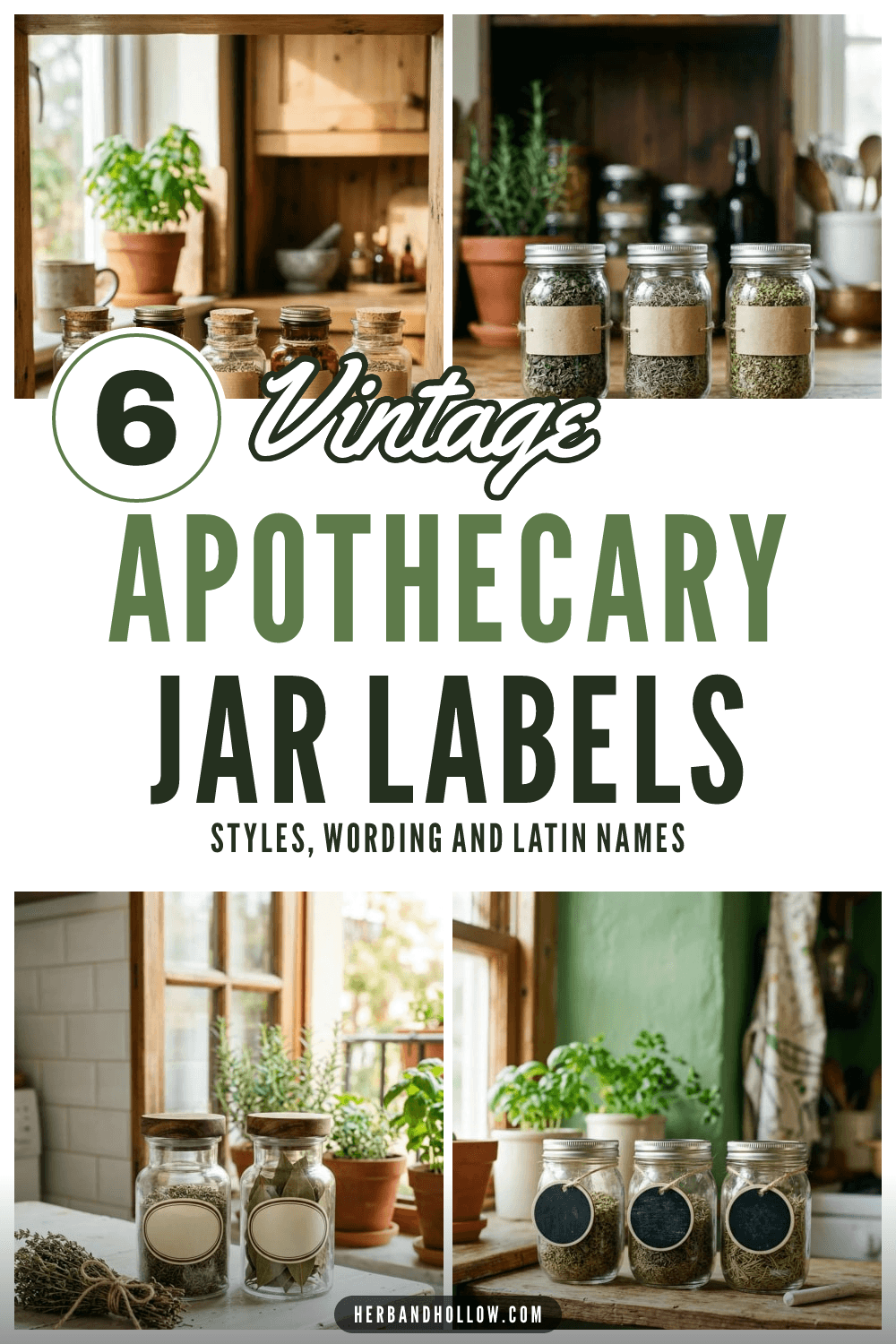
Save it for later
Pin this to your Kitchen Apothecary board so it's there when you need it.
Save to Pinterest