This post contains affiliate links. As an Amazon Associate we earn from qualifying purchases, at no extra cost to you. Read our disclosure.
Safety first: Herbs can be powerful. If you are pregnant, nursing, take medication or have a health condition, check with your doctor or pharmacist first. Please read our herbal & garden safety notes before you start.
Key takeaways
- VCA Hospitals says to avoid citrus peel, cinnamon sticks and cloves in simmer pots around pets
- Rosemary, sage and thyme are listed as non-toxic to dogs and cats by the ASPCA
- Skip bay leaves in pet homes: the ASPCA lists bay laurel as toxic if eaten
- A simmer pot is a scent, never food or tea; write that on the tag
- Never leave the pot running, and keep it from boiling dry
In this post9 sections
- What a simmer pot gift jar is, and what we leave out
- What goes in the jar, and the pet note for each add-in
- How to make the herb simmer pot gift jar, step by step
- Copy this care card for the tag
- How to use a simmer pot safely
- A spice version for homes without pets
- Wrap it and give it
- Dry your own herbs to fill the jars
- FAQ
What a simmer pot gift jar is, and what we leave out
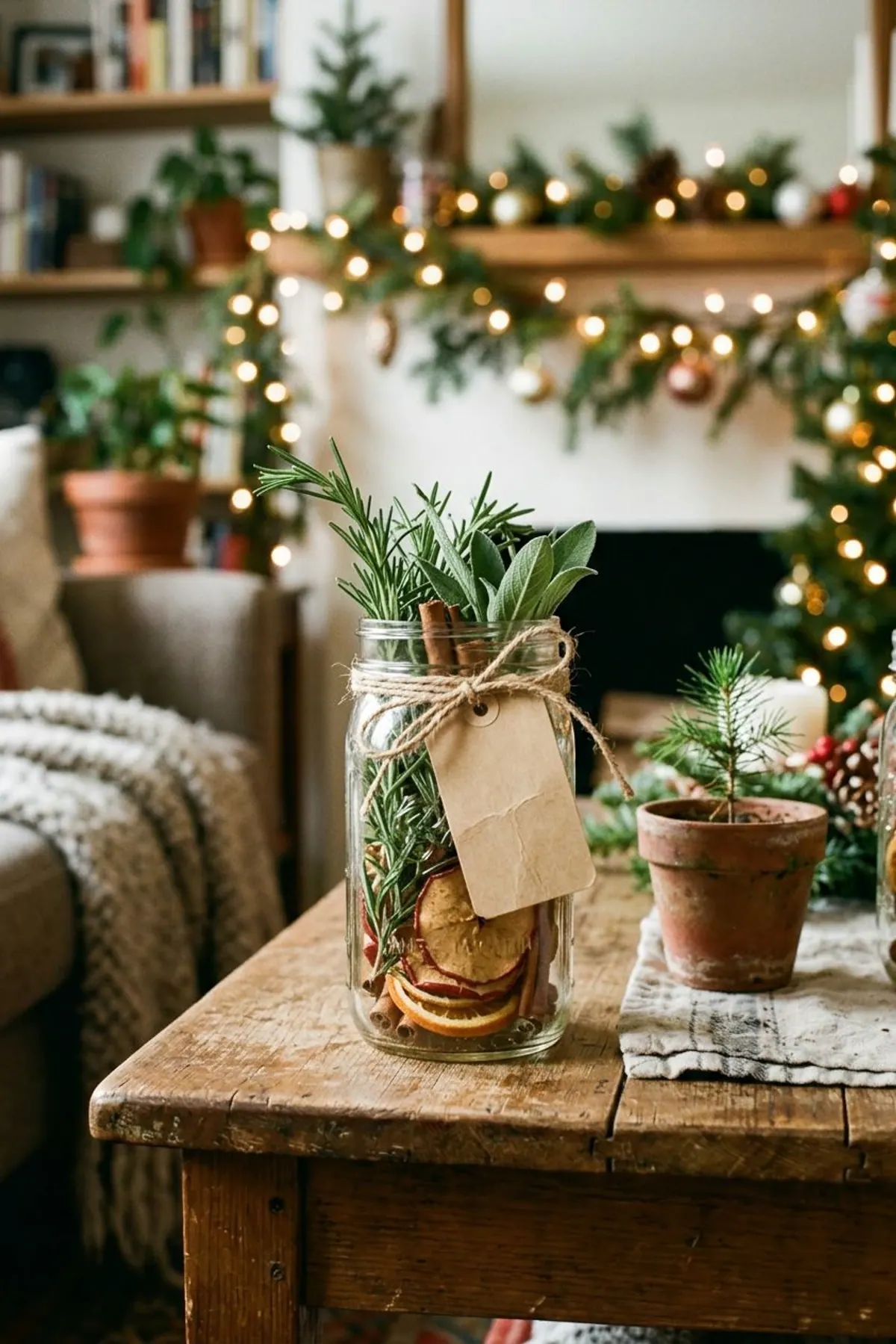
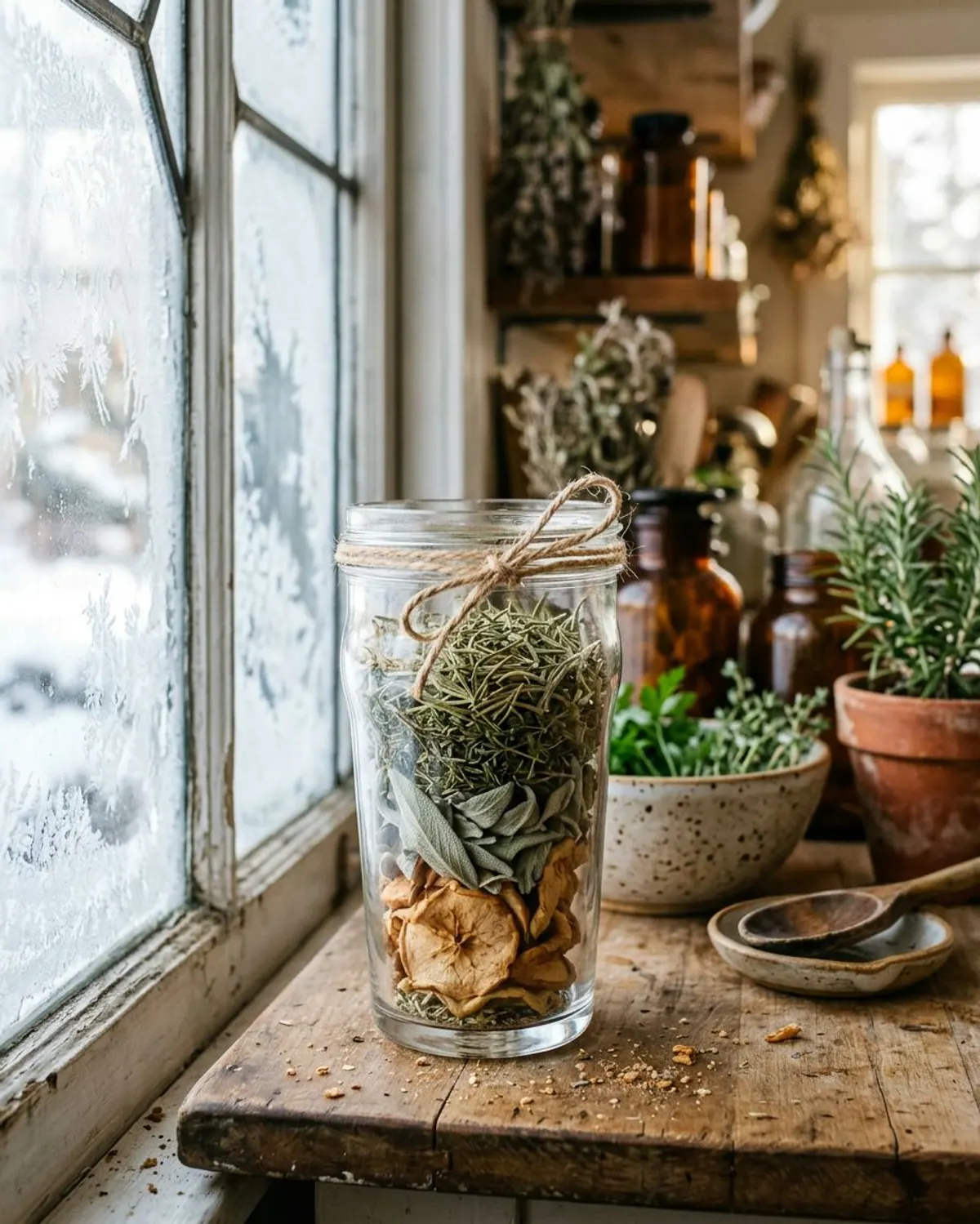
A simmer pot gift jar is a jar of dried herbs and fruit that the person pours into a small pot of water and warms on low heat so the kitchen smells of rosemary and sage. It is a scent gift, not food: nobody eats or drinks it. Most Christmas versions you see online add orange peel, cinnamon sticks and cloves, and that is where a pet owner should pause.
VCA Hospitals, a veterinary group, says to avoid orange, lemon or lime peels, cinnamon sticks and cloves in a simmer pot because they contain phenols that can be dangerous to pets. It suggests simmering rosemary or sage sprigs, bay leaves or a few drops of vanilla instead. So our main jar is herb-first, and the spice version comes later with a clear warning.
What goes in the jar, and the pet note for each add-in
Use this table before you buy anything. The ASPCA status is for dogs and cats; always check the plant list again for your own pet.
| Add-in | Pet note | In our jar? |
|---|---|---|
| Rosemary sprigs | ASPCA lists rosemary as non-toxic to dogs and cats | Yes |
| Sage leaves | ASPCA lists sage as non-toxic to dogs and cats | Yes |
| Thyme sprigs | ASPCA lists thyme as non-toxic to dogs and cats | Yes |
| Dried apple slices | Not on the VCA list. Our own scent filler, so skip it if you are unsure | Optional |
| Bay leaves | VCA suggests them for simmering, but the ASPCA lists bay laurel as toxic to dogs and cats if eaten | Skip in pet homes |
| Citrus peel, cinnamon sticks, cloves | VCA says to avoid them around pets because of phenols | Spice version only |
| Essential oils | VCA says it is best to avoid diffusing scented oils at all | Never |
We have not tested these mixes ourselves, and the amounts below are a starting point to adjust by nose. Dried herbs smell milder than fresh sprigs, so a gift jar is packed generously.
How to make the herb simmer pot gift jar, step by step
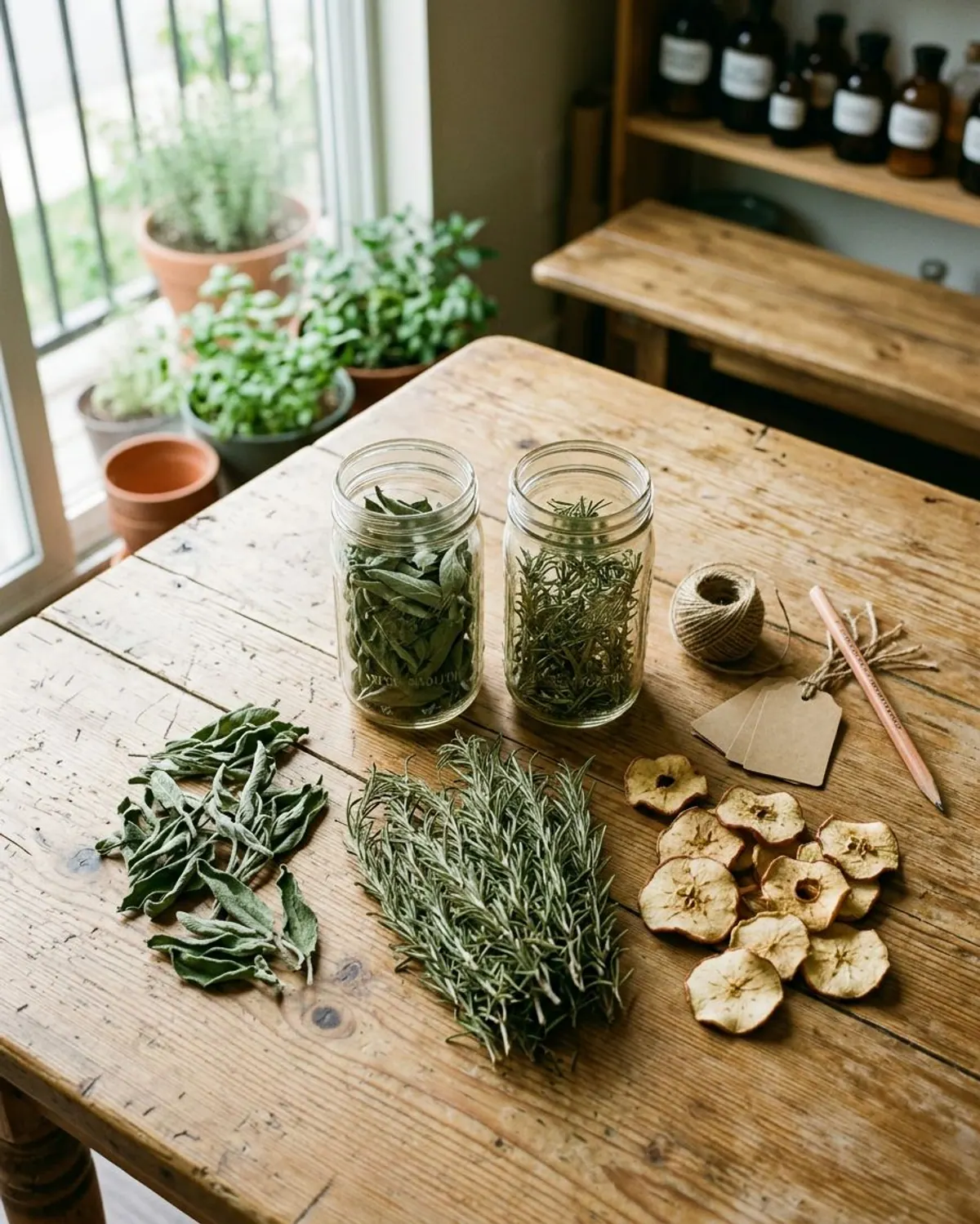
Supplies:
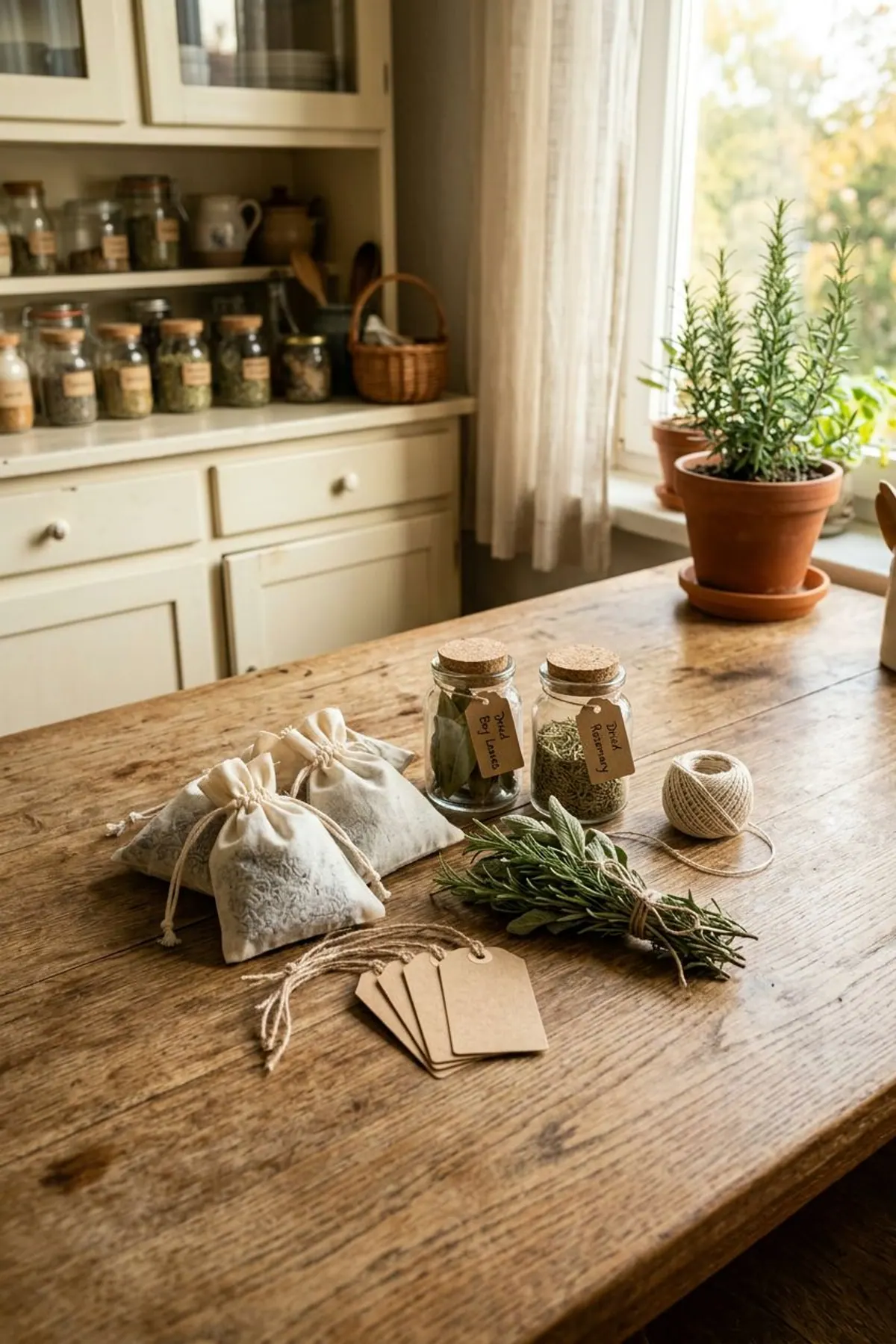
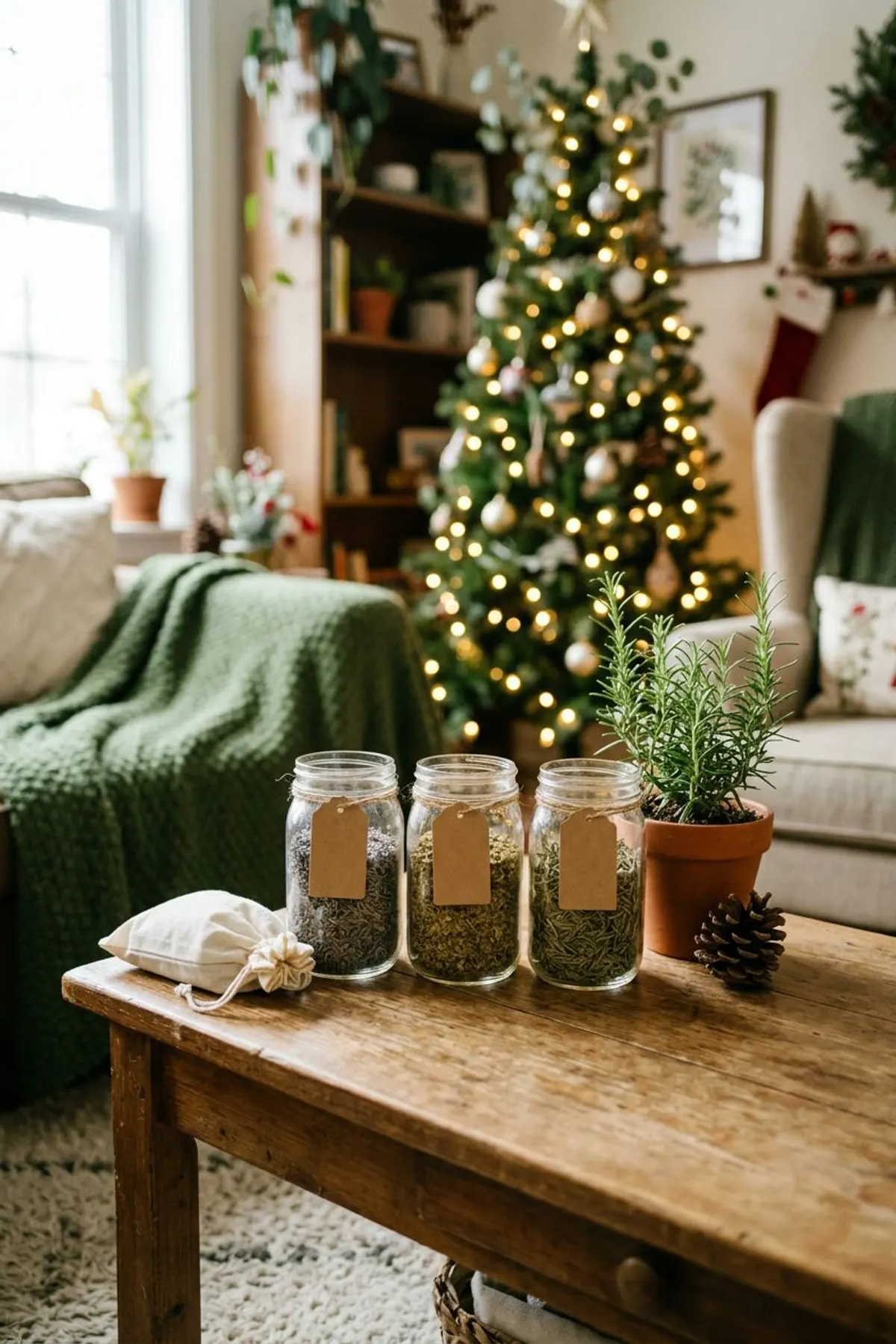
Wide-mouth pint jars with lids, dried rosemary, dried sage, dried thyme, dried apple slices (optional), twine and blank kraft tags.
Time:
About 15 minutes per jar once the herbs are dry.
Mess:
Low. Work over a tray so loose leaves can be scooped back.
-
Step 1: Dry and check the herbs
Use herbs that are fully dry and crumbly at the stem, with no soft spots or musty smell. Our guide to drying herbs at home covers air, oven and dehydrator methods, or buy dried sprigs.
-
Step 2: Wash and dry the jar
Use a clean, fully dry wide-mouth pint jar so no moisture sits against the herbs.
-
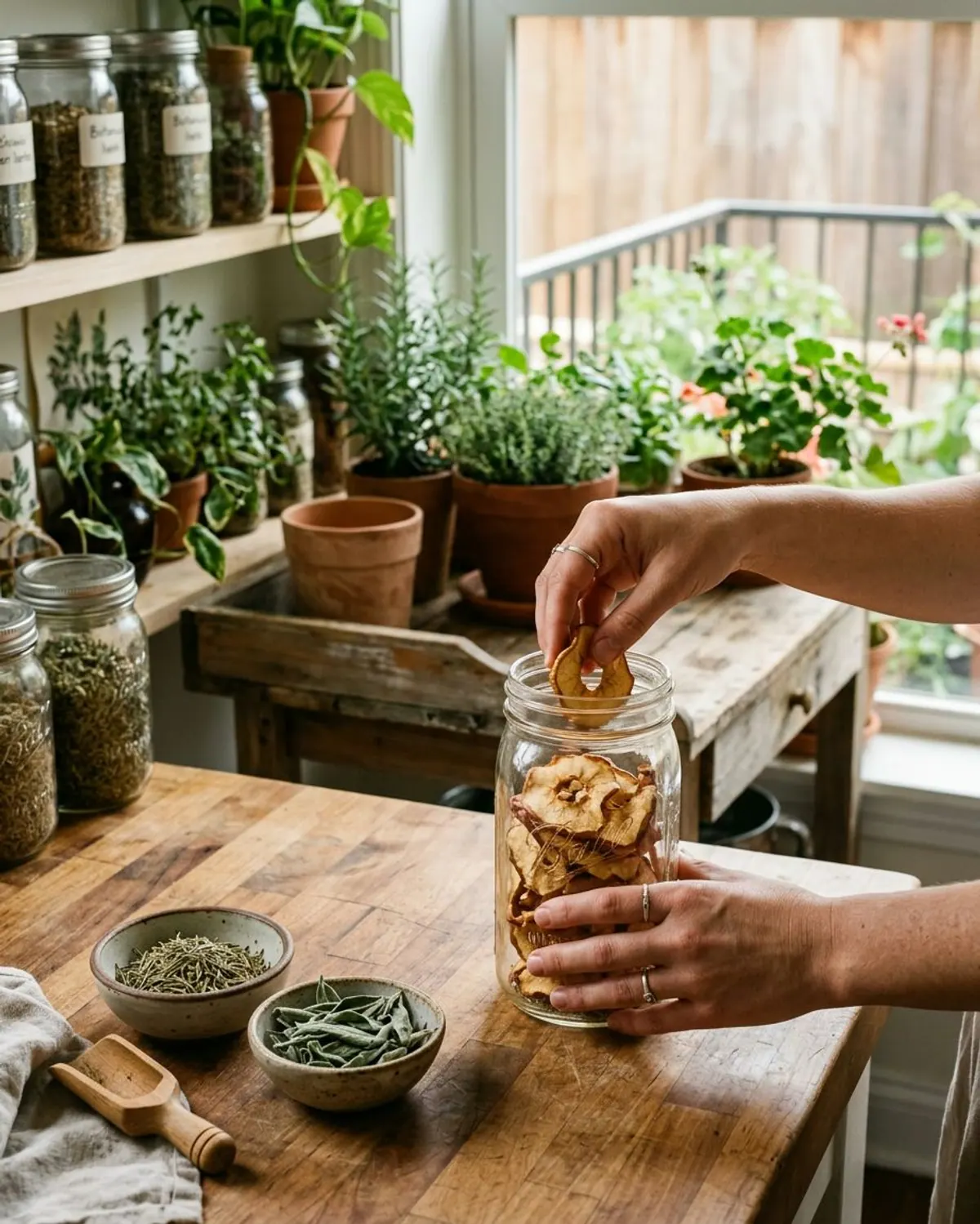
Step 3: Layer the apple slices first
Put about 1 cup of dried apple slices in the bottom, or skip them for a pure herb jar. The slices show through the glass and give the jar its color.
-
Step 4: Add the herbs in layers
Add 6 to 8 dried rosemary sprigs, 12 to 15 sage leaves and 4 to 6 thyme sprigs, pressing lightly so the layers show at the glass. Leave a little room so the lid closes without crushing the leaves.
-
Step 5: Close it and tag it
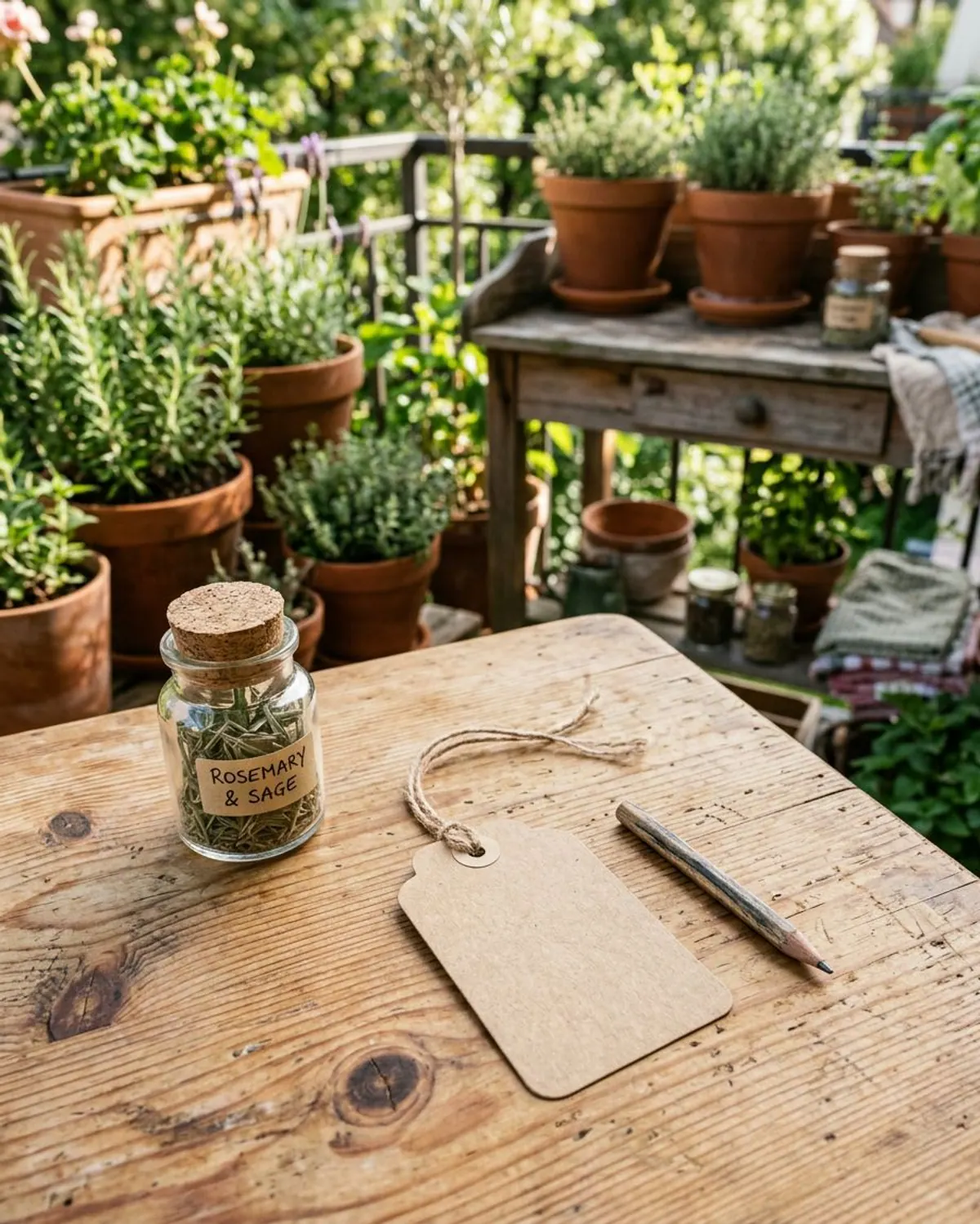
Screw on the lid and write the care card on a tag: what is inside, how to use it, the safety lines and the date. Tie the tag on with twine.
-
Step 6: Store it dry until you give it
Keep the jar out of the sun and away from steam. Use the herbs within a year, in line with our dried herb storage guide.
Copy this care card for the tag
Herb simmer pot. To use: pour the jar into a small pot, add about 4 cups of water and warm on low heat while you are in the room. Add water when it drops. Turn off the heat when you leave and let it cool. Not for eating or drinking. Keep the pot and the water away from pets and children. Not medical advice.
The core safety lines come from common sense and the VCA advice to watch the pot so it does not boil dry. Write the pet line on every tag, even if you do not know the recipient's pets.
How to use a simmer pot safely
Use a small stainless pot on a back burner, with the handle turned in. Fill it about two thirds with water, add the jar, bring it to a gentle simmer and turn it down. Set a timer, because VCA warns not to let the pot boil dry.
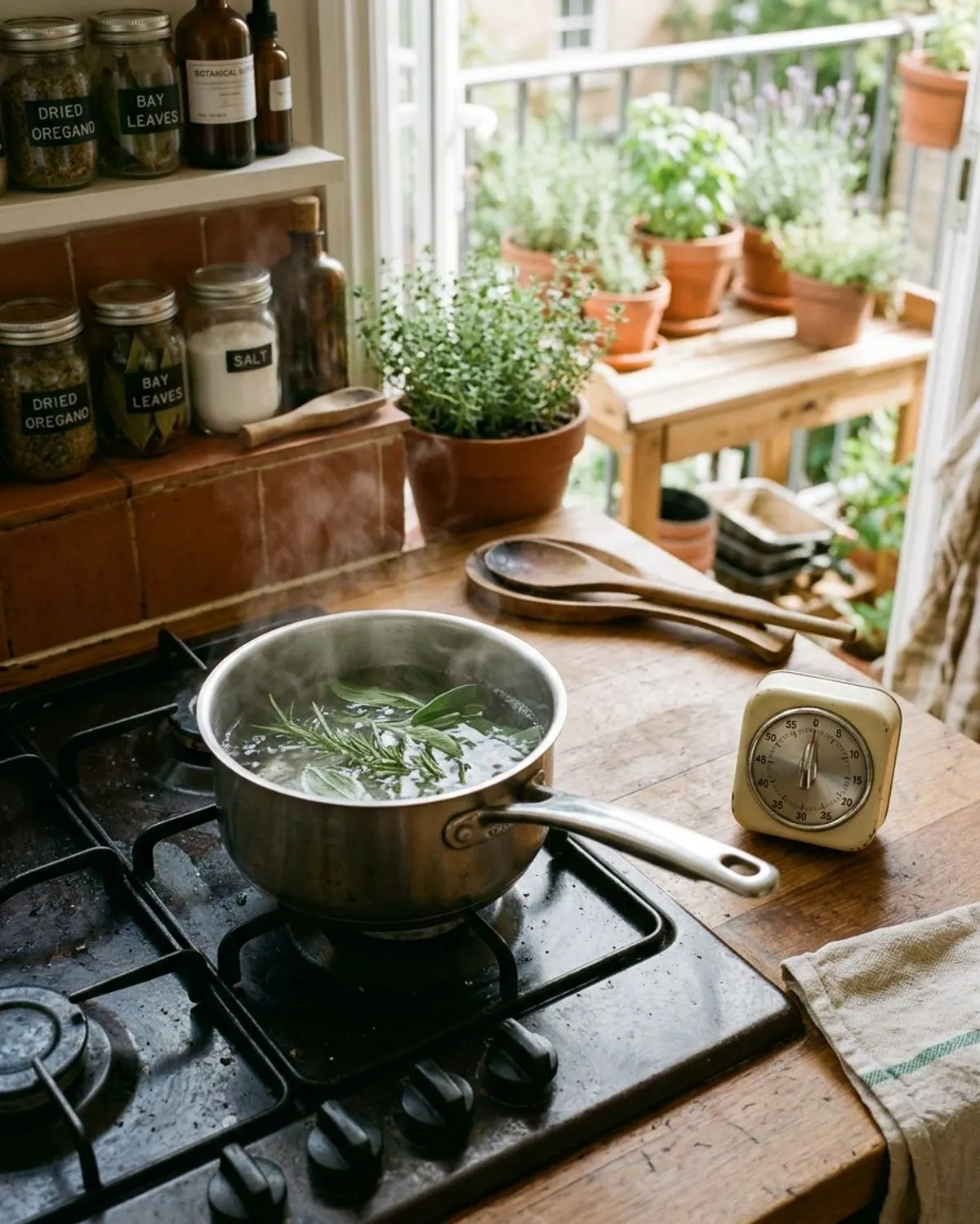
Safe simmer pot checklist
A spice version for homes without pets
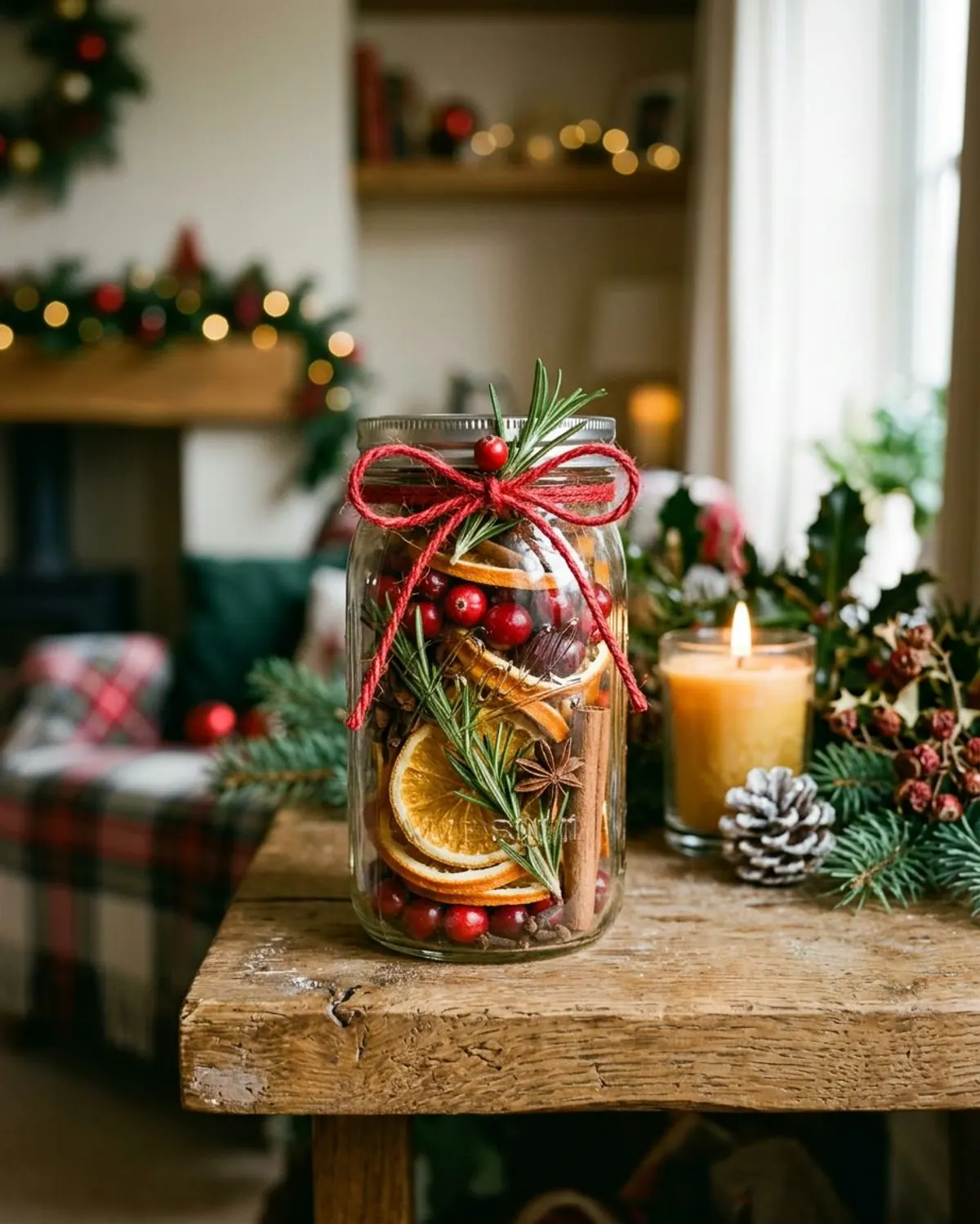
If the recipient has no cat or dog, the classic jar is fine to give: dried orange slices, whole cranberries, a few rosemary sprigs, two cinnamon sticks and four to six cloves. Ask first. Our dried orange garland guide shows how to dry the slices. Because VCA lists citrus peel, cinnamon and cloves as risks for pets, never give this jar to a pet home as a surprise.
Wrap it and give it
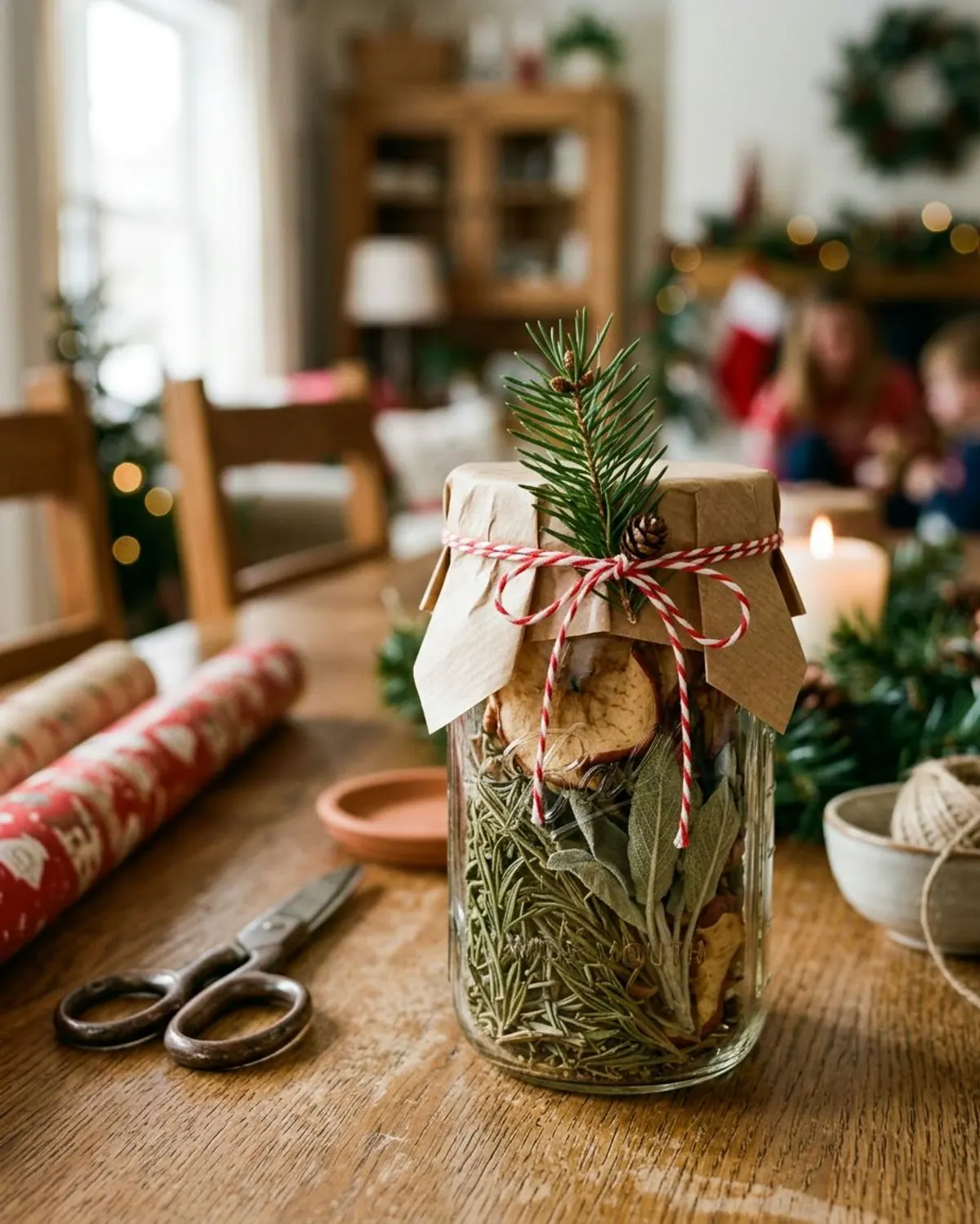
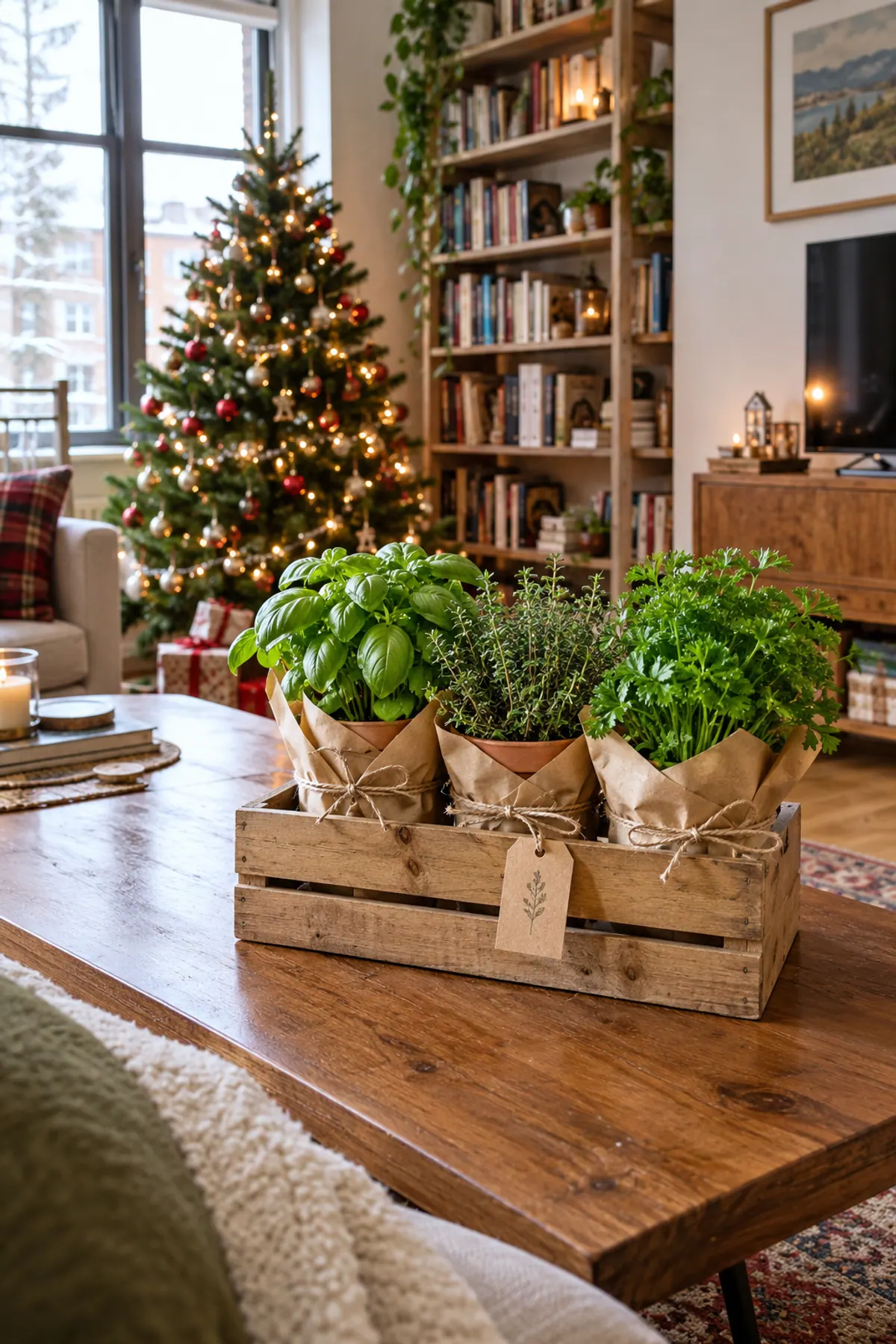
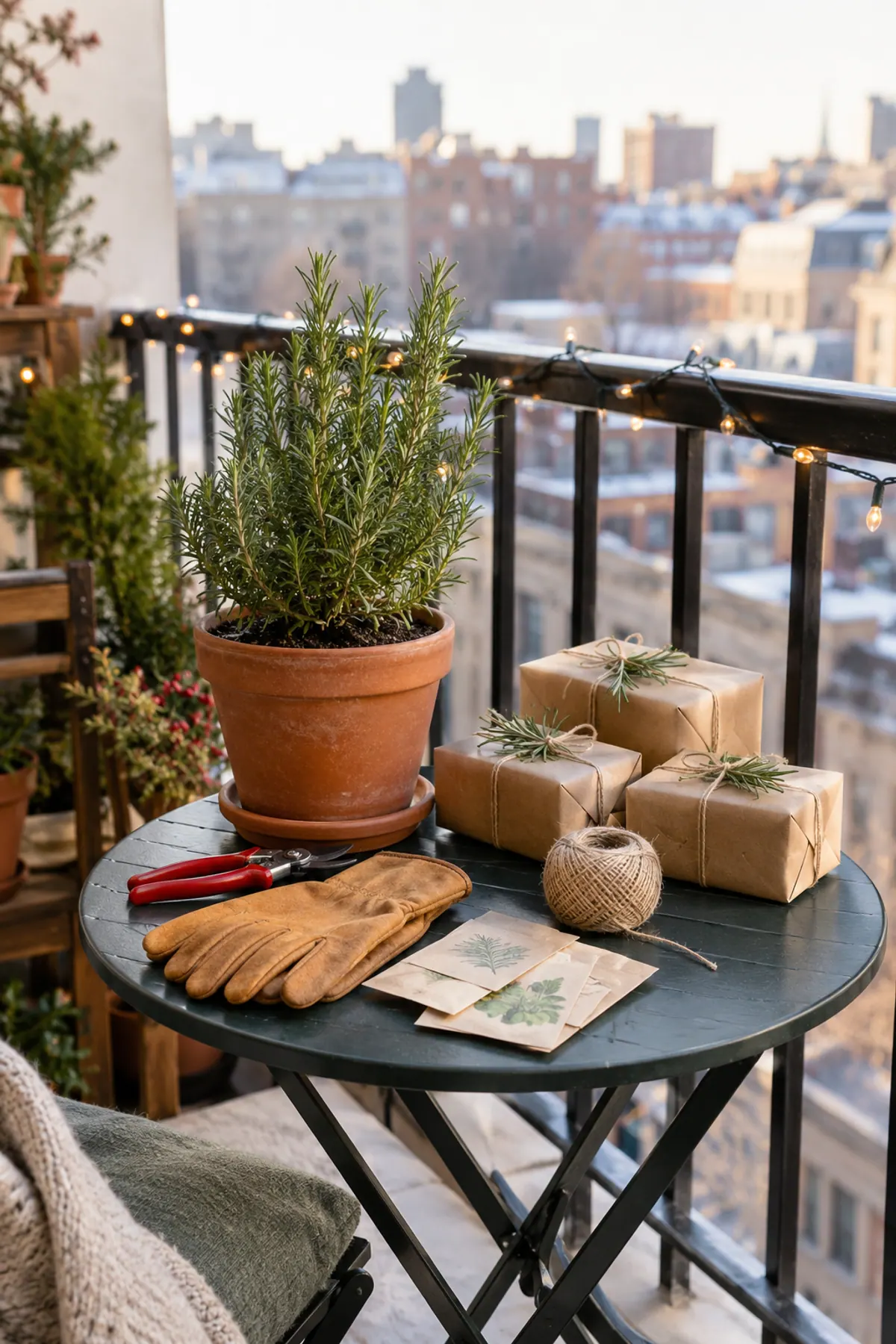
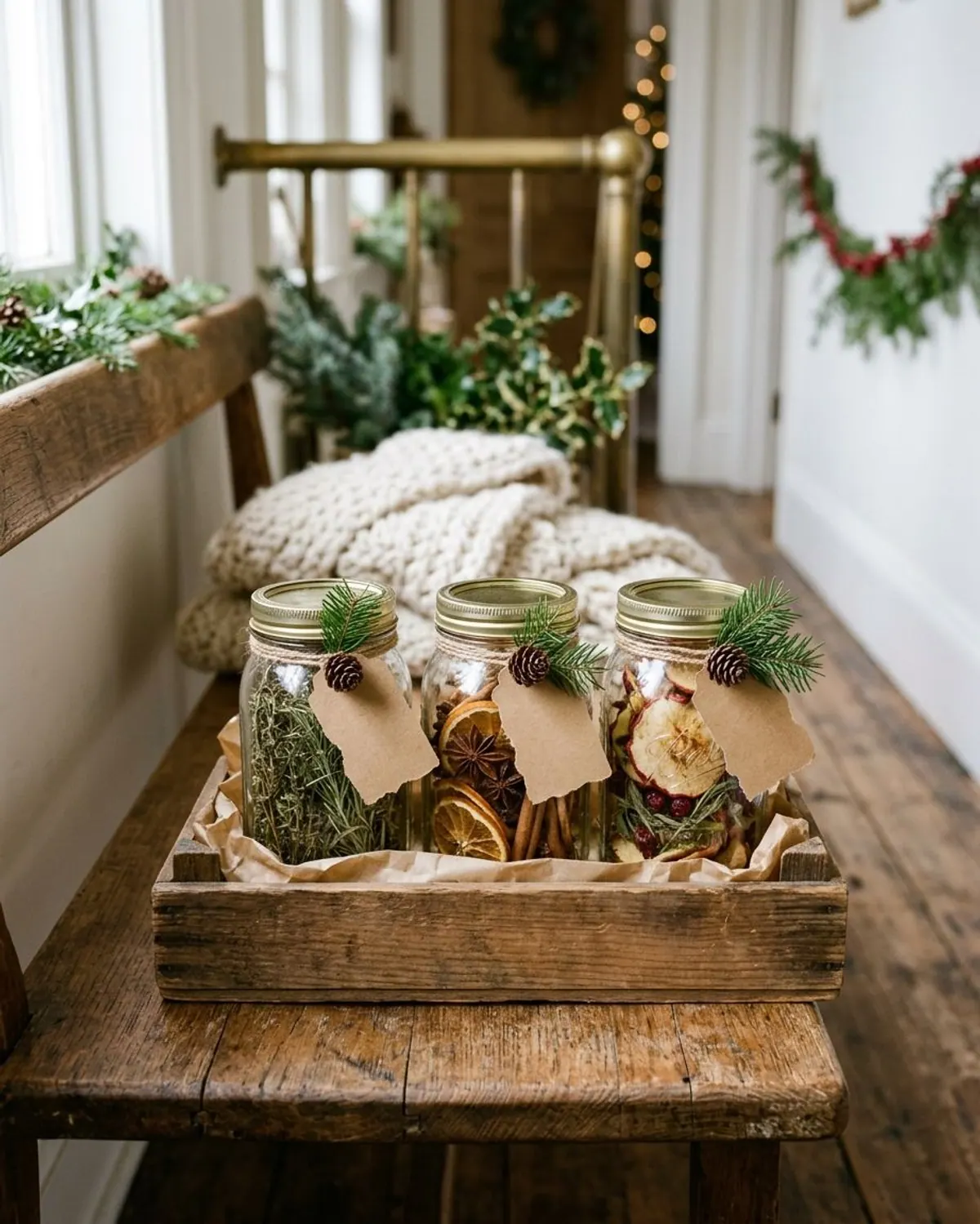
Cover the lid with a square of kraft paper, tie it with twine and add a sprig of pine or a dried herb stem. For a bigger gift, set three jars in a small crate with kraft paper and a tag on each, and add a small stainless pot as a bonus. If you also like herbs as gifts, see our potted herb gift guide and Christmas gifts for gardeners.
Dry your own herbs to fill the jars
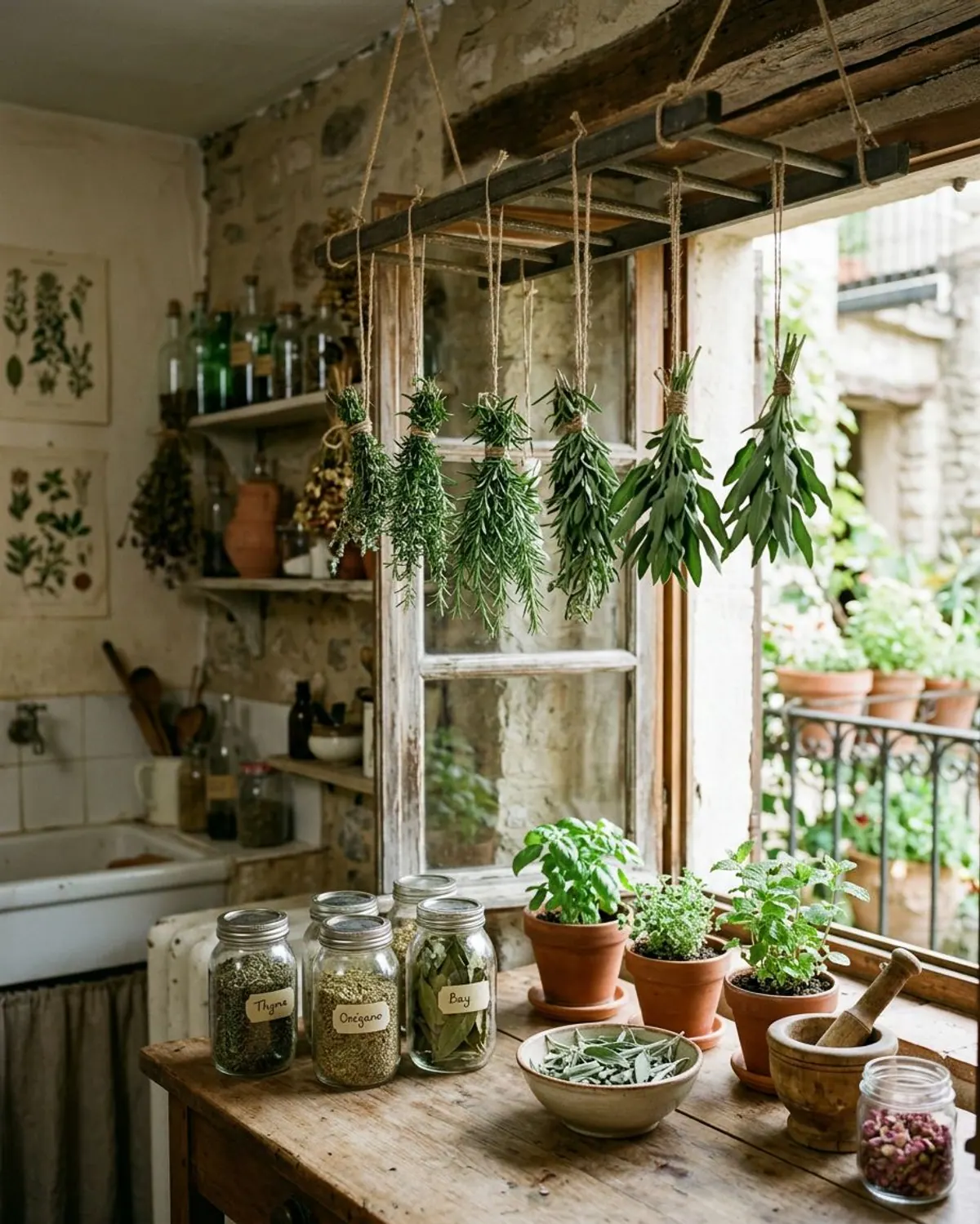
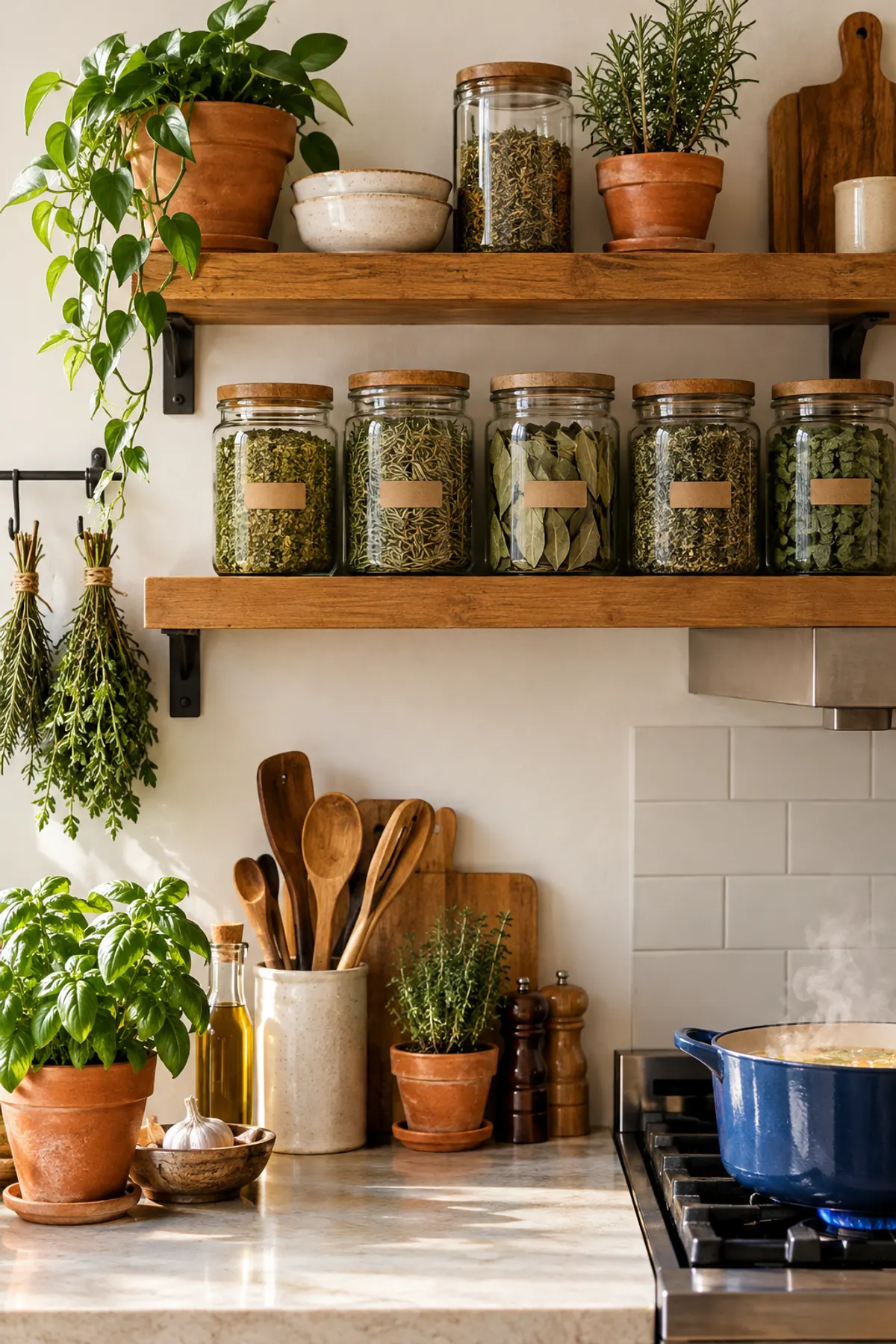
Sage and rosemary are two of the easiest herbs to dry, and a few bundles fill several jars. Our dried herbs and their uses chart and the 14 uses for dried herbs show what else to do with the rest. The Small-Space Garden Binder ($25) keeps your drying dates and labels in one place.
Supplies for simmer pot gift jars
-
Wide-mouth pint mason jars with lids
Typically $12 to $25
A pack of 12 covers a neighbor gift list
Check price on Amazon for Wide-mouth pint mason jars with lids -
Dried rosemary and sage, whole
Typically $8 to $20
A shortcut if your own herbs are not dry yet
Check price on Amazon for Dried rosemary and sage, whole -
Kraft tags with twine
Typically $6 to $12
For the care card
Check price on Amazon for Kraft tags with twine -
Small stainless steel saucepan
Typically $15 to $35
A useful add-on gift for a first simmer pot
Check price on Amazon for Small stainless steel saucepan
Frequently asked questions
Is a simmer pot safe around cats and dogs?
Veterinary guidance from VCA Hospitals says to avoid citrus peels, cinnamon sticks and cloves around pets and suggests rosemary or sage sprigs instead. Keep the pot out of reach and never leave it unattended. This is not medical advice; ask your vet about your own pet.
What herbs go in a simmer pot gift jar?
Rosemary, sage and thyme make a herb-first jar, and the ASPCA lists all three as non-toxic to dogs and cats. Dried apple slices add color and are optional.
Can you drink or eat simmer pot water?
No. A simmer pot is a scent, not food or tea. Write that on the gift tag.
How long does a simmer pot gift jar last?
Keep the dry jar out of sun and steam and use the herbs within about a year, in line with typical dried herb storage advice. Throw out any herbs that smell musty.
How much water does a simmer pot need?
Fill a small pot about two thirds with water and top it up as it drops. Never let it boil dry, and turn it off when you leave the room.
Save it for later
Pin this to your Kitchen Apothecary board so it's there when you need it.
Save to Pinterest