This post contains affiliate links. As an Amazon Associate we earn from qualifying purchases, at no extra cost to you. Read our disclosure.
Safety first: Herbs can be powerful. If you are pregnant, nursing, take medication or have a health condition, check with your doctor or pharmacist first. Please read our herbal & garden safety notes before you start.
Key takeaways
- Dried herbs keep their cooking flavor for about a year; after that they still hold enough scent for sachets, simmer pots and decor for another year or two.
- The 14 uses below are grouped by room: scent, home and decor, bath and body, garden and pantry.
- Lavender, rosemary, mint, sage, thyme, bay and chamomile cover almost every use; a per-herb table shows which goes where.
- A gift set of 6 sachets and 3 simmer pot jars takes about 20 minutes and under $15 in supplies.
- Not medical advice. Patch test skin uses, check with a doctor if pregnant, and keep lavender, mint and essential oils away from cats and dogs.
In this post10 sections
- What to do with dried herbs besides cooking: the 14 uses, by room
- Scent: sachets, simmer pots and fire starters
- Home and decor: bundles, wreaths, jar displays and gift tags
- Bath and body: soaks, foot baths and hair rinses
- Garden and pantry: pest sachets, compost and seed labels
- It depends on how old they are: the 1-year, 3-year rule
- It depends on the herb: what each one does best
- Myth vs reality about old dried herbs
- A 20-minute gift plan: 6 sachets and 3 simmer pot jars
- FAQ
Short answer: dried herbs that are too faded for the pot still work for scent, decor, bath soaks and the garden. Sort them by age, pick a use from the four groups below, and label the jar so you know what is left.
| Question | Short answer |
|---|---|
| How old is too old? | About 1 year for cooking flavor; up to 3 years for scent and decor uses |
| Best all-round herbs | Lavender, rosemary, mint, sage, thyme, bay, chamomile |
| Cheapest use | Drawer and closet sachets: a muslin bag and 2 tablespoons of herbs |
| Best gift use | Simmer pot jars: dried orange, cinnamon stick, rosemary, bay in a small jar |
| Skin and bath | Patch test first; chamomile, lavender and calendula are the gentle ones |
| Pets | Lavender, mint and essential oils are listed as toxic to cats and dogs by the ASPCA; keep sachets out of reach |
| Compost? | Yes, any herb with no added salt or oil |
We earn from qualifying purchases on Amazon links in this article, at no extra cost to you. Read our disclosure and editorial guidelines. Herbal uses here are general home information, not medical advice.
What to do with dried herbs besides cooking: the 14 uses, by room
Most of these take under ten minutes and need nothing you do not already own, apart from a few muslin bags or small jars. Start with the scent group, since that is where faded herbs are most useful.
Scent: sachets, simmer pots and fire starters
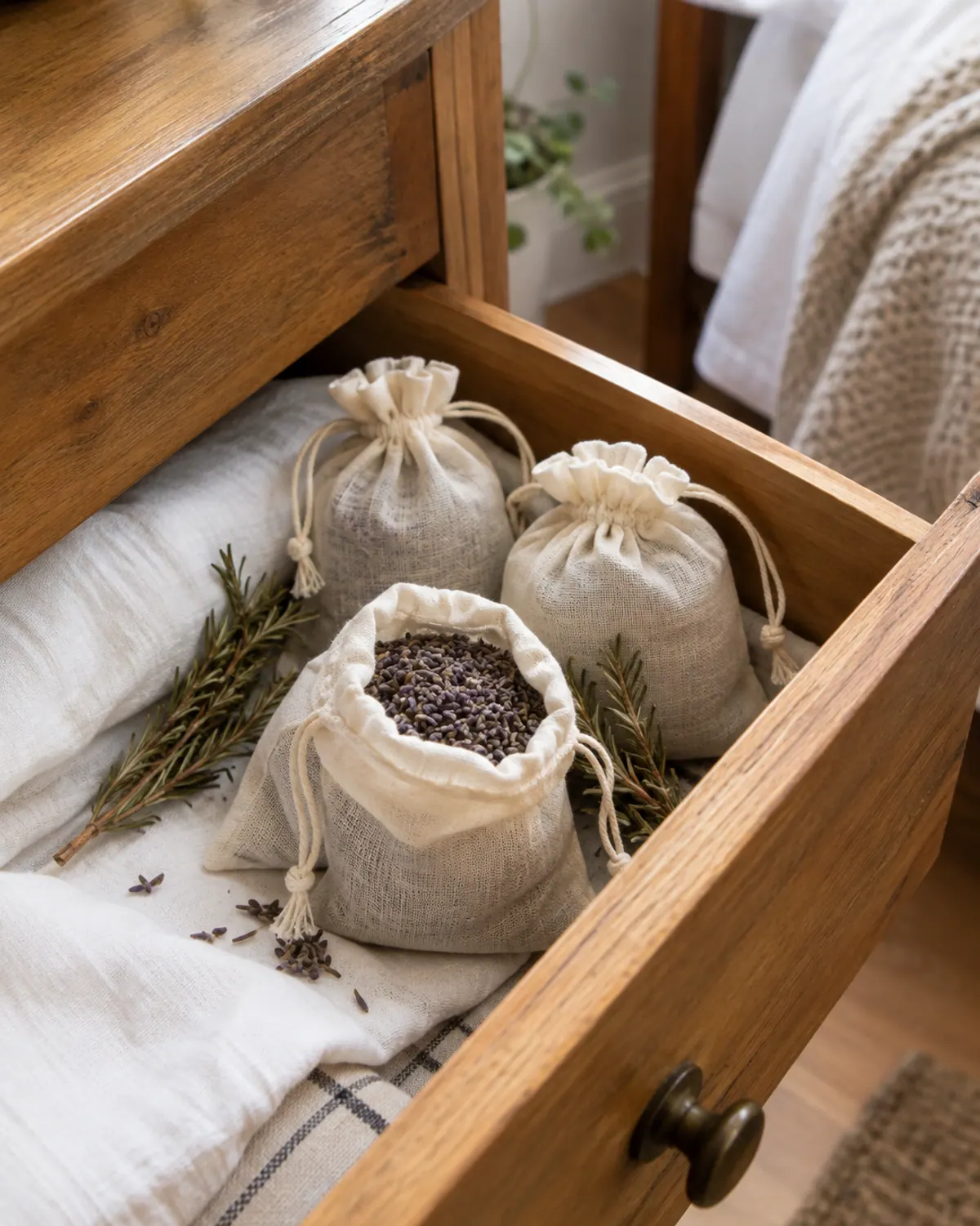
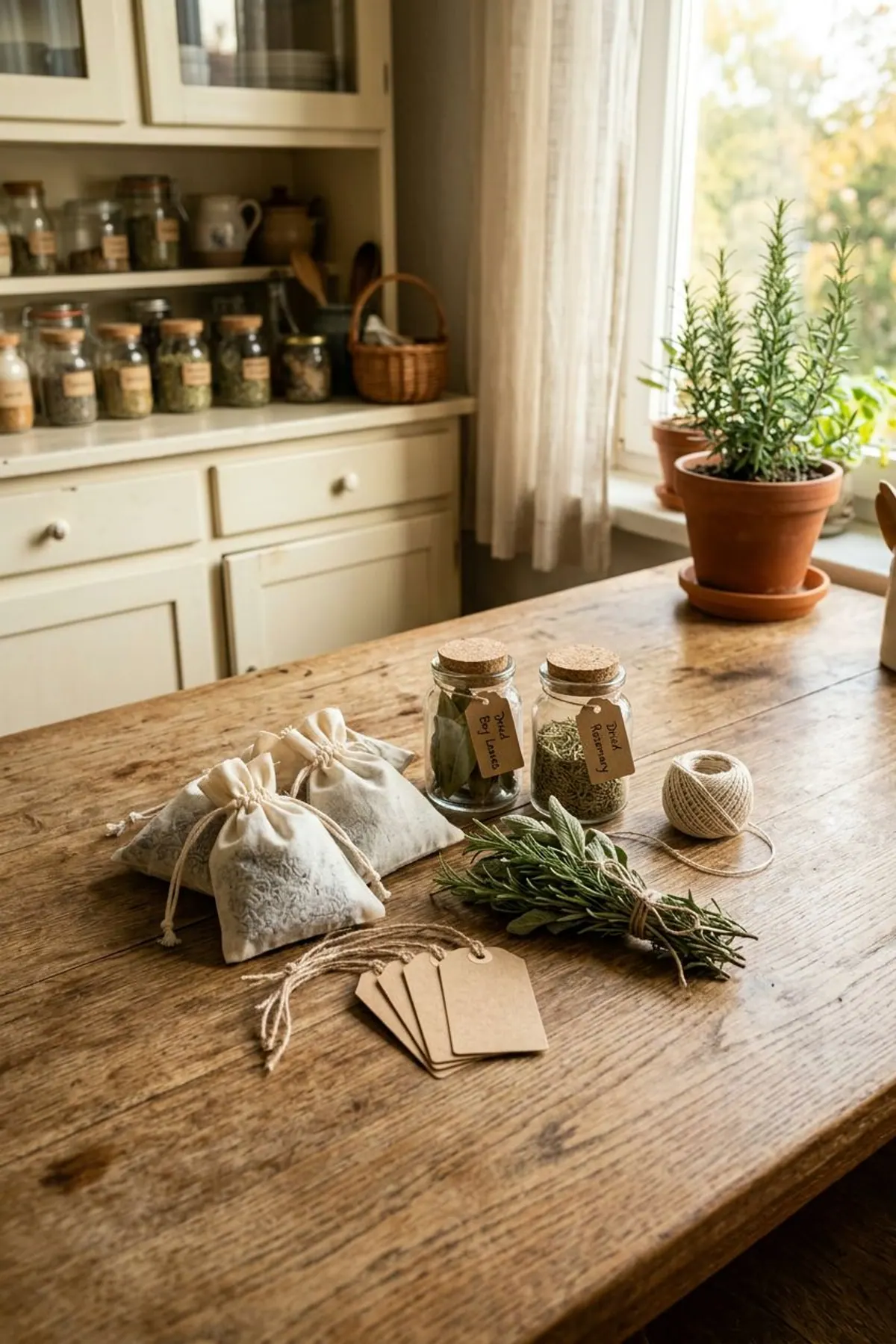
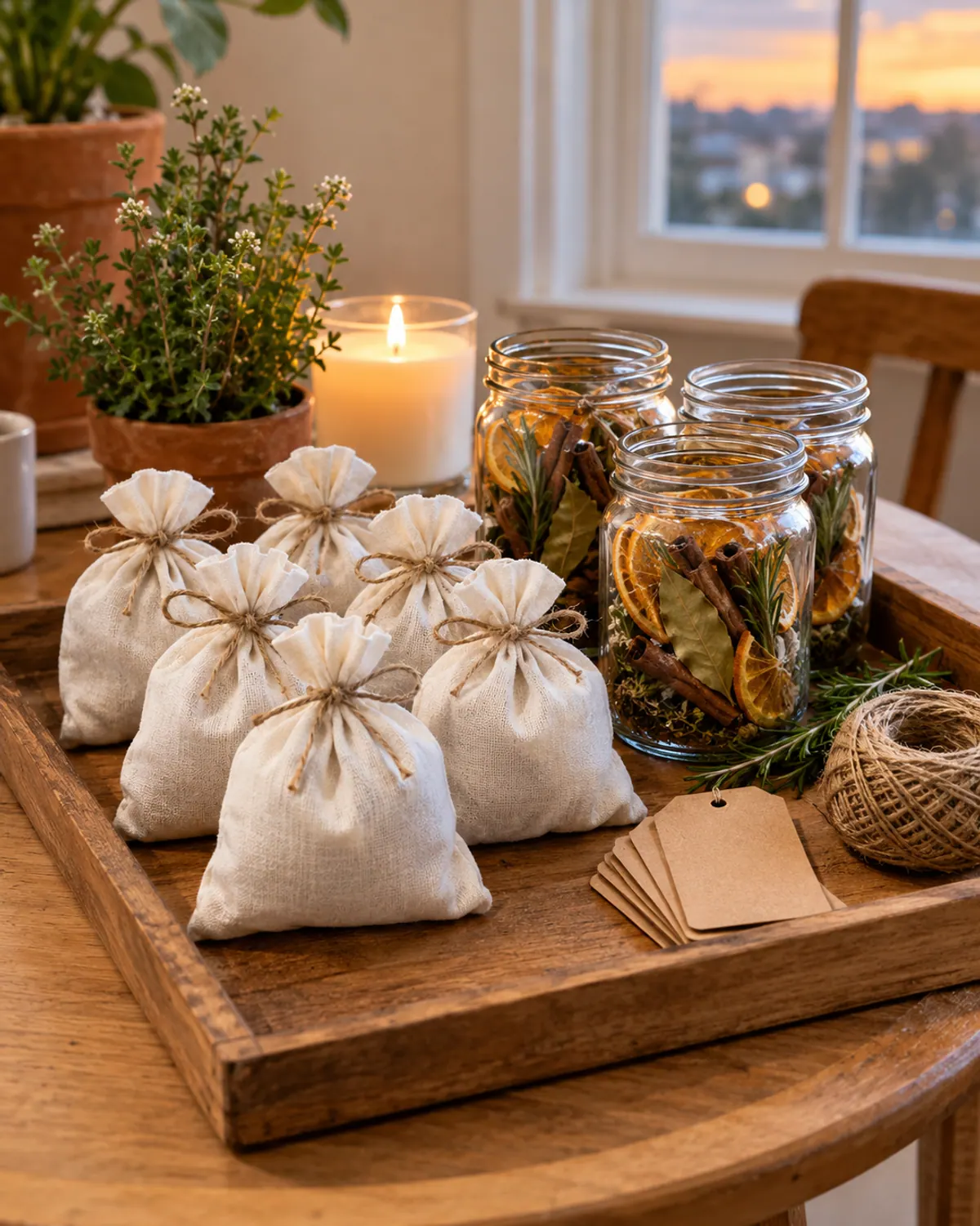
1. Drawer and closet sachets. Fill a muslin drawstring bag with 2 tablespoons of lavender, rosemary or mint and tuck it in with sweaters or linens. Rosemary and mint are the ones traditionally used around wool because moths dislike strong scents, though a sachet is a deterrent, not a cure.
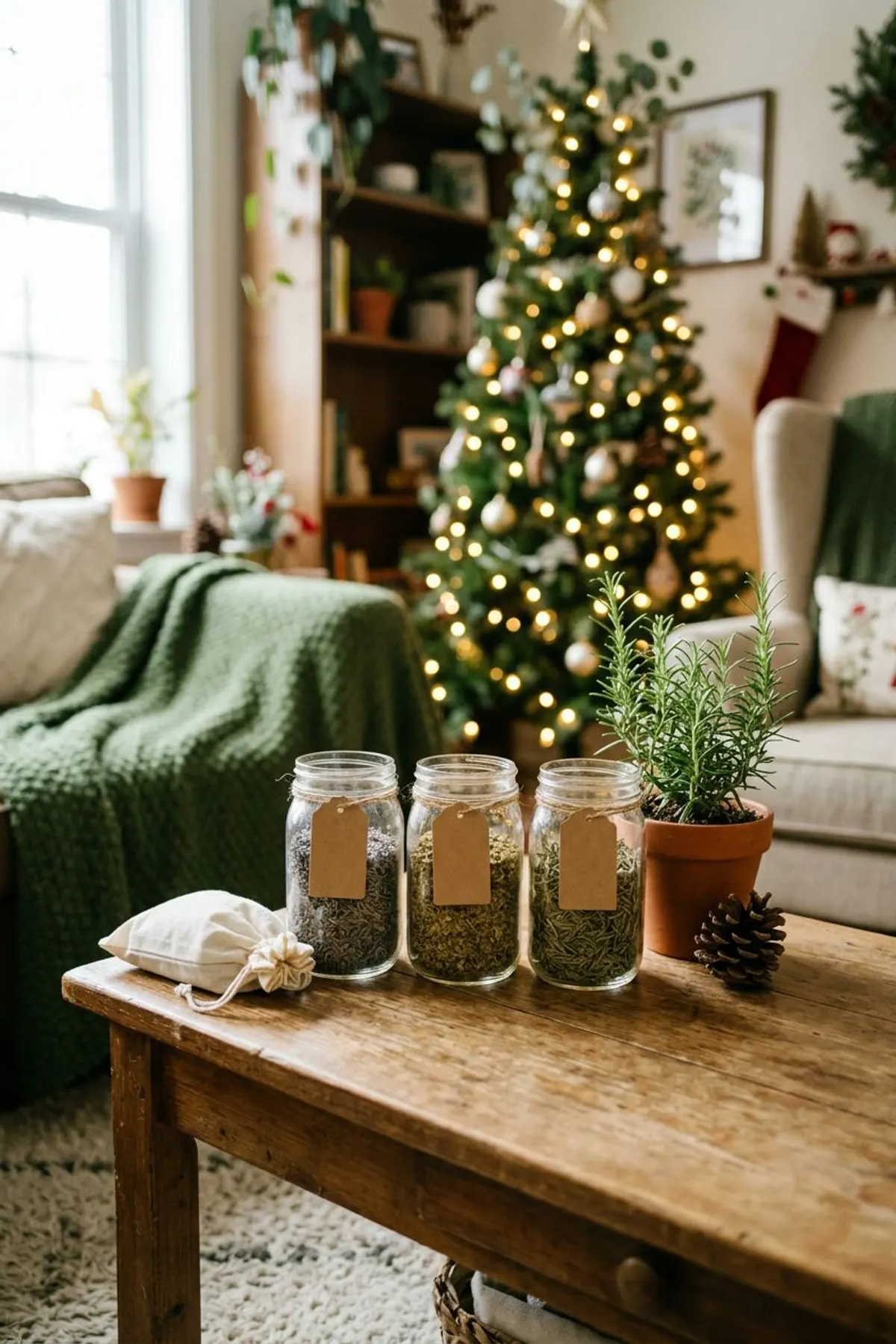
2. Simmer pot jars. Layer dried orange slices, a cinnamon stick, a bay leaf and a pinch of rosemary in a small jar. To use, tip the jar into a saucepan of water and keep it at a low simmer for an hour, topping up the water; the whole apartment smells like December.
3. Fire starters and grill bundles. Tie dried rosemary, sage or thyme stems into a thumb-sized bundle with cotton string. Tucked under kindling in a fireplace or on hot coals, they scent the smoke; keep them small and never leave a flame unattended.
4. Shoe and gym-bag deodorizers. The same muslin sachet, filled with mint and a tablespoon of baking soda, goes into boots or a gym bag overnight. Replace the baking soda monthly.
Home and decor: bundles, wreaths, jar displays and gift tags
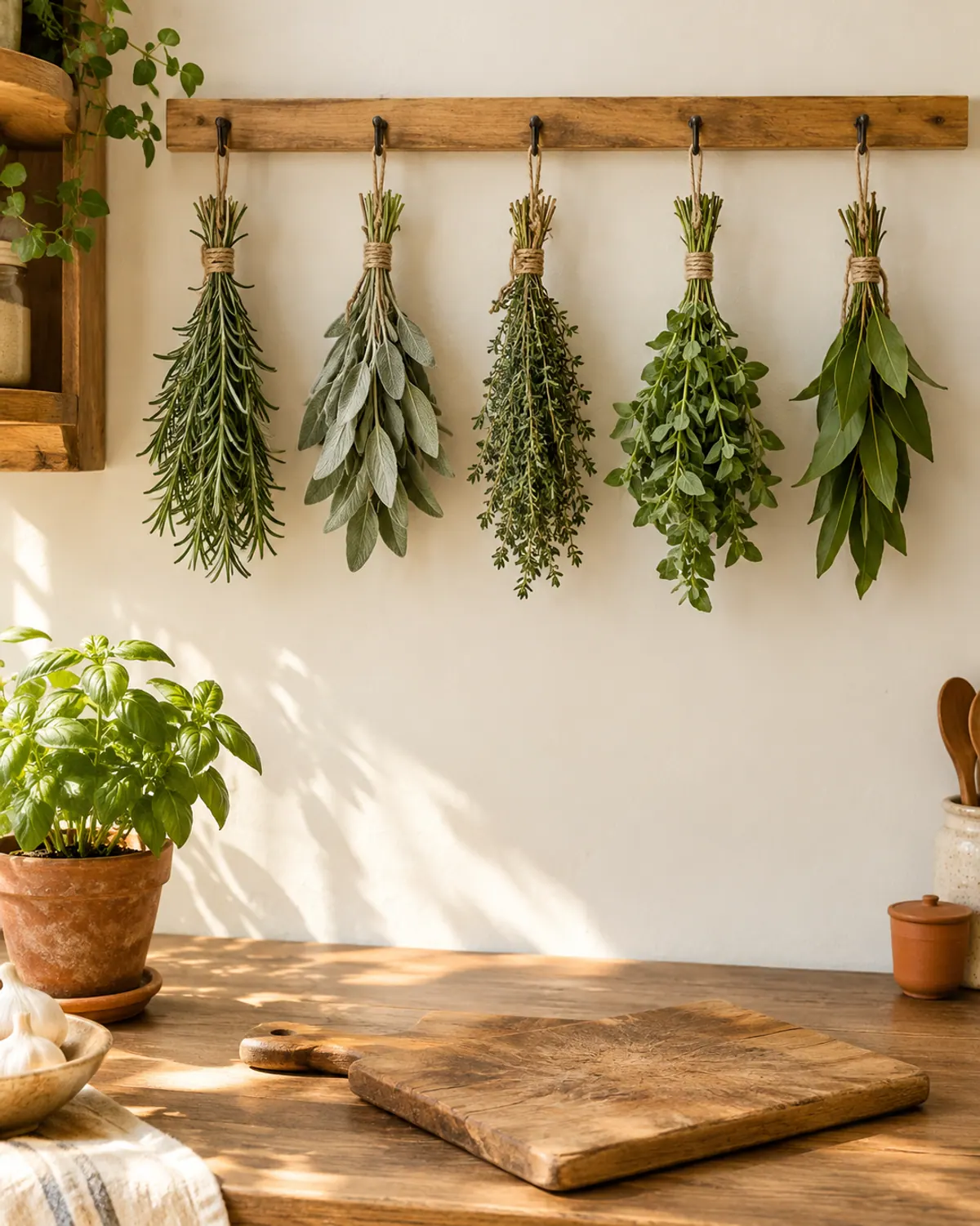
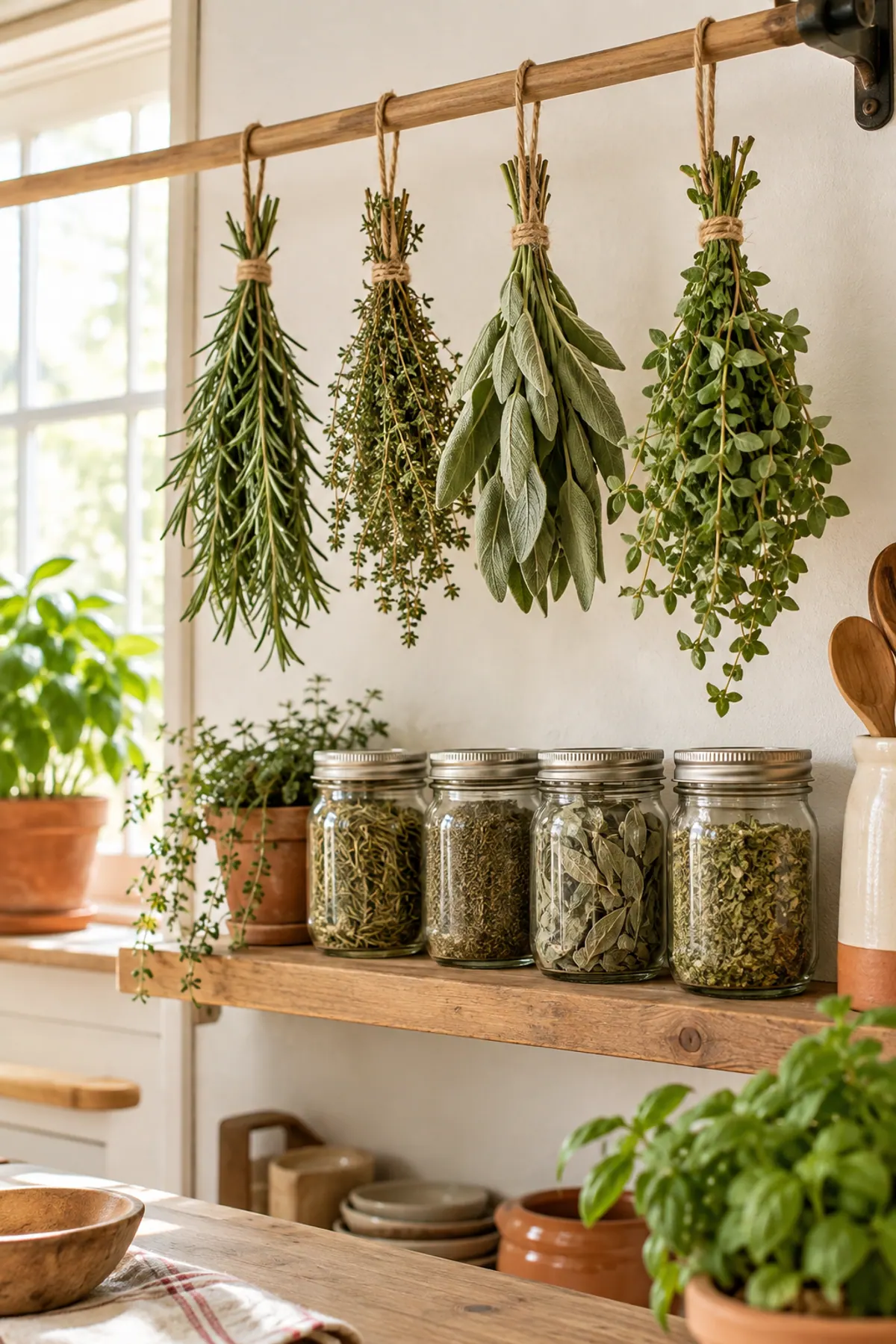
5. Hanging bundles on a rail. Tie 5 to 8 stems with twine, hang them head-down from a towel rail or a strip of hooks, and you have storage that looks like decor. Our herb wreath ideas show the same stems shaped into rings for a door or a cupboard.
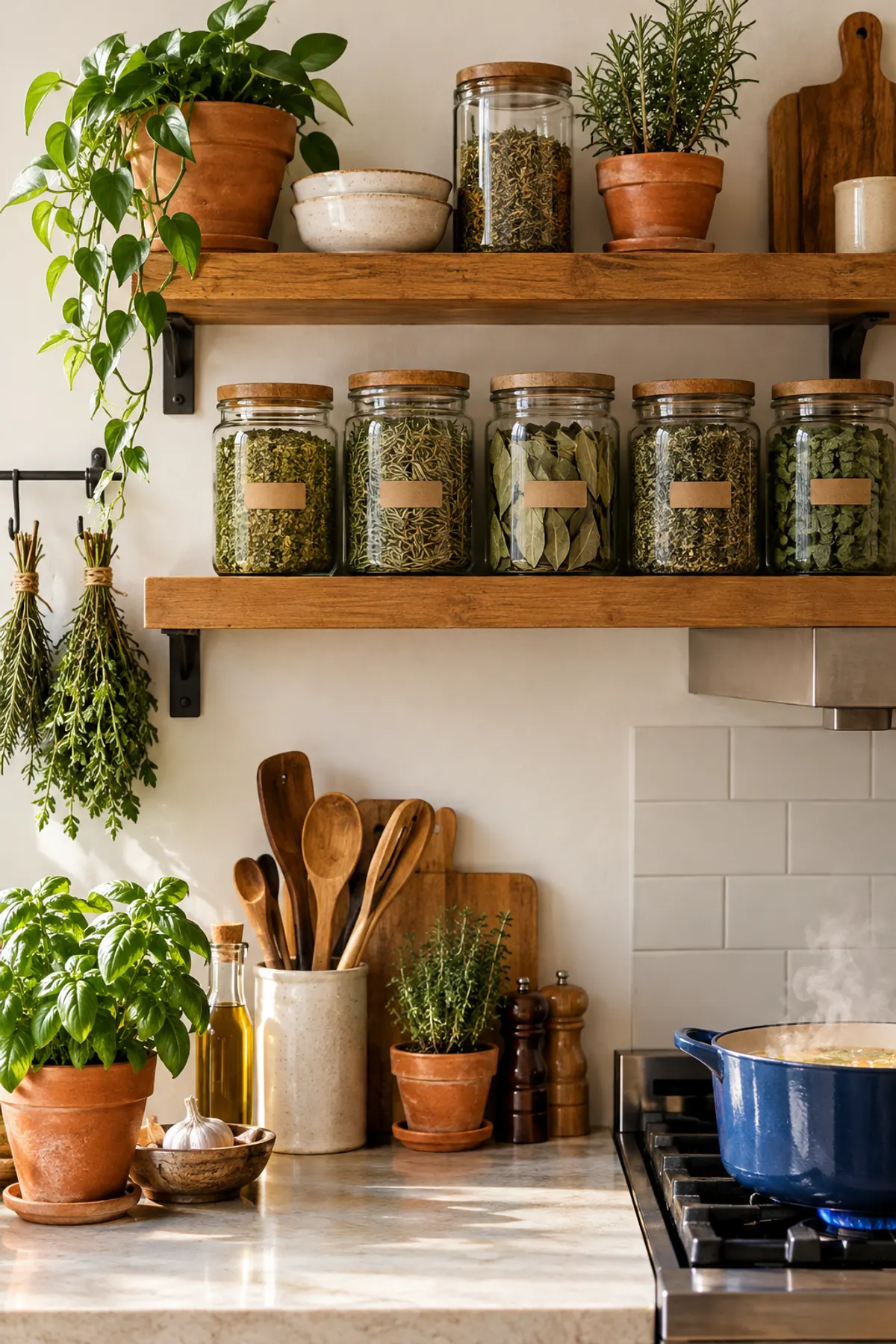
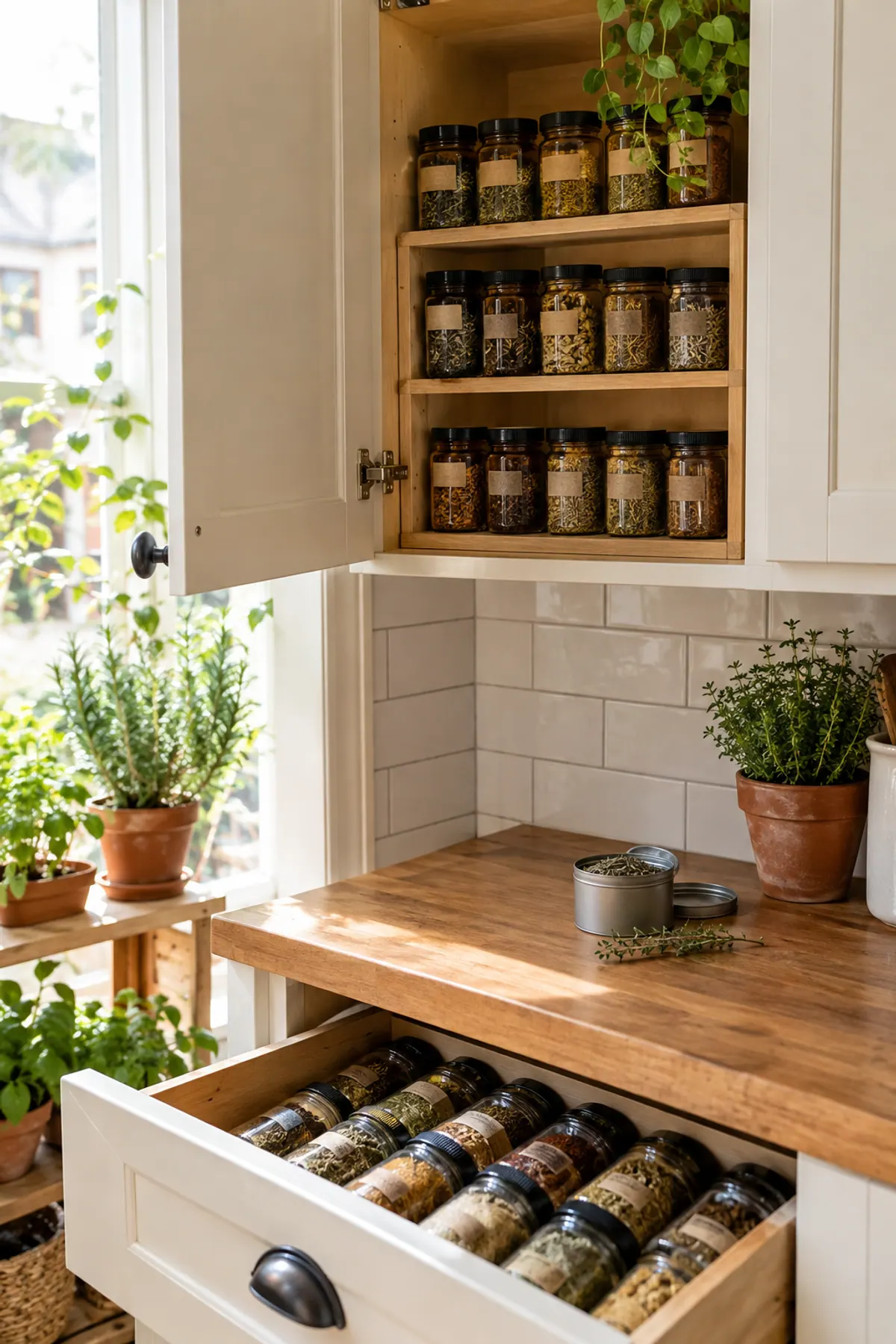
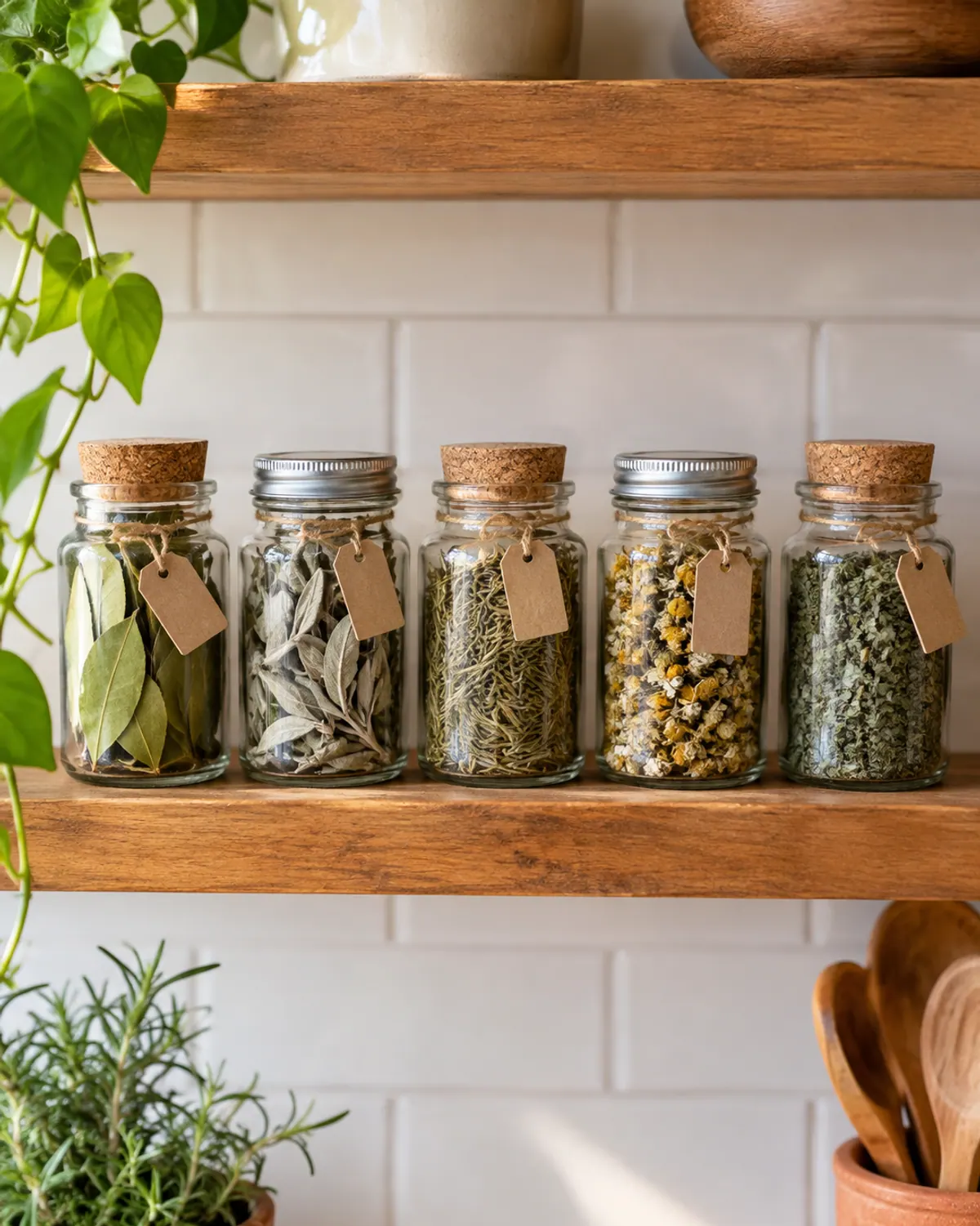
6. Jar displays on open shelves. Whole leaves keep their color better than crumbled ones, so fill small clear jars with whole bay, sage and rosemary and group them in threes. The dried herb storage ideas article has rack and label layouts that fit a one-shelf kitchen.
7. Gift tags and card toppers. Glue a sprig of dried lavender or a single bay leaf to a kraft tag with a dab of craft glue. It costs cents and makes a plain brown-paper parcel look considered.
8. Potpourri bowls without essential oils. A shallow bowl of dried rose petals, lavender, orange peel and a few cloves holds scent for about a month in a bedroom. Skip the oils if you have cats or dogs; the dried herbs alone are enough in a small room.
Bath and body: soaks, foot baths and hair rinses
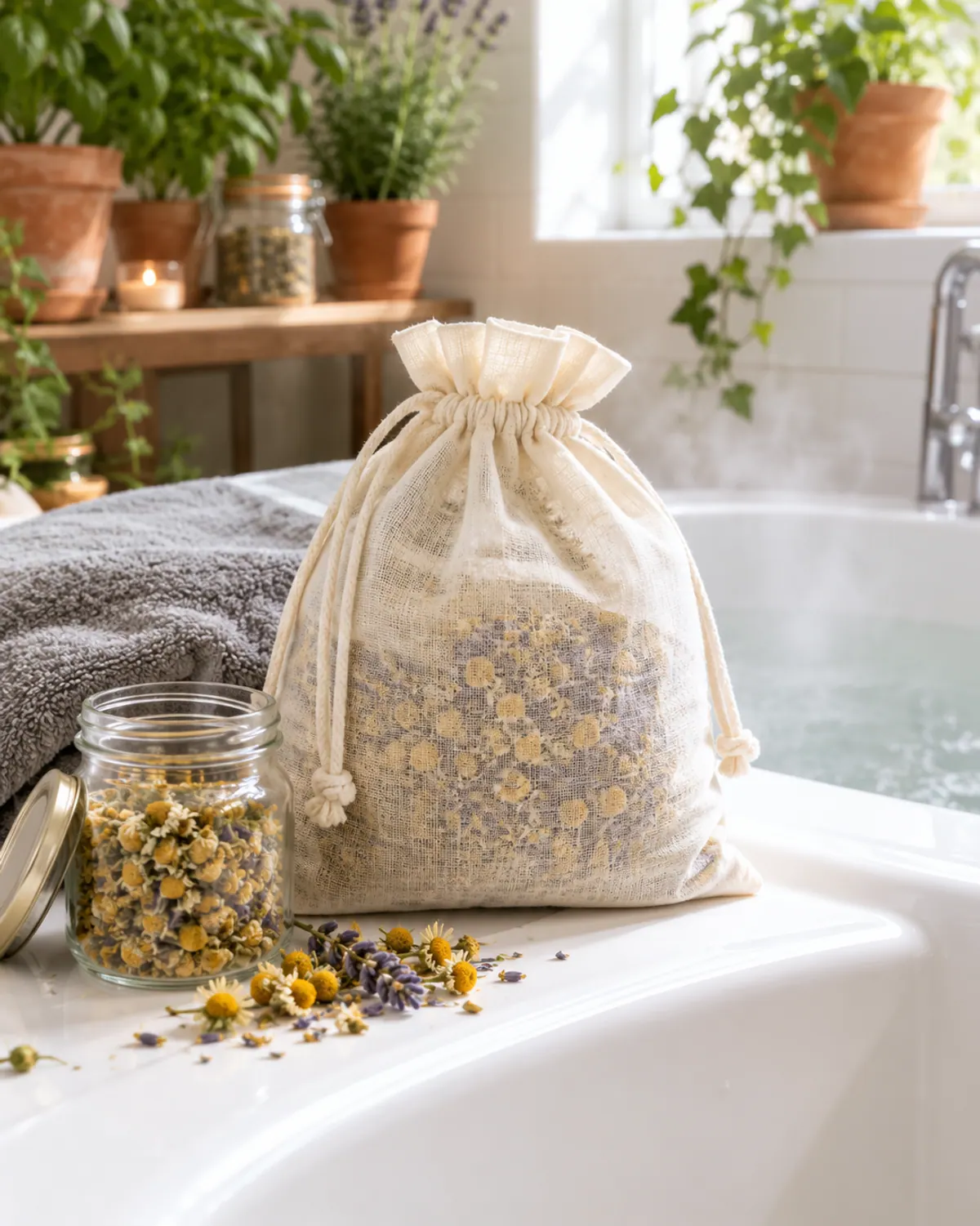
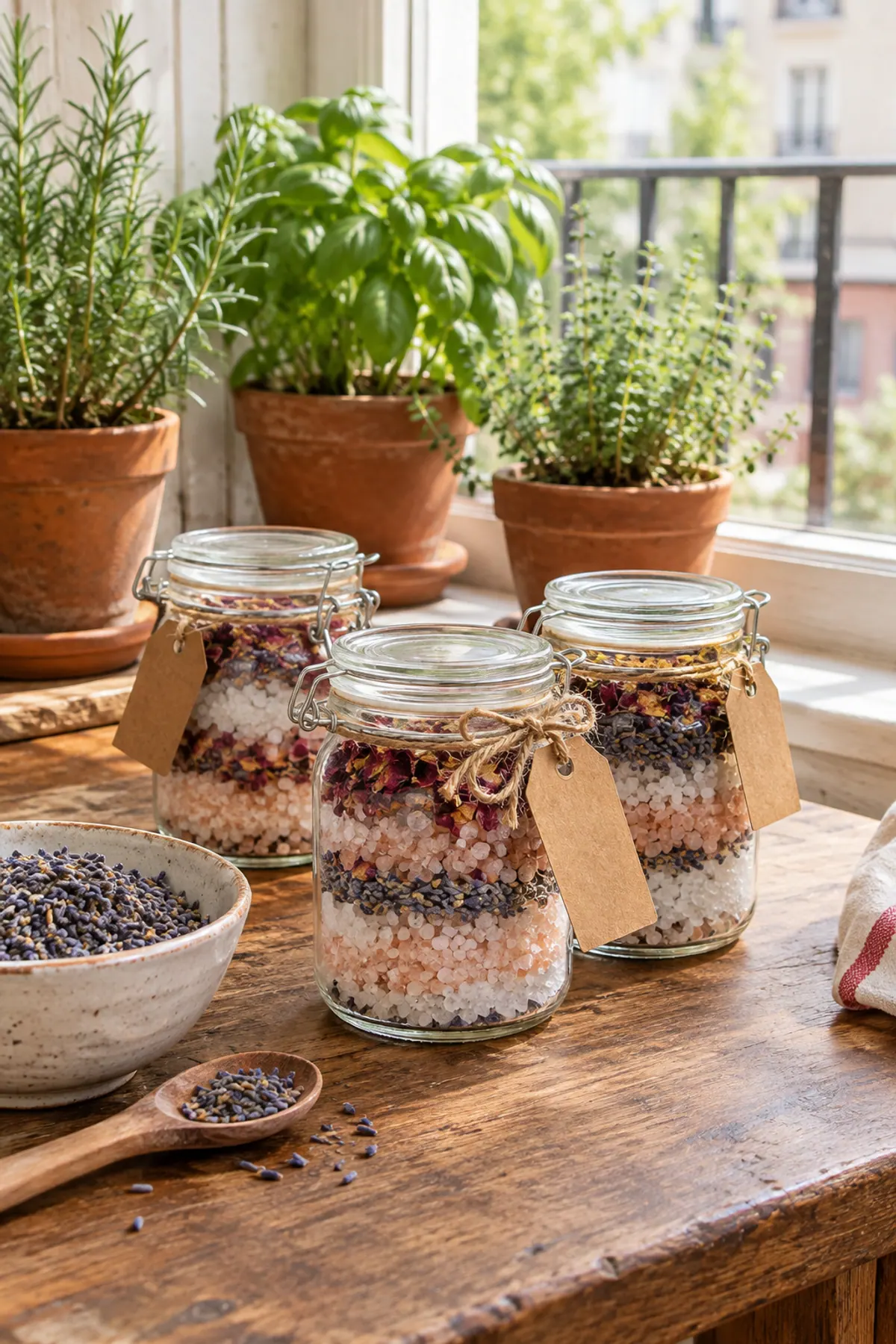
9. Bath sachets. Fill a large muslin bag with half a cup of chamomile, lavender or calendula and hang it from the tap while the bath runs. The bag keeps the herbs out of the drain. The DIY herbal bath salts article turns the same herbs into a jar gift.
10. Foot soaks. A tablespoon of dried mint or rosemary in a basin of warm water is a ten-minute foot soak after a long day. Patch test any herb on the inside of your wrist first if you have sensitive skin.
11. Hair rinse. Steep 2 tablespoons of rosemary or chamomile in 2 cups of just-boiled water, cool it fully, and pour it over hair after shampoo. This is a traditional rinse, not a treatment; strain it well so nothing is left in your hair.
Garden and pantry: pest sachets, compost and seed labels
12. Pantry sachets. Bay leaves and dried mint in a muslin bag tucked beside flour and rice is an old pantry habit; the strong scent is a mild deterrent for pantry pests. It is a helper, not a fix, so keep dry goods in sealed jars too.
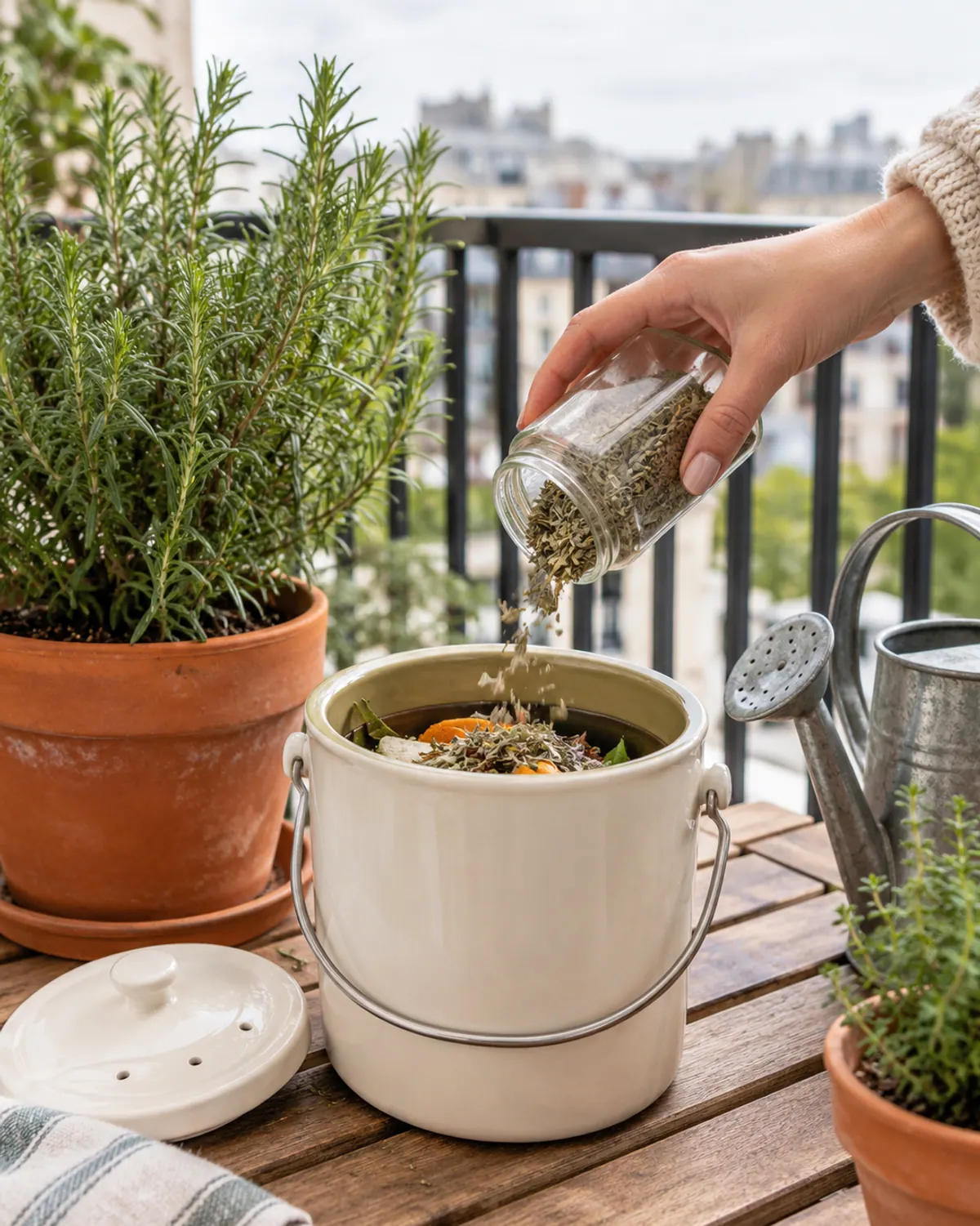
13. Compost or mulch. Anything that has truly lost its scent can go in the compost caddy or be scattered over a houseplant's soil as a thin mulch. Skip any blend with added salt, garlic or oil.
14. Grow more of the same herb. If a jar is finished, that is your sign to plant it. The guide to drying herbs at home covers air, oven and dehydrator methods so next year's jar is yours.
It depends on how old they are: the 1-year, 3-year rule
Dried herbs do not spoil the way fresh food does; they fade. Rub a pinch between your fingers and smell it. If the scent is strong, cook with it; if it is faint, it moves to the scent and decor group.
| Age of jar | Scent when rubbed | Best uses |
|---|---|---|
| Under 1 year | Strong | Cooking, tea, bath sachets, simmer pots |
| 1 to 2 years | Clear but softer | Drawer sachets, simmer pots, potpourri, foot soaks |
| 2 to 3 years | Faint | Bundles and jar displays, gift tags, fire starters |
| No scent at all | None | Compost or mulch |
It depends on the herb: what each one does best
| Herb | Best for | Note |
|---|---|---|
| Lavender | Drawer sachets, bath, gift tags | Toxic to cats and dogs if eaten (ASPCA) |
| Rosemary | Bundles, fire starters, hair rinse | Keeps its shape and color when hung |
| Mint | Shoe sachets, pantry sachets, foot soaks | Listed as toxic to cats and dogs (ASPCA) |
| Sage | Bundles, wreaths, fire starters | Silver leaves look good in clear jars |
| Thyme | Small wreaths, simmer pots | Crumbles easily; keep stems whole for display |
| Bay | Simmer pots, pantry sachets, jar displays | Whole leaves keep for years |
| Chamomile | Bath sachets, hair rinse | Avoid if allergic to ragweed |
| Calendula | Bath sachets | Bright petals; patch test first |
For the kitchen side of the same jars, the dried herbs and their uses chart lists which herb goes in which dish and how much to use.
Myth vs reality about old dried herbs
Reality
- Faded herbs still carry scent for a year or two beyond their cooking life
- A muslin bag and 2 tablespoons of herbs is a working sachet; no oils needed
- Chamomile, lavender and calendula are the gentle bath herbs, and a patch test still comes first
- Lavender and mint are on the ASPCA toxic list for cats and dogs
Myth
- Dried herbs past a year are useless and should be thrown out
- Potpourri and sachets need essential oils to work
- Any herb is fine in a bath because it is natural
- A common kitchen herb must be safe for pets
A 20-minute gift plan: 6 sachets and 3 simmer pot jars
The 20-minute gift plan
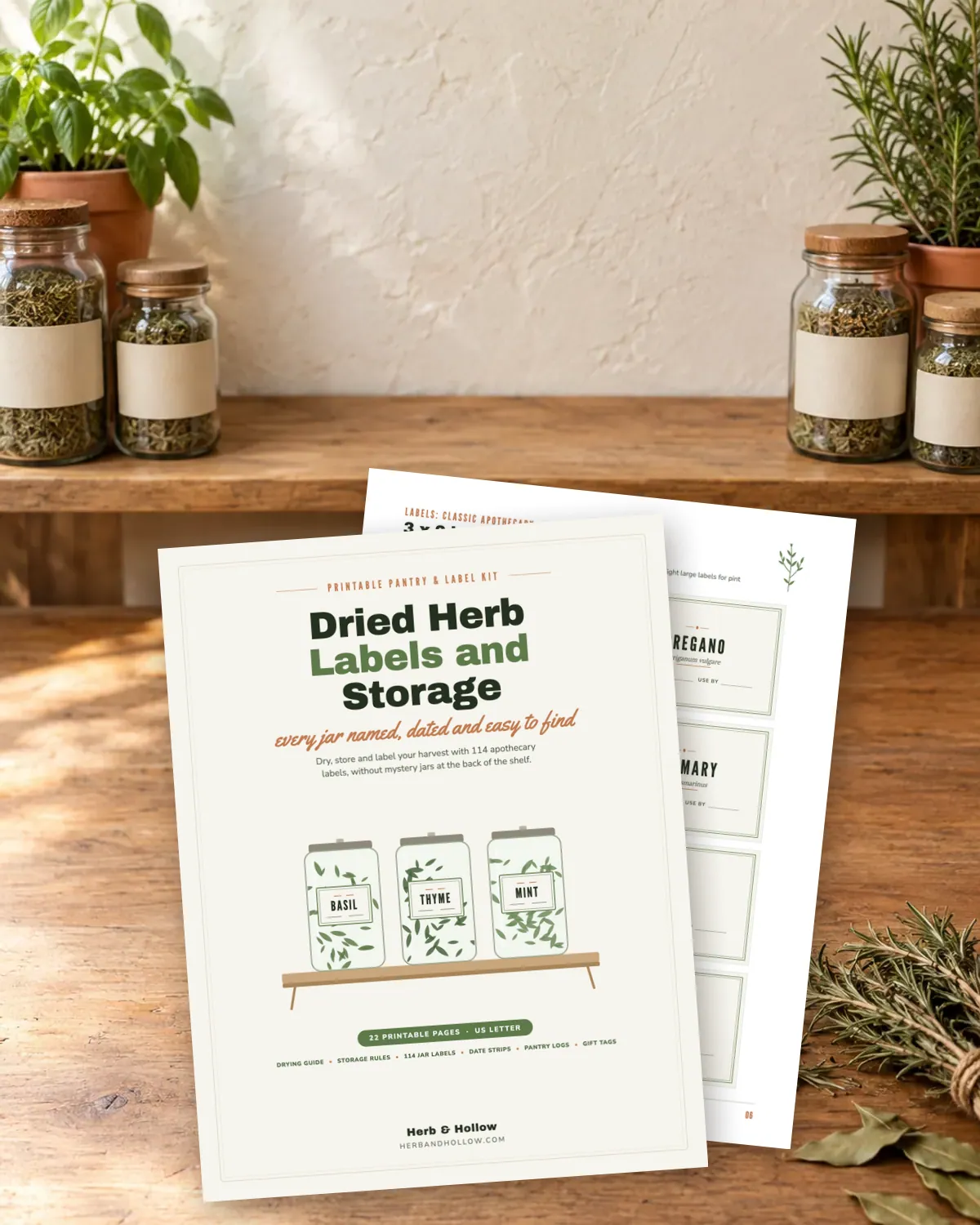
Label every jar and bag before it leaves the kitchen. The Dried Herb Labels and Storage kit has printable jar labels, date tags and a shelf-life chart, so the gift tags and your own pantry match.
Supplies for sachets, simmer pots and displays
- Start here
Muslin drawstring bags, 3 x 4 inch (pack of 50)
Typically $8 to $14
One pack covers a year of drawer, shoe, pantry and bath sachets.
Check price on Amazon for Muslin drawstring bags, 3 x 4 inch (pack of 50) -
Small glass spice jars with lids (set of 12)
Typically $15 to $25
Clear jars for displays and simmer pot gifts.
Check price on Amazon for Small glass spice jars with lids (set of 12) -
Kraft gift tags with twine (100 pack)
Typically $6 to $10
Date tags for jars and sachets, plus a spot to glue a sprig.
Check price on Amazon for Kraft gift tags with twine (100 pack) -
Cotton kitchen twine
Typically $5 to $9
Ties bundles and fire starters; safe near a flame, unlike synthetic string.
Check price on Amazon for Cotton kitchen twine -
Large muslin bath sachet bags (pack of 10)
Typically $8 to $12
Holds half a cup of chamomile or lavender and hangs from the tap.
Check price on Amazon for Large muslin bath sachet bags (pack of 10)
Safety note. Herbal uses here are general home information, not medical advice. Patch test skin uses, ask a doctor if you are pregnant or nursing, and keep sachets, potpourri and dried lavender or mint out of reach of cats and dogs; the ASPCA lists both plants as toxic to them. Essential oils are a separate risk to pets and are not needed for any idea above.
Frequently asked questions
What can I do with dried herbs besides cooking?
Scent, decor, bath and garden uses: drawer and shoe sachets, simmer pot jars, fire starters, hanging bundles, jar displays, gift tags, bath sachets, foot soaks, hair rinses, pantry sachets and compost. Faded herbs suit the scent and decor uses best.
What should I do with old dried herbs that have lost their flavor?
Rub a pinch and smell it. If there is any scent left, use it in sachets, simmer pots or potpourri. If there is none, compost it or scatter it as a thin mulch on a houseplant.
Can you put dried herbs in a bath?
Yes, in a muslin bag so they do not block the drain. Chamomile, lavender and calendula are the usual gentle choices. Patch test first, and check with a doctor if you are pregnant or have a skin condition.
How long do dried herbs last?
About a year at full cooking flavor when stored in a sealed jar away from light and heat, then a year or two more with enough scent for sachets and decor. Whole leaves last longer than crumbled ones.
Which dried herbs are best for sachets?
Lavender for drawers and linens, rosemary and mint for closets and shoes, bay and mint for the pantry. Keep lavender and mint sachets away from cats and dogs, since the ASPCA lists both as toxic to them.

Save it for later
Pin this to your Kitchen Apothecary board so it's there when you need it.
Save to Pinterest